Illinois Warranty Deed for Husband and Wife Converting Property from Tenants in Common to Joint Tenancy
Understanding this form
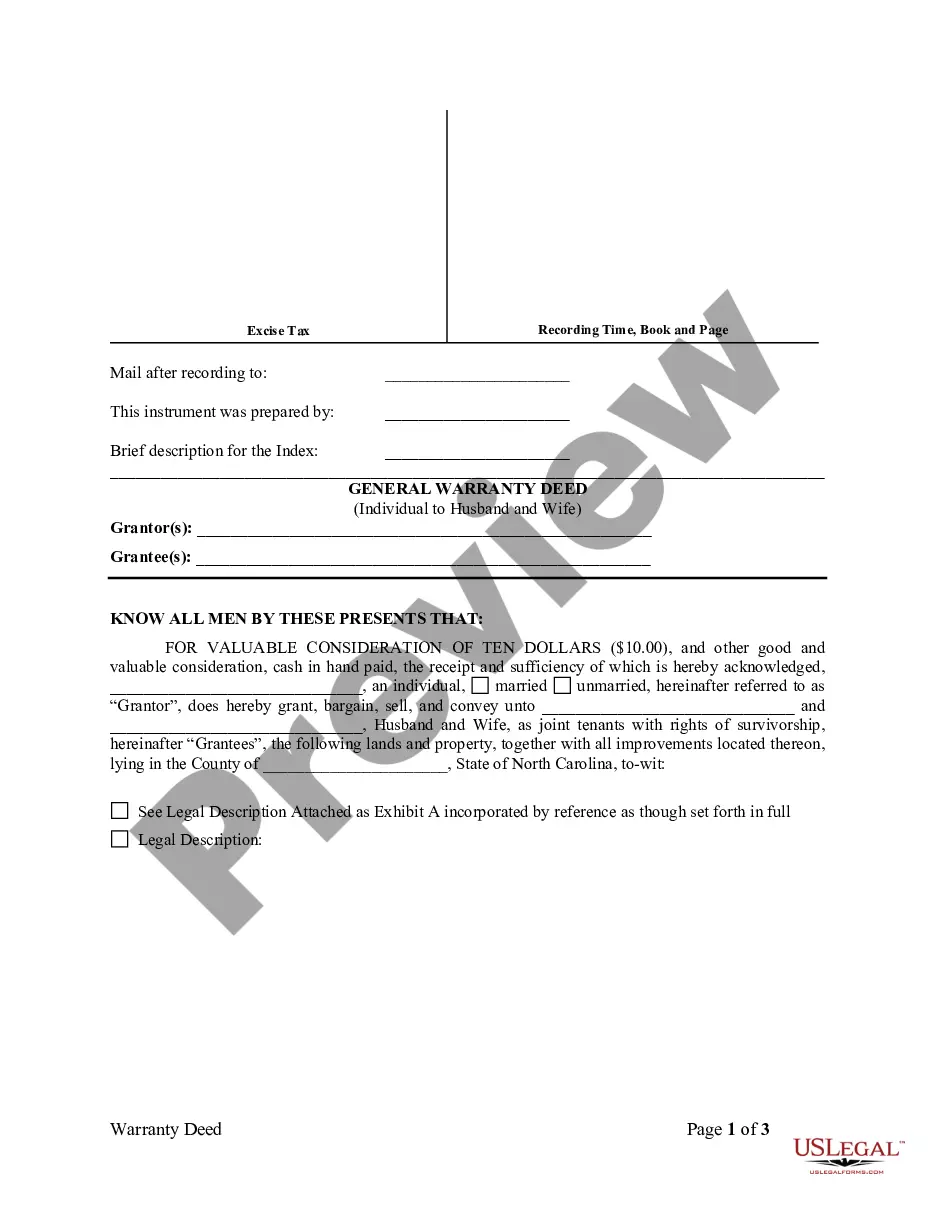
The Warranty Deed for Husband and Wife Converting Property from Tenants in Common to Joint Tenancy is a legal document that allows married couples to change their ownership of property from tenants in common to joint tenancy. This form ensures that if one spouse passes away, the surviving spouse automatically retains full ownership of the property, simplifying the transfer process and avoiding probate. This differs from other types of deeds, such as quitclaim deeds, which may not provide the same level of security regarding survivorship rights.
Main sections of this form
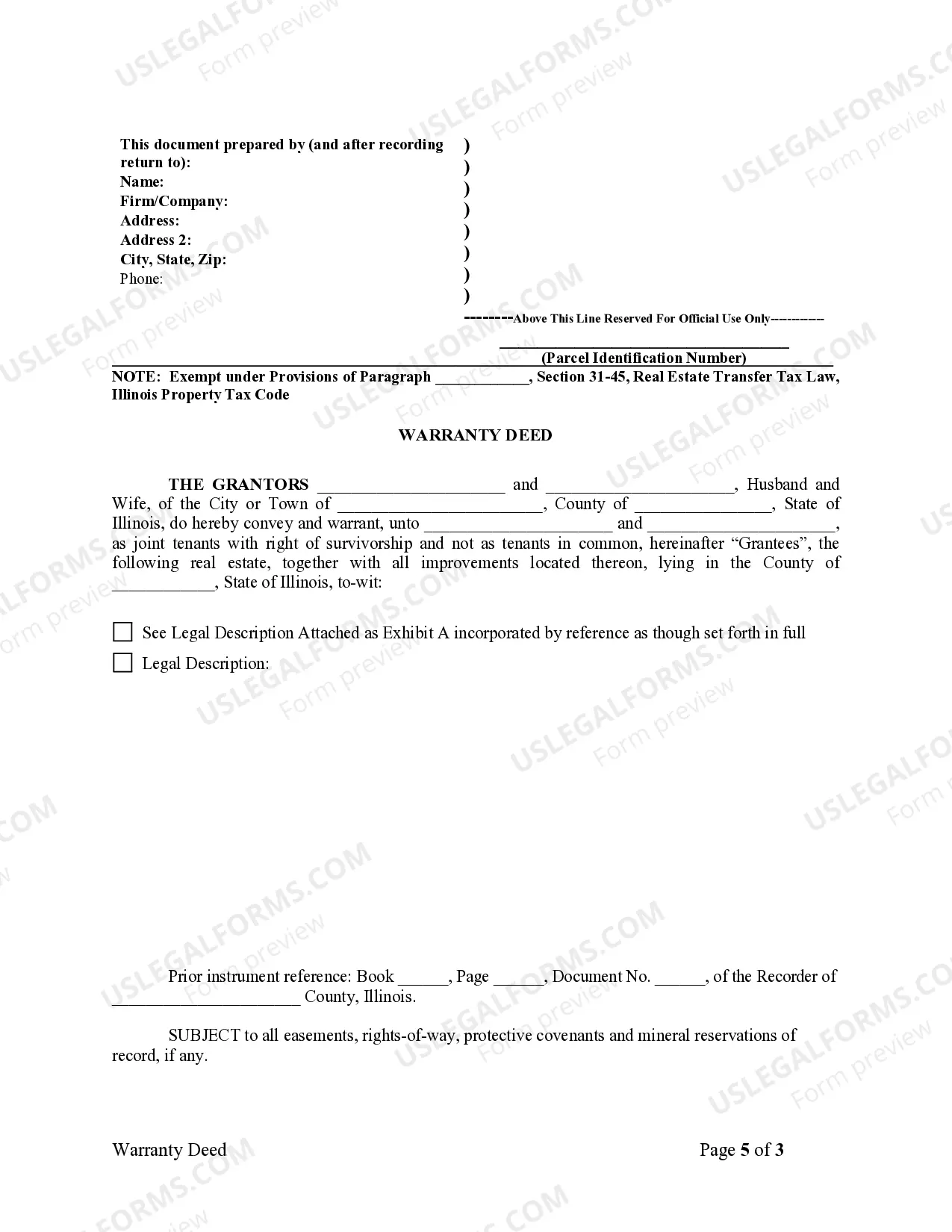
- Identification of the grantors (husband and wife) and their current ownership status.
- Details of the property being transferred, including legal descriptions.
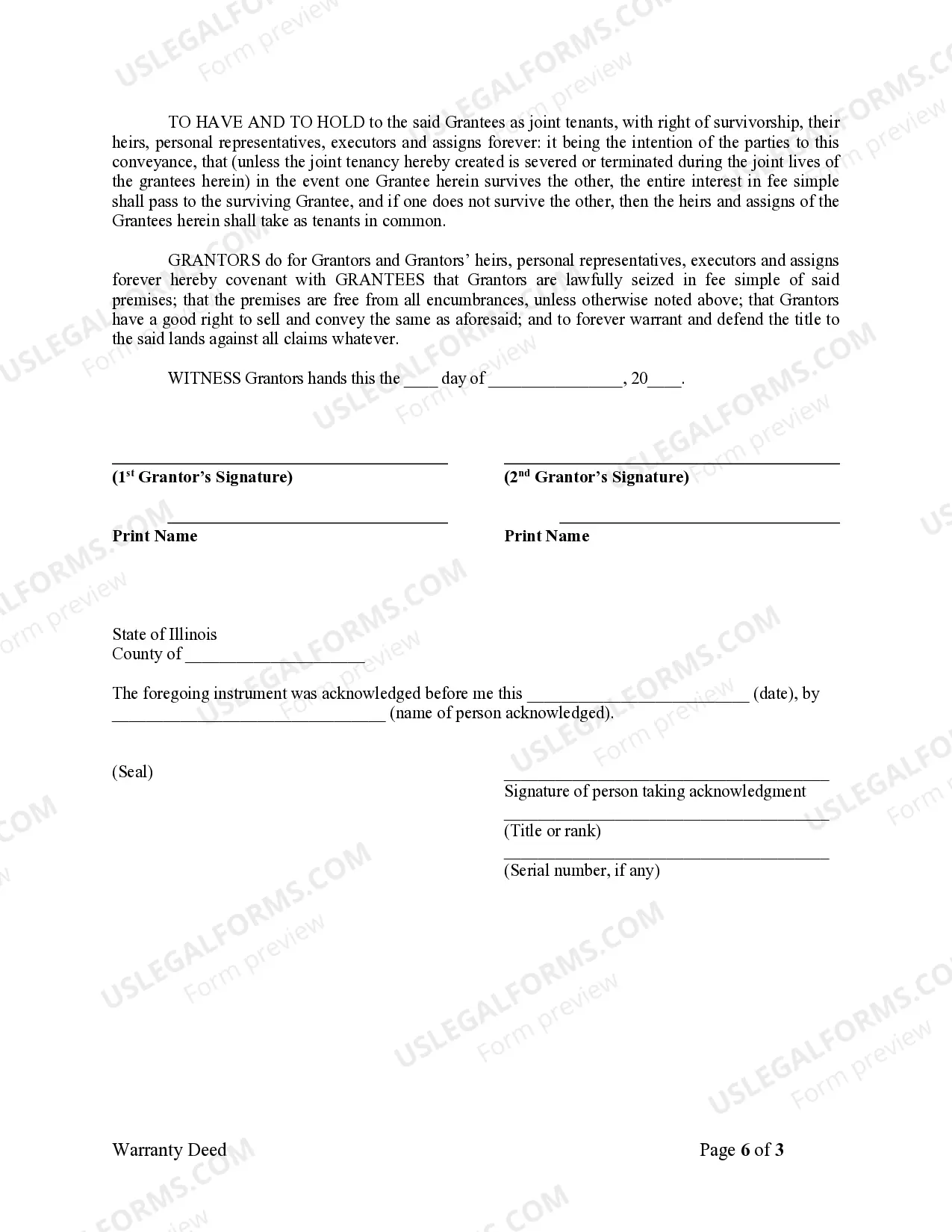
- Clause converting property from tenants in common to joint tenancy with right of survivorship.
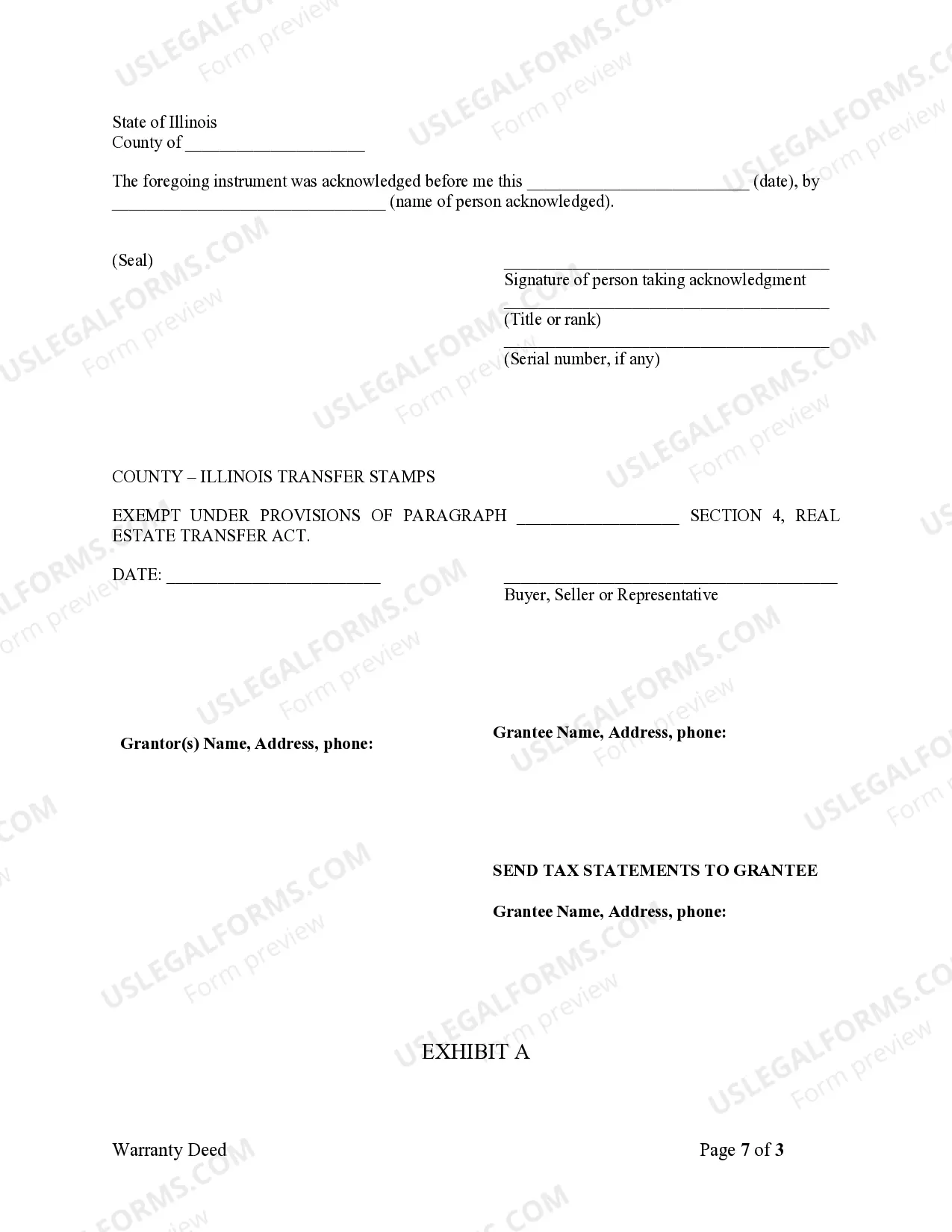
- Signatures of the grantors along with notary acknowledgment.





When to use this form
This form is useful when a married couple wishes to consolidate their ownership rights over property previously held as tenants in common. It is particularly applicable when one spouse wants to ensure that the other retains full ownership automatically upon their death, promoting seamless property transfer and avoiding any legal complications that may arise during estate settlement.
Intended users of this form
This form is intended for:
- Married couples who co-own property as tenants in common.
- Individuals wanting to convert shared property ownership to joint tenancy.
- Couples looking to ensure legal rights to property in the event of one spouse's death.
How to complete this form
- Identify the full names of both grantors (husband and wife).
- Specify the legal description of the property being converted.
- Indicate the date and sign the document in the presence of a notary public.
- Ensure both parties fill out their respective sections completely, including any additional required signatures.
Notarization requirements for this form
Notarization is required for this form to take effect. Our online notarization service, powered by Notarize, lets you verify and sign documents remotely through an encrypted video session, available 24/7.
Get your form ready online
Our built-in tools help you complete, sign, share, and store your documents in one place.
Make edits, fill in missing information, and update formatting in US Legal Forms—just like you would in MS Word.
Download a copy, print it, send it by email, or mail it via USPS—whatever works best for your next step.
Sign and collect signatures with our SignNow integration. Send to multiple recipients, set reminders, and more. Go Premium to unlock E-Sign.
If this form requires notarization, complete it online through a secure video call—no need to meet a notary in person or wait for an appointment.
We protect your documents and personal data by following strict security and privacy standards.

Make edits, fill in missing information, and update formatting in US Legal Forms—just like you would in MS Word.

Download a copy, print it, send it by email, or mail it via USPS—whatever works best for your next step.

Sign and collect signatures with our SignNow integration. Send to multiple recipients, set reminders, and more. Go Premium to unlock E-Sign.

If this form requires notarization, complete it online through a secure video call—no need to meet a notary in person or wait for an appointment.

We protect your documents and personal data by following strict security and privacy standards.
Typical mistakes to avoid
- Not providing the complete legal description of the property.
- Failing to ensure both spouses sign and date the form.
- Neglecting to have the document notarized, which may invalidate the deed.
Advantages of online completion
- Easy access to templates designed by licensed attorneys.
- Edit and fill out forms conveniently from any computer.
- Reliable and secure storage of your completed legal forms.
Quick recap
- This Warranty Deed facilitates the conversion of property ownership from tenants in common to joint tenancy.
- Proper completion and notarization are crucial for the document's legality.
- Utilizing this form helps ensure property rights transfer without probate complications.
Looking for another form?

Form popularity
FAQ
Serve a written notice of the change (a 'notice of severance') on the other owners - a conveyancer can help you do this. Download and fill in form SEV to register a restriction without the other owners' agreement. Prepare any supporting documents you need to include.
Jointly-owned property.There is no need for probate or letters of administration unless there are other assets that are not jointly owned. The property might have a mortgage. However, if the partners are tenants in common, the surviving partner does not automatically inherit the other person's share.
The simplest way to add a spouse to a deed is through a quitclaim deed. This type of deed transfers whatever ownership rights you have so that you and your spouse now become joint owners. No title search or complex transaction is necessary. The deed will list you as the grantor and you and your spouse as grantees.
You can apply to court to change your ex-partner's tenancy to your name, or remove their name from a joint tenancy. You can apply for a 'transfer of tenancy' if: your landlord refuses to change your tenancy. your tenancy doesn't allow a transfer.
Jointly owned propertyProperty owned as joint tenants does not form part of a deceased person's estate on death. But the value of the deceased person's share of jointly owned property is included when calculating the value of the estate for Inheritance Tax purposes.
Most jointly owned property is held as joint tenants but you should not assume this.As property held under a joint tenancy will automatically pass to the surviving joint owners it will not form part of the deceased's estate except for the purposes of calculating inheritance tax.
When one co-owner dies, property that was held in joint tenancy with the right of survivorship automatically belongs to the surviving owner (or owners). The owners are called joint tenants.
When you opt to co-own an asset with another individual, you can enter into a legal ownership agreement known as joint tenants with rights of survivorship or JTWROS. Upon the death of one of the owners, the surviving owner automatically becomes sole owner of the property, whether it's a vacation home, a plane, or
Regardless of how the property is owned (and how it will be treated for succession purposes), the deceased's share of jointly owned property will form part of the deceased's estate for inheritance tax (IHT) purposes (although an exemption will, of course, apply where the deceased's share passes to their spouse/civil