Illinois Statutory Power of Attorney for Mental Health Care
About this form
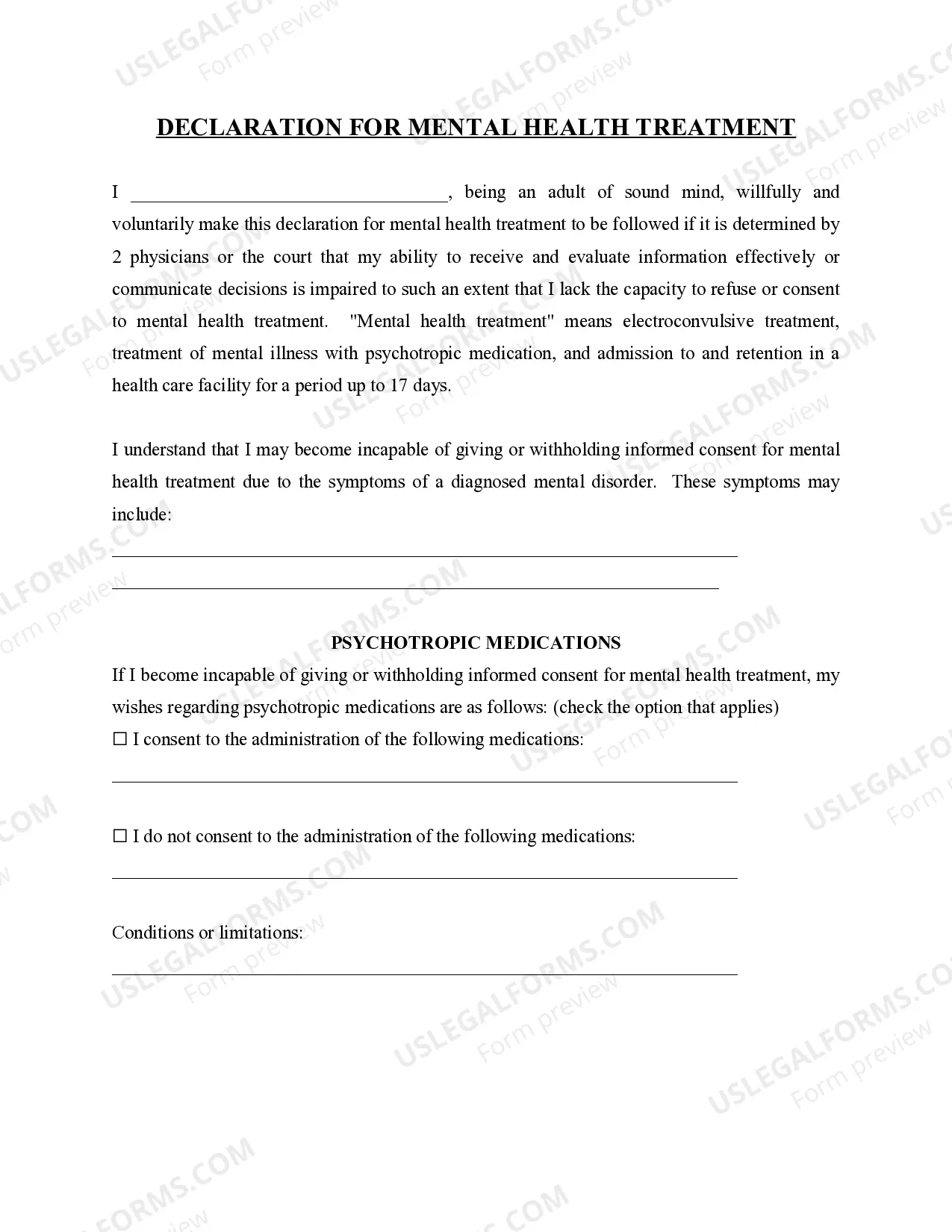
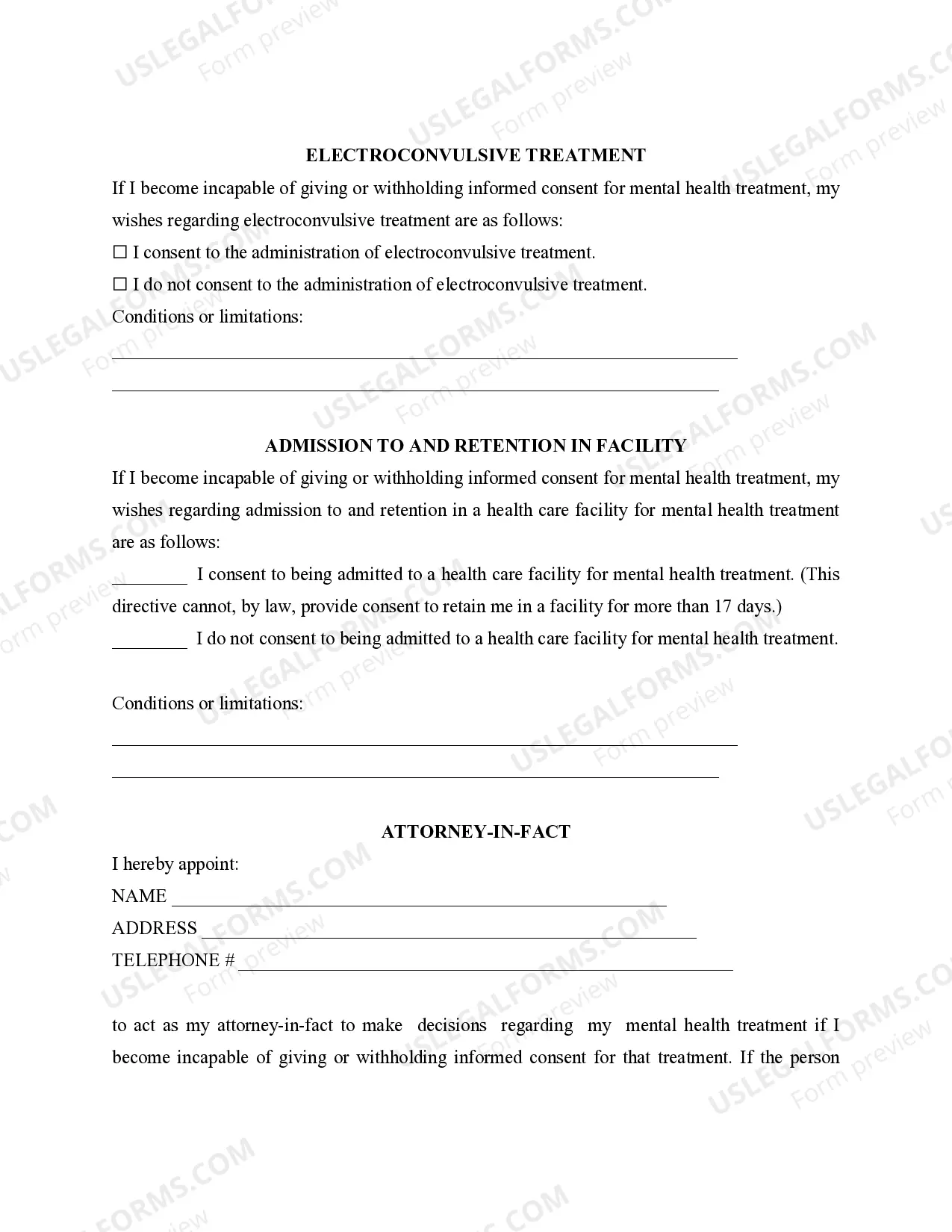
The Statutory Power of Attorney for Mental Health Care is a legal document that allows individuals to outline their preferences regarding mental health treatments in advance. This form enables you to specify your consent for three specific types of mental health interventions: psychotropic medication, electroconvulsive therapy, and short-term admission to a treatment facility. It is distinct from other power of attorney forms as it specifically focuses on mental health treatment decisions and comes into effect only if you are deemed incapable of making those decisions yourself by two physicians or a court.
Form components explained
- A declaration specifying the types of mental health treatments you consent to or decline.
- The ability to appoint an attorney-in-fact to make decisions on your behalf if you are incapacitated.
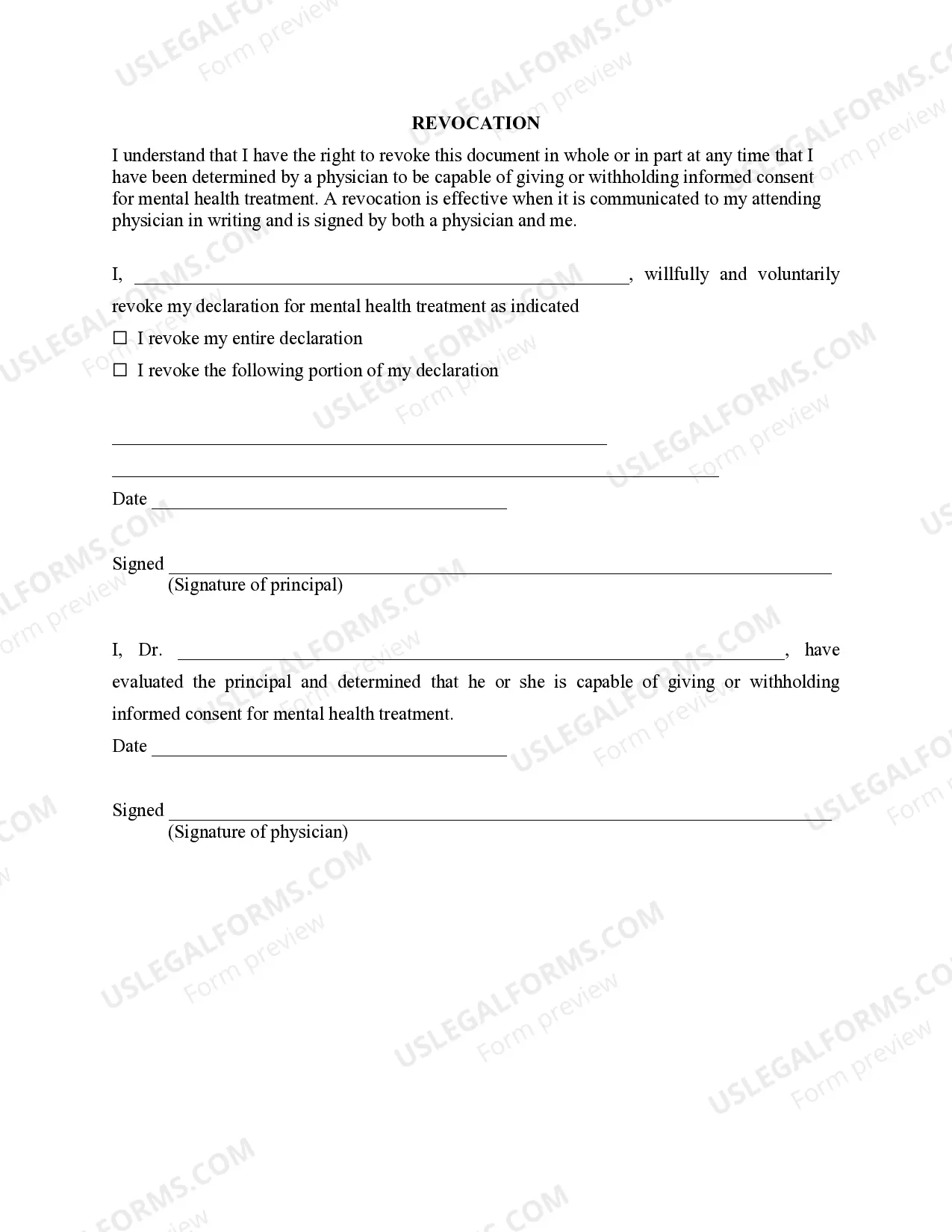
- Provisions for revoking the declaration when you regain the capacity to make decisions.
- Instructions on how the document must be signed and witnessed to ensure its validity.
- Optional selection of a physician to determine incapacity for mental health decisions.




Common use cases
This form should be used when you want to plan ahead for your mental health treatment decisions in case you become unable to communicate your preferences due to circumstances such as a mental health crisis or severe mental illness. It ensures that your treatment aligns with your wishes even if you are not able to speak for yourself at the time care is needed.
Who can use this document
- Any adult capable of making informed decisions regarding their mental health treatment.
- Individuals who have specific preferences about their mental health care and want those documented.
- People with a history of mental health challenges who want to ensure their treatment preferences are respected.
Instructions for completing this form
- Begin by clearly stating your name and acknowledging that you are of sound mind.
- Detail your wishes regarding psychotropic medications, electroconvulsive treatment, and short-term admissions to a facility.
- Designate an attorney-in-fact, including their name, address, and contact information.
- Ensure the document is signed by you and witnessed by two individuals who are not related to you or involved in your care.
- Include a specific physician's name if you wish to designate someone for incapacity evaluations.
- Keep a copy of the signed document for your records and inform your attorney-in-fact and physician about its existence.
Notarization guidance
Notarization is generally not required for this form. However, certain states or situations might demand it. You can complete notarization online through US Legal Forms, powered by Notarize, using a verified video call available anytime.
Get your form ready online
Our built-in tools help you complete, sign, share, and store your documents in one place.
Make edits, fill in missing information, and update formatting in US Legal Forms—just like you would in MS Word.
Download a copy, print it, send it by email, or mail it via USPS—whatever works best for your next step.
Sign and collect signatures with our SignNow integration. Send to multiple recipients, set reminders, and more. Go Premium to unlock E-Sign.
If this form requires notarization, complete it online through a secure video call—no need to meet a notary in person or wait for an appointment.
We protect your documents and personal data by following strict security and privacy standards.

Make edits, fill in missing information, and update formatting in US Legal Forms—just like you would in MS Word.

Download a copy, print it, send it by email, or mail it via USPS—whatever works best for your next step.

Sign and collect signatures with our SignNow integration. Send to multiple recipients, set reminders, and more. Go Premium to unlock E-Sign.

If this form requires notarization, complete it online through a secure video call—no need to meet a notary in person or wait for an appointment.

We protect your documents and personal data by following strict security and privacy standards.
Avoid these common issues
- Failing to have the form signed and witnessed properly, which might render it invalid.
- Not clearly stating your preferences, leading to confusion about your treatment decisions.
- Neglecting to inform your attorney-in-fact about the details in the document.
Why complete this form online
- Convenience of filling out the form from home without the need for an appointment.
- Editability, allowing you to revise your preferences as your situation changes.
- Access to templates that are drafted by licensed attorneys, ensuring legal compliance.
Legal use & context
- This declaration will be legally binding if executed according to the requirements set forth in your state.
- It remains in effect for three years unless you are deemed incapable of making decisions regarding mental health treatments.
- You retain the right to revoke or modify the declaration at any time when you are capable of making decisions.
Looking for another form?







Form popularity
FAQ
Section 3-4 of the Illinois Power of Attorney Act outlines the rights and responsibilities of agents designated under a power of attorney. This section defines how an agent should act on behalf of the principal, including the requirement to consider the principal’s known wishes. Understanding this section is crucial when creating an Illinois Statutory Power of Attorney for Mental Health Care, as it ensures that appointed agents are held to clear standards.
Without a power of attorney in Illinois, decision-making authority may default to family members or the court, which may not represent your preferences. This lack of clarity can lead to conflicts and delays in care. Establishing an Illinois Statutory Power of Attorney for Mental Health Care allows you to communicate your wishes directly and can prevent uncertainty in critical situations.
Most states do not require a POA to be in writing in order to be effective, except in specific cases established by statute.As a result, most POAs can be executed electronically with or without authorization under the eCommerce laws, since there is no writing or signature requirement to begin with.
The person you give the power of attorney to is the agent and you are the principal. The agent is usually a spouse, a close friend, or a trusted relative. The document does not have to be notarized.
It is governed by the Illinois Power of Attorney Act.He or she must also act in accordance with the law and with the directions in this form. Your agent must keep a record of all receipts, disbursements, and significant actions taken as your agent.
After the principal's name, write by and then sign your own name. Under or after the signature line, indicate your status as POA by including any of the following identifiers: as POA, as Agent, as Attorney in Fact or as Power of Attorney.
Generally, the document must be signed, witnessed and notarized by an adult. If your agent will have to deal with real estate assets, some states require you to put the document on file in the local land records office. The power of attorney for finances is typically extinguished upon death, revocation, or divorce.
A general power of attorney ends the moment you become incapacitated.A durable power of attorney stays effective until the principle dies or until they act to revoke the power they've granted to their agent. But there are a handful of circumstances where courts will end durable power of attorney.
The person you give the power of attorney to is the agent and you are the principal. The agent is usually a spouse, a close friend, or a trusted relative. The document does not have to be notarized.
Choose an agent. Before you begin to fill out the form, you have some decisions to make. Decide on the type of authority. You can choose whether you want your POA to be broad or narrow. Identify the length of time the POA will be in effect. Fill out the form. Execute the document.