Illinois Statutory General Power of Attorney with Durable Provisions - Short Form Power of Attorney for Property
What is this form?
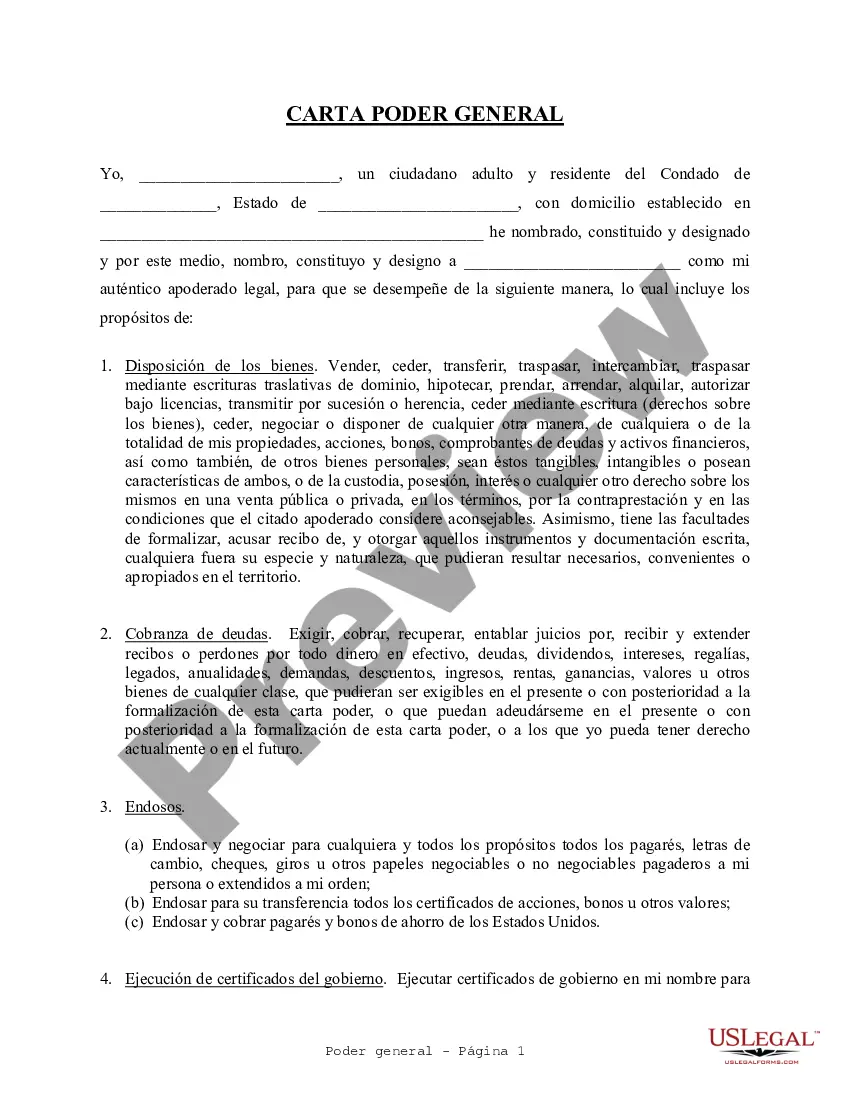
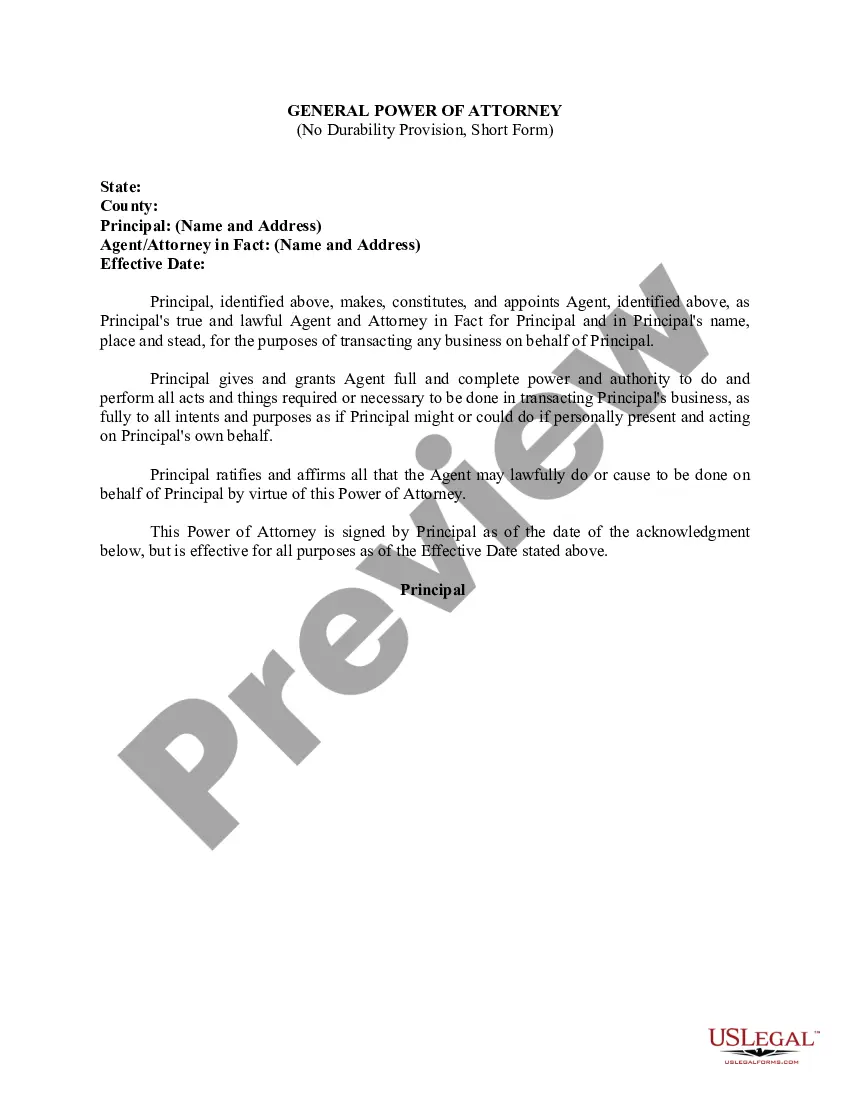
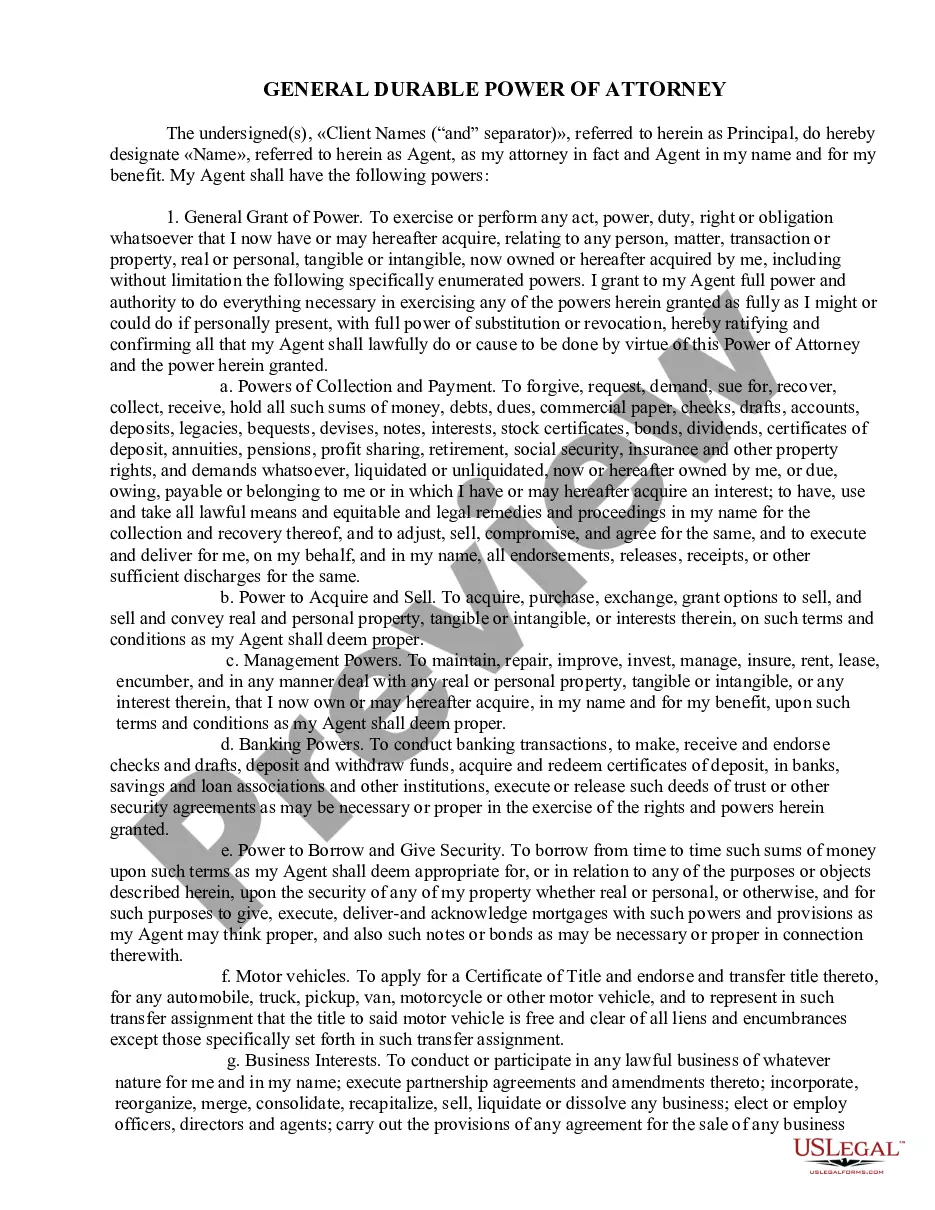
The Statutory General Power of Attorney with Durable Provisions is a legally recognized document that allows you to appoint an attorney-in-fact, or agent, to manage your financial and property matters. This statutory form is designed to be straightforward and is approved by the state legislature, which differentiates it from non-statutory alternatives. It allows you to specify the powers you want your agent to have, covering diverse areas such as real estate, banking, and taxes while ensuring certain durable provisions that remain effective even if you become incapacitated.
Main sections of this form
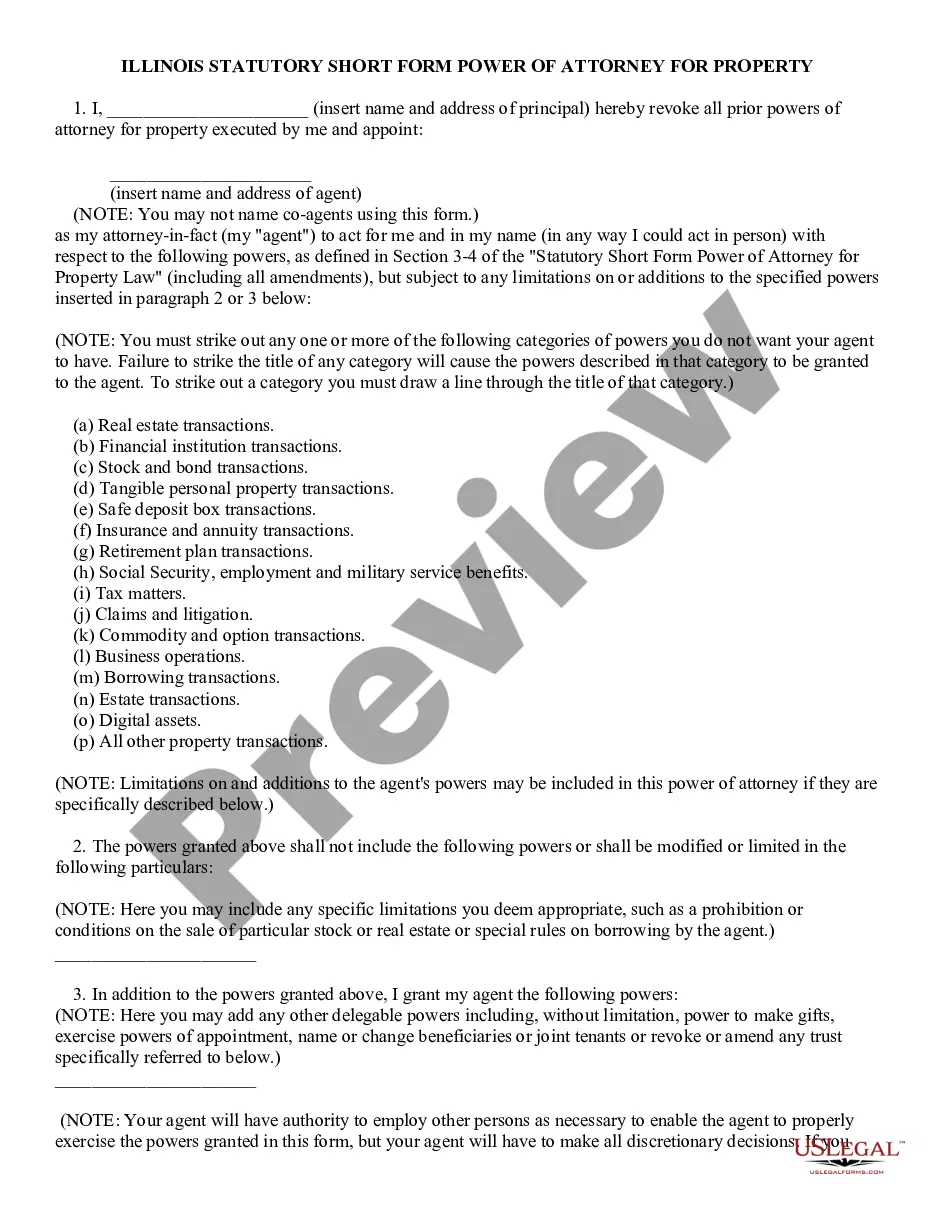
- Revocation of previous powers of attorney for property.
- Appointment of a single agent with specified powers.
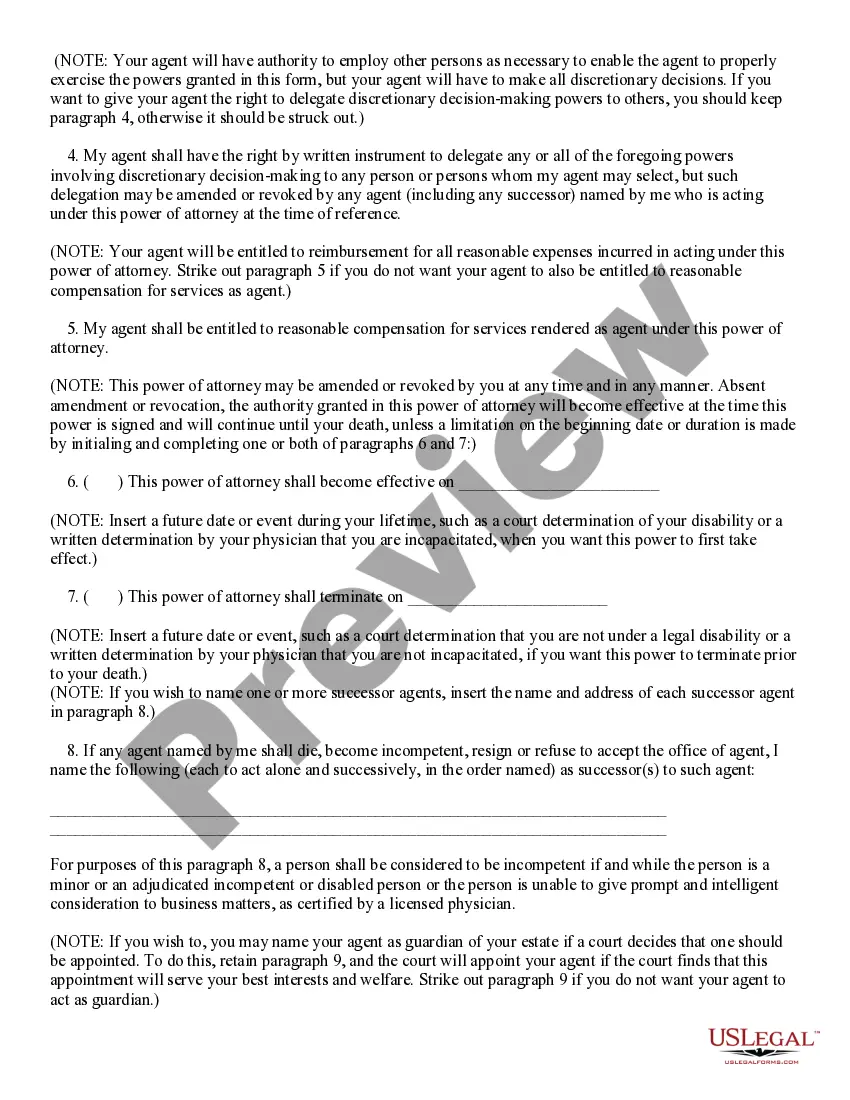
- Options to limit or expand the powers of the agent.
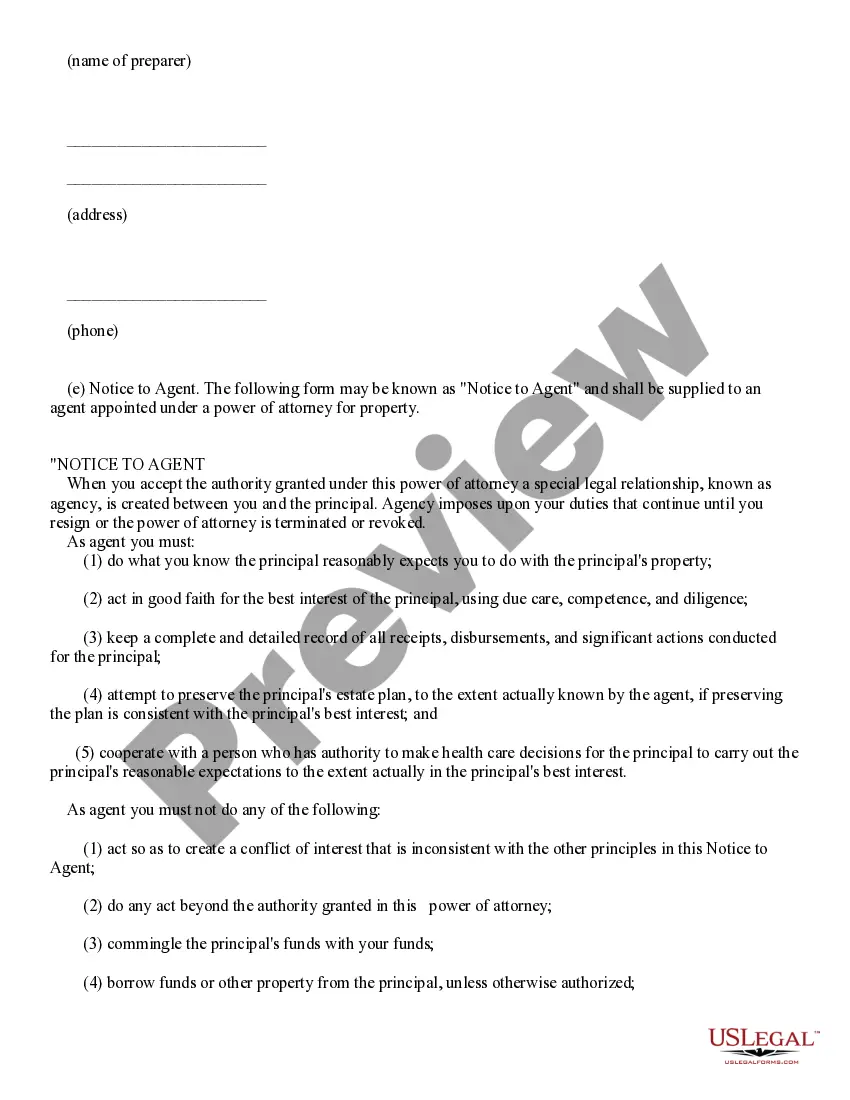
- Provisions for successor agents in case the primary agent is unavailable.
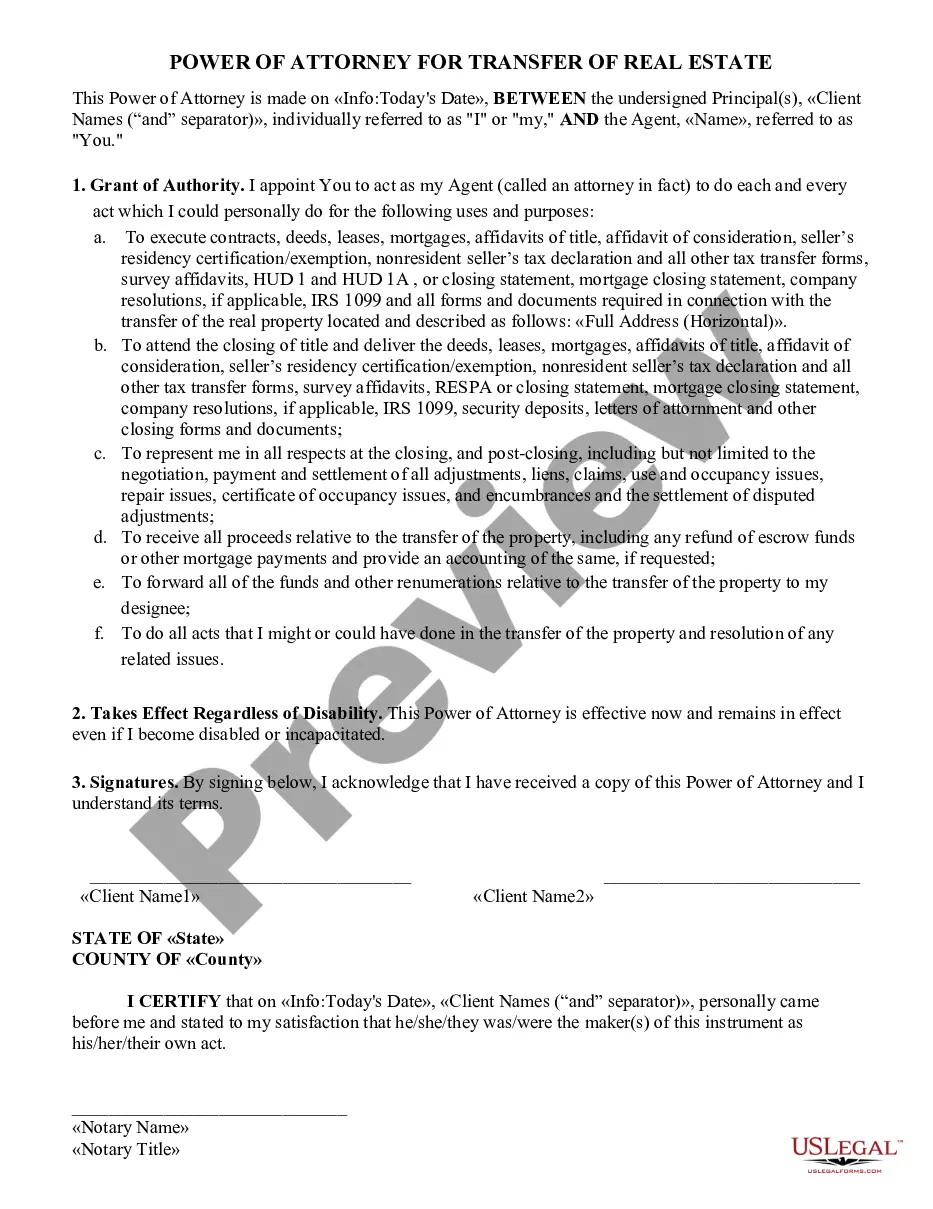
- Enforcement of powers including real estate transactions and financial activities.
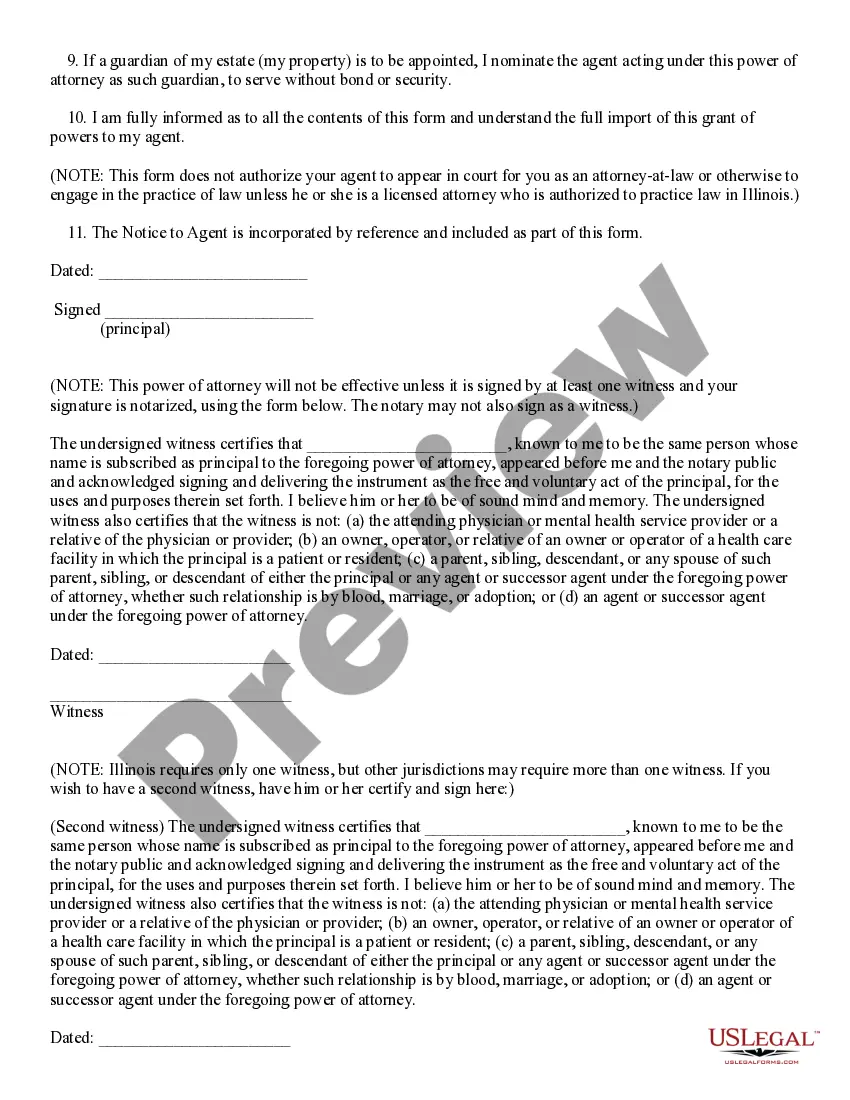
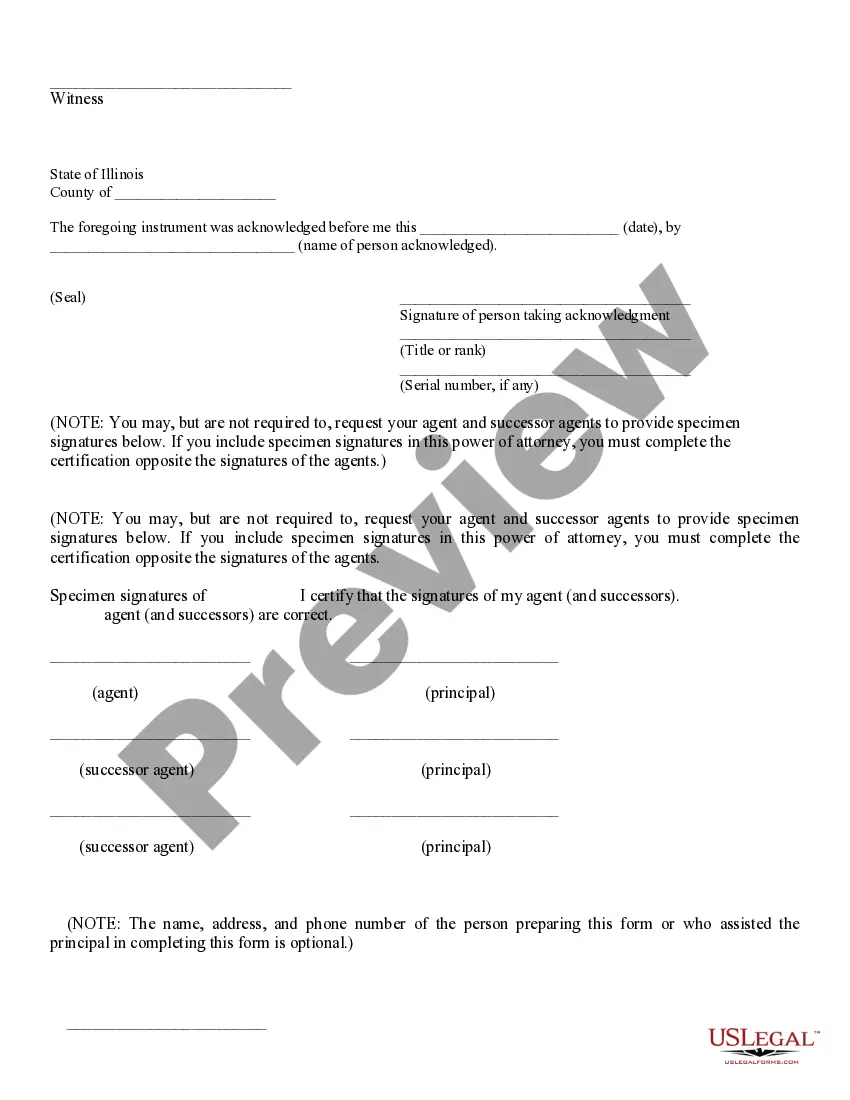
- Requirements for notarization and witness signatures for validation.
Situations where this form applies
This form is essential when you need to authorize someone to handle your property and financial affairs in case of your absence or incapacity. Common scenarios include planning for a future incapacitating health condition, managing an estate, and delegating financial responsibilities while you are away. This document can be particularly useful for individuals who travel frequently, are aging, or wish to establish a trusted entity to manage their affairs without legal complications.
Who can use this document
- Individuals wishing to appoint someone to manage their financial and property matters.
- People planning for potential incapacity due to health issues.
- Those looking to revoke previous power of attorney documents.
- Anyone needing to specify particular limitations on their agent's powers.
- Individuals who want to ensure continuity of management through successor agents.
Steps to complete this form
- Identify yourself as the principal, including your name and address.
- Appoint your agent by providing their name and address.
- Select and specify the powers you grant your agent by marking the relevant categories.
- Include any limitations on those powers as necessary in the designated sections.
- Ensure that you and your agent sign the document in the presence of a witness and a notary public.
- Complete any optional sections, such as naming successor agents or establishing effective dates.
Notarization requirements for this form
Yes, this form must be notarized to be legally valid. It requires the signatures of at least one witness and a notary public. US Legal Forms offers integrated online notarization options for your convenience, allowing you to get your document notarized securely through a video call, anytime.
Get your form ready online
Our built-in tools help you complete, sign, share, and store your documents in one place.
Make edits, fill in missing information, and update formatting in US Legal Forms—just like you would in MS Word.
Download a copy, print it, send it by email, or mail it via USPS—whatever works best for your next step.
Sign and collect signatures with our SignNow integration. Send to multiple recipients, set reminders, and more. Go Premium to unlock E-Sign.
If this form requires notarization, complete it online through a secure video call—no need to meet a notary in person or wait for an appointment.
We protect your documents and personal data by following strict security and privacy standards.

Make edits, fill in missing information, and update formatting in US Legal Forms—just like you would in MS Word.

Download a copy, print it, send it by email, or mail it via USPS—whatever works best for your next step.

Sign and collect signatures with our SignNow integration. Send to multiple recipients, set reminders, and more. Go Premium to unlock E-Sign.

If this form requires notarization, complete it online through a secure video call—no need to meet a notary in person or wait for an appointment.

We protect your documents and personal data by following strict security and privacy standards.
Typical mistakes to avoid
- Failing to revoke previous powers of attorney, leading to confusion.
- Not marking the categories of powers correctly, which can unintentionally grant more authority than intended.
- Omitting signatures or failing to meet witness and notarization requirements.
- Neglecting to specify limitations or additional powers, resulting in ambiguity.
Advantages of online completion
- Convenient access to a legally compliant document tailored to your needs.
- Ease of editing and filling out necessary details electronically.
- Reliable source of attorney-drafted content that meets state requirements.
- Ability to download and print for immediate use, saving time.
Main things to remember
- The Statutory General Power of Attorney with Durable Provisions is crucial for appointing an agent to manage your property and finances.
- It is vital to specify the powers granted and any limitations to avoid potential misuse.
- Ensure compliance with state-specific requirements, including notarization for validity.
- Utilizing this form online adds convenience and guarantees that you adhere to legal standards.
Looking for another form?
Form popularity
FAQ
Your name, address, and signature as the principal. The name, address, and signature of your Agent. The activities and properties under the Agent's authority. The start and termination dates of the Agent's powers. Any compensation you will give to the Agent.
Finally, the power of attorney document requires the principal's notarized signature and at least one witness to be effective. Please note, according to Section 3-3.6 of the Illinois Power of Attorney Act, the requirement of at least one witness's signature applies to agencies created after June 9, 2000.
A power of attorney (or POA) is a legal document that grants a person or organization the legal authority to act on another's behalf and make certain decisions for them.A power of attorney needs to be signed in front of a licensed notary public in order to be legally binding.
In many states, notarization is required by law to make the durable power of attorney valid. But even where law doesn't require it, custom usually does. A durable power of attorney that isn't notarized may not be accepted by people with whom your attorney-in-fact tries to deal.
After the principal's name, write by and then sign your own name. Under or after the signature line, indicate your status as POA by including any of the following identifiers: as POA, as Agent, as Attorney in Fact or as Power of Attorney.
Generally, a power of attorney allows you to designate an agent to perform specific functions on your behalf. Under the Texas Estates Code, statutory durable power of attorney can be used to appoint an agent to make certain financial decisions for you should you be unable to do so.
A statutory power of attorney is a power of attorney that copies the language in a state statute. The provisions of the Statutory Power of Attorney are provided by the laws of the particular state. It also includes an example of a form that may be used.
General Power of Attorney. Durable Power of Attorney. Special or Limited Power of Attorney. Springing Durable Power of Attorney.
The person you give the power of attorney to is the agent and you are the principal. The agent is usually a spouse, a close friend, or a trusted relative. The document does not have to be notarized.