Illinois Letter from Landlord to Tenant as Notice of Abandoned Personal Property
What this document covers
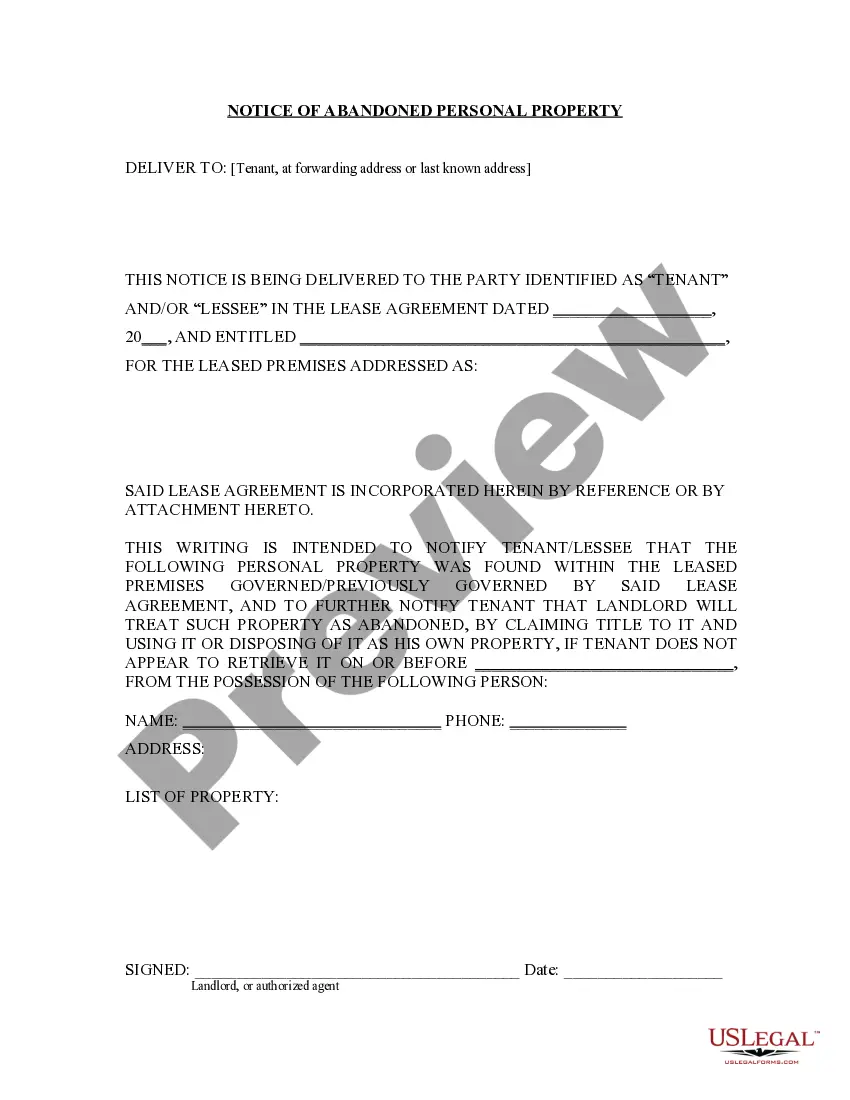
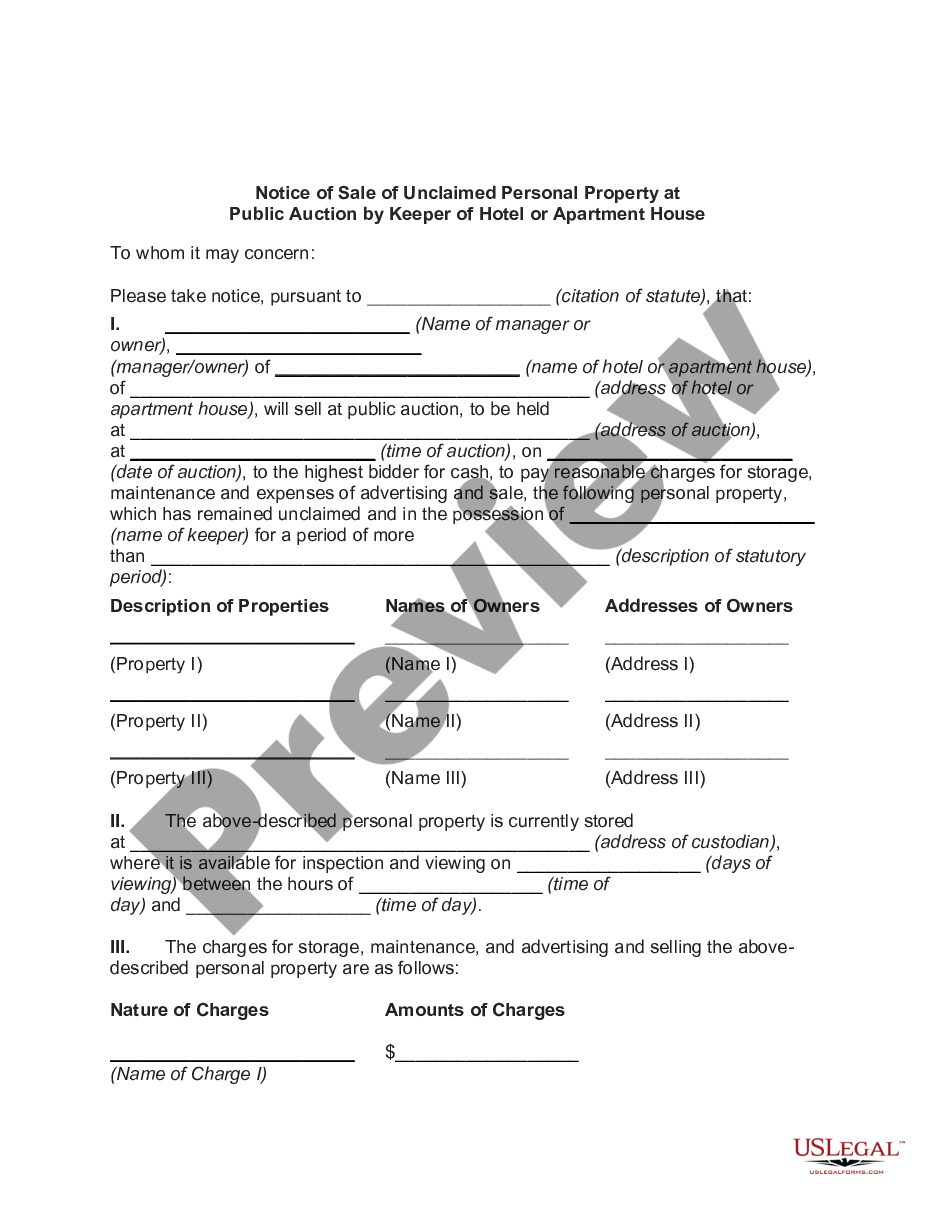
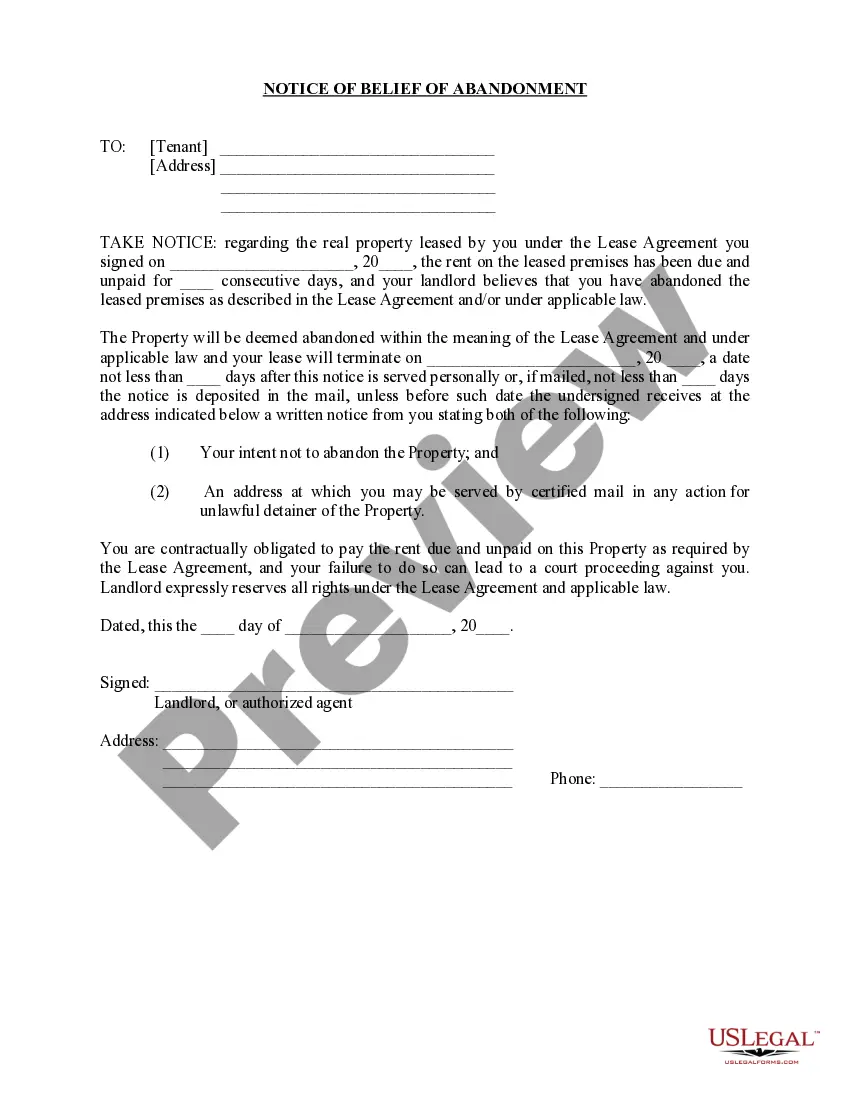
This Letter from Landlord to Tenant as Notice of Abandoned Personal Property is an official document that informs a tenant about personal belongings left in a rental property. It provides clear directions on how the tenant can retrieve their items or be notified that the landlord may dispose of said items. This form is essential in distinguishing between abandoned property and items still retained by a tenant, ensuring compliance with state laws regarding abandoned personal property.
Key parts of this document
- Identification of the tenant and landlord.
- Specification of the personal property found on the leased premises.
- Deadline for the tenant to retrieve their belongings.
- Consequences of failure to retrieve property, including potential confiscation.

When to use this document
This form is used when a tenant has left personal items in a rental property after moving out or abandoning the lease. It is applicable in situations where the landlord needs to formally notify the tenant that they will be claiming ownership of the left belongings if not retrieved by a specified date.
Who should use this form
- Landlords managing rental properties.
- Property management companies overseeing multiple leases.
- Tenants who need to reclaim their belongings left behind.
Completing this form step by step
- Identify the parties involved by entering the landlord's and tenant's names.
- Specify the personal property that was left behind in the leased premises.
- Clearly state the deadline by which the tenant must retrieve their items.
- Include any relevant details about the method of retrieval or disposal of the items.
Notarization requirements for this form
This form does not typically require notarization unless specified by local law. Always check your state's specific requirements regarding notarization for legal documents of this nature.
Get your form ready online
Our built-in tools help you complete, sign, share, and store your documents in one place.
Make edits, fill in missing information, and update formatting in US Legal Forms—just like you would in MS Word.
Download a copy, print it, send it by email, or mail it via USPS—whatever works best for your next step.
Sign and collect signatures with our SignNow integration. Send to multiple recipients, set reminders, and more. Go Premium to unlock E-Sign.
If this form requires notarization, complete it online through a secure video call—no need to meet a notary in person or wait for an appointment.
We protect your documents and personal data by following strict security and privacy standards.

Make edits, fill in missing information, and update formatting in US Legal Forms—just like you would in MS Word.

Download a copy, print it, send it by email, or mail it via USPS—whatever works best for your next step.

Sign and collect signatures with our SignNow integration. Send to multiple recipients, set reminders, and more. Go Premium to unlock E-Sign.

If this form requires notarization, complete it online through a secure video call—no need to meet a notary in person or wait for an appointment.

We protect your documents and personal data by following strict security and privacy standards.
Common mistakes to avoid
- Failing to specify a clear deadline for item retrieval.
- Not providing a detailed description of the abandoned property.
- Using vague language that may lead to misunderstandings about property ownership.
Benefits of using this form online
- Immediate access to a legally vetted document tailored to your situation.
- Ability to customize the form to meet specific needs.
- Convenience of downloading and using the form without the need for in-person visits.
Legal use & context
- This notice serves as a legal basis for landlords to claim abandoned property after a specified period.
- Abandoned property laws can vary by state, making proper notification essential to protect landlord rights.
- Failure to follow legal procedures regarding abandoned property may result in disputed claims or liabilities.
What to keep in mind
- The notice minimizes disputes over abandoned property rights.
- Timely notification helps both landlords and tenants manage property effectively.
- Understanding local laws ensures the effective enforcement of this notice.
Looking for another form?

Form popularity
FAQ
This form informs a tenant about personal belongings left on a rental property and provides clear steps to retrieve them. It helps distinguish abandoned property from items the tenant still retains, and it guides both landlord and tenant on disposal options while ensuring compliance with Illinois rules governing abandoned personal property.
Yes. This Illinois form serves as the formal notice that personal property left on the leased premises is considered abandoned if not retrieved by the specified deadline. It identifies the tenant and landlord, lists the property, and describes the consequences of failing to reclaim, including potential disposal or confiscation, in accordance with state guidelines.
Abandonment occurs when a tenant leaves personal items on the rental property after moving out or abandoning the lease. This form provides the documentation to document what's left, names the parties, describes the items, and sets a retrieval deadline, ensuring the landlord can proceed in line with Illinois abandoned property practices.
This document is used when a tenant has left belongings after moving out or abandoning the lease. It formalizes the notice, identifying the parties and property and setting a deadline for retrieval, with a warning that unclaimed items may be disposed of or claimed by the landlord if the deadline passes.
While this form is designed to help comply with Illinois approaches to abandoned personal property, it does not replace state statutes. It provides a structured notice, identifies the property, sets a retrieval deadline, and notes potential disposal if not retrieved. For specific Illinois rules, consult a licensed attorney.
This form is tailored to Illinois law and the landlord-tenant context, explicitly listing the landlord and tenant, describing the property, and setting a retrieval deadline with potential confiscation language. It emphasizes the distinction between abandoned items and belongings still in tenant possession, aligning with Illinois requirements.