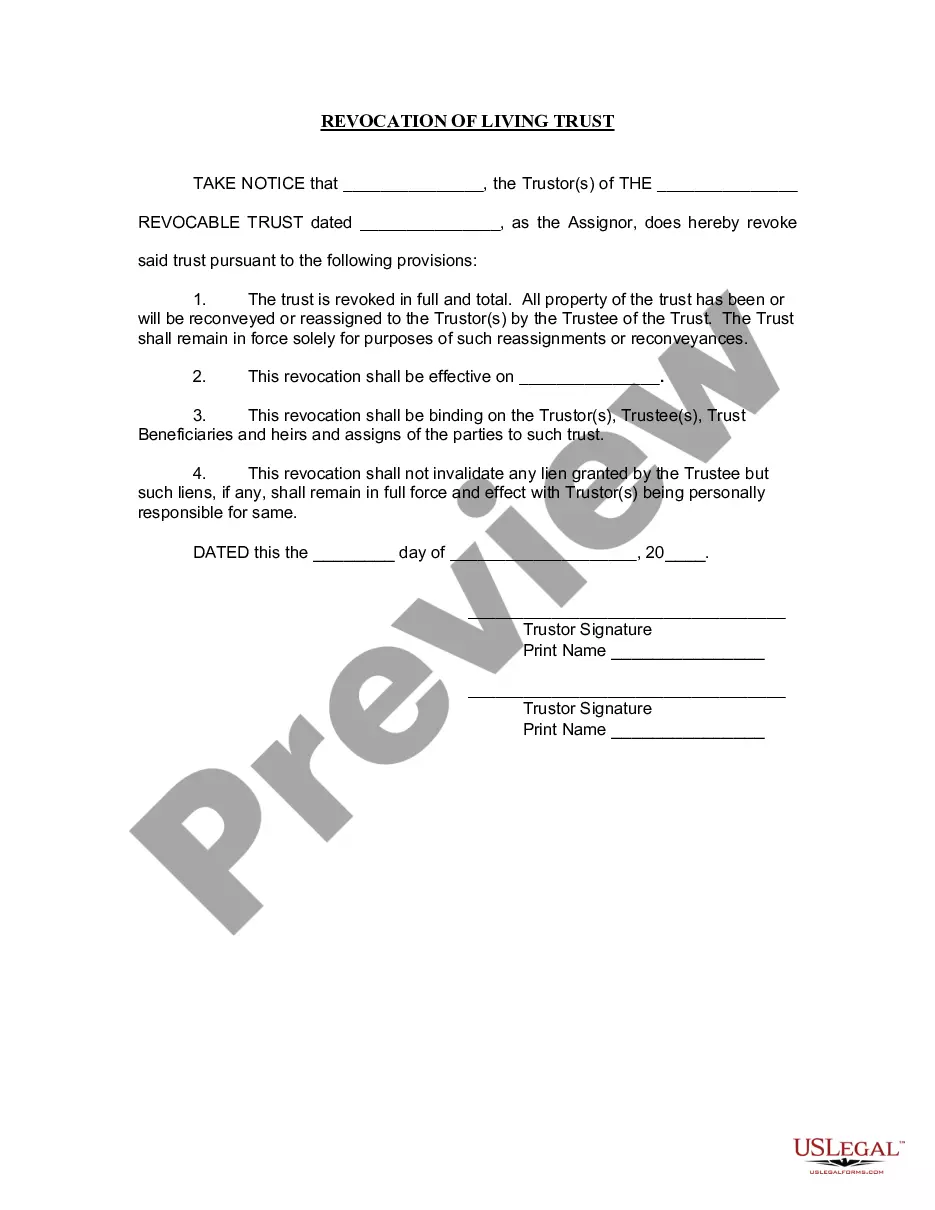
Illinois Letter from Tenant to Landlord about Fair Housing Reduction or Denial of services to Family with Children
What is this form?
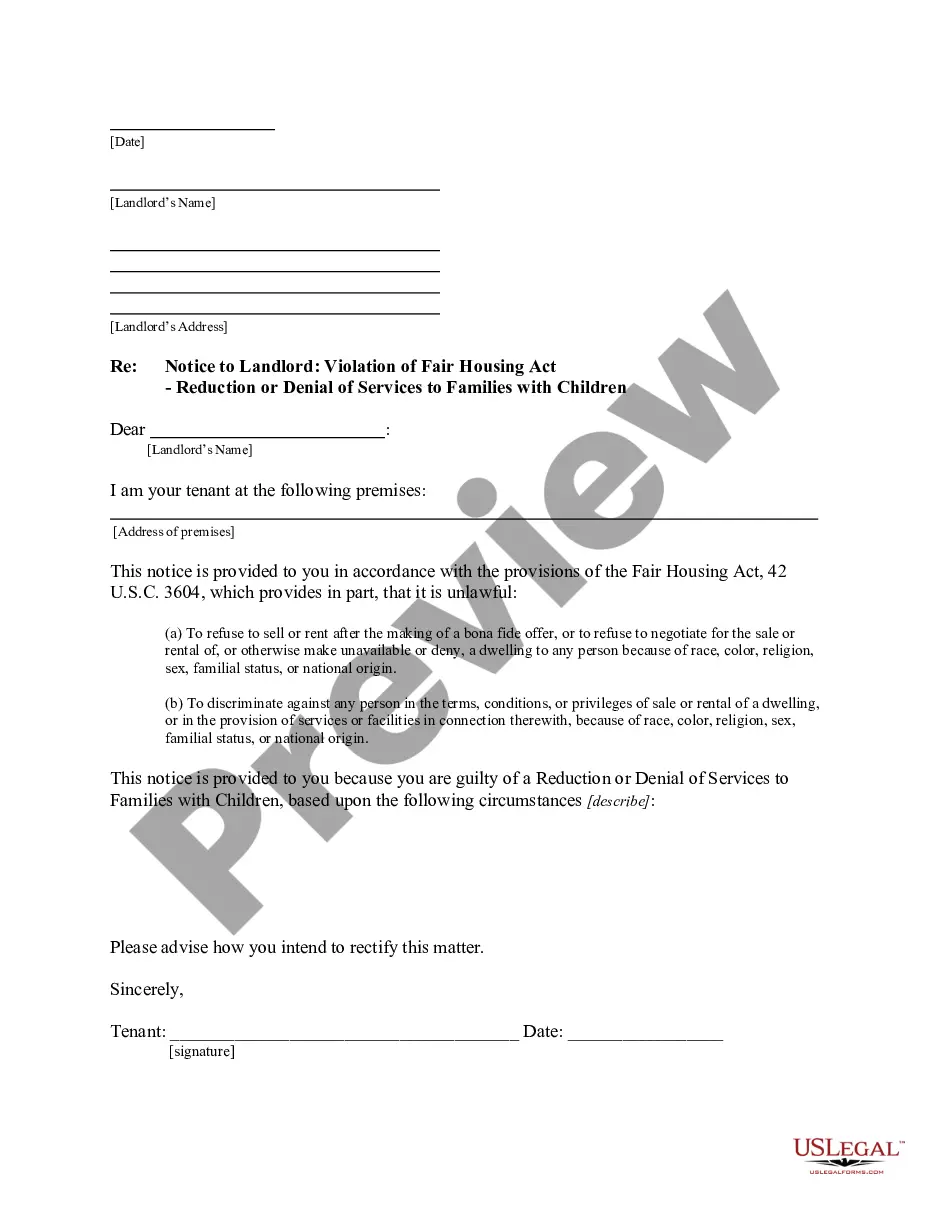
This form, titled "Letter from Tenant to Landlord about Fair Housing Reduction or Denial of Services to Family with Children," is designed to help tenants formally notify their landlords of violations related to the Fair Housing Act. It specifically addresses situations where landlords may be denying or reducing services to families with children, which is considered discriminatory under federal law. This letter serves as a key tool for tenants to assert their rights and seek compliance from landlords regarding fair housing practices.
Main sections of this form
- Identification of the tenant and landlord involved in the dispute.
- A clear statement of the alleged violation against the Fair Housing Act.
- Specific circumstances that led to the claim of reduction or denial of services.
- A request for the landlord to address the violation and ensure compliance with fair housing laws.

Situations where this form applies
This form should be used when a tenant believes their landlord is violating the Fair Housing Act by reducing or denying services based on familial status. Examples include being denied access to amenities such as playgrounds, pools, or other family-friendly services, or facing unfair treatment because of having children. Utilizing this letter as an official notice can help initiate conversations towards resolution and compliance.
Intended users of this form
- Tenants who believe their landlord is discriminating against them based on having children.
- Individuals seeking to formally document their concerns about housing discrimination.
- Families with children who are experiencing unfair treatment in rental housing situations.
Completing this form step by step
- Identify the parties: Clearly state your name and address as the tenant and the landlord's name and address.
- Outline the violation: Describe the specific actions taken by the landlord that constitute a reduction or denial of services.
- Cite the Fair Housing Act: Reference the relevant sections of the Fair Housing Act that are applicable to your situation.
- Request compliance: Clearly specify what actions you want the landlord to take to resolve the issue.
- Sign and date the letter: Ensure to sign the letter and include the date before sending it to the landlord.
Notarization guidance
This form does not typically require notarization unless specified by local law. However, it is essential to ensure that all necessary elements are addressed to strengthen your position.
Get your form ready online
Our built-in tools help you complete, sign, share, and store your documents in one place.
Make edits, fill in missing information, and update formatting in US Legal Forms—just like you would in MS Word.
Download a copy, print it, send it by email, or mail it via USPS—whatever works best for your next step.
Sign and collect signatures with our SignNow integration. Send to multiple recipients, set reminders, and more. Go Premium to unlock E-Sign.
If this form requires notarization, complete it online through a secure video call—no need to meet a notary in person or wait for an appointment.
We protect your documents and personal data by following strict security and privacy standards.

Make edits, fill in missing information, and update formatting in US Legal Forms—just like you would in MS Word.

Download a copy, print it, send it by email, or mail it via USPS—whatever works best for your next step.

Sign and collect signatures with our SignNow integration. Send to multiple recipients, set reminders, and more. Go Premium to unlock E-Sign.

If this form requires notarization, complete it online through a secure video call—no need to meet a notary in person or wait for an appointment.

We protect your documents and personal data by following strict security and privacy standards.
Common mistakes
- Failing to clearly identify the specific services that have been reduced or denied.
- Not referencing the Fair Housing Act or the relevant legal protections adequately.
- Forgetting to include your contact information for follow-up communications.
Why complete this form online
- Convenience of completing the form from your home at any time.
- Easy to edit and personalize to reflect your specific situation.
- Reliable templates drafted by licensed attorneys to enhance legal accuracy.
Legal use & context
- This letter is a formal notification of violations of the Fair Housing Act.
- It may serve as evidence in legal disputes if further action is necessary.
- Landlords are required by law to respond to such communications adequately.
Looking for another form?


Form popularity
FAQ
Some landlords may hesitate to accept Section 8 due to misconceptions about tenants or concerns regarding the inspection process. They might also worry about the time it takes to complete paperwork or receive payments. It's essential for tenants to communicate effectively, perhaps using an Illinois Letter from Tenant to Landlord about Fair Housing Reduction or Denial of services to Family with Children, to clarify these misunderstandings.
Family status includes individuals or families with children under the age of 18, pregnant women, and those involved in child custody proceedings. This status is protected under fair housing laws to prevent discriminatory practices in housing. For families experiencing barriers because of their family status, an Illinois Letter from Tenant to Landlord about Fair Housing Reduction or Denial of services to Family with Children serves as a formal way to address and resolve issues with landlords.
Steering refers to the practice of guiding prospective tenants or buyers towards certain neighborhoods based on their personal characteristics, such as familial status. This practice is discriminatory and is illegal under the Fair Housing Act, as it limits housing choices and reinforces segregation. If you suspect you or someone you know is experiencing steering due to family status, an Illinois Letter from Tenant to Landlord about Fair Housing Reduction or Denial of services to Family with Children can help articulate your concerns to the landlord.
For a first-time violation of the Fair Housing Act, the maximum penalty can reach up to $19,787 as of the latest revisions. This penalty serves as a deterrent to landlords who might unlawfully deny services to families with children. Tenants can use resources like an Illinois Letter from Tenant to Landlord about Fair Housing Reduction or Denial of services to Family with Children to assert their rights and seek justice.
Race, color, religion, sex, handicap, familial status, national origin. Although some interest groups have tried to lobby to include sexual orientation and marital status, these aren't protected classes under the federal law, but are sometimes protected by certain local state fair housing laws.
Which would be exempt under the Federal Fair Housing Acts of 1968? An individual selling a personal residence who does not use a broker or discriminatory advertising:Some groups are not covered by the Federal Fair Housing protected classes. These are age, marital status, and occupation.
It's fair to be angry and scaredthe direct federal fines for violations of the Fair Housing Act are usually $17,000 per violation; total settlements on race, familial status, age and sex discrimination cases often reach well into the six figuresbut those overwhelming emotions are why you should go straight to your
HUD Settles Disability Discrimination Fair Housing Act Case For $80,000.
Under the FHA, familial status discrimination occurs when a landlord, property manager, real estate agent, or property owner treats someone differently because they have a family with one or more individuals who are under 18 years of age.
While tenants cannot unreasonably deny access to a landlord, landlords must also follow all of the state and local rules regarding access to tenants' apartments. Roughly half of states have rules governing landlord entry into tenants' apartments.