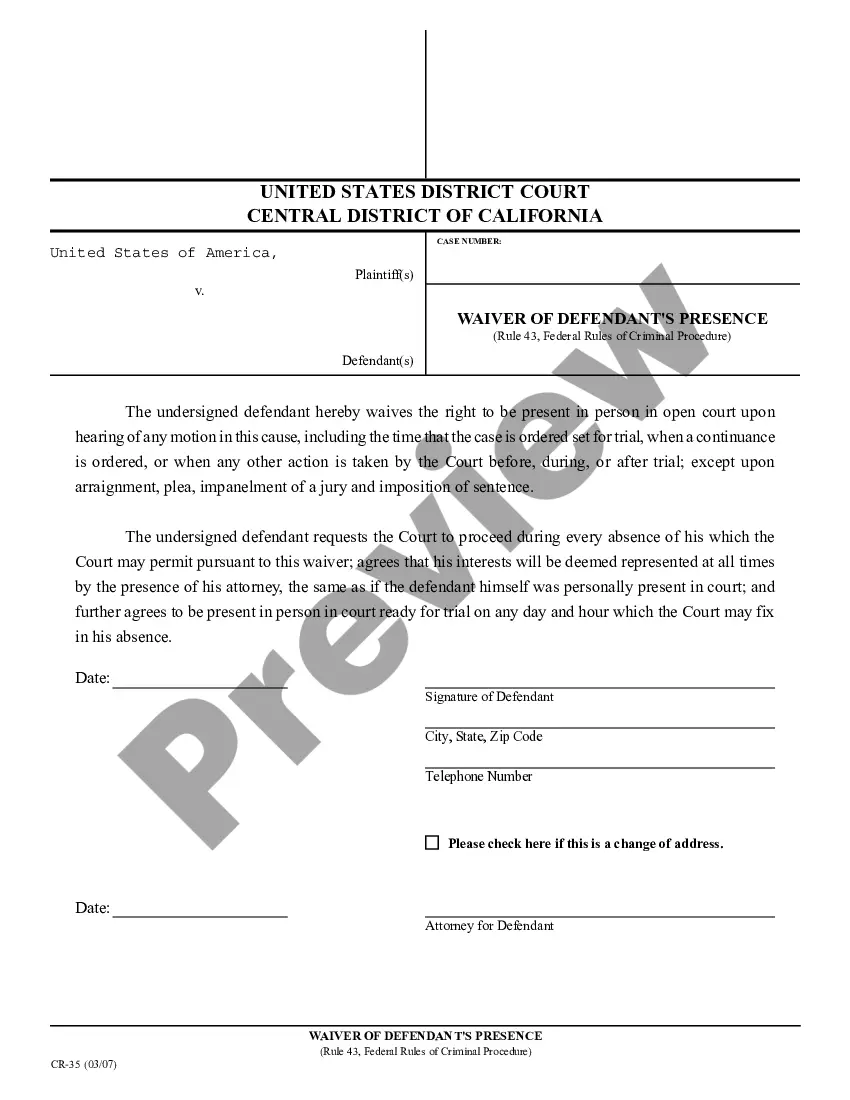
Illinois Warranty Deed from two Individuals to Husband and Wife
Overview of this form
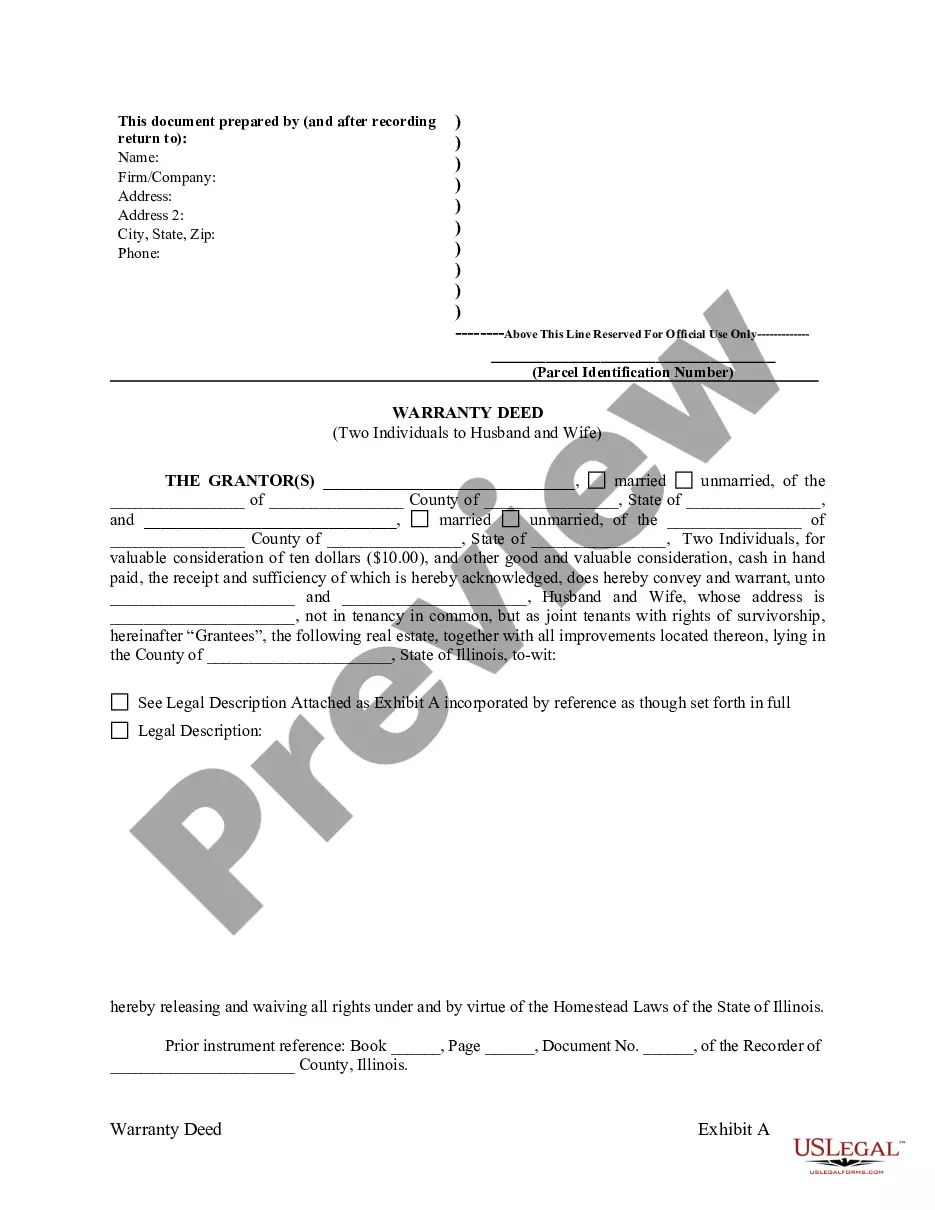
The Warranty Deed from two Individuals to Husband and Wife is a legal document used to transfer property ownership from two individuals (Grantors) to a married couple (Grantees). This form ensures that the Grantors convey their interest in the property while reserving rights to any oil, gas, or minerals beneath it. This differs from other forms of a warranty deed that may involve single individuals or different types of grantees, making it specific for property transactions between couples where the Grantors are not spouses.
Key components of this form
- Identification of Grantors and Grantees
- Detailed legal description of the property
- Clause regarding the reservation of oil, gas, and minerals
- Warranties of property title and rights
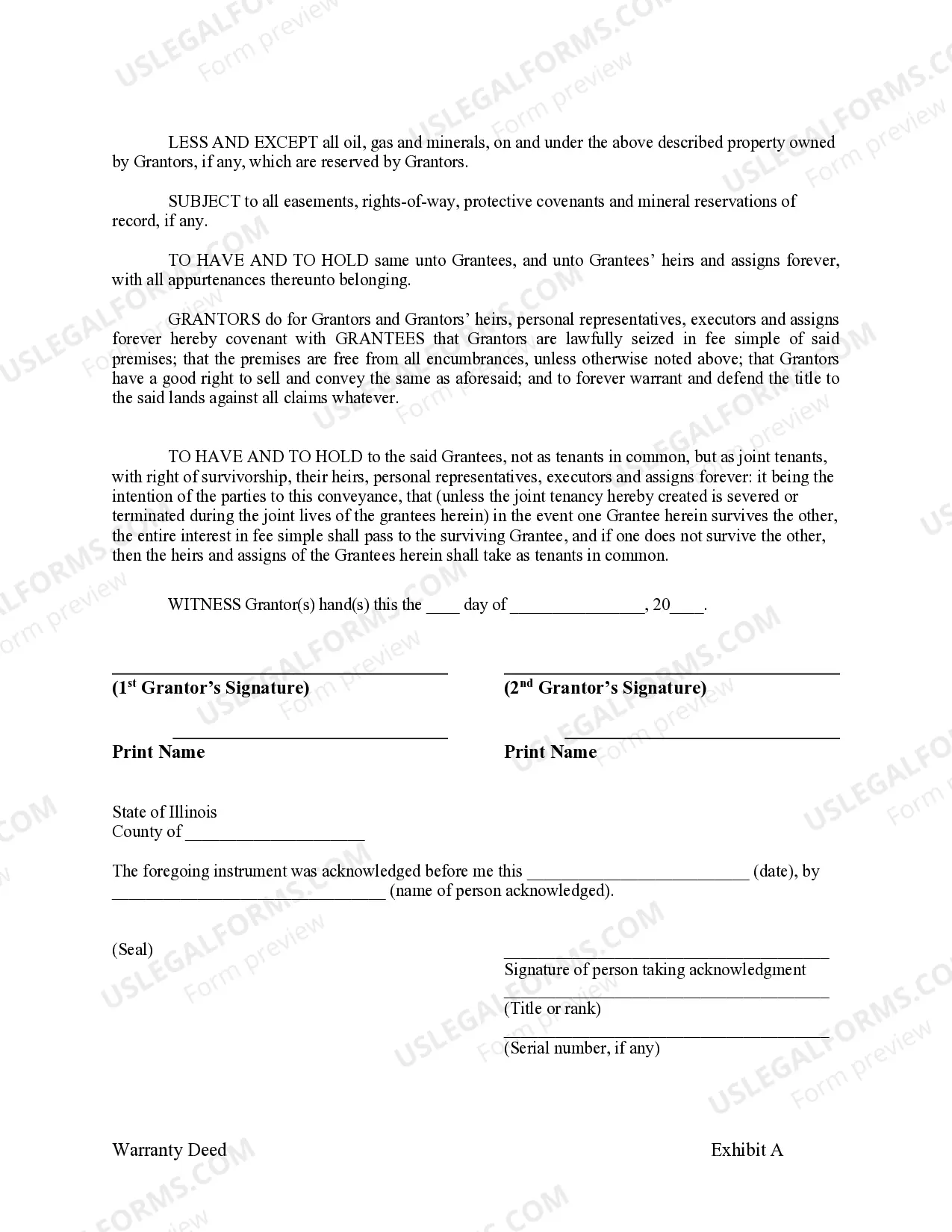
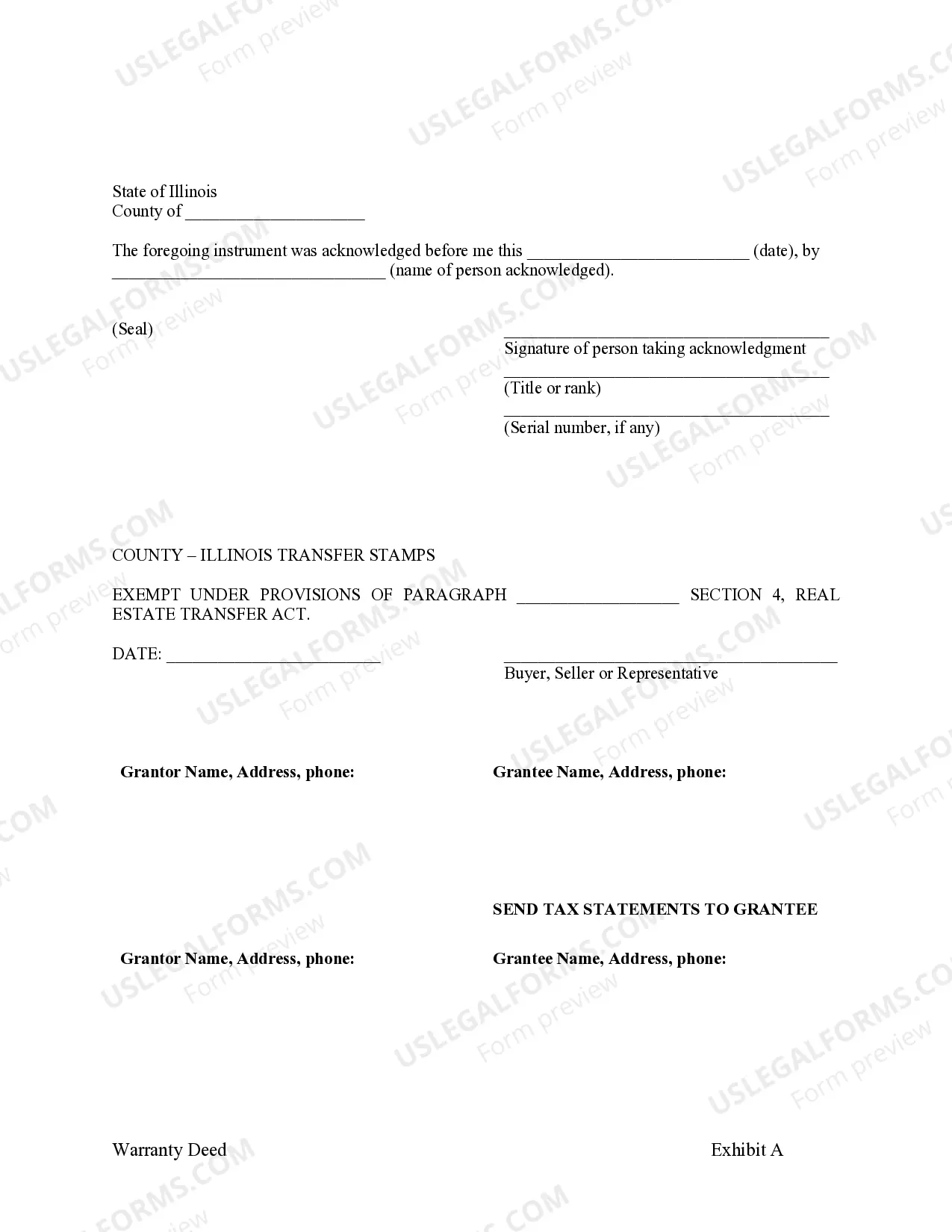
- Notary acknowledgment section






When to use this form
This form is essential when two individuals wish to transfer property ownership to a husband and wife. It is particularly useful in situations where the Grantors are selling or gifting their property, and they want to ensure that title is conveyed clearly and securely to the married couple. This form also serves in documenting any mineral rights reservations, which helps protect the Grantors in future transactions.
Who this form is for
- Individuals looking to transfer property to a married couple
- Estate planners managing family property transfers
- Legal representatives assisting clients with property transactions
- Couples acquiring property as joint tenants or tenants by the entirety
Steps to complete this form
- Identify the full names and addresses of the Grantors and Grantees.
- Provide the legal description of the property being transferred.
- Insert any reservations for oil, gas, and mineral rights as applicable.
- Have all Grantors sign the document in front of a notary public.
- Ensure the notary public completes the acknowledgment section.
Does this document require notarization?
This document requires notarization to meet legal standards. US Legal Forms provides secure online notarization powered by Notarize, allowing you to complete the process through a verified video call, available 24/7.
Get your form ready online
Our built-in tools help you complete, sign, share, and store your documents in one place.
Make edits, fill in missing information, and update formatting in US Legal Forms—just like you would in MS Word.
Download a copy, print it, send it by email, or mail it via USPS—whatever works best for your next step.
Sign and collect signatures with our SignNow integration. Send to multiple recipients, set reminders, and more. Go Premium to unlock E-Sign.
If this form requires notarization, complete it online through a secure video call—no need to meet a notary in person or wait for an appointment.
We protect your documents and personal data by following strict security and privacy standards.

Make edits, fill in missing information, and update formatting in US Legal Forms—just like you would in MS Word.

Download a copy, print it, send it by email, or mail it via USPS—whatever works best for your next step.

Sign and collect signatures with our SignNow integration. Send to multiple recipients, set reminders, and more. Go Premium to unlock E-Sign.

If this form requires notarization, complete it online through a secure video call—no need to meet a notary in person or wait for an appointment.

We protect your documents and personal data by following strict security and privacy standards.
Typical mistakes to avoid
- Not detailing the legal description of the property accurately.
- Failing to include required signatures or notarization.
- Omitting any reservations that may affect the title.
- Confusing the terms of ownership between the Grantors and Grantees.
Benefits of completing this form online
- Convenience of downloading and filling out the form from anywhere.
- Editability allows customization based on specific needs.
- Reliability with forms drafted by licensed attorneys to ensure legal compliance.
Main things to remember
- This Warranty Deed facilitates the transfer of property from two individuals to a married couple.
- It includes specific clauses regarding mineral rights and title warranties.
- Proper completion and notarization are essential for legal enforceability.
Looking for another form?


Form popularity
FAQ
When it comes to reasons why you shouldn't add your new spouse to the Deed, the answer is simple divorce and equitable distribution. If you choose not to put your spouse on the Deed and the two of you divorce, the entire value of the home is not subject to equitable distribution.
The simplest way to add a spouse to a deed is through a quitclaim deed. This type of deed transfers whatever ownership rights you have so that you and your spouse now become joint owners. No title search or complex transaction is necessary. The deed will list you as the grantor and you and your spouse as grantees.
One of the most common ways property owners add spouses to real estate titles is by using quitclaim deeds. Once completed and filed, quitclaim deed forms effectually transfer a share of ownership from the owners, or grantors, to their spouses, or the grantees.
What Is the Difference Between a Warranty Deed & a Survivorship Deed?A warranty deed is the most comprehensive and provides the most guarantees. Survivorship isn't so much a deed as a title. It's a way to co-own property where, upon the death of one owner, ownership automatically passes to the survivor.
The easiest way to grant your spouse title to your home is via a quitclaim deed (Californians generally use an interspousal grant deed). With a quitclaim deed, you can name your spouse as the property's joint owner. The quitclaim deed must include the property's description, including its boundary lines.
Each party has a full ownership interest in the property. The property will pass instantly to the survivor upon the death of the other without probate. Conveyance by one party without the other breaks the joint tenancy. Seller warrants that he/she has good title and will warrant and defend title.
The dangers of joint tenancy include the following: Danger #1: Only delays probate. When either joint tenant dies, the survivor usually a spouse or child immediately becomes the owner of the entire property. But when the survivor dies, the property still must go through probate.
If you live in a common-law state, you can keep your spouse's name off the title the document that says who owns the property.You can put your spouse on the title without putting them on the mortgage; this would mean that they share ownership of the home but aren't legally responsible for making mortgage payments.
Yes you can. This is called a transfer of equity but you will need the permission of your lender. If you are not married or in a civil partnership you may wish to consider creating a deed of trust and a living together agreement which we can explain to you.