Illinois Subcontractor's 60 day Notice to Owner - Owner Occupied Residence - Mechanic Liens - Individual
What is this form?
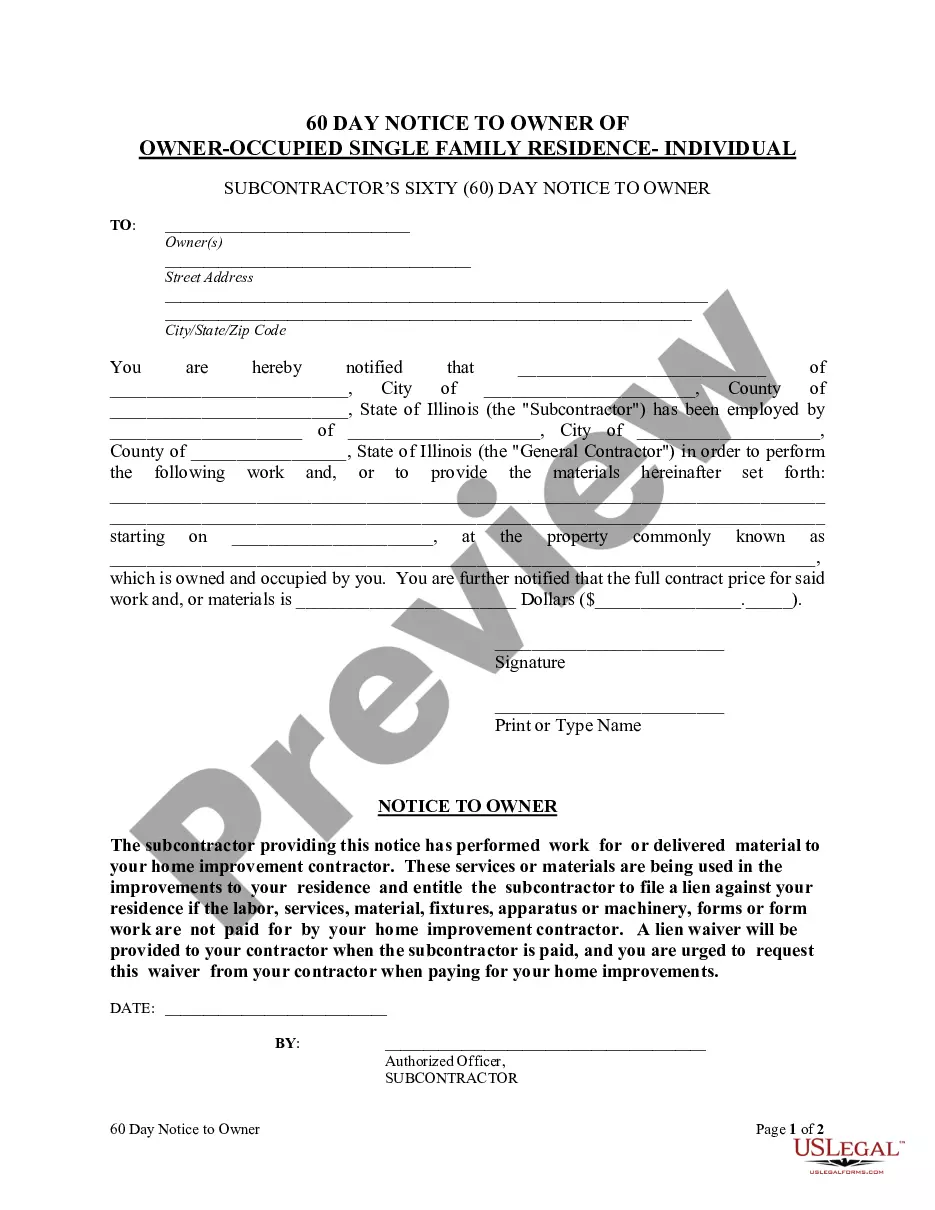
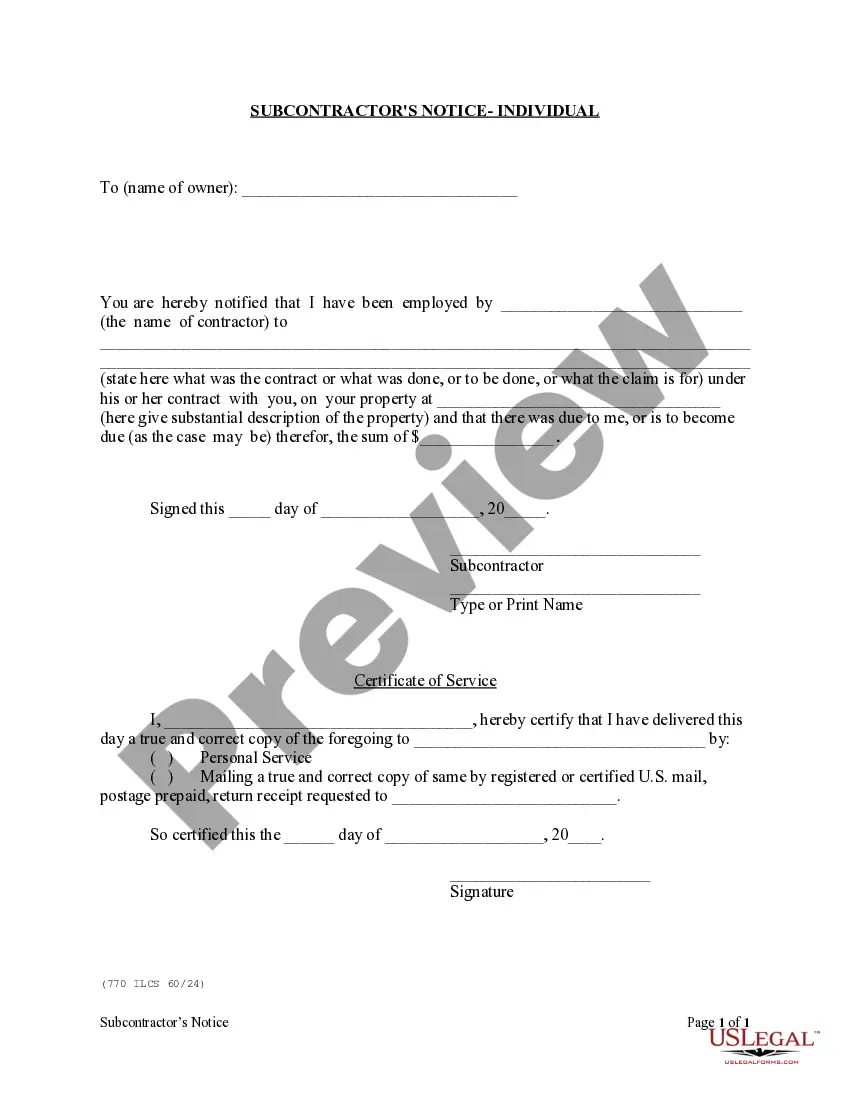
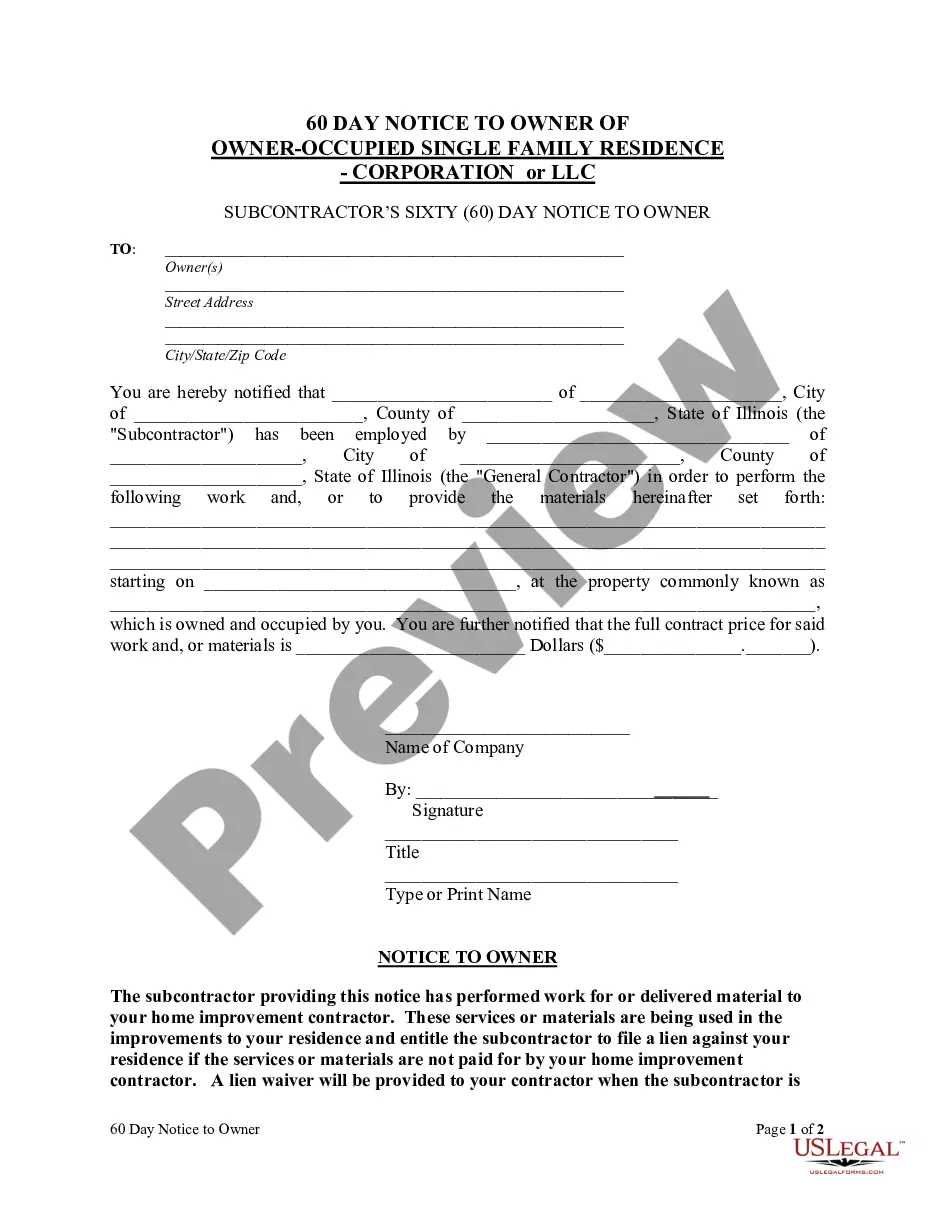
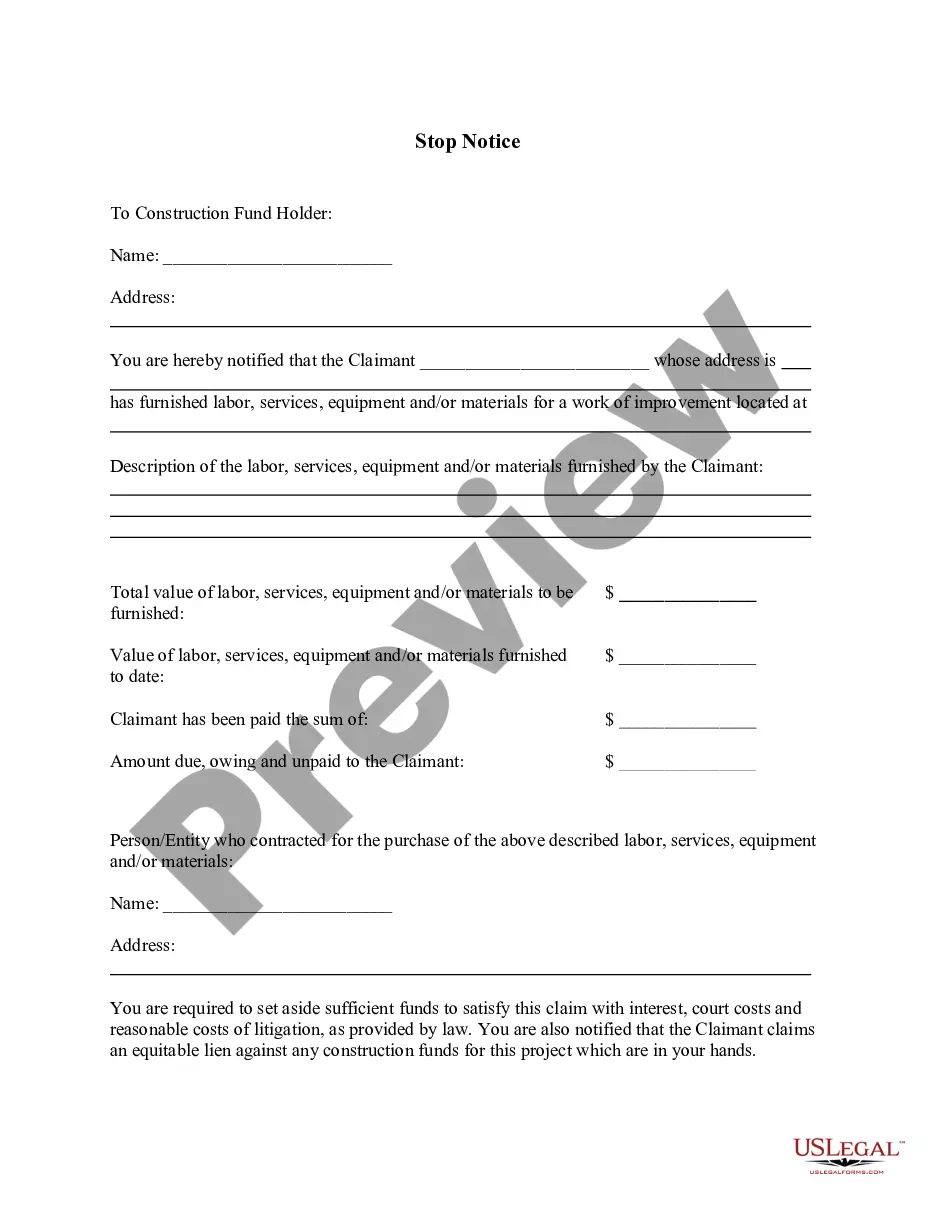
The Subcontractor's 60 Day Notice to Owner is a legal document that alerts the owner of a residential property when an individual subcontractor has provided labor or materials for home improvements. It serves to inform the homeowner of the subcontractor's work and establishes their right to file a mechanic's lien if payment is not made. This form is specifically tailored for owner-occupied residences and differs from general lien notices by addressing individual subcontractors working on homes directly occupied by the owners.
Key parts of this document
- Identification of the owner(s) and property address.
- Details of the subcontractor, including name and location.
- Name and details of the general contractor who hired the subcontractor.
- Description of the work or materials provided.
- Contract price and payment details.
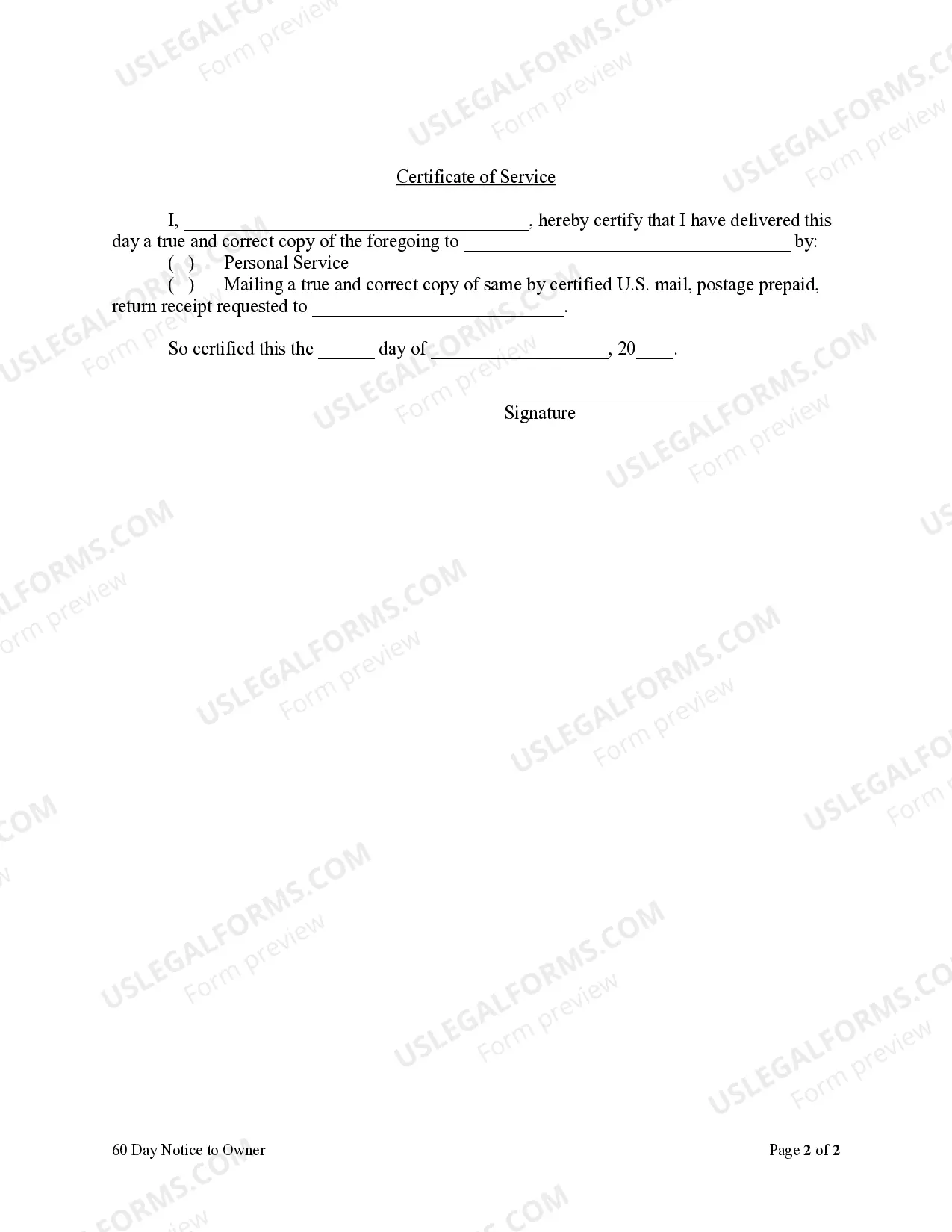
- Certification of service delivery to the owner.
Situations where this form applies
This form should be used when an individual subcontractor has completed work or delivered materials for home improvements at an owner-occupied residence in Illinois. It is essential when the subcontractor wants to establish their rights to payment and inform the homeowner of potential liens if the general contractor fails to pay for the services rendered. This notice ensures that the owner is aware of their financial obligations concerning the home improvement project.
Who this form is for
- Individual subcontractors who have provided services or materials for a home improvement project.
- Homeowners of owner-occupied residences who need to understand their obligations under mechanic lien law.
- General contractors managing subcontractors for residential projects.
Instructions for completing this form
- Identify the owner(s) of the property and provide their full name and address.
- Specify the subcontractor's name and address along with their employed status.
- Enter the name of the general contractor and their details for clarity.
- Clearly describe the work performed or materials supplied and the contract price.
- Sign and date the form, certifying that it has been delivered to the owner.
Is notarization required?
This form does not typically require notarization unless specified by local law. However, always check with local regulations to confirm requirements related to the delivery and recognition of the notice.
Get your form ready online
Our built-in tools help you complete, sign, share, and store your documents in one place.
Make edits, fill in missing information, and update formatting in US Legal Forms—just like you would in MS Word.
Download a copy, print it, send it by email, or mail it via USPS—whatever works best for your next step.
Sign and collect signatures with our SignNow integration. Send to multiple recipients, set reminders, and more. Go Premium to unlock E-Sign.
If this form requires notarization, complete it online through a secure video call—no need to meet a notary in person or wait for an appointment.
We protect your documents and personal data by following strict security and privacy standards.

Make edits, fill in missing information, and update formatting in US Legal Forms—just like you would in MS Word.

Download a copy, print it, send it by email, or mail it via USPS—whatever works best for your next step.

Sign and collect signatures with our SignNow integration. Send to multiple recipients, set reminders, and more. Go Premium to unlock E-Sign.

If this form requires notarization, complete it online through a secure video call—no need to meet a notary in person or wait for an appointment.

We protect your documents and personal data by following strict security and privacy standards.
Avoid these common issues
- Failing to provide accurate and complete information about the parties involved.
- Not delivering the notice in accordance with state requirements.
- Omitting details regarding the work performed or materials supplied.
- Neglecting to keep a copy of the notice for personal records.
Benefits of completing this form online
- Convenience of downloading and filling out the form anytime.
- Access to reliable, attorney-drafted templates that comply with Illinois law.
- Ability to easily edit and customize the form to fit specific situations.
- Secure storage of electronic documents for future reference.
Summary of main points
- The Subcontractor's 60 Day Notice to Owner is essential for protecting subcontractor rights in residential projects.
- It ensures that homeowners are aware of their obligations regarding payments for home improvements.
- Using this form can help avoid potential mechanic's liens and legal disputes.
Looking for another form?
Form popularity
FAQ
How long does a judgment lien last in Illinois? A judgment lien in Illinois will remain attached to the debtor's property (even if the property changes hands) for seven years.
Negotiate with the contractor who placed the lien (the "lienor" to remove it. Obtain a lien bond to discharge the lien, or. File a lawsuit to vacate the lien.
Mechanic's lien. Which of the following liens does not need to be recorded to be valid? A statutory lien is created by statute. A real estate tax lien, then, is an involuntary, statutory lien.
In order to enforce a lien, the contractor, subcontractor or supplier must file a lawsuit. The deadline to file a lawsuit is two years from the last date work was performed or materials were supplied. A recorded lien is valid for these two years, but a failure to sue within that time frame voids the lien.
The deadline for contractors and subcontractors to file their statement of mechanic's lien is four months (not 120 days) from the last date of work (exclusive of warranty work or other work performed free of charge), or from the last date that materials were supplied to the project.
The deadline for contractors and subcontractors to file their statement of mechanic's lien is four months (not 120 days) from the last date of work (exclusive of warranty work or other work performed free of charge), or from the last date that materials were supplied to the project.
Formalize a defense for disputing the amount of the lien. Gather supporting documentation for your rebuttal, depending on the type of lien. Contact the agent representing the creditor to dispute the amount of the claim. Negotiate a payment settlement with the creditor if you cannot pay the amount you owe in full.
The process of bonding off a mechanics lien starts after a claimant has filed a mechanics lien. After the claim is made, a general contractor or a property owner can contact a surety bond company to purchase a surety bond that replaces the value of the lien that was filed against the property.