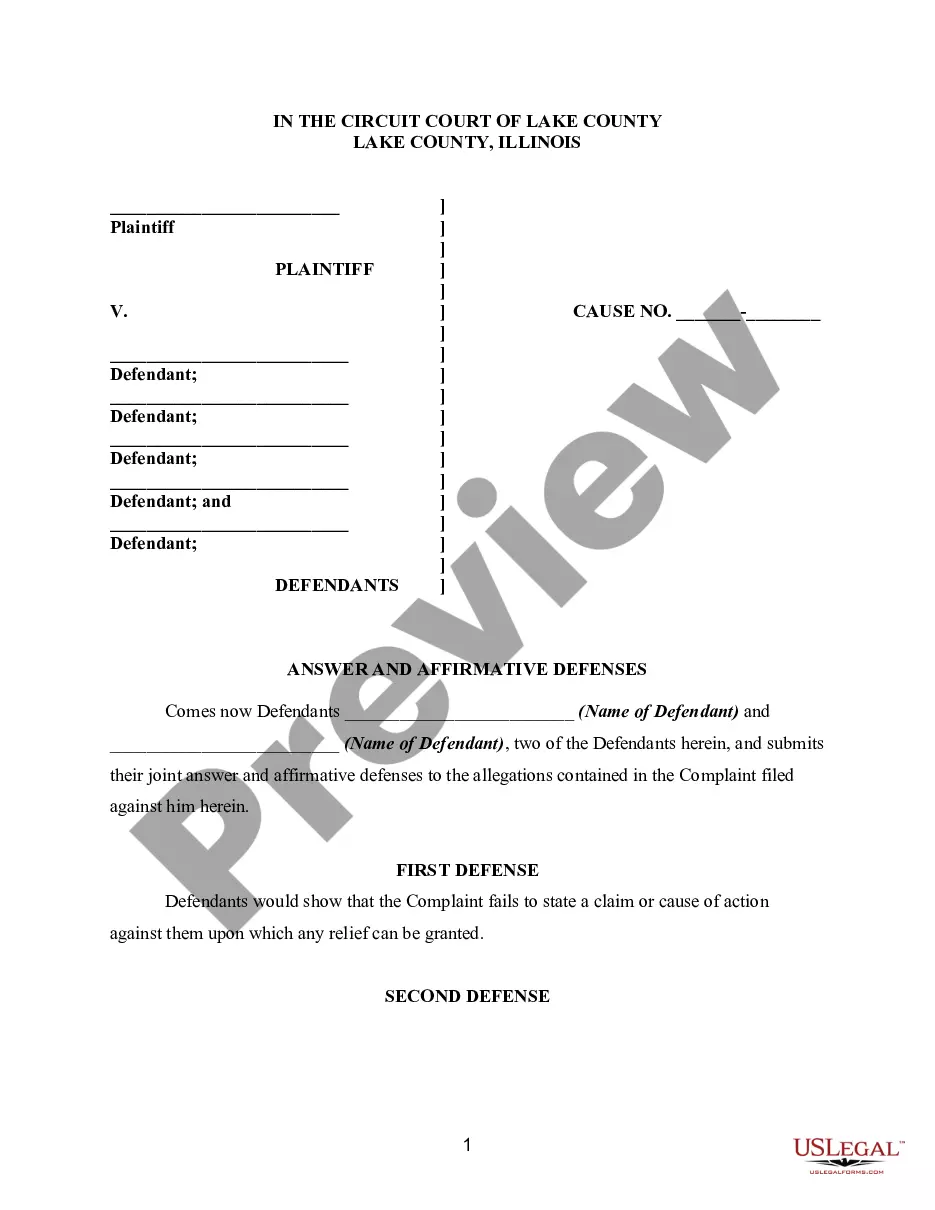
Illinois Answer to Complaint for Judicial Foreclosure
Overview of this form
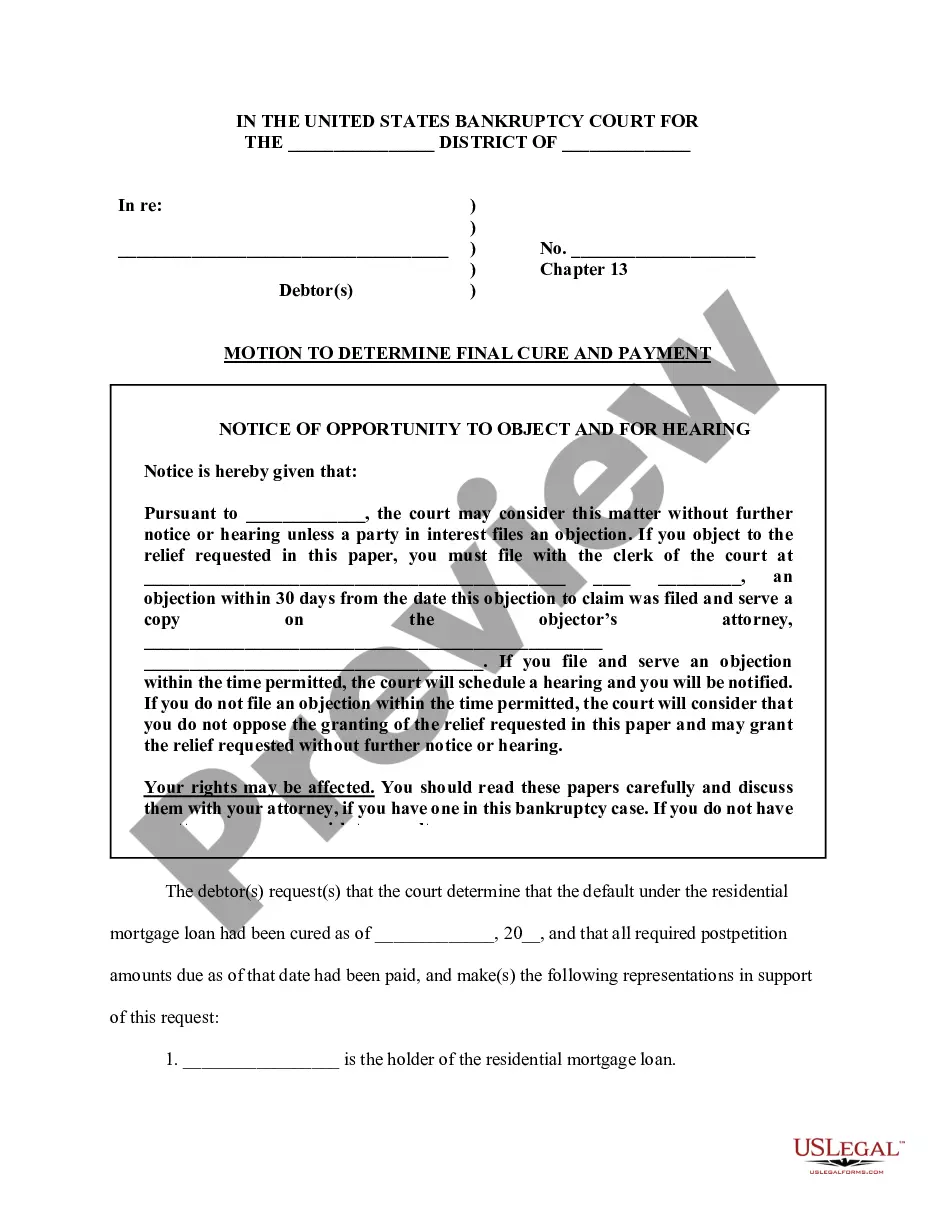
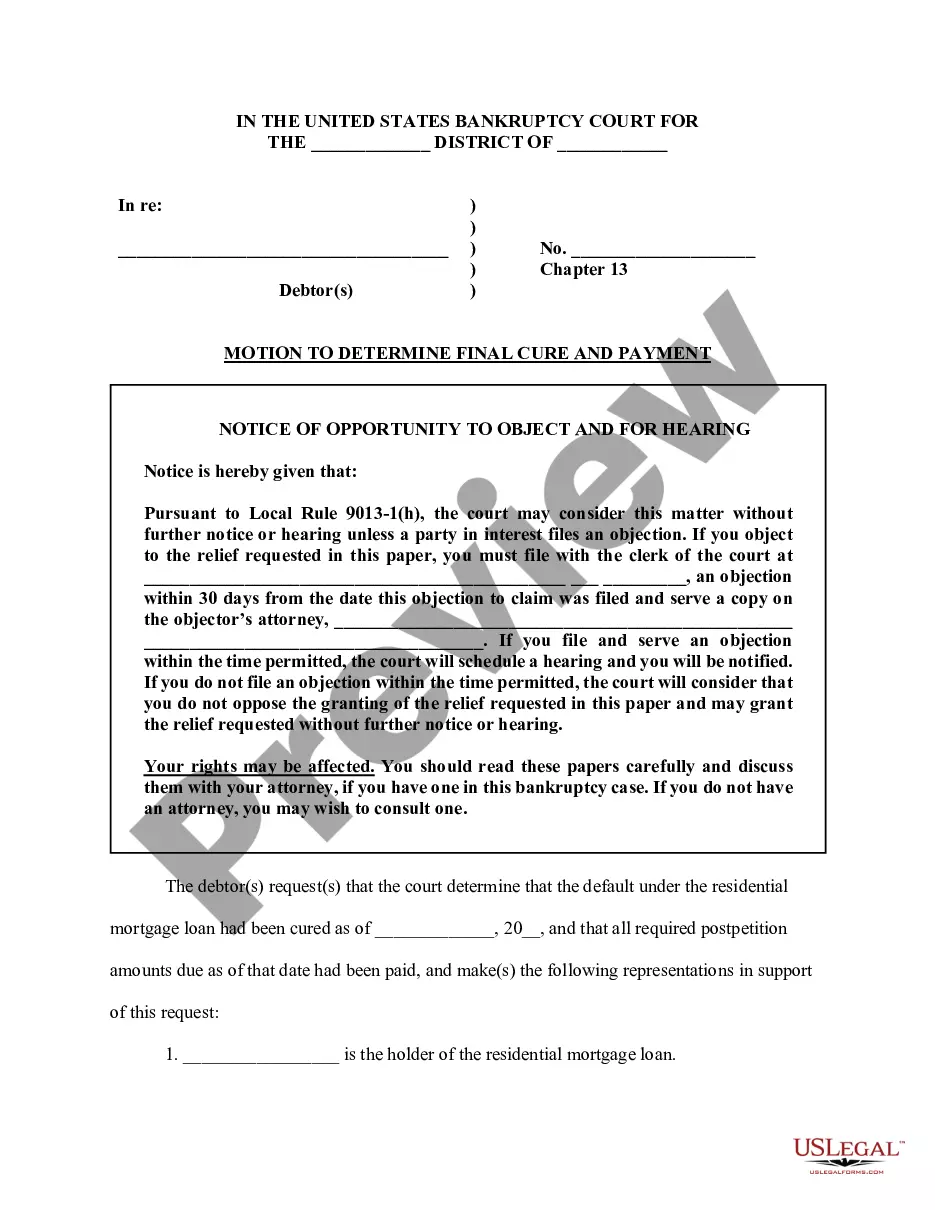
The Answer to Complaint for Judicial Foreclosure is a legal document used by defendants in a judicial foreclosure proceeding to respond to allegations made by the plaintiff. Unlike non-judicial foreclosures that do not require court involvement, judicial foreclosures are pursued through the court system, often because the mortgage lacks a power of sale clause. This form allows defendants to present their defenses and counterarguments to the claims made against them.
Form components explained
- Defendants' names and contact information.
- Identification of the plaintiff and the court case details.
- Defendants' joint answer to the complaint.
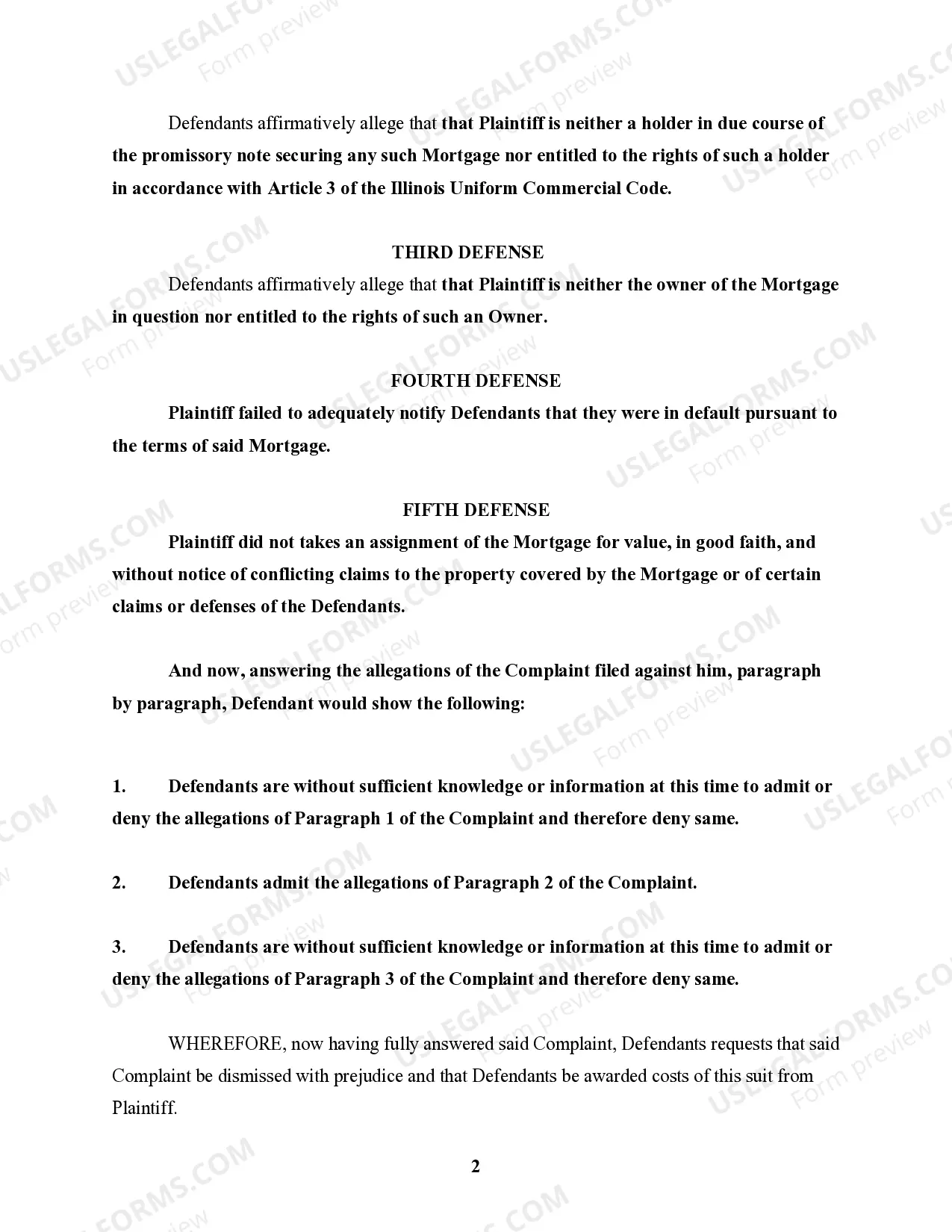
- Affirmative defenses that challenge the plaintiff's claims.
- Requests for dismissal of the complaint and reimbursement of legal costs.
- Signature and contact information of defendants' legal counsel.


Common use cases
This form should be used when a defendant receives a complaint for judicial foreclosure regarding their property. It is essential in situations where the lender has initiated a legal action to foreclose on the property after claiming that the borrower has defaulted on their mortgage obligations. By filing this answer, defendants assert their defenses and clarify their position within the legal proceedings.
Who should use this form
- Defendants named in a complaint for judicial foreclosure.
- Homeowners facing foreclosure and seeking to contest the claims.
- Borrowers without sufficient knowledge of legal proceedings seeking representation.
- Individuals who prefer to respond to foreclosure actions in a formal legal setting.
Steps to complete this form
- Clearly identify the names of all defendants involved in the complaint.
- Include the courtâs name and case number at the top of the form.
- Draft the answer section, addressing each allegation made in the complaint.
- List affirmative defenses to contest the plaintiff's claims effectively.
- Have the defendants and their attorney sign and date the form.
- Send a copy of the completed form to the plaintiff's attorneys to certify service.
Does this form need to be notarized?
This form does not typically require notarization unless specified by local law.
Get your form ready online
Our built-in tools help you complete, sign, share, and store your documents in one place.
Make edits, fill in missing information, and update formatting in US Legal Forms—just like you would in MS Word.
Download a copy, print it, send it by email, or mail it via USPS—whatever works best for your next step.
Sign and collect signatures with our SignNow integration. Send to multiple recipients, set reminders, and more. Go Premium to unlock E-Sign.
If this form requires notarization, complete it online through a secure video call—no need to meet a notary in person or wait for an appointment.
We protect your documents and personal data by following strict security and privacy standards.

Make edits, fill in missing information, and update formatting in US Legal Forms—just like you would in MS Word.

Download a copy, print it, send it by email, or mail it via USPS—whatever works best for your next step.

Sign and collect signatures with our SignNow integration. Send to multiple recipients, set reminders, and more. Go Premium to unlock E-Sign.

If this form requires notarization, complete it online through a secure video call—no need to meet a notary in person or wait for an appointment.

We protect your documents and personal data by following strict security and privacy standards.
Avoid these common issues
- Failing to respond to the complaint within the specified time frame.
- Not addressing each allegation listed in the complaint.
- Neglecting to assert all possible defenses.
- Omitting signatures of all defendants or the attorney.
- Not filing the response with the court as required.
Benefits of using this form online
- Immediate access to a professionally drafted legal template.
- Ease of customization to fit individual circumstances.
- Time-saving by eliminating the need to consult multiple legal resources.
- Convenient downloading and printing options.
- Reliable source crafted by licensed attorneys ensuring legal compliance.
Looking for another form?







Form popularity
FAQ
To contest a judicial foreclosure, you have to file a written answer to the complaint (the lawsuit). You'll need to present your defenses and explain the reasons why the lender shouldn't be able to foreclose. You might need to defend yourself against a motion for summary judgment and at trial.
In situations where a foreclosure has already occurred, the California Supreme Court held that a borrower has standing to sue for wrongful foreclosure based on an allegedly void assignment of his or her mortgage.
Foreclosure proceedings begin with a complaint filed by the lender. The borrower is served a copy of the complaint and a summons, along with a notice of his or her rights during foreclosure. In most cases, the borrower has 30 days to file a response. Failure to respond will result in a default judgment for the lender.
A lender can rescind a foreclosure sale if a borrower requests to reinstate the loan agreements and then makes payment to bring the loan balance current, provided this is done more than five days before the scheduled sale date.
To get the deficiency judgment, the bank has to file an application with the court within three months of the foreclosure sale. The judge will then hold a fair value hearing to determine the property's value.
If the court grants summary judgment in favor of the bank, typically after a hearing, the bank wins the case, and your home will be sold at a foreclosure sale.order the foreclosure sale, or. dismiss the case, usually without prejudice. (Without prejudice means the bank can refile the foreclosure.)
Negotiate With Your Lender. If you are having financial difficulties, the worst thing that you can do is bury your head in the sand. Request a Forbearance. Modify Your Loan. Make a Claim. Get a Housing Counselor. Declare Bankruptcy. Use A Foreclosure Defense Strategy. Make Them Produce The Not.
Proving Wrongful Foreclosure If you wish to sue the bank for wrongful foreclosure, you must prove the following: The lender owed you, the borrower, a legal duty. The lender breached that duty. The breach of duty caused your injury or loss (damages)