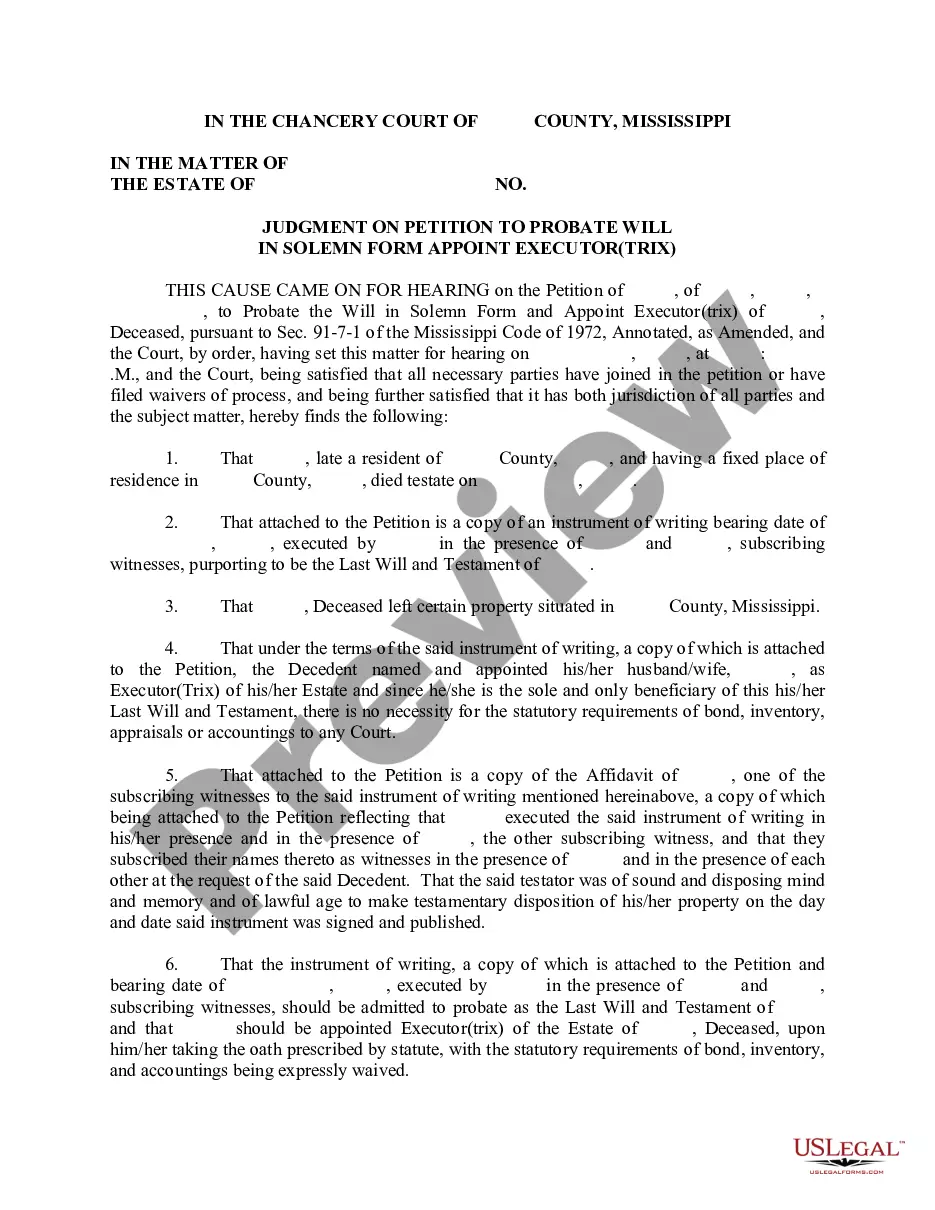
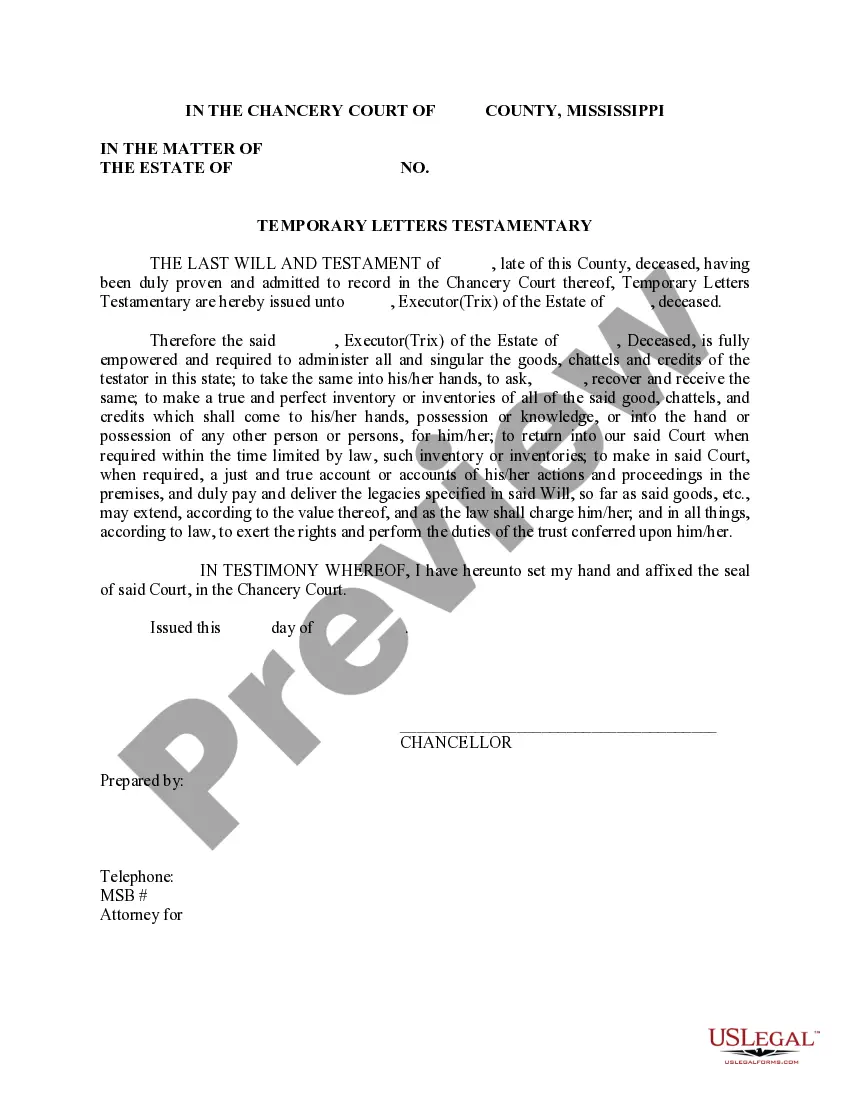
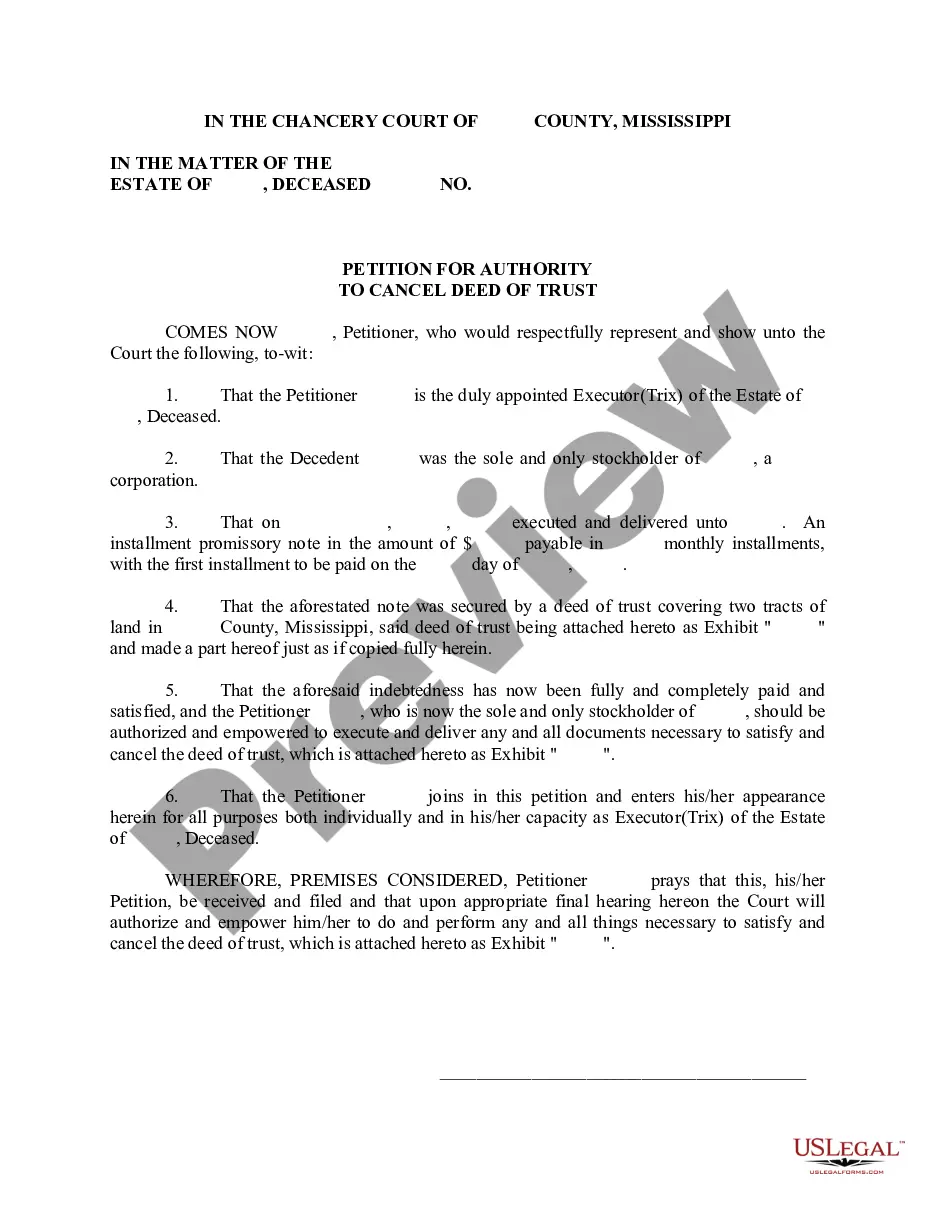
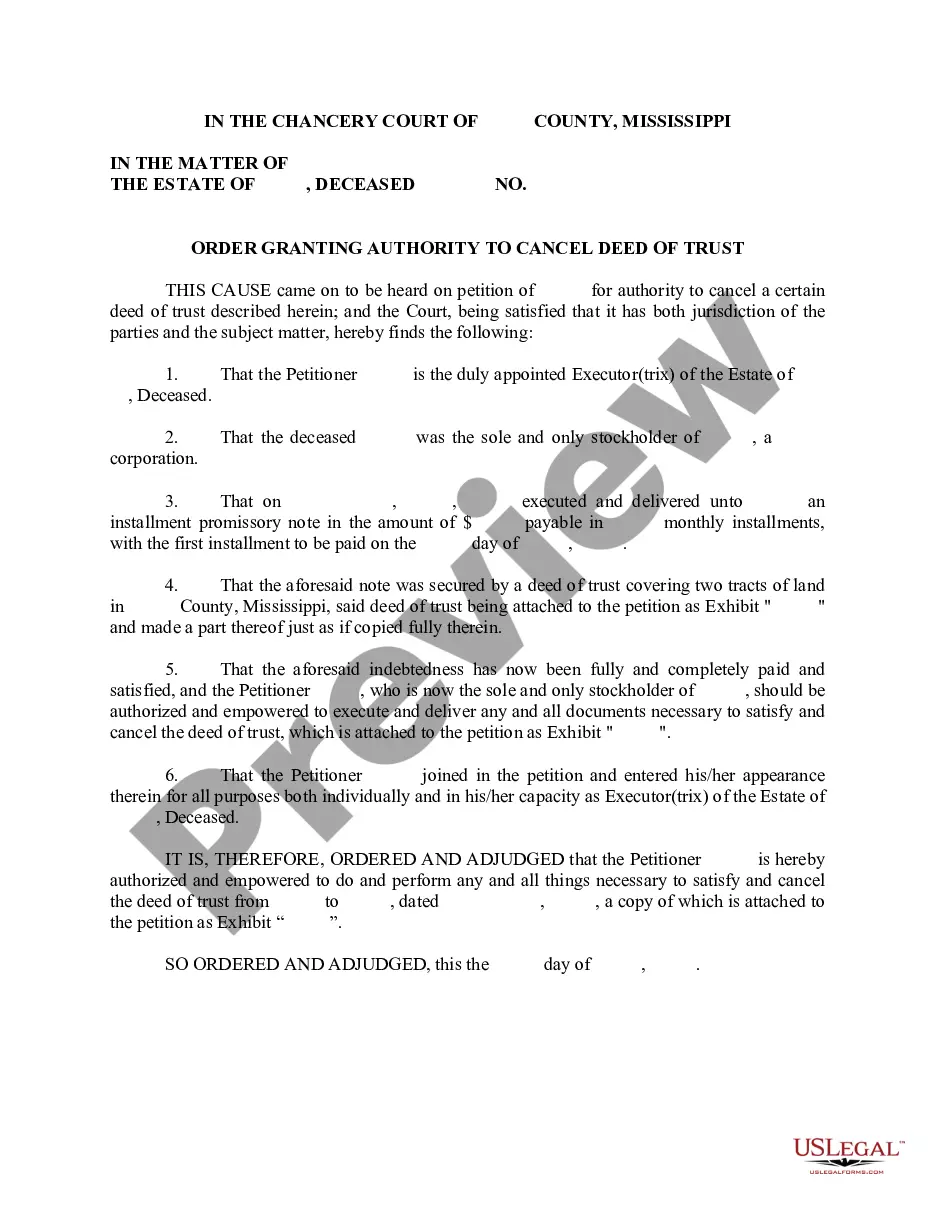
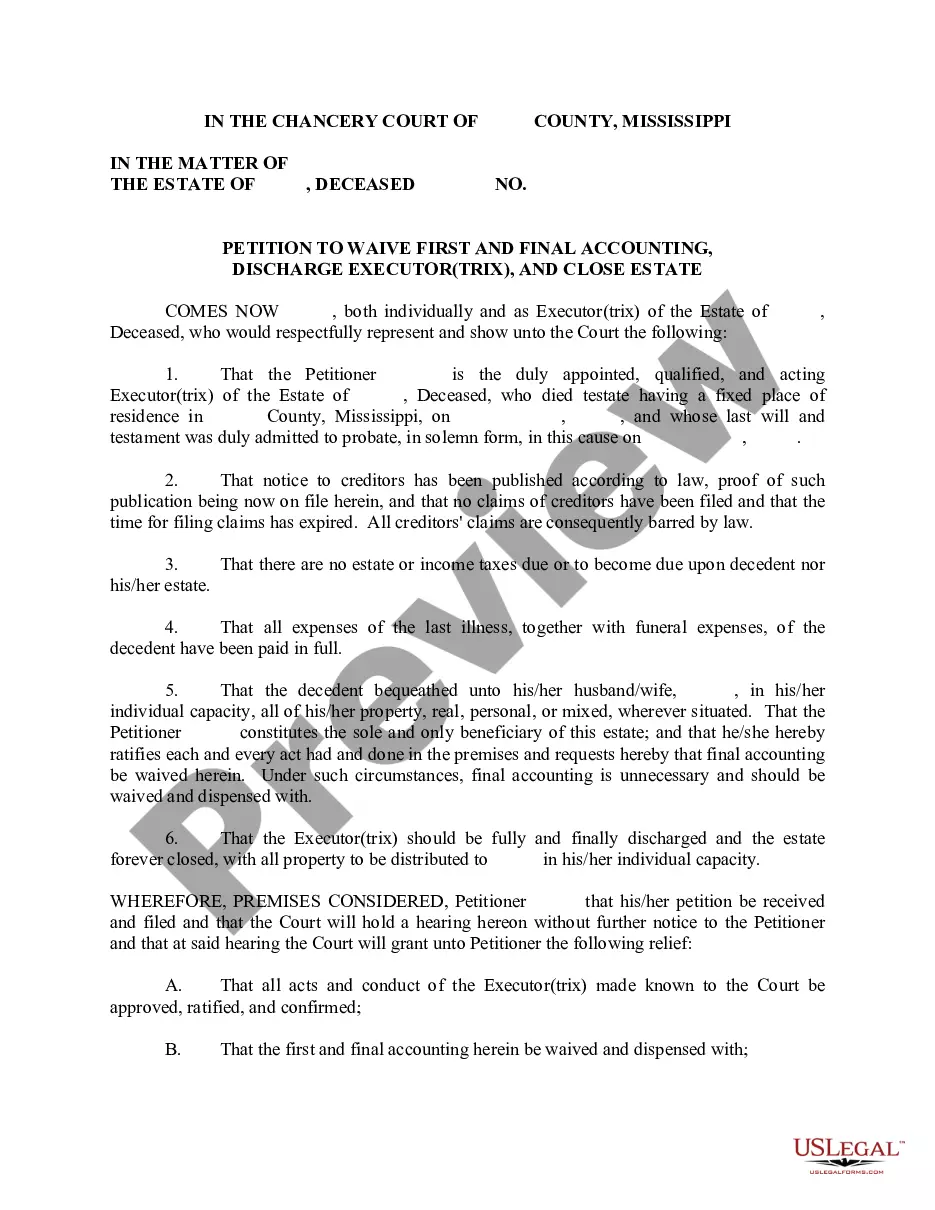
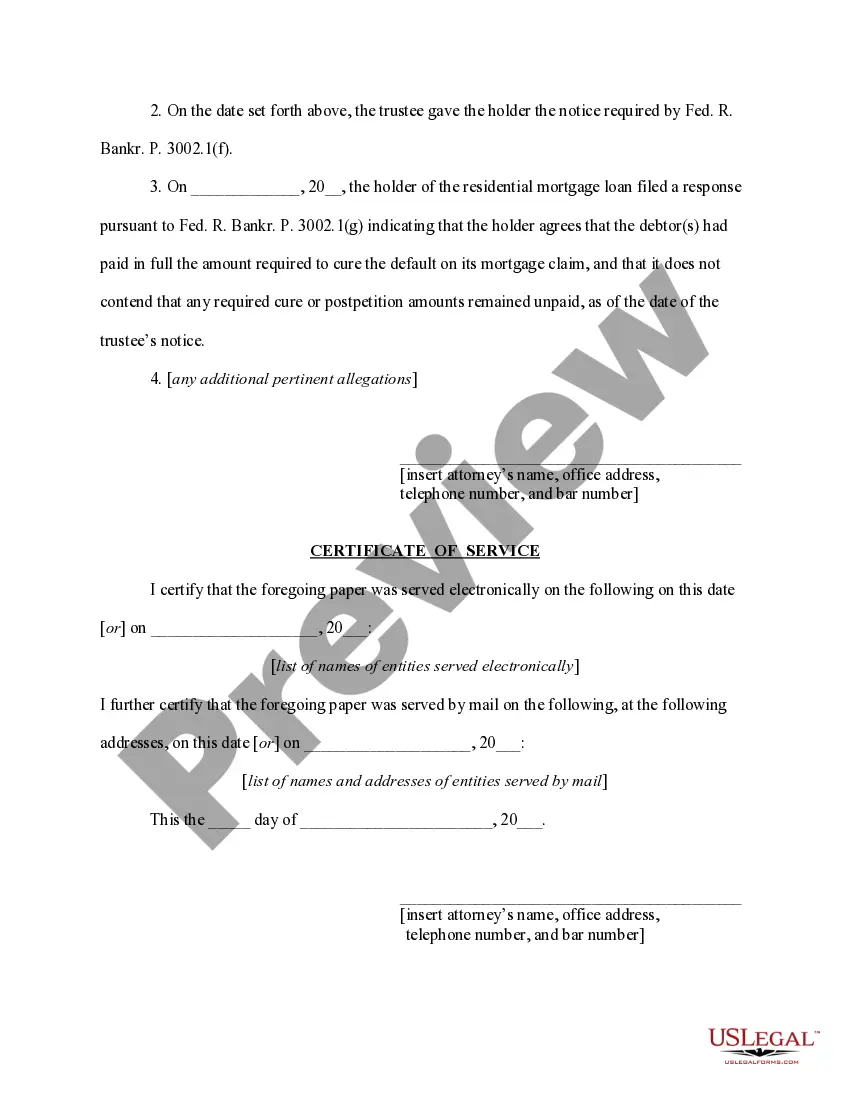
Motion to determine final cure and payment (mortgagee filed to respond to trustee's notice)
What is this form?
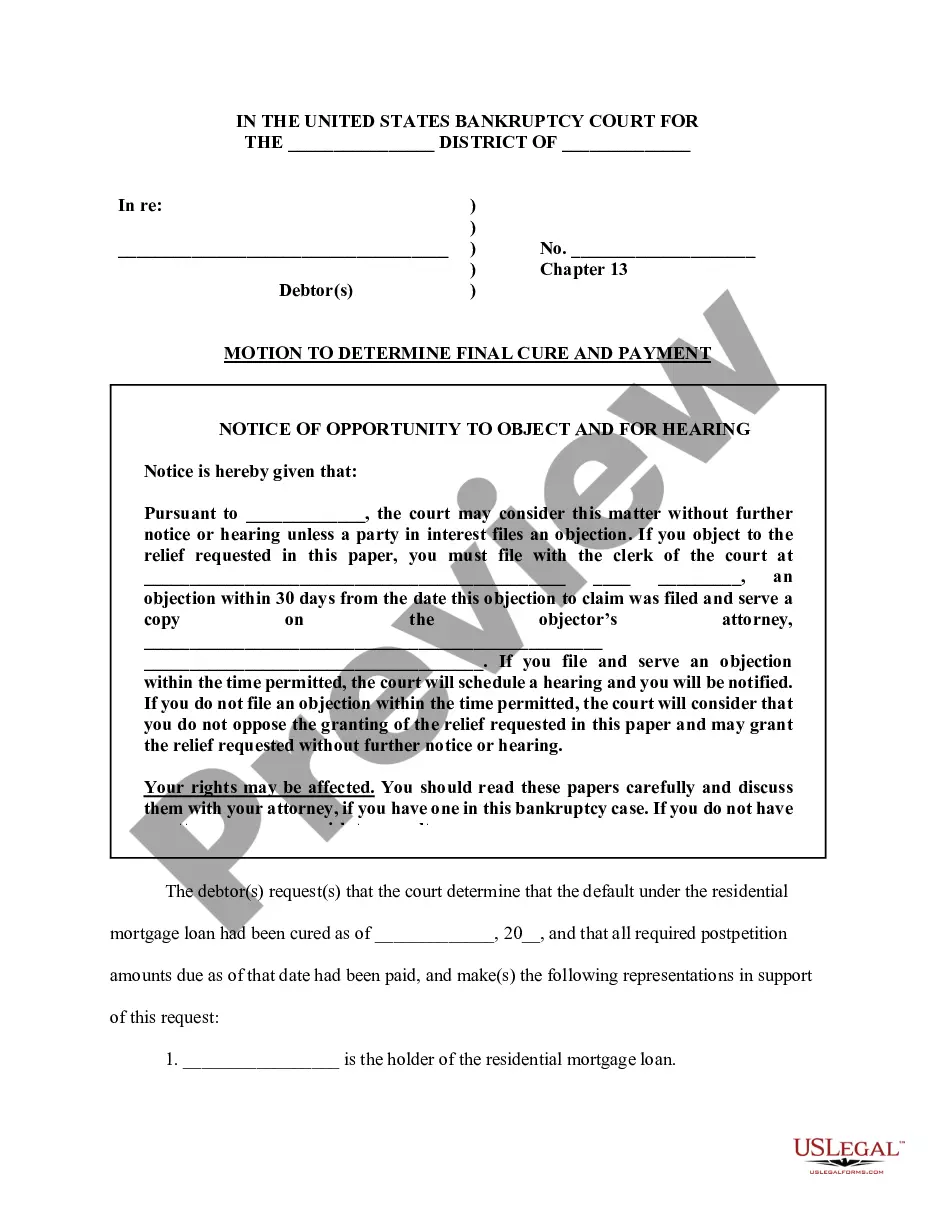
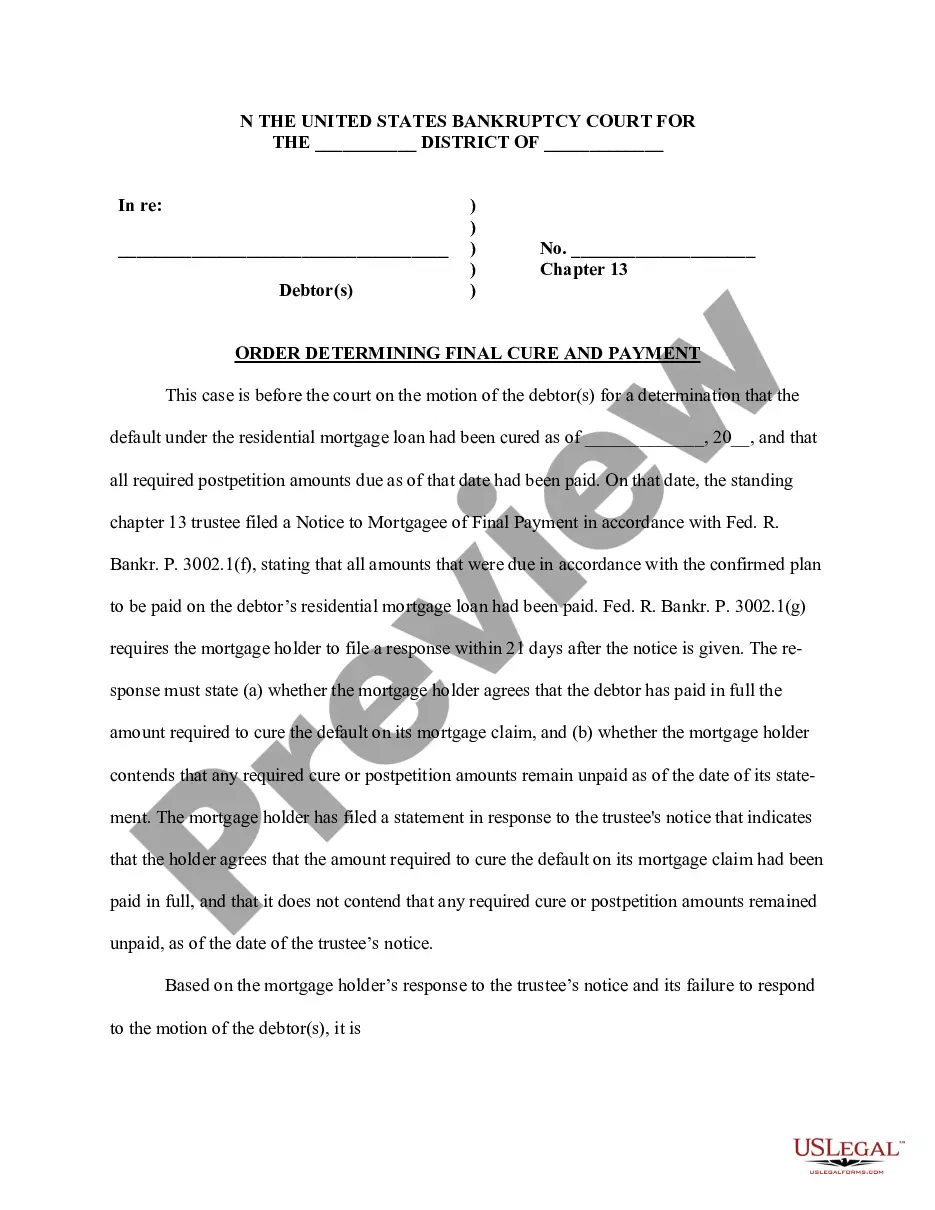
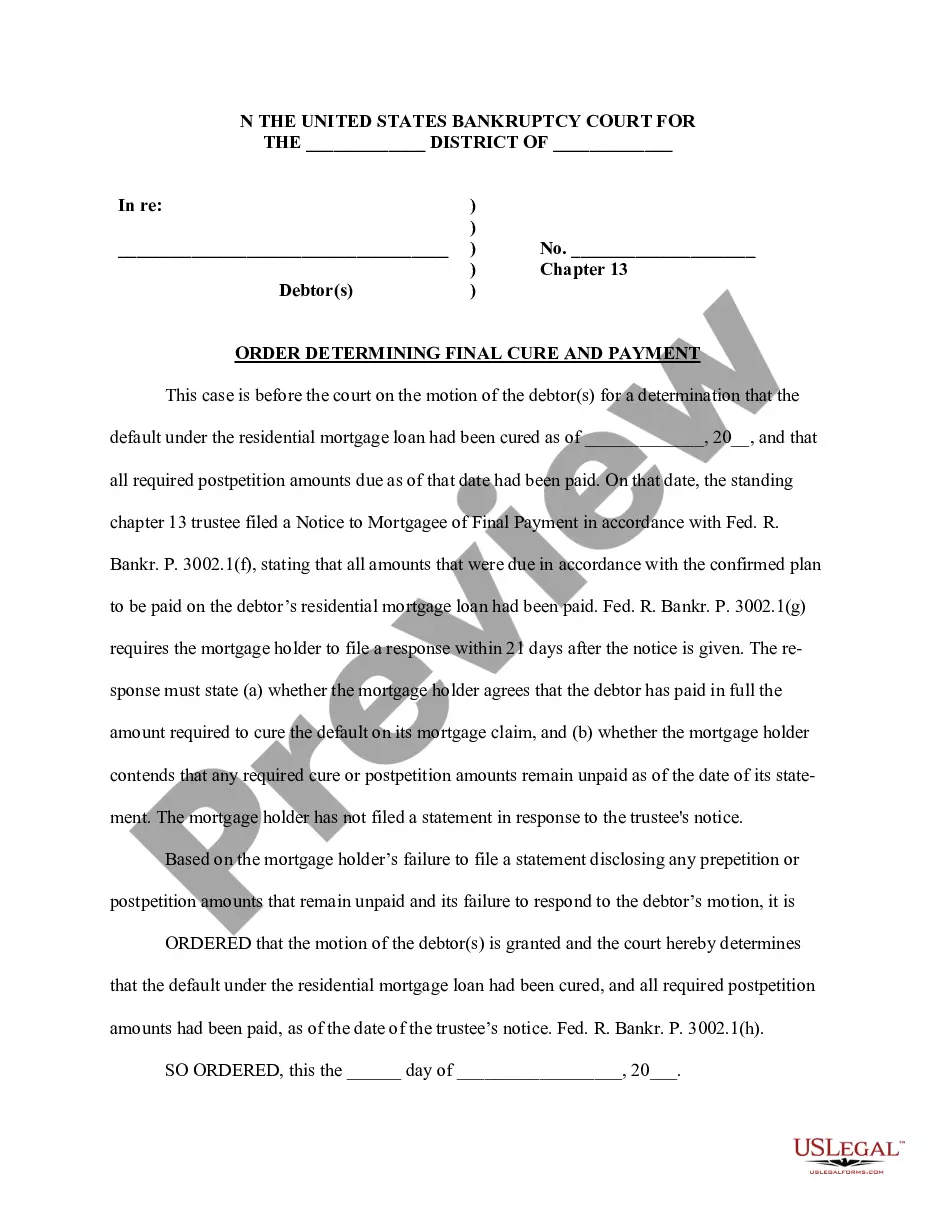
The Motion to determine final cure and payment is a legal document used in Chapter 13 bankruptcy proceedings. This motion allows the mortgagee, or lender, to respond to the trustee's notice regarding the debtor's payment status. It specifically addresses whether the debtor has met all payment obligations, effectively confirming that any defaults on the mortgage have been cured. This form is essential for ensuring that all parties involved have clarity regarding payment histories and current obligations, distinguishing it from other forms used in bankruptcy cases.
Key parts of this document
- Identification of the court and case number
- Details on the debtor(s) and their payment status
- Statement of the mortgage holder's agreement on the cure of any defaults
- Notice provisions related to objections and potential hearing schedules
- Certificate of service indicating who received the motion
Common use cases
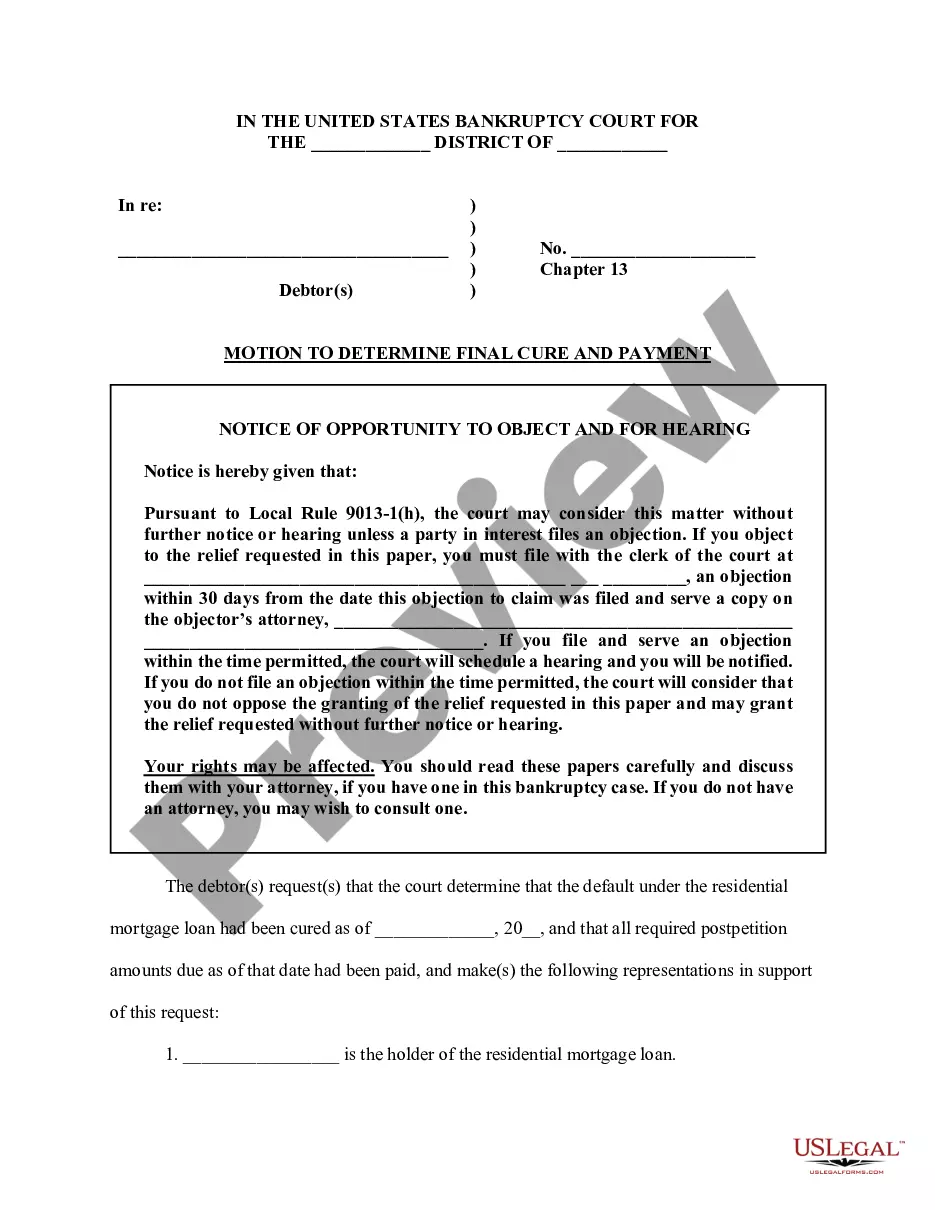
This form is used when a borrower in Chapter 13 bankruptcy wants to confirm with the court that they have made all necessary payments to cure a mortgage default. It is applicable when the trustee issues a notice indicating a potential issue with the mortgage payments, allowing the mortgagee to clarify any misunderstandings about the payment status and affirm compliance with court requirements.
Who should use this form
This form is intended for:
- Mortgage lenders (mortgagees) looking to respond to a trustee's notice
- Debtors seeking to prove they have cured a default on their mortgage
- Bankruptcy attorneys representing either the lender or the borrower
Completing this form step by step
- Identify the specific bankruptcy court and include the case number.
- Enter the debtorâs name(s) and relevant details regarding their mortgage status.
- Document the date on which the trustee notified the mortgage holder about the payment status.
- Include any additional allegations or details pertinent to the mortgage default status.
- Complete the certificate of service, listing all parties served with this motion.
Notarization requirements for this form
This form does not typically require notarization unless specified by local law. It is advisable to consult with an attorney or local court rules to confirm any specific requirements for notarization regarding this type of motion.
Get your form ready online
Our built-in tools help you complete, sign, share, and store your documents in one place.
Make edits, fill in missing information, and update formatting in US Legal Forms—just like you would in MS Word.
Download a copy, print it, send it by email, or mail it via USPS—whatever works best for your next step.
Sign and collect signatures with our SignNow integration. Send to multiple recipients, set reminders, and more. Go Premium to unlock E-Sign.
If this form requires notarization, complete it online through a secure video call—no need to meet a notary in person or wait for an appointment.
We protect your documents and personal data by following strict security and privacy standards.

Make edits, fill in missing information, and update formatting in US Legal Forms—just like you would in MS Word.

Download a copy, print it, send it by email, or mail it via USPS—whatever works best for your next step.

Sign and collect signatures with our SignNow integration. Send to multiple recipients, set reminders, and more. Go Premium to unlock E-Sign.

If this form requires notarization, complete it online through a secure video call—no need to meet a notary in person or wait for an appointment.

We protect your documents and personal data by following strict security and privacy standards.
Typical mistakes to avoid
- Failing to provide complete documentation of payments made.
- Incorrectly identifying the court or case number.
- Neglecting to serve all relevant parties with the motion.
- Missing the deadline for filing objections to the notice.
- Not including the mortgage holderâs agreement on payment status.
Why complete this form online
- Convenient access to legal documentation without the need for in-person appointments.
- Editability enables users to input specific case details easily.
- Reliable access to forms drafted by experienced attorneys, ensuring legal compliance.
- Immediate availability allows for timely filing of the motion in response to trustee notices.
Looking for another form?
Form popularity
FAQ
In addition, aliens must follow the following formalities: Use Form I-290B, notice of appeal, or motion. Submit the motion within 30 days of the decision to be rescinded. Send the reopening motion to the address indicated by USCIS. If you get the address wrong, the motion will be returned. Pay the filing fee of $675.
$675. You may pay the fee with a money order, personal check, cashier's check or pay by credit card using Form G-1450, Authorization for Credit Card Transactions. If you pay by check, you must make your check payable to the U.S. Department of Homeland Security.
Motion to Reopen Processing Time You can expect a response from the USCIS office within 90 days of filing your motion. This, like the USCIS appeal processing time, may be shortened, but it is more often extended.
(d) Amount of Payment ? The filing fee, in all cases in which a fee is required except for a practitioner's appeal from a decision in disciplinary proceedings, is $110 and must be paid in the precise amount.
In all cases, the immigration judge will issue a decision on a fee waiver request in writing or on the record. (1) Motions to reopen or reconsider - When a filing fee is required, the fee for motions to reopen or reconsider is $145.
Creditors must file a response to the notice of final cure payment within 21 days after service of the notice. This response will state whether the creditor agrees that all arrears have been paid. The response will also state whether any post-petition amounts under the mortgage loan remain unpaid.
Cure Payment means the payment of Cash or the distribution of other property (as the parties may agree or the Bankruptcy Court may order) that is necessary to cure any and all defaults under an executory contract or unexpired lease so that such contract or lease may be assumed, or assumed and assigned, pursuant to