California Tenant Lease Agreement
What is this form?
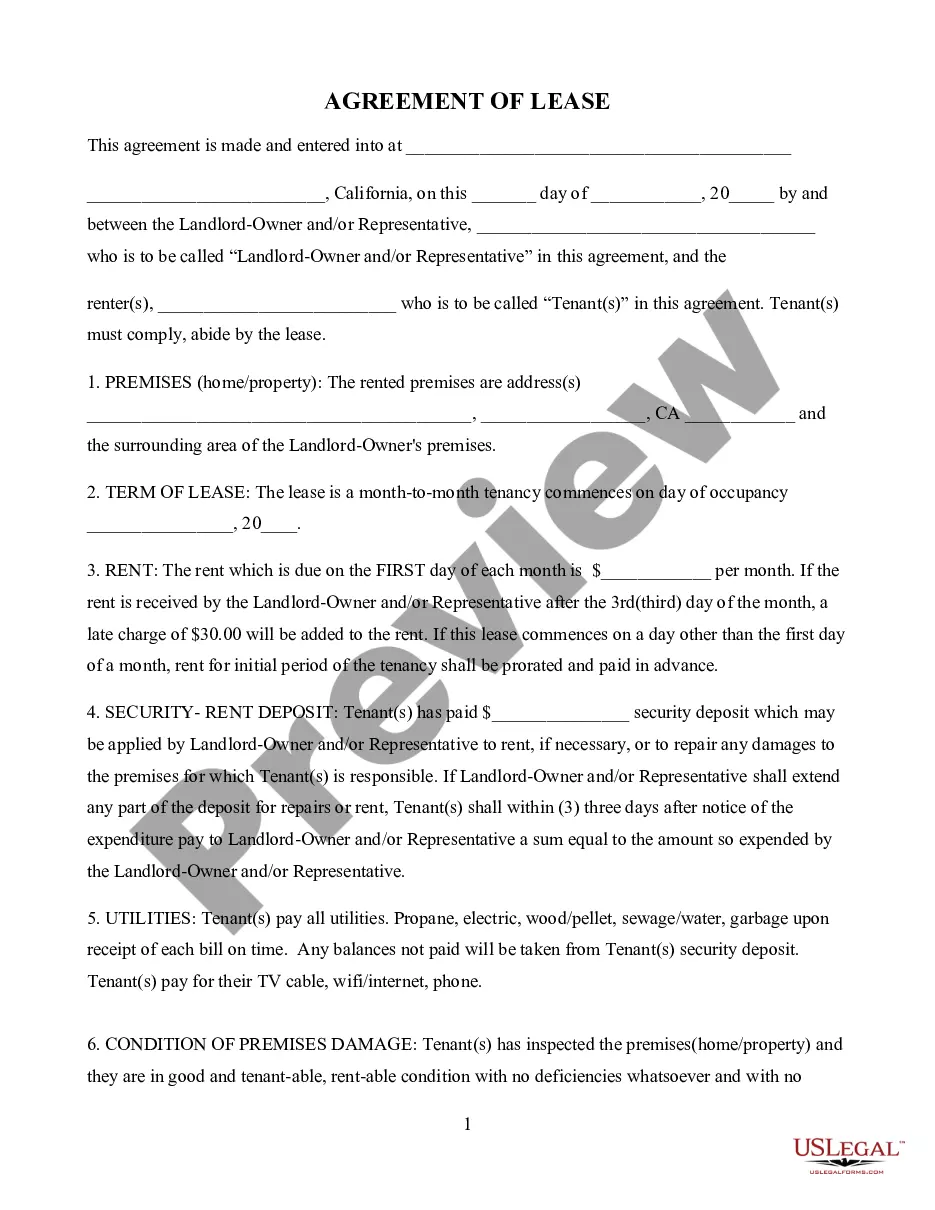
The Tenant Lease Agreement is a legal document that outlines the terms and conditions for renting a property in California. Specifically designed for month-to-month tenancies, this form serves to clarify the rights and responsibilities of both landlords and tenants, ensuring a smooth rental experience. Unlike more complex lease agreements for longer terms, this document caters to those seeking flexibility in their living arrangements.
What’s included in this form
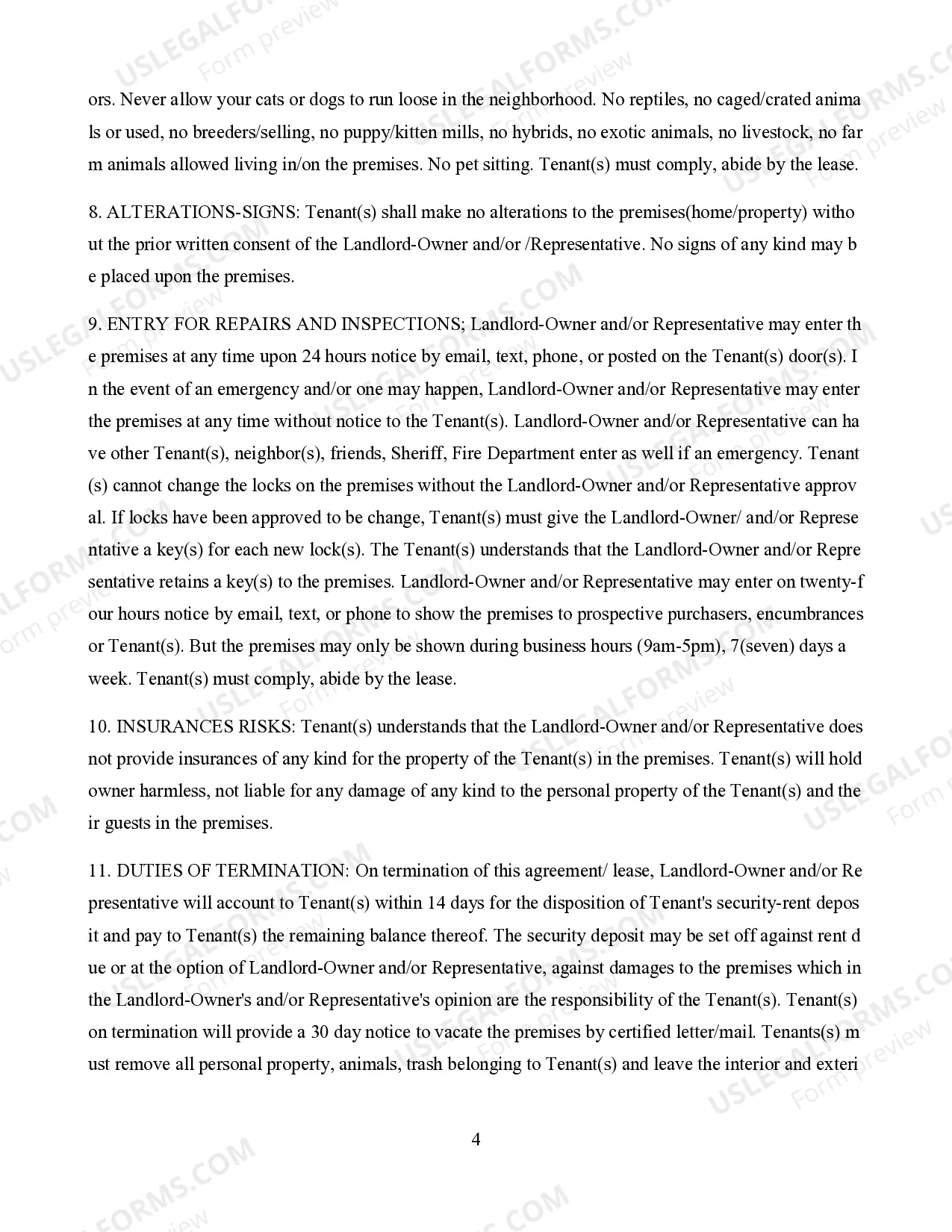
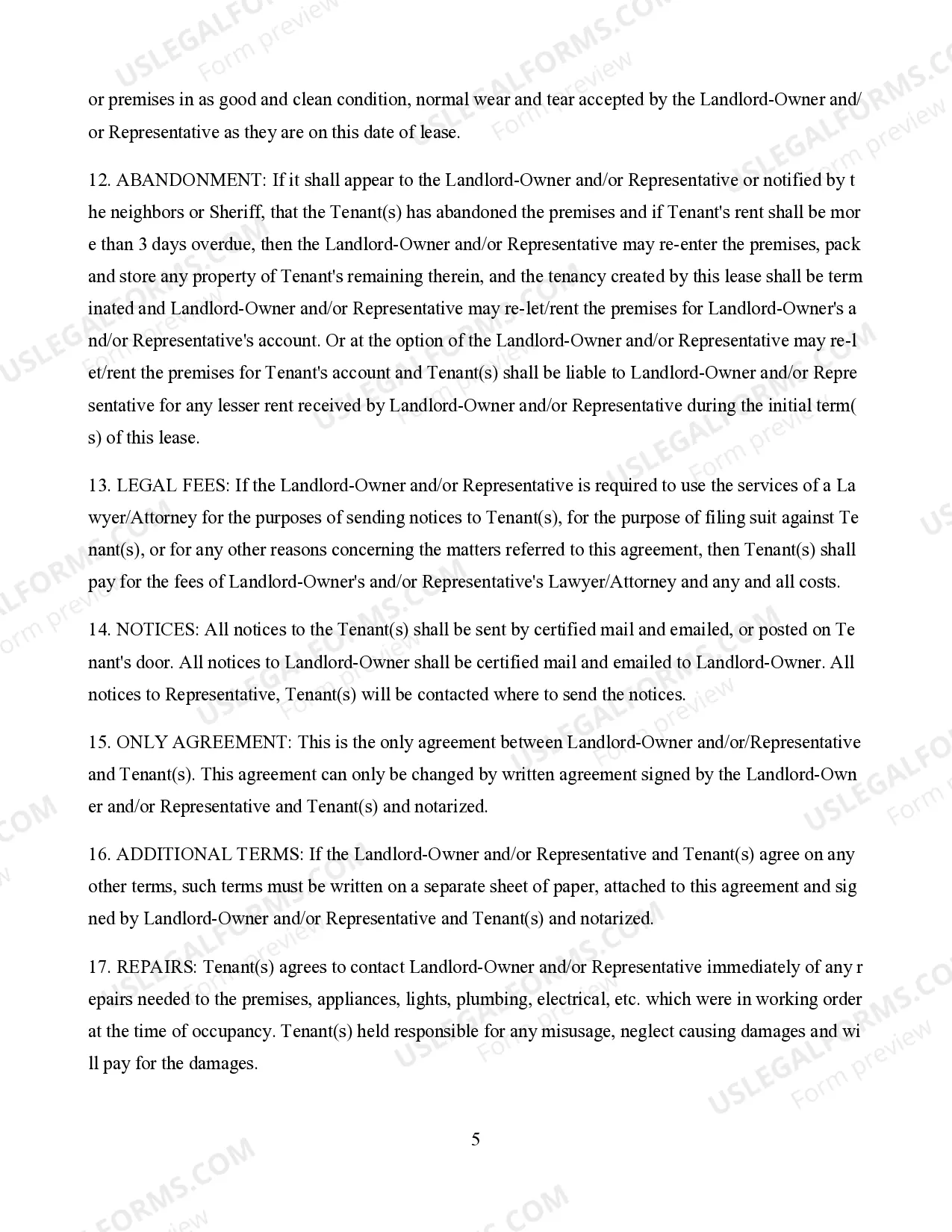
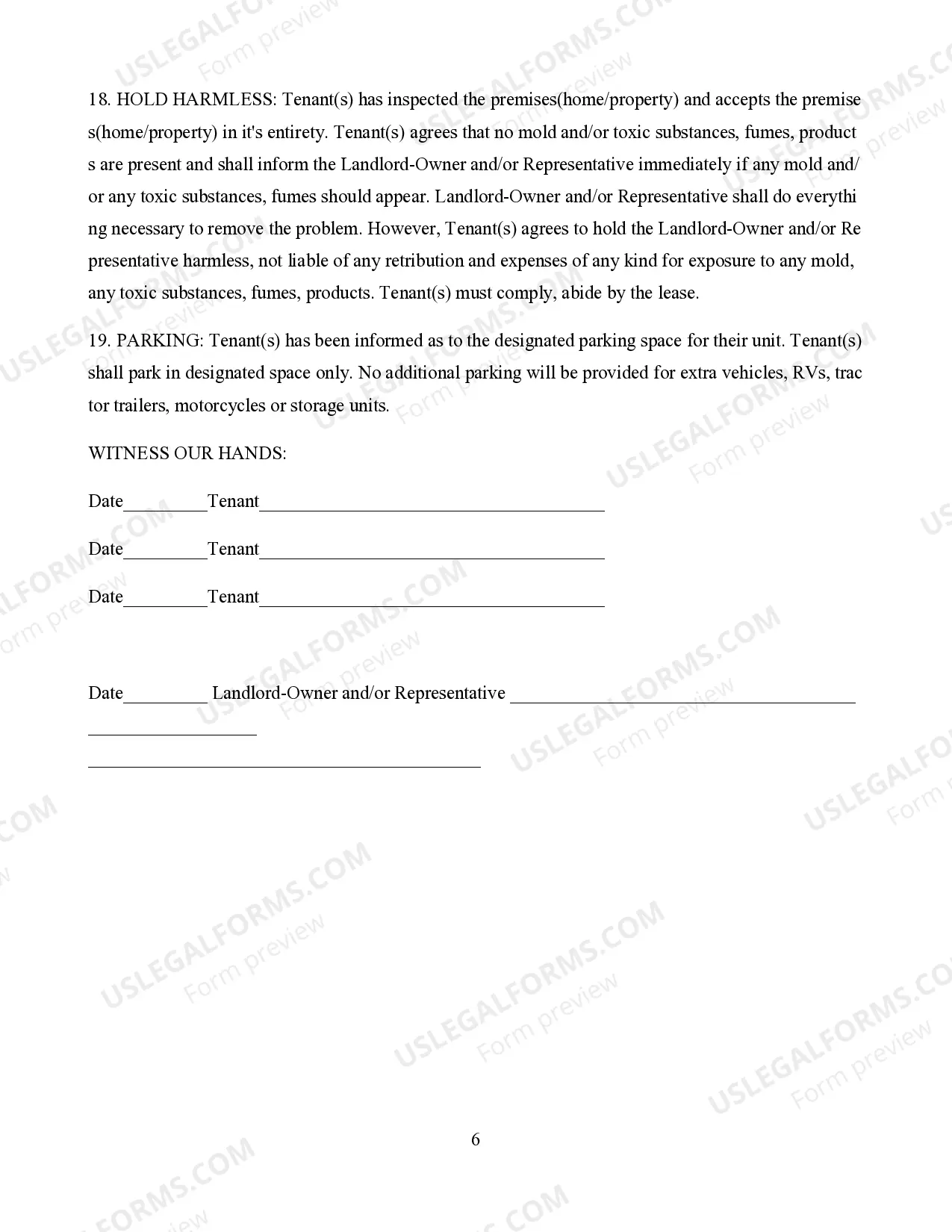
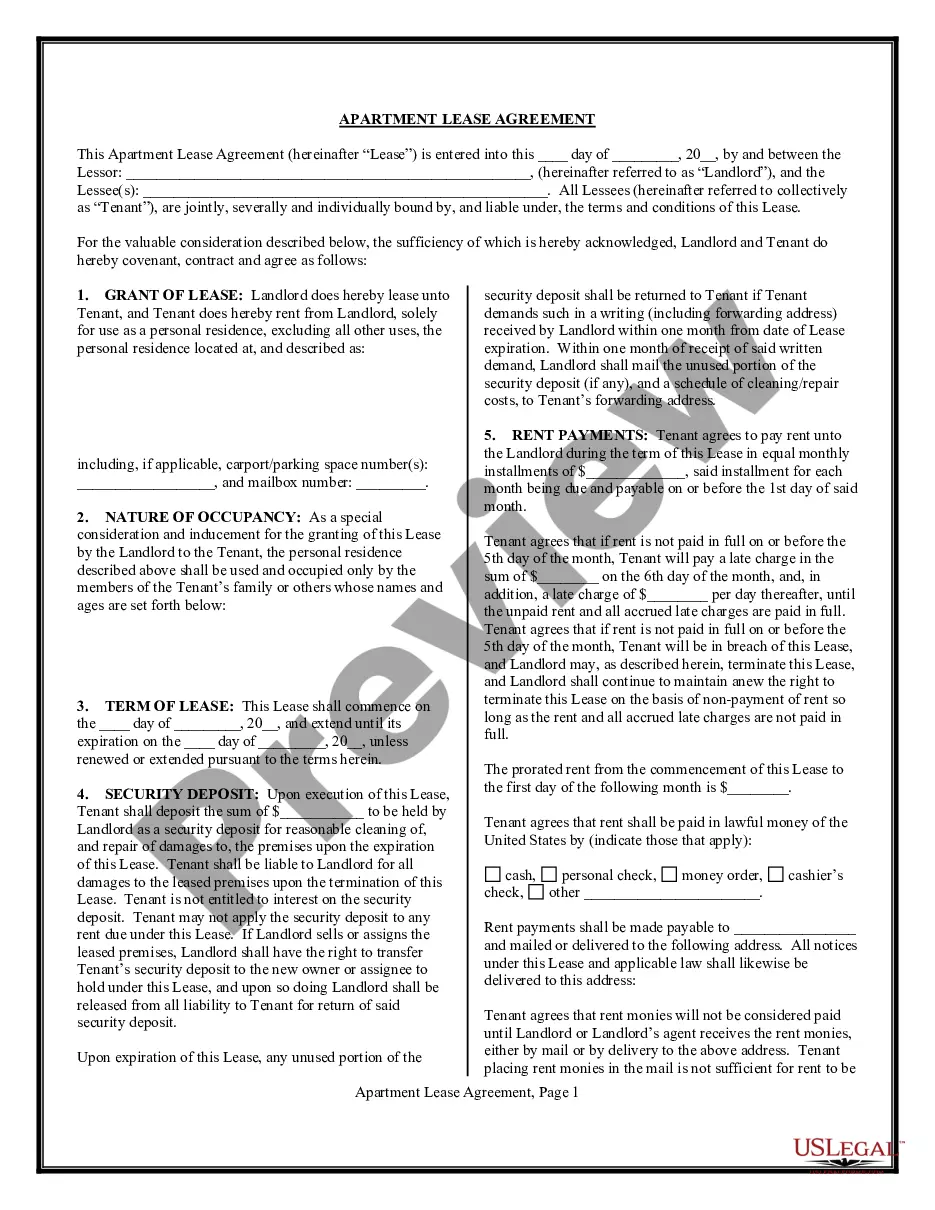
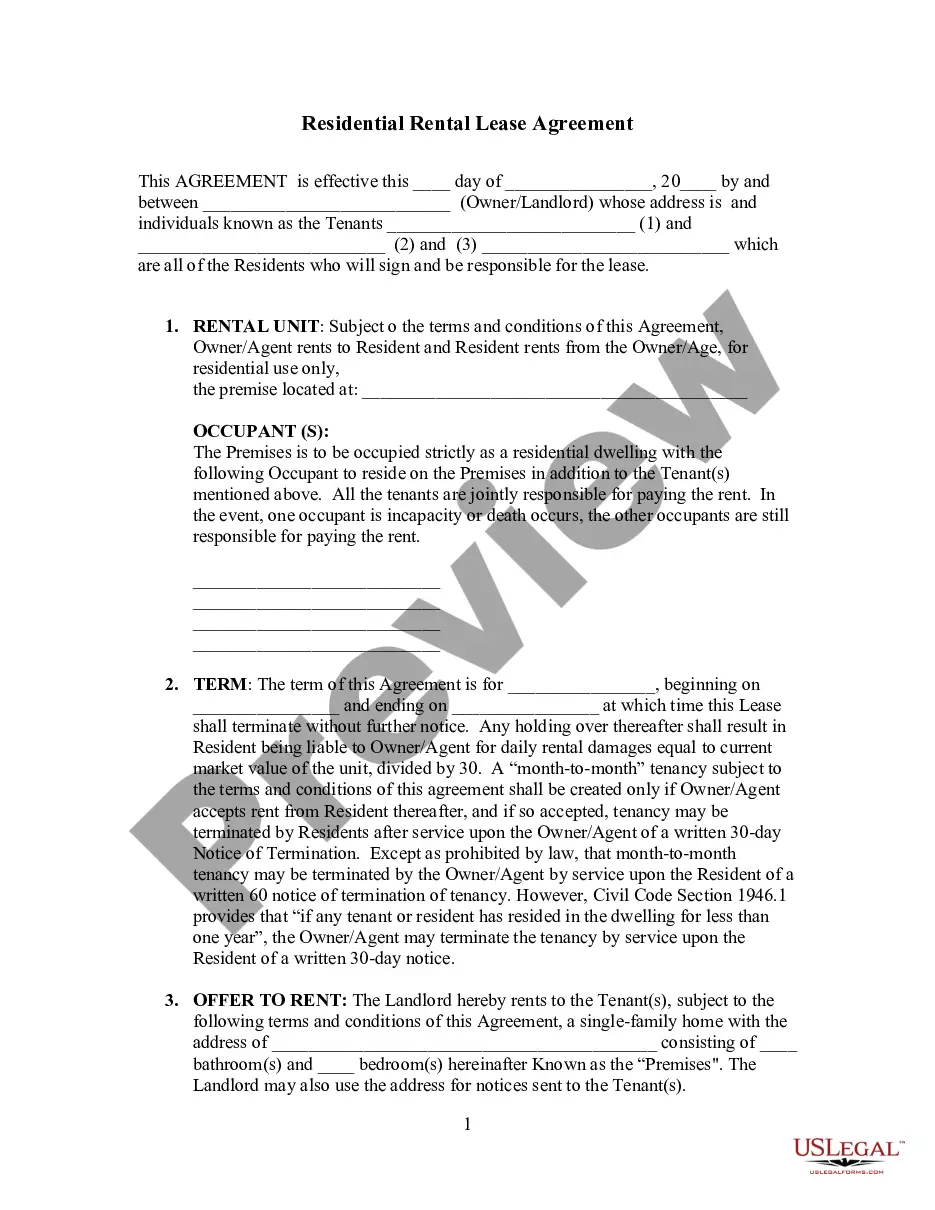
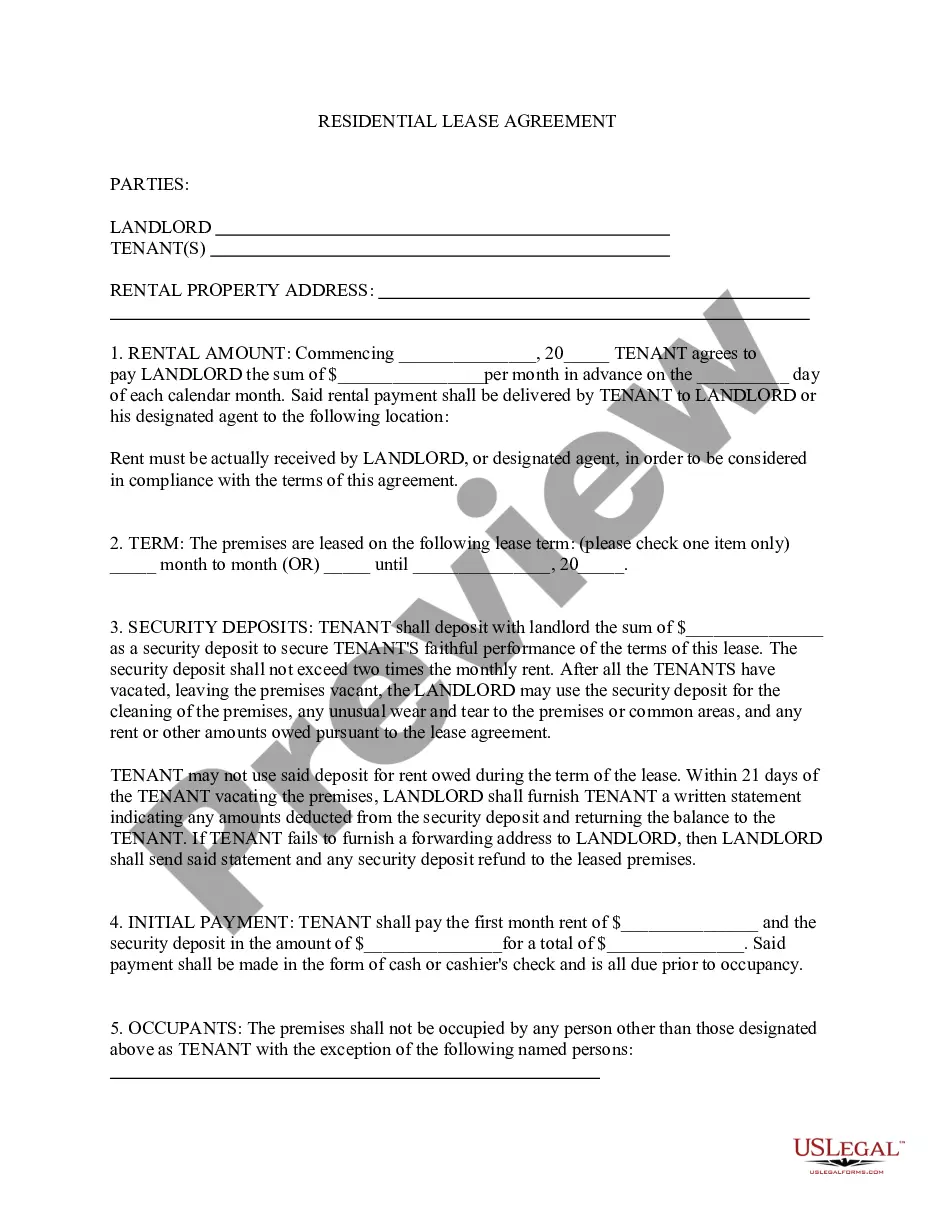
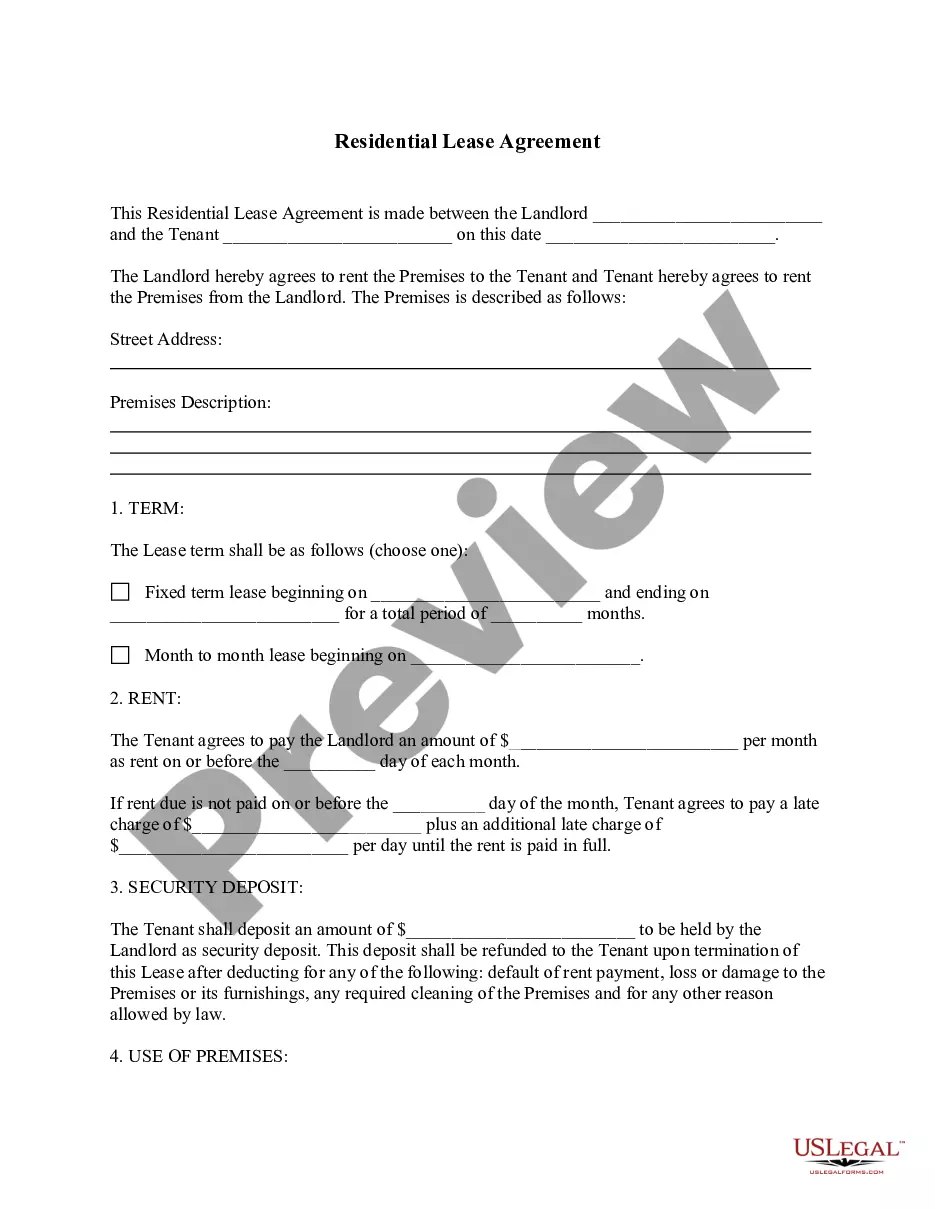
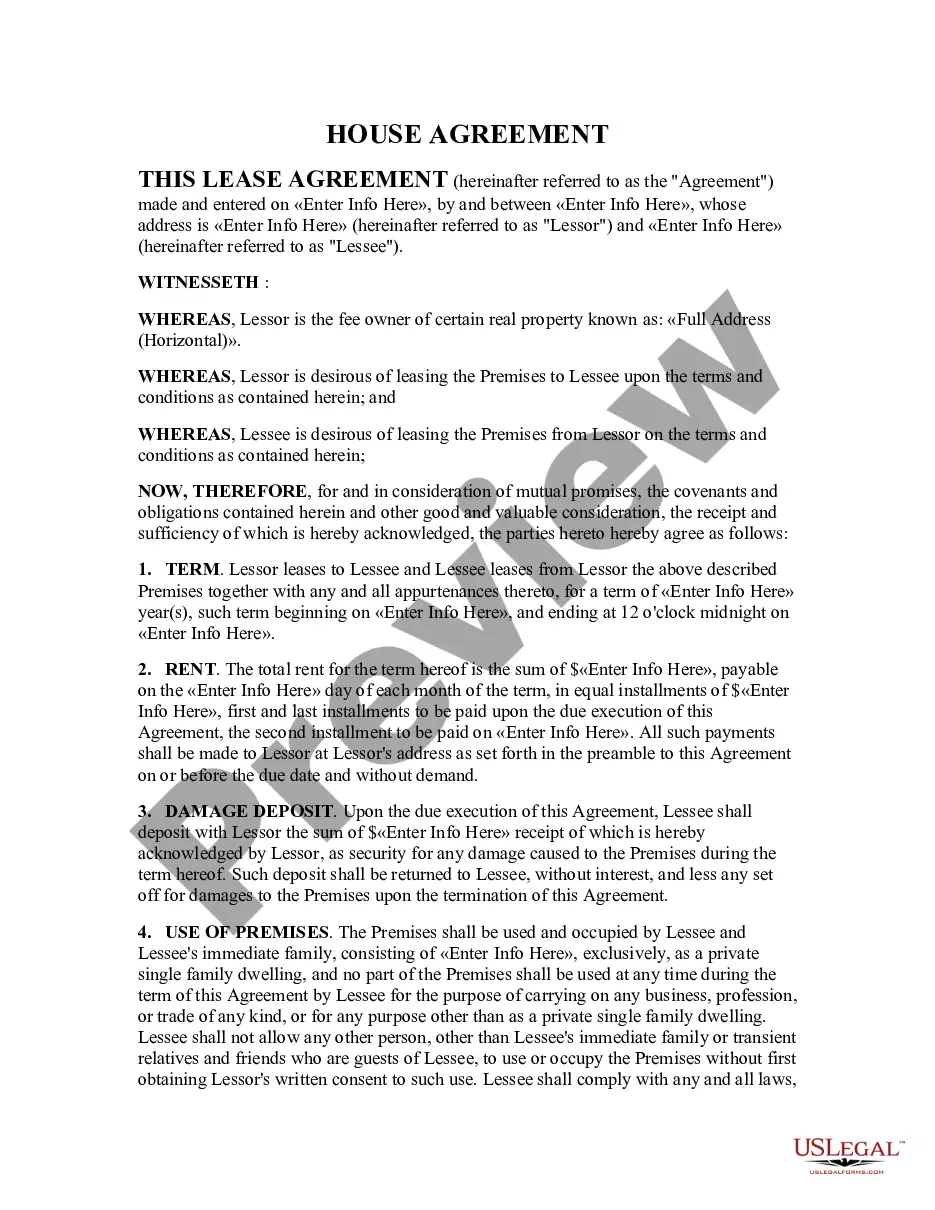
- Parties Involved: Identifies the landlord and tenant(s) by name.
- Property Details: Specifies the location of the rented property.
- Term of Lease: Indicates the month-to-month rental terms.
- Rent Requirements: Outlines the rent amount and payment deadlines, including late fees.
- Security Deposit: Details the security deposit amount and conditions for its use.
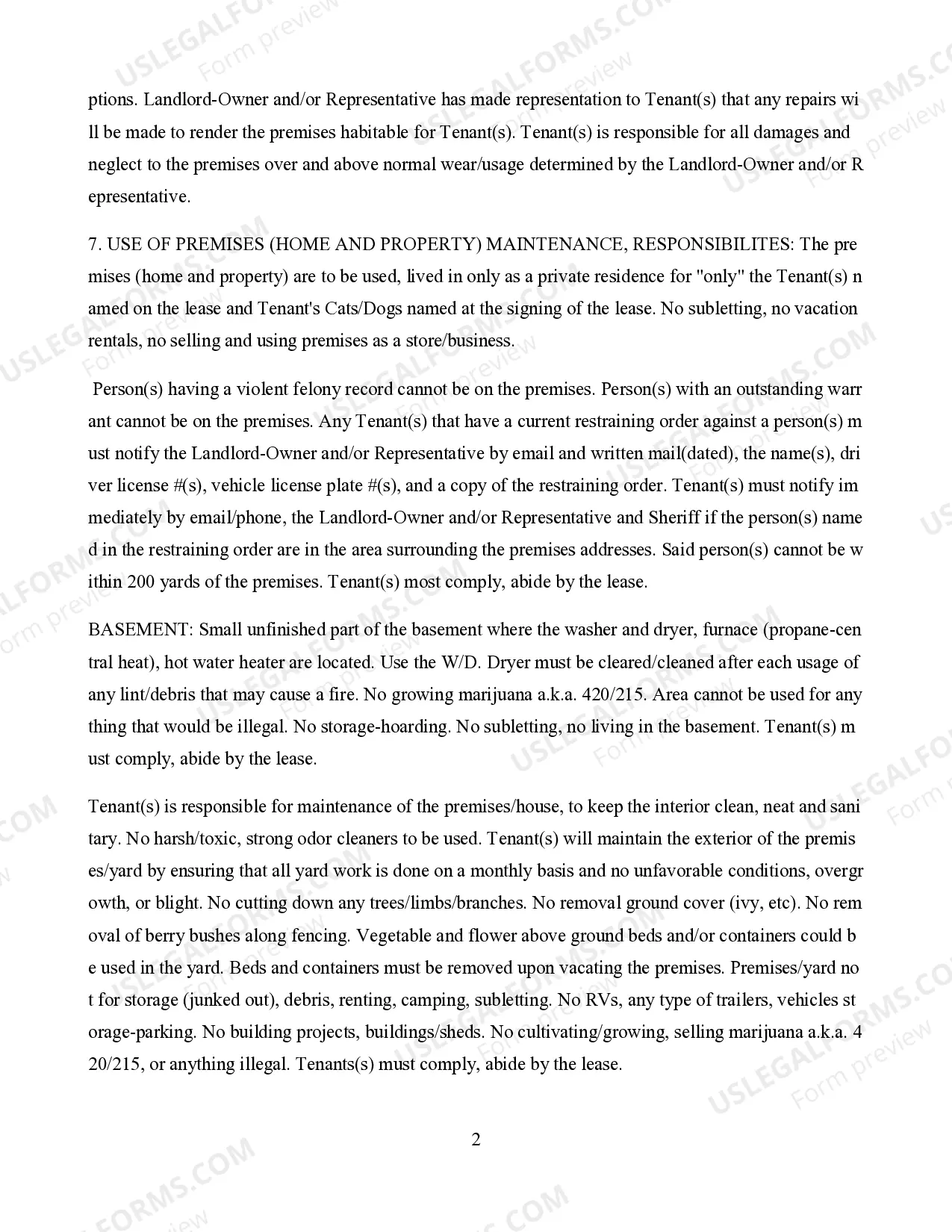
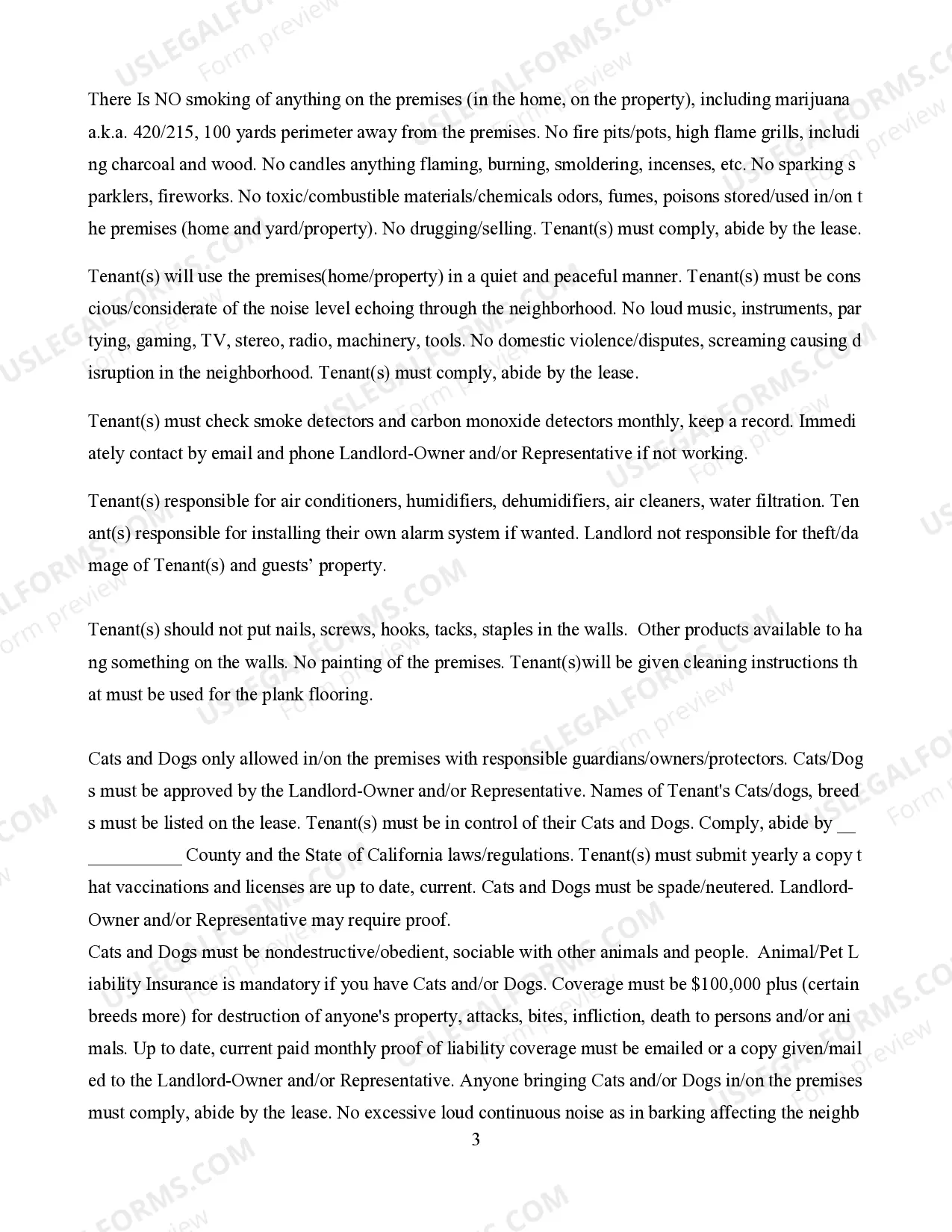
- Use of Premises: Restricts use of the property for specific purposes.
- Entry for Repairs: Establishes the landlordâs rights to enter the property for maintenance and inspections.
- Duties upon Termination: Lists tenant obligations when ending the lease agreement.
When to use this document
This Tenant Lease Agreement should be used when a landlord and tenant agree to rent a property on a month-to-month basis in California. It is particularly useful for landlords who desire flexibility in leasing arrangements or for tenants who may not wish to commit to a long-term lease. This form helps clarify expectations regarding rent terms, property maintenance responsibilities, and other essential aspects of the tenancy.
Who should use this form
- Landlords seeking a legal framework for month-to-month rental arrangements.
- Tenants who prefer not to enter into a long-term lease and desire flexibility.
- Property managers responsible for overseeing rental agreements on behalf of owners.
Completing this form step by step
- Identify the parties by entering the full names of the landlord and tenant(s).
- Specify the rental property address and details of the premises being leased.
- Enter the commencement date of the lease and the agreed-upon monthly rent amount.
- Document the amount of the security deposit and any specific terms pertaining to its use.
- Review and agree upon any additional terms or conditions and ensure signatures are obtained from all parties involved.
Notarization requirements for this form
This form does not typically require notarization unless specified by local law. Itâs advised to check any specific requirements that may apply to unique circumstances under California rental regulations.
Get your form ready online
Our built-in tools help you complete, sign, share, and store your documents in one place.
Make edits, fill in missing information, and update formatting in US Legal Forms—just like you would in MS Word.
Download a copy, print it, send it by email, or mail it via USPS—whatever works best for your next step.
Sign and collect signatures with our SignNow integration. Send to multiple recipients, set reminders, and more. Go Premium to unlock E-Sign.
If this form requires notarization, complete it online through a secure video call—no need to meet a notary in person or wait for an appointment.
We protect your documents and personal data by following strict security and privacy standards.

Make edits, fill in missing information, and update formatting in US Legal Forms—just like you would in MS Word.

Download a copy, print it, send it by email, or mail it via USPS—whatever works best for your next step.

Sign and collect signatures with our SignNow integration. Send to multiple recipients, set reminders, and more. Go Premium to unlock E-Sign.

If this form requires notarization, complete it online through a secure video call—no need to meet a notary in person or wait for an appointment.

We protect your documents and personal data by following strict security and privacy standards.
Common mistakes
- Failing to specify the property address accurately can lead to confusion.
- Neglecting to outline clear late fee terms can result in misunderstandings.
- Not obtaining necessary signatures from all parties involved may invalidate the agreement.
- Omitting any specific terms related to the security deposit could cause disputes later.
Why complete this form online
- Convenient access to the form allows for quick completion without waiting for physical copies.
- Editability ensures customization to fit specific rental terms and preferences.
- Reliability is guaranteed as the form is drafted by licensed attorneys with expertise in landlord-tenant law.
Looking for another form?
Form popularity
FAQ
In California, the notice a landlord must give a tenant depends on the lease type and the situation. For most lease agreements, a 30-day notice is required for tenants who have lived in the unit for less than a year. If a tenant has lived in the home for over a year, a 60-day notice applies. Understanding these requirements is essential for effective management of a California Tenant Lease Agreement.
Creating a California Tenant Lease Agreement involves several key steps. First, outline the essential terms, including rent amount, duration of the lease, and security deposit details. Next, ensure the agreement complies with California rental laws, such as providing necessary disclosures. Using platforms like US Legal Forms can streamline this process, offering templates that make it easy to draft a comprehensive lease agreement.
In California, a lease agreement must include specific information, such as the rental amount, term length, and responsibilities of both the landlord and tenant. A California Tenant Lease Agreement should also clearly outline any fees, rules regarding pets, and maintenance responsibilities. Ensure both parties sign to validate the agreement. Using platforms like USLegalForms can simplify the process by providing compliant templates tailored to California laws.
Writing a simple lease agreement starts with outlining the essential terms, such as the rental amount, duration of the lease, and rules for the property. You can find templates for a California Tenant Lease Agreement that guide you through the process. Including information like the names of both parties and property specifics adds crucial details. Finally, ensure to sign and date the lease to make it legally binding.
California does not have a state-mandated standard lease agreement, but it does have laws that dictate what must be included in any California Tenant Lease Agreement. Landlords and tenants can create customized agreements that comply with these laws. This flexibility allows for adjustments based on individual needs while ensuring essential protections are in place. For those seeking guidance, the US Legal Forms platform offers templates to help create a compliant lease agreement.
Yes, in California, landlords must provide tenants with a copy of the California Tenant Lease Agreement within a reasonable time. This ensures that tenants clearly understand their rights and responsibilities. Having a copy allows both parties to refer back to the terms agreed upon, making it easier to resolve disputes. Always ask for your copy to protect yourself as a tenant.
If there is no lease agreement in California, the tenant still has rights, but the situation may become complicated. In the absence of a written California Tenant Lease Agreement, the law provides a set of default terms. This includes month-to-month tenancy, where either party can end the agreement with proper notice. It's wise to establish clear terms to avoid misunderstandings.
Creating a lease agreement in California involves several simple steps. Start by outlining key components like tenant information, property details, and rental terms. You can use a California Tenant Lease Agreement template from uslegalforms for guidance. Finally, ensure all parties review and sign the document to make it enforceable.
While there is no official standard lease agreement in California, most agreements include essential terms like rent amount and duration. A California Tenant Lease Agreement can be customized to fit specific needs, including pet policies or maintenance responsibilities. Utilizing templates from platforms like uslegalforms can streamline the process and ensure compliance with state laws. Always review your lease to ensure it meets local requirements.
In California, a rental agreement does not need to be notarized to be legally binding. However, having a California Tenant Lease Agreement notarized can add an extra layer of security. It can serve as proof of identity and help resolve disputes in the future. To ensure your agreement is valid, it is essential to have both parties sign it.