Mississippi Summons by Process Server with Process Server's Return - Service of Process
What is this form?
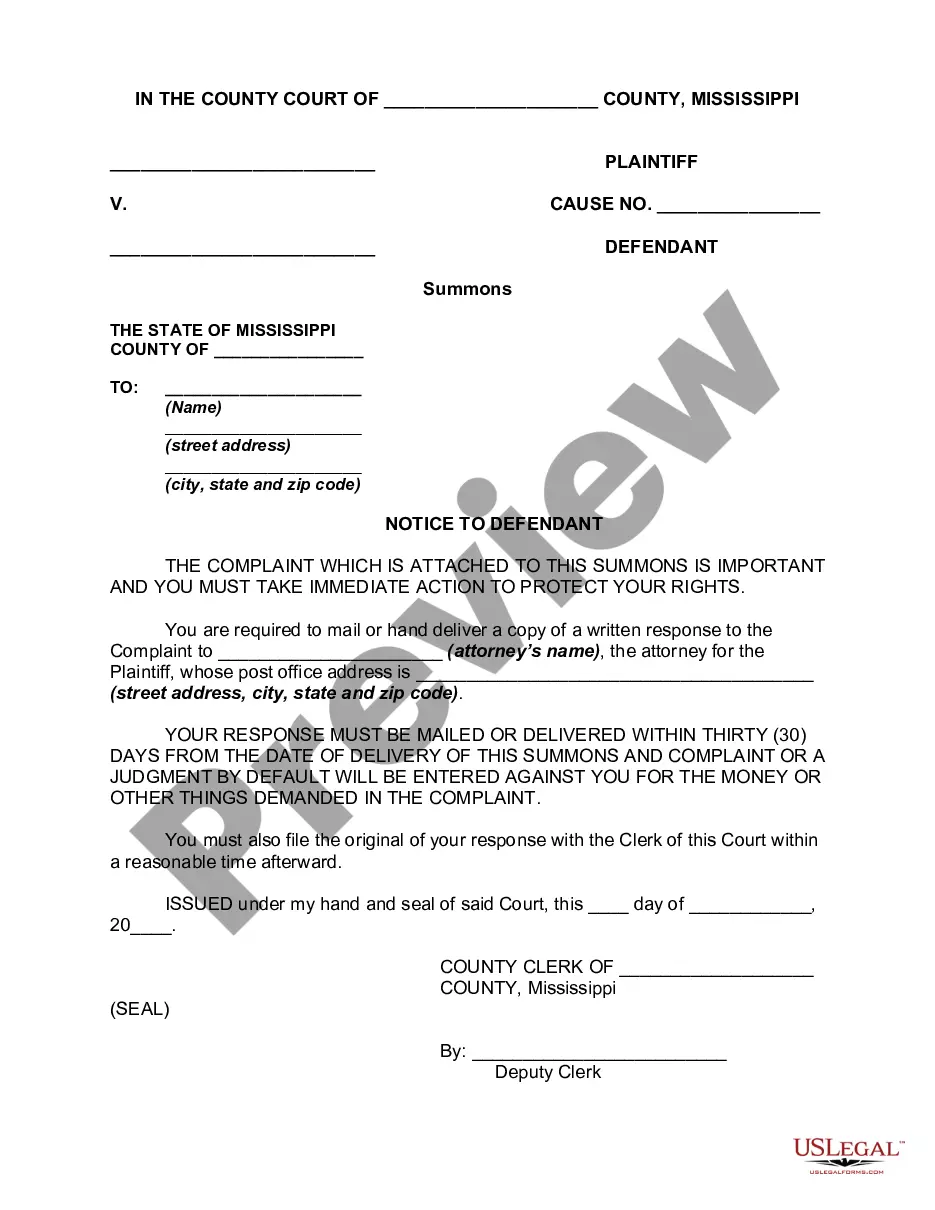
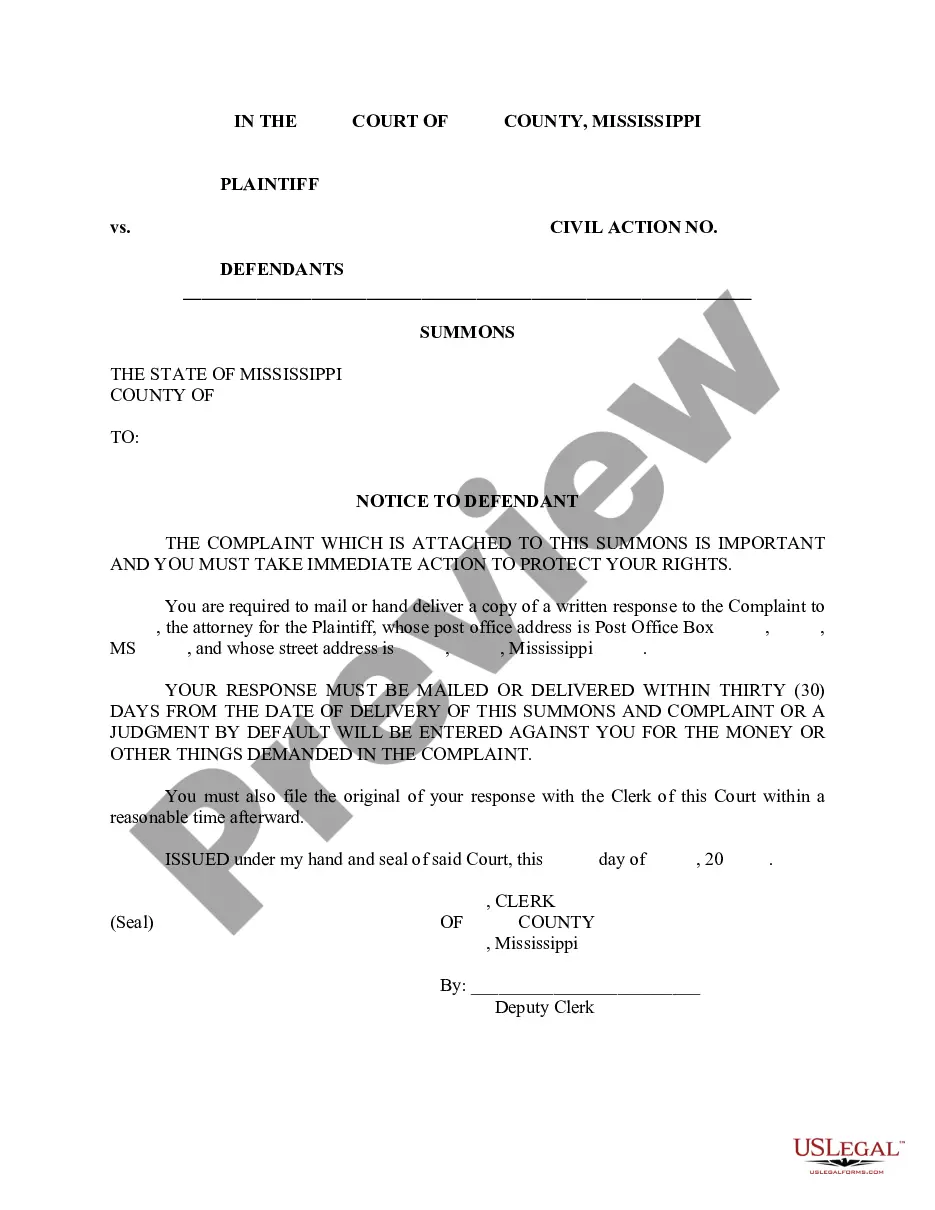
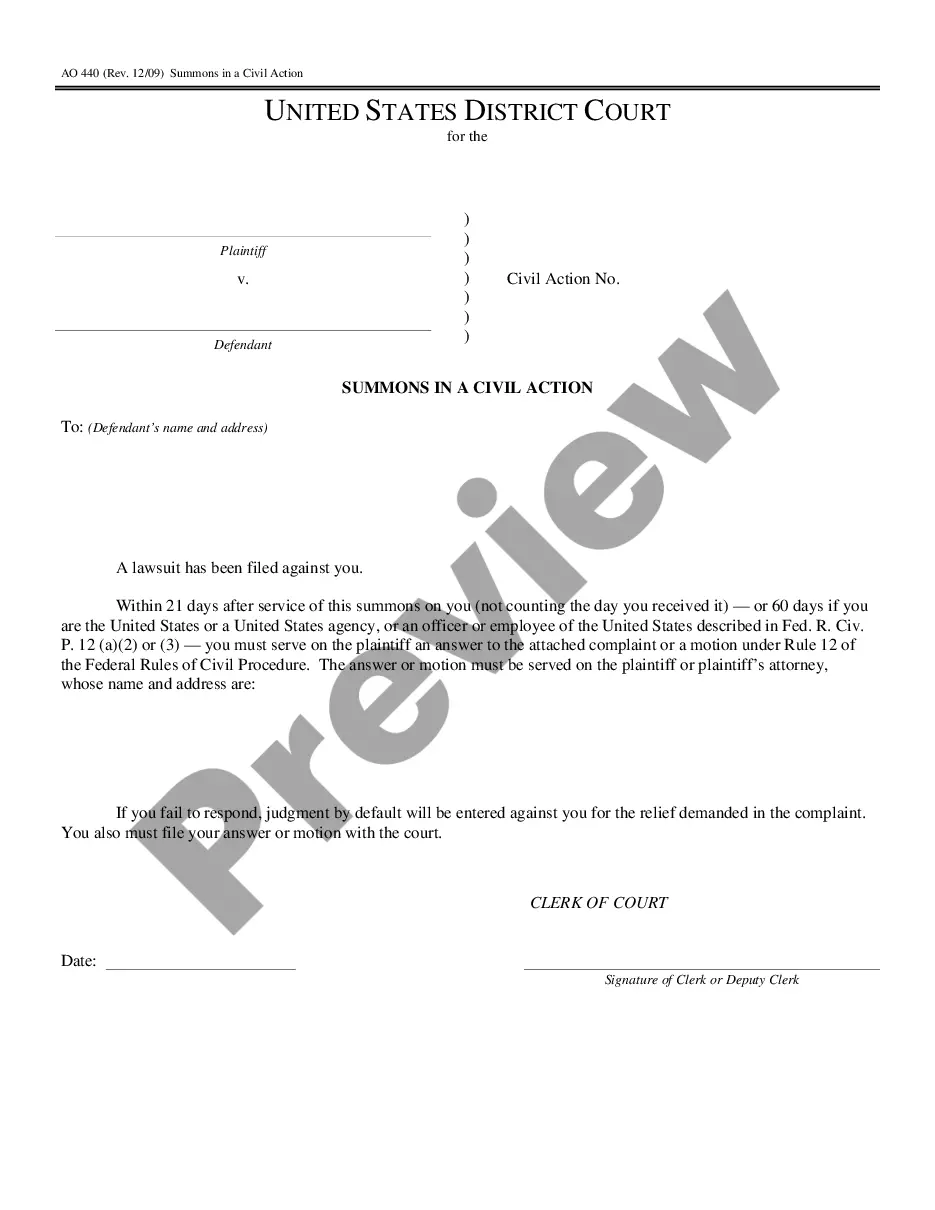
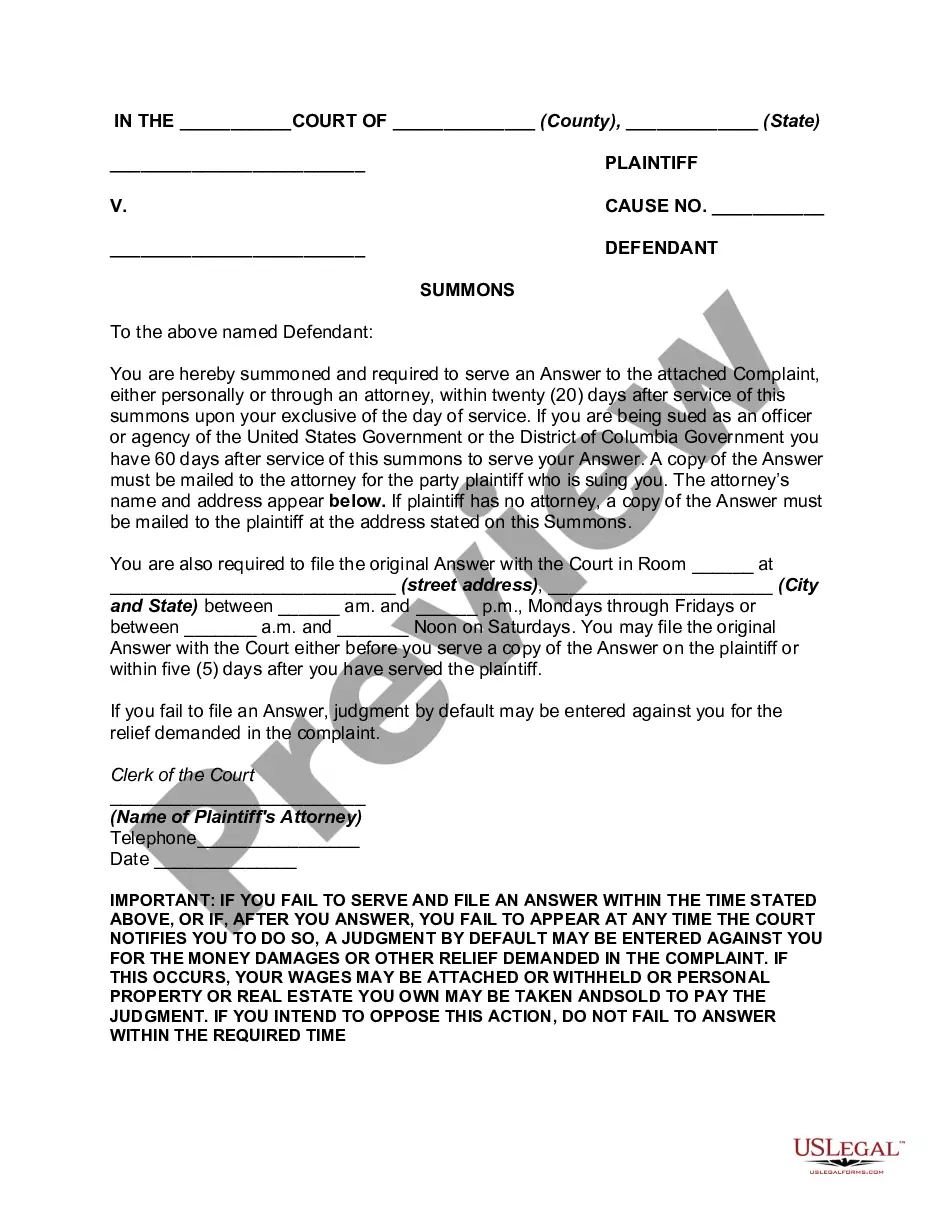
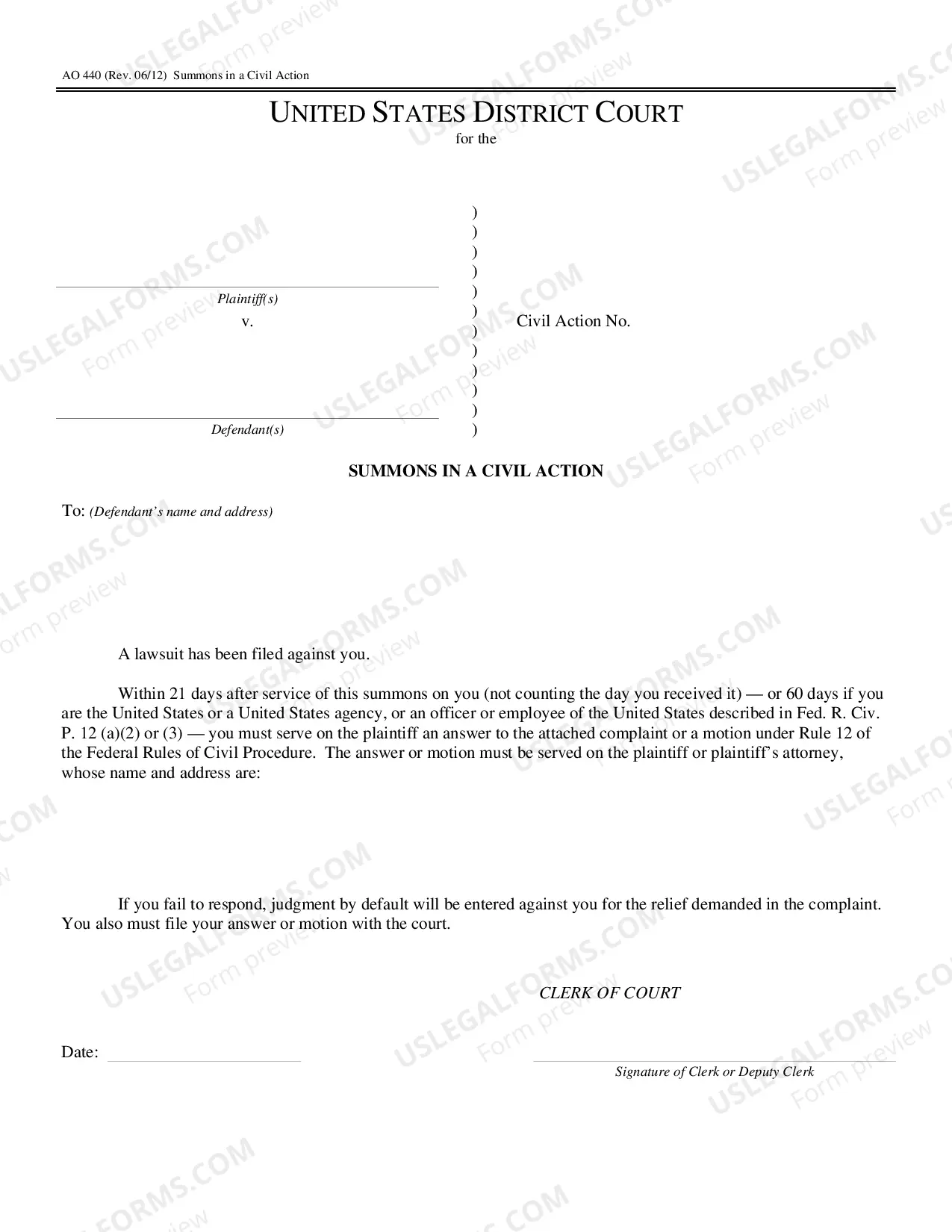
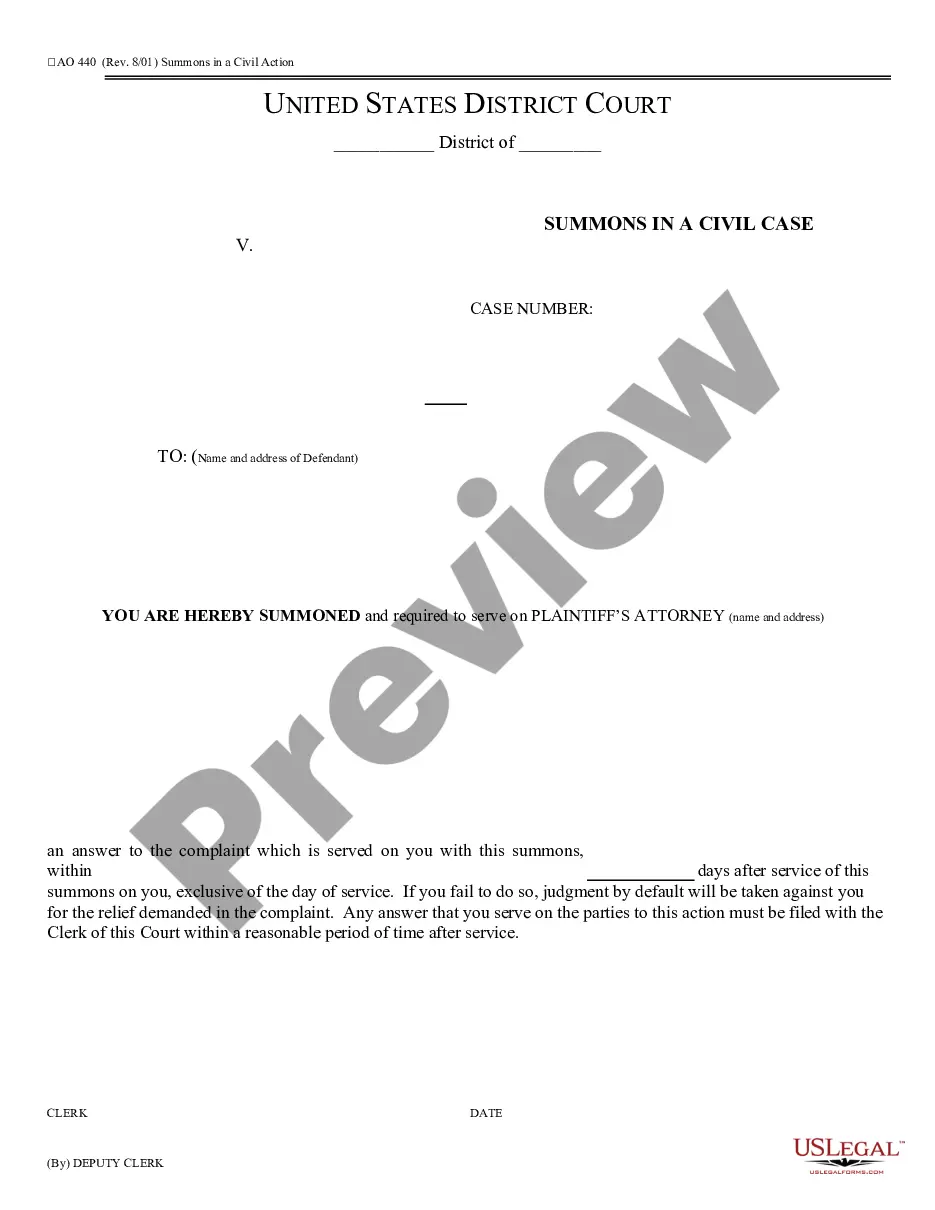
The Summons by Process Server with Process Server's Return - Service of Process is a legal document used to notify a defendant that a lawsuit has been filed against them. This form includes instructions for the defendant on how to respond to the complaint attached. It is essential in ensuring that the defendant is aware of the legal proceedings and has an opportunity to defend themselves. Unlike other forms of summons, this document specifically involves a process server who delivers the complaint and verifies the delivery method, fulfilling the legal requirement for proper service of process.
Key parts of this document
- Identification of the Plaintiff and Defendant
- Case number and state jurisdiction details
- Instructions for the Defendant regarding response timelines and actions
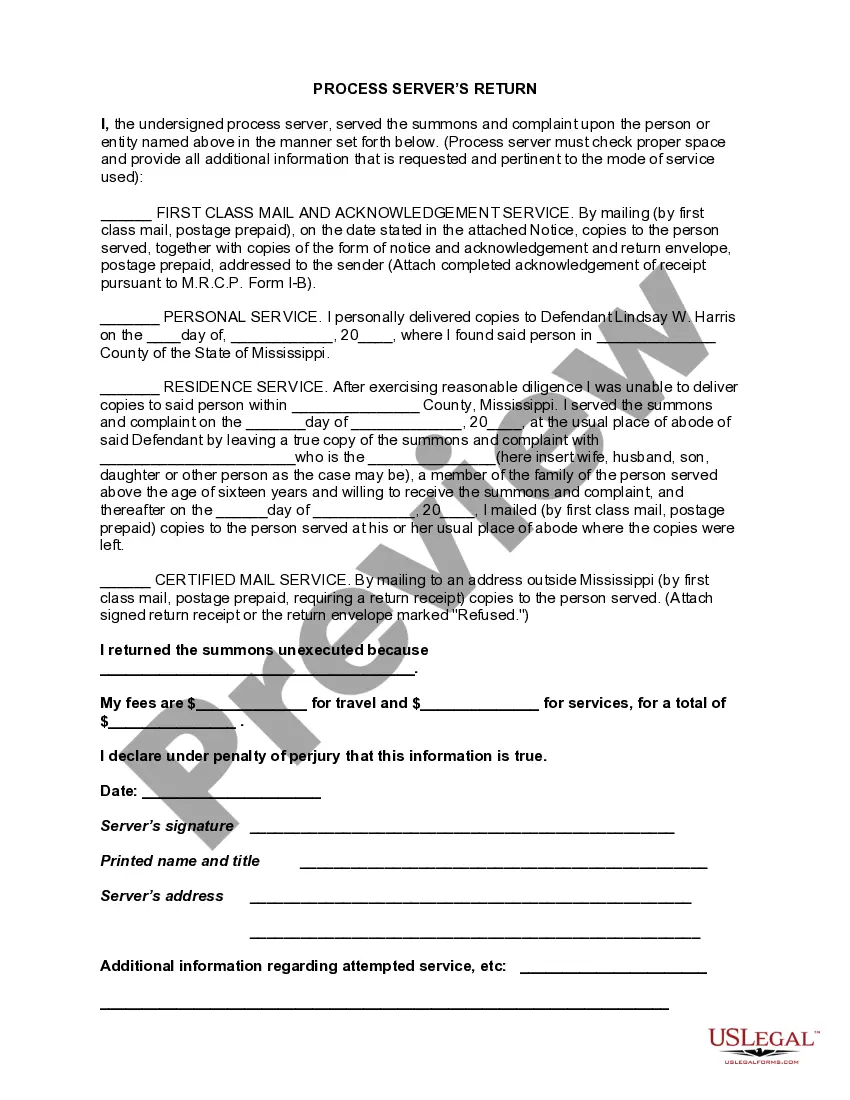
- Process server's return section documenting how the summons was served
- Space for the process server's signature and declaration of service

Situations where this form applies
This form is needed when initiating a lawsuit in Mississippi and serving the defendant. Use it when a complaint is filed, and you need to ensure that the defendant is properly notified of the legal action. It should be utilized to comply with legal service requirements as outlined in Rule 4(c) of the Mississippi Rules of Civil Procedure.
Who this form is for
- Plaintiffs involved in a civil lawsuit in Mississippi
- Process servers assigned to deliver legal documents
- Attorneys representing plaintiffs in court cases
Completing this form step by step
- Fill in the names of the plaintiff and defendant, along with the case number.
- Provide the address of the defendant to ensure proper service.
- Include detailed instructions for the defendant about responding to the complaint.
- Select and complete the appropriate method of service by the process server.
- Ensure the process server signs and dates the return of service section after delivering the summons.
Does this document require notarization?
This form does not typically require notarization unless specified by local law. Ensure you check state-specific rules and guidelines when preparing legal documents.
Get your form ready online
Our built-in tools help you complete, sign, share, and store your documents in one place.
Make edits, fill in missing information, and update formatting in US Legal Forms—just like you would in MS Word.
Download a copy, print it, send it by email, or mail it via USPS—whatever works best for your next step.
Sign and collect signatures with our SignNow integration. Send to multiple recipients, set reminders, and more. Go Premium to unlock E-Sign.
If this form requires notarization, complete it online through a secure video call—no need to meet a notary in person or wait for an appointment.
We protect your documents and personal data by following strict security and privacy standards.

Make edits, fill in missing information, and update formatting in US Legal Forms—just like you would in MS Word.

Download a copy, print it, send it by email, or mail it via USPS—whatever works best for your next step.

Sign and collect signatures with our SignNow integration. Send to multiple recipients, set reminders, and more. Go Premium to unlock E-Sign.

If this form requires notarization, complete it online through a secure video call—no need to meet a notary in person or wait for an appointment.

We protect your documents and personal data by following strict security and privacy standards.
Typical mistakes to avoid
- Failing to include all necessary addresses and contact details.
- Not providing clear instructions for the defendant's response.
- Using an unlicensed or inappropriate process server.
- Overlooking deadlines for the defendant's response.
Advantages of online completion
- Easy access to downloadable and customizable legal forms.
- Prepared by licensed attorneys, ensuring accuracy and legal compliance.
- Convenient editing options to tailor the form to specific needs.
- Fast and secure way to manage legal documents without in-person visits.
Looking for another form?

Form popularity
FAQ
A Simple Answer to "What Happens if a Process Server Can't Serve You?" The simple answer to your question is that the court continues without you. Evidence is brought forth without a rebuttal or defense from you and a judgment is issued.
Instruct the roommates/family to tell the Process Server/Sheriff that the person they're after no longer lives there. This may stop them from coming back. They will usually then write it off as a "non-service" on their proof of service.
Process servers also generally are exempt from being sued under the federal Fair Debt Collection Practices Act PDF.
Generally, process servers make up to three attempts (morning, afternoon, & evening).
Generally, process servers make at least three attempts to serve somebody.
It's not illegal to avoid being served with a process, but it is rarely advantageous. In some cases, it can result in court orders and decisions being made without your knowledge, and it always results in longer and more expensive litigations.
As for attempting too late at night, most servers do not attempt after pm, but there is no law stating that they cannot. Process servers are very good at their job and know what it takes to get the job done without undue irritation.
For standard serves, the typical time to serve papers is 5-7 days. Turn-around-time (or TAT) can vary from process server to process server. However, this is something that can be determined in most cases by you, which usually leads to a higher cost.
If a Defendant Does Not Answer the Door A process server cannot compel a defendant to answer the door. In some cases, people who know a lawsuit has been filed against them will attempt to avoid service.He or she will have to come back on another date if the defendant refuses to open the door.