Mississippi Retainer Agreement with Initial Payment and Hourly Fees - Real Estate Transaction
About this form
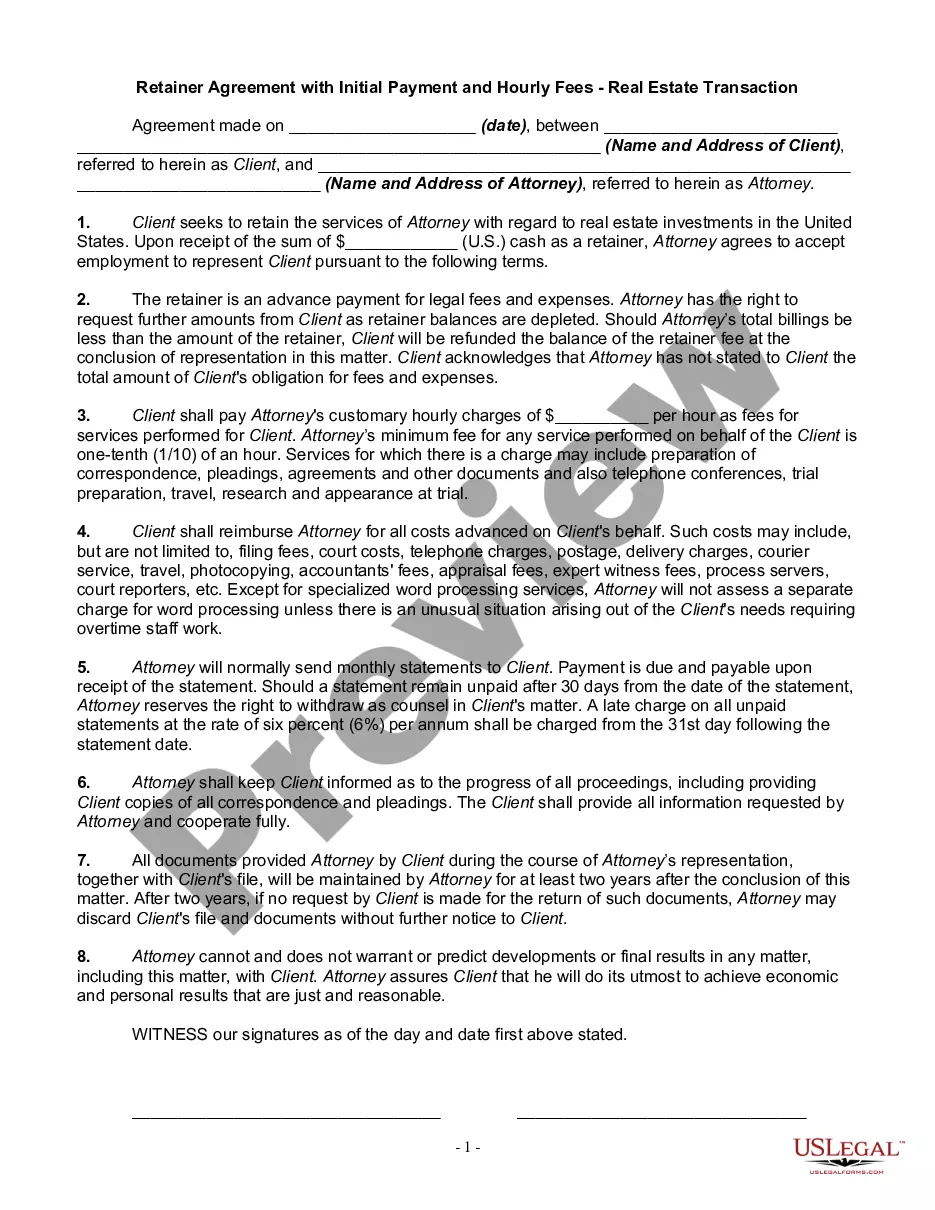
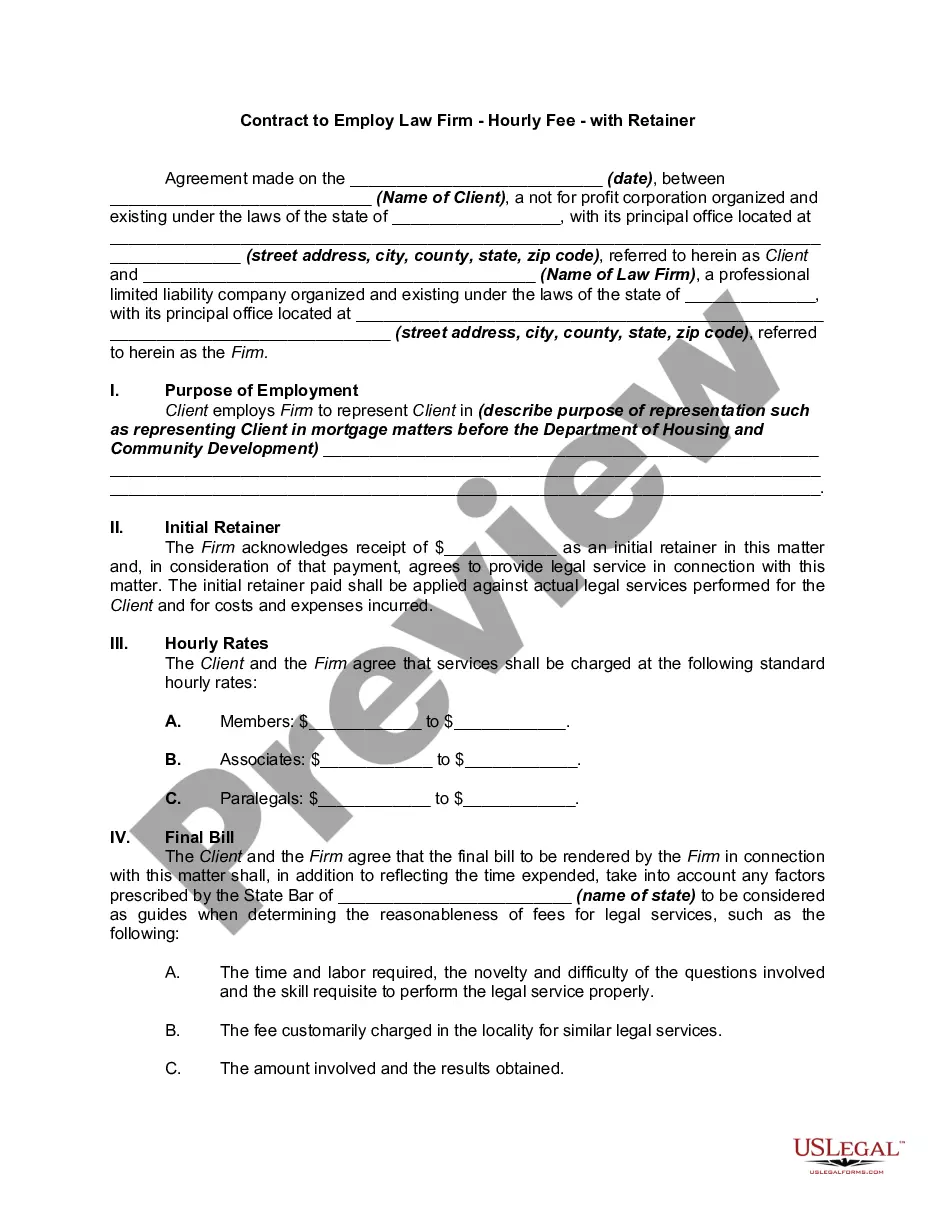
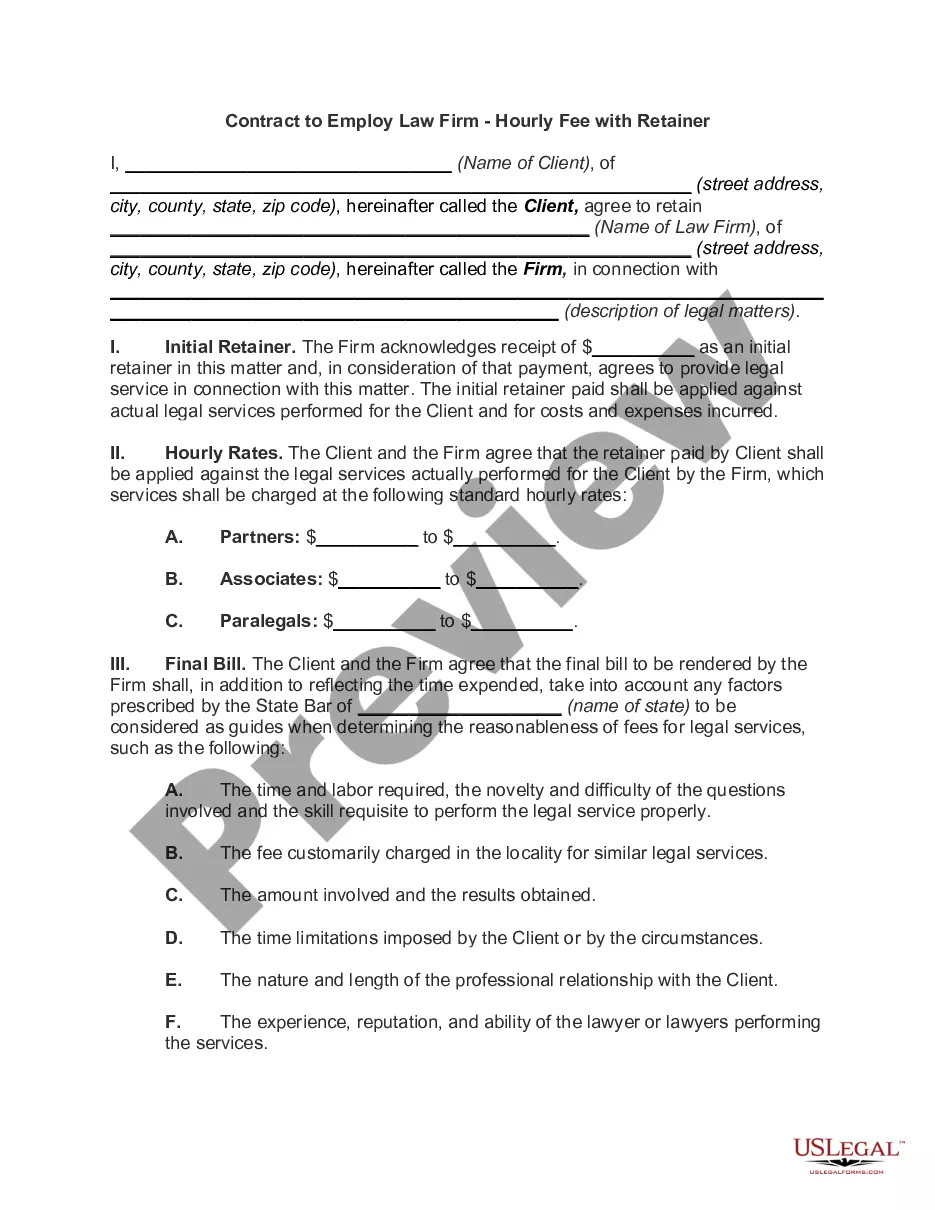
The Retainer Agreement with Initial Payment and Hourly Fees for Real Estate Transactions is a legal document used to secure the services of an attorney for real estate matters. This form establishes the terms of payment, including an initial retainer fee and the hourly rates for services rendered. It is an essential tool that ensures both the client and the attorney understand their obligations and rights during the legal representation process.
Main sections of this form
- Identification of the client and attorney involved in the agreement.
- Details on the retainer fee, including the amount and terms of payment.
- Outline of hourly charges for services provided by the attorney.
- Terms regarding reimbursement for costs associated with the legal representation.
- Guidelines for invoicing and late payment consequences.
- Retention of documents and conditions for disposal after two years.



Common use cases
This retainer agreement should be used when a client seeks to hire an attorney to assist with real estate transactions. It is appropriate for situations such as purchasing or selling property, negotiating leases, or handling disputes related to real estate. Utilizing this form helps ensure clarity in financial arrangements and the scope of legal representation.
Who should use this form
This form is intended for:
- Individuals or organizations engaged in real estate transactions.
- Clients who wish to secure legal representation from an attorney.
- Attorneys providing services that require an upfront retainer fee.
Completing this form step by step
- Enter the date of the agreement at the top of the form.
- Provide the full name and address of both the client and the attorney.
- Specify the amount of the retainer fee to be paid upfront by the client.
- Indicate the attorney's hourly rate and any specific billing practices.
- Sign and date the agreement in the designated spaces for both parties.
Notarization guidance
This form usually doesn’t need to be notarized. However, local laws or specific transactions may require it. Our online notarization service, powered by Notarize, lets you complete it remotely through a secure video session, available 24/7.
Get your form ready online
Our built-in tools help you complete, sign, share, and store your documents in one place.
Make edits, fill in missing information, and update formatting in US Legal Forms—just like you would in MS Word.
Download a copy, print it, send it by email, or mail it via USPS—whatever works best for your next step.
Sign and collect signatures with our SignNow integration. Send to multiple recipients, set reminders, and more. Go Premium to unlock E-Sign.
If this form requires notarization, complete it online through a secure video call—no need to meet a notary in person or wait for an appointment.
We protect your documents and personal data by following strict security and privacy standards.

Make edits, fill in missing information, and update formatting in US Legal Forms—just like you would in MS Word.

Download a copy, print it, send it by email, or mail it via USPS—whatever works best for your next step.

Sign and collect signatures with our SignNow integration. Send to multiple recipients, set reminders, and more. Go Premium to unlock E-Sign.

If this form requires notarization, complete it online through a secure video call—no need to meet a notary in person or wait for an appointment.

We protect your documents and personal data by following strict security and privacy standards.
Common mistakes
- Failing to specify the total amount of the retainer fee can lead to confusion.
- Not including the hourly rate or payment terms may create disputes later.
- Neglecting to sign the agreement invalidates it as a legal document.
Benefits of completing this form online
- The ability to download and complete the form at your convenience.
- Editability allows for quick adjustments to suit your specific needs.
- Access to legally sound templates created by licensed attorneys for peace of mind.
Looking for another form?





Form popularity
FAQ
A retainer fee is an amount of money paid upfront to secure the services of a consultant, freelancer, lawyer, or other professional. A retainer fee is most commonly paid to individual third parties that have been engaged by the payer to perform a specific action on their behalf.
Step 1 Acquire Your Copy Of The Retainer Template From This Page. Step 2 Introduce This Retainer, The Service Provider, And The Client. Step 3 Define When Service Must Begin And When It Must Terminate. Step 4 Document The Pay Rate Or Manner Of Compensation.
A retainer fee is an amount of money paid in advance by a client to assure your services will be available to them for an extended amount of time. The client pays a lump sum upfront, or makes a recurring monthly payment, and you work with them on a long-term project, or provide them with access to services each month.
Generally, if the attorney is on a cash basis of accounting, the retainer is taxable when received. The client is normally given a periodic accounting of the time and costs spent on the case. If the prepaid funds are exhausted, the client is billed for any balance due.
A retainer fee is an advance payment that's made by a client to a professional, and it is considered a down payment on the future services rendered by that professional. Regardless of occupation, the retainer fee funds the initial expenses of the working relationship.
In a definitive sense, a retainer is a fee that is paid in advance in order to hold services (ie. a wedding or event date). While a deposit may also reserve a date, it is returned when the services have been completed. A retainer is by default non-refundable and is not returned.
The amount you're to receive each month. The date you're to be paid by. Any invoicing procedures you're expected to follow. Exactly how much work and what type of work you expect to do. When your client needs to let you know about the month's work by.
Accounting for a Retainer Fee If the firm is using the accrual basis of accounting, retainers are recognized as a liability upon receipt of the cash, and are recognized as revenue only after the associated work has been performed.
Accounting for a Retainer Fee If the firm is using the accrual basis of accounting, retainers are recognized as a liability upon receipt of the cash, and are recognized as revenue only after the associated work has been performed.