Illinois Warranty Deed from Husband to Himself and Wife
About this form
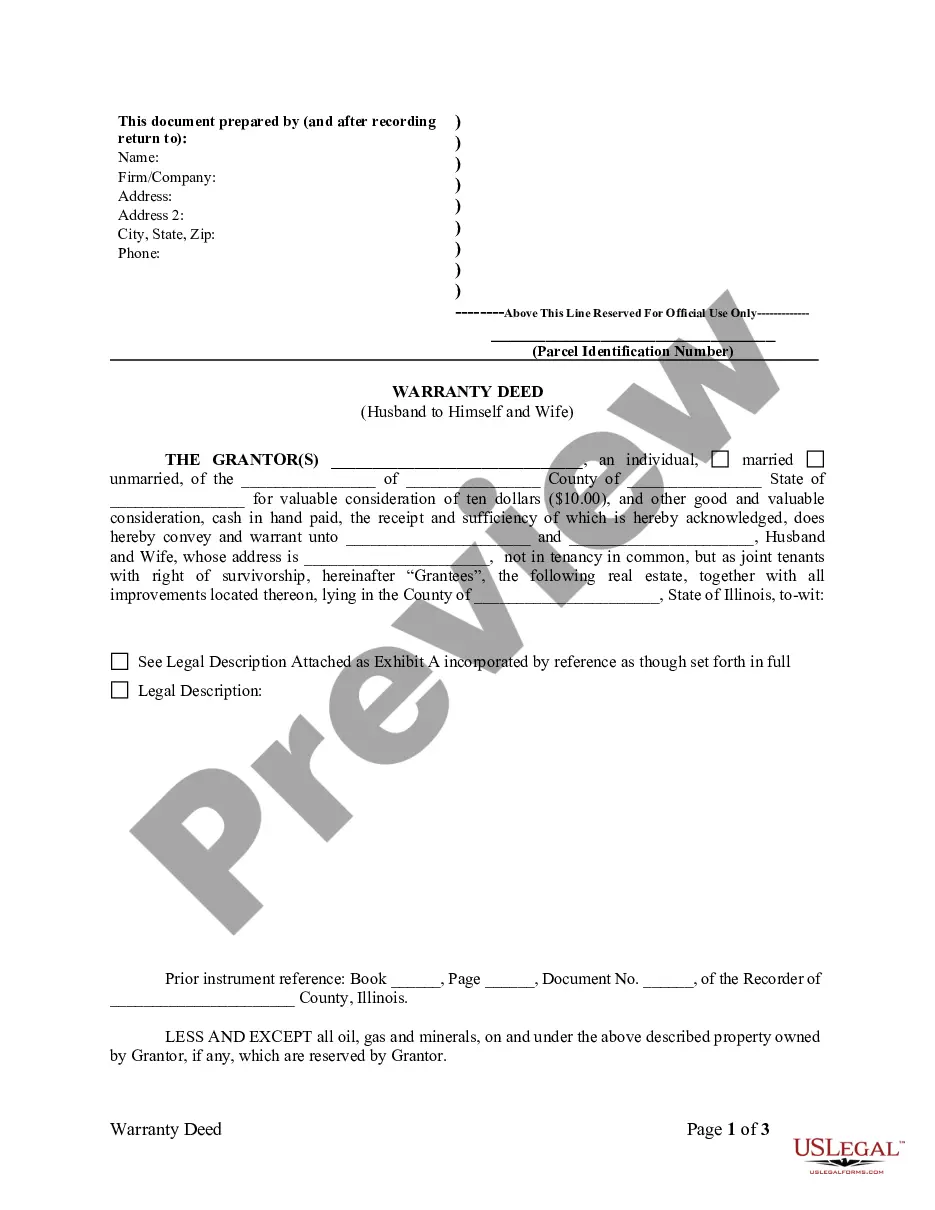
The Warranty Deed from Husband to Himself and Wife is a legal document that allows a husband to transfer ownership of property to himself and his wife as joint tenants. This form ensures that both parties hold equal interest in the property with rights of survivorship, meaning if one spouse passes away, the other automatically inherits the entire interest in the property. This deed is specifically designed to comply with state statutory laws, ensuring it meets all legal requirements in the jurisdiction of use.
Form components explained
- Identification of the grantor (husband) and grantees (husband and wife).
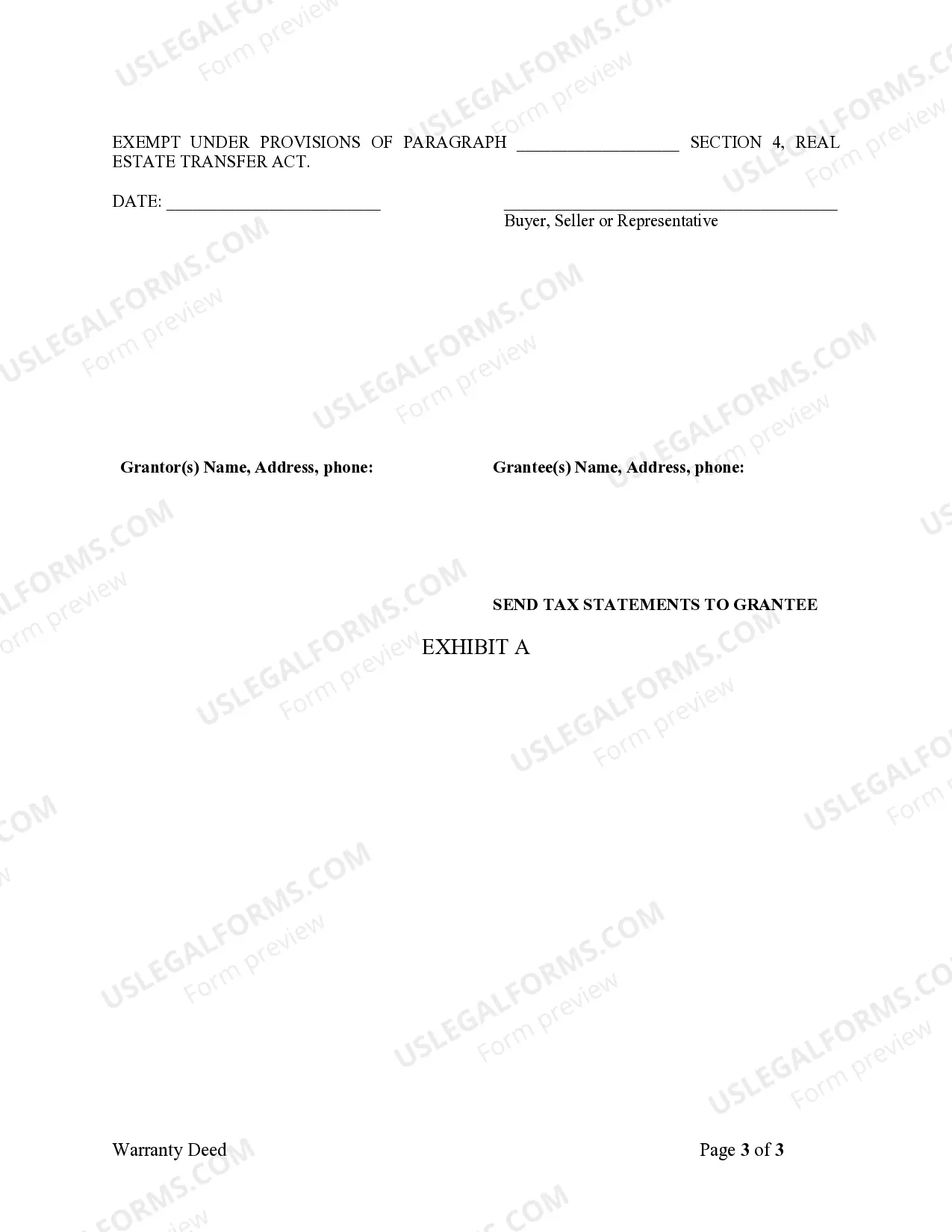
- Legal description of the property being transferred.
- Statement of the property being conveyed as joint tenants with rights of survivorship.
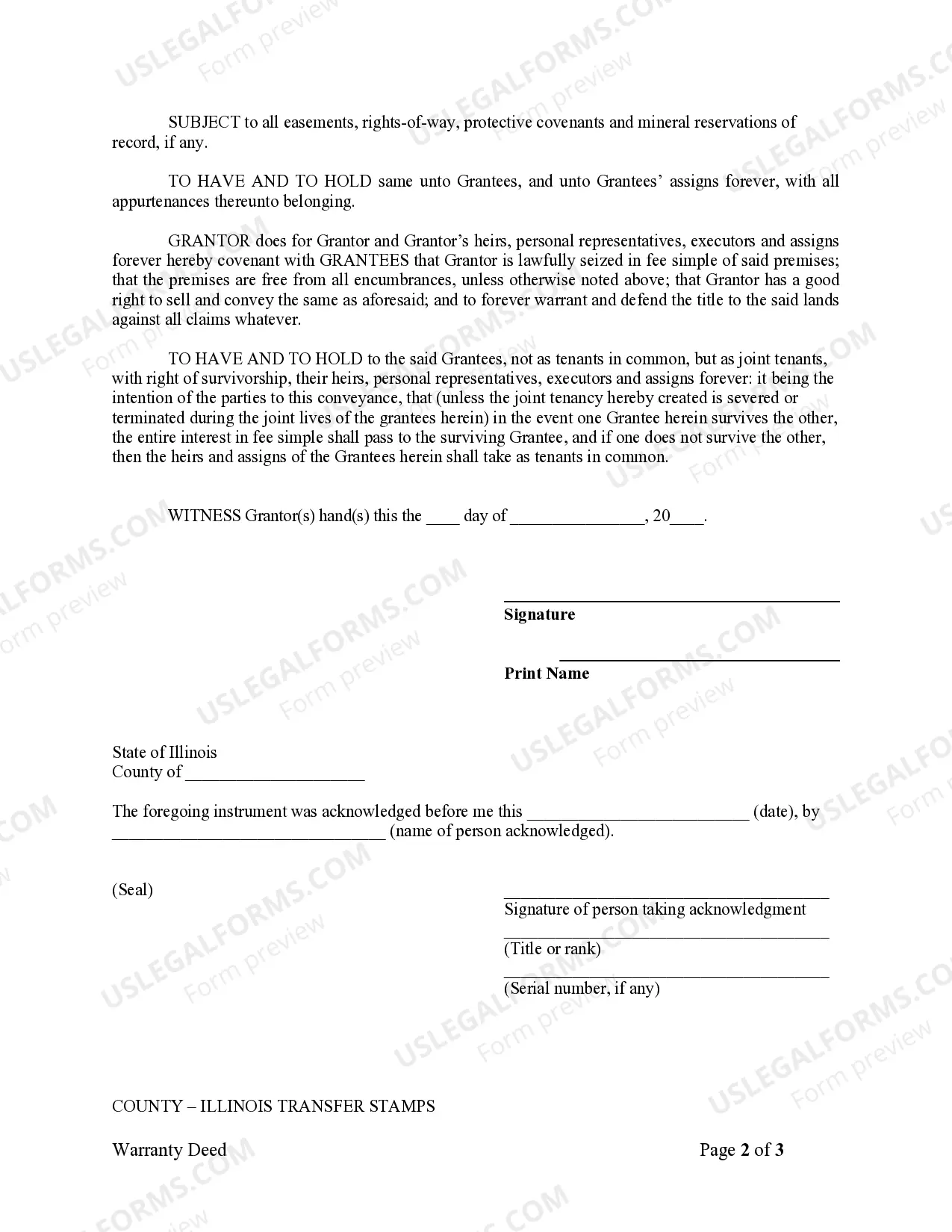
- Covenant of warranty from the grantor, ensuring a clear title to the property.
- Signature block for the grantor and acknowledgment by a notary public.




Common use cases
This form is typically used when a husband wants to transfer property ownership to both himself and his wife, ensuring joint ownership. It is particularly useful in situations such as marriage, estate planning, or when consolidating property ownership to reflect both spouses' names on the title. Additionally, using this form provides clarity on survivorship rights, which can simplify inheritance matters.
Who this form is for
- Married couples looking to establish joint ownership of property.
- Husbands who wish to add their spouse to the title of property they own.
- Individuals involved in estate planning to ensure property passes to the surviving spouse.
- Homeowners who want to clarify ownership and survivorship rights.
How to prepare this document
- Begin by entering the names of the grantor (husband) and grantees (husband and wife).
- Provide a full legal description of the property in the appropriate section.
- Specify that the property is conveyed as joint tenants with rights of survivorship.
- Complete all necessary information regarding the grantor's legal authority to transfer the property.
- Sign the document in the presence of a notary public, who will then notarize the deed.
Notarization requirements for this form
Yes, this form must be notarized to be legally valid. Notarization confirms the identities of the parties involved and that they willingly signed the document. US Legal Forms offers integrated online notarization services, available 24/7, allowing you to securely complete the process via a video call without the need for travel.
Get your form ready online
Our built-in tools help you complete, sign, share, and store your documents in one place.
Make edits, fill in missing information, and update formatting in US Legal Forms—just like you would in MS Word.
Download a copy, print it, send it by email, or mail it via USPS—whatever works best for your next step.
Sign and collect signatures with our SignNow integration. Send to multiple recipients, set reminders, and more. Go Premium to unlock E-Sign.
If this form requires notarization, complete it online through a secure video call—no need to meet a notary in person or wait for an appointment.
We protect your documents and personal data by following strict security and privacy standards.

Make edits, fill in missing information, and update formatting in US Legal Forms—just like you would in MS Word.

Download a copy, print it, send it by email, or mail it via USPS—whatever works best for your next step.

Sign and collect signatures with our SignNow integration. Send to multiple recipients, set reminders, and more. Go Premium to unlock E-Sign.

If this form requires notarization, complete it online through a secure video call—no need to meet a notary in person or wait for an appointment.

We protect your documents and personal data by following strict security and privacy standards.
Avoid these common issues
- Failing to include a complete legal description of the property.
- Not specifying the correct ownership structure (joint tenancy vs. tenants in common).
- Omitting the notary public's acknowledgment or signature.
- Not reviewing state-specific legal requirements before submitting.
Advantages of online completion
- Convenience: Download and complete the form at your own pace without scheduling appointments.
- Editability: Easily customize the form to reflect specific details unique to your situation.
- Reliability: Forms are prepared by licensed attorneys, ensuring legal accuracy and compliance.
Looking for another form?
Form popularity
FAQ
To fill out a quit claim deed to add a spouse, first enter your name as the grantor and your spouse's name as the grantee. Include a clear description of the property being transferred. After completing the form, both parties must sign it in front of a notary public to ensure its validity.
It's important to note that a warranty deed does not actually prove the grantor has ownership (a title search is the best way to prove that), but it is a promise by the grantor that they are transferring ownership and if it turns out they don't actually own the property, the grantor will be responsible for compensating
The two parties involved in a warranty deed are the seller or owner, also known as the grantor, and the buyer or the grantee. Either party can be an individual or a business, and are often strangers to each other.
DEED: A written instrument by which one party, the Grantor, conveys the title of ownership in property to another party, the Grantee. A Warranty Deed contains promises, called covenants, that the Grantor makes to the Grantee.It is even possible that the Grantor does not have any title or ownership interest at all!
A warranty deed guarantees that: The grantor is the rightful owner of the property and has the legal right to transfer the title.The title would withstand third-party claims to ownership of the property. The grantor will do anything to ensure the grantee's title to the property.