Illinois Warranty Deed from Corporation to Individual
What is this form?
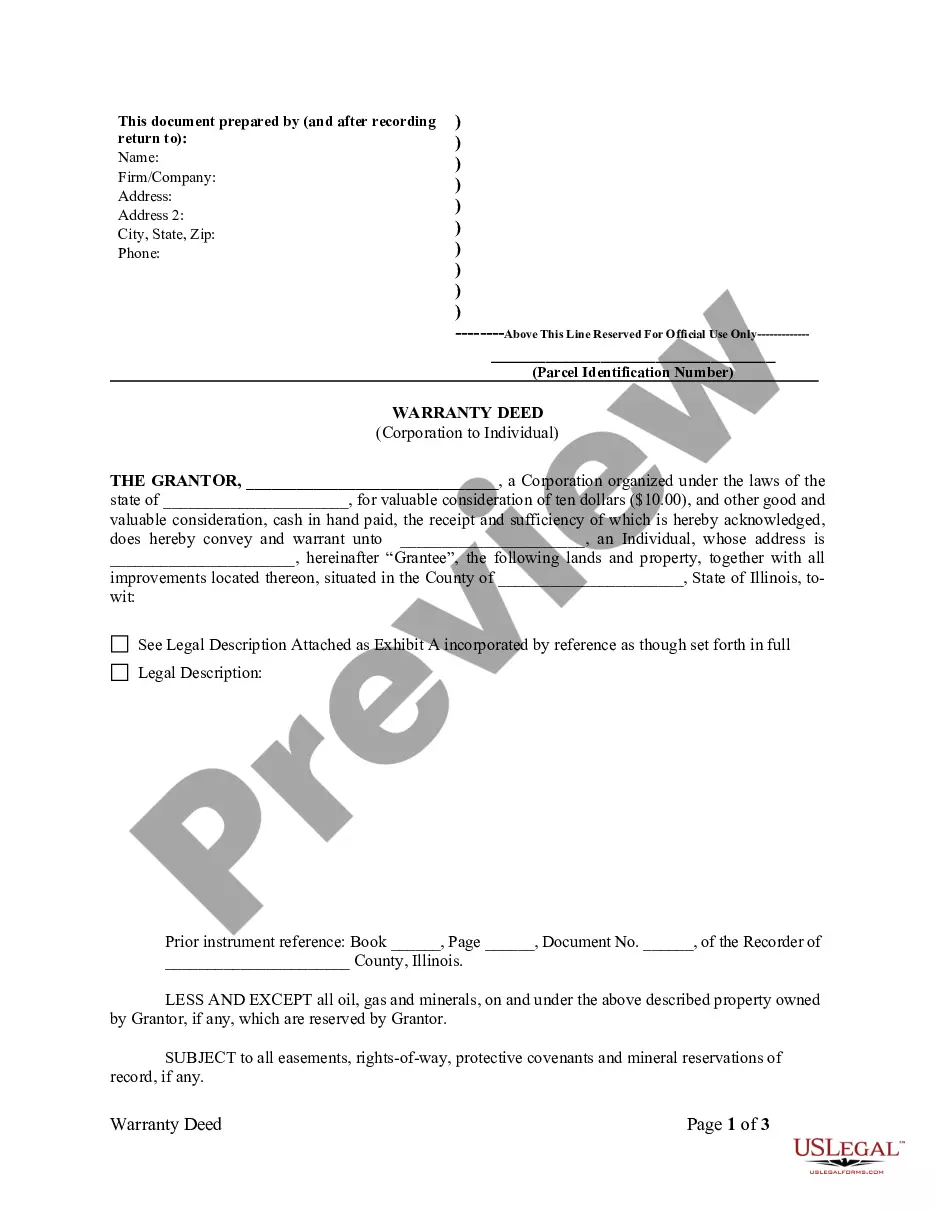
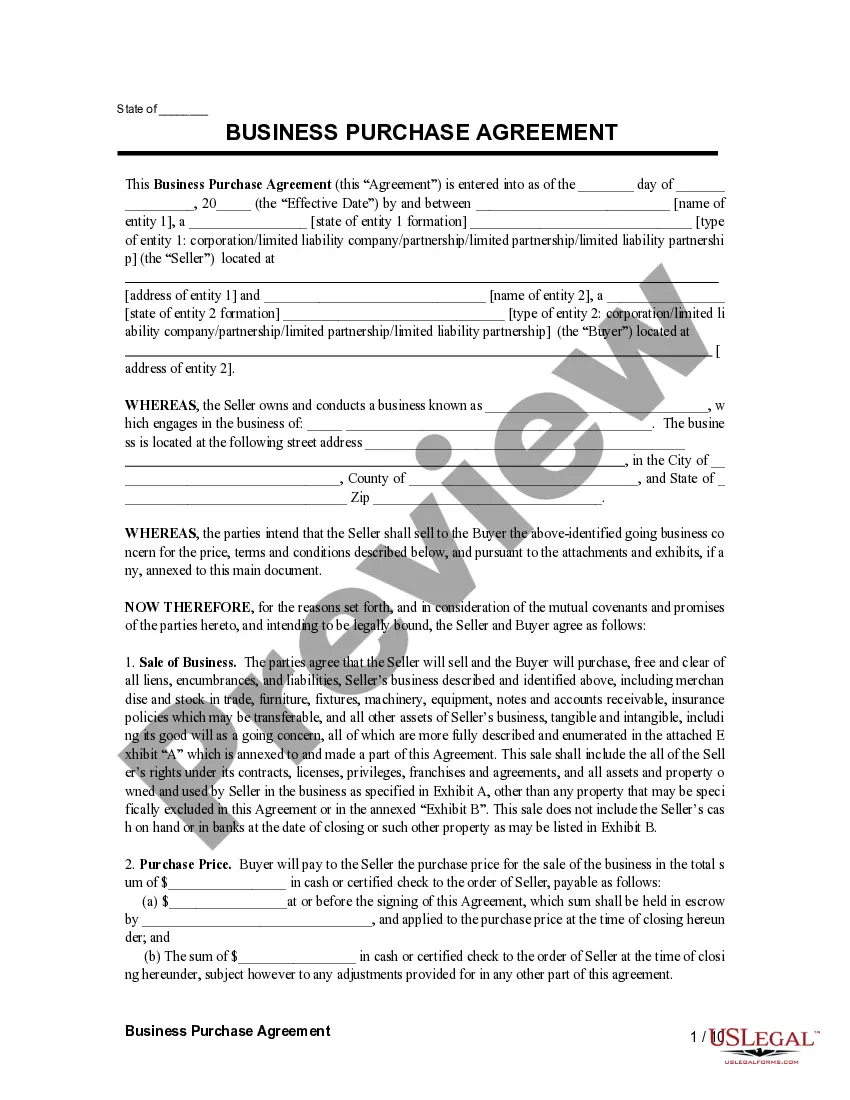
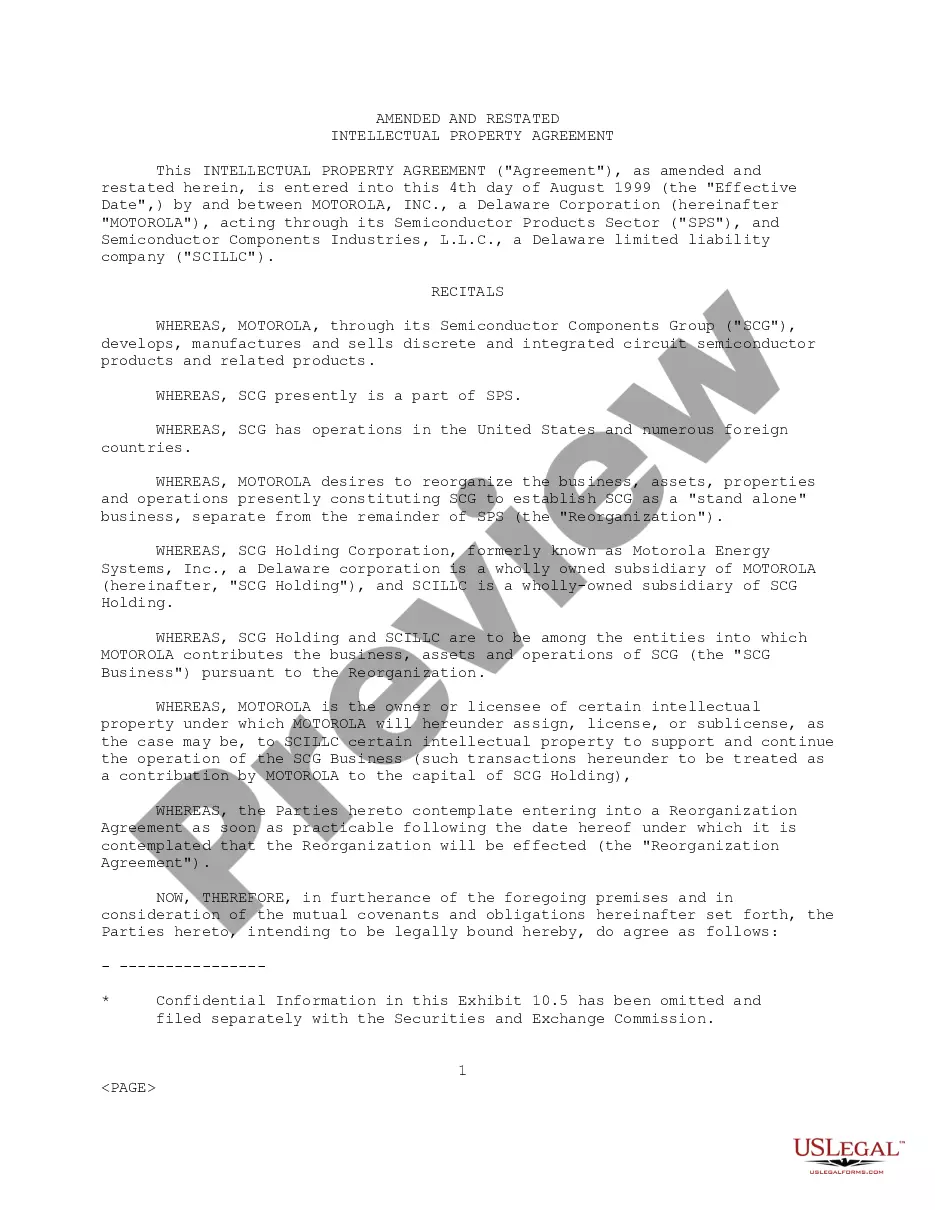
The Warranty Deed from Corporation to Individual is a legal document used to transfer property ownership from a corporation (the Grantor) to an individual (the Grantee). This form ensures that the corporation conveys clear title to the property, while reserving certain rights such as oil, gas, and mineral interests, if applicable. This form complies with statutory laws, making it a reliable choice for real property transactions between a corporation and a private individual. Unlike other deeds, this document specifically addresses the nuances of corporate ownership transfer.
Key parts of this document
- Identification of the Grantor (Corporation) and Grantee (Individual)
- Legal description of the property being transferred
- Reservations of rights related to minerals and utilities
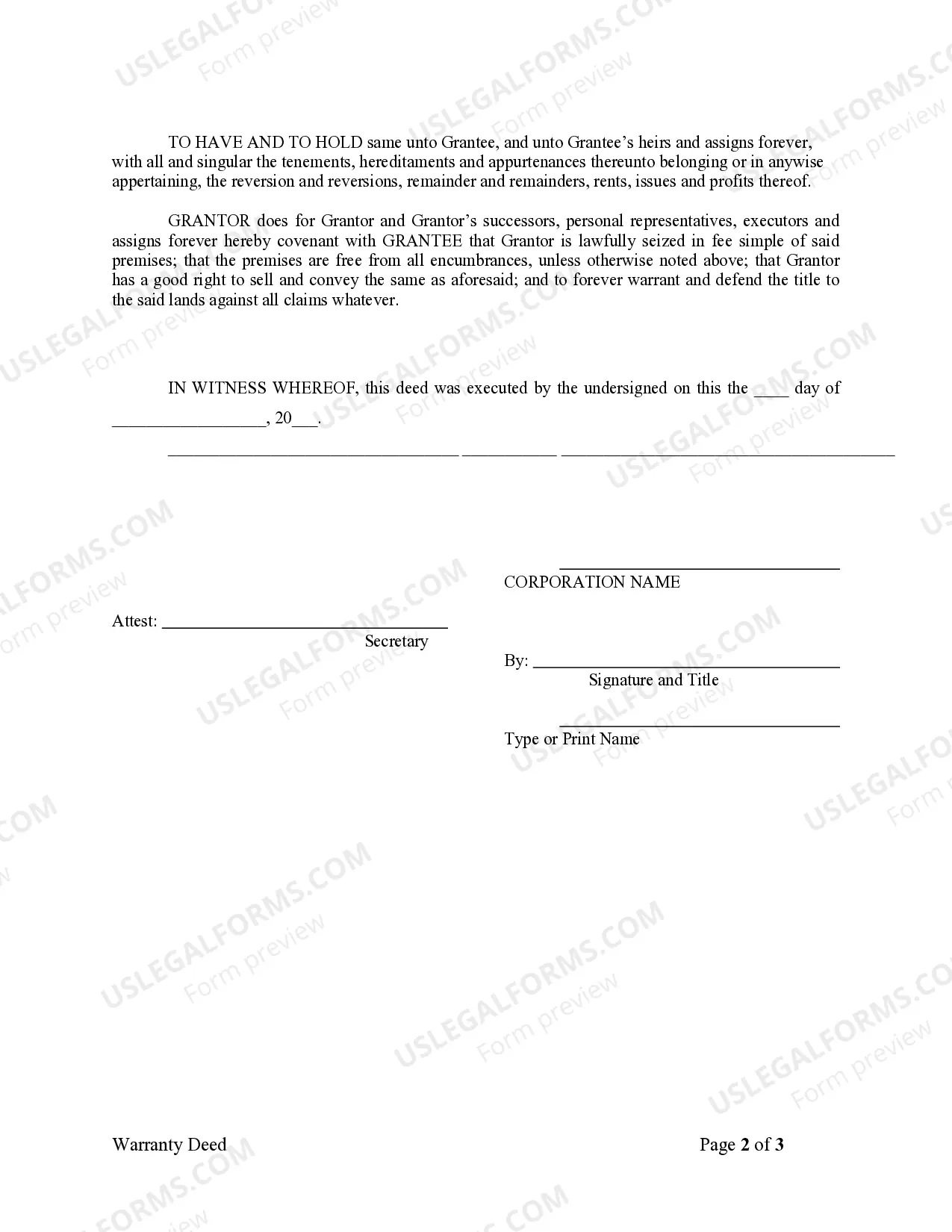
- Covenants and warranties regarding title and encumbrances
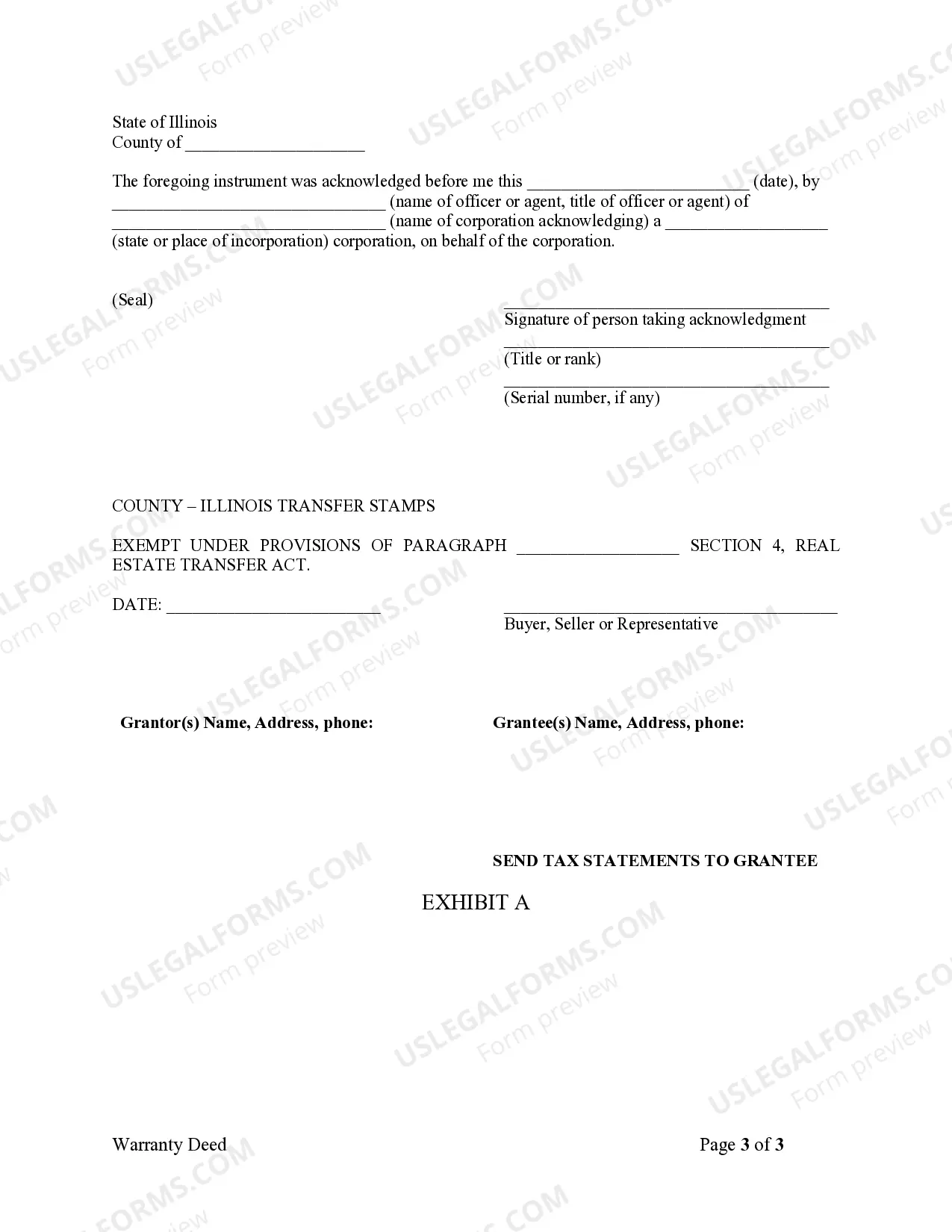
- Notarial acknowledgment and signatures




When to use this document
This form should be used when a corporation wishes to transfer property ownership to an individual. This may occur during transactions such as selling property, gifting property, or facilitating estate planning for corporate-owned assets. Properly transferring ownership can help avoid future disputes over property rights.
Who this form is for
- Corporations looking to convey property to an individual
- Individuals receiving property from a corporation
- Real estate professionals assisting with corporate property transactions
- Estate planners managing assets owned by corporations
Completing this form step by step
- Identify the parties involved by entering the full name of the corporation (Grantor) and the individual (Grantee).
- Include a detailed legal description of the property being transferred.
- Specify any reservations regarding oil, gas, and mineral interests as described in the form.
- Ensure all necessary covenants regarding title are included and properly phrased.
- Sign and notarize the document to validate the transfer of ownership.
Is notarization required?
Yes, this form must be notarized to be legally valid. Notarization helps confirm the identities of the parties involved and ensures that the transfer is executed under lawful conditions. US Legal Forms offers integrated online notarization, available 24/7, securing the process through a convenient and efficient video call without the need for physical travel.
Get your form ready online
Our built-in tools help you complete, sign, share, and store your documents in one place.
Make edits, fill in missing information, and update formatting in US Legal Forms—just like you would in MS Word.
Download a copy, print it, send it by email, or mail it via USPS—whatever works best for your next step.
Sign and collect signatures with our SignNow integration. Send to multiple recipients, set reminders, and more. Go Premium to unlock E-Sign.
If this form requires notarization, complete it online through a secure video call—no need to meet a notary in person or wait for an appointment.
We protect your documents and personal data by following strict security and privacy standards.

Make edits, fill in missing information, and update formatting in US Legal Forms—just like you would in MS Word.

Download a copy, print it, send it by email, or mail it via USPS—whatever works best for your next step.

Sign and collect signatures with our SignNow integration. Send to multiple recipients, set reminders, and more. Go Premium to unlock E-Sign.

If this form requires notarization, complete it online through a secure video call—no need to meet a notary in person or wait for an appointment.

We protect your documents and personal data by following strict security and privacy standards.
Avoid these common issues
- Failing to provide a detailed legal description of the property.
- Not including specific reservations for minerals or other rights.
- Omitting the notary signature and seal, leading to invalidation of the deed.
- Not ensuring both parties have signed the document.
Why complete this form online
- Convenience of downloading and accessing the form anytime.
- Editability allows customization to fit specific transaction details.
- Forms drafted by licensed attorneys ensure legal compliance and reliability.
Summary of main points
- This Warranty Deed facilitates the transfer of property from a corporation to an individual.
- Ensure proper completion and notarization to uphold the deed's legal validity.
- Be aware of state-specific regulations regarding property transfers.
Looking for another form?

Form popularity
FAQ
Signing over the interest in the property, whether land or house, can be done in several ways. However, the most common instruments of transfer of property between family members are the quitclaim deed, the gift deed or the transfer on death (TOD) deed.
Think about IHT implications potentially exempt transfer Be aware of the rules on gifts with reservation of benefit You will no longer be the legal owner of the property. Risk from outside parties. Don't forget capital gains tax.
Locate the most recent deed to the property. Create the new deed. Sign and notarize the new deed. Record the deed in the Illinois land records.
The first common requirement is that the deed must be in writing and signed by the grantor(s). 765 ILCS 5/1. Generally, deeds conveying a homestead estate must also be signed by the grantor's spouse, except where one spouse conveys to the other. A few other exceptions to this rule are set forth at 735 ILCS 5/12-904.
Although it's possible to change the names on title deeds yourself, we recommend that you seek professional help from a solicitor. The value of property is sufficiently high to make it worthwhile getting the transfer right.
Retrieve your original deed. Get the appropriate deed form. Draft the deed. Sign the deed before a notary. Record the deed with the county recorder. Obtain the new original deed.
No law forbids adding someone to your mortgaged home's deed or in signing your home over to others through one. Mortgage lenders understand deeds, though, and use loan due-on-sale clauses to prevent unauthorized property sales or transfers.
Discuss the terms of the deed with the new owners. Hire a real estate attorney to prepare the deed. Review the deed. Sign the deed in front of a notary public, with witnesses present. File the deed on public record.
There is one way you can make an IRS-approved gift of your home while still living there. That is with a qualified personal residence trust (or QPRT). Using a QPRT potentially allows you to get the residence out of your taxable estate without moving out even though you have not made a full FMV sale to your child.