California Performance Horse Lease Agreement
Understanding this form
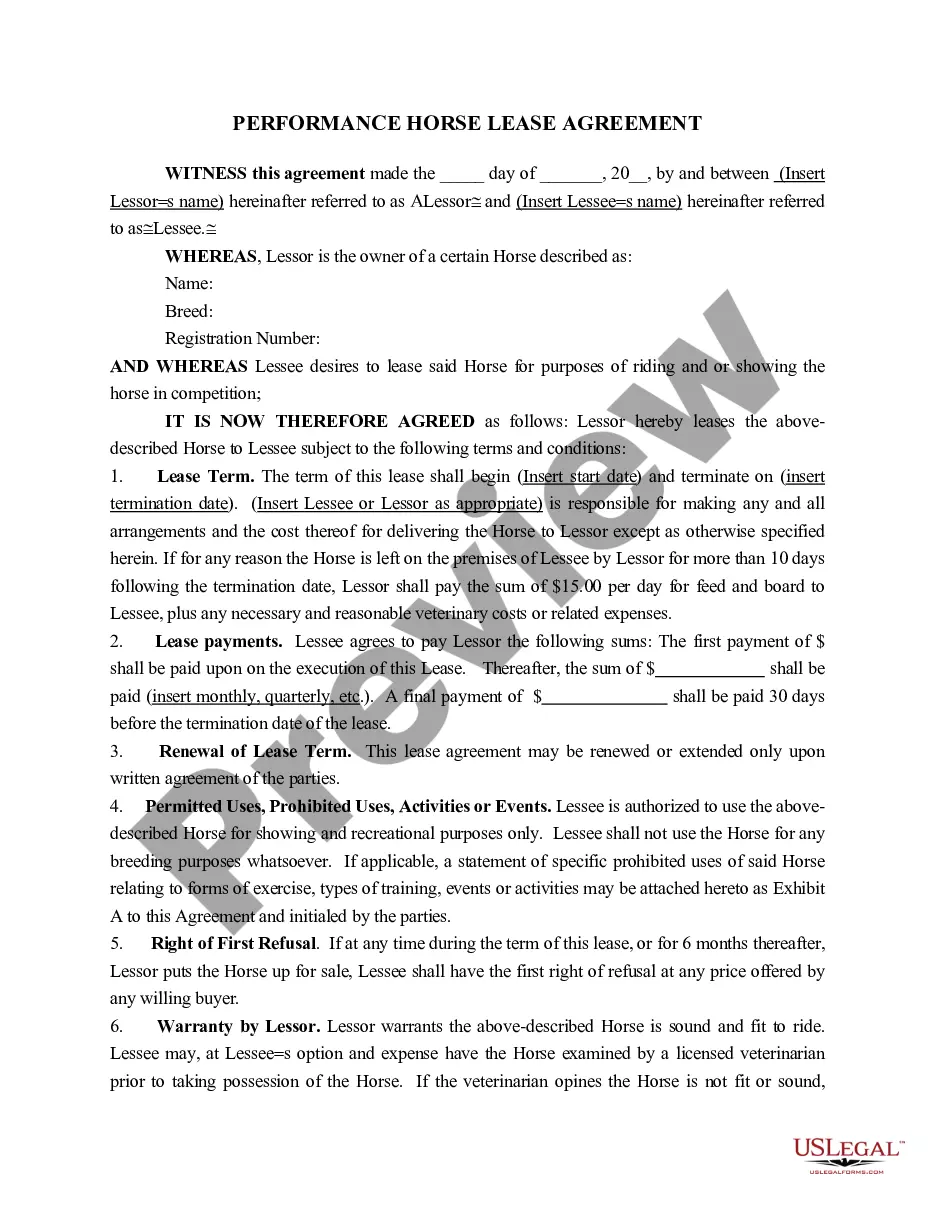
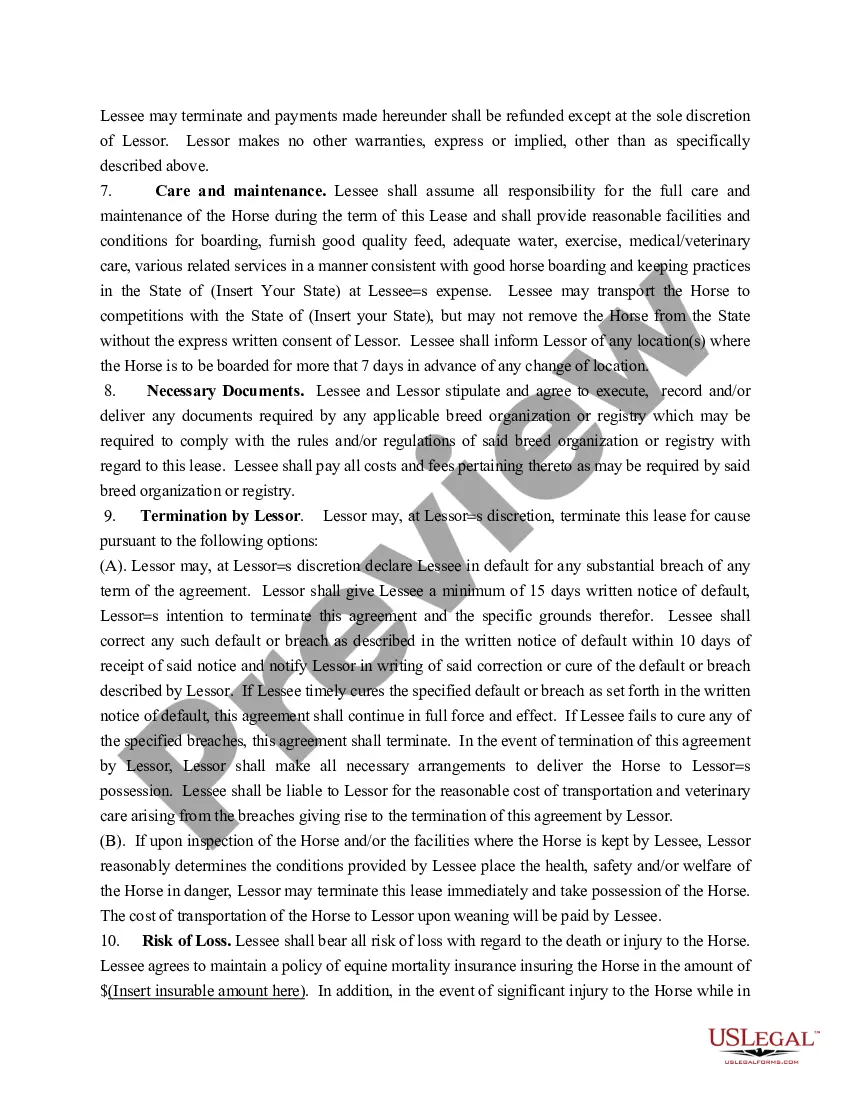
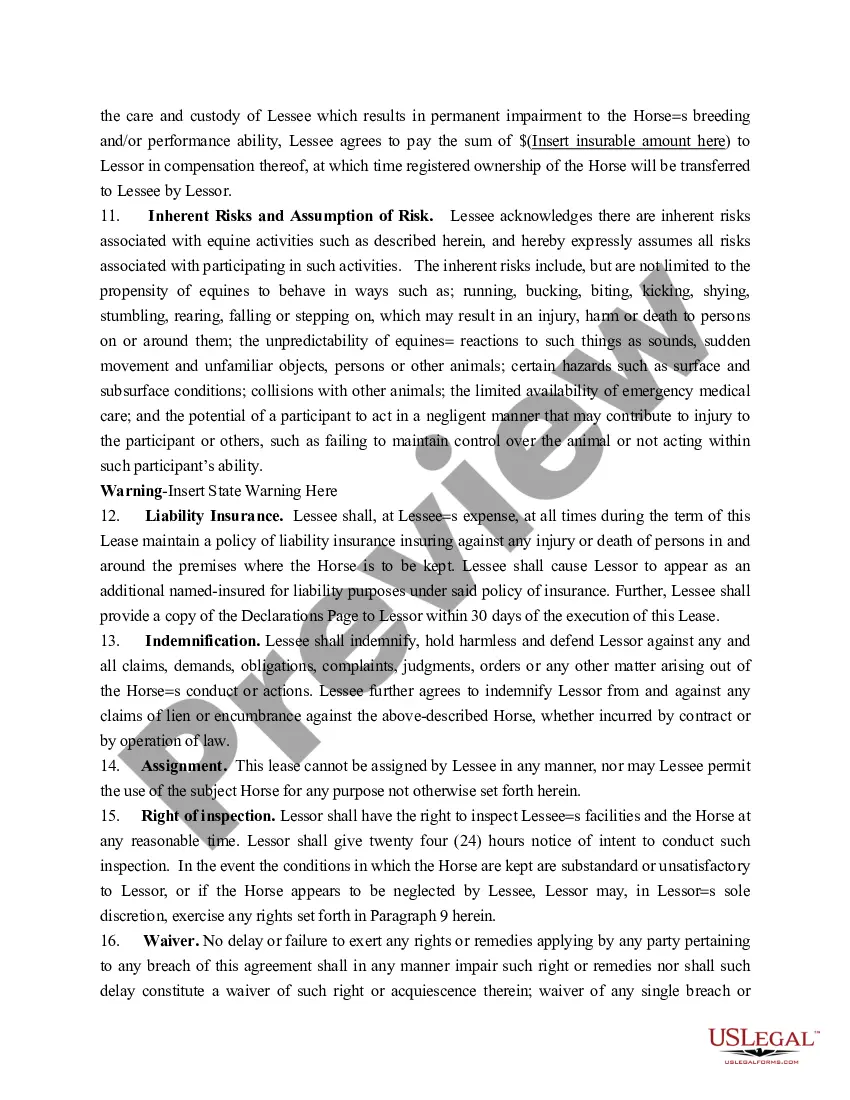
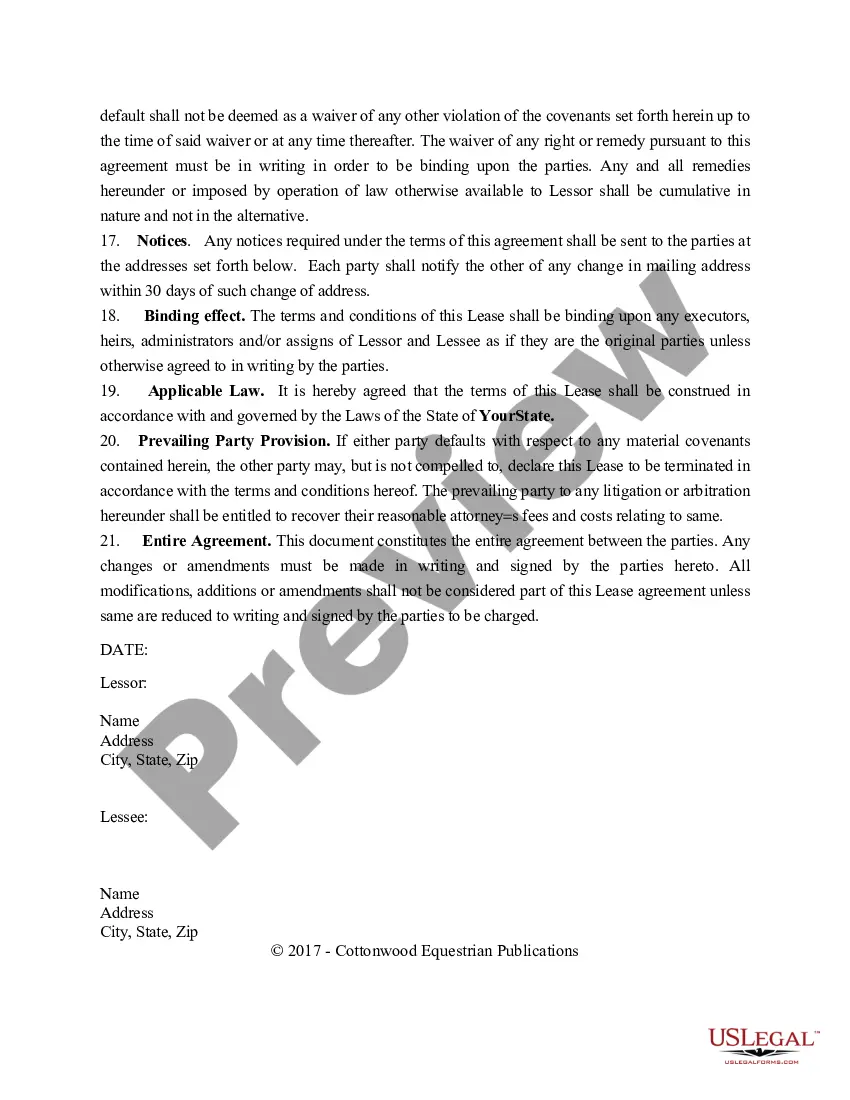
The Performance Horse Lease Agreement is a legal document that allows a lessee to lease a horse owned by another party, specifically intended for riding or showing in competitions. This agreement outlines the responsibilities and rights of both the lessor and lessee, covering aspects such as lease payments, care and maintenance of the horse, and conditions regarding use and risk. Unlike standard horse lease agreements, this form specifically addresses performance-related aspects, making it suitable for competitive environments.
What’s included in this form
- Lease term: Specifies the duration of the lease with start and end dates.
- Lease payments: Details initial, ongoing, and final payments required from the lessee.
- Permitted and prohibited uses: Outlines allowed uses of the horse and restrictions on breeding or other activities.
- Right of first refusal: Gives the lessee the first chance to purchase the horse if the lessor decides to sell.
- Risk of loss: Addresses liability for health and welfare of the horse and conditions for lease termination.

Common use cases
This form is essential when a horse owner wants to lease their horse for riding or performance related activities, ensuring both parties have clear expectations. It is commonly used in competitive equestrian events where a lessee may not own a horse or is seeking a horse for specific shows or competitions. This agreement is particularly beneficial in situations where the lessee plans to engage in training or competing with the horse and needs to formalize the arrangement for safety and liability reasons.
Who can use this document
This agreement is intended for the following parties:
- Horse owners (lessors) looking to lease their horse for performance or competition.
- Riders or competitors (lessees) seeking to rent a horse for showing or recreational activities.
- Equestrian facilities or trainers needing clear terms for horse leases related to competitions.
Completing this form step by step
- Identify the parties: Enter the names and contact information for both the lessor and lessee.
- Specify the horse: Include key details such as the horse's name, breed, and registration number.
- Enter lease dates: Indicate the start and end dates of the lease term.
- Detail payment terms: Specify the amounts and schedule for lease payments.
- Sign and date: Ensure both parties sign the agreement to validate the lease.
Does this form need to be notarized?
This form does not typically require notarization unless specified by local law. However, having it notarized can add an additional layer of authenticity to the agreement. US Legal Forms offers integrated online notarization for added convenience.
Get your form ready online
Our built-in tools help you complete, sign, share, and store your documents in one place.
Make edits, fill in missing information, and update formatting in US Legal Forms—just like you would in MS Word.
Download a copy, print it, send it by email, or mail it via USPS—whatever works best for your next step.
Sign and collect signatures with our SignNow integration. Send to multiple recipients, set reminders, and more. Go Premium to unlock E-Sign.
If this form requires notarization, complete it online through a secure video call—no need to meet a notary in person or wait for an appointment.
We protect your documents and personal data by following strict security and privacy standards.

Make edits, fill in missing information, and update formatting in US Legal Forms—just like you would in MS Word.

Download a copy, print it, send it by email, or mail it via USPS—whatever works best for your next step.

Sign and collect signatures with our SignNow integration. Send to multiple recipients, set reminders, and more. Go Premium to unlock E-Sign.

If this form requires notarization, complete it online through a secure video call—no need to meet a notary in person or wait for an appointment.

We protect your documents and personal data by following strict security and privacy standards.
Mistakes to watch out for
- Failing to include the complete identification of the horse, leading to disputes.
- Not specifying the terms regarding care and maintenance of the horse.
- Overlooking the need for signatures from both parties, which can invalidate the agreement.
- Neglecting to address what happens in case of an emergency or health issue involving the horse.
Benefits of using this form online
- Convenience: Easily download and fill out the agreement at your own pace.
- Editability: Customize sections of the lease to fit your unique arrangements.
- Reliability: Access templates drafted by licensed attorneys, ensuring legal compliance.
Legal use & context
- The agreement is enforceable in a court of law, provided it is completed accurately and signed by both parties.
- Clear definitions in the agreement can help prevent disputes regarding the ownership and care of the horse.
What to keep in mind
- The Performance Horse Lease Agreement is tailored for leasing horses specifically for performance and competitions.
- It clearly outlines financial obligations, responsibilities for care, and conditions for use.
- Both parties must ensure all terms are understood and agreed upon to avoid future conflicts.
Looking for another form?
Form popularity
FAQ
Leasing a horse commits you to follow the terms outlined in the California Performance Horse Lease Agreement. You need to ensure regular upkeep, such as feeding, grooming, and ensuring health care. Additionally, facilitate training and exercise to keep the horse fit. Keeping the horse’s social and physical needs in mind is essential for a rewarding leasing experience.
When you lease a horse, you start by thoroughly reviewing the California Performance Horse Lease Agreement to understand your rights and responsibilities. Engage with the owner to learn about the horse’s needs and care. It's essential to maintain open communication for a smooth leasing experience. You will also need to ensure the horse receives proper care, feeding, and exercise.
Filling out a California Performance Horse Lease Agreement requires clear details about the horse, terms, and responsibilities of both parties. Start by entering the names of the lessor and lessee, along with their contact information. Next, describe the horse, including breed, age, and registration details. Finally, specify rental terms such as duration, payment schedule, and responsibilities regarding care and maintenance.
To obtain your California Performance Horse Lease Agreement, you can visit the US Legal Forms website. There, you will find a collection of professionally designed lease agreements tailored for California. Simply select the agreement that meets your needs, and you can fill it out and download it quickly. This user-friendly platform provides a reliable solution for securing your lease agreement seamlessly, ensuring you have the necessary documentation for your horse leasing arrangements.
Leasing a horse involves clear rules, which should be detailed in your California Performance Horse Lease Agreement. Typically, the lease will outline the responsibilities of both the lessee and the lessor, including care, maintenance, and usage of the horse. It's crucial to adhere to the agreed schedules for riding and training. Understanding these rules ensures a positive experience for both you and the horse.
To exit a horse lease, you should first review your California Performance Horse Lease Agreement for any exit clauses. Communication with the horse owner is essential; discussing your reasons for wanting to end the lease can lead to a mutual understanding. If both parties agree, you can draft a lease termination document to finalize the process. Always consider legal advice to ensure compliance with the terms outlined in your agreement.
Whether you need your own tack often depends on the lease agreement you enter into with the horse owner. Some leases include the use of the owner's tack, while others may require you to provide your own. It's advisable to discuss this during the leasing process and outline it in the California Performance Horse Lease Agreement. Ensuring clarity on equipment use helps avoid any misunderstandings later on.
Horse leasing allows you to enjoy riding and caring for a horse without the full commitment of ownership. The lease usually specifies the use, responsibilities, and costs associated with the horse. With a California Performance Horse Lease Agreement in place, you gain access to the horse while the owner retains ownership. This arrangement benefits both parties, offering flexibility and companionship.
Leasing a horse typically begins with finding a suitable horse that matches your needs. After selecting a horse, you will discuss the terms with the owner, which can include the duration of the lease and associated costs. It's important to review or draft a California Performance Horse Lease Agreement to clarify responsibilities and ensure both parties are protected. Once both sides agree on the terms, you can finalize the agreement.
Filling out a California residential lease agreement requires attention to detail and understanding of the terms involved. Start by entering the names of the landlord and tenant, along with the property address. Next, specify the lease duration, rent amount, and payment schedule. Lastly, ensure you both sign the agreement to make it legally binding.