Idaho Warranty Deed to Child Reserving a Life Estate in the Parents

Overview of this form
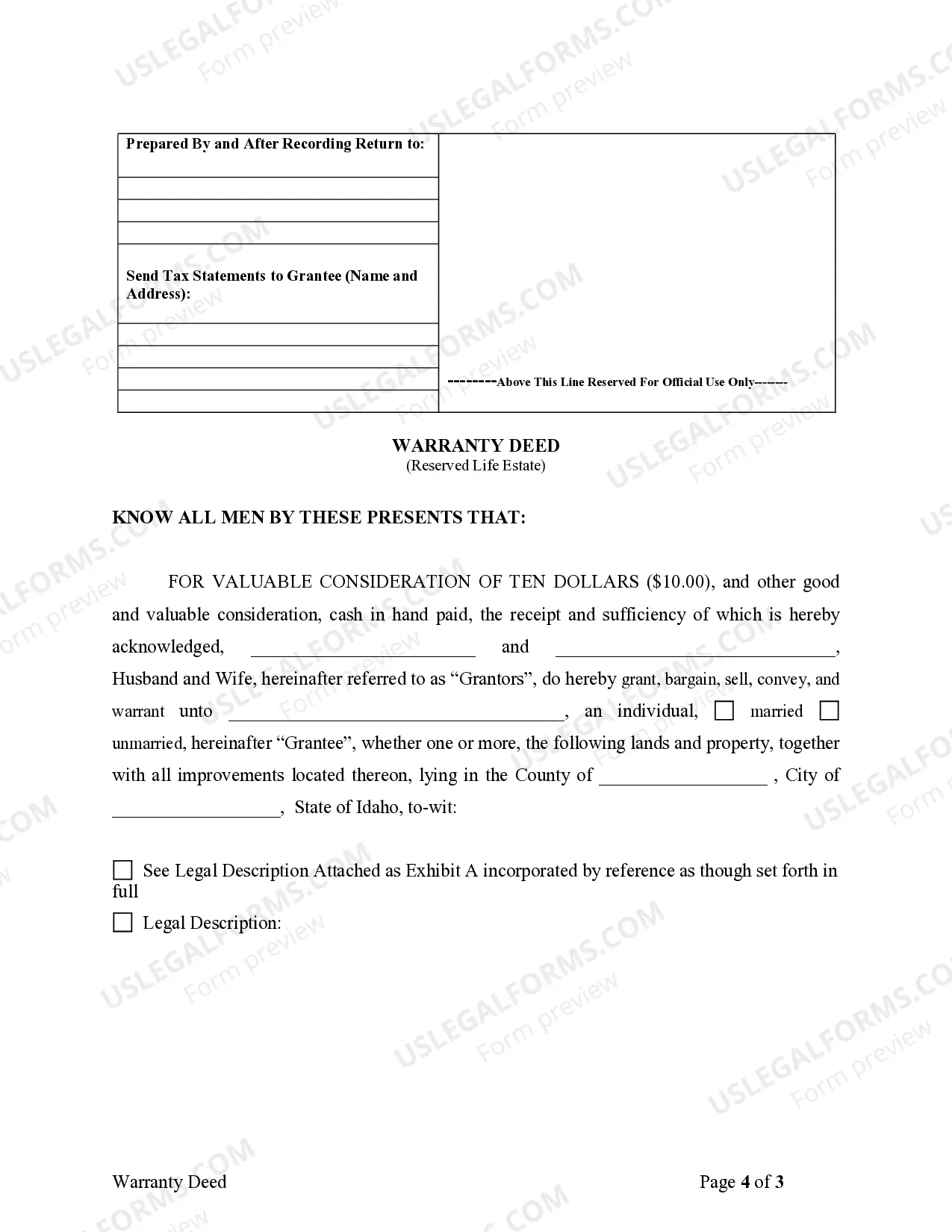
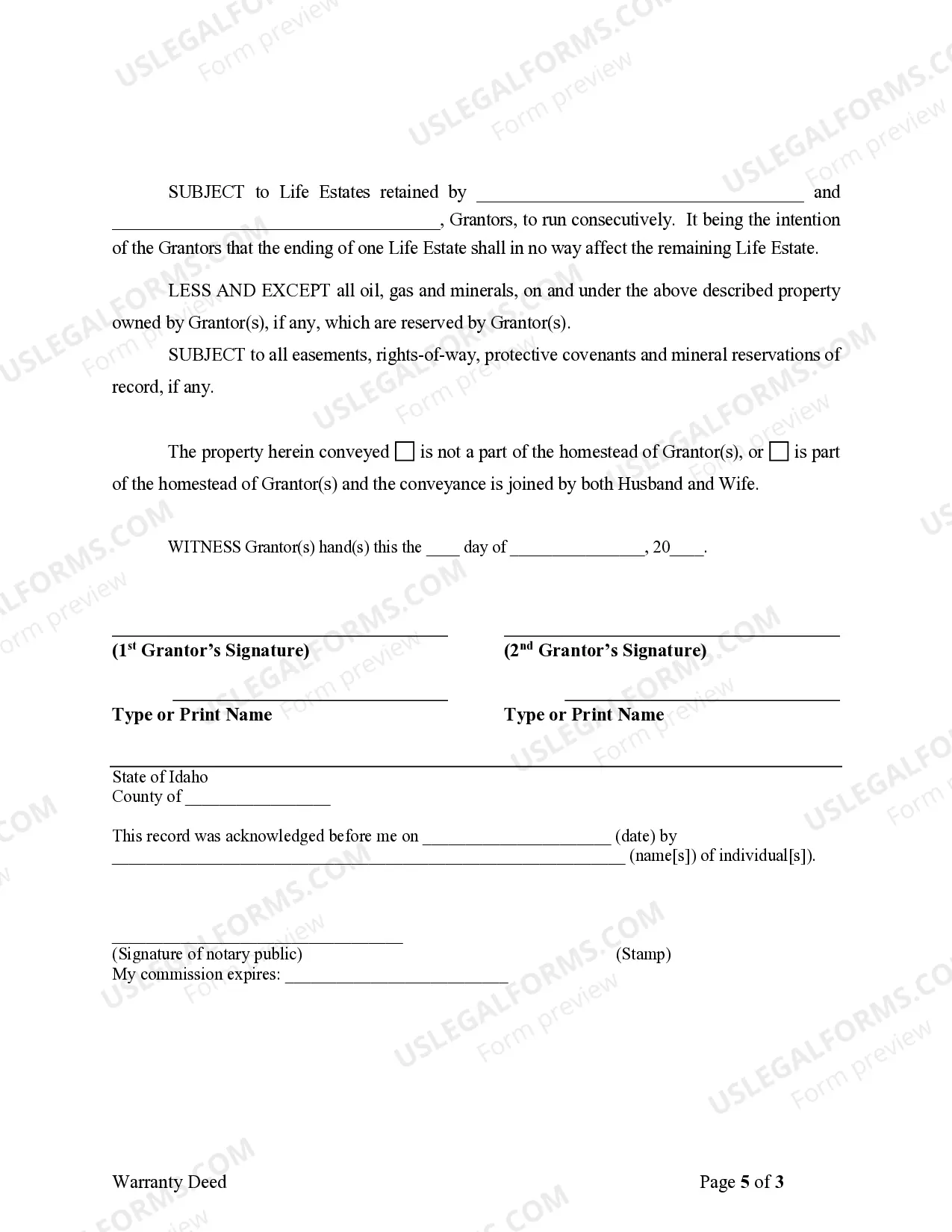
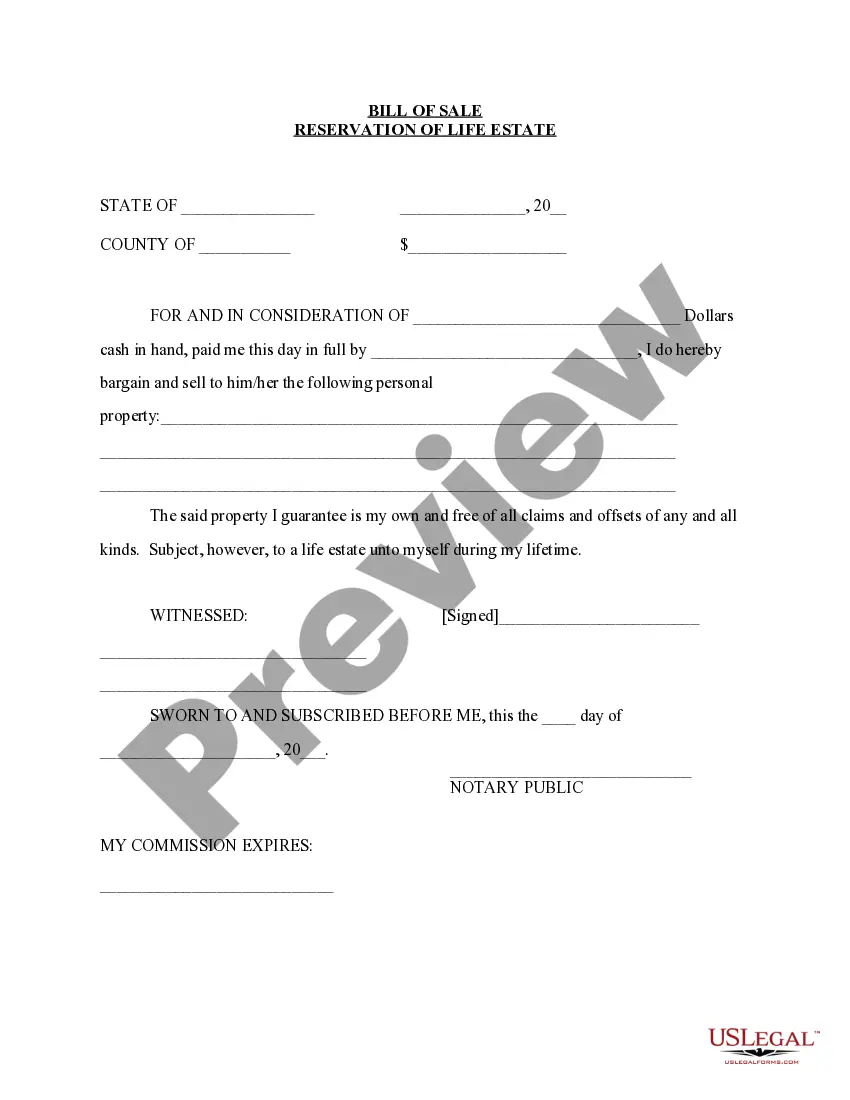
This Warranty Deed to Child Reserving a Life Estate in the Parents is a legal document that transfers ownership of property from parents to their child while allowing the parents to retain a life estate. This means the parents maintain the right to live in and use the property for the remainder of their lives, even though the child will hold legal title. This form is different from a standard warranty deed, as it includes a specific provision for reserving a life estate, ensuring that the parents can remain in control of the property during their lifetime.
Key components of this form
- Identification of the grantors (parents) and the grantee (child).
- Reservation of a life estate, allowing the parents to remain on the property until their passing.
- Definition of property being transferred, including any mineral rights reserved.
- Signature lines for the grantors and a notary acknowledgment.
- Clarification on whether the property is part of the homestead or separate.




Situations where this form applies
This form is needed in situations where parents wish to transfer property to their child but want to ensure they can continue living in the home or using the property throughout their lifetime. This is commonly used in estate planning to manage property transfers while minimizing estate taxes or avoiding probate complications.
Who can use this document
- Parents who own property and want to transfer it to their child while retaining the right to live in it.
- Families looking to simplify estate planning and avoid potential conflicts after the parents' passing.
- Individuals seeking to take advantage of tax benefits related to property ownership transfers.
How to prepare this document
- Identify the parties involved: the grantors (parents) and the grantee (child).
- Specify the property being transferred, including legal descriptions if necessary.
- Indicate the reservation of the life estate clearly within the form.
- Ensure both grantors sign the document in the presence of a notary public.
- Fill in all details accurately, including dates and any personal information required.
Does this document require notarization?
This form must be notarized to be legally valid. US Legal Forms provides secure online notarization powered by Notarize, allowing you to complete the process through a verified video call.
Get your form ready online
Our built-in tools help you complete, sign, share, and store your documents in one place.
Make edits, fill in missing information, and update formatting in US Legal Forms—just like you would in MS Word.
Download a copy, print it, send it by email, or mail it via USPS—whatever works best for your next step.
Sign and collect signatures with our SignNow integration. Send to multiple recipients, set reminders, and more. Go Premium to unlock E-Sign.
If this form requires notarization, complete it online through a secure video call—no need to meet a notary in person or wait for an appointment.
We protect your documents and personal data by following strict security and privacy standards.

Make edits, fill in missing information, and update formatting in US Legal Forms—just like you would in MS Word.

Download a copy, print it, send it by email, or mail it via USPS—whatever works best for your next step.

Sign and collect signatures with our SignNow integration. Send to multiple recipients, set reminders, and more. Go Premium to unlock E-Sign.

If this form requires notarization, complete it online through a secure video call—no need to meet a notary in person or wait for an appointment.

We protect your documents and personal data by following strict security and privacy standards.
Common mistakes to avoid
- Failing to clarify the life estate reservation, leading to misunderstandings later.
- Not including a complete and accurate legal description of the property.
- Missing signatures from both parents, which can invalidate the deed.
- Neglecting to have the form notarized, if required.
Advantages of online completion
- Convenience of completing the form from home without visiting a lawyer.
- Editability allows customization based on personal circumstances.
- Affordability provides access to legal forms at a fraction of the cost of hiring an attorney.
- Reliable templates drafted by licensed attorneys ensure compliance with legal standards.
Looking for another form?
Form popularity
FAQ
A life estate is a form of joint ownership that allows one person to remain in a house until his or her death, when it passes to the other owner. Life estates can be used to avoid probate and to give a house to children without giving up the ability to live in it.
Possible tax breaks for the life tenant. Reduced capital gains taxes for remainderman after death of life tenant. Capital gains taxes for remainderman if property sold while life tenant still alive. Remainderman's financial problems can affect the life tenant.
The life tenant cannot change the remainder beneficiary without their consent. If the life tenant applies for any loans, they cannot use the life estate property as collateral. There's no creditor protection for the remainderman. You can't minimize estate tax.
A California Revocable Transfer-On-Death Deed does not take effect until the property owner dies.As long as the original owner is alive, he can revoke the transfer, sell the property, add or remove beneficiaries, and otherwise maintain complete control over the property.
People typically consider a life estate deed because they like the idea of avoiding probate and/or they believe there is a chance that they might need to apply for Medicaid-covered long-term care in the future.
A life estate deed permits the property owner to have full use of their property until their death, at which point the ownership of the property is automatically transferred to the beneficiary.
A Life Estate may be created in real property or in personal property. It is a term used to describe ownership of an asset for the duration of the person's life. The owner of a Life Estate is called a 'life tenant'. The life tenant has the right to possession and enjoyment of the asset and its income until their death.
A person owns property in a life estate only throughout their lifetime. Beneficiaries cannot sell property in a life estate before the beneficiary's death. One benefit of a life estate is that property can pass when the life tenant dies without being part of the tenant's estate.