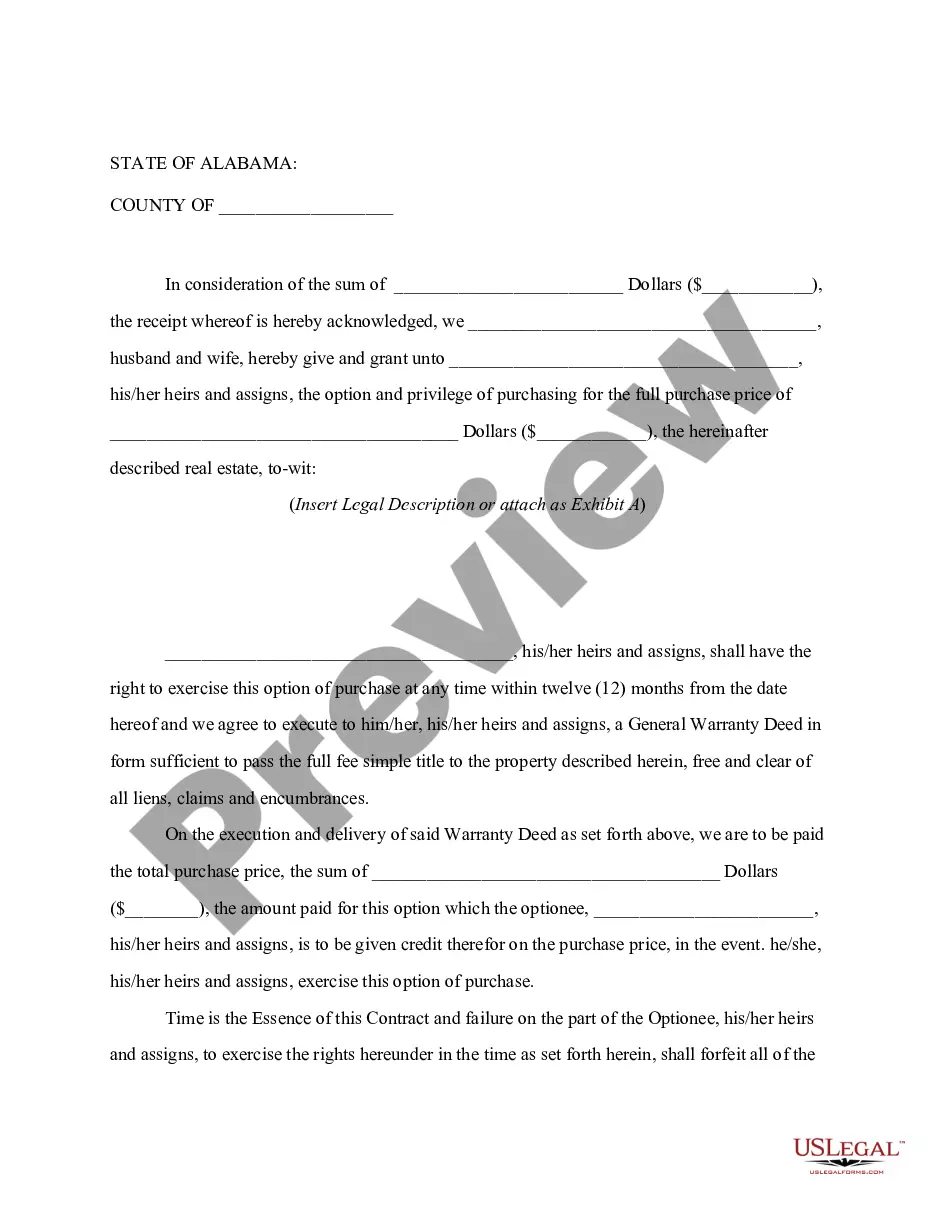
Idaho Warranty Deed from Husband to Himself and Wife
Overview of this form
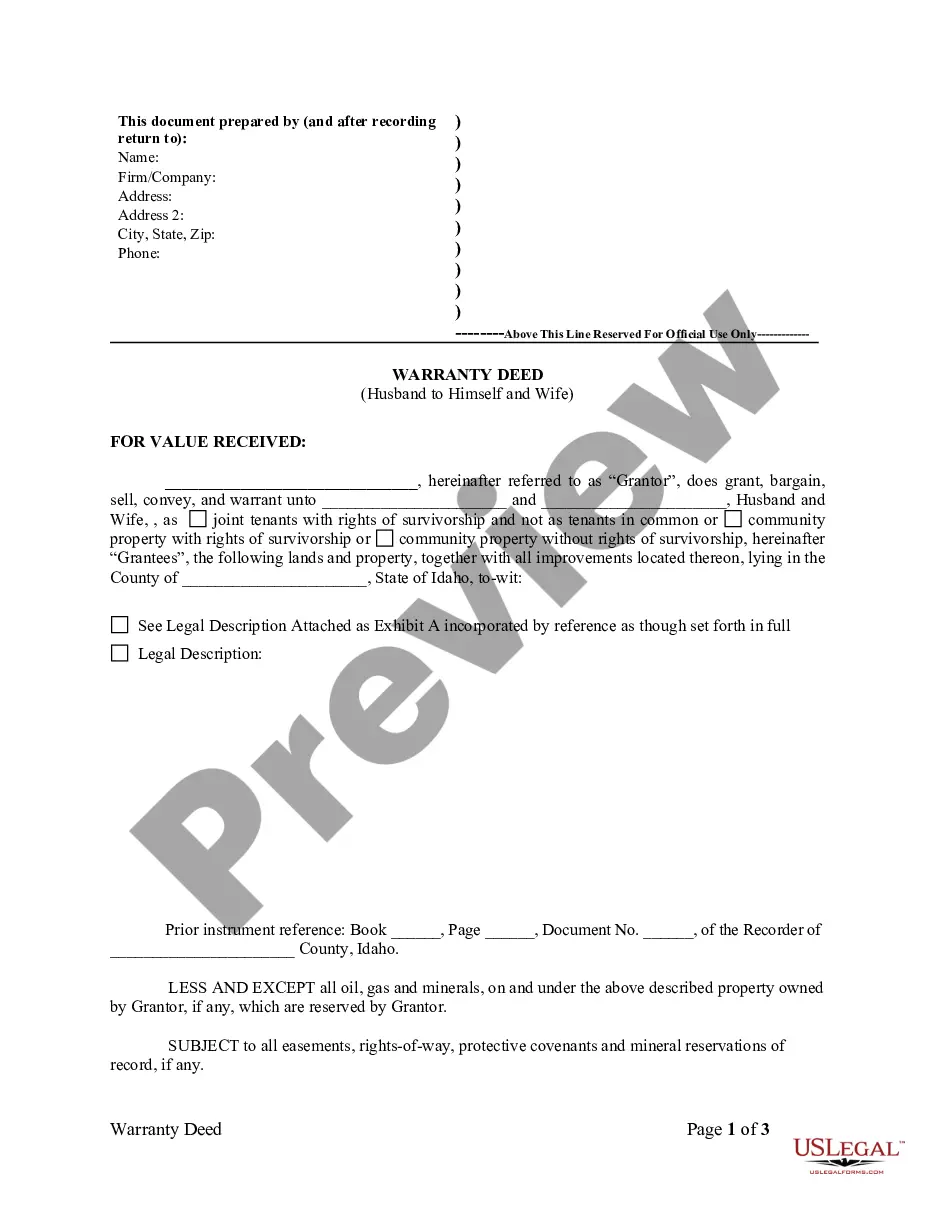
This Warranty Deed from Husband to Himself and Wife is a legal document that allows a husband to transfer property ownership to himself and his wife as joint tenants with rights of survivorship. This form ensures that, in the event of one spouse's death, the surviving spouse automatically retains full ownership of the property. It is essential to differentiate this deed from other property transfer documents, as it specifically addresses the rights of survivorship and the exclusion of oil, gas, and minerals from the transaction.
Key components of this form
- Identification of the grantor (husband) and grantees (husband and wife).
- Legal description of the property being transferred.
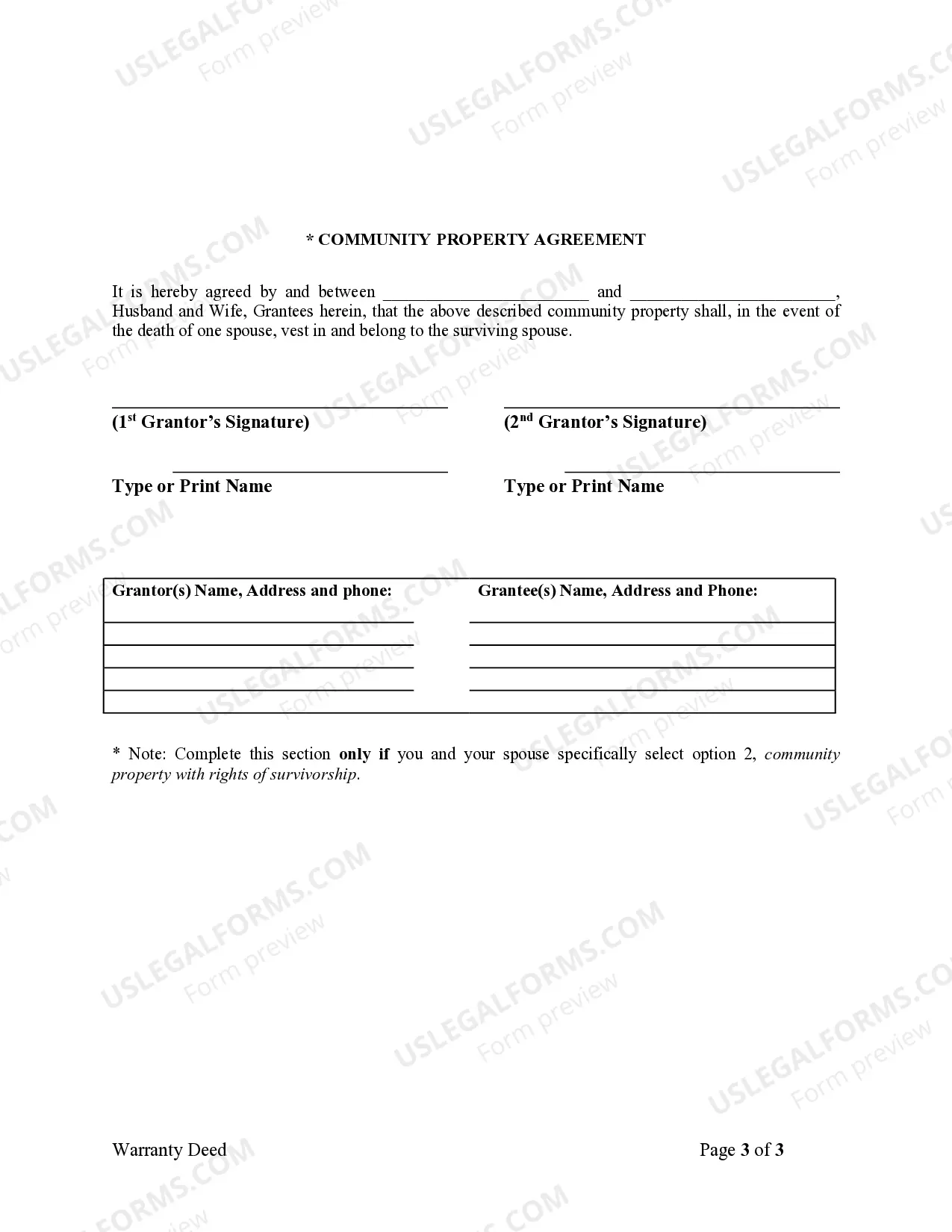
- Clause specifying the joint tenancy with rights of survivorship.
- Exclusion of specific property rights, such as oil, gas, and minerals.
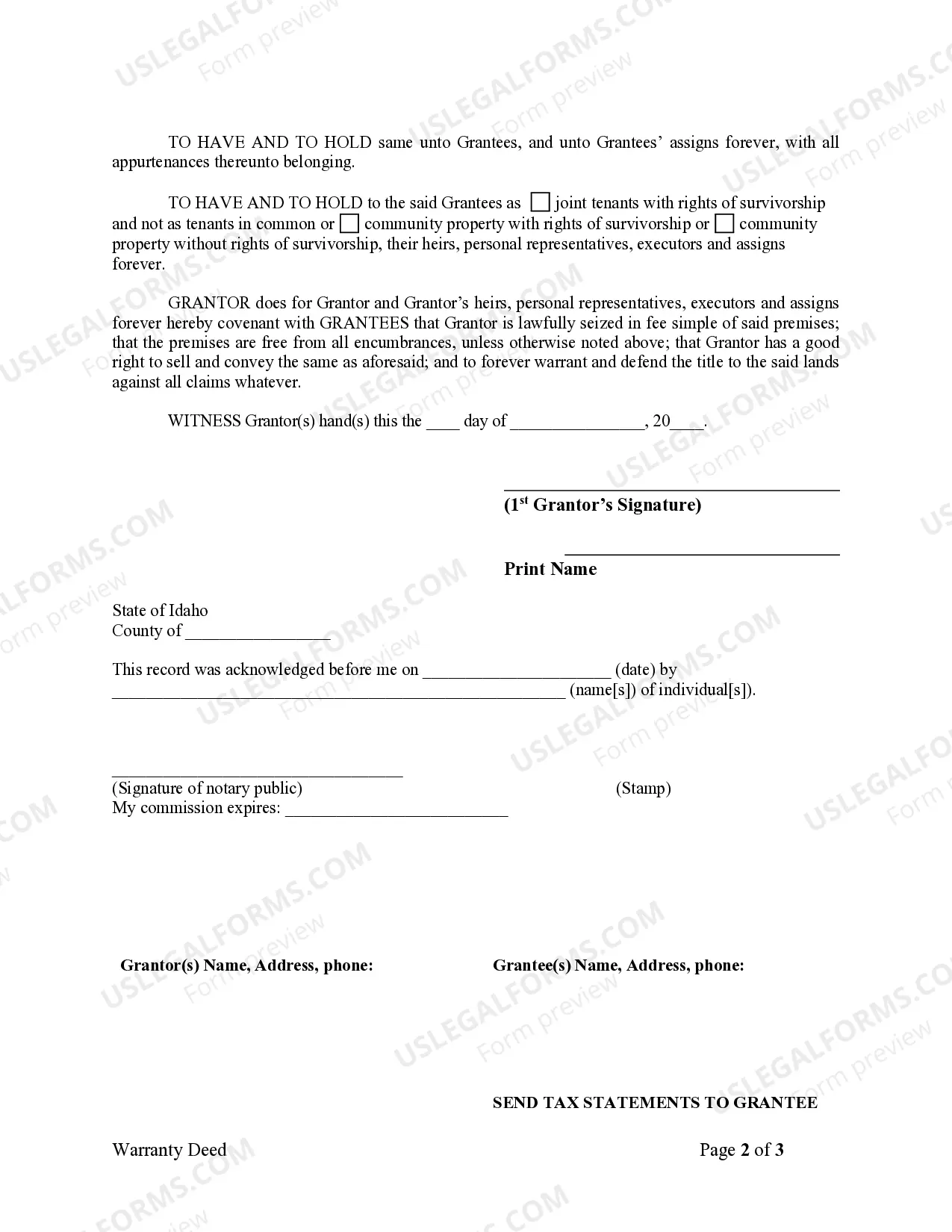
- Covenant assuring the grantees that the property is free from encumbrances.
- Signature lines for the grantor and notary public.




When to use this document
This Warranty Deed should be used when a husband wishes to transfer property ownership to himself and his wife, particularly when they want to hold the property as joint tenants with rights of survivorship. This form is typically needed during the transition of property ownership due to personal decisions, estate planning, or marriage. It ensures that in the event of one spouse's passing, the surviving spouse retains the property without going through probate.
Intended users of this form
- Married couples who wish to ensure property transfers to the surviving spouse.
- Individuals looking to consolidate property ownership with a spouse.
- Homeowners intending to manage the property through estate planning.
How to complete this form
- Identify the parties involved: Include the grantor (husband) and grantees (husband and wife).
- Specify the property: Enter a complete legal description of the property being transferred.
- Indicate the type of ownership: Mark the joint tenancy option to ensure rights of survivorship.
- Enter dates: Fill in the date of the transfer where indicated.
- Sign and notarize: Ensure the grantor and any required witnesses sign the deed, and have it notarized to validate the transaction.
Notarization requirements for this form
This form needs to be notarized to ensure legal validity. US Legal Forms provides secure online notarization powered by Notarize, allowing you to complete the process through a verified video call, available anytime.
Get your form ready online
Our built-in tools help you complete, sign, share, and store your documents in one place.
Make edits, fill in missing information, and update formatting in US Legal Forms—just like you would in MS Word.
Download a copy, print it, send it by email, or mail it via USPS—whatever works best for your next step.
Sign and collect signatures with our SignNow integration. Send to multiple recipients, set reminders, and more. Go Premium to unlock E-Sign.
If this form requires notarization, complete it online through a secure video call—no need to meet a notary in person or wait for an appointment.
We protect your documents and personal data by following strict security and privacy standards.

Make edits, fill in missing information, and update formatting in US Legal Forms—just like you would in MS Word.

Download a copy, print it, send it by email, or mail it via USPS—whatever works best for your next step.

Sign and collect signatures with our SignNow integration. Send to multiple recipients, set reminders, and more. Go Premium to unlock E-Sign.

If this form requires notarization, complete it online through a secure video call—no need to meet a notary in person or wait for an appointment.

We protect your documents and personal data by following strict security and privacy standards.
Common mistakes
- Omitting the legal description of the property, which may lead to invalidation.
- Failing to properly indicate the type of tenancy (joint tenants vs. tenants in common).
- Not having the deed notarized, which may be a requirement in some jurisdictions.
- Leaving out signatures or dates, which can render the deed incomplete.
Benefits of using this form online
- Convenient 24/7 access to download and complete your form.
- Edit and customize the template to fit your specific needs.
- Ensures compliance with current legal standards and state requirements.
- Easy-to-follow instructions help you complete the form accurately.
Looking for another form?


Form popularity
FAQ
Under the Grantor section of the deed, write the name of the person transferring title. Under Grantee, write the name of the person receiving title. Describe the parcel of land. Use the street address and include the North Carolina County where the land is located.
Discuss property ownership interests. Access a copy of your title deed. Complete, review and sign the quitclaim or warranty form. Submit the quitclaim or warranty form. Request a certified copy of your quitclaim or warranty deed.
The name and address of the seller (called the grantor) The name and address of the buyer (called the grantee) A legal description of the property (found on the previous deed) A statement that the grantor is transferring the property to the grantee.
The name and address of the seller (called the grantor) The name and address of the buyer (called the grantee) A legal description of the property (found on the previous deed) A statement that the grantor is transferring the property to the grantee.
The answer is yes. Parties to a transaction are always free to prepare their own deeds. If you do so, be sure your deed measures up to your state's legal regulations, to help avert any legal challenge to the deed later.
It's often easier to qualify for a joint mortgage, because both spouses can contribute income and assets to the application. However, if one spouse can qualify for a mortgage based on his own income and credit, the mortgage does not need to be in both spouses' names unless you live in a community property state.
To make the form legally binding, you must sign it in front of a notary public. You must then file your signed and notarized deed with the county office that's in charge of recording property documents. Once the grantee signs the warranty deed, he/she legally has ownership and claim to the property.
In California, all property bought during the marriage with income that was earned during the marriage is deemed "community property." The law implies that both spouses own this property equally, regardless of which name is on the title deed.
Two of the most common ways to transfer property in a divorce are through an interspousal transfer deed or quitclaim deed. When spouses own property together, but then one spouse executes an interspousal transfer or a quitclaim deed, this is known as transmutation.