Alabama Summons
Overview of this form
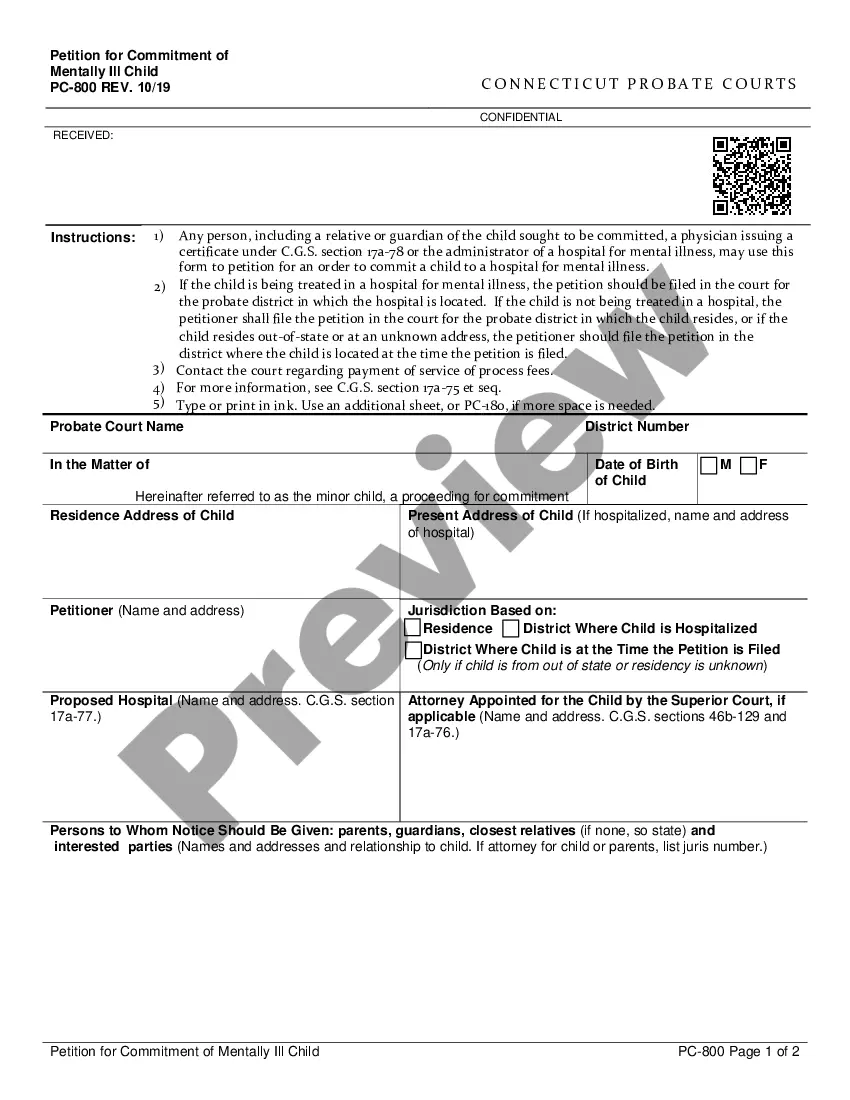
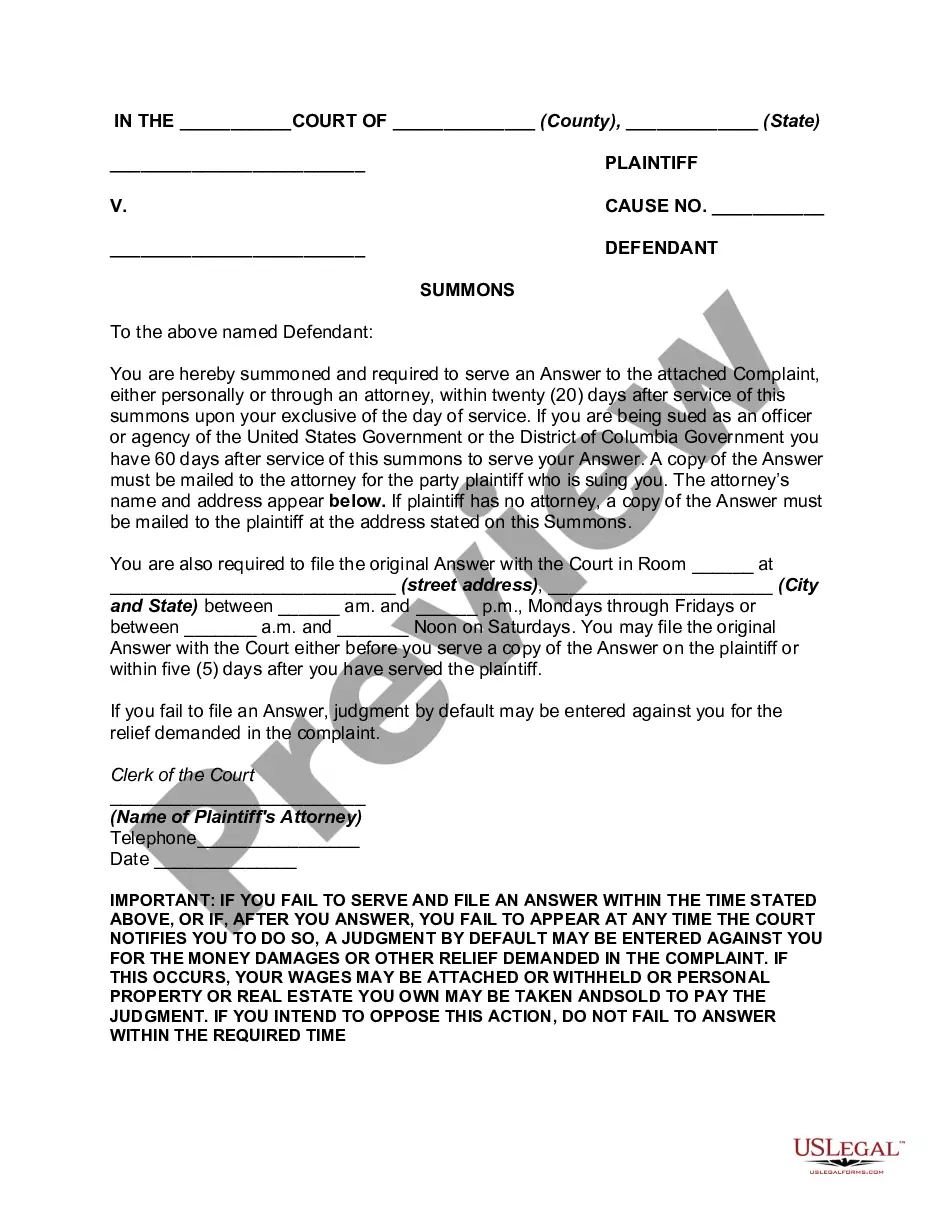
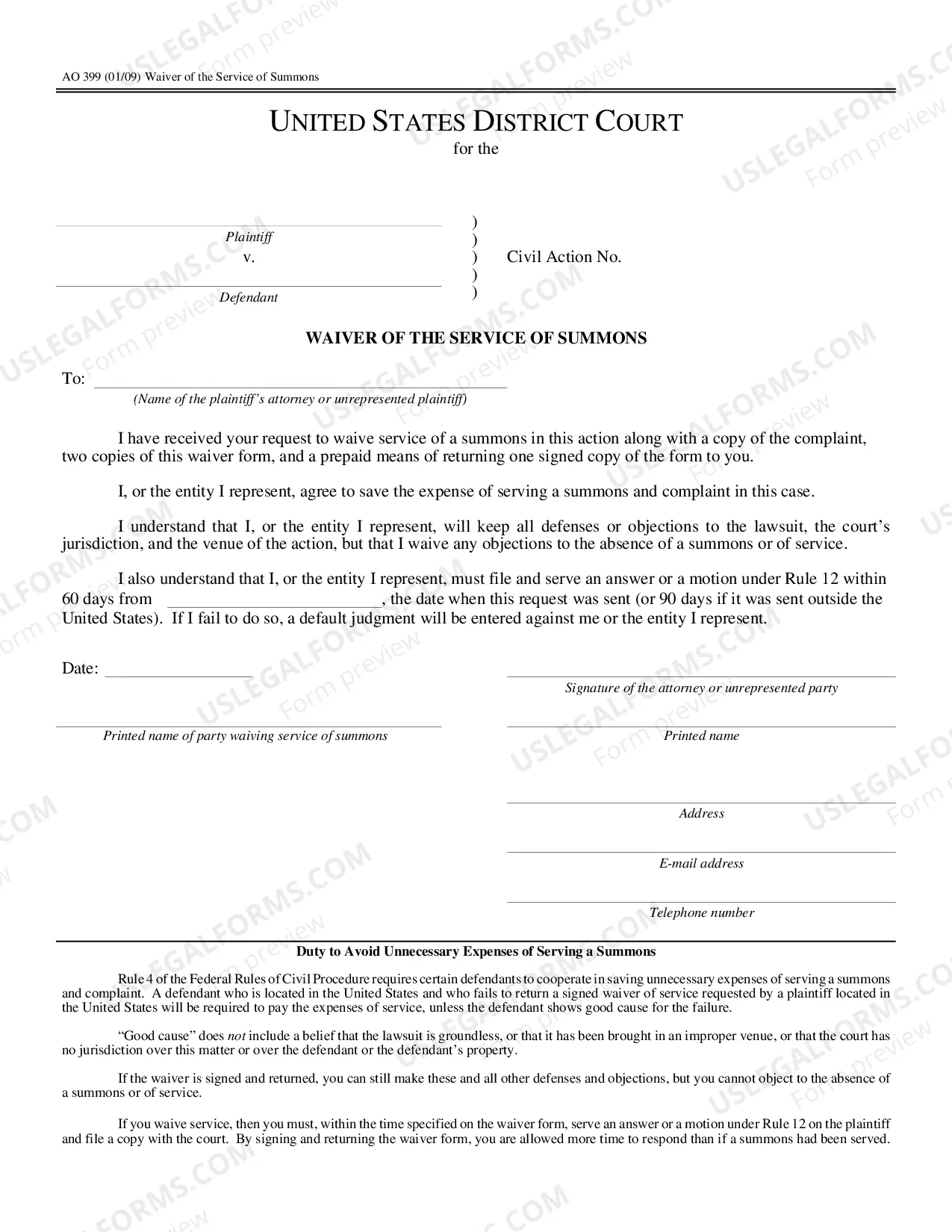
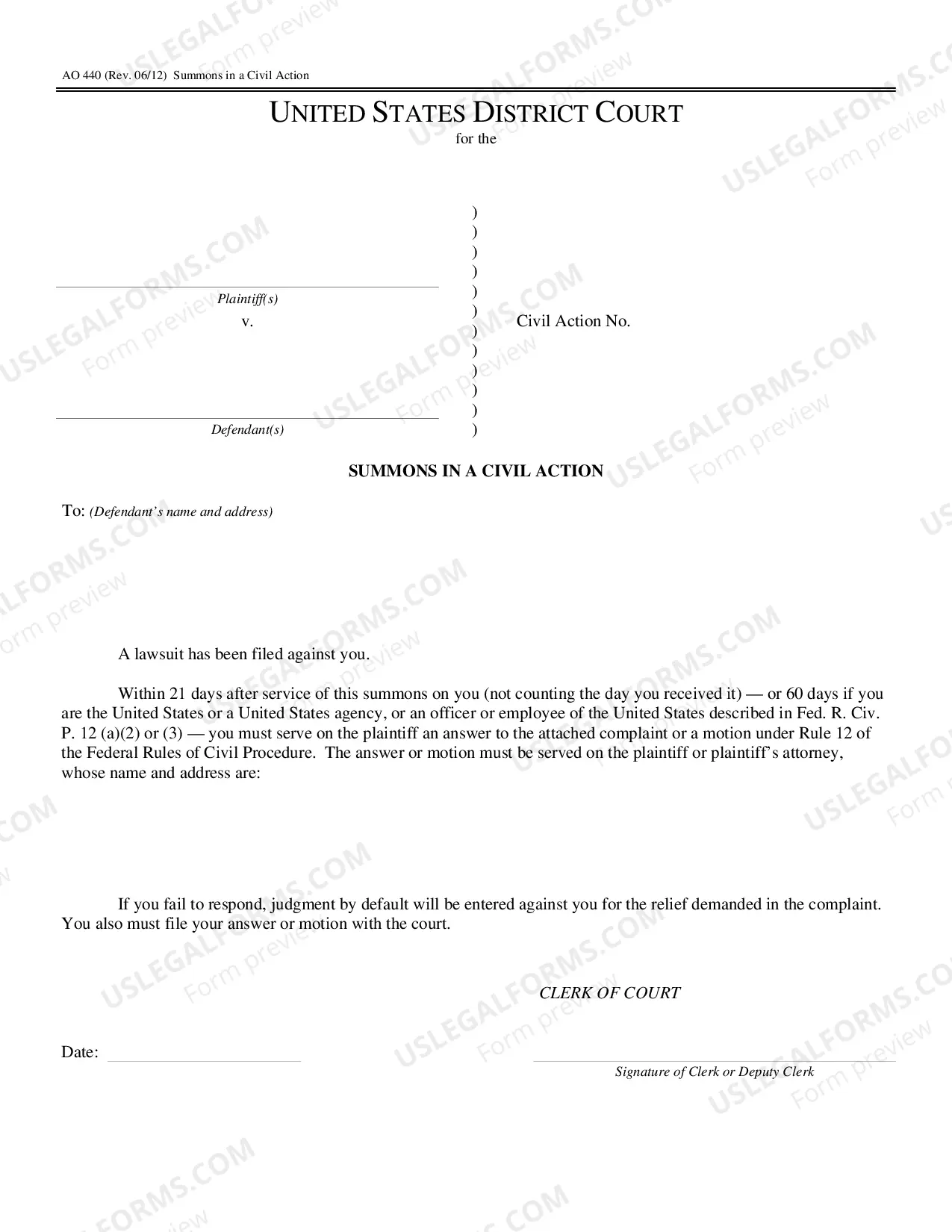
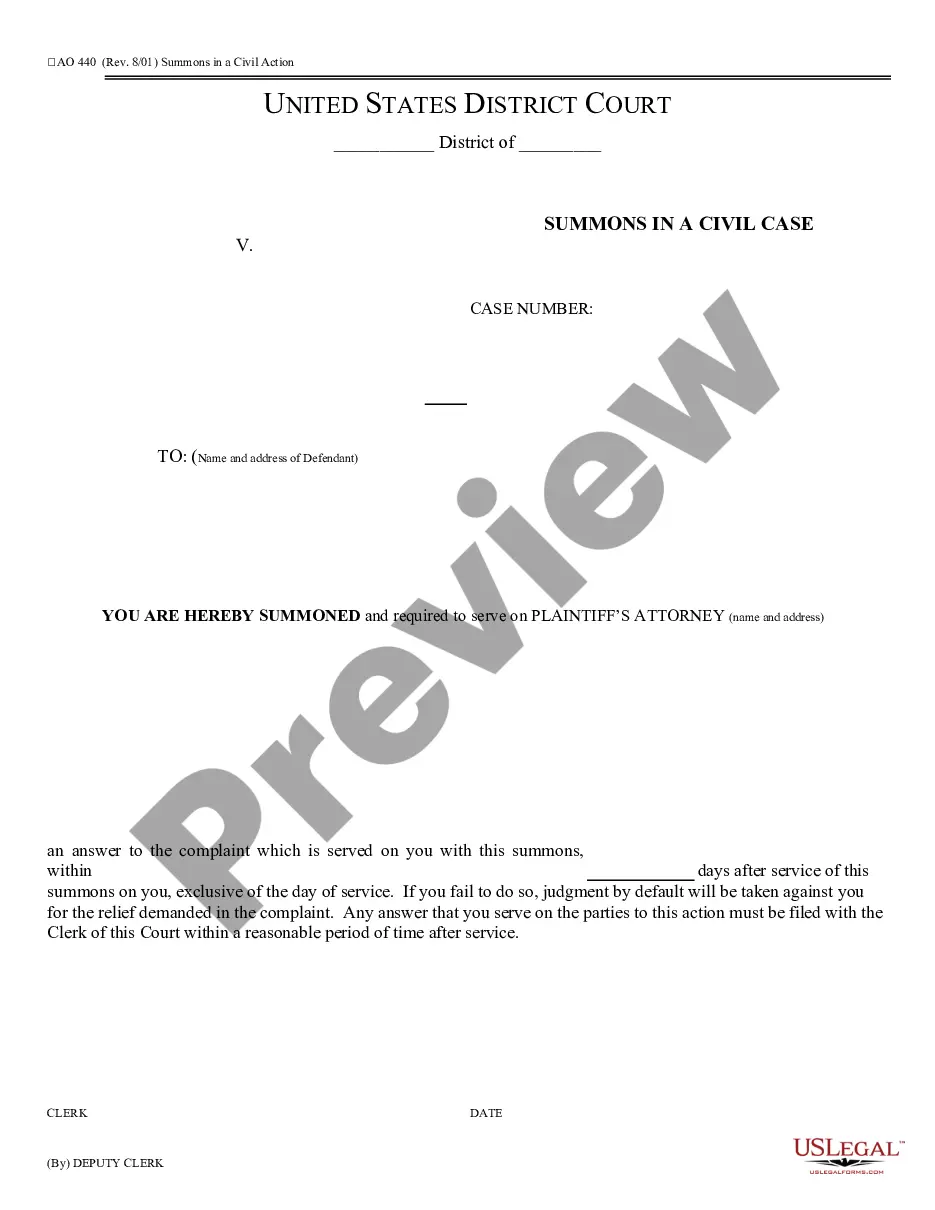
A summons is a legal document issued by a court that notifies a defendant of a pending lawsuit. It serves as an official invitation to respond to the attached complaint. Importantly, a summons outlines the actions the defendant must take to protect their rights, including the requirement to respond within a specified timeframe. Unlike other legal forms, a summons directly engages a defendant and initiates the court process.
Key components of this form
- Case number to identify the court action.
- Names of the parties involved, including the plaintiff and defendant.
- Notice of the importance of responding to the complaint.
- Instructions for filing an answer to the complaint with the court.
- Deadline for response, typically 30 days from service.
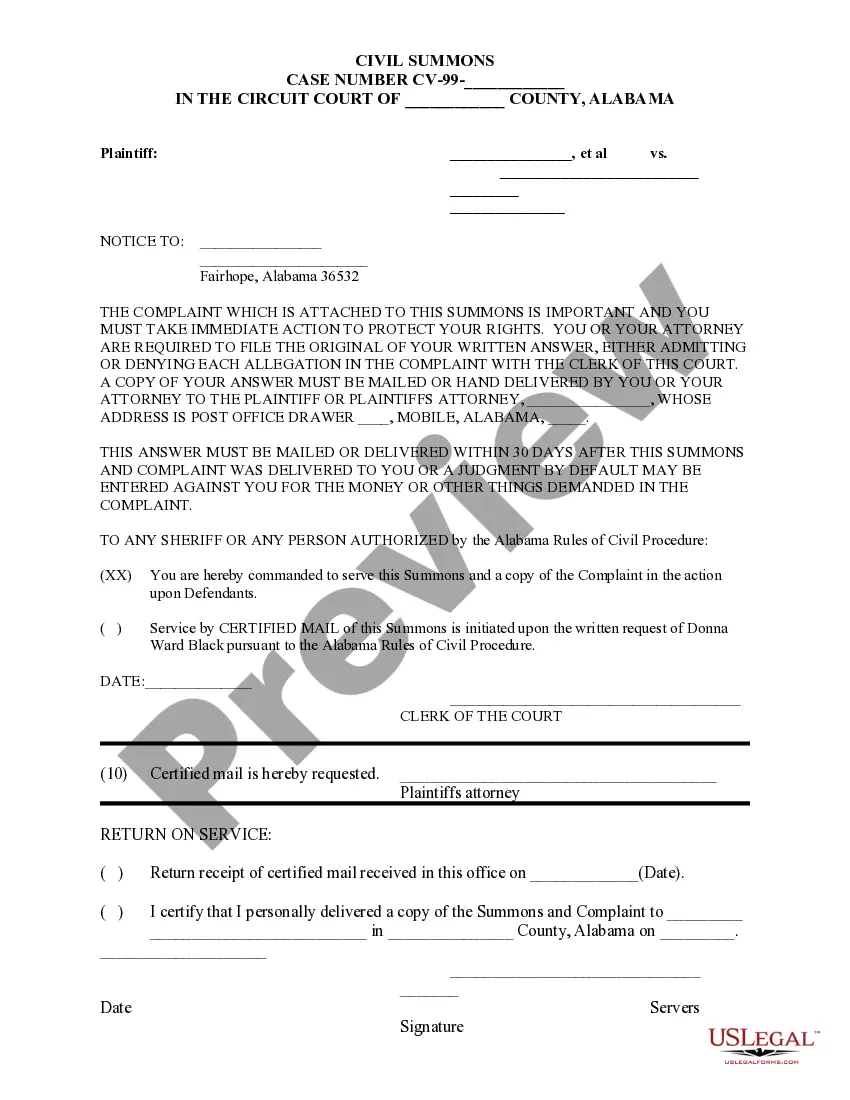
- Details about the required mode of service, such as certified mail.
When this form is needed
This summons should be used when a plaintiff wishes to formally notify a defendant about a complaint filed against them in the circuit court. It is essential in cases involving civil disputes, such as contract issues, property disputes, or personal injury claims, where the defendant needs to know they are being sued and must respond to the claim made against them.
Intended users of this form
- Individuals or entities filing a lawsuit in circuit court.
- Plaintiffs seeking to formally serve a defendant with legal notice.
- Attorneys representing clients in civil litigation.
Instructions for completing this form
- Fill in the case number at the top of the form.
- Enter the names of the plaintiff and defendant in the appropriate spaces.
- Attach the complaint to the summons before serving it.
- Review the notice section to confirm it emphasizes the need for a prompt response.
- Specify the method of service, ensuring it complies with local laws.
- Sign and date the summons where indicated by the clerk of court.
Is notarization required?
This form does not typically require notarization to be legally valid. However, some jurisdictions or document types may still require it. US Legal Forms provides secure online notarization powered by Notarize, available 24/7 for added convenience.
Get your form ready online
Our built-in tools help you complete, sign, share, and store your documents in one place.
Make edits, fill in missing information, and update formatting in US Legal Forms—just like you would in MS Word.
Download a copy, print it, send it by email, or mail it via USPS—whatever works best for your next step.
Sign and collect signatures with our SignNow integration. Send to multiple recipients, set reminders, and more. Go Premium to unlock E-Sign.
If this form requires notarization, complete it online through a secure video call—no need to meet a notary in person or wait for an appointment.
We protect your documents and personal data by following strict security and privacy standards.

Make edits, fill in missing information, and update formatting in US Legal Forms—just like you would in MS Word.

Download a copy, print it, send it by email, or mail it via USPS—whatever works best for your next step.

Sign and collect signatures with our SignNow integration. Send to multiple recipients, set reminders, and more. Go Premium to unlock E-Sign.

If this form requires notarization, complete it online through a secure video call—no need to meet a notary in person or wait for an appointment.

We protect your documents and personal data by following strict security and privacy standards.
Typical mistakes to avoid
- Failing to complete all relevant fields, including names and case numbers.
- Not attaching the complaint to the summons when serving it to the defendant.
- Missing the response deadline, which can lead to default judgment.
- Not properly delivering the summons, which can invalidate the service.
Advantages of online completion
- Easy access to professionally drafted legal documents.
- Immediate download after purchase for quick use.
- Convenience of filling out forms on your own time.
- Editable templates to customize for your specific legal situation.
Looking for another form?
Form popularity
FAQ
Alabama Summons is a court-issued notice served to a defendant in a civil case filed in a circuit court. It informs the defendant of the lawsuit and requires a response to the attached complaint within a set deadline, typically 30 days from service. It also details how the summons must be served and initiates the court process.
Yes. When you are served with Alabama Summons, you are formally notified of the lawsuit and must respond or appear by the deadline, typically 30 days from service. The summons directs you to file an answer with the circuit court to protect your rights and may require appearing in court.
If a defendant ignores the summons and does not respond by the deadline, the court may enter a default against them and proceed with the case. The plaintiff can seek remedies based on the complaint, and the defendant would lose the opportunity to present defenses unless a set aside is granted. Always consult an attorney for options.
No. A summons is a court order notifying you of a lawsuit and requiring a response or appearance within the deadline—typically 30 days from service. Refusing the summons does not stop the case; it can lead to default judgment or other court actions.
This form is used by plaintiffs filing in circuit court who must formally notify a defendant of the lawsuit. It is also used by attorneys representing plaintiffs to ensure proper service and to initiate the defendant's response, setting the legal process in motion.
Alabama Summons is tailored for Alabama circuit court civil cases. It emphasizes Alabama-specific deadlines (typically 30 days to respond from service) and the required service details noted in the form components, ensuring alignment with Alabama civil procedure practices rather than generic, multi-state formats.