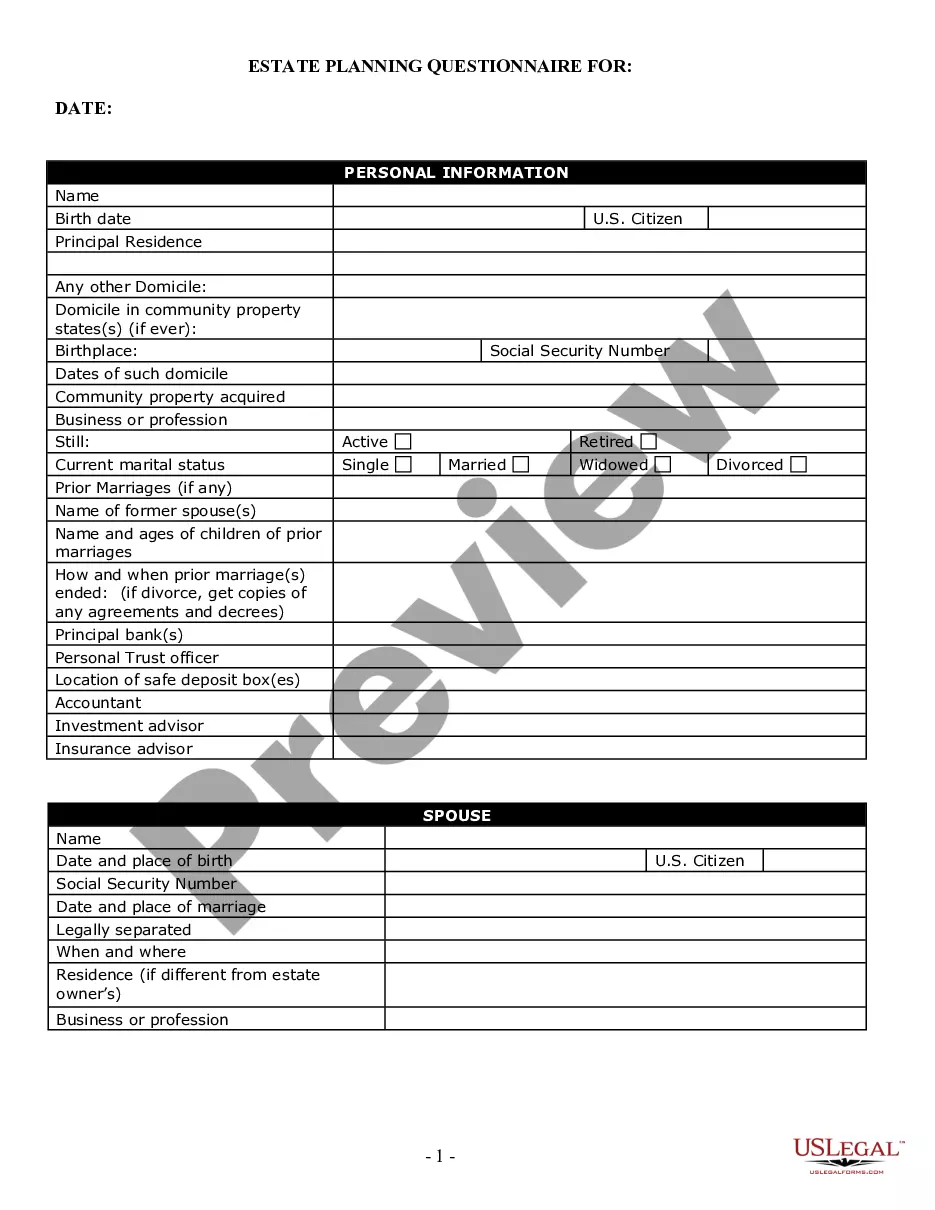
Iowa Last Will and Testament for Married person with Adult Children from Prior Marriage
Overview of this form
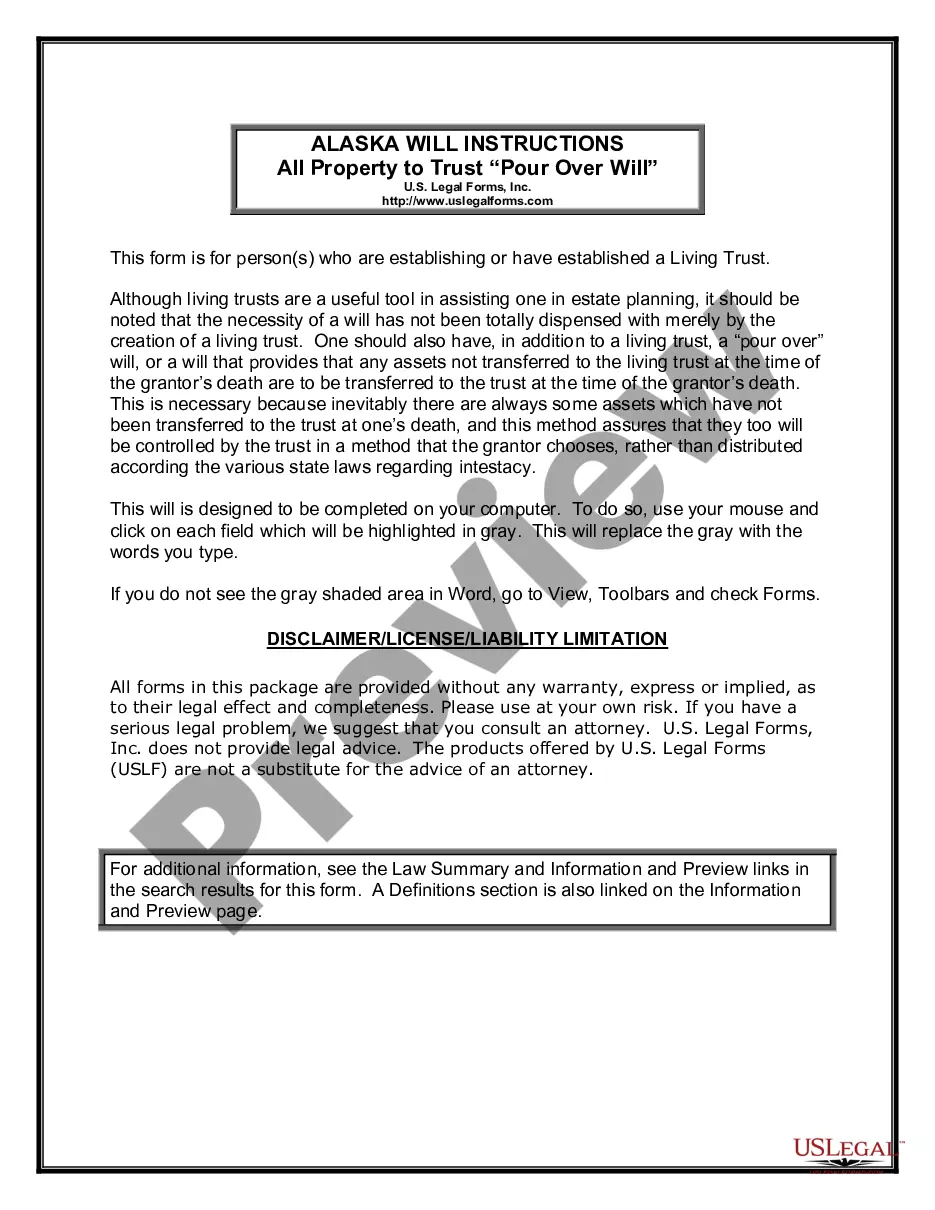
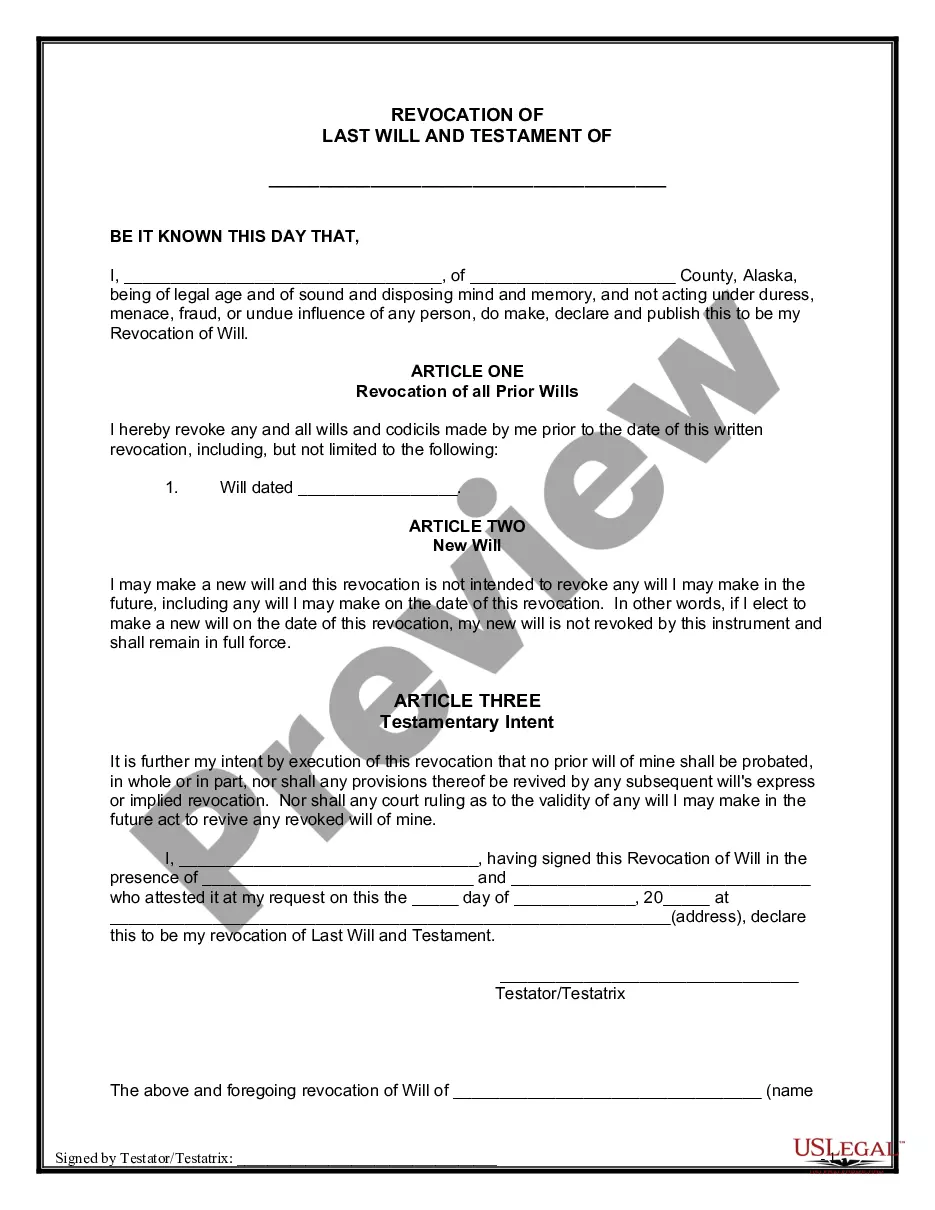
The Last Will and Testament for a Married Person with Adult Children from a Prior Marriage is a legal document that outlines how you wish to distribute your assets after your passing. This form is specifically designed for individuals who are married and have adult children from a previous marriage. It includes sections for appointing a personal representative, specifying beneficiaries, and addressing any specific bequests you may have. This form is essential for ensuring your wishes are honored regarding the distribution of your estate, which may differ from traditional wills that do not take into account multiple marriages or children from previous unions.
Main sections of this form
- Personal information: Your name, county of residence, and marital status.
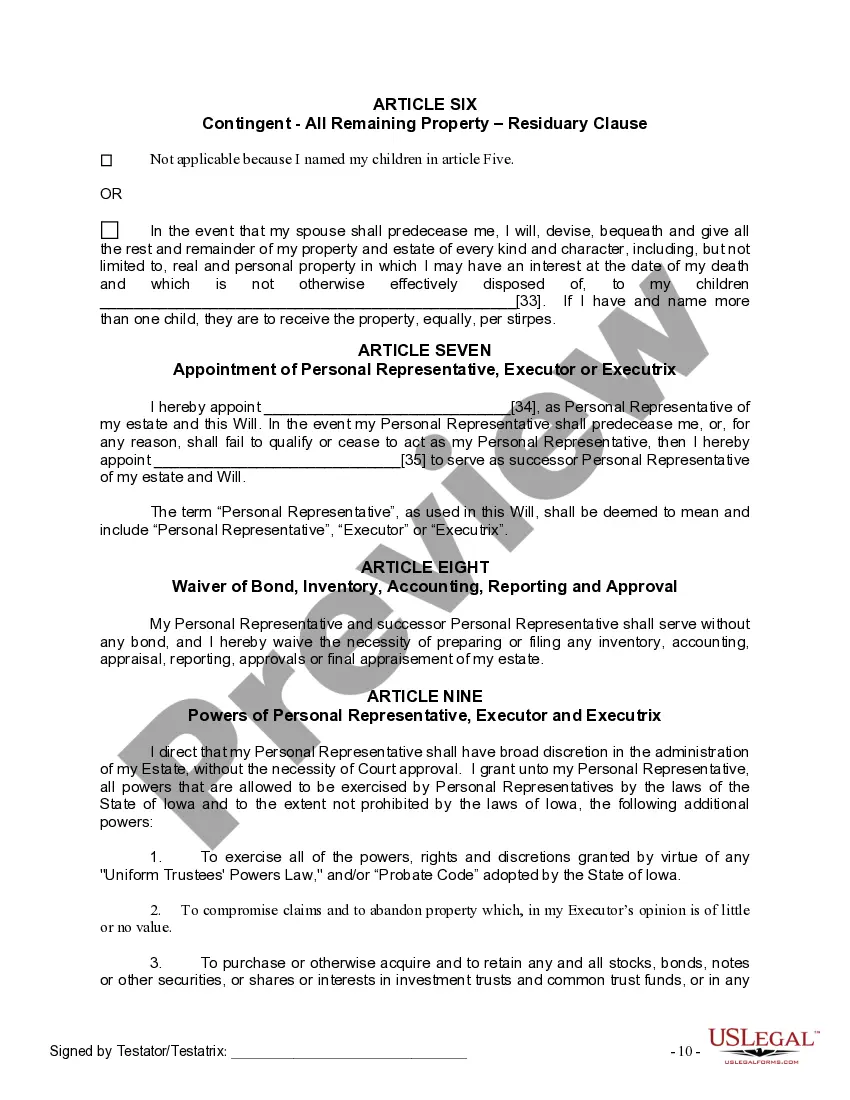
- Appointment of a personal representative to manage your estate.
- Designation of beneficiaries, including specific bequests to individuals.
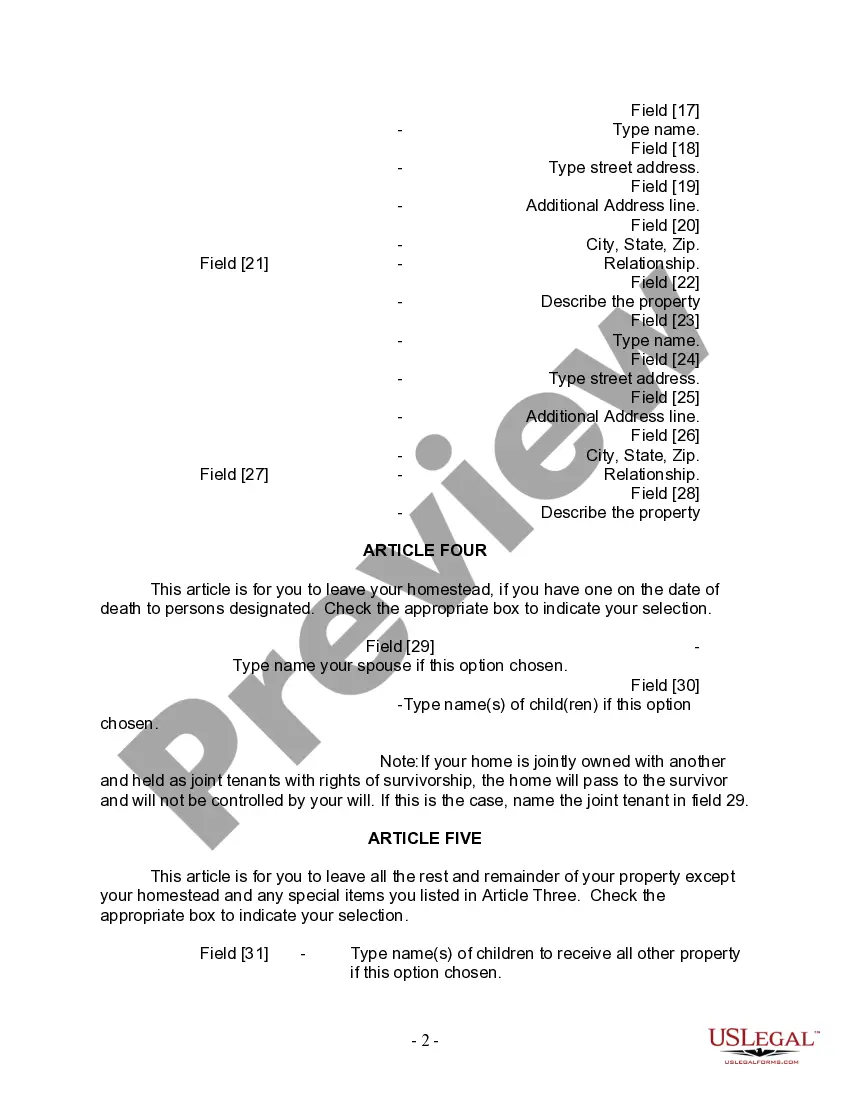
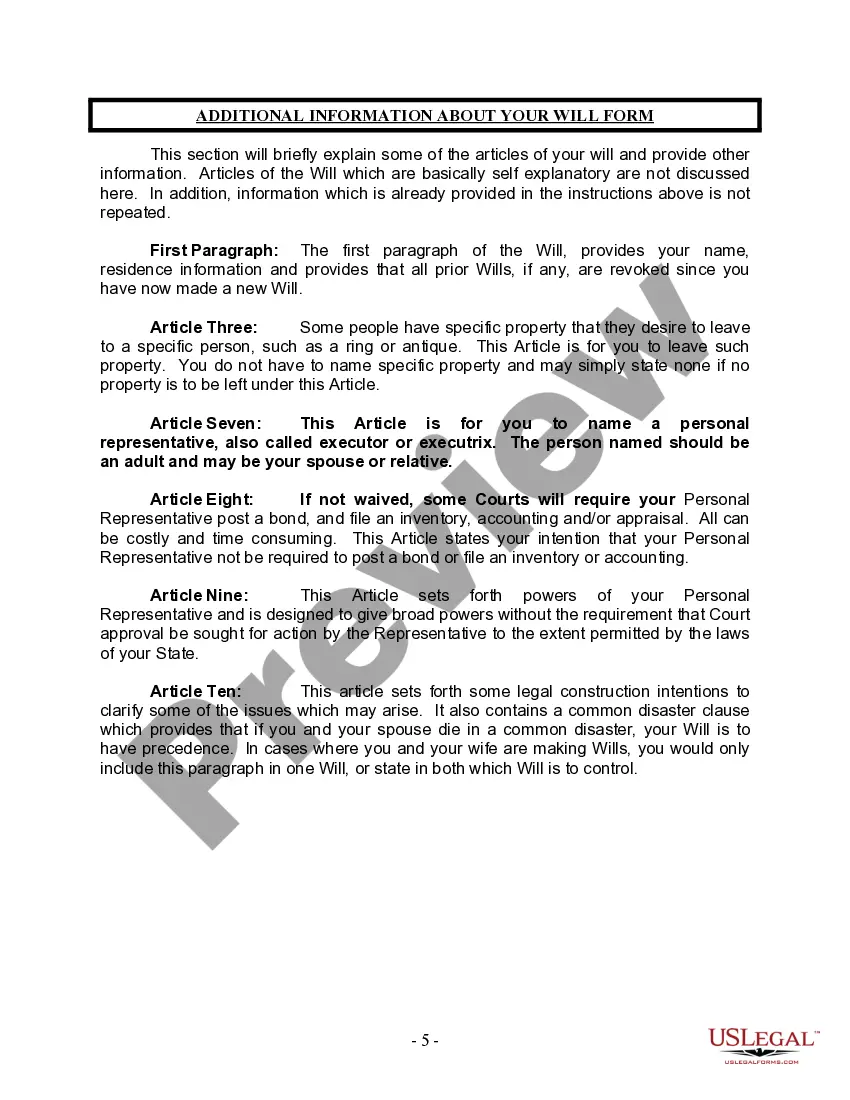
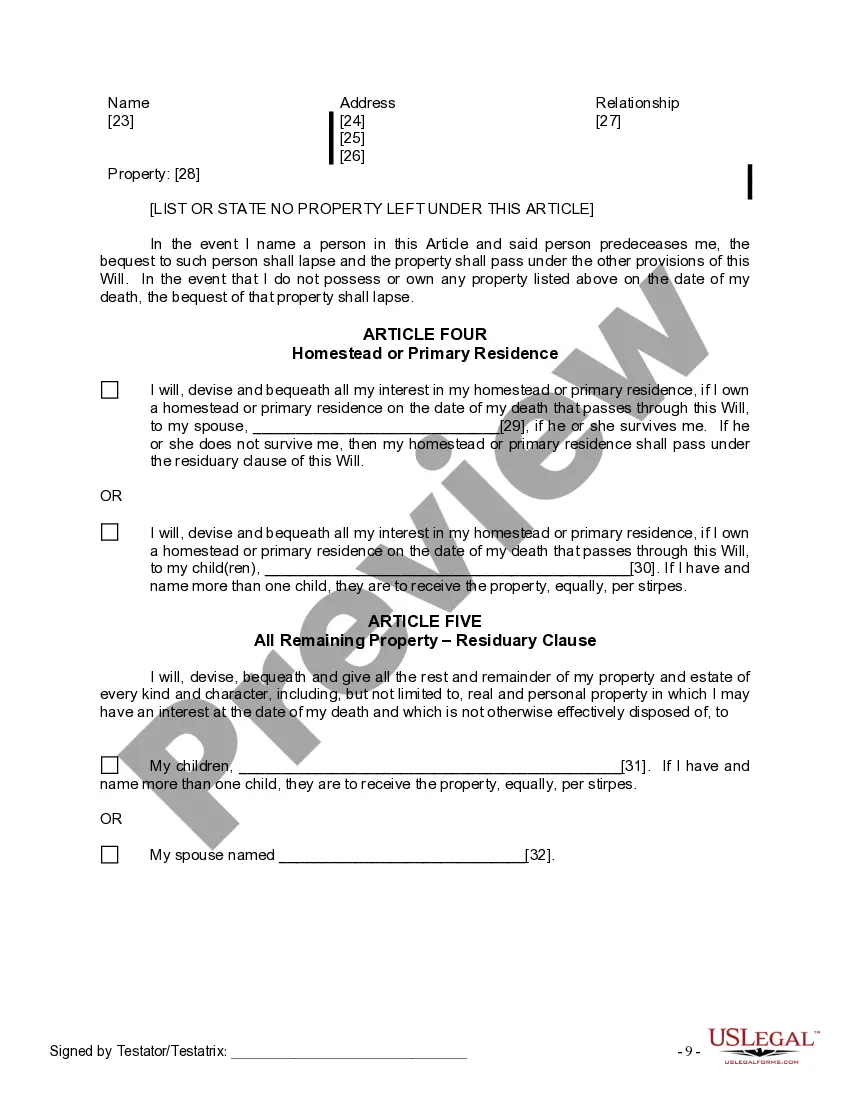
- Instructions for handling your homestead or primary residence.
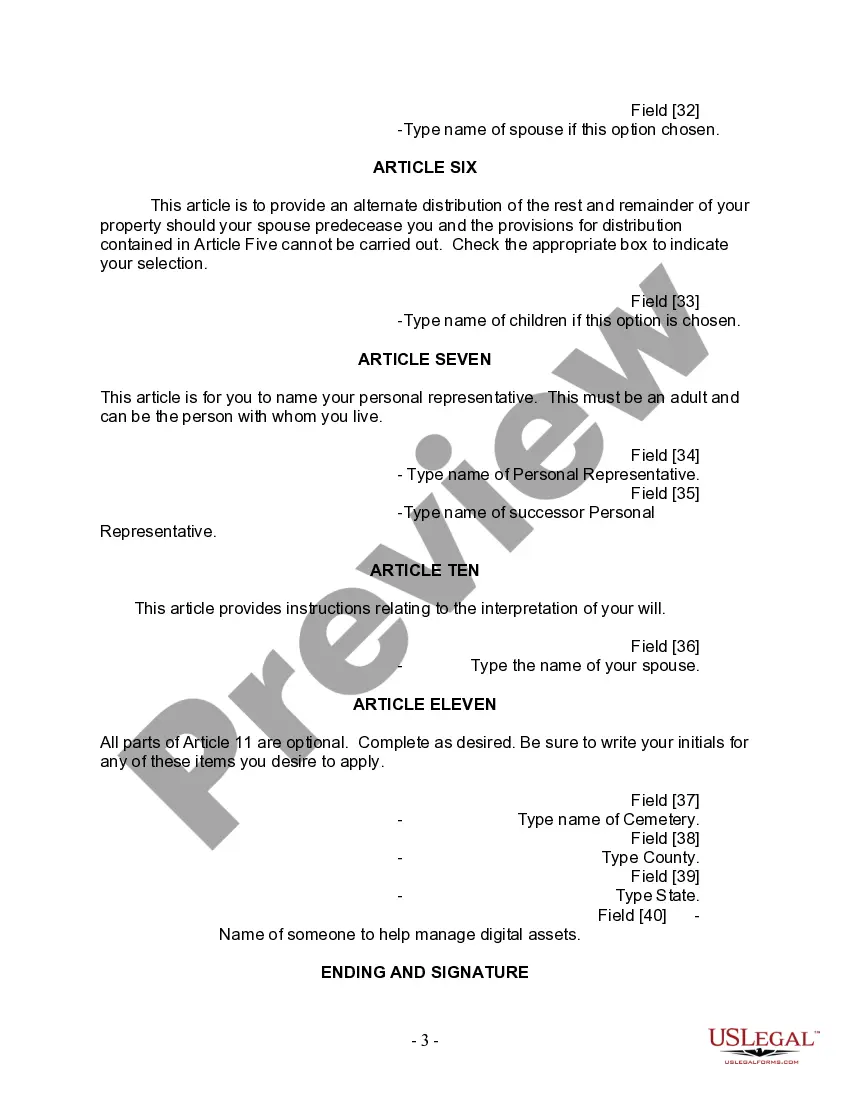
- Provisions for the distribution of the remainder of your estate after specific bequests.
- Legal clauses to clarify the interpretation and administration of your will.






Situations where this form applies
This form is ideal for individuals in a second marriage or for those who have adult children from a previous marriage, allowing clear direction on how assets should be divided. Use this will when you wish to ensure that your spouse and children are both considered in your estate plan, preventing potential disputes or misunderstandings after your death.
Who this form is for
- Married individuals with adult children from prior relationships.
- People who are planning to update or create a will that includes provisions for stepchildren.
- Anyone needing a legally valid will to ensure their property is distributed according to their wishes.
Instructions for completing this form
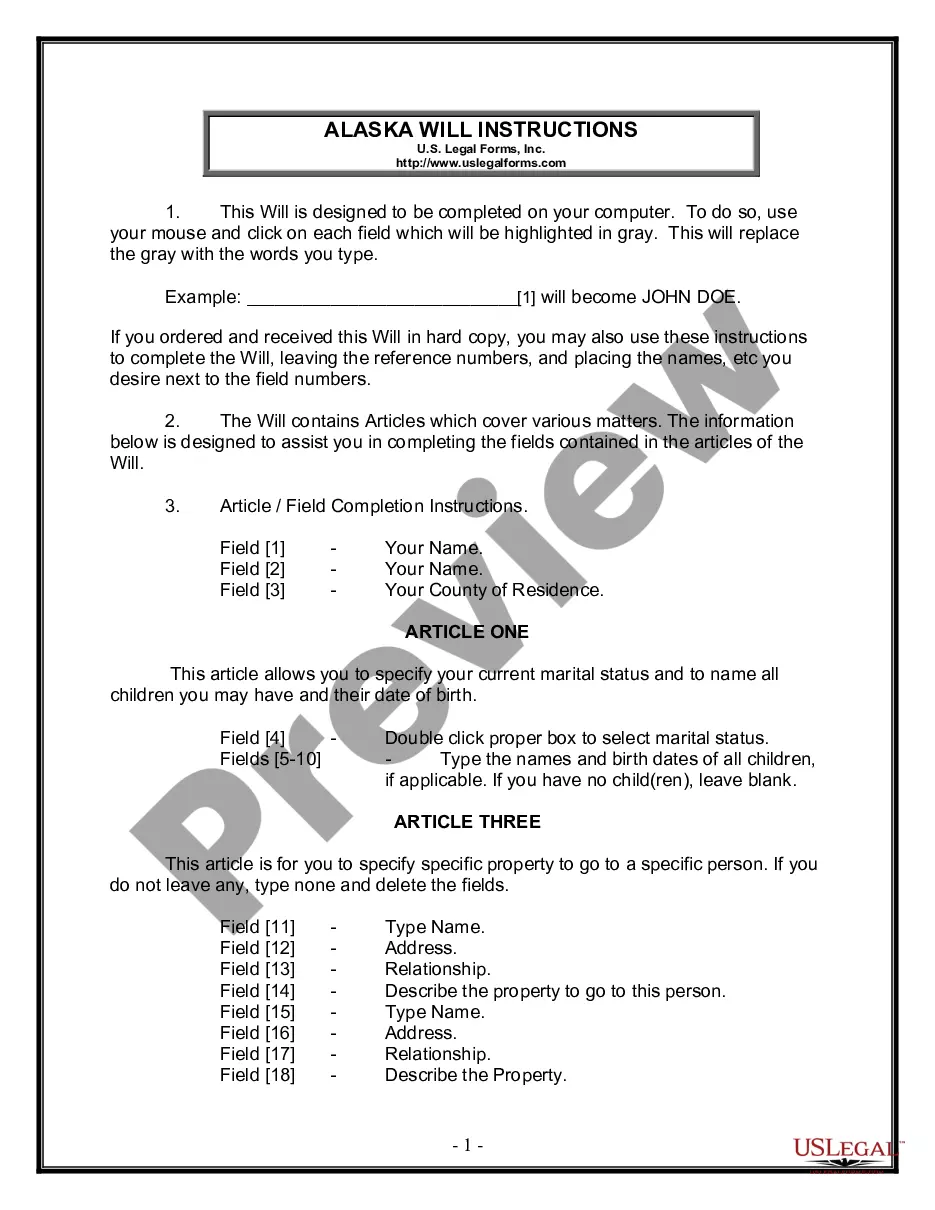
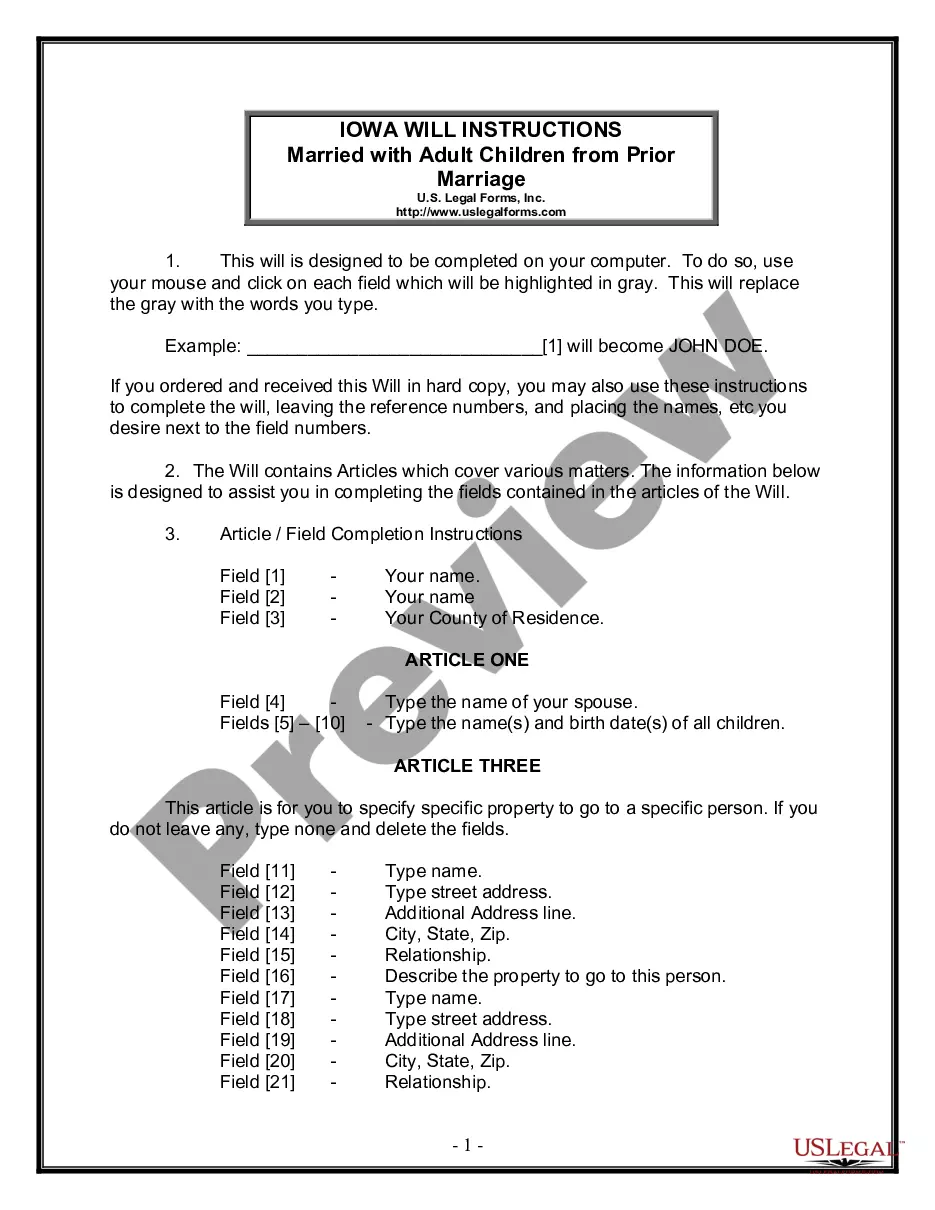
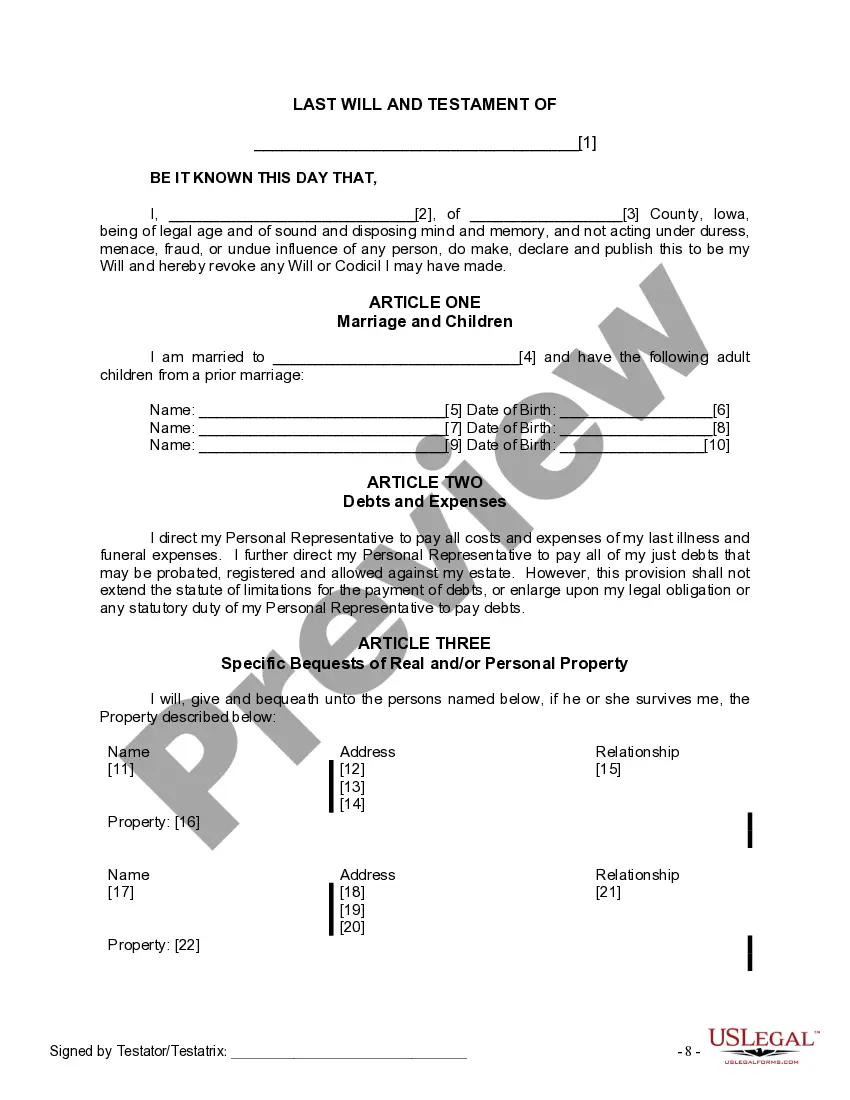
- Enter your full name and residence information at the beginning of the document.
- Specify the name of your spouse and list all adult children along with their birth dates.
- Outline specific bequests in Article Three, naming individuals and the property they will receive.
- Designate your personal representative who will execute the terms of your will.
- Have the will signed in the presence of two witnesses, ensuring they are not beneficiaries.
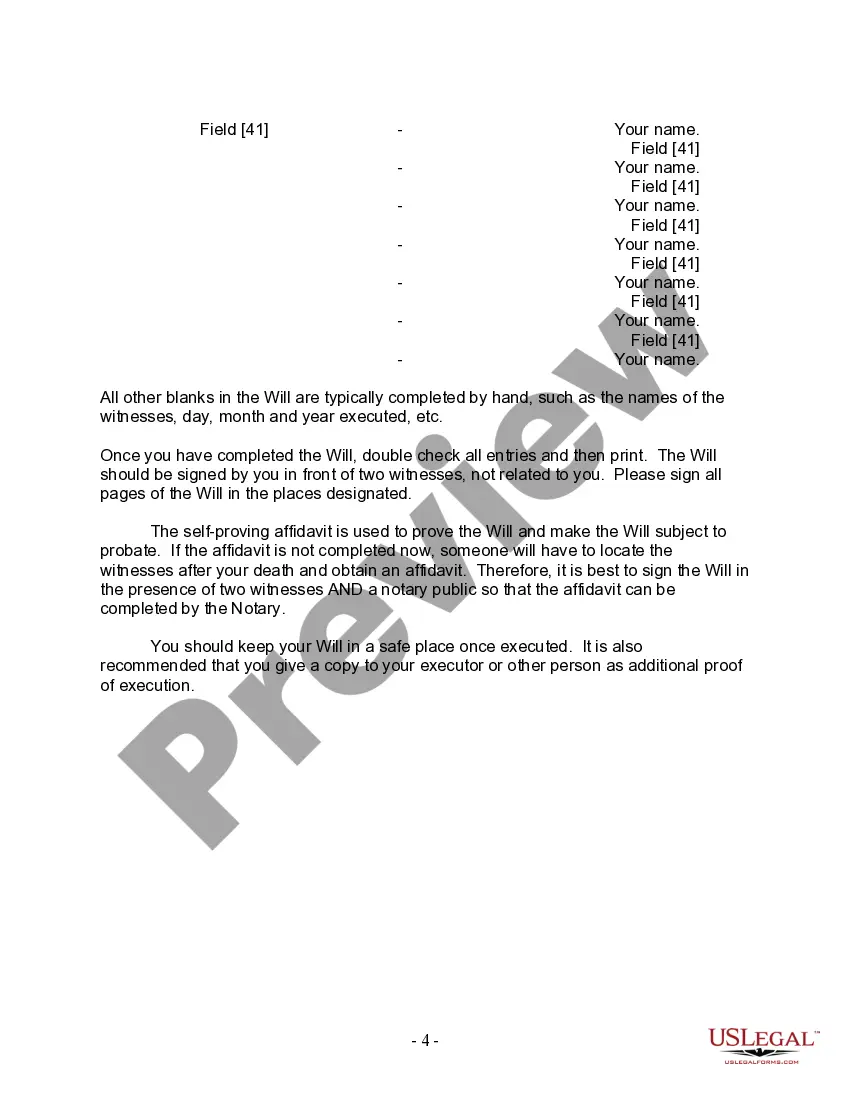
- If applicable, complete the self-proving affidavit in the presence of a notary public.
Is notarization required?
Notarization is required for this form to take effect. Our online notarization service, powered by Notarize, lets you verify and sign documents remotely through an encrypted video session, available 24/7.
Get your form ready online
Our built-in tools help you complete, sign, share, and store your documents in one place.
Make edits, fill in missing information, and update formatting in US Legal Forms—just like you would in MS Word.
Download a copy, print it, send it by email, or mail it via USPS—whatever works best for your next step.
Sign and collect signatures with our SignNow integration. Send to multiple recipients, set reminders, and more. Go Premium to unlock E-Sign.
If this form requires notarization, complete it online through a secure video call—no need to meet a notary in person or wait for an appointment.
We protect your documents and personal data by following strict security and privacy standards.

Make edits, fill in missing information, and update formatting in US Legal Forms—just like you would in MS Word.

Download a copy, print it, send it by email, or mail it via USPS—whatever works best for your next step.

Sign and collect signatures with our SignNow integration. Send to multiple recipients, set reminders, and more. Go Premium to unlock E-Sign.

If this form requires notarization, complete it online through a secure video call—no need to meet a notary in person or wait for an appointment.

We protect your documents and personal data by following strict security and privacy standards.
Mistakes to watch out for
- Failing to properly sign and date the will in front of witnesses.
- Not updating the will after significant life events, such as a divorce or the birth of additional children.
- Omitting critical information about assets or beneficiaries.
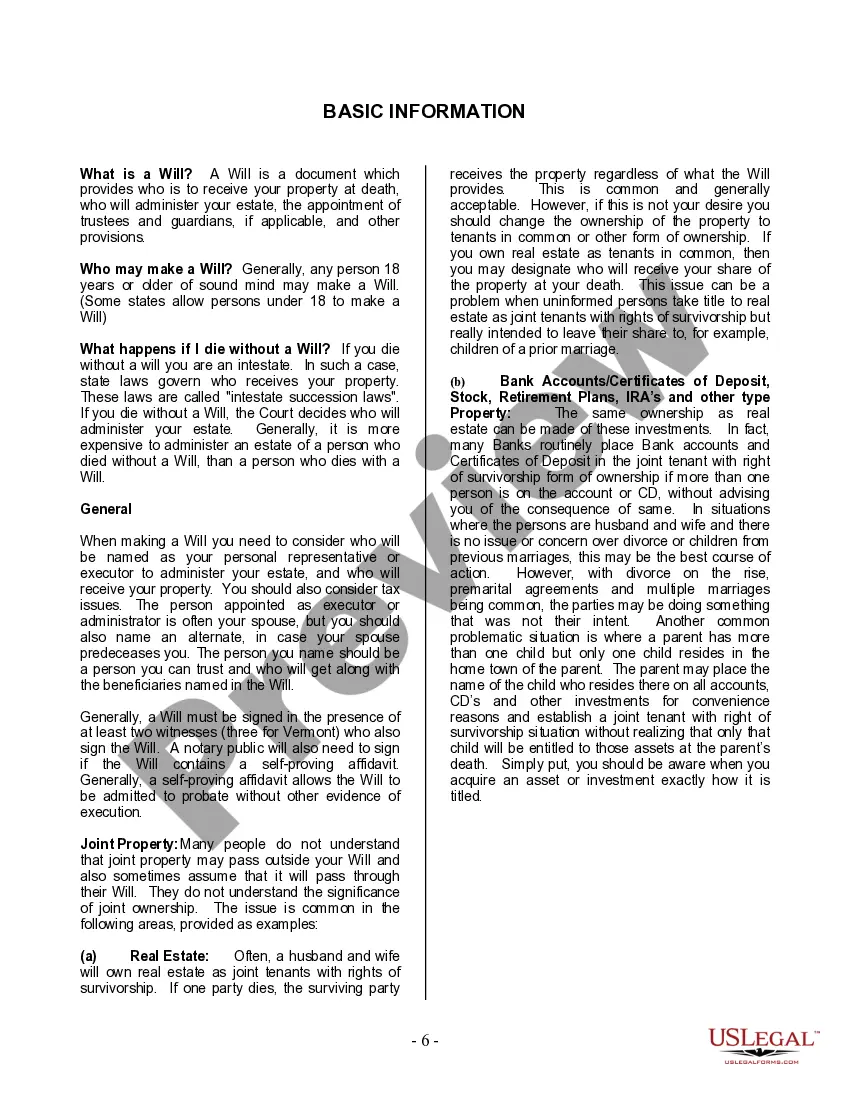
- Assuming that joint property will be covered by the will without understanding joint ownership laws.
Advantages of online completion
- Convenience of completing the document at your own pace from any device.
- Editability allows you to change information easily before finalizing.
- Access to legal forms drafted by licensed attorneys, ensuring compliance with legal standards.
Quick recap
- A Last Will and Testament is essential for ensuring your wishes are respected after your death.
- This specific form addresses the unique needs of married individuals with adult children from prior marriages.
- Proper execution requires witnesses and potentially notarization, depending on state law.
Looking for another form?

Form popularity
FAQ
In Iowa, a will does not entirely override the rights of a spouse. However, a legally executed will can specify how your assets should be distributed, even if you have a spouse. It's essential to understand Iowa law surrounding spousal rights, especially when dealing with adult children from a prior marriage. Consulting with a legal expert can help clarify these complexities.
1Create the initial document. Start by titling the document Last Will and Testament" and including your full legal name and address.2Designate an executor.3Appoint a guardian.4Name the beneficiaries.5Designate the assets.6Ask witnesses to sign your will.7Store your will in a safe place.
Include personal identifying information. Include a statement about your age and mental status. Designate an executor. Decide who will take care of your children. Choose your beneficiaries. List your funeral details. Sign and date your Last Will and Testament.
1Include personal identifying information.2Include a statement about your age and mental status.3Designate an executor.4Decide who will take care of your children.5Choose your beneficiaries.6List your funeral details.7Sign and date your Last Will and Testament.
A simple will is made up of a basic set of components.Names an executor, or person who will be responsible for distributing the assets to the beneficiaries. Contains the signature of the testator. Contains witness signatures.
You can make your own will in California, using Nolo's do-it-yourself online will or will software. You may, however, want to consult a lawyer in some situations; for example, if you suspect your will might be contested or if you want to disinherit your spouse, you should talk with an attorney.
You don't have to have a lawyer to create a basic will you can prepare one yourself. It must meet your state's legal requirements and should be notarized.But be careful: For anything complex or unusual, like distributing a lot of money or cutting someone out, you'd do best to hire a lawyer.
Bank accounts. Brokerage or investment accounts. Retirement accounts and pension plans. A life insurance policy.
Create the initial document. Start by titling the document Last Will and Testament" and including your full legal name and address. Designate an executor. Appoint a guardian. Name the beneficiaries. Designate the assets. Ask witnesses to sign your will. Store your will in a safe place.
Decide if you want to get help or use a do-it-yourself software program. Select your beneficiaries. Choose the executor for your will. Pick a guardian for your kids. Be specific about who gets what. Be realistic about who gets what. If there's more you want to say, attach a letter to the will.