Hawaii Revocation of General Durable Power of Attorney
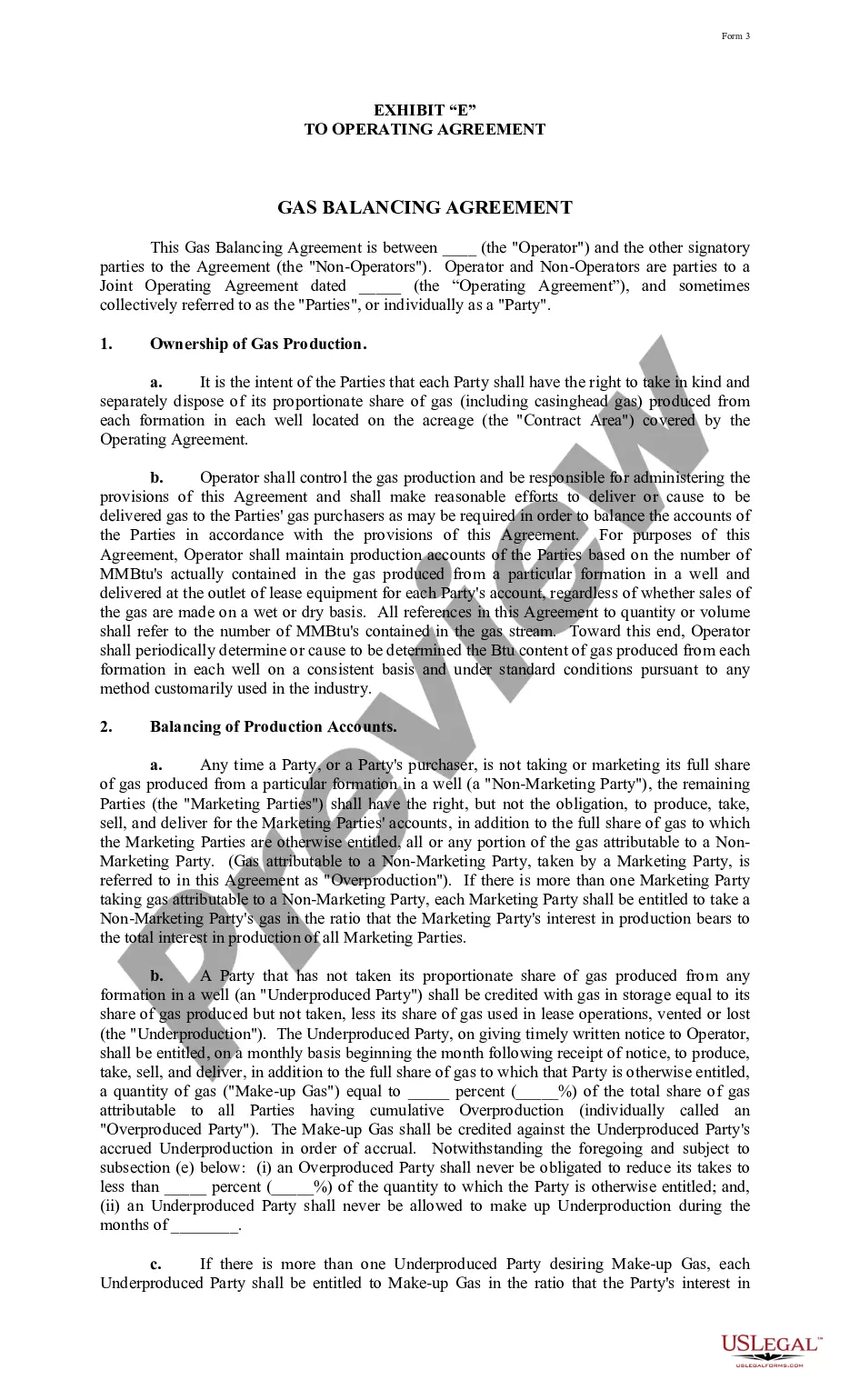
What is this form?
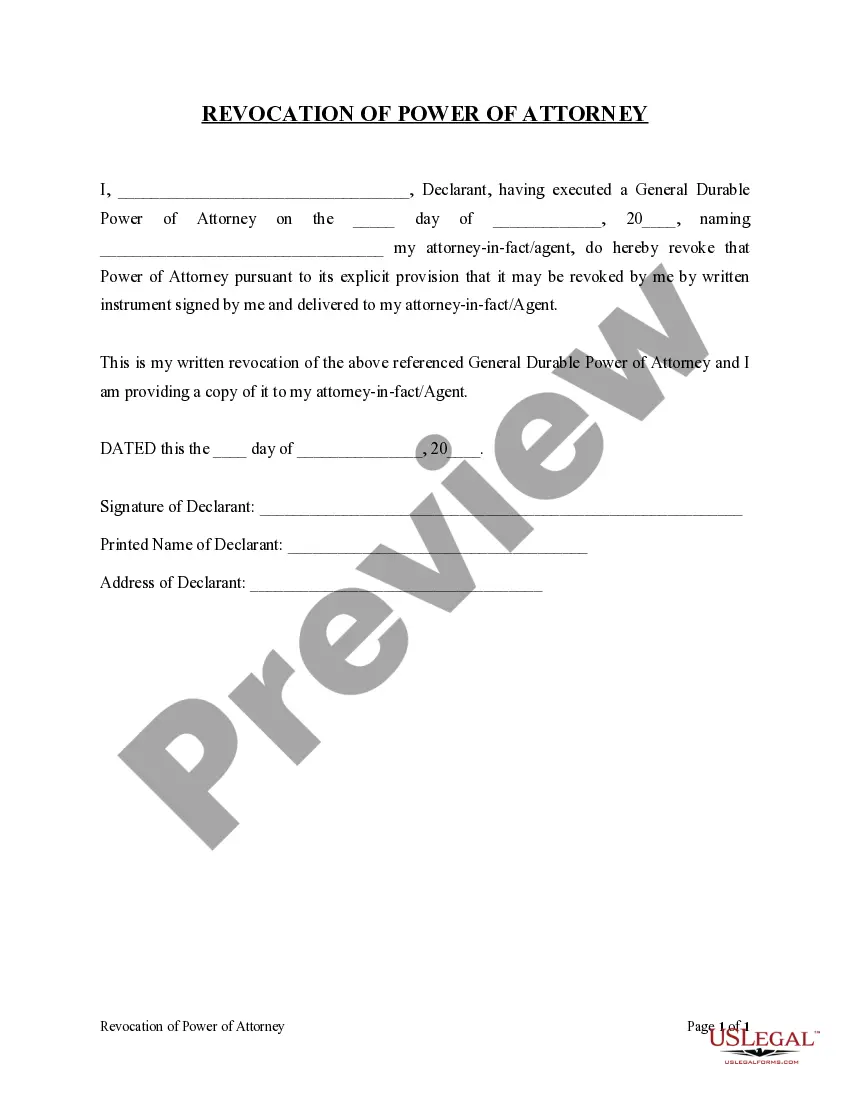
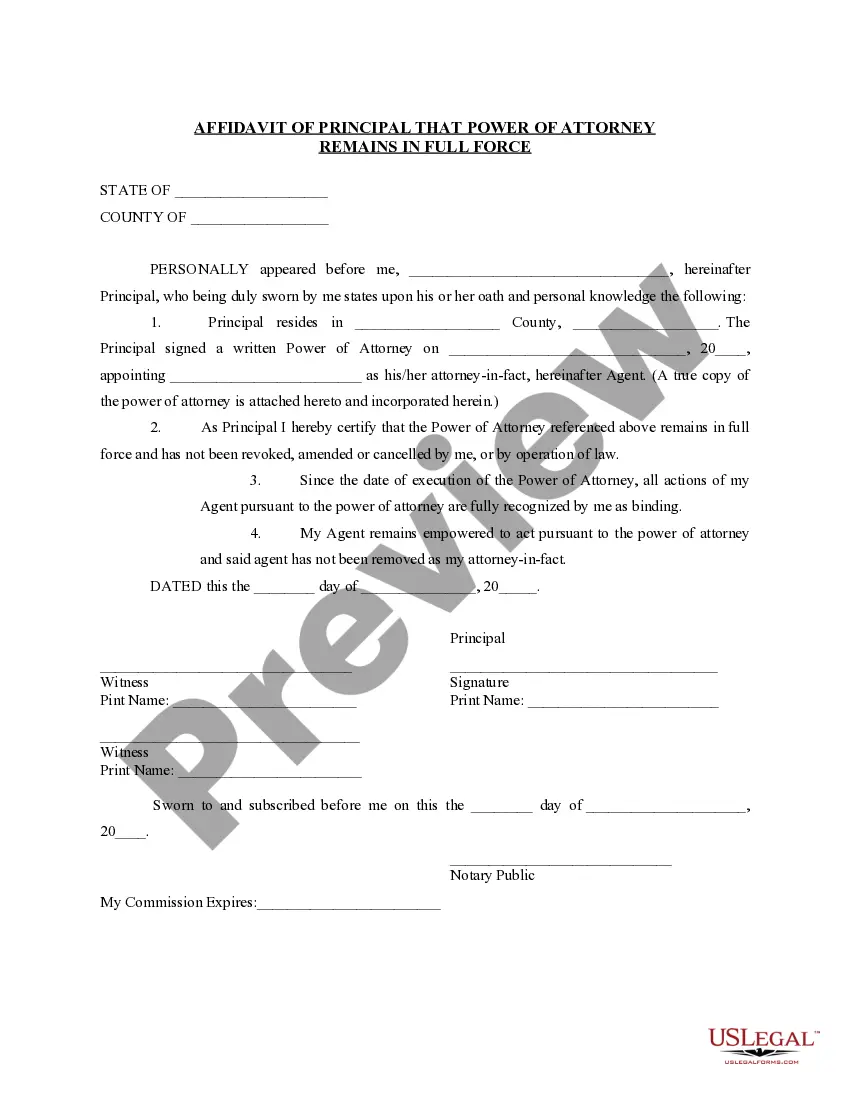
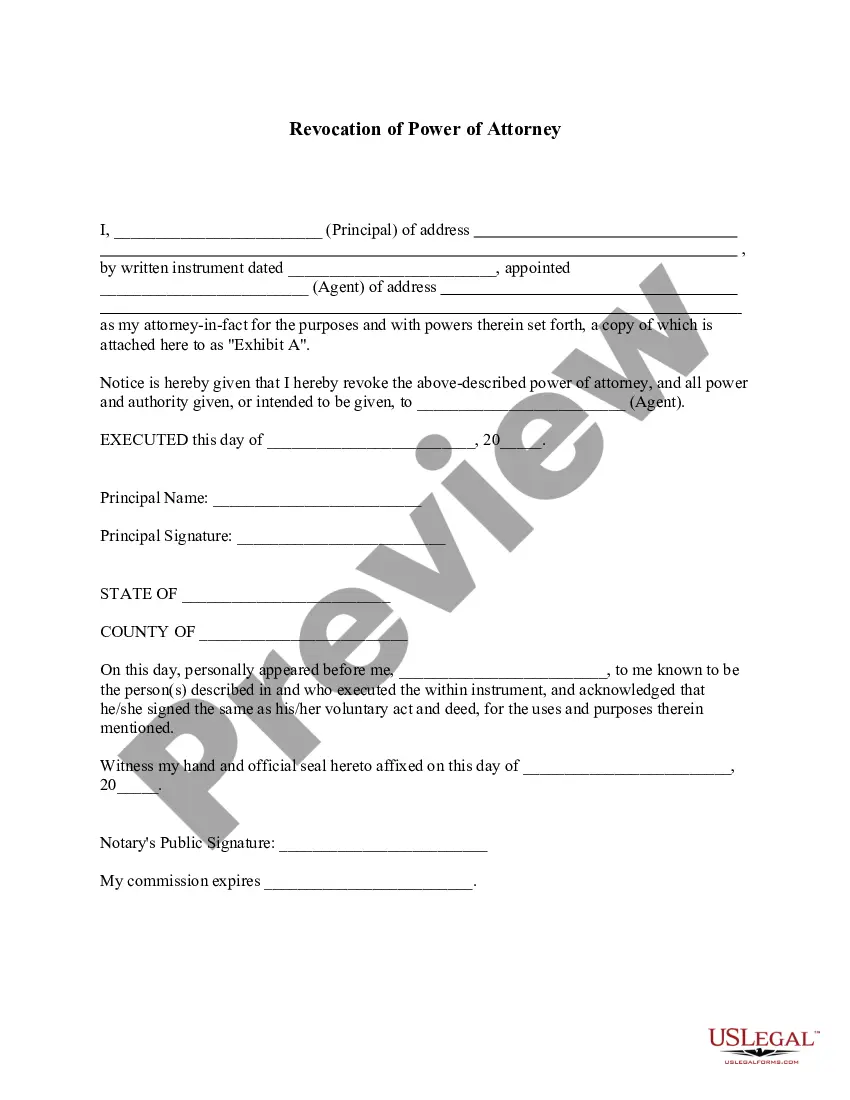
The Revocation of General Durable Power of Attorney is a legal document that officially cancels a previously granted power of attorney. This form explicitly removes the authority given to an agent or attorney-in-fact, allowing you to regain full control over your financial and management decisions. It is essential to use this specific revocation form to ensure clarity and legal effectiveness when terminating an existing Durable Power of Attorney.
Main sections of this form
- Declarant's name and signature confirmation.
- Details of the original Durable Power of Attorney, including the agent's name.
- Statement of revocation clearly stating the intention to revoke the prior authority.
- Date of the revocation.
- Provision to deliver a copy of the revocation to the former agent.
When to use this form
This form is necessary when you decide to dismiss a previously appointed attorney-in-fact due to various reasons, such as changes in trust, financial management needs, or personal circumstances. It is crucial when you want to ensure your wishes and financial matters are managed by someone else, especially if the original agent can no longer fulfill their duties or if you want to appoint a new agent.
Who needs this form
- Individuals who have previously established a Durable Power of Attorney.
- People needing to revoke someone else's authority to act on their behalf.
- Those who wish to appoint a new agent after revocation.
How to complete this form
- Identify yourself as the declarant and provide your name.
- State the date you executed the original Durable Power of Attorney.
- Clearly identify the agent you are revoking powers from.
- Include the date of the revocation.
- Sign the document to validate the revocation.
- Deliver a copy of the completed form to your former agent.
Does this form need to be notarized?
This form does not typically require notarization unless specified by local law. It is still advisable to check specific state requirements or consult with a legal professional to ensure compliance.
Get your form ready online
Our built-in tools help you complete, sign, share, and store your documents in one place.
Make edits, fill in missing information, and update formatting in US Legal Forms—just like you would in MS Word.
Download a copy, print it, send it by email, or mail it via USPS—whatever works best for your next step.
Sign and collect signatures with our SignNow integration. Send to multiple recipients, set reminders, and more. Go Premium to unlock E-Sign.
If this form requires notarization, complete it online through a secure video call—no need to meet a notary in person or wait for an appointment.
We protect your documents and personal data by following strict security and privacy standards.

Make edits, fill in missing information, and update formatting in US Legal Forms—just like you would in MS Word.

Download a copy, print it, send it by email, or mail it via USPS—whatever works best for your next step.

Sign and collect signatures with our SignNow integration. Send to multiple recipients, set reminders, and more. Go Premium to unlock E-Sign.

If this form requires notarization, complete it online through a secure video call—no need to meet a notary in person or wait for an appointment.

We protect your documents and personal data by following strict security and privacy standards.
Avoid these common issues
- Not specifying the correct date of the original Durable Power of Attorney.
- Failing to sign the revocation form.
- Not providing a copy to the former agent, which is crucial for legal validity.
- Using vague language that does not clearly state the intent to revoke.
Benefits of using this form online
- Convenient access to fill out the form at your own pace.
- Editable fields allow for accurate completion and customization.
- Reliable templates drafted by licensed attorneys ensure compliance.
- Instant download capabilities for prompt use and distribution.
Looking for another form?
Form popularity
FAQ
Power of attorney and guardianship serve different purposes in Hawaii. A power of attorney allows you to appoint someone to manage your affairs, while guardianship is a legal process that grants an individual the authority to make decisions for someone deemed incapacitated. Understanding these distinctions is essential, especially when navigating the Hawaii Revocation of General Durable Power of Attorney when your needs change. For tailored guidance, platforms like US Legal Forms can simplify your decisions.
In Hawaii, a power of attorney generally lasts until the principal revokes it, dies, or is declared incompetent. It is vital to understand that if you wish to revoke or alter the power of attorney, you can do so through the Hawaii Revocation of General Durable Power of Attorney process. With this in mind, making reminders to review your documents regularly can help you maintain control over your affairs. Stay informed about the vital dates related to your power of attorney.
Yes, you can have both a general and durable power of attorney in Hawaii. A general power of attorney grants broad authority to your agent, while a durable power of attorney remains effective even if you become incapacitated. Utilizing both types can help cover various situations, ensuring that your interests are protected under the Hawaii Revocation of General Durable Power of Attorney framework. Consider consulting with professionals for tailored advice.
The maximum period of a power of attorney in Hawaii is generally determined by the principal, the person granting the authority. A power of attorney can remain effective until revoked, which is applicable under the Hawaii Revocation of General Durable Power of Attorney guidelines. However, specific circumstances, such as the principal's death or incapacity, can lead to its termination. Understanding this can help ensure your wishes are followed.
When writing a revocation, start with a clear title stating that it is a revocation of power of attorney. Include your full name, the attorney-in-fact's name, and the date of the original power of attorney. Ensure you state that you are revoking it, and conclude with your signature and date to make it official.
To write a letter to revoke a power of attorney, begin by stating the date and your contact information. Clearly express your intent to revoke the existing power of attorney, citing both your name and the name of the attorney-in-fact. Always sign the letter and send it through a method that provides proof of receipt to ensure effective communication.
Several factors can void a power of attorney in Hawaii, including the death of the principal, a new legal document that specifically revokes the existing power of attorney, or the principal's decision to revoke the power. Furthermore, if the principal becomes mentally incapacitated, the existing power of attorney may also become void, making the Hawaii revocation of general durable power of attorney essential.
The fastest way to revoke a power of attorney in Hawaii is to create a written revocation document and notify all parties involved. This includes the attorney-in-fact and any institutions relying on the power of attorney. Additionally, file the revocation with the local county clerk if necessary to ensure public notice.
To write a letter for the Hawaii revocation of general durable power of attorney, clearly state your intent to terminate. Include your name, the name of the attorney, and any specific details about the power of attorney you wish to revoke. Be sure to sign and date the letter, and consider sending it via certified mail for proof of delivery.
To revoke a power of attorney in Hawaii, you need to prepare a written revocation document that complies with state laws. Include essential information like your name, the date, and a declaration of your intent to revoke the previous power of attorney. Once completed, it is important to distribute copies to relevant parties, including the appointed agent. US Legal Forms offers templates to make this straightforward, helping you ensure a smooth revocation process.