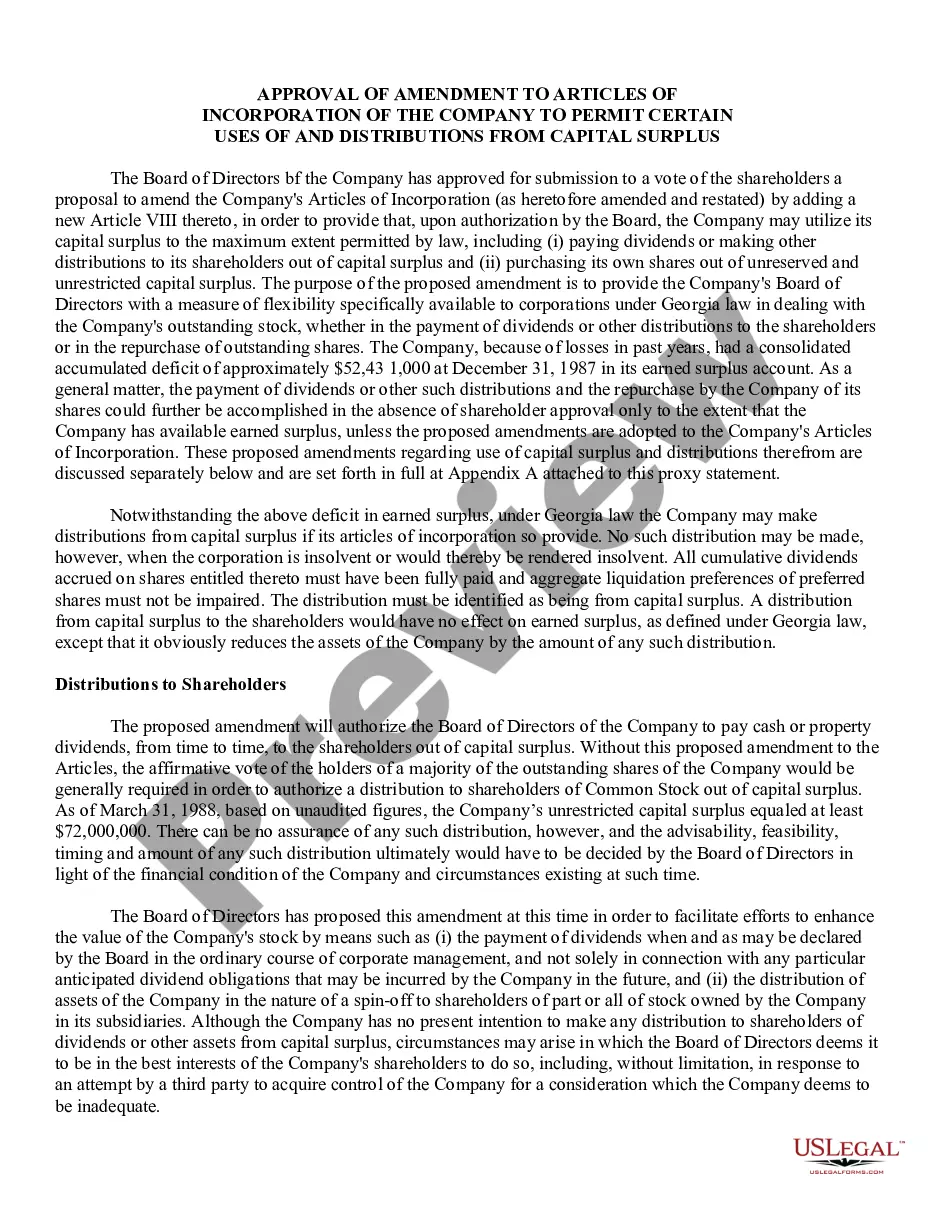
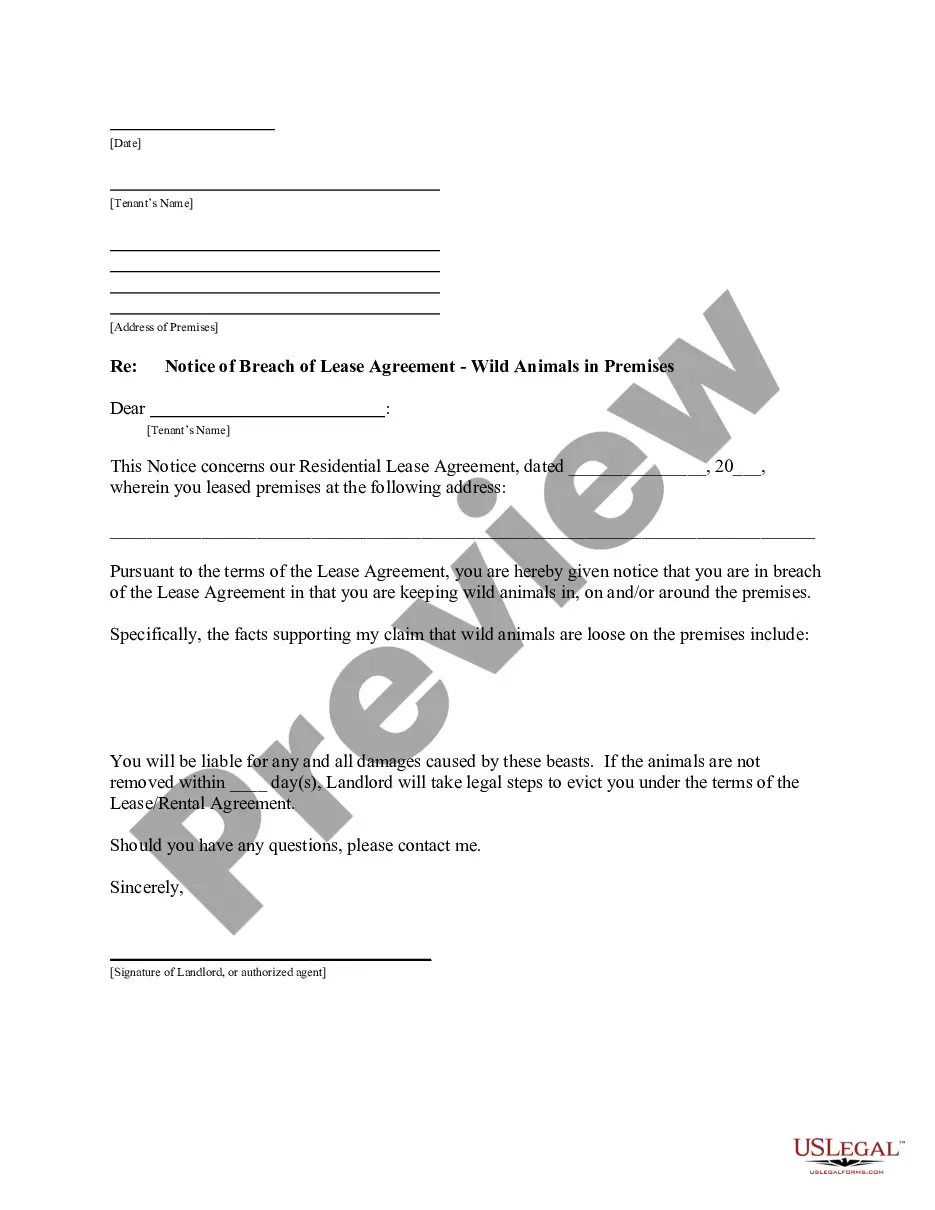
Hawaii Letter from Landlord to Tenant as Notice to remove Wild Animals in Premises
About this form
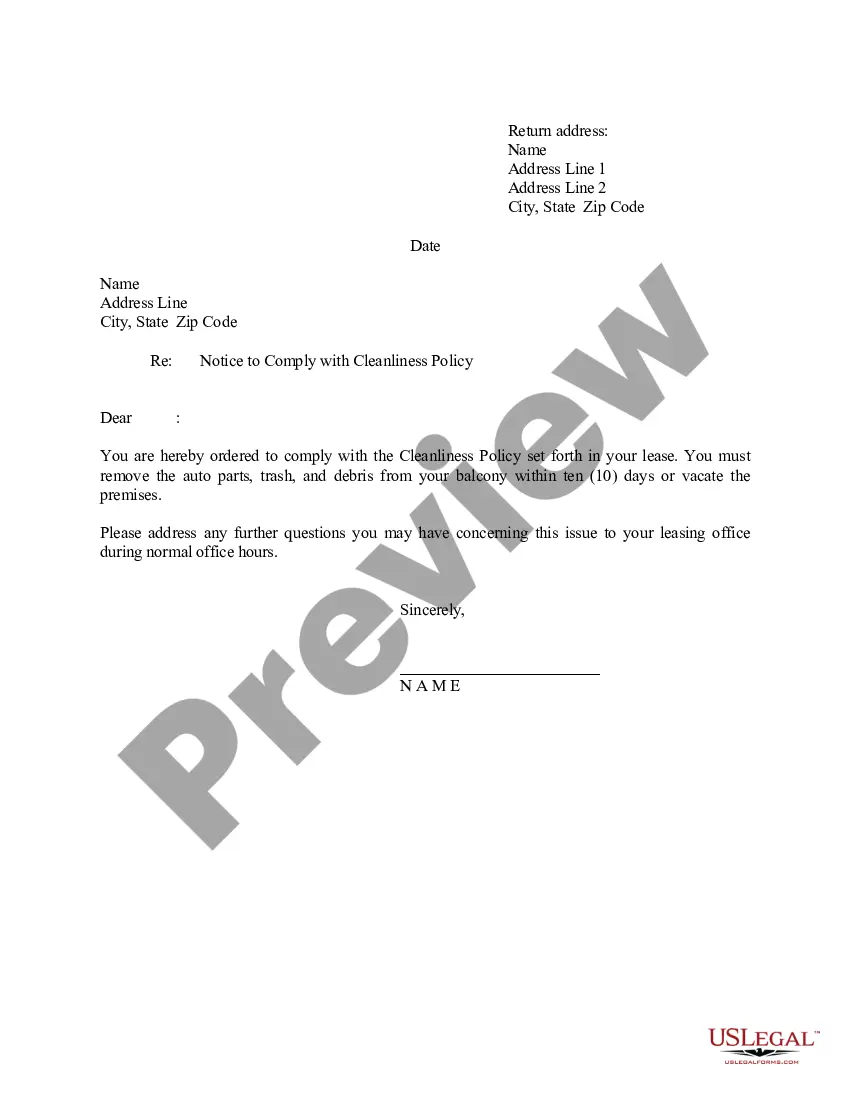
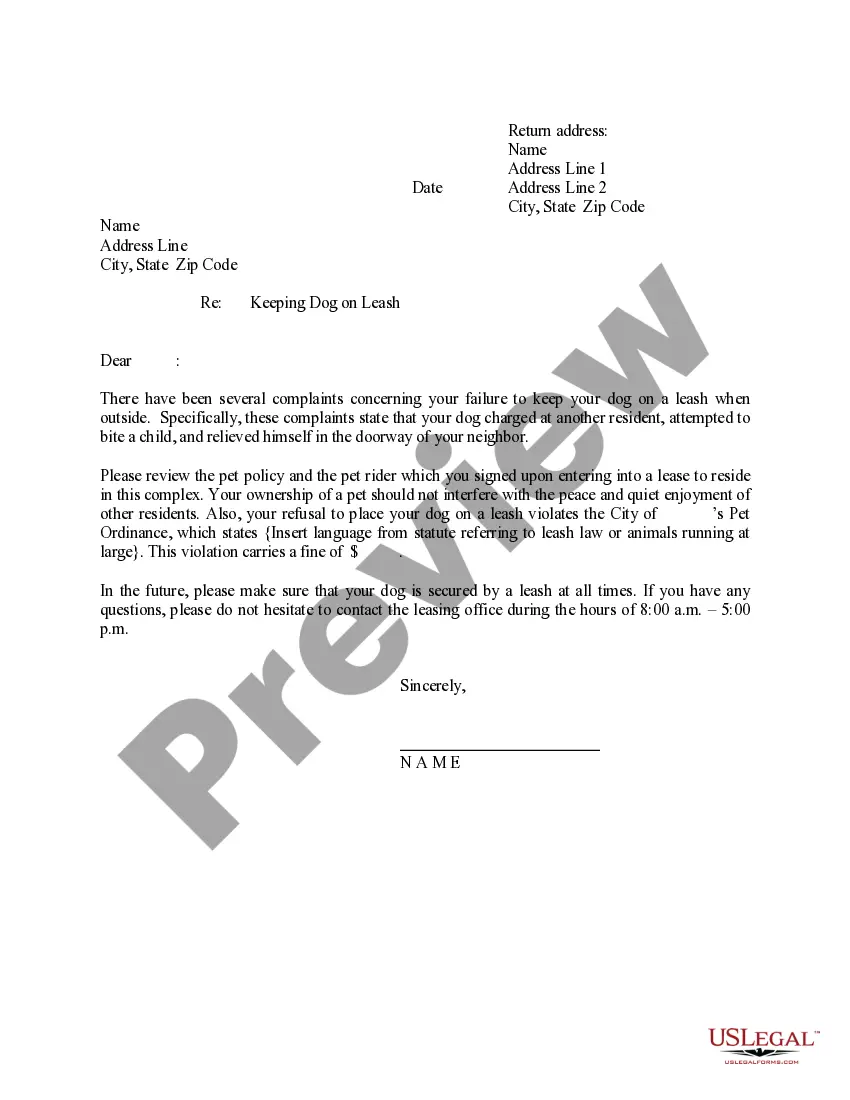
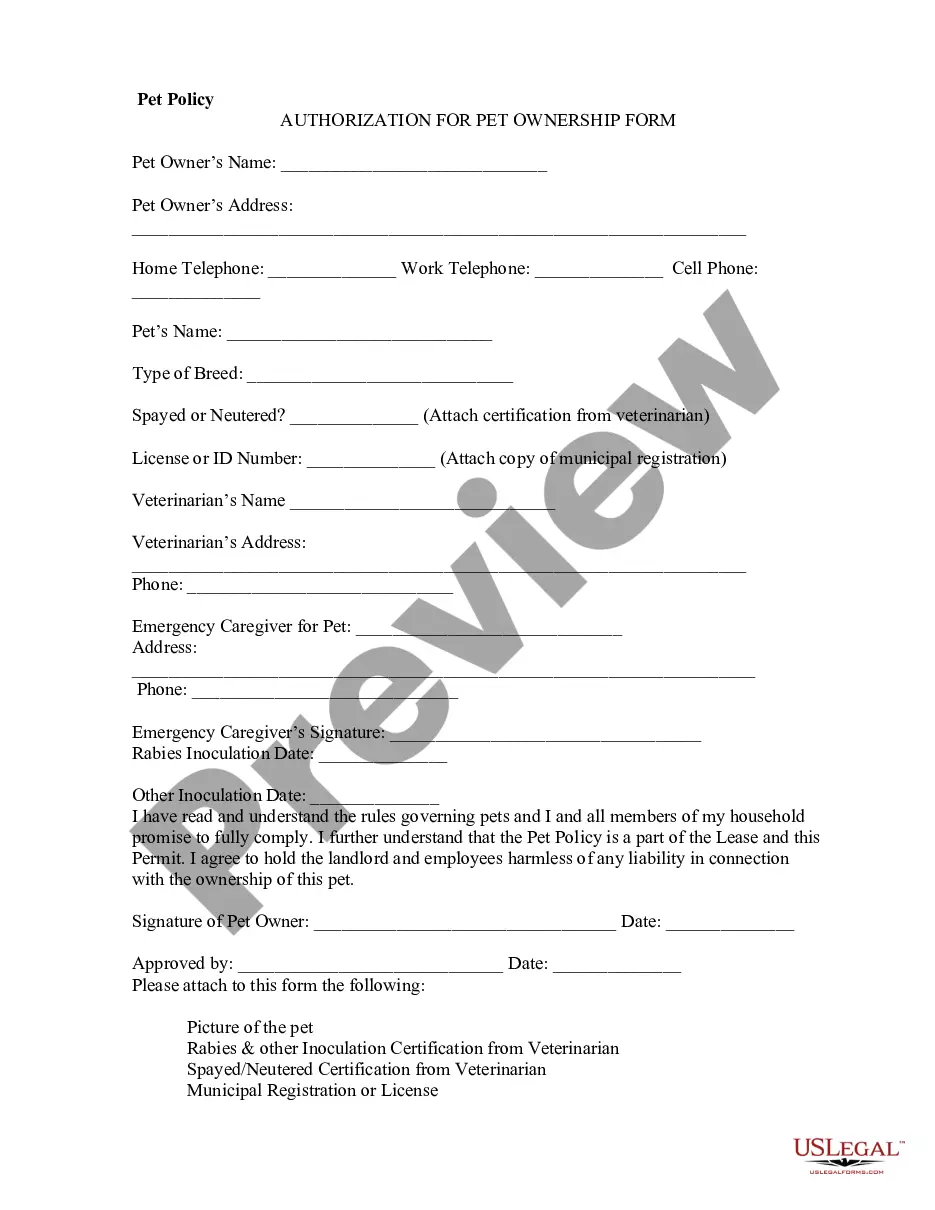
This Letter from Landlord to Tenant as Notice to Remove Wild Animals in Premises is a formal document used by landlords to notify tenants of violations related to keeping wild animals on rental properties. This form serves to clarify the breach of lease agreements and outlines the tenant's obligation to address the issue. It is especially important in places like Hawaii, where specific regulations may apply to wildlife on rental properties.
Key components of this form
- Identification of parties: Includes the names of the landlord and tenant.
- Notice of breach: Clearly states that keeping wild animals constitutes a breach of the lease agreement.
- Instructions for action: Specifies that the tenant must remove wild animals from the premises.
- Signature line: Space for the landlord or authorized agent to sign the document.
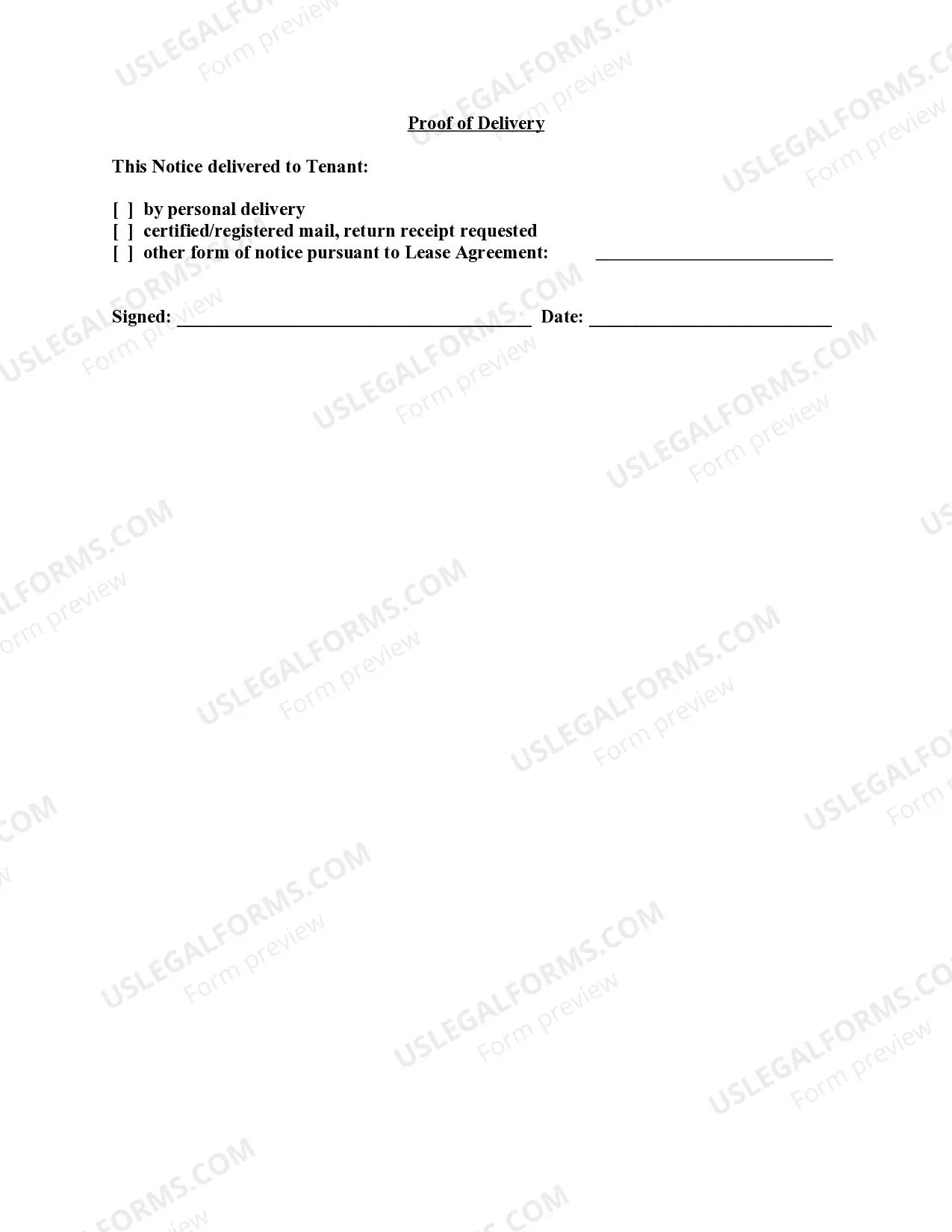
- Proof of delivery section: Details options for how the notice was delivered to the tenant.

When to use this form
This form should be used when a landlord discovers that a tenant is keeping wild animals on the rental property in violation of the lease agreement. It serves as a formal notification that addresses the issue and provides the tenant with a clear directive to take action.
Who this form is for
- Landlords managing rental properties.
- Property managers acting on behalf of the landlord.
- Tenants needing to understand their obligations regarding wildlife on the premises.
Steps to complete this form
- Identify the parties: Enter the name of the landlord and the tenant.
- State the breach: Clearly outline that keeping wild animals is a breach of the lease.
- Specify the action required: Direct the tenant to remove the wild animals from the premises.
- Sign the document: The landlord or authorized agent should sign in the provided space.
- Document delivery: Indicate how the notice was delivered to the tenant.
Notarization requirements for this form
This form does not typically require notarization unless specified by local law. It is advisable to check local regulations to ensure compliance.
Get your form ready online
Our built-in tools help you complete, sign, share, and store your documents in one place.
Make edits, fill in missing information, and update formatting in US Legal Forms—just like you would in MS Word.
Download a copy, print it, send it by email, or mail it via USPS—whatever works best for your next step.
Sign and collect signatures with our SignNow integration. Send to multiple recipients, set reminders, and more. Go Premium to unlock E-Sign.
If this form requires notarization, complete it online through a secure video call—no need to meet a notary in person or wait for an appointment.
We protect your documents and personal data by following strict security and privacy standards.

Make edits, fill in missing information, and update formatting in US Legal Forms—just like you would in MS Word.

Download a copy, print it, send it by email, or mail it via USPS—whatever works best for your next step.

Sign and collect signatures with our SignNow integration. Send to multiple recipients, set reminders, and more. Go Premium to unlock E-Sign.

If this form requires notarization, complete it online through a secure video call—no need to meet a notary in person or wait for an appointment.

We protect your documents and personal data by following strict security and privacy standards.
Avoid these common issues
- Failing to sign the document, which could render it invalid.
- Not specifying the nature of the breach clearly.
- Neglecting to follow up with the tenant after sending the notice.
Benefits of completing this form online
- Convenient access: Easily download the form at any time.
- Editability: Customize the form with specific tenant and property information.
- Reliability: Get a legally vetted document drafted by licensed attorneys.
- The form serves as a legal notice under the lease agreement, establishing a formal communication channel between landlord and tenant.
- Failure to comply with the notice can lead to further legal actions based on local eviction and animal control laws.
Summary of main points
- This form is essential for landlords to notify tenants of wildlife issues on rental properties.
- It must be completed accurately to avoid misunderstandings and legal complications.
- Understanding state-specific regulations, such as those in Hawaii, is crucial when using this form.
Looking for another form?


Form popularity
FAQ
Landlord harassment in Hawaii refers to actions by a landlord that interfere with a tenant's right to quiet enjoyment of their home. This includes excessive inspections, failing to provide essential repairs, or using intimidation tactics. If you feel that your landlord is not adhering to the code, sending a Hawaii Letter from Landlord to Tenant as Notice to remove Wild Animals in Premises can serve as a necessary step to address these issues legally and professionally.
One of the primary purposes of Hawaii's landlord-tenant code is to establish clear guidelines for both landlords and tenants regarding their rights and responsibilities. This code aims to protect tenants from unfair practices while ensuring landlords can manage their properties effectively. If you are dealing with issues related to wild animals, using a Hawaii Letter from Landlord to Tenant as Notice to remove Wild Animals in Premises can help clarify these obligations and facilitate a prompt resolution.
If you do not inform your landlord about having a pet, it could lead to a breach of your lease agreement and possibly eviction. Landlords have the right to enforce their no-pet policies, especially if it's clearly stated in the lease. To avoid these issues, consider addressing the situation proactively, possibly using a Hawaii Letter from Landlord to Tenant as Notice to remove Wild Animals in Premises for context.
A letter to a landlord moving out typically includes your name, address, and the planned move-out date. Clearly state your intention to vacate and any requests regarding your security deposit. If you had any issues with pets, referencing a Hawaii Letter from Landlord to Tenant as Notice to remove Wild Animals in Premises can clarify the situation.
Failure to give a 30-day notice to your landlord may result in losing your security deposit or facing other penalties as stipulated in your lease agreement. Additionally, it may complicate your relationship with the landlord and future rental opportunities. Keep in mind, addressing any pet issues beforehand, such as the Hawaii Letter from Landlord to Tenant as Notice to remove Wild Animals in Premises, can prevent misunderstandings.
Yes, you can write your own notice to vacate as long as you follow the required format and include necessary information such as your address and move-out date. It’s advisable to check your lease for any specific terms regarding notice to vacate. If pets are involved, make sure to highlight any relevant agreements, especially those outlined in a Hawaii Letter from Landlord to Tenant as Notice to remove Wild Animals in Premises.
In Hawaii, tenants typically need to give a 30-day notice if they rent month-to-month. For long-term leases, the notice period may vary and could be as outlined in the lease agreement. It's essential to adhere to these requirements to avoid complications, especially if a Hawaii Letter from Landlord to Tenant as Notice to remove Wild Animals in Premises is involved.
A letter of intent to vacate should include key information, such as your name, the property address, and your planned move-out date. Additionally, it can include any requests regarding the security deposit and inspection. Referencing a Hawaii Letter from Landlord to Tenant as Notice to remove Wild Animals in Premises can be useful if you've had pet-related discussions.
When writing a letter to your landlord to vacate, include the date, your address, and a clear statement of your intention to move out. Specify your last day of residence and provide any necessary details regarding the return of the security deposit. If your pets are an issue, you could mention the Hawaii Letter from Landlord to Tenant as Notice to remove Wild Animals in Premises for clarity.
To inform a tenant that pets are not allowed, it’s best to communicate this clearly in the lease or a separate notice. Use a respectful tone and ensure that the policy is fully understood. If necessary, provide alternatives or solutions for tenants who may request a pet, referencing a Hawaii Letter from Landlord to Tenant as Notice to remove Wild Animals in Premises for additional context.