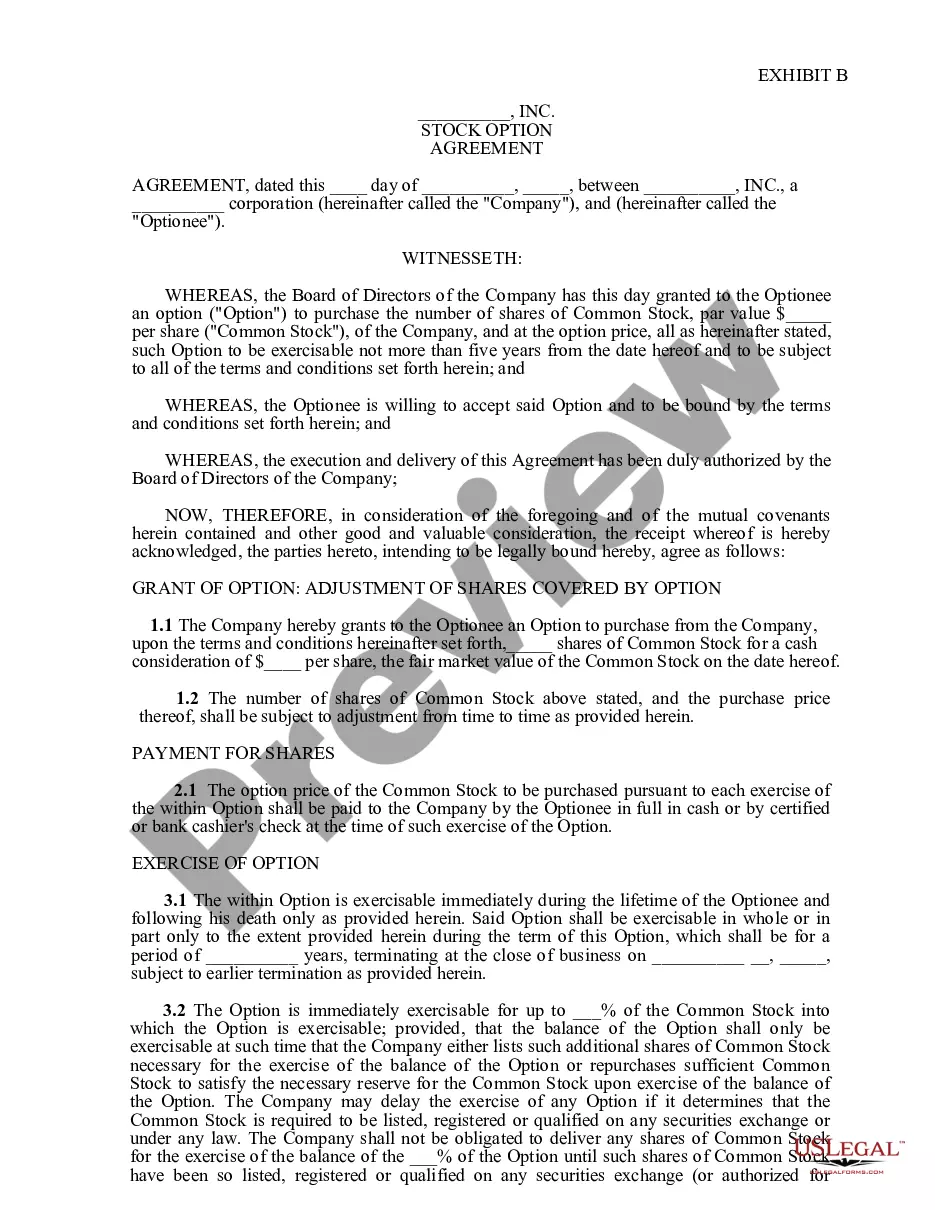
Hawaii Notice of Mechanic's and Materialman's Lien and Demand for Payment
About this form
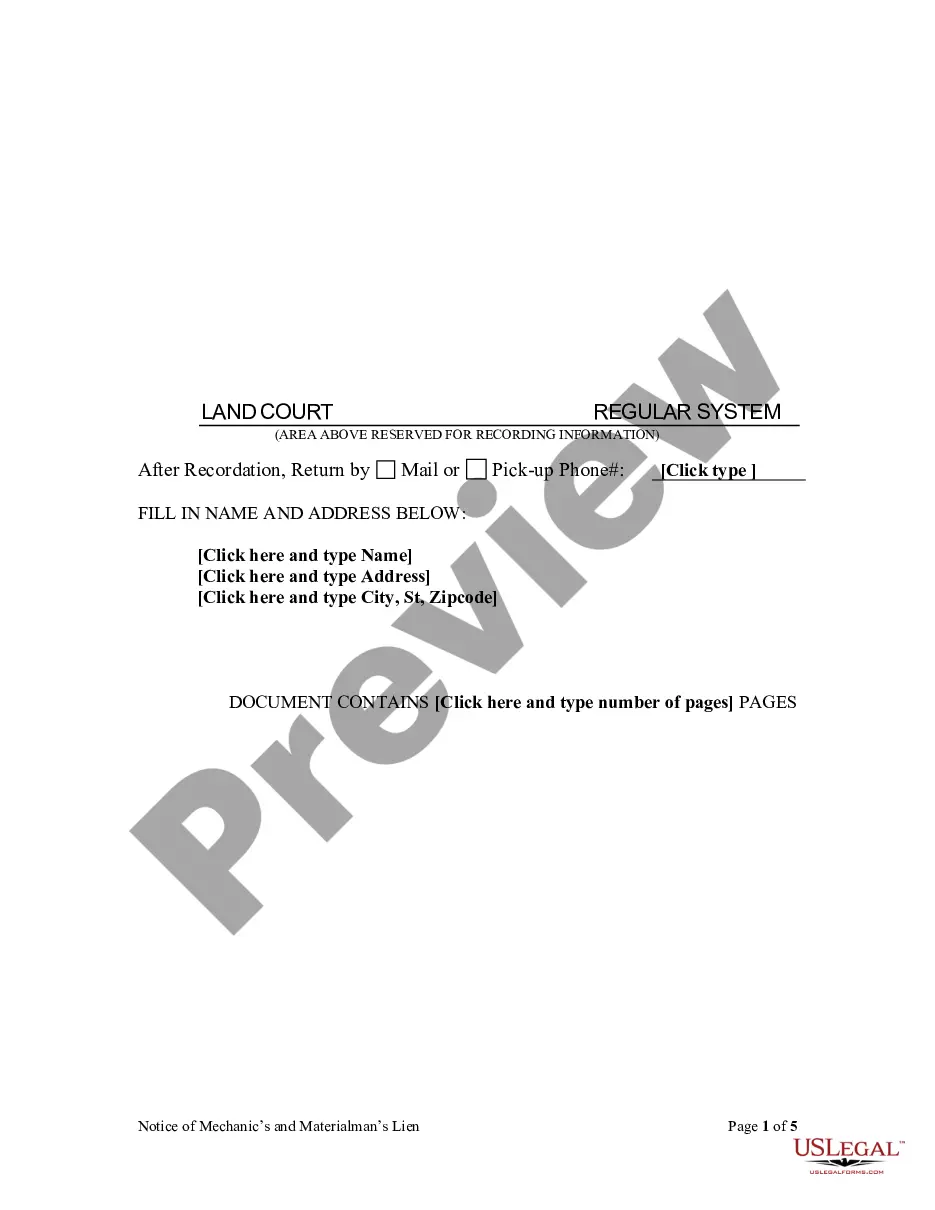
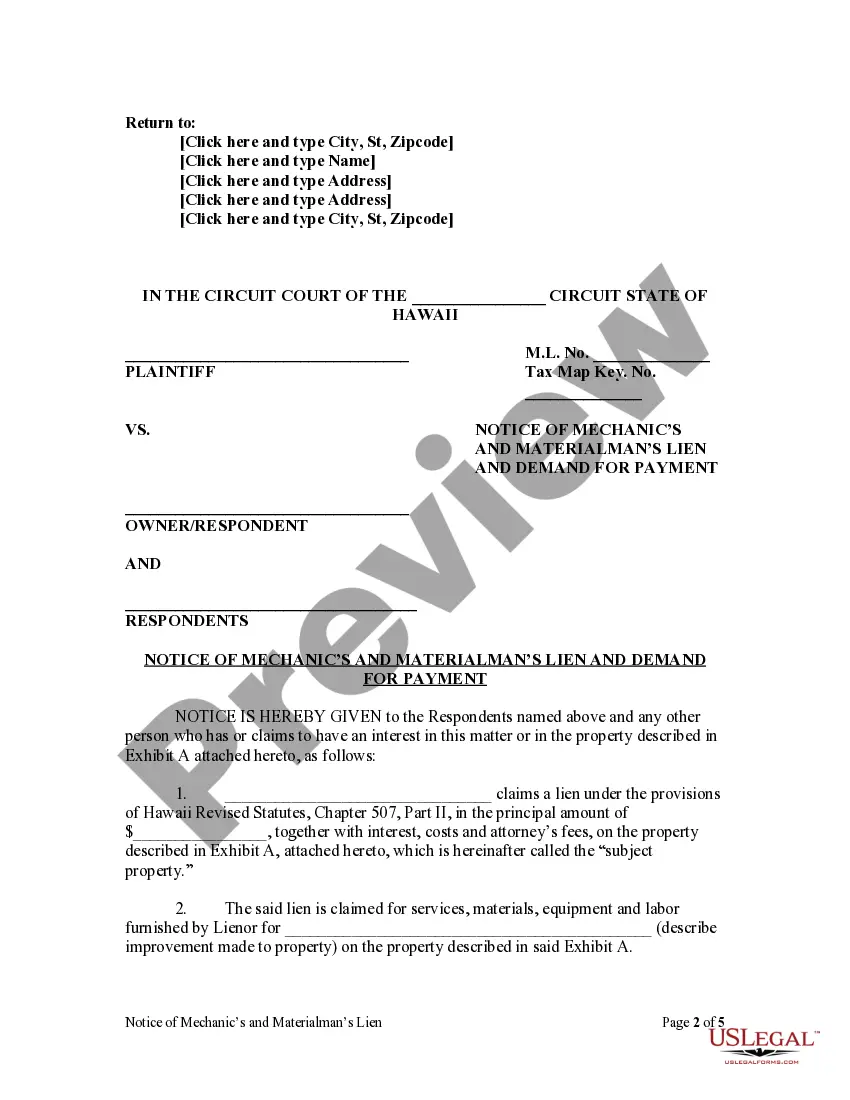
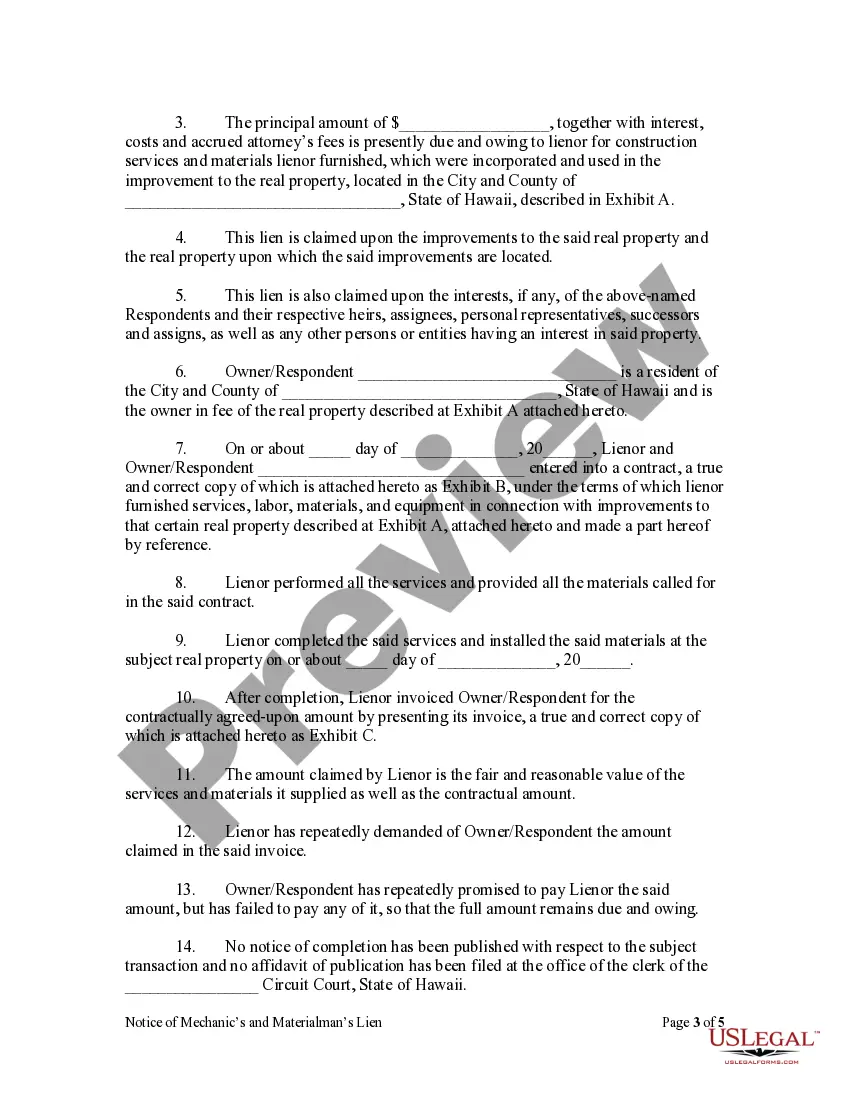
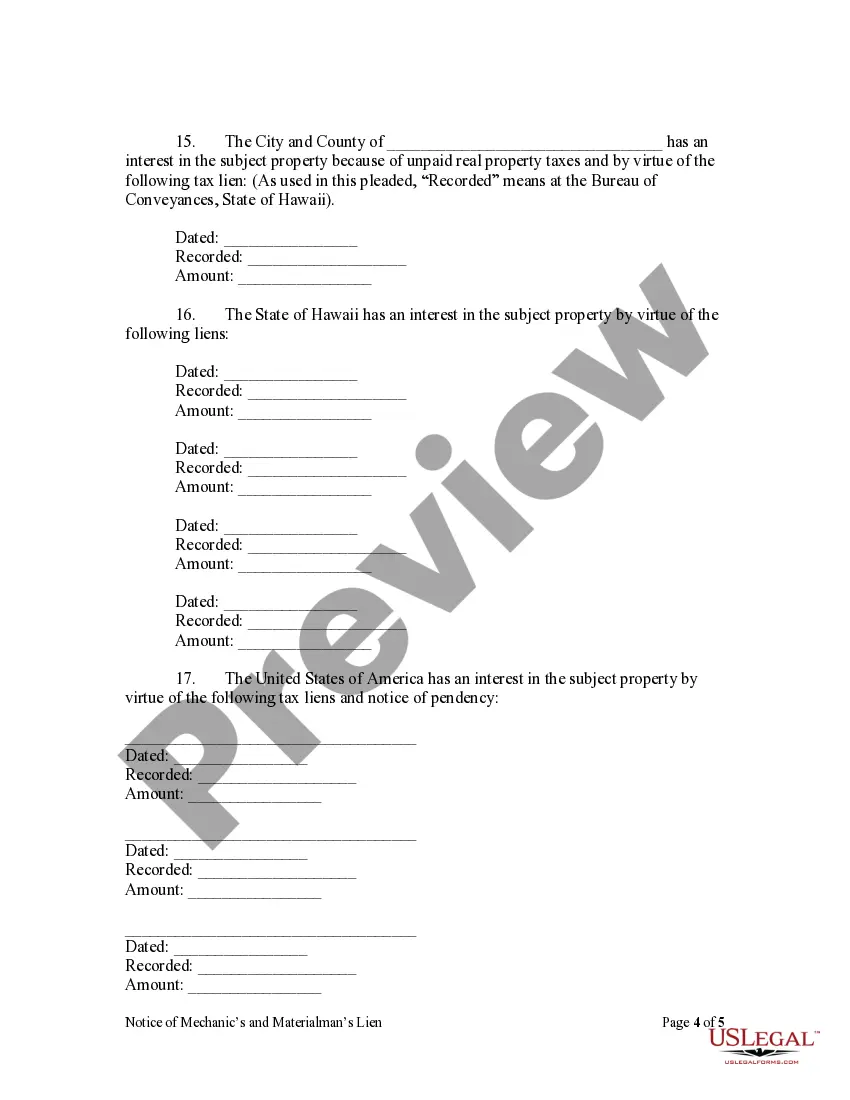
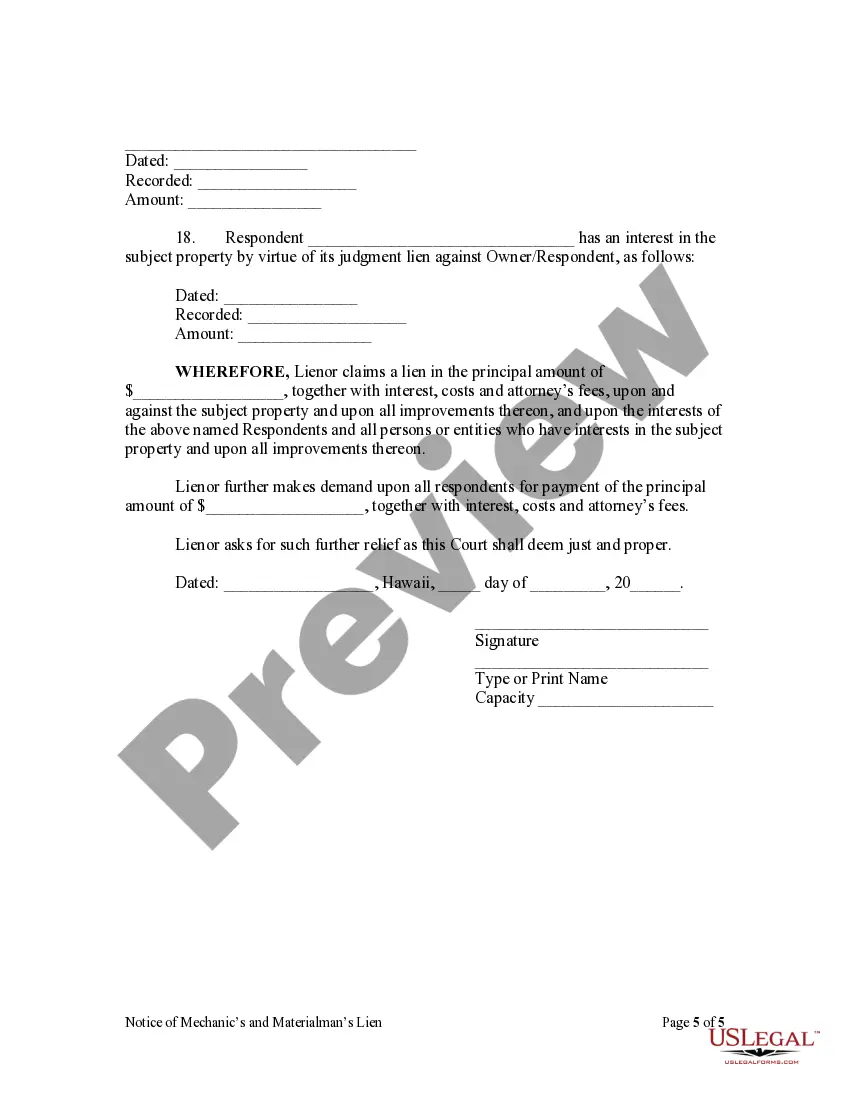
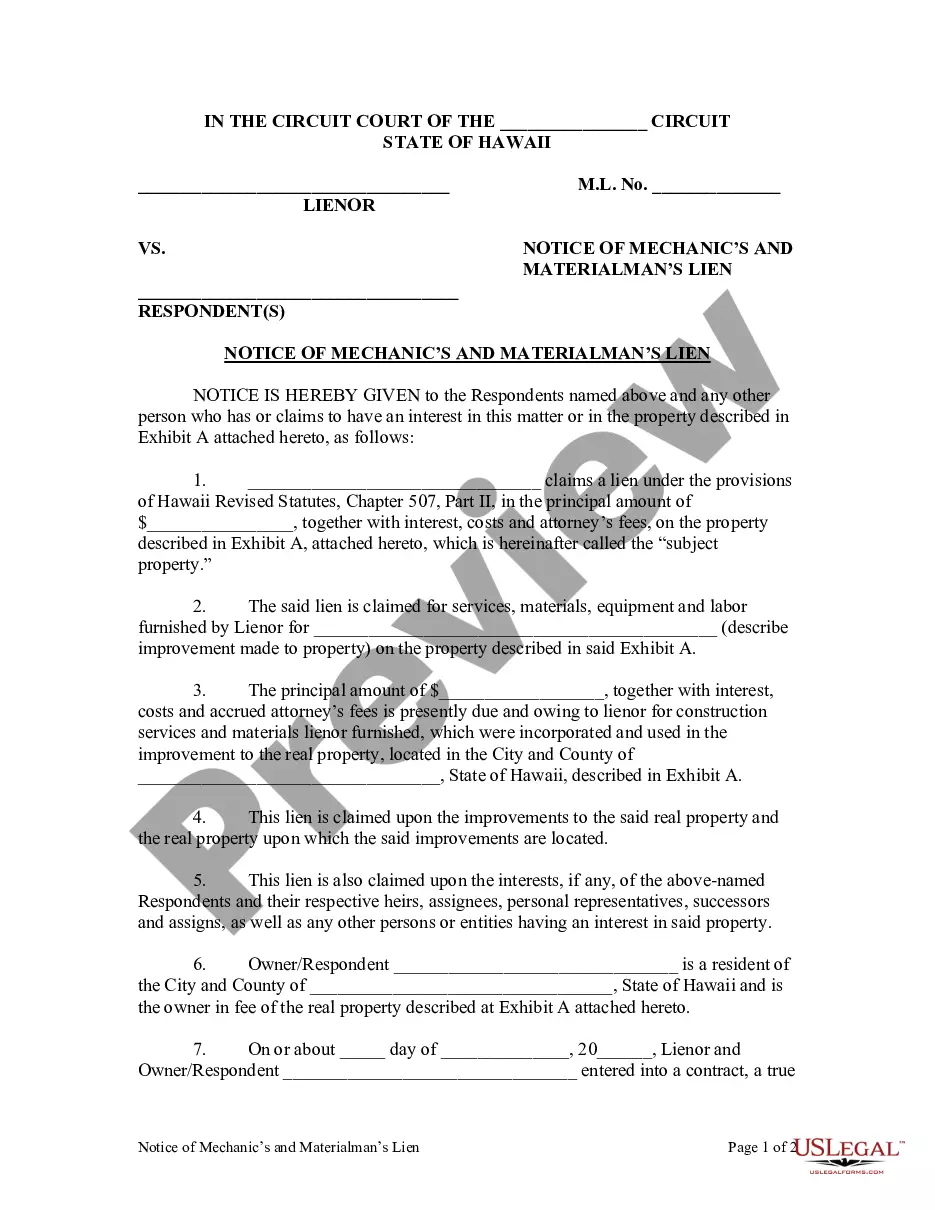
The Notice of Mechanic's and Materialman's Lien and Demand for Payment is a legal document that notifies respondents and others about a claim of lien on a property for unpaid services, materials, equipment, or labor provided for improvements on that property. This form is essential for establishing a legal right to collect payment when contractors or suppliers have not been compensated for their work. It differentiates itself from other liens by specifying its use for construction-related claims under the provisions of Hawaii law.
Main sections of this form
- Claimant information: Name and address of the party asserting the lien.
- Details of the property: Description and location of the property involved.
- Amount due: Principal amount owed plus any applicable interest, costs, and attorney's fees.
- Nature of work: Description of services, materials, and improvements provided.
- Legal basis: Reference to the relevant statutes under which the lien claim is made.
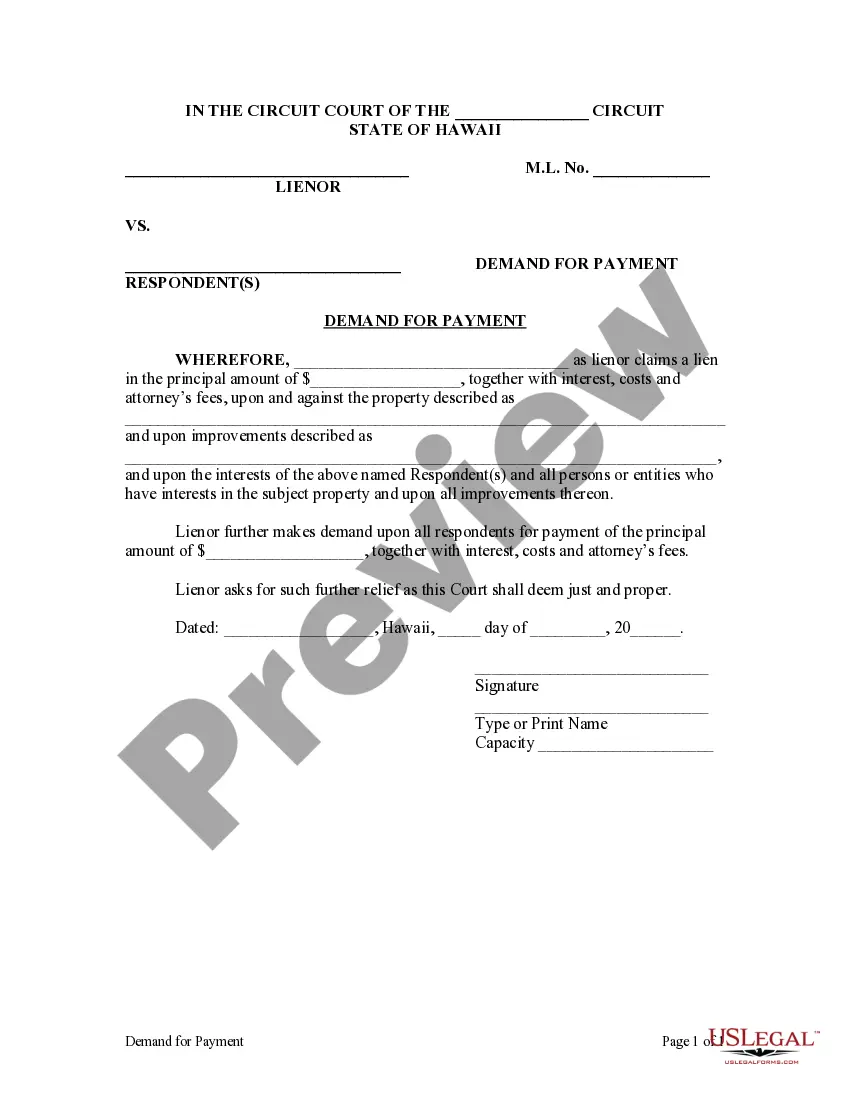
- Demand for payment: A formal request for the outstanding amount owed, specifying any previous demands made for payment.
When this form is needed
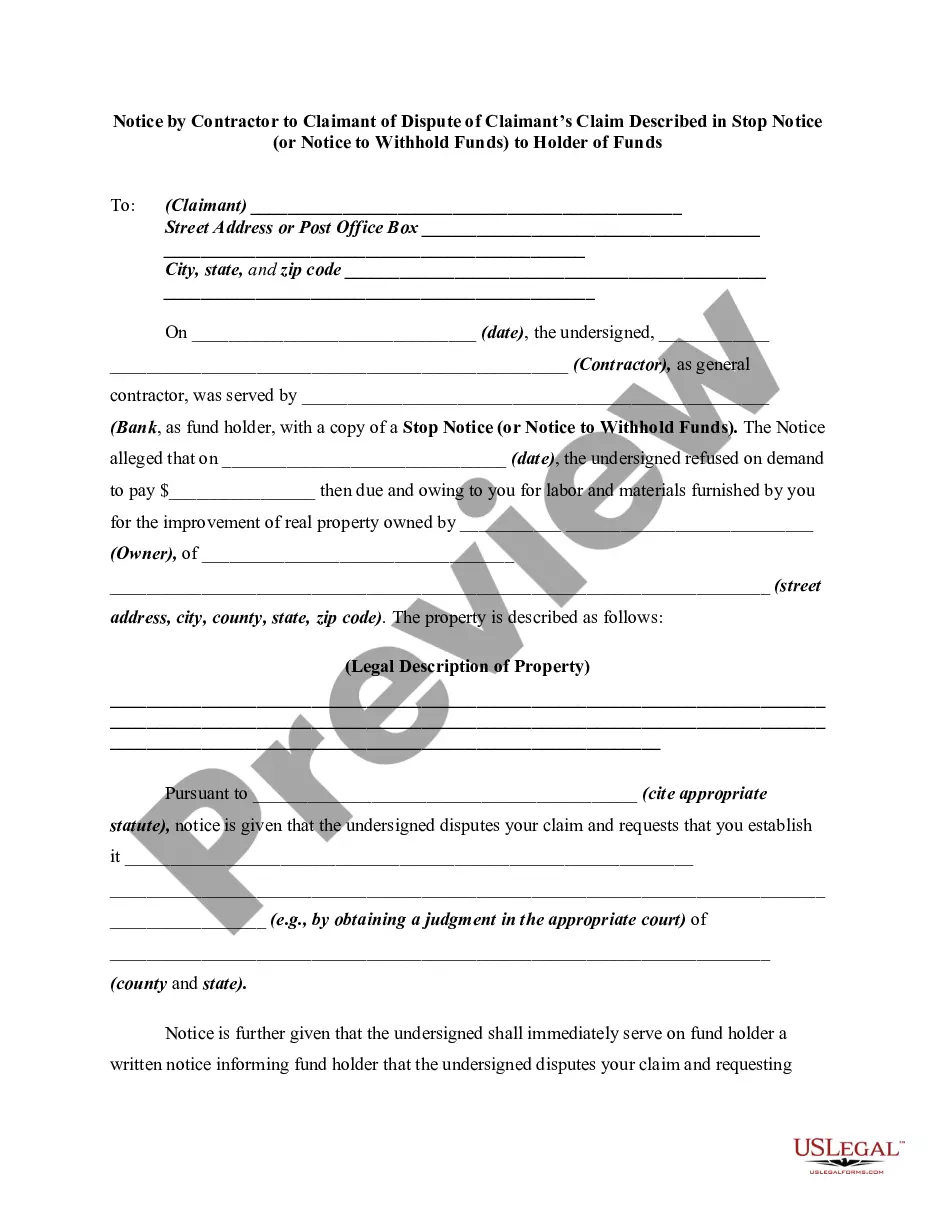
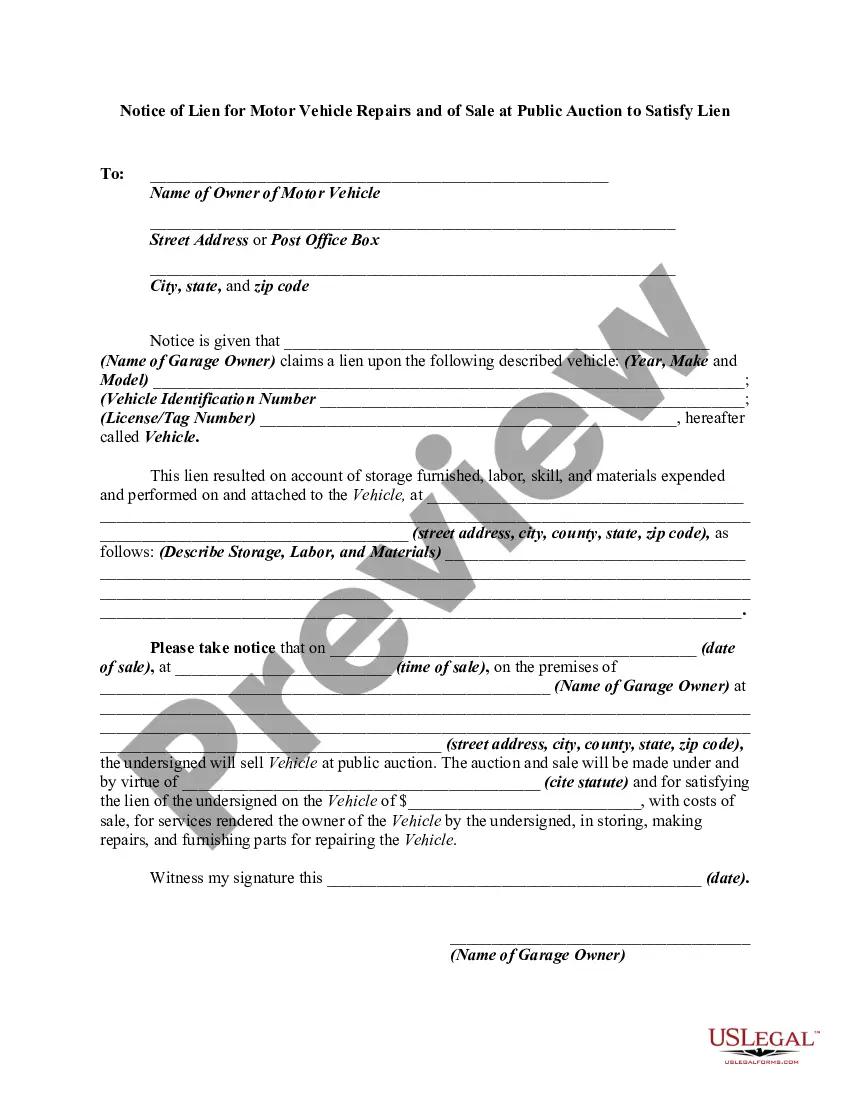
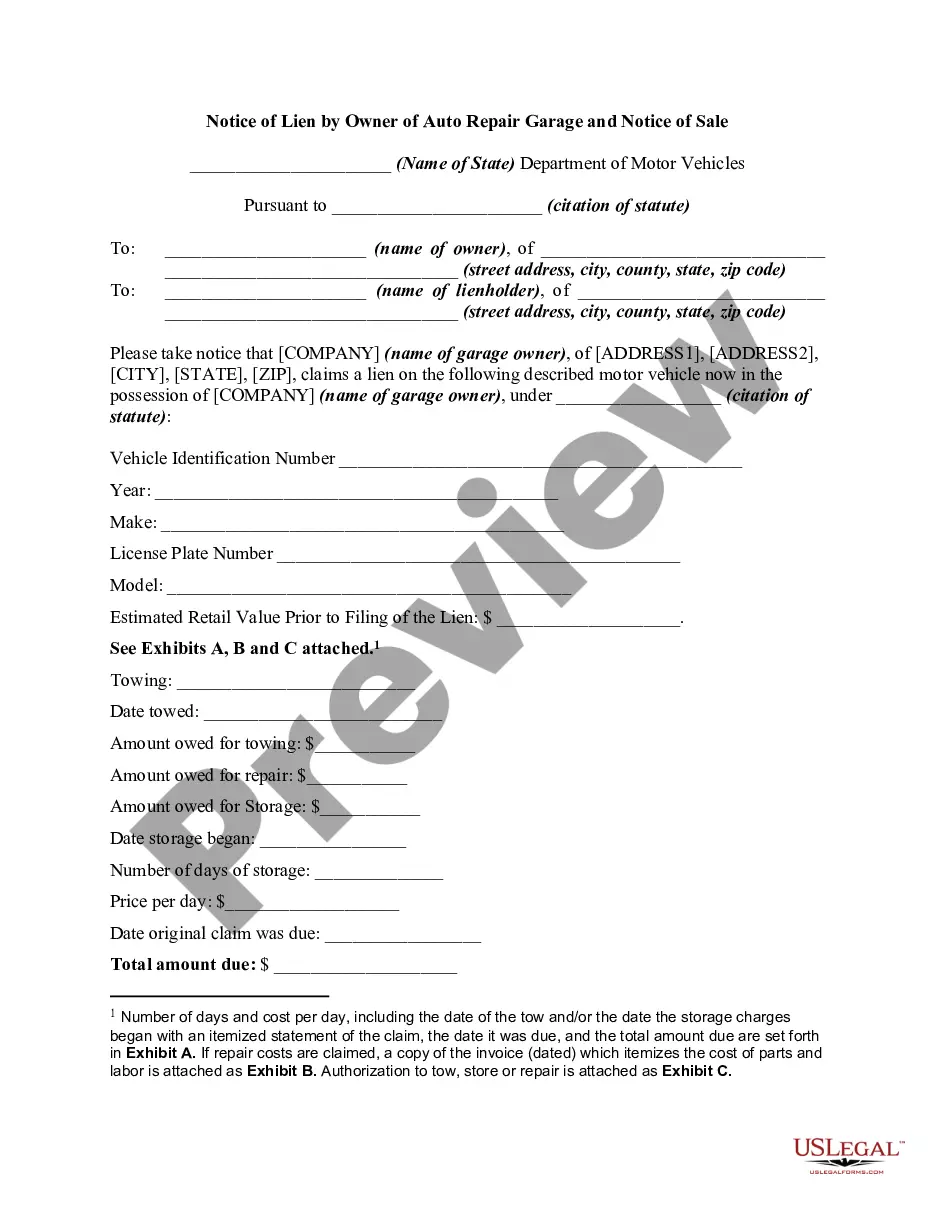
This form should be used when a contractor, subcontractor, or supplier has not received payment for work completed or materials supplied in a construction project. It serves as a formal notice to the property owner and any other parties involved, indicating that a lien may be placed on the property if payment is not received. It is particularly crucial to file this form when previous attempts to collect payment have been unsuccessful and no notice of completion has been published.
Who should use this form
- Contractors and subcontractors who have provided services or materials for property improvements.
- Suppliers of construction materials who have not been compensated for their products.
- Anyone seeking to secure a legal claim to collect payment for outstanding debts linked to construction-related work.
Instructions for completing this form
- Fill in your name and address at the top of the form.
- Clearly identify the property by providing a detailed description and location.
- State the exact amount owed, including any interest, costs, and attorney's fees.
- Describe the work performed or materials provided, referencing any contracts if applicable.
- Sign and date the form to authenticate your claim.
Notarization guidance
To make this form legally binding, it must be notarized. Our online notarization service, powered by Notarize, lets you verify and sign documents remotely through an encrypted video session.
Get your form ready online
Our built-in tools help you complete, sign, share, and store your documents in one place.
Make edits, fill in missing information, and update formatting in US Legal Forms—just like you would in MS Word.
Download a copy, print it, send it by email, or mail it via USPS—whatever works best for your next step.
Sign and collect signatures with our SignNow integration. Send to multiple recipients, set reminders, and more. Go Premium to unlock E-Sign.
If this form requires notarization, complete it online through a secure video call—no need to meet a notary in person or wait for an appointment.
We protect your documents and personal data by following strict security and privacy standards.

Make edits, fill in missing information, and update formatting in US Legal Forms—just like you would in MS Word.

Download a copy, print it, send it by email, or mail it via USPS—whatever works best for your next step.

Sign and collect signatures with our SignNow integration. Send to multiple recipients, set reminders, and more. Go Premium to unlock E-Sign.

If this form requires notarization, complete it online through a secure video call—no need to meet a notary in person or wait for an appointment.

We protect your documents and personal data by following strict security and privacy standards.
Mistakes to watch out for
- Failing to provide a detailed description of the property, which can lead to confusion or disputes.
- Leaving out the total amount due including interest and fees, which can weaken the claim.
- Not attaching supporting documents, such as contracts or invoices, that validate the claim.
- Neglecting to properly sign and date the form, which is essential for its legitimacy.
Why complete this form online
- Convenient access: You can fill out and download the form anytime from anywhere.
- Editability: Easily customize the form to fit your specific circumstances with minimal hassle.
- Reliability: Ensure compliance with legal standards, knowing the form has been reviewed by licensed attorneys.
Legal use & context
- This form serves as a formal notice of a lien, which helps secure the claimant's right to collect payment from the property owner.
- It provides a legal basis for pursuing further actions if payment remains unpaid, such as filing a lawsuit.
- Understanding and filling out this document correctly can prevent legal disputes regarding unpaid construction claims.
Quick recap
- The Notice of Mechanic's and Materialman's Lien and Demand for Payment is essential for claiming unpaid debts for construction work.
- Complete the form accurately to ensure your legal rights are protected.
- This form is tailored for use in Hawaii, adhering to specific state regulations.
Looking for another form?





Form popularity
FAQ
California Mechanics' Lien law provides special protection to contractors, subcontractors, laborers and suppliers who furnish labor or materials to repair, remodel or build your home.The mechanics' lien is a right that California gives to workers and suppliers to record a lien to ensure payment.
A statutory lien that exists to secure payment for services, labor, and material related to improvements performed on real property.State statutes creating mechanics' liens vary from state to state. These statutes provide for the criteria and circumstances required for a mechanic's lien to be deemed a super lien.
To enforce the lien, the contractor must file a lawsuit within 90 days from the date of recording the lien. If this deadline is passed, the contractor may not be able to enforce the lien and may be required to remove the lien.
A judgment is a court order. A lien is a claim of interest in a property right. A judgment can turn into a lien when the law allows this. For example, if a creditor records a court judgment, it can affect the right of an owner of real property to sell the...
Mechanic's liens are legal documents that essentially reserve the rights of the filer to seek unpaid compensation. They are usually filed by contractors, subcontractors, or suppliers that never received payment for work that they performed or materials that they provided on the property.
Which of the following is a difference between a mechanic's lien and a judgment lien? The answer is MECHANIC'S LIENS ARE CREATED BY STATUTE. Whereas mechanics liens are created by statute, judgment liens are created by court decisions. Both may take priority before the recording date.
In Hawaii, all lien claimants must initiate the enforcement of the lien within 3 months from the date on which the lien attached. 3 10 days after the lien is filed, a court will determine if probable cause exists for the lien. If probable cause is found, the lien attaches on that date.
Mechanic's liens create a cloud on title, meaning that they appear in public property records. Liens are sometimes said to travel with the land, meaning that anyone who buys your house would take the property subject to the contractor's lien (or, more likely, demand that you pay it off first).
In California, money judgments are enforceable by a writ of execution. In order to enforce the judgment lien, the judgment creditor must obtain a writ of execution, levy and then sell the real property at an execution sale.
When a contractor files a mechanics' (construction) lien on your home, the lien makes your home into what's called security for an outstanding debt, which the contractor claims is due and unpaid for services or materials.