Georgia Last Will and Testament for Widow or Widower with Minor Children
Overview of this form
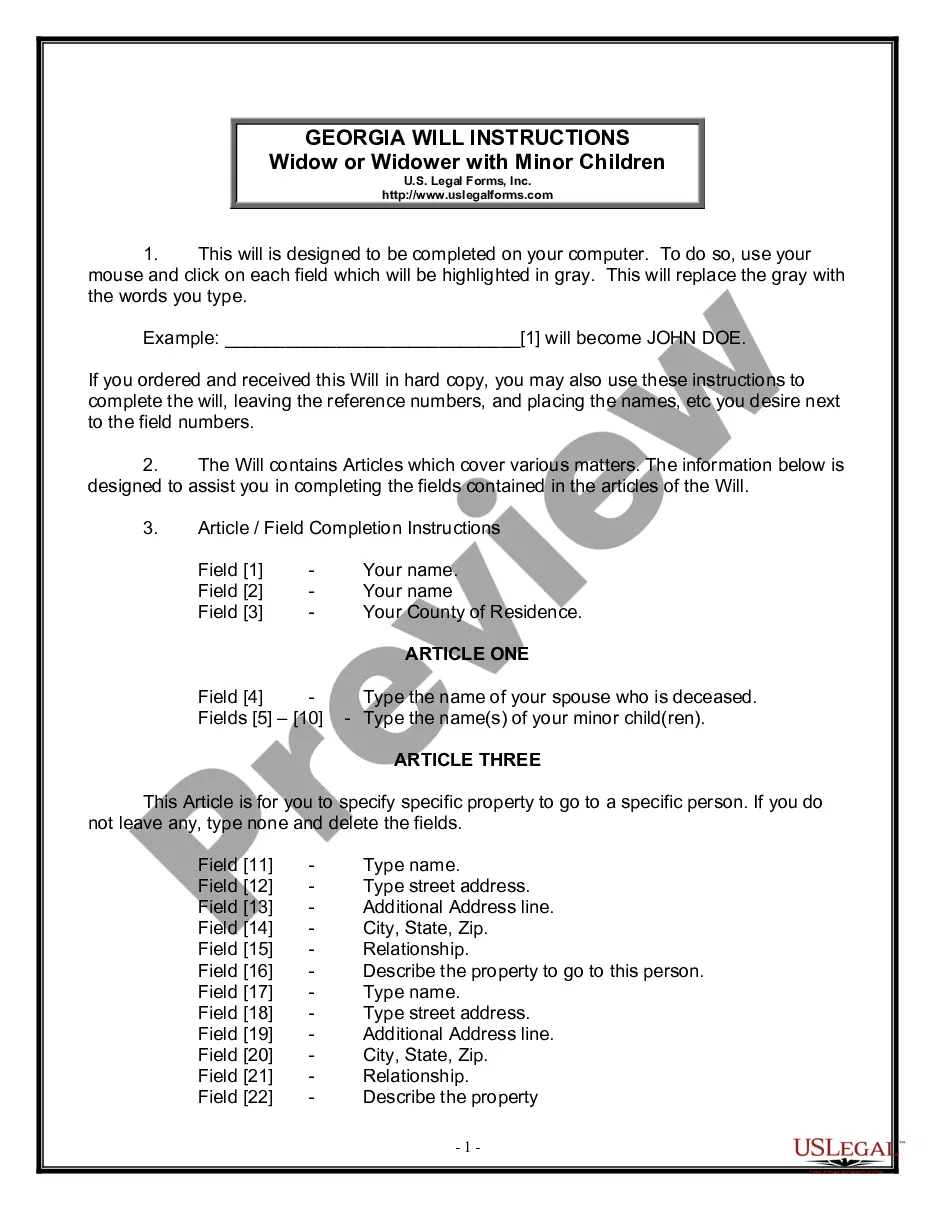
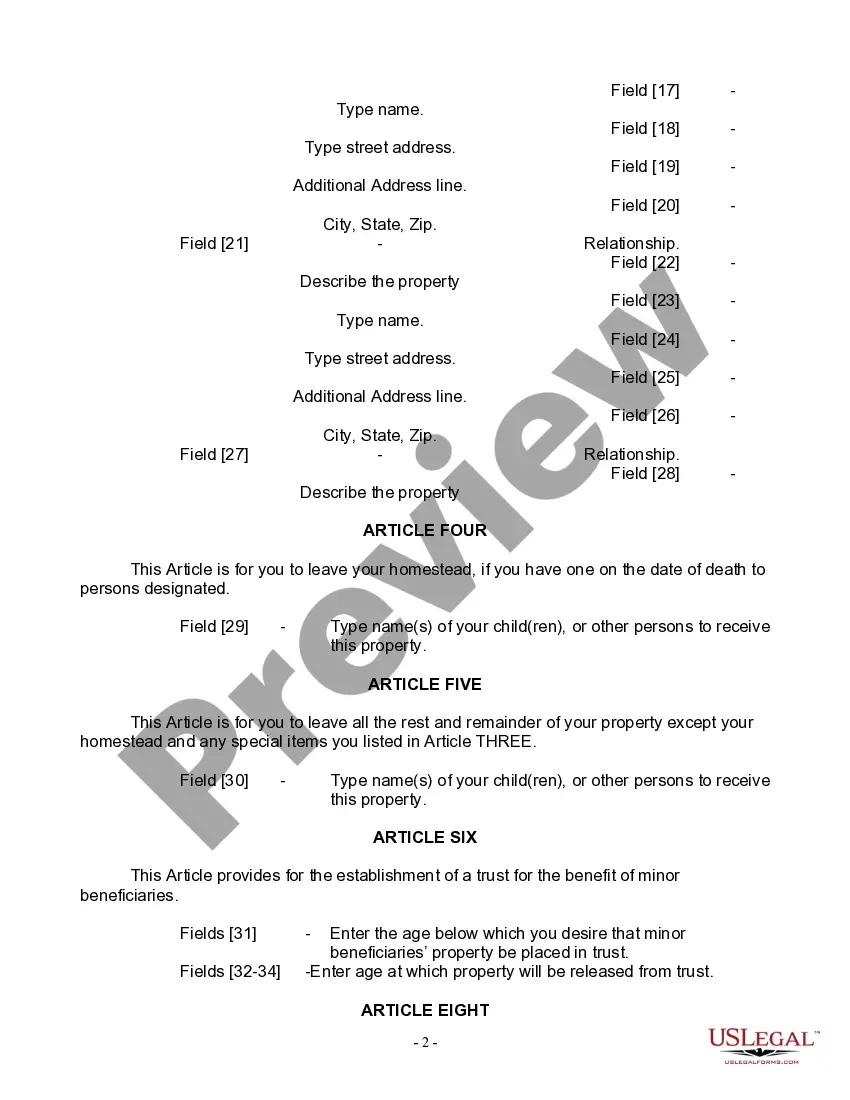
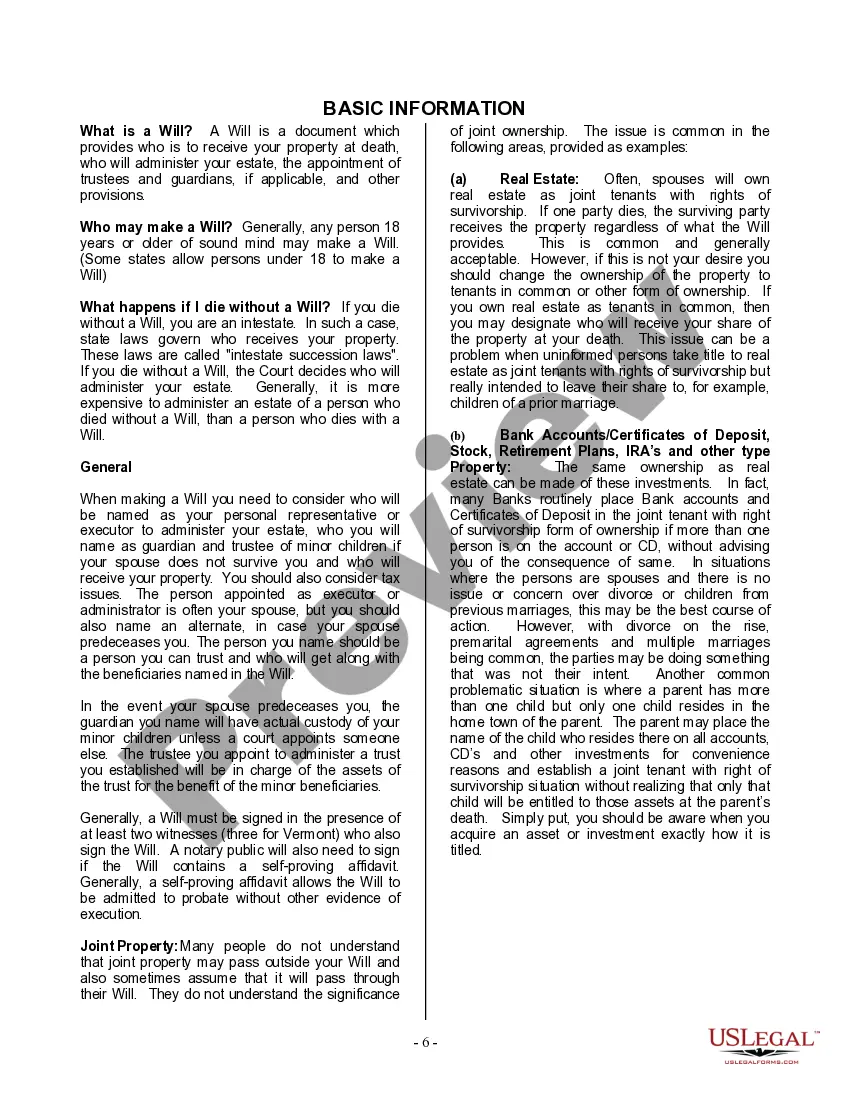
The Last Will and Testament for Widow or Widower with Minor Children is a legal document designed for individuals who have lost their spouse and have dependent children. This will allows you to specify how your property will be distributed upon your death. It appoints a personal representative to manage your estate and outlines provisions for the care and management of assets left for your minor children. This form is essential for ensuring your wishes are honored and your children are cared for, distinguishing it from other wills that may not cater specifically to families with minor children.
What’s included in this form
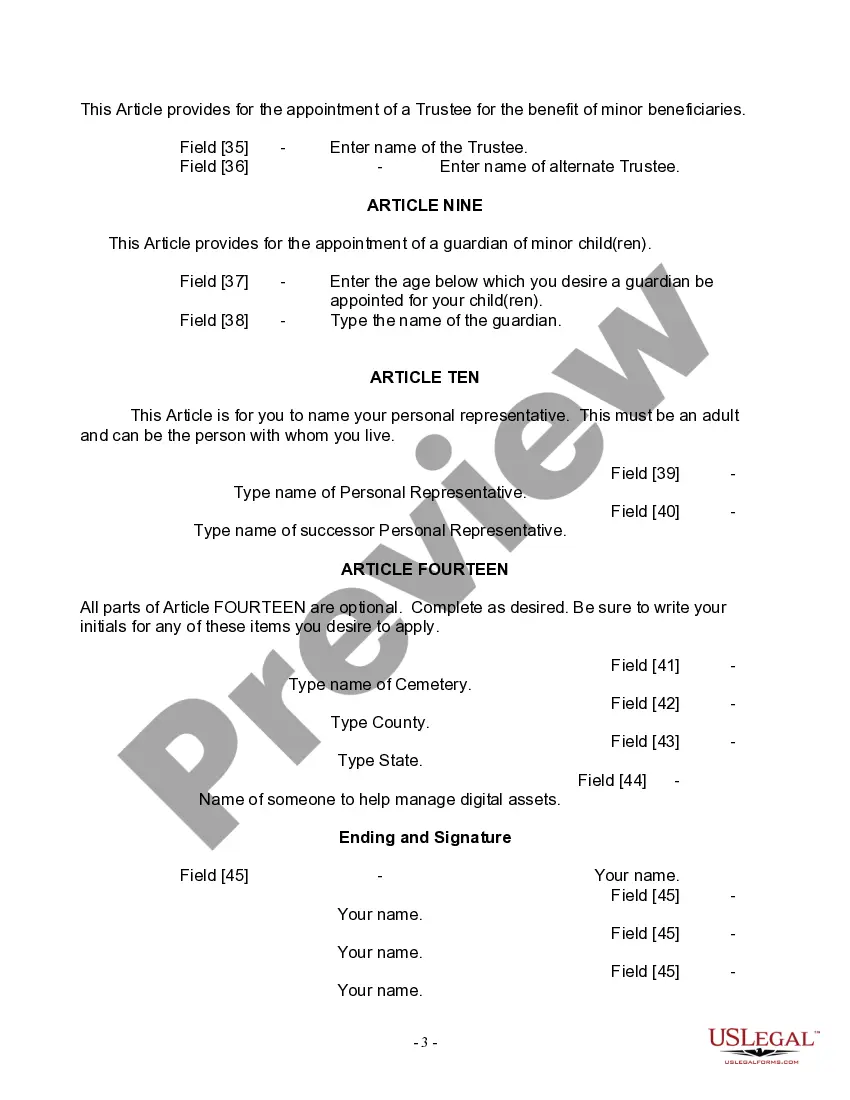
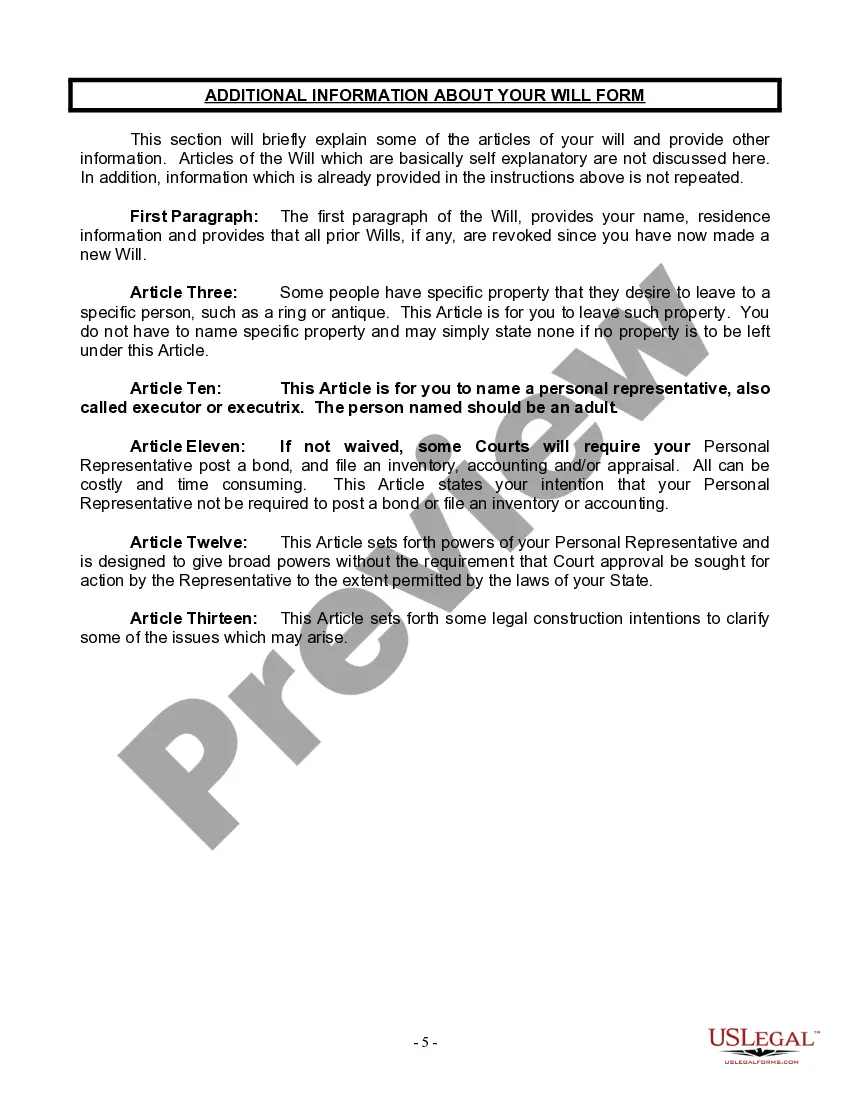
- Appointment of a personal representative to execute your will.
- Designation of beneficiaries, including your minor children.
- Instructions for the distribution of specific assets.
- Provisions for appointing a trustee to manage assets for minor children.
- Designation of a guardian for minor children in case of your death.
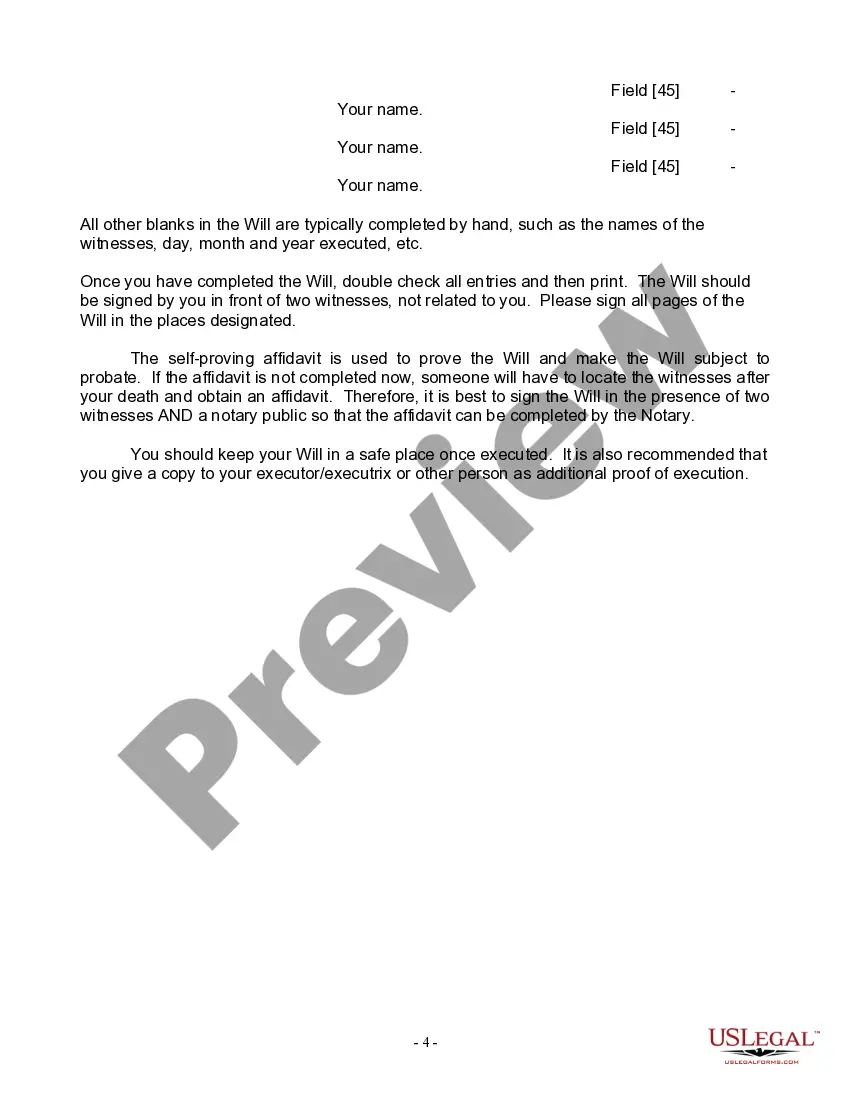
- Instructions for signing in the presence of witnesses and notarization if required.
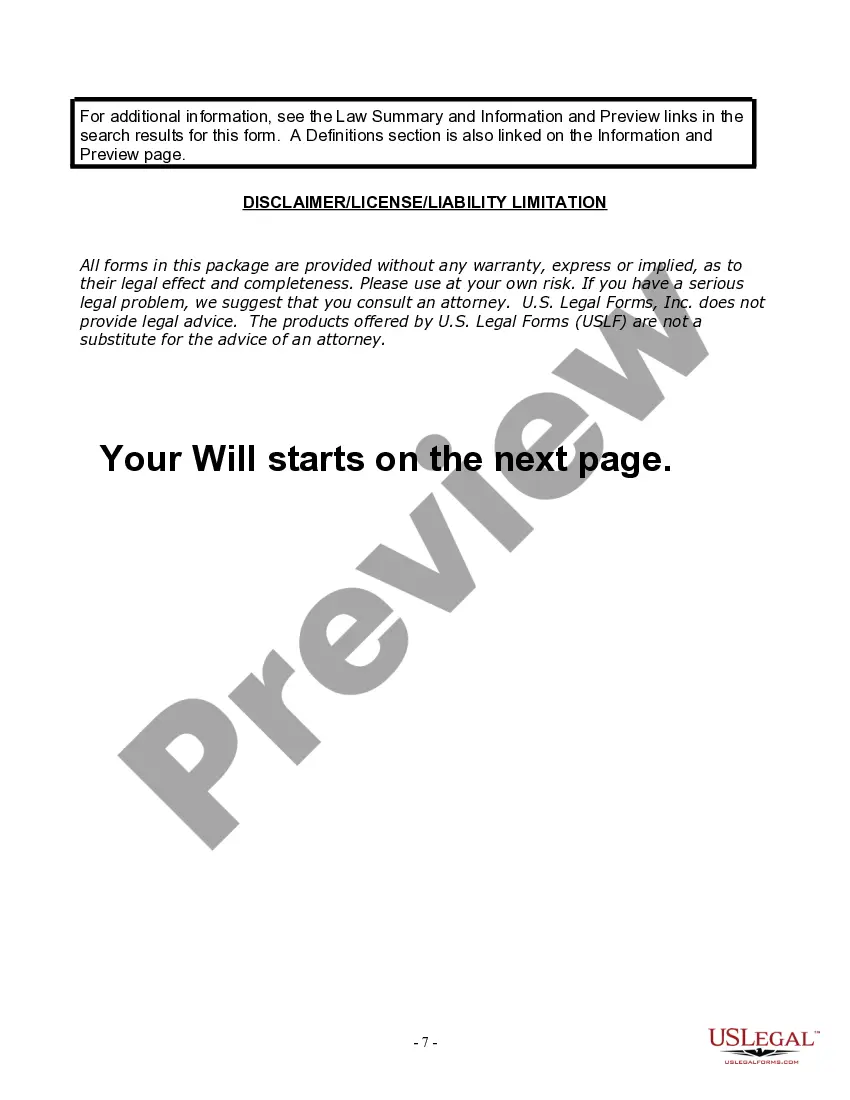
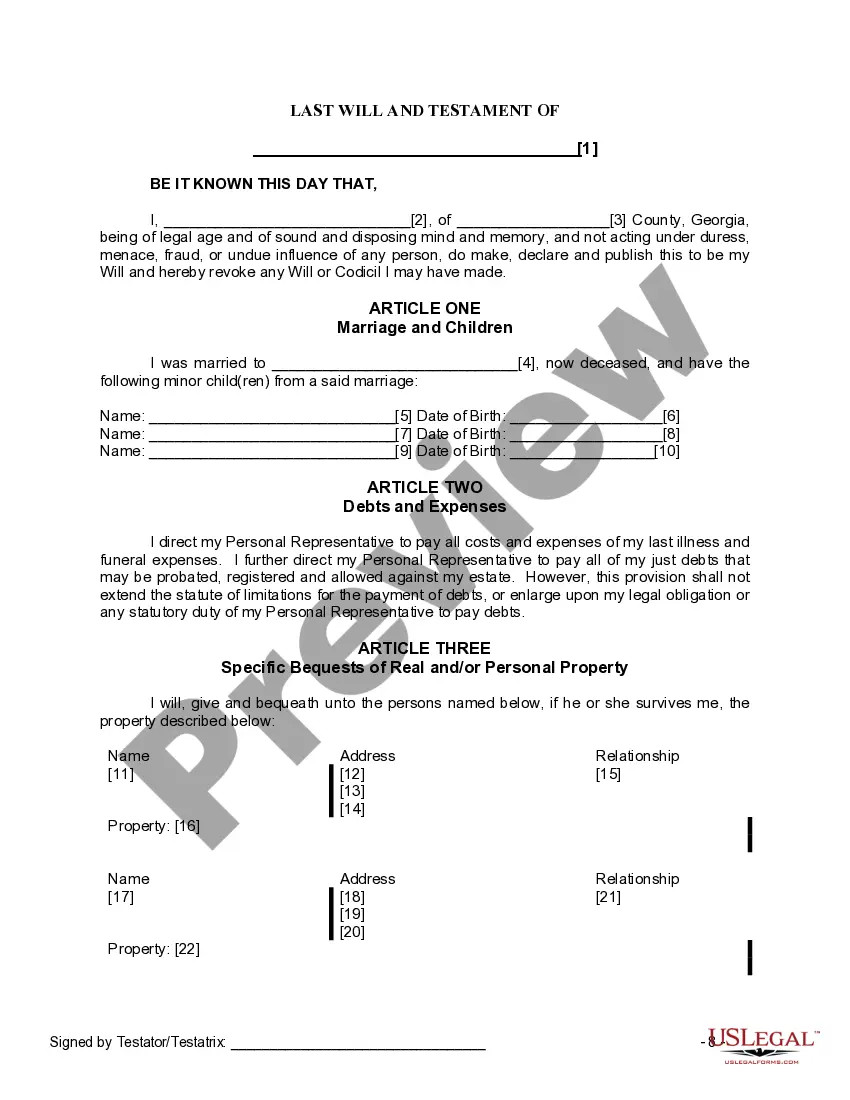
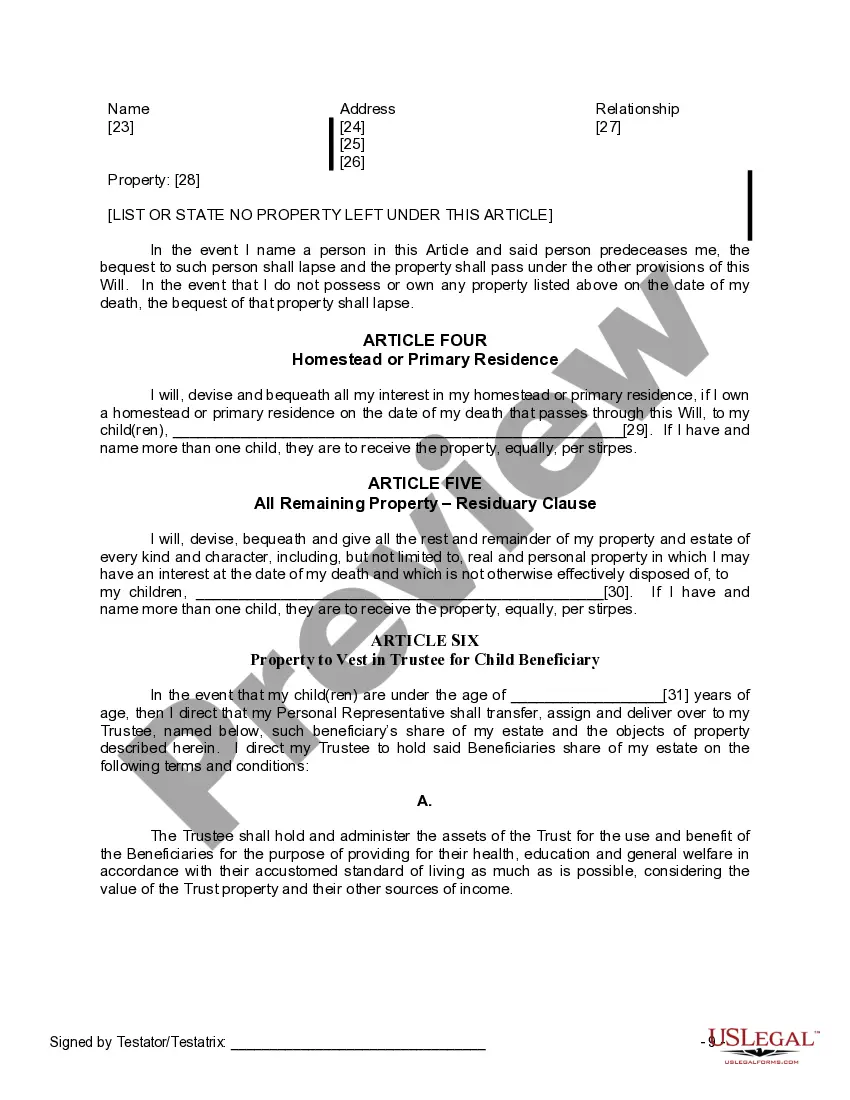
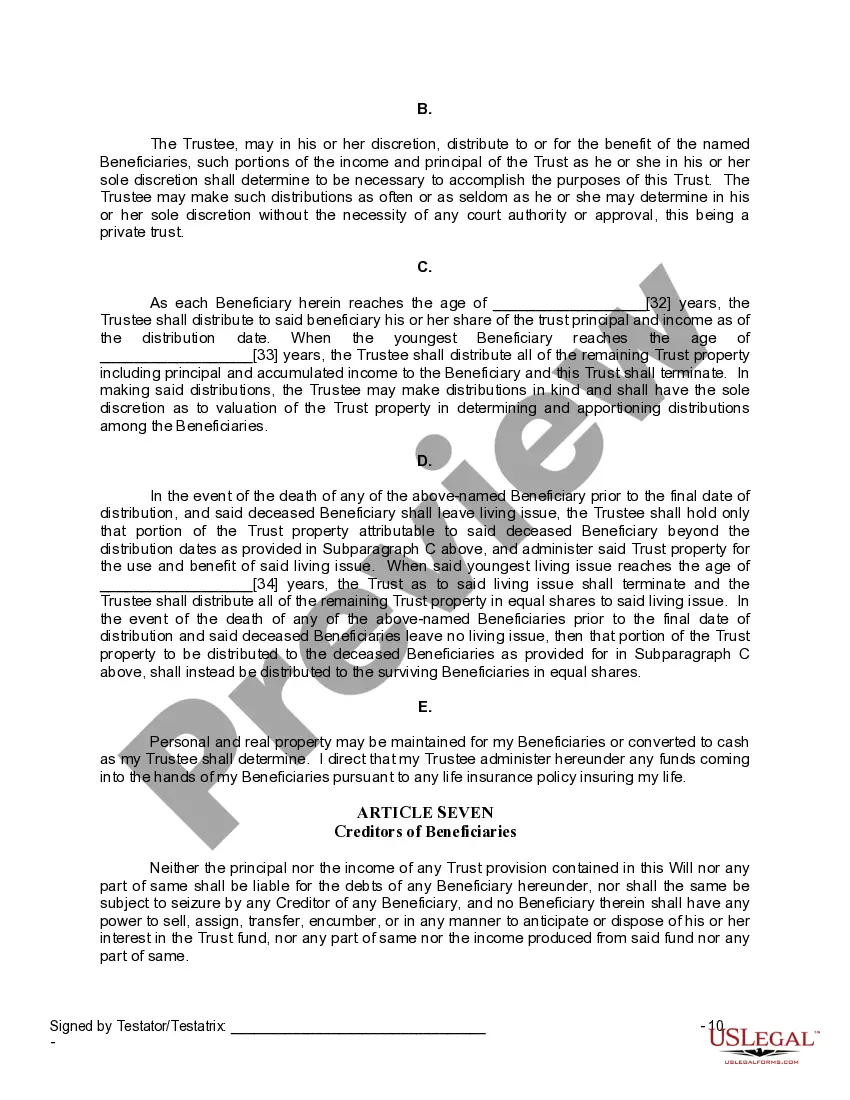




Situations where this form applies
This form should be used when a widow or widower wants to create a will that specifically addresses the needs of minor children following their death. It is ideal for individuals who have recently experienced the loss of a spouse and need to ensure that their children are provided for and that their assets are distributed according to their wishes. This will is crucial for preventing disputes among family members and for providing clarity about guardianship and asset management for children.
Intended users of this form
- Widows or widowers who have minor children.
- Individuals seeking to establish their wishes regarding property distribution after death.
- Parents wanting to appoint guardians for their children in the event of their death.
- Individuals who want to secure the financial future of their minor children through a trust.
Steps to complete this form
- Enter your full name and address to identify yourself as the testator.
- Specify the name of your deceased spouse and list your minor children.
- Designate beneficiaries for specific property and outline any bequests you wish to make.
- Appoint a trustee to manage any resources intended for your minor children.
- Choose a guardian for your children and a personal representative for your estate.
- Sign the will in the presence of two witnesses and a notary public, if applicable.
Notarization guidance
Yes, this form must be notarized to be legally valid in many states, especially if it includes a self-proving affidavit. A notary public will verify your identity and witness your signature, ensuring the document meets legal standards.
Get your form ready online
Our built-in tools help you complete, sign, share, and store your documents in one place.
Make edits, fill in missing information, and update formatting in US Legal Forms—just like you would in MS Word.
Download a copy, print it, send it by email, or mail it via USPS—whatever works best for your next step.
Sign and collect signatures with our SignNow integration. Send to multiple recipients, set reminders, and more. Go Premium to unlock E-Sign.
If this form requires notarization, complete it online through a secure video call—no need to meet a notary in person or wait for an appointment.
We protect your documents and personal data by following strict security and privacy standards.

Make edits, fill in missing information, and update formatting in US Legal Forms—just like you would in MS Word.

Download a copy, print it, send it by email, or mail it via USPS—whatever works best for your next step.

Sign and collect signatures with our SignNow integration. Send to multiple recipients, set reminders, and more. Go Premium to unlock E-Sign.

If this form requires notarization, complete it online through a secure video call—no need to meet a notary in person or wait for an appointment.

We protect your documents and personal data by following strict security and privacy standards.
Avoid these common issues
- Failing to have the will signed by required witnesses.
- Not specifying alternative guardians or trustees in case the primary option cannot serve.
- Forgetting to update the will after significant life changes.
- Assuming the will is valid without notarization, when required by state law.
Why use this form online
- Convenient access to necessary legal forms without needing to visit an attorney.
- Ability to complete the form at your own pace with guided instructions.
- Instant download of your completed will for immediate use.
- Editable format allows for changes as your circumstances evolve.
Looking for another form?
Form popularity
FAQ
After someone dies, power of attorney becomes void; thus, no one will hold this power if there is no will. Instead, the probate court will appoint an administrator to handle the estate. To avoid complications, it’s advisable to establish clear directives in a Georgia Last Will and Testament for Widow or Widower with Minor Children, outlining your preferences for the handling of your affairs.
If someone dies without a will in Georgia, the state intestacy laws determine inheritance. Generally, the deceased's spouse and children inherit first, followed by parents and siblings. Knowing this can help you create a robust Georgia Last Will and Testament for Widow or Widower with Minor Children to ensure your wishes are fulfilled.
In Georgia, the surviving spouse does not automatically inherit everything unless there are no children. If there are children, the spouse typically inherits a portion of the estate. Therefore, when creating a Georgia Last Will and Testament for Widow or Widower with Minor Children, a clear delineation of assets can prevent misunderstandings.
In Georgia, a valid will must be in writing and signed by the testator. It should also be witnessed by at least two individuals who are present at the same time. Ensuring compliance with these rules is essential when drafting your Georgia Last Will and Testament for Widow or Widower with Minor Children, as invalidations can lead to disputes.
When someone dies without a will in Georgia, intestacy laws dictate the order of inheritance. Typically, the spouse and children inherit first, followed by parents, siblings, and more distant relatives. It's crucial to understand these rules when preparing a Georgia Last Will and Testament for Widow or Widower with Minor Children, as they can greatly affect how assets are distributed.
While it's legally possible to exclude your spouse from your will in Georgia, it's important to consider the implications. Georgia law allows a surviving spouse to make a claim against the estate, even if excluded from the will. Therefore, if you are creating a Georgia Last Will and Testament for Widow or Widower with Minor Children, be mindful of your spouse's potential rights to inherit.
In Georgia, the next of kin typically refers to a person's closest relatives. Generally, this includes the spouse, children, and parents. Understanding the order of next of kin can be vital when dealing with a Georgia Last Will and Testament for Widow or Widower with Minor Children, especially during estate planning or probate matters.
Yes, you can write your own will in Georgia, including the Georgia Last Will and Testament for Widow or Widower with Minor Children. However, it's important to follow legal requirements to ensure its validity. Once you complete your will, you can have it notarized to add an extra layer of authenticity and protection. Using a reliable platform like US Legal Forms can help streamline the process and provide templates that adhere to Georgia's laws, making it easier to secure your wishes.
A sample wording for the Georgia Last Will and Testament for Widow or Widower with Minor Children typically includes an introduction that states your name, residence, and intention to create a will. Then, it designates an executor to manage your estate and clearly outlines how you wish to distribute your assets among your children. Additionally, you may wish to include any guardianship provisions for your minor children to ensure their care. This structure helps provide clarity and peace of mind, making it easier for your loved ones to follow your wishes.
A surviving spouse in Georgia has specific rights regarding the deceased's estate. Generally, they are entitled to a share of the estate, especially if there are minor children involved. By preparing a Georgia Last Will and Testament for Widow or Widower with Minor Children, you can provide additional protections and specify your spouse's entitlements, ensuring that your family's future is secure.