Georgia Letter from Landlord to Tenant for Failure to use electrical, plumbing, sanitary, heating, ventilating, air conditioning and other facilities in a reasonable manner
About this form
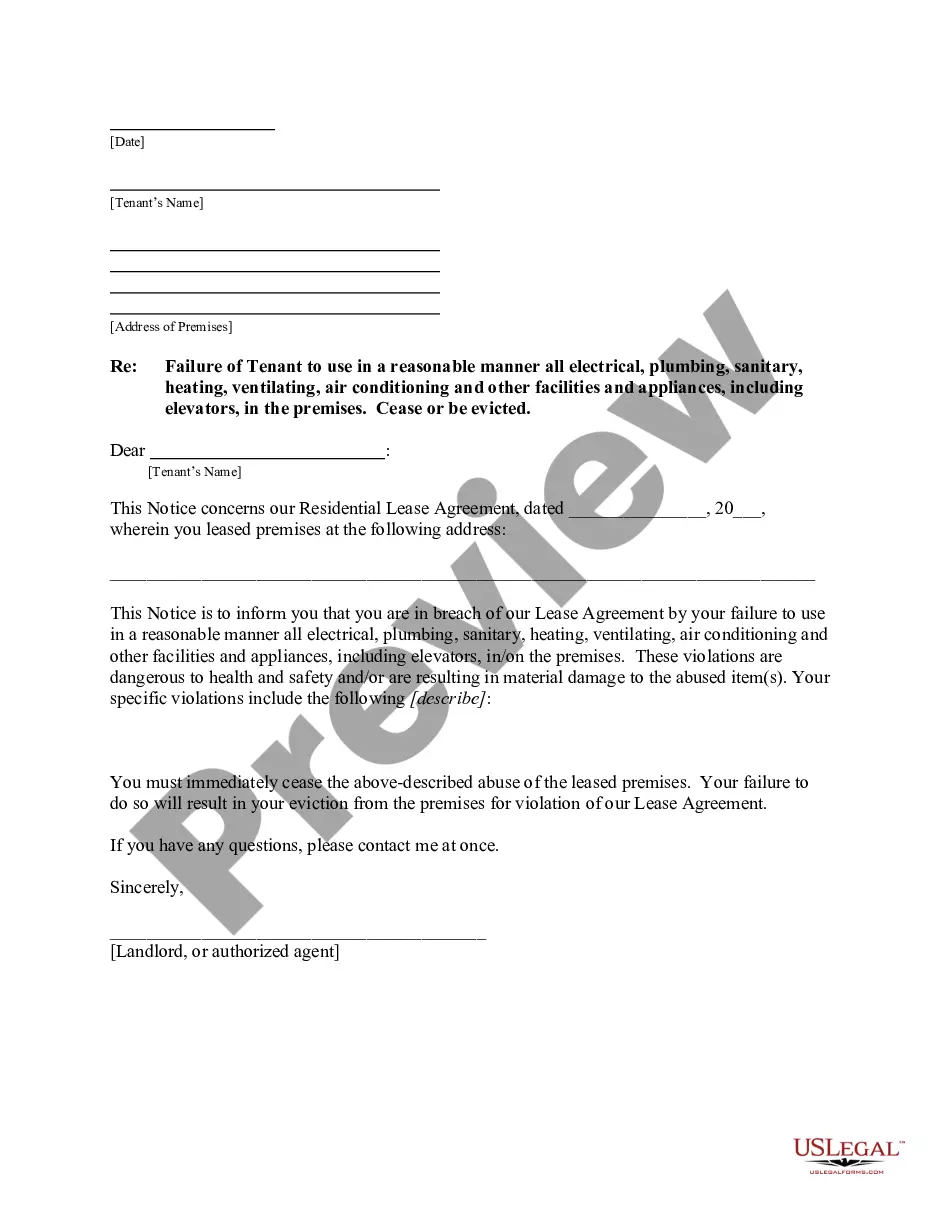
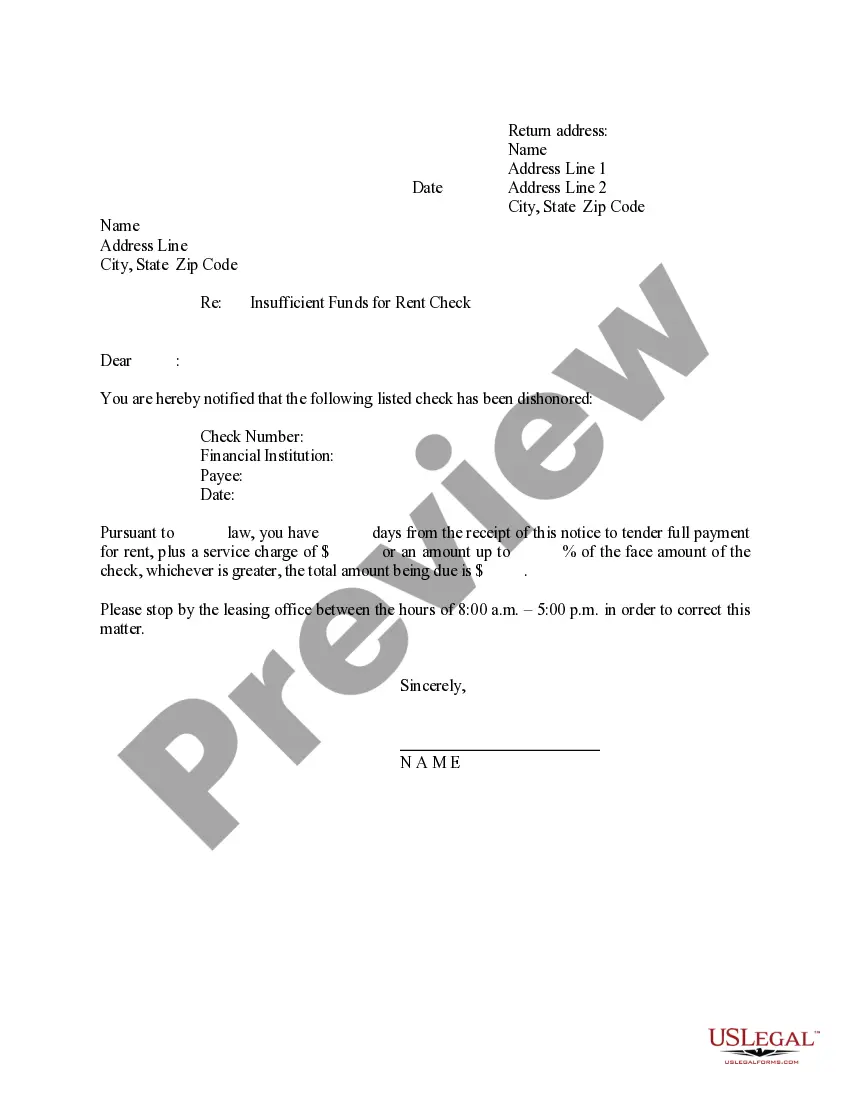
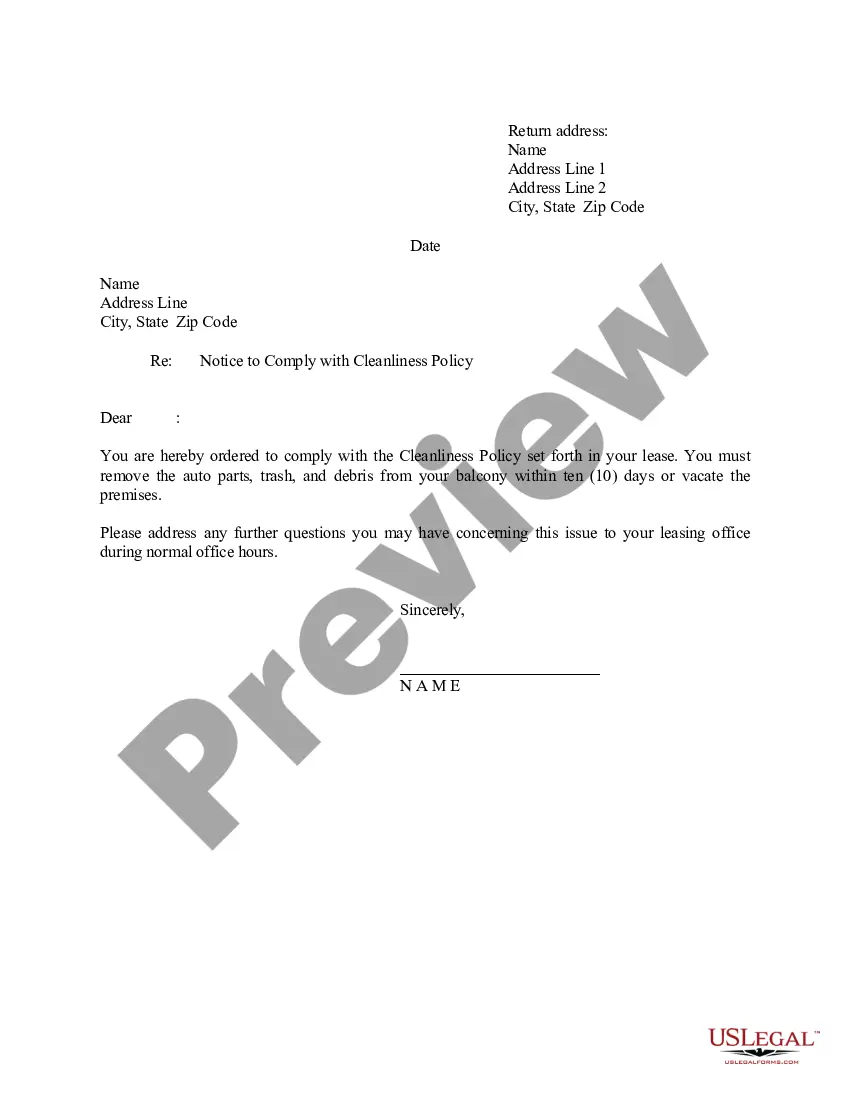
This form is a notice from a landlord to a tenant addressing the misuse of essential facilities such as electrical, plumbing, and heating systems. It serves as an official communication, urging the tenant to rectify their behavior to avoid potential eviction. Unlike standard eviction notices, this letter specifically highlights the failure to use provided utilities in a reasonable manner, allowing for corrective action before further legal steps are taken.
Form components explained
- Identification of the landlord and tenant involved.
- Description of the issues related to misuse of facilities.
- A warning regarding the consequences of continued misuse, including possible eviction.
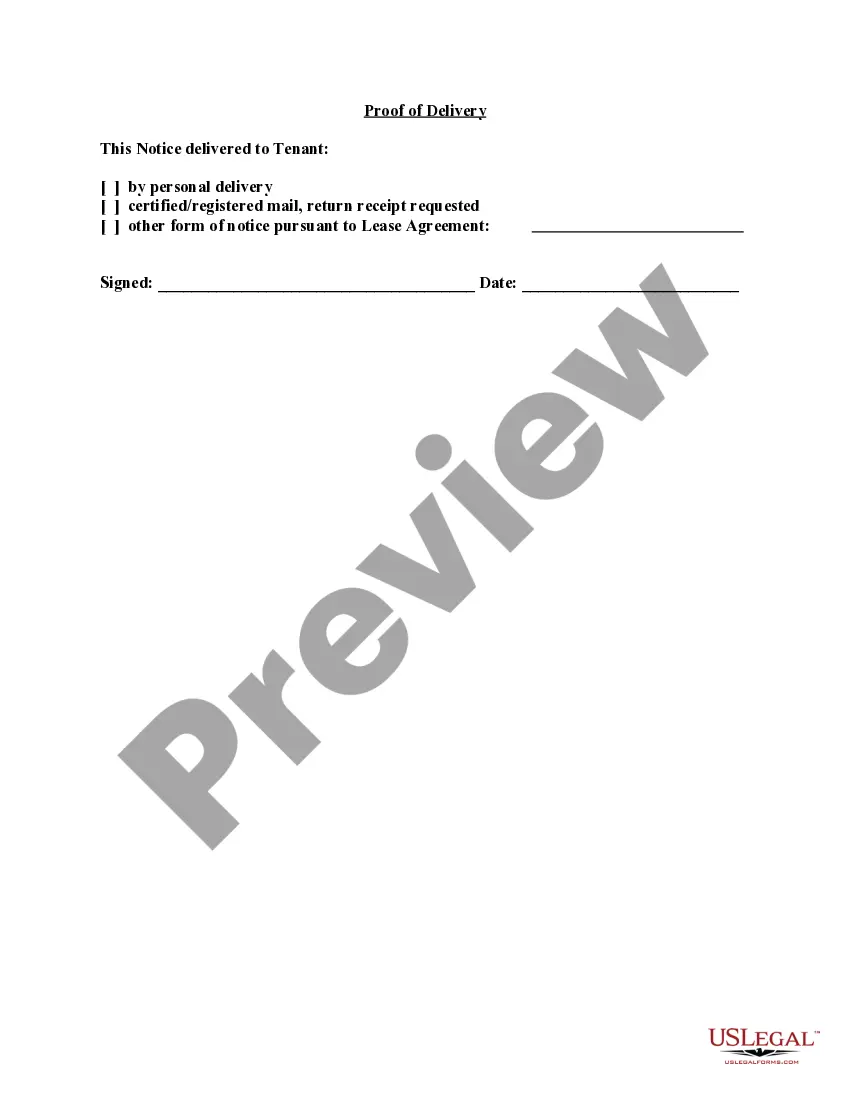
- Proof of delivery options for the notice.


Situations where this form applies
This form should be used when a landlord observes that a tenant is not using essential utilities and facilities, such as plumbing, heating, and electrical systems, in an appropriate or respectful manner as specified in the lease agreement. It is a proactive measure to address these issues before escalating to legal action or eviction proceedings.
Who should use this form
- Landlords who have tenants in residential or commercial properties.
- Property managers acting on behalf of landlords.
- Anyone overseeing rental agreements where facility misuse has occurred.
Instructions for completing this form
- Identify the parties involved: enter the landlord's and tenant's names and addresses.
- Clearly describe the issues related to the misuse of facilities.
- Specify the date of the notice and the response period for the tenant.
- Sign the document as the landlord or authorized agent.
- Deliver the notice using one of the proof of delivery methods indicated.
Does this form need to be notarized?
This form does not typically require notarization to be legally valid. However, some jurisdictions or document types may still require it. US Legal Forms provides secure online notarization powered by Notarize, available 24/7 for added convenience.
Get your form ready online
Our built-in tools help you complete, sign, share, and store your documents in one place.
Make edits, fill in missing information, and update formatting in US Legal Forms—just like you would in MS Word.
Download a copy, print it, send it by email, or mail it via USPS—whatever works best for your next step.
Sign and collect signatures with our SignNow integration. Send to multiple recipients, set reminders, and more. Go Premium to unlock E-Sign.
If this form requires notarization, complete it online through a secure video call—no need to meet a notary in person or wait for an appointment.
We protect your documents and personal data by following strict security and privacy standards.

Make edits, fill in missing information, and update formatting in US Legal Forms—just like you would in MS Word.

Download a copy, print it, send it by email, or mail it via USPS—whatever works best for your next step.

Sign and collect signatures with our SignNow integration. Send to multiple recipients, set reminders, and more. Go Premium to unlock E-Sign.

If this form requires notarization, complete it online through a secure video call—no need to meet a notary in person or wait for an appointment.

We protect your documents and personal data by following strict security and privacy standards.
Common mistakes to avoid
- Failing to provide specific examples of the misuse.
- Not delivering the notice through a verifiable method.
- Leaving out the date which can lead to confusion regarding the timeline.
- Using ambiguous language that may not clearly convey the issue to the tenant.
Why complete this form online
- Easy access to professionally drafted templates.
- Editable formats that allow customization to suit individual circumstances.
- Time-saving process for generating legal documents.
- Secure storage and retrieval of legal forms for future use.
Looking for another form?
Form popularity
FAQ
Landlord consent refers to the agreement provided by a landlord allowing tenants to undertake specific actions, such as making alterations or inviting guests. Consent is essential to maintain property standards and ensure that the premises remain in good condition. If tenants misuse facilities, issuing a Georgia Letter from Landlord to Tenant for Failure to use electrical, plumbing, sanitary, heating, ventilating, air conditioning and other facilities in a reasonable manner can help clarify the bounds of landlord consent.
A landlord consent waiver is a document that indicates a landlord's agreement to allow certain actions or modifications made by the tenant, which might otherwise be restricted. This waiver ensures that both parties are aware of the terms and conditions related to property use. By utilizing a Georgia Letter from Landlord to Tenant for Failure to use electrical, plumbing, sanitary, heating, ventilating, air conditioning and other facilities in a reasonable manner, landlords can convey the seriousness of proper facility use.
Yes, plumbing issues are generally covered by the landlord as part of their obligation to maintain safe and livable conditions. Landlords must address issues such as leaks, clogs, or malfunctioning plumbing promptly. If tenants fail to use plumbing facilities responsibly, a Georgia Letter from Landlord to Tenant for Failure to use electrical, plumbing, sanitary, heating, ventilating, air conditioning and other facilities in a reasonable manner can be issued to address these concerns.
A waiver of consent is a legal document in which a landlord agrees to relinquish certain rights or claims regarding tenant behavior or property conditions. It often pertains to situations where tenants may cause damage or misuse facilities. In the context of a Georgia Letter from Landlord to Tenant for Failure to use electrical, plumbing, sanitary, heating, ventilating, air conditioning and other facilities in a reasonable manner, a waiver of consent can prompt tenants to maintain the property better.
The purpose of a landlord waiver is to clarify the responsibilities and rights of tenants regarding maintenance and use of the property. This document helps protect landlords while also informing tenants of their obligations. Using a Georgia Letter from Landlord to Tenant for Failure to use electrical, plumbing, sanitary, heating, ventilating, air conditioning and other facilities in a reasonable manner can prevent disputes and promote better landlord-tenant relationships.
A landlord cannot evict a tenant without an adequately obtained eviction notice and sufficient time. A landlord cannot retaliate against a tenant for a complaint. A landlord cannot forego completing necessary repairs or force a tenant to do their own repairs.A landlord cannot remove a tenant's personal belongings.
Georgia law allows a landlord to evict a tenant for not paying rent on time. You must give the tenant notice that rent is due and the tenant must refuse to pay the rent before you can file an eviction lawsuit with the court.
Notice Requirements for Georgia Landlords A landlord can simply give you a written notice to move, allowing you 60 days as required by Georgia law and specifying the date on which your tenancy will end.
NOTE: This order has been extended through 6/30/2021 The CDC issued an order that makes it illegal to evict tenants who cannot pay their rent and have no other housing options.
State law regulates several rent-related issues, such as how much time (seven days in Georgia) a tenant has to pay rent or move before a landlord can file for eviction, and the maximum you can charge for bounced check fees. For details, see Georgia Termination for Nonpayment of Rent and Other Rent Rules.