Wyoming Initial Disclosures
Overview of this form
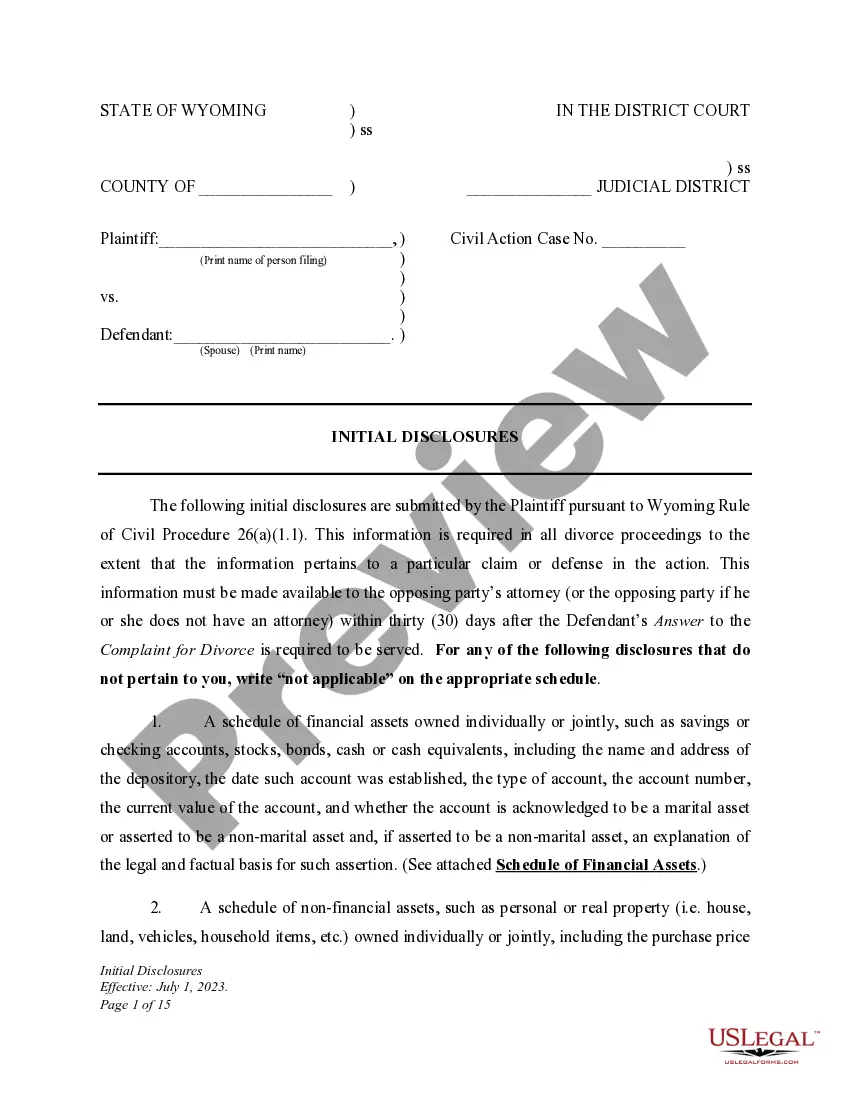
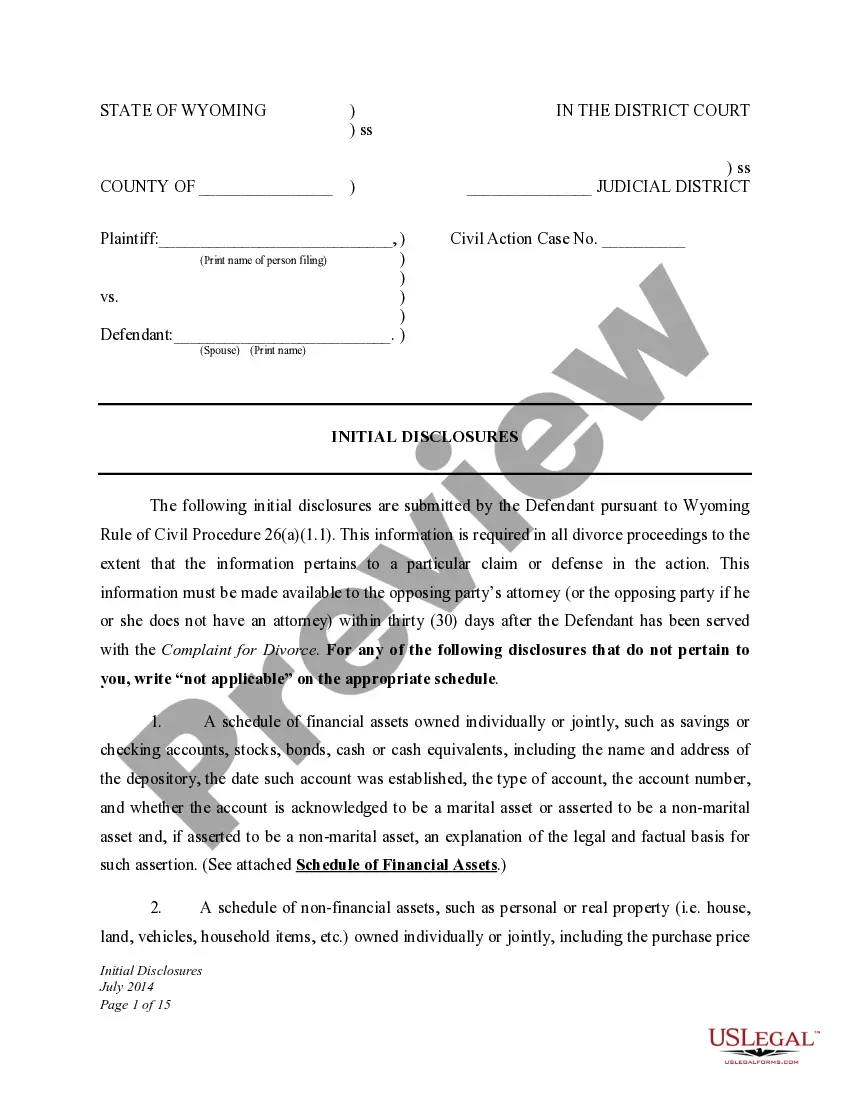
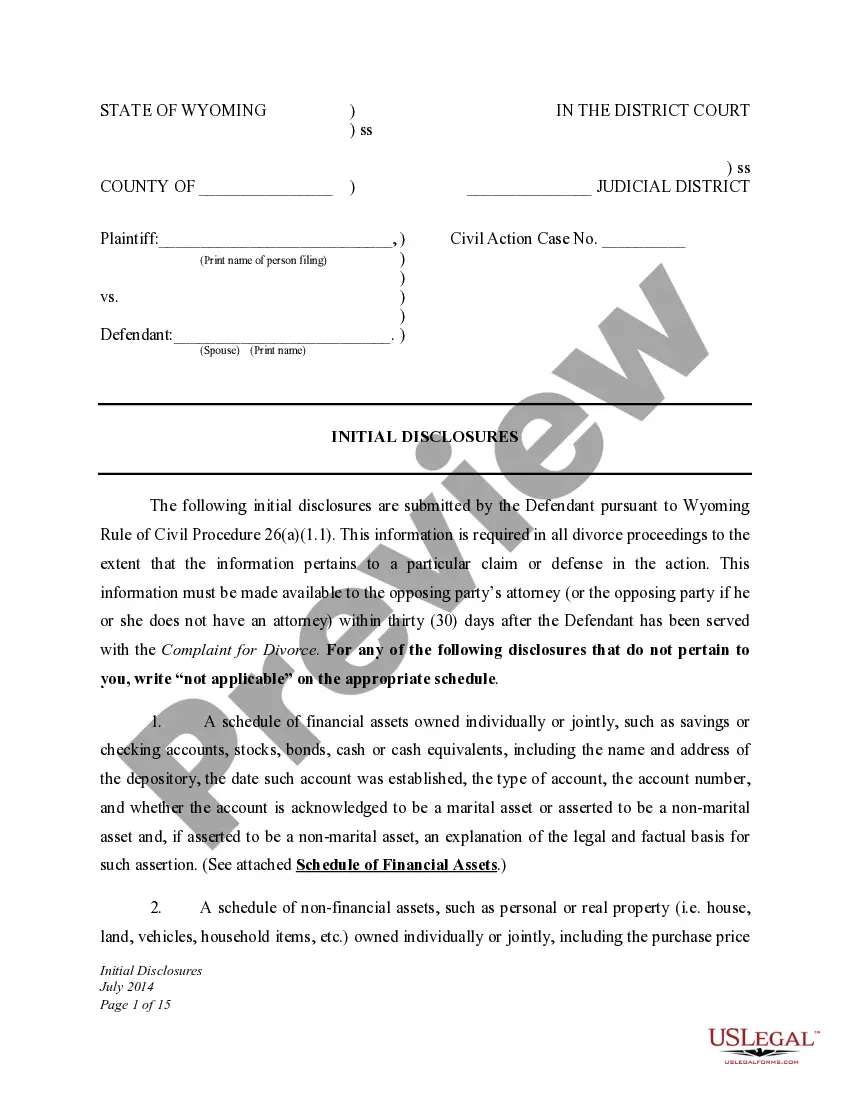
The Initial Disclosures form is a legal document used in divorce proceedings in Wyoming. It outlines the required information that each party must disclose to the other, including financial and non-financial assets, debts, and other relevant details. This form is essential for ensuring transparency during divorce proceedings and helps establish a fair division of assets and responsibilities.
Key components of this form
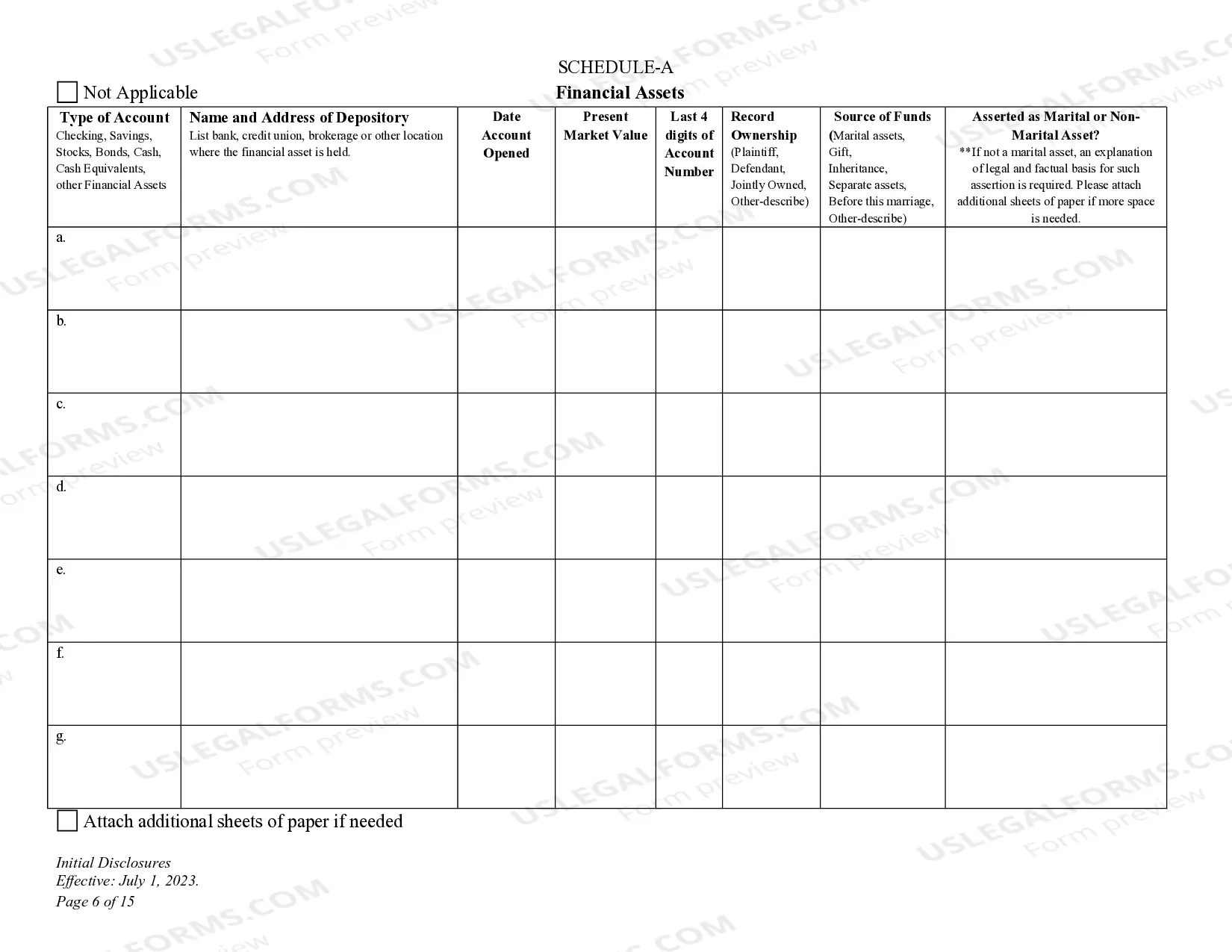
- A schedule of financial assets, including savings, stocks, and accounts.
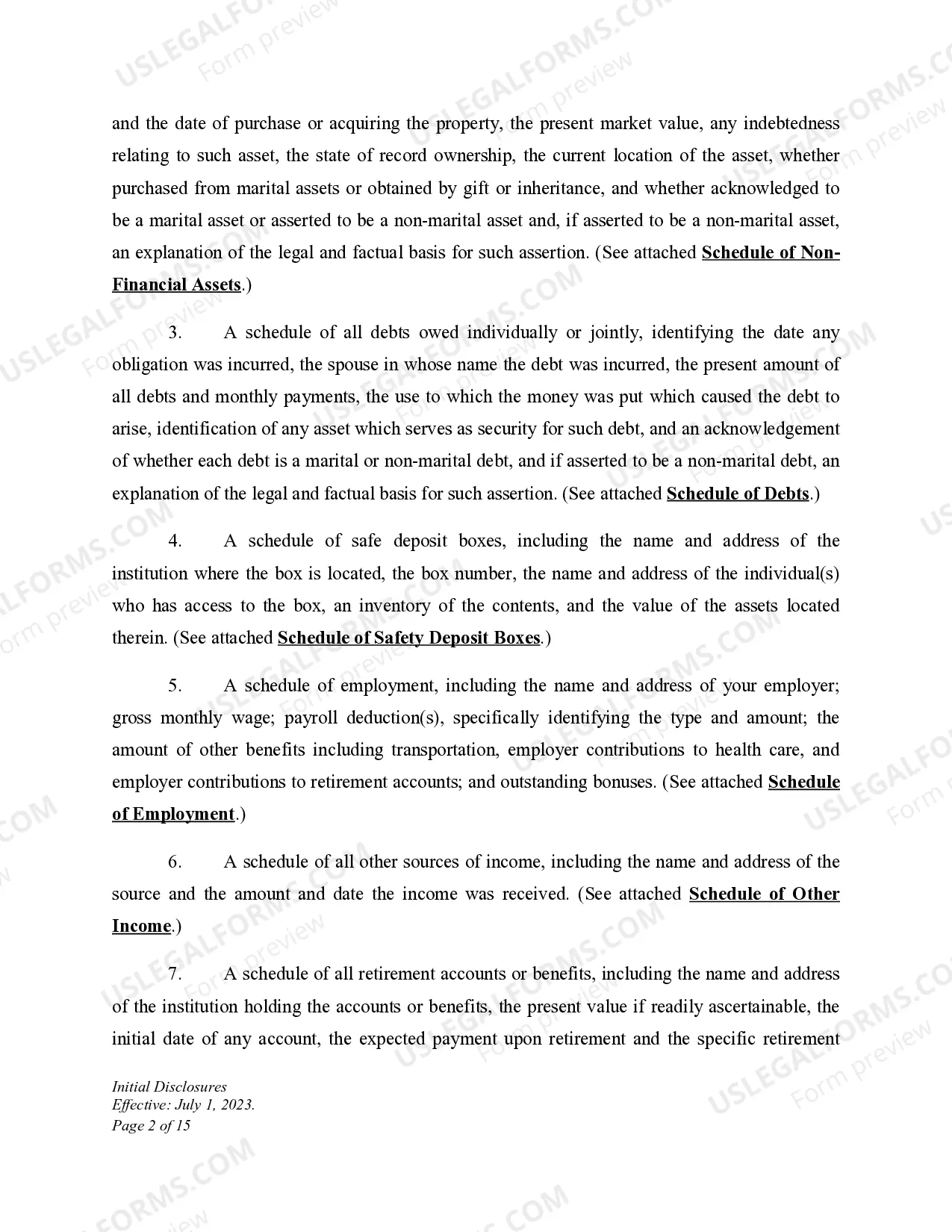
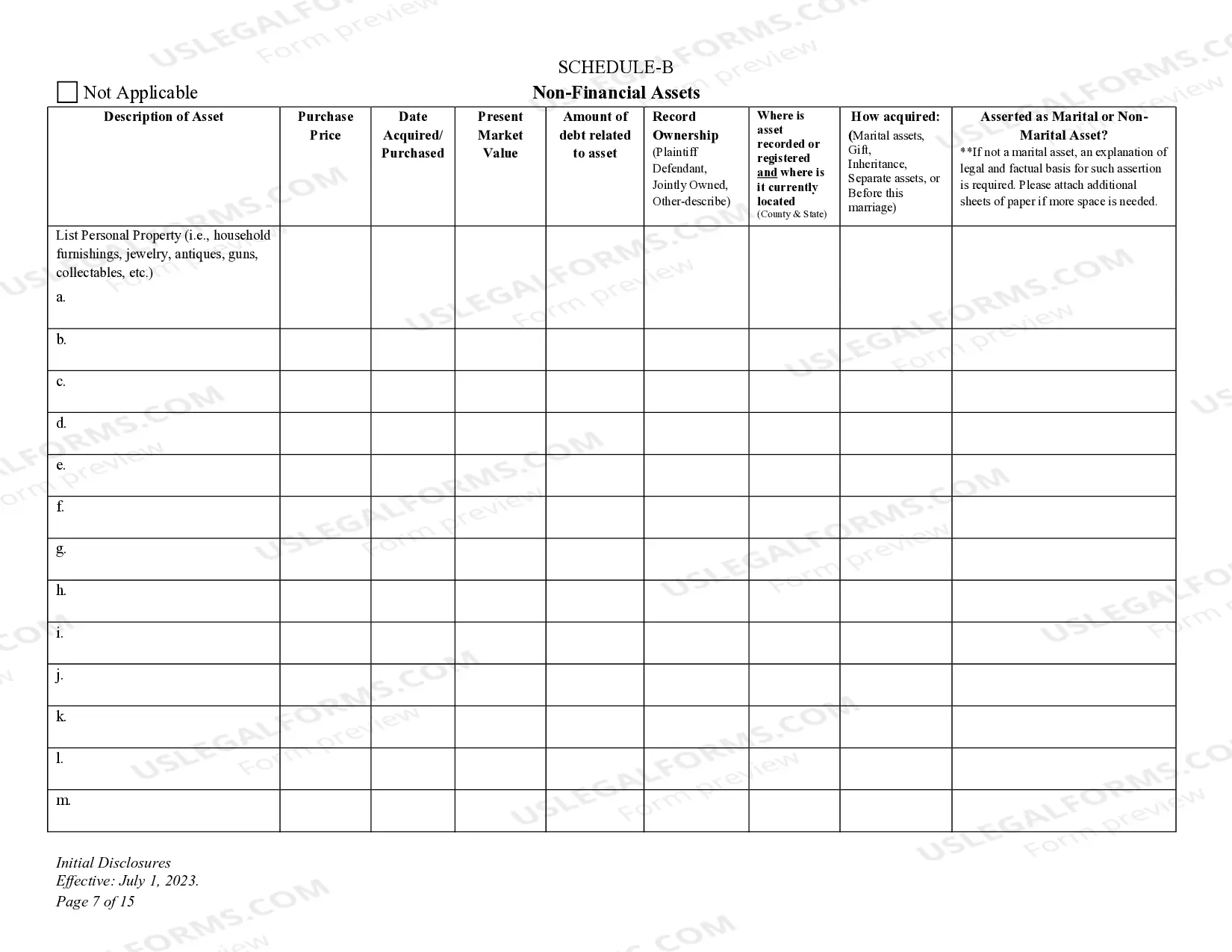
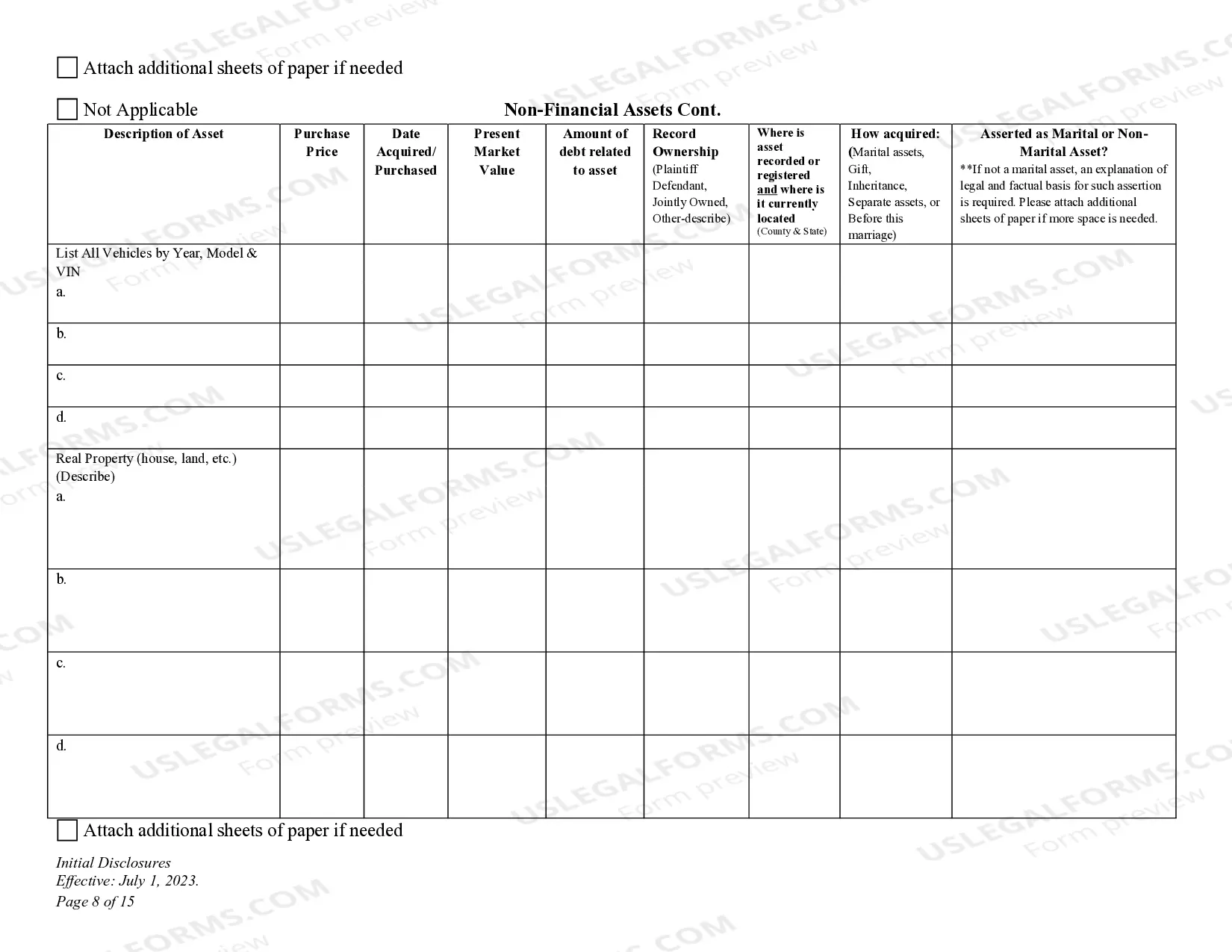
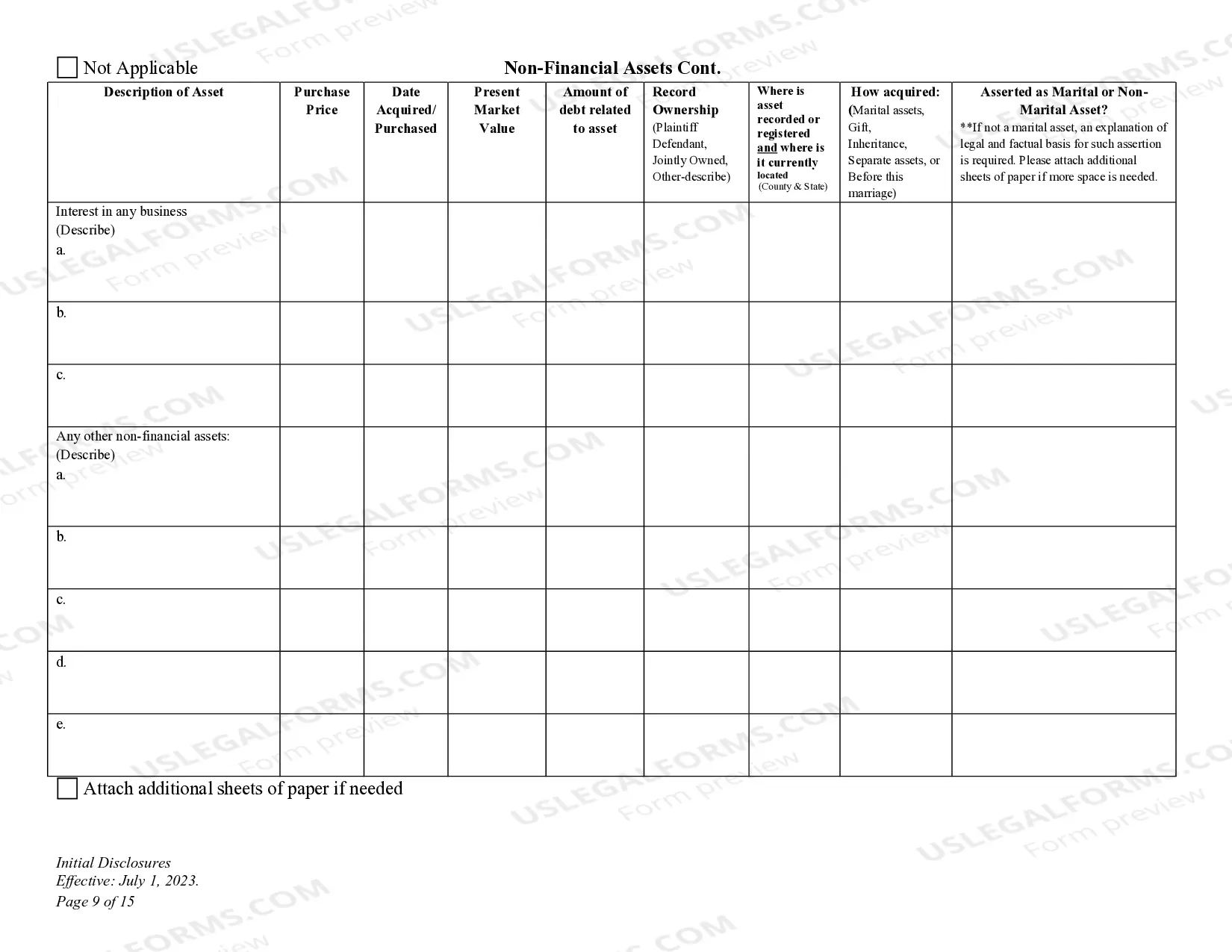
- A schedule of non-financial assets, such as property and vehicles.
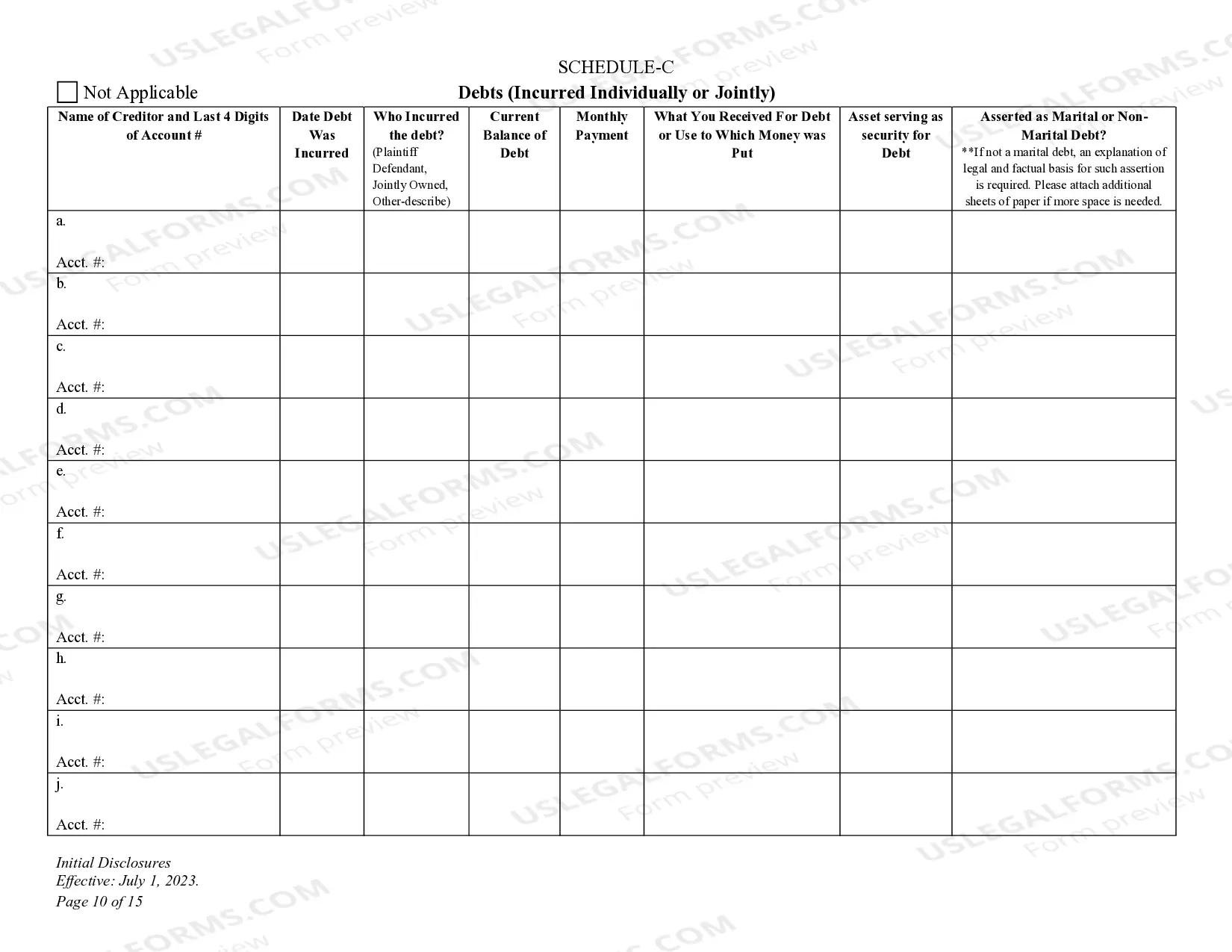
- A schedule of debts, specifying who incurred them and their current status.
- Details about any safe deposit boxes, including their contents and access.
- Disclosure of employment income and other sources of income.
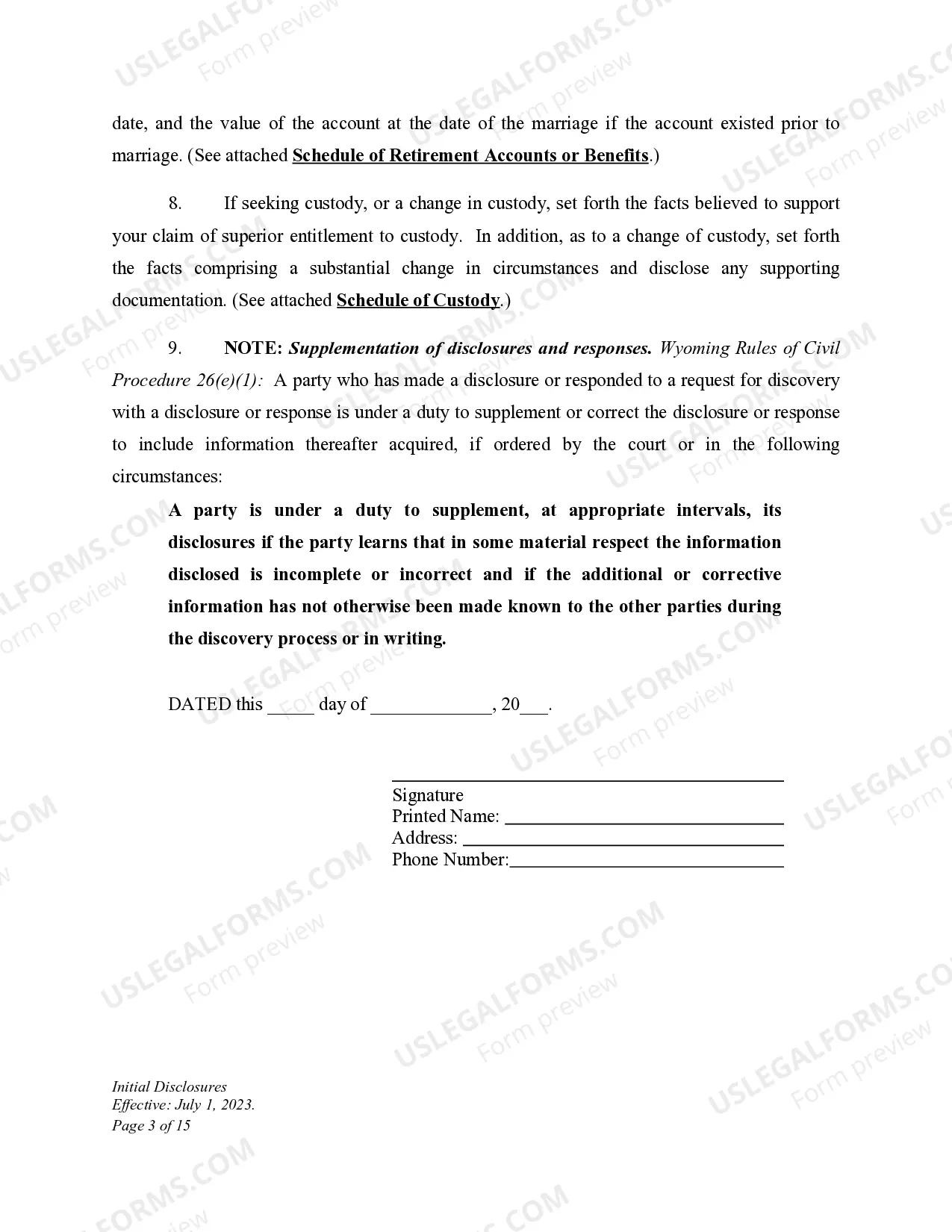
- Information regarding retirement accounts and custody considerations if applicable.

When to use this form
This form should be used when initiating a divorce proceeding in Wyoming. It is required to provide initial disclosures within thirty days after the defendant has been served with the complaint for divorce. It is critical for both parties to fully disclose relevant information to facilitate the fair and efficient resolution of issues related to property, debts, and custody.
Who this form is for
This form is designed for individuals who are filing for divorce in Wyoming. Both the plaintiff (the party filing for divorce) and the defendant (the other party) are required to use this form to disclose pertinent information related to their assets and liabilities.
How to complete this form
- Identify the parties involved, including their names and the case number.
- Complete each schedule by providing detailed information about financial assets, non-financial assets, and debts.
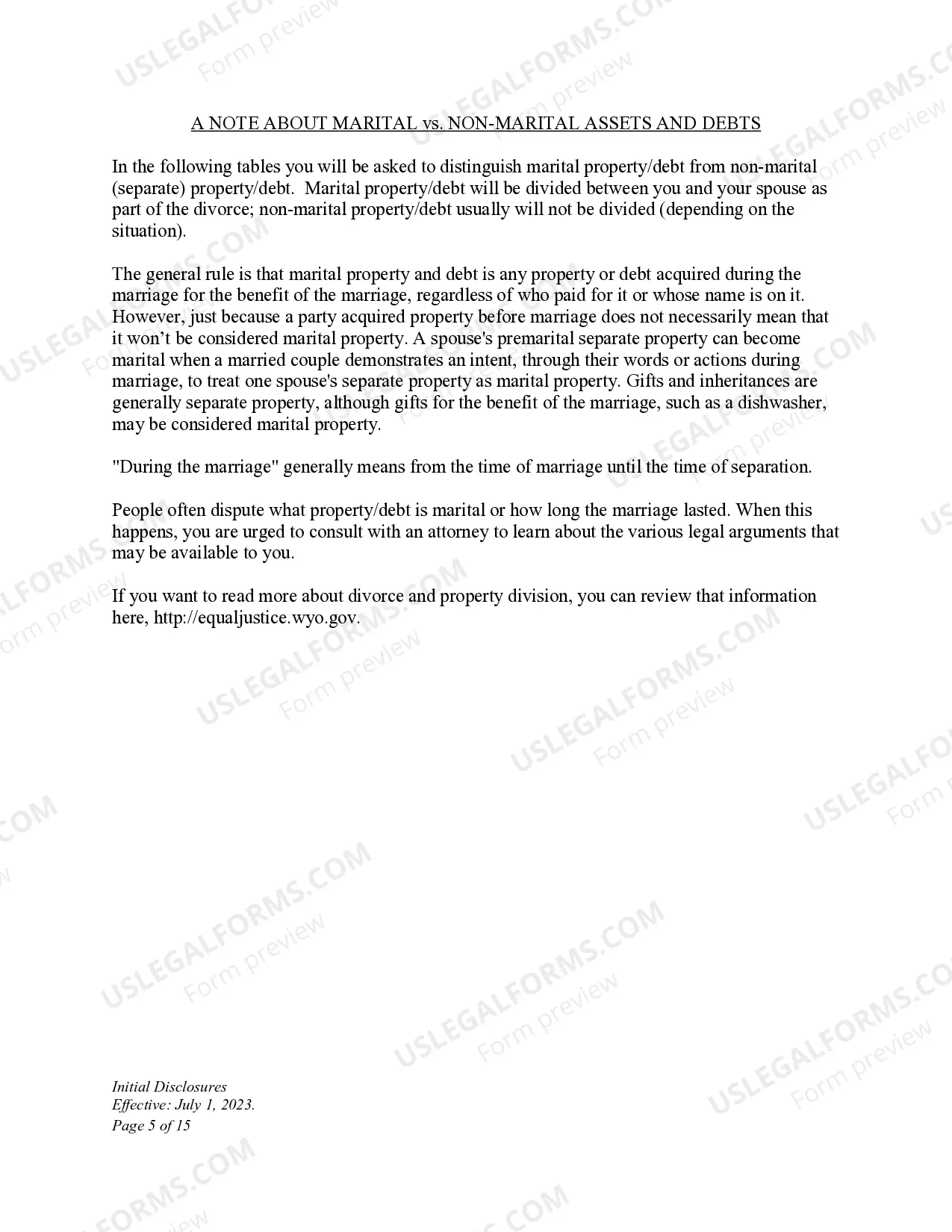
- Clearly indicate whether each asset or debt is marital or non-marital, including explanations where necessary.
- Sign and date the document, including your printed name and contact information.
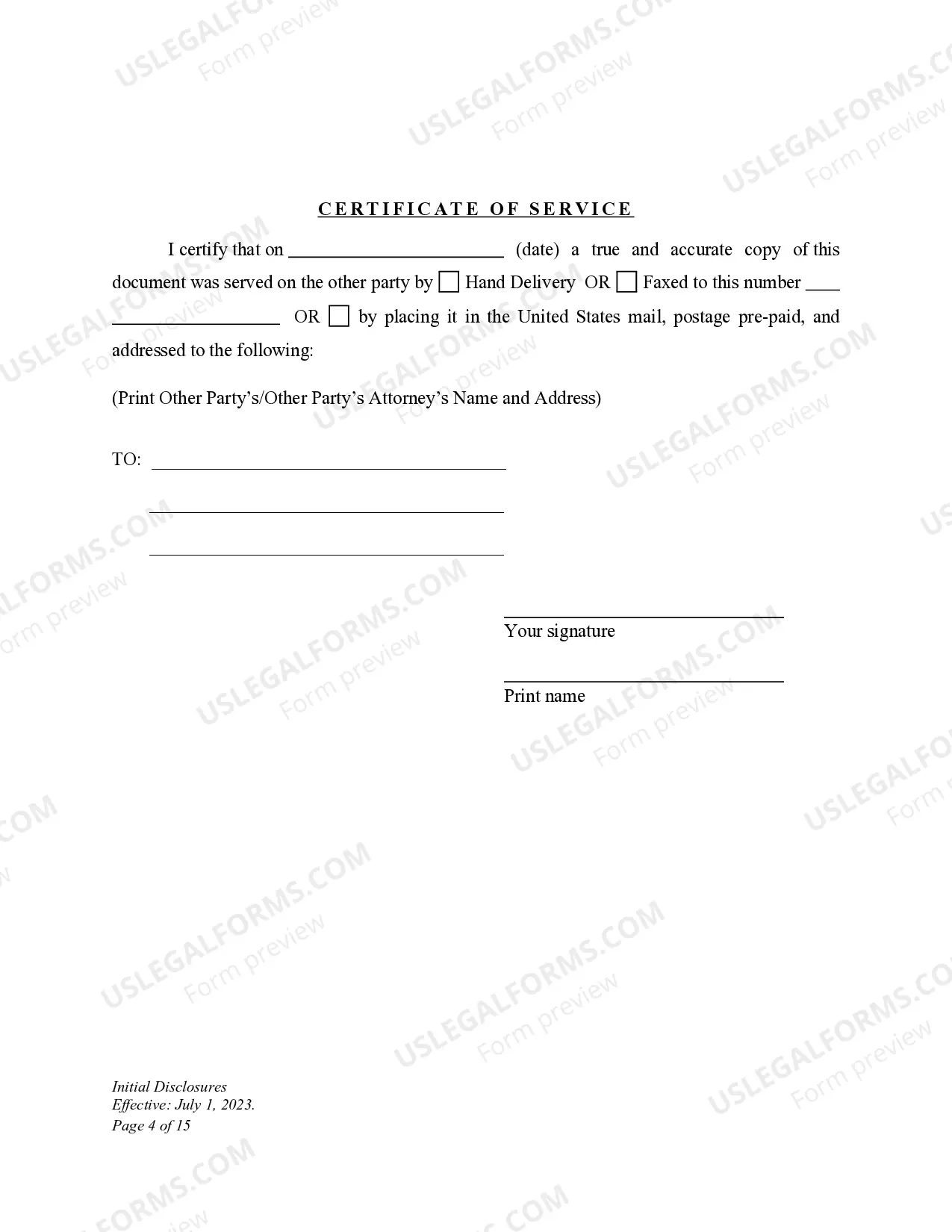
- Serve the completed form to the other party using the prescribed methods (e.g., hand delivery or mail).
Notarization guidance
In most cases, this form does not require notarization. However, some jurisdictions or signing circumstances might. US Legal Forms offers online notarization powered by Notarize, accessible 24/7 for a quick, remote process.
Get your form ready online
Our built-in tools help you complete, sign, share, and store your documents in one place.
Make edits, fill in missing information, and update formatting in US Legal Forms—just like you would in MS Word.
Download a copy, print it, send it by email, or mail it via USPS—whatever works best for your next step.
Sign and collect signatures with our SignNow integration. Send to multiple recipients, set reminders, and more. Go Premium to unlock E-Sign.
If this form requires notarization, complete it online through a secure video call—no need to meet a notary in person or wait for an appointment.
We protect your documents and personal data by following strict security and privacy standards.

Make edits, fill in missing information, and update formatting in US Legal Forms—just like you would in MS Word.

Download a copy, print it, send it by email, or mail it via USPS—whatever works best for your next step.

Sign and collect signatures with our SignNow integration. Send to multiple recipients, set reminders, and more. Go Premium to unlock E-Sign.

If this form requires notarization, complete it online through a secure video call—no need to meet a notary in person or wait for an appointment.

We protect your documents and personal data by following strict security and privacy standards.
Common mistakes to avoid
- Failing to disclose all assets, which can lead to legal complications.
- Not specifying whether assets or debts are marital or non-marital.
- Missing the deadline for providing disclosures to the opposing party.
- Providing incomplete or unclear information in schedules.
Benefits of completing this form online
- Convenient access to the form from anywhere with an internet connection.
- Editability allows users to fill out the form at their own pace.
- Reliable templates that reflect current legal standards and requirements.
- Support from licensed attorneys ensures the form meets necessary legal criteria.
Looking for another form?
Form popularity
FAQ
(d) Filing.But disclosures under Rule 26(a)(1) or (2) and the following discovery requests and responses must not be filed until they are used in the proceeding or the court orders filing: depositions, interrogatories, requests for documents or tangible things or to permit entry onto land, and requests for admission.
The Rule 26(a)(1) initial disclosures generally must be made within 14 days after the parties conduct a Rule 26(f ) conference, at which they are to discuss a discovery plan and other matters. The initial disclosures are typically made within 60 to 90 days after the complaint has been filed.
Initial disclosures are the preliminary disclosures that must be acknowledged and signed in order to move forward with your loan application.When you apply for a mortgage loan, the lender is required to provide you with initial disclosures within three business days of application.
Initial disclosures are a requirement under the federal legislation and must include: (1) the names, addresses, and phone numbers of individuals who contributed to the discovery, (2) a duplicate description of all related paperwork, compilation of all information pertaining to the invention, and publicly owned tangible
FRCP 26 a 1 Initial Disclosures The names and contact information of any party who may have knowledge of or access to discoverable information or evidence that could support or contradict the fundamental claims of a case.
A party must make the initial disclosures at or within 14 days after the parties' Rule 26(f) conference unless a different time is set by stipulation or court order, or unless a party objects during the conference that initial disclosures are not appropriate in this action and states the objection in the proposed
Discovery is a major part of civil litigation, the process through which the parties gather evidence before trial.The very first step in discovery is the exchange of initial disclosures. Through initial disclosures, the parties are required to provide information they may use to support their cases at trial.