Request for Change of Beneficiary of Life Insurance Policy
Understanding this form
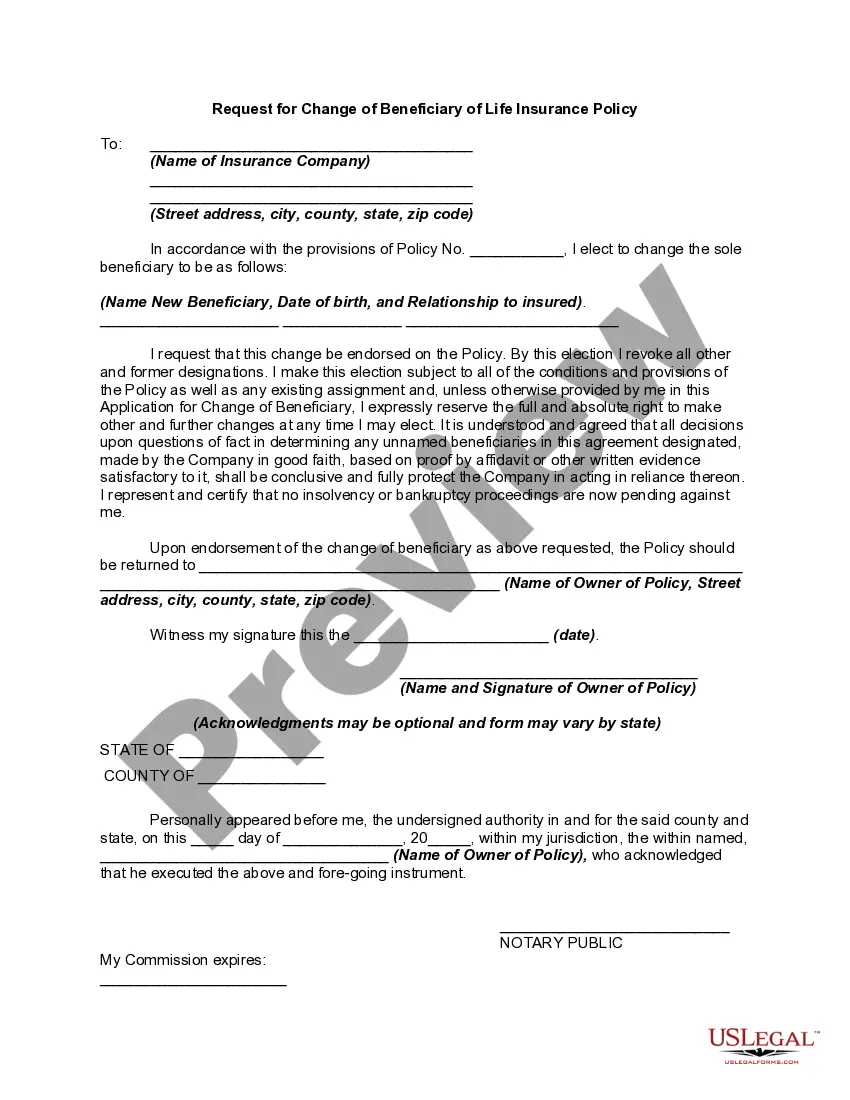
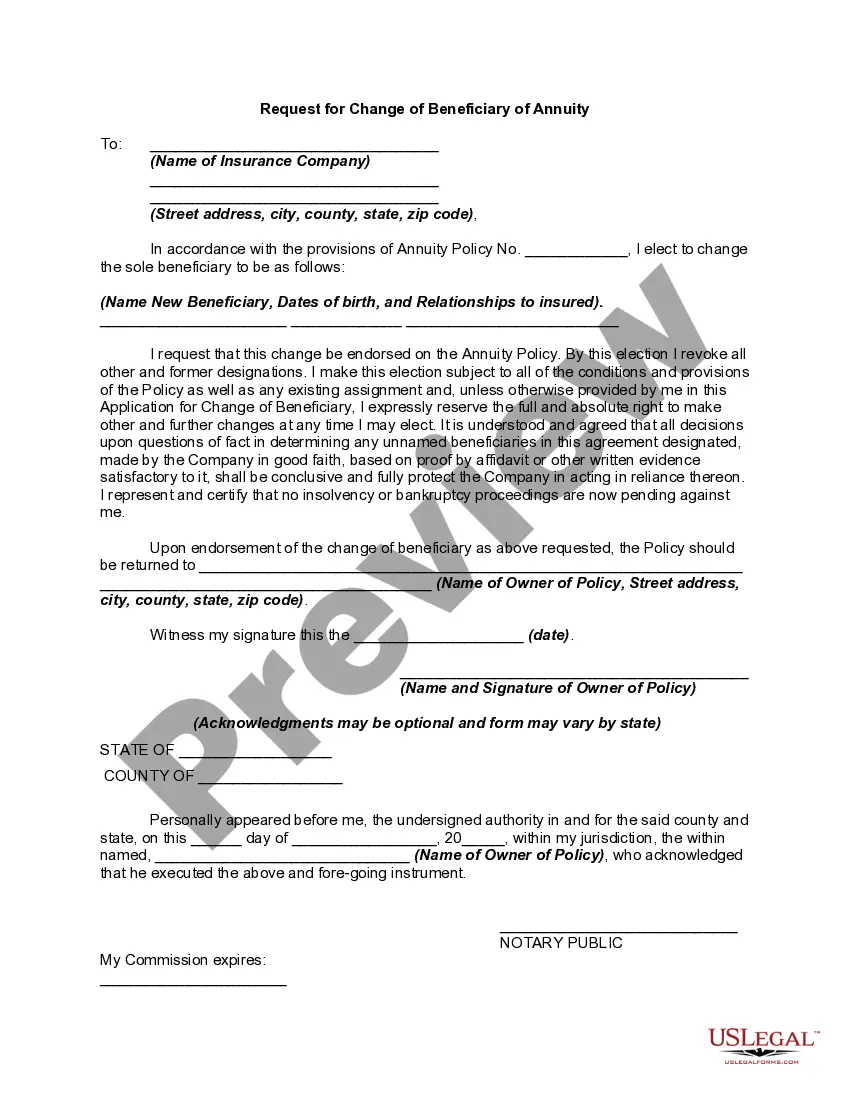
The Request for Change of Beneficiary of Life Insurance Policy is a legal document used to officially change the designated beneficiary on a life insurance policy. This form is essential when the insured wishes to update their beneficiaries due to life changes such as marriage, divorce, or the birth of a child. Unlike other forms that may only serve as a guideline for beneficiaries, this form allows you to directly request a formal change, ensuring that all legal provisions are met and documented correctly.
Main sections of this form
- Identification of the insurance company, including name and address.
- Specification of the insurance policy number.
- Details of the new beneficiary, including name, date of birth, and relationship to the insured.
- A statement revoking any previous beneficiary designations.
- A request for endorsement of the change on the policy.
- Signature of the policy owner and witness, if necessary.
State-specific requirements
This form is suitable for use across multiple states but may need changes to align with your state’s laws. Review and adapt it before final use.
Common use cases
You should use this form when you want to change the beneficiary named in your life insurance policy. Common situations for using this form include changes in marital status, the death of a previous beneficiary, or the desire to allocate benefits to a new individual or entity. It is also recommended to review your beneficiary designations periodically to ensure they reflect your current wishes.
Intended users of this form
This form is intended for:
- The policyholder or insured individual wishing to change a beneficiary.
- Individuals seeking to ensure their life insurance benefits are directed according to their current wishes.
- Those who are required to comply with state laws governing beneficiary changes.
Completing this form step by step
- Identify and enter the name and address of the insurance company.
- State the policy number for which the beneficiary is being changed.
- Fill in the details of the new beneficiary, including their name, birth date, and relationship to you.
- Sign and date the form to authenticate your request.
- If required, have the form witnessed or notarized based on state law.
Does this form need to be notarized?
To make this form legally binding, it must be notarized. Our online notarization service, powered by Notarize, lets you verify and sign documents remotely through an encrypted video session.



Mistakes to watch out for
- Failing to provide complete information about the new beneficiary.
- Not signing or dating the form, which may invalidate the request.
- Overlooking the need for consent from current beneficiaries when required by law.
- Using outdated forms that do not reflect current state requirements.
Why use this form online
- Convenient access to legal forms from anywhere, at any time.
- Editable templates that allow you to tailor the document to your needs.
- Reliability of forms drafted by licensed attorneys, ensuring compliance with legal standards.
Form popularity
FAQ
Write only one beneficiary on each line. Make sure that you write the full names of all beneficiaries. For example, if you name you children as beneficiaries, DO NOT merely write children on one of the lines; instead write the full names of each of your children on separate lines.
The same legal principles that allow a will contest forgery, fraud, undue influence, for example also apply to changes in beneficiary designation.
Disputing life insurance beneficiaries requires a legal case presented in court. This is not something the life insurance company can do, even if your claim seems valid. Only the courts have the legal right to make a change to a life insurance policy after the policyholder's death.
Revocable beneficiaries: The owner of the life insurance policy has the right to change the beneficiary designation at any time without the consent of the previously named beneficiary.
When you purchase a life insurance policy, you choose one or more beneficiaries who will get the policy pay-out when you die.You can't remove that person's name from the policy, even if you have a falling out or get divorced, without his or her consent.
You simply need to contact your insurer and request a change of beneficiary form and fill out the form accurately and completely. Make sure to spell out the complete names of all your beneficiaries and provide their Social Security numbers to facilitate payout of benefits in the event of your death.
To take out a life insurance policy on someone else, you'll need to prove to the insurance company that you have something called insurable interest . You can roughly translate that to "financial interest, which means that you would need to prove that if the insured were to die, it would financially burden you.
Revocable and Irrevocable Life Insurance Beneficiaries Revocable beneficiaries: The owner of the life insurance policy has the right to change the beneficiary designation at any time without the consent of the previously named beneficiary.
Once a life insurance policyholder dies, little can be done to change the beneficiary designation and prevent a dispute. However, policyholders can protect their loved ones and beneficiaries by keeping their policies up-to-date. When life changes happen, changes in the life insurance policy should reflect them.