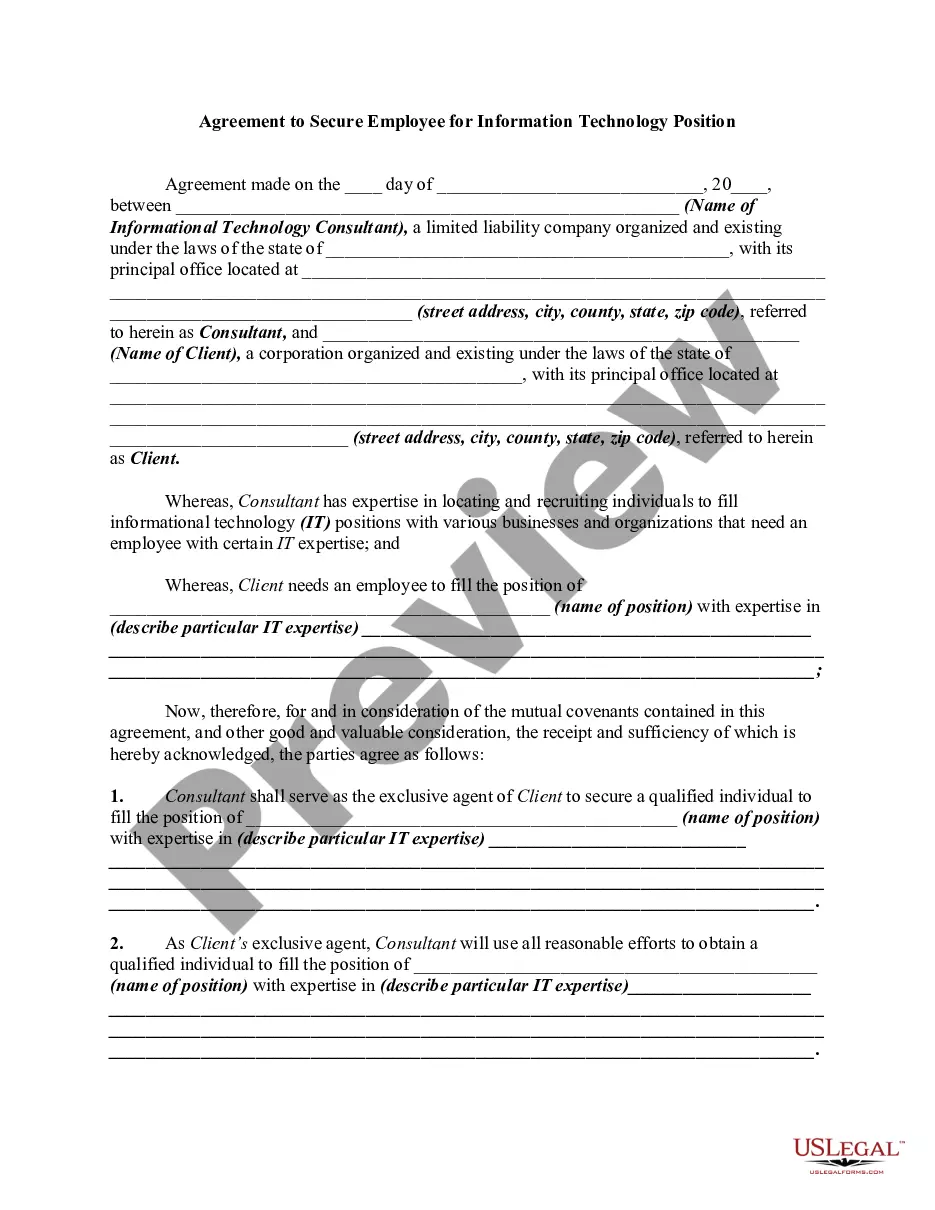
Wyoming Lien Waiver
What this document covers
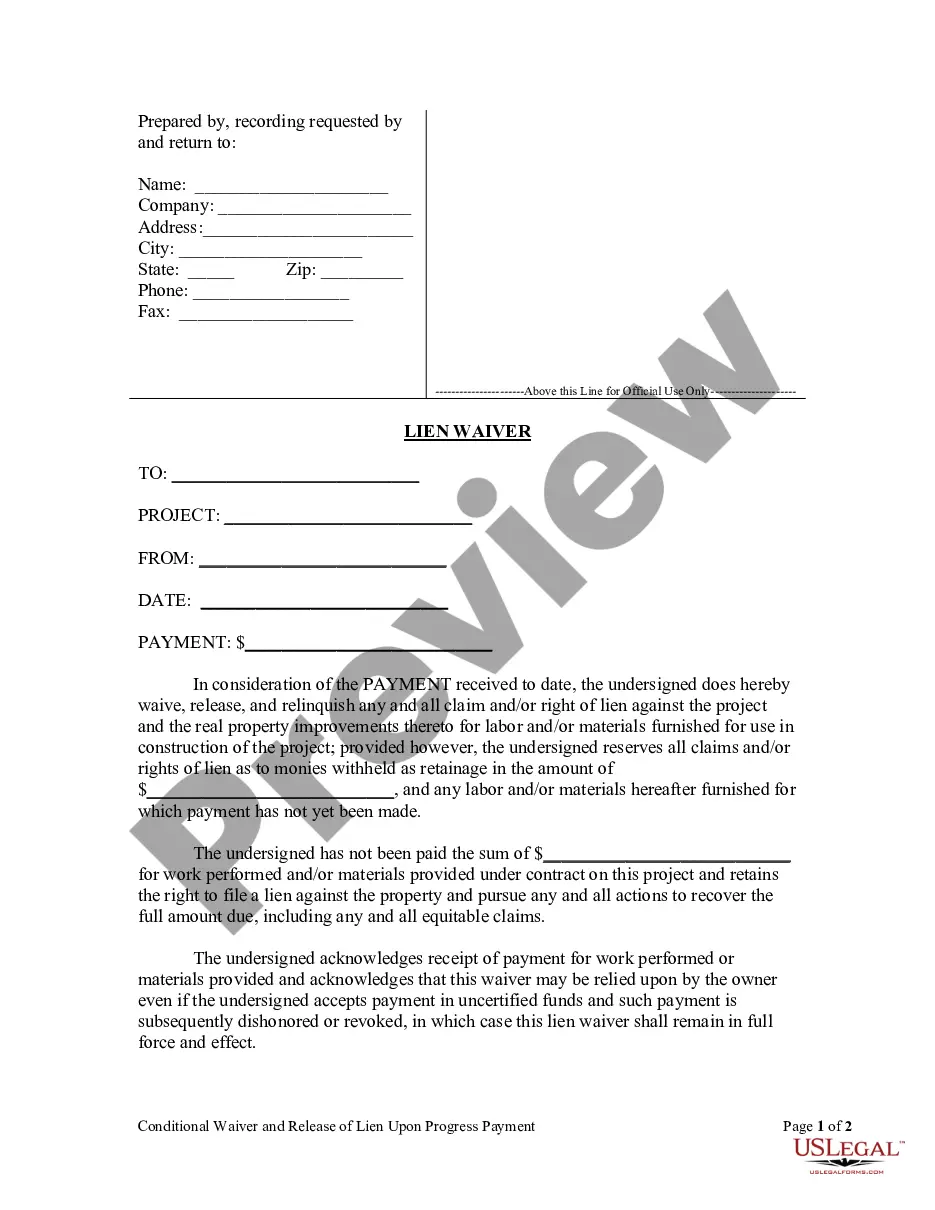
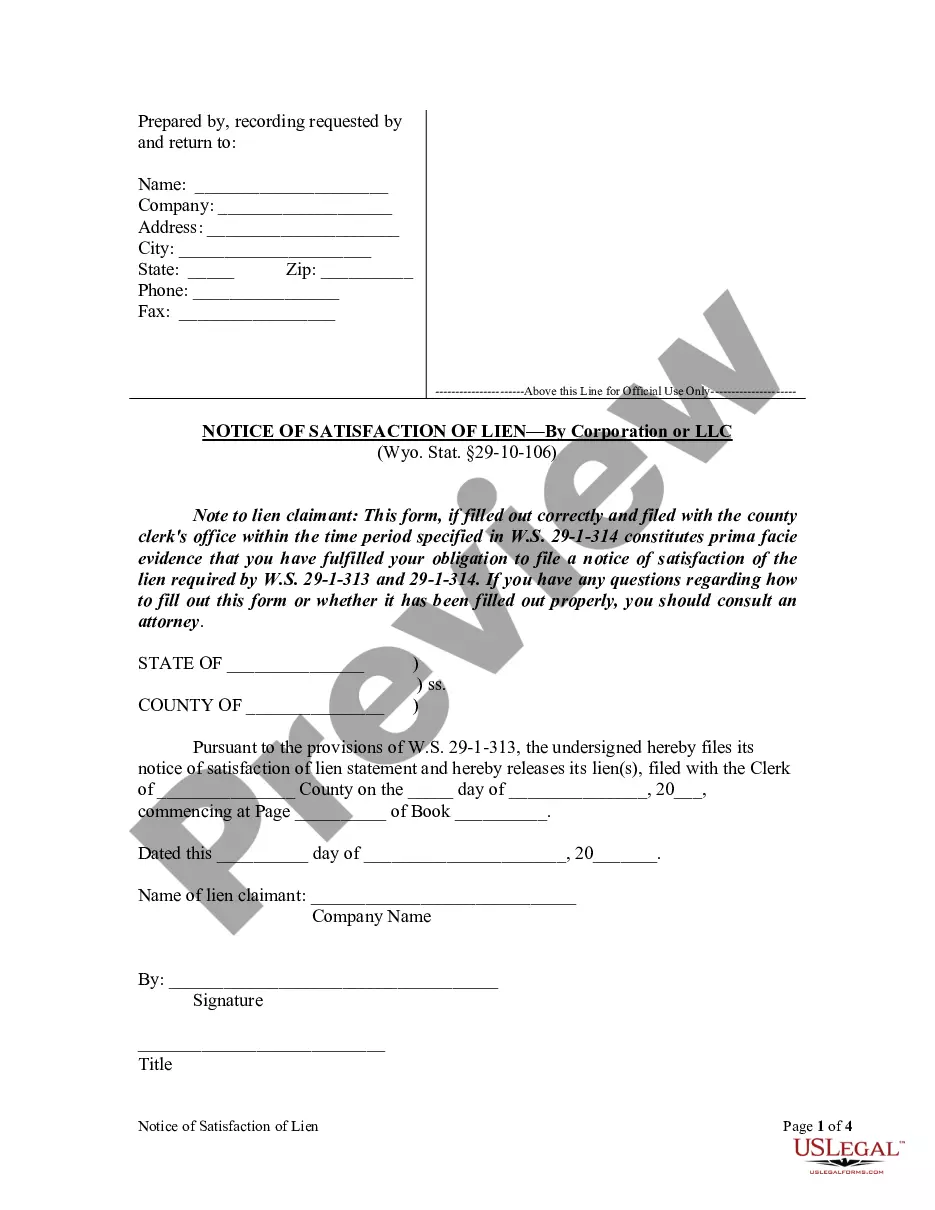
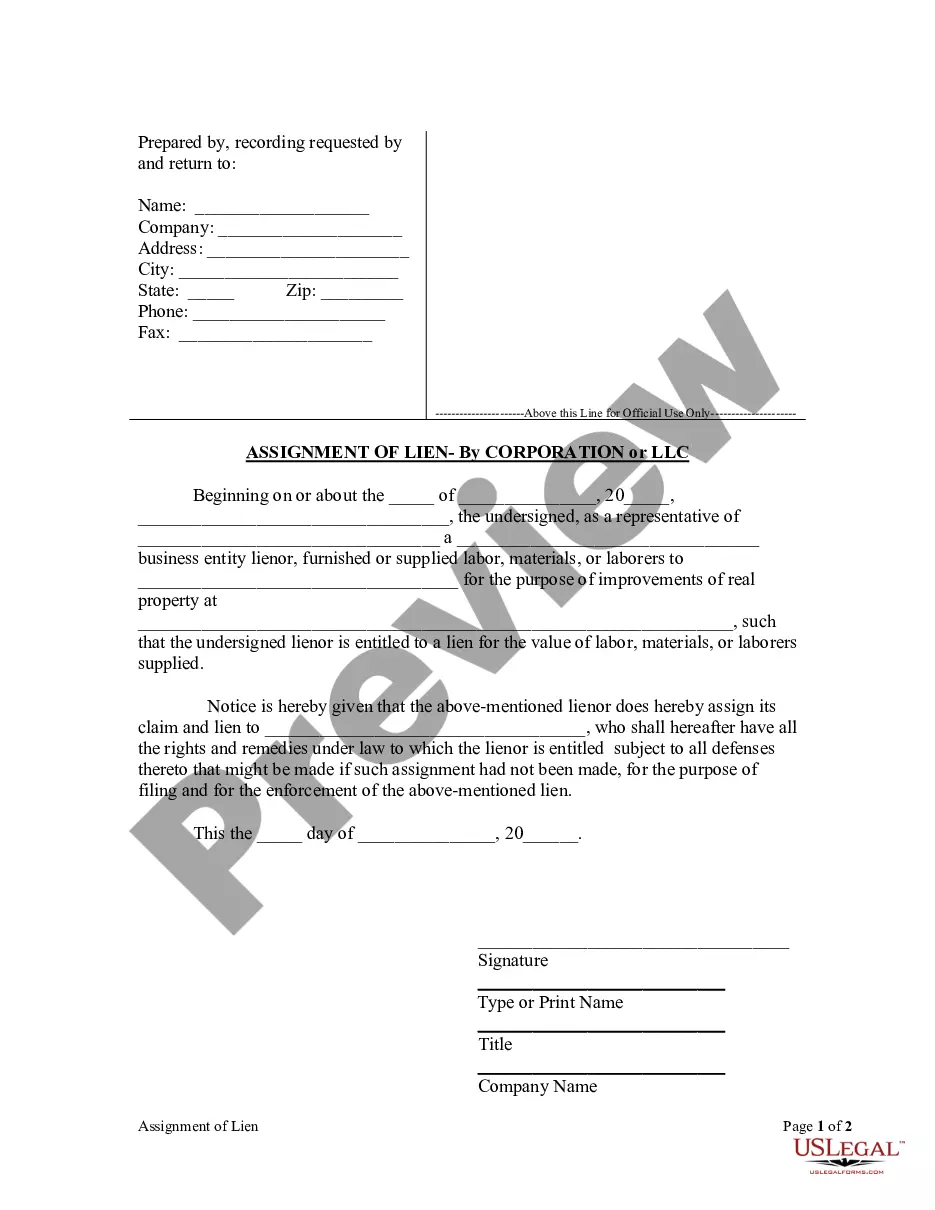
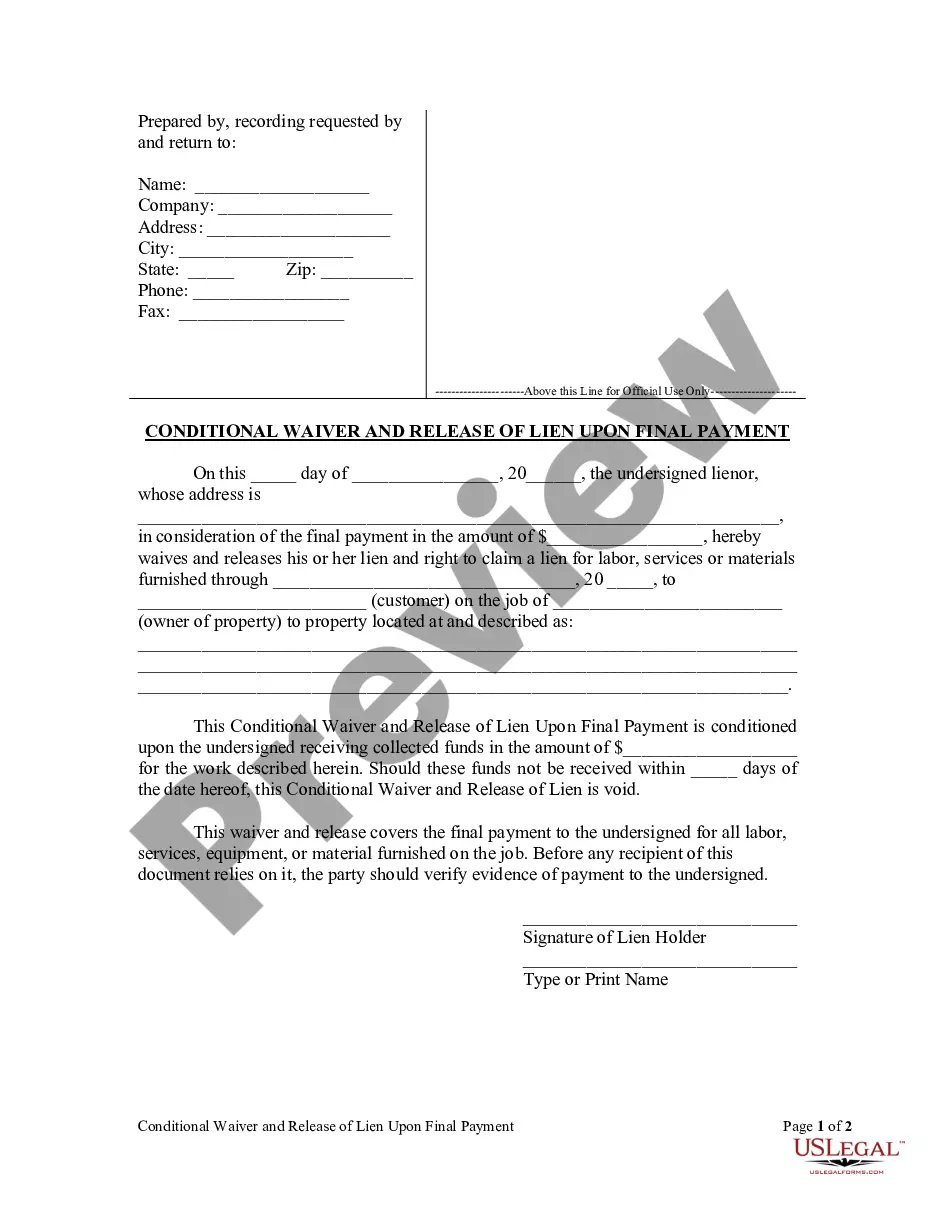
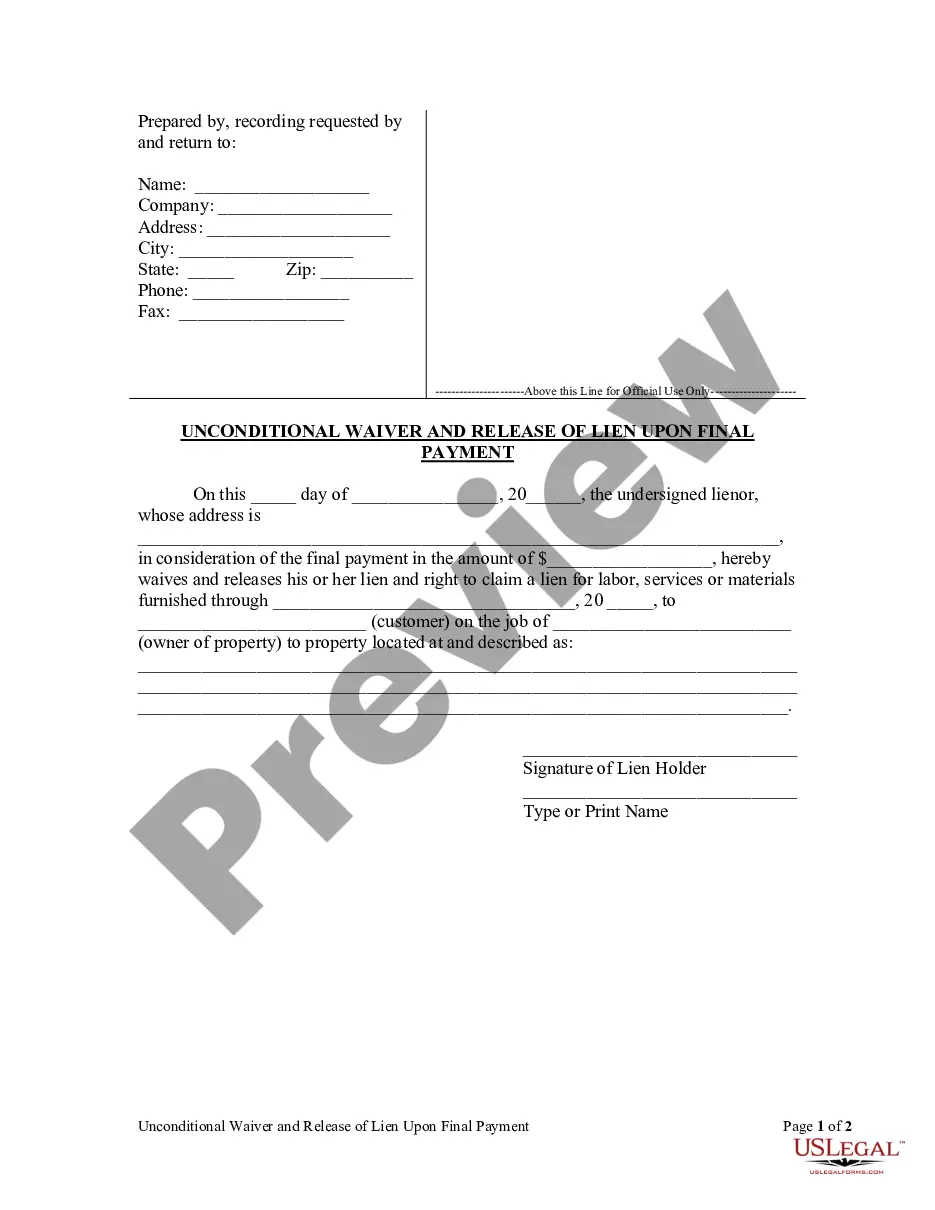
A lien waiver is a legal document used by a lien claimant to waive and release their right to claim a lien against a property for labor, services, or materials provided up to a specific date. This form is particularly important as it demonstrates that the claimant has received payment, thereby releasing the property owner from potential claims against the property. Unlike unconditional waivers, the conditional waiver ensures it only takes effect upon receiving the specified payment, providing a layer of protection for both parties involved.
Form components explained
- Name and contact information of the lien claimant.
- Amount of payment being waived.
- Date of the waiver and the condition for its effectiveness.
- Description of labor, services, or materials provided.
- Property owner's information and property description.
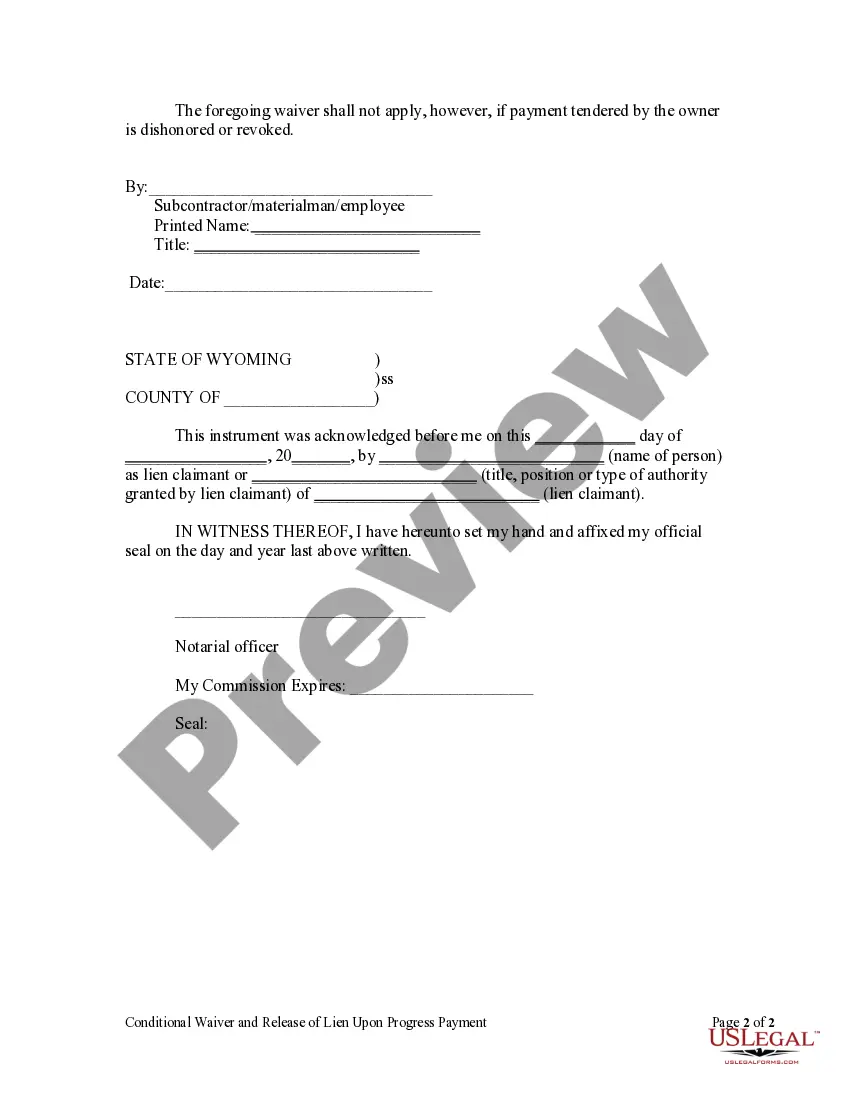
- Signature of the lien holder and acknowledgment by a notary public.
When to use this document
This lien waiver should be used when a contractor, subcontractor, or supplier has provided services or materials to a property and has received partial payment. It is crucial to provide this form to the property owner to confirm that the claimant will not hold a lien on the property for the specified work. It is commonly used in construction projects and improvements where multiple payments may be made over the course of a job.
Who this form is for
- Contractors who have performed work on a property.
- Subcontractors or suppliers providing materials or services.
- Any individual or entity claiming a lien in consideration of payment for their contributions to a project.
Completing this form step by step
- Identify the parties involved, including the lien claimant and property owner.
- Specify the total amount of payment being waived.
- Enter the date of the waiver and the last date for which services were provided.
- Provide a detailed description of the materials, labor, or services delivered.
- Sign the form in the appropriate section, and have it notarized.
Notarization guidance
Notarization is required for this form to take effect. Our online notarization service, powered by Notarize, lets you verify and sign documents remotely through an encrypted video session, available 24/7.
Get your form ready online
Our built-in tools help you complete, sign, share, and store your documents in one place.
Make edits, fill in missing information, and update formatting in US Legal Forms—just like you would in MS Word.
Download a copy, print it, send it by email, or mail it via USPS—whatever works best for your next step.
Sign and collect signatures with our SignNow integration. Send to multiple recipients, set reminders, and more. Go Premium to unlock E-Sign.
If this form requires notarization, complete it online through a secure video call—no need to meet a notary in person or wait for an appointment.
We protect your documents and personal data by following strict security and privacy standards.

Make edits, fill in missing information, and update formatting in US Legal Forms—just like you would in MS Word.

Download a copy, print it, send it by email, or mail it via USPS—whatever works best for your next step.

Sign and collect signatures with our SignNow integration. Send to multiple recipients, set reminders, and more. Go Premium to unlock E-Sign.

If this form requires notarization, complete it online through a secure video call—no need to meet a notary in person or wait for an appointment.

We protect your documents and personal data by following strict security and privacy standards.
Avoid these common issues
- Failing to specify the condition for the waiver's validity.
- Omitting details about the work performed or materials supplied.
- Not having the waiver notarized when required by state law.
- Leaving out critical information such as the exact payment amount.
Why complete this form online
- Convenient access to legal templates at any time.
- Easy to fill out and customize for your specific situation.
- Secure storage and downloading options for your completed form.
Main things to remember
- The Lien Waiver releases a lien claimant's rights upon payment.
- It must be filled out accurately, with specified details about payments and dates.
- Notarization is often required to validate the document.
Looking for another form?

Form popularity
FAQ
The short answer to that question is usually no. If somebody owes you money you could sue them, you could obtain a judgment, you can obtain what's called a "judgment lien" and once you get the judgment lien, you can have the court record that against their property including the real estate.
Someone who is owed money is generally not able to just put a lien on property without first securing a judgment. Securing a judgment requires the creditor to sue the debtor. This may be through circuit court in many jurisdictions. If under a certain dollar amount, this suit may be through the small claims court.
It basically states that you've paid the subcontractor what is owed, they accept the payment in full, and they waive the right to put a lien on your property. Simply present this form to the subcontractor with your payment and ask them to sign it. Make sure you get their signature!
Bottom Line: Never Sign an Unconditional Lien Waiver Prior to Receiving Payment!If the lien waiver is the only proof the owner has as to whether a particular party has been paid, the owner must be able to rely on it in order for the lien waiver to accomplish its purpose.
Preliminary notice is mandatory All project participants wishing to file a mechanics lien in Wyoming must first file a Preliminary Notice of Right to Lien with the property owner. Also, every project participant is required to send a notice of intent to lien 20 days prior to filing a mechanics lien on the property.
LIen waivers are not required to be notarized. The primary times that a document needs to be notarized is if it is going to be filed with the county recorder or it is an affidavit. There are some other documents that often use notarization, but lien...
Lien waivers that are given after payment is received and which generally cover payments received in a prior pay period are considered trailing lien waivers.Lien waiv- ers are typically provided with each requisition during the course of the project and at final completion of the project.
This is a legal document where a contractor waives his common law right to hold control and possession over a property or resists to hand over the keys to the Bank when requested to do so, if he is not paid in full. Legal FAQ Guide.
A lien waiver is quite common in the construction business. Essentially, it is a document from a contractor, subcontractor, supplier, or another party who holds a mechanic's lien that states they have been paid in full and waive future lien rights to the disputed property.