West Virginia Transfer on Death Deed or TOD - Beneficiary Deed for Individual to Two Individuals
What this document covers
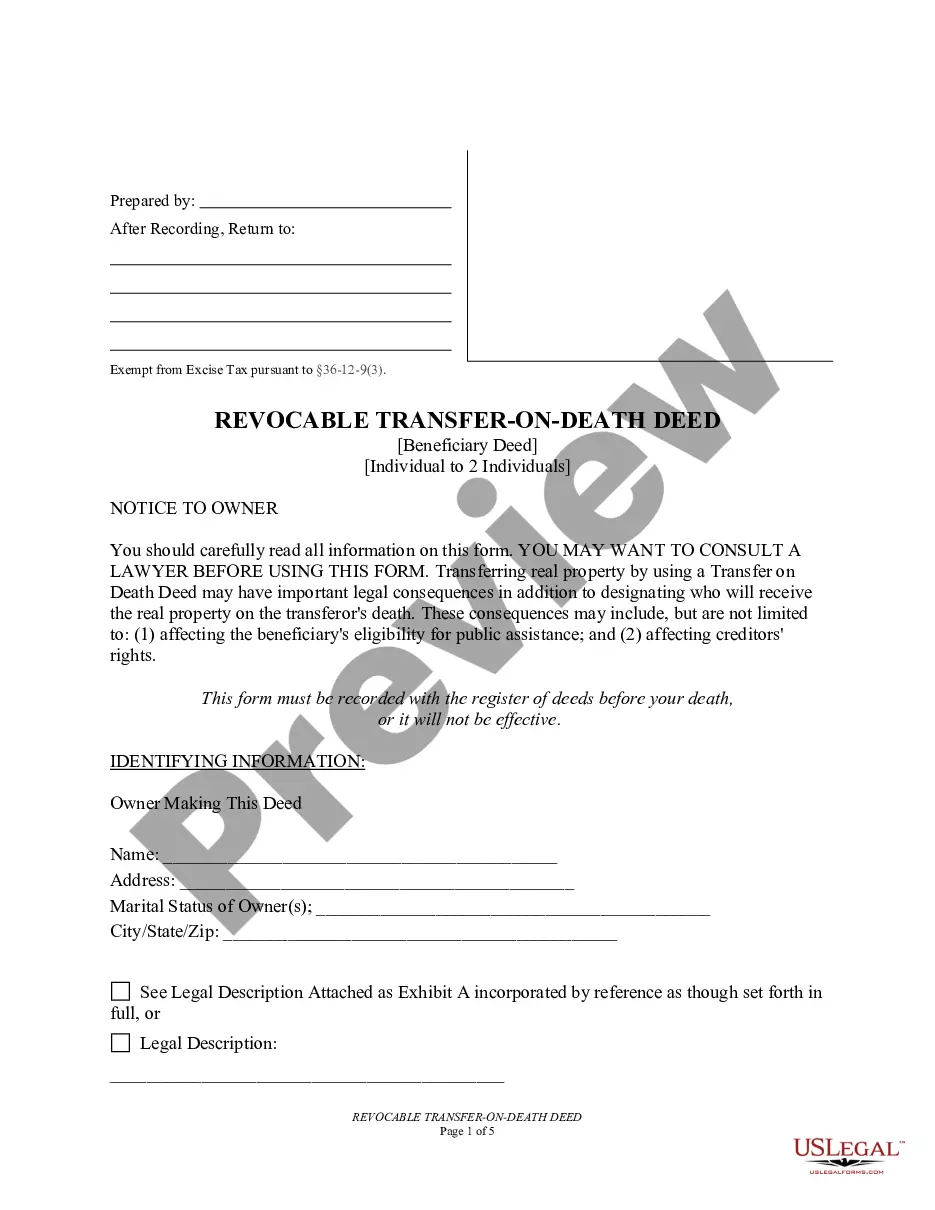
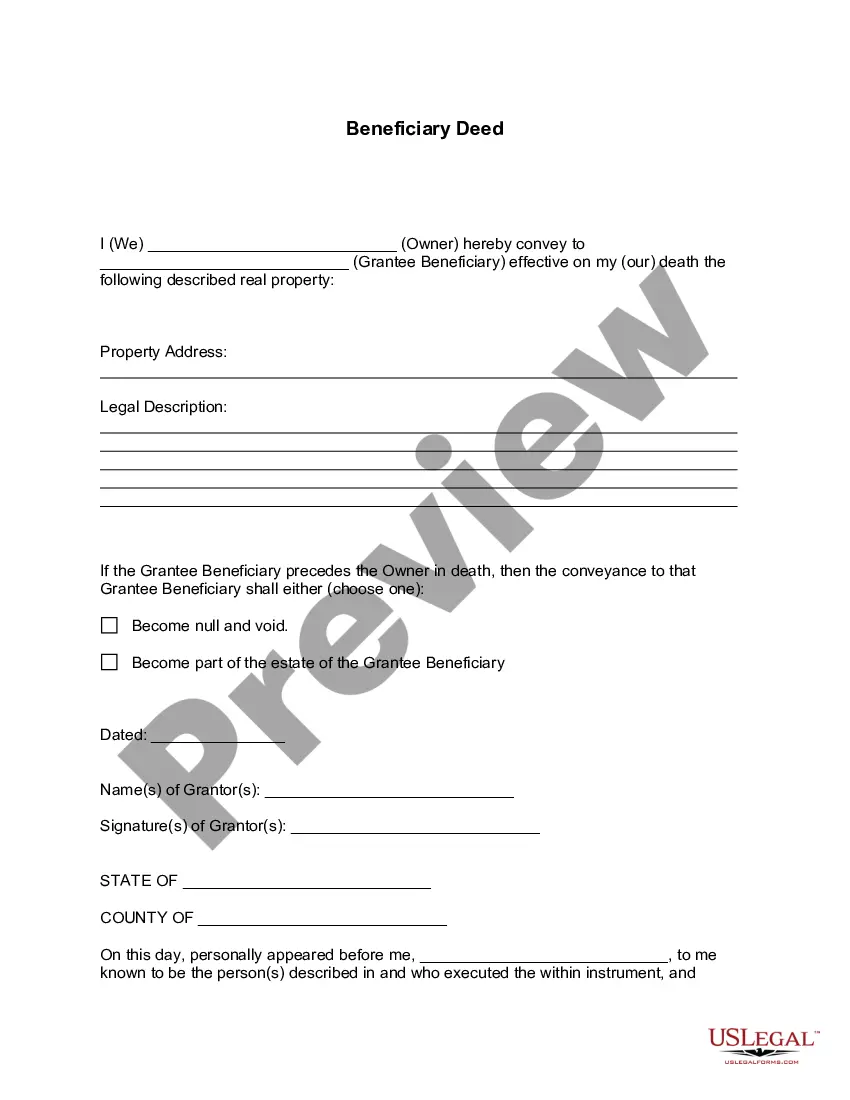
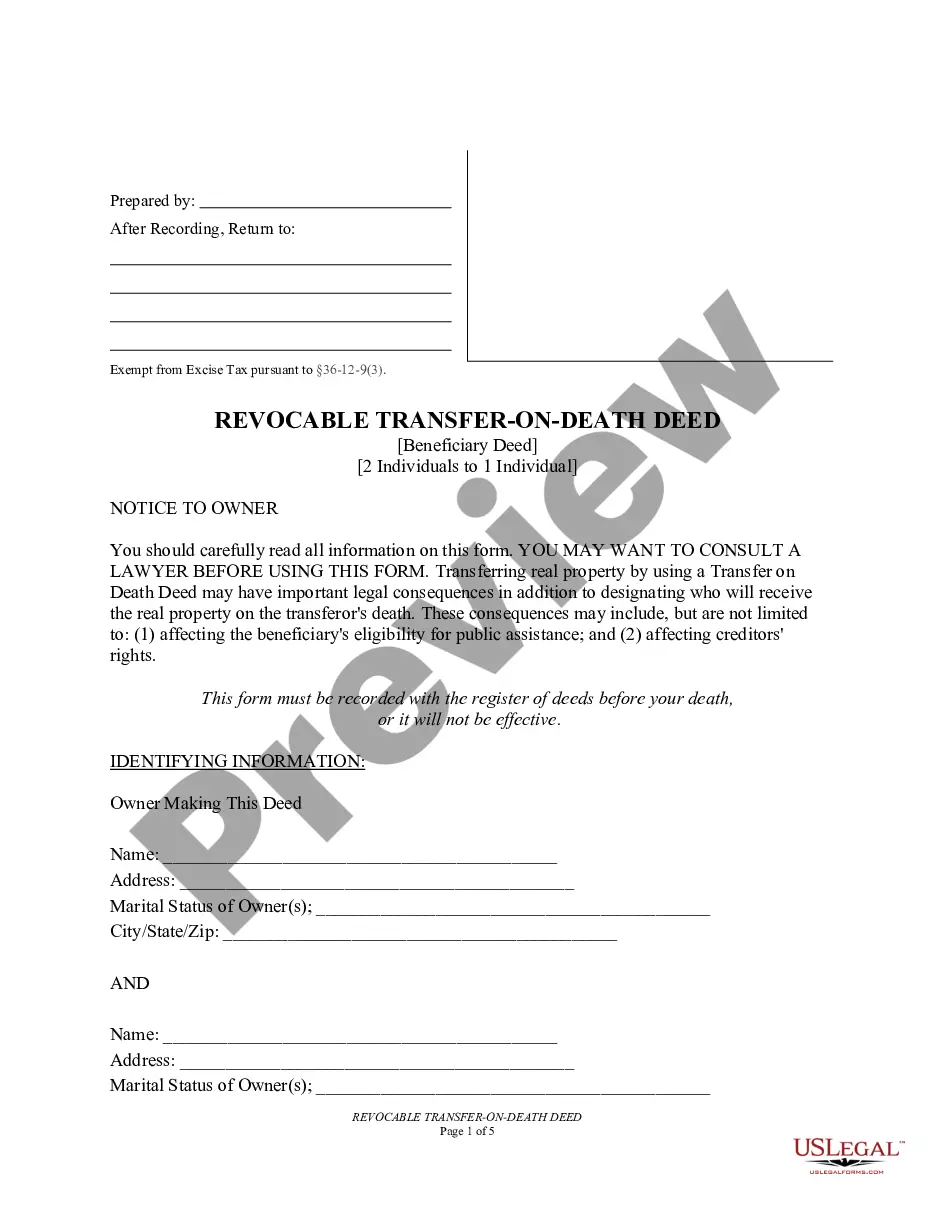
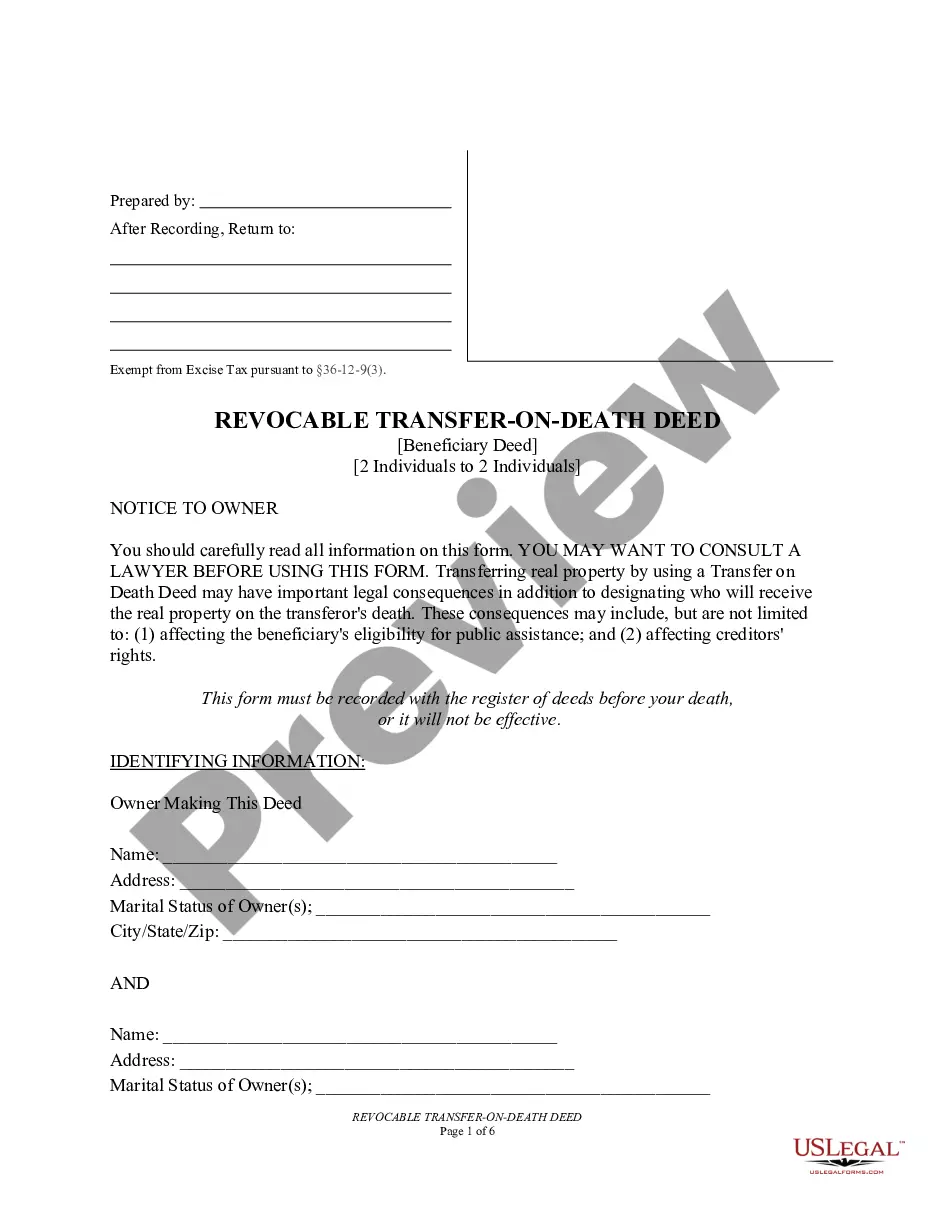
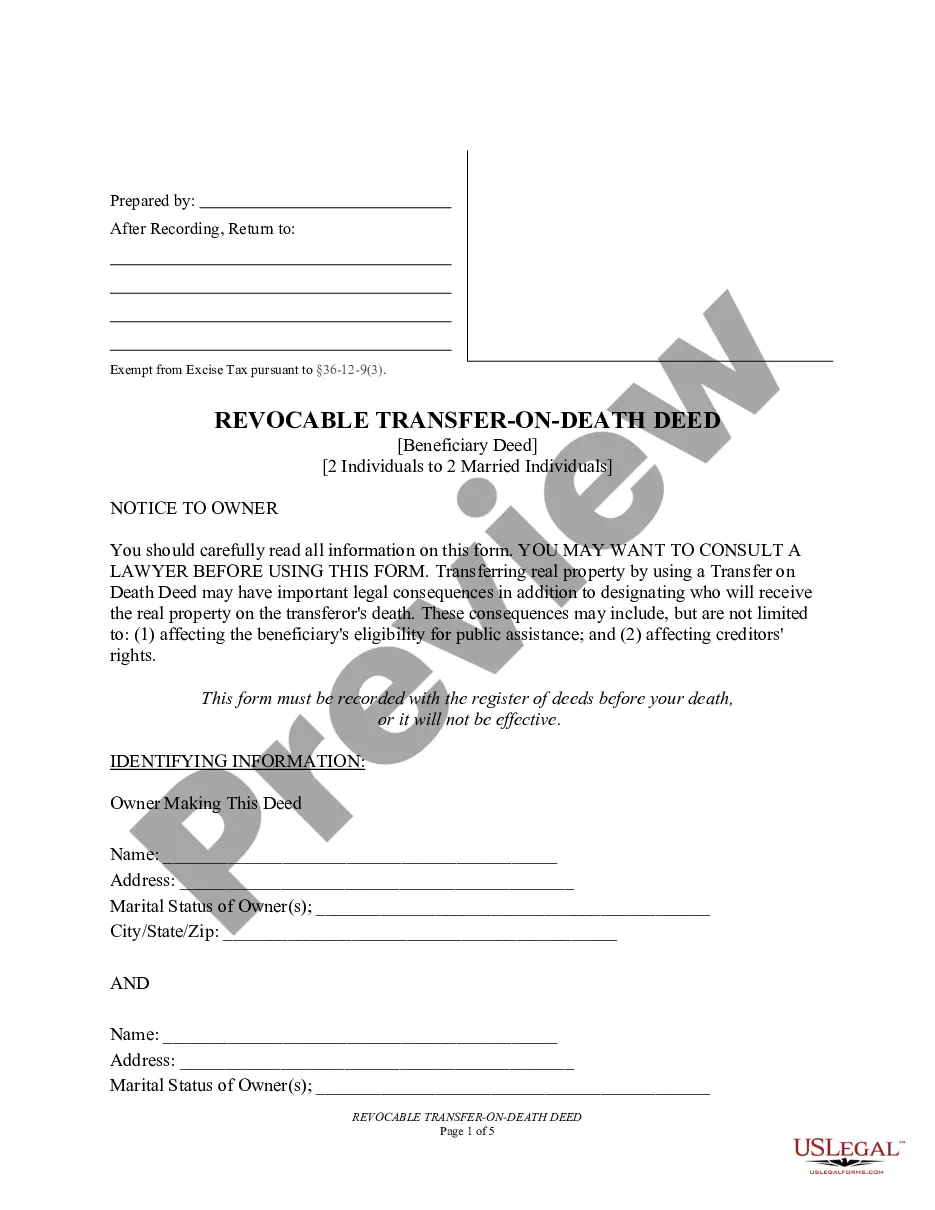
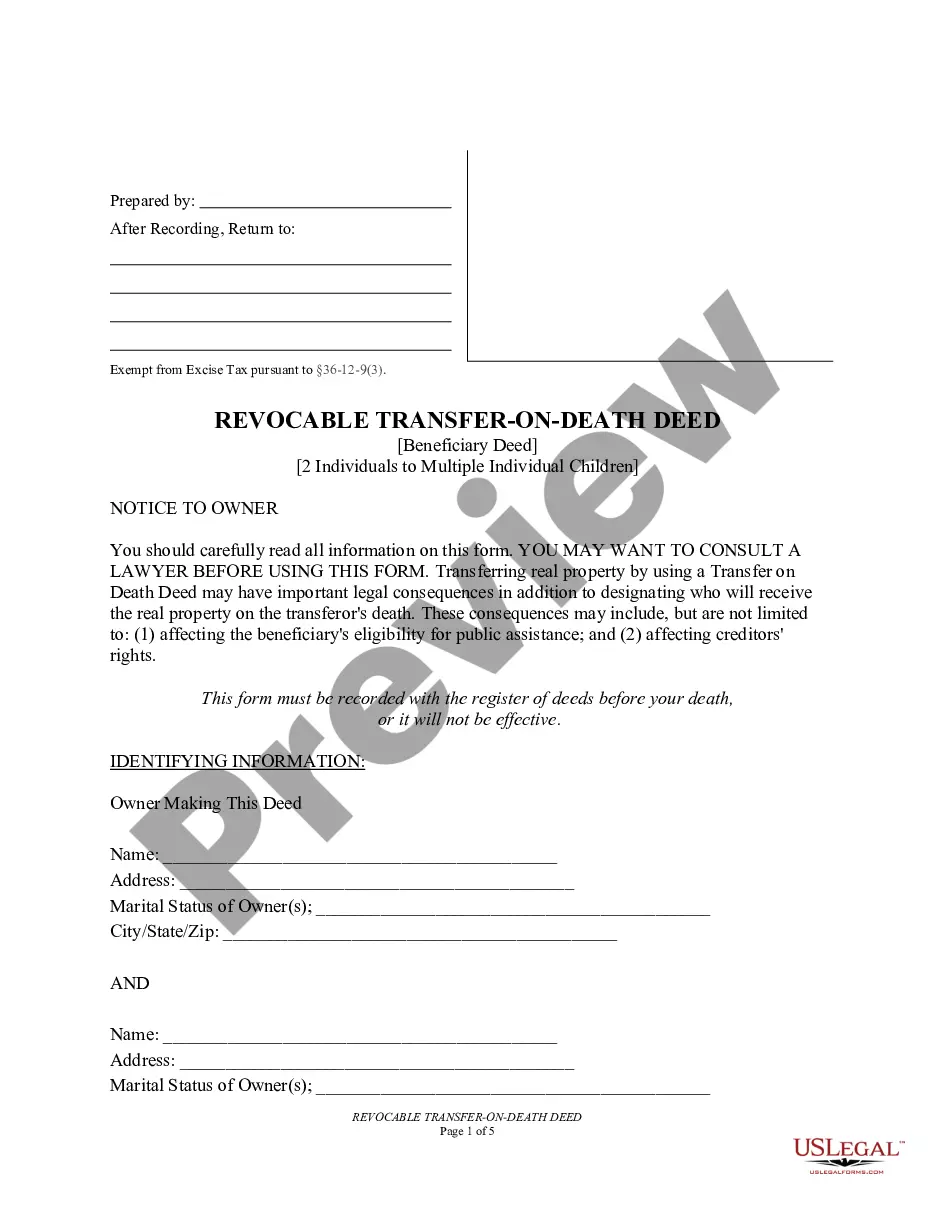
The Transfer on Death Deed, also known as the TOD Beneficiary Deed, allows an individual to designate beneficiaries who will receive their property upon their death, without transferring ownership during their lifetime. This deed offers flexibility, as it can be revoked at any time before the ownerâs death. It is distinct from a traditional will, as this deed specifically addresses the transfer of real estate and avoids probate for the designated beneficiaries.
Key components of this form
- Owner's identifying information, including name and address.
- Legal description of the property to be transferred.
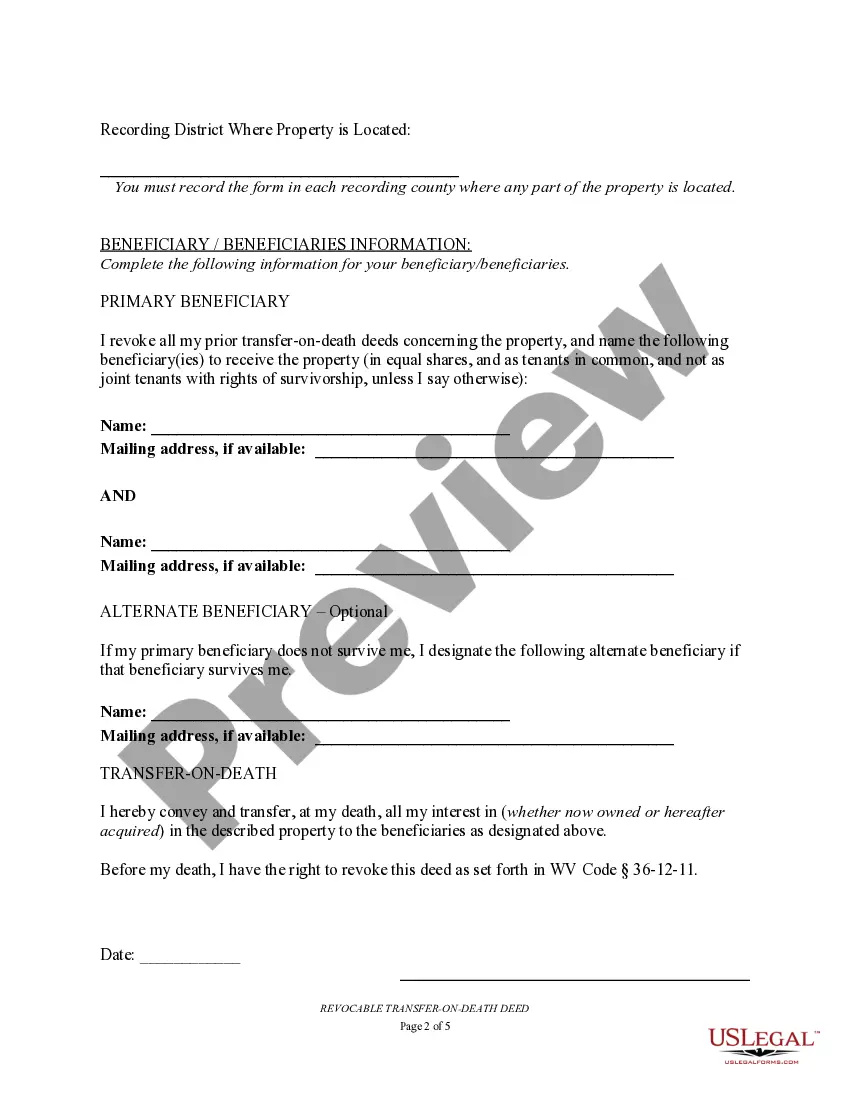
- Names and addresses of primary beneficiaries who will inherit the property.
- Optional designation of alternate beneficiaries in case primary beneficiaries do not survive the Grantor.
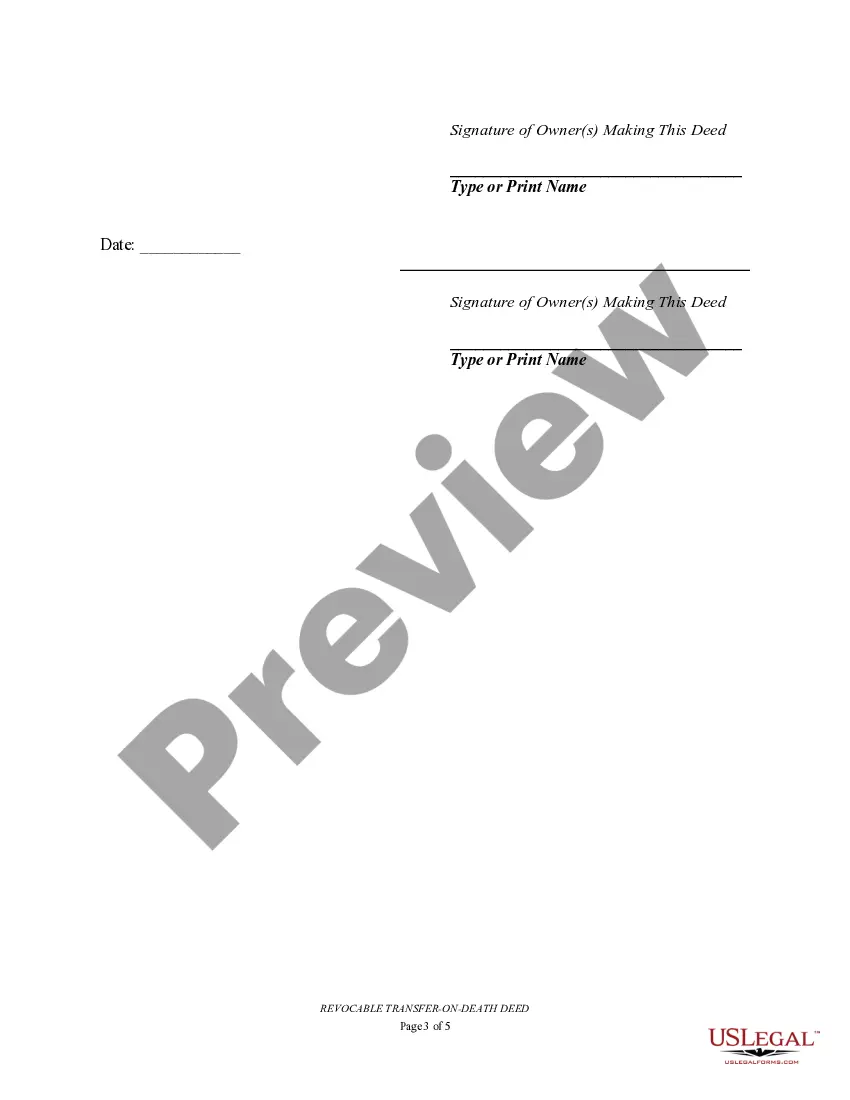
- Signature of the property owner, ensuring legal validity.
When to use this document
This form is suitable when a property owner wishes to transfer ownership of their property to two individuals upon their death, while retaining the right to change their mind during their lifetime. It is particularly useful in estate planning, allowing for a straightforward transfer that bypasses the probate process, providing clarity and managing potential disputes among heirs.
Who should use this form
- Property owners who want to designate specific beneficiaries to inherit real estate.
- Individuals looking to avoid probate for their real estate assets.
- People considering estate planning strategies that allow revocable transfers of property.
Completing this form step by step
- Identify yourself as the property owner and provide your full name and address.
- Include the legal description of the property, which identifies it for transfer.
- Name and provide addresses for the primary beneficiary or beneficiaries receiving the property.
- If applicable, fill out the section for alternate beneficiaries you wish to designate.
- Sign and date the document in the presence of a notary public, if required.
Is notarization required?
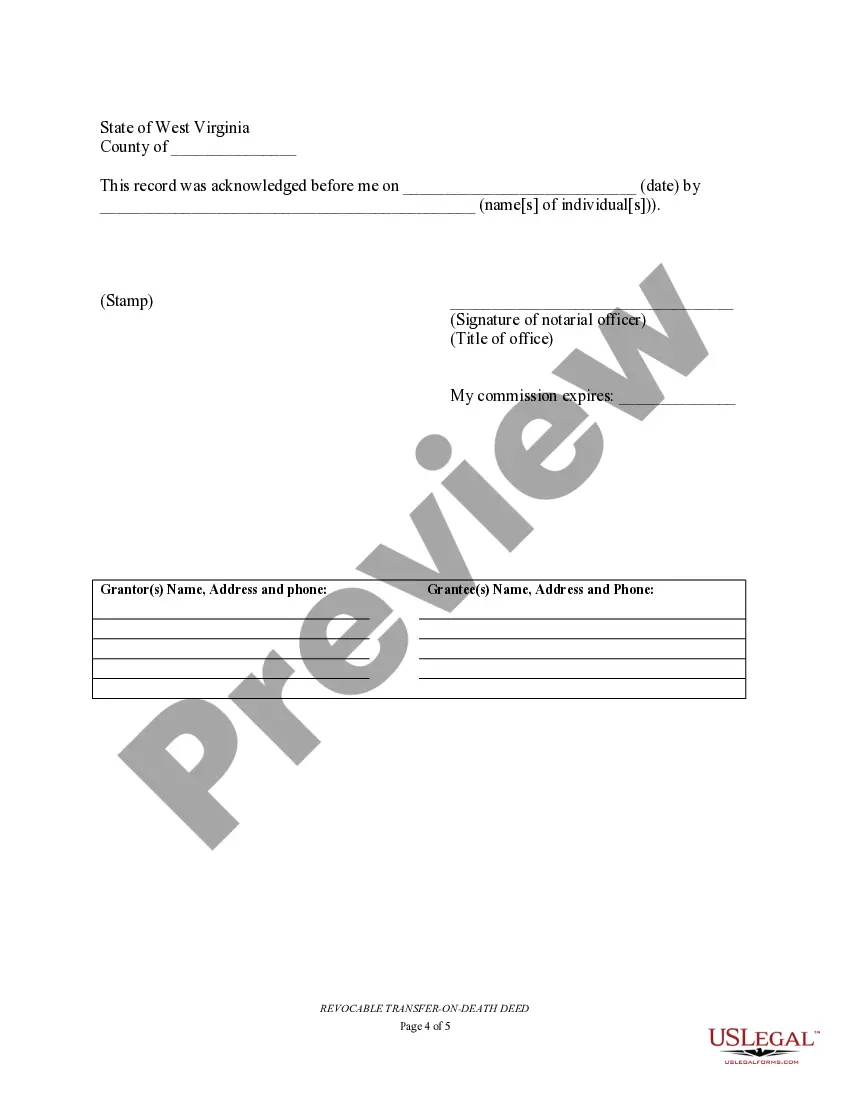
Yes, this form must be notarized to be legally valid. It should be signed in front of a notary public, who will verify the identities of the signers and affix their official seal. This not only enhances the document's credibility but also ensures compliance with local regulations.
Get your form ready online
Our built-in tools help you complete, sign, share, and store your documents in one place.
Make edits, fill in missing information, and update formatting in US Legal Forms—just like you would in MS Word.
Download a copy, print it, send it by email, or mail it via USPS—whatever works best for your next step.
Sign and collect signatures with our SignNow integration. Send to multiple recipients, set reminders, and more. Go Premium to unlock E-Sign.
If this form requires notarization, complete it online through a secure video call—no need to meet a notary in person or wait for an appointment.
We protect your documents and personal data by following strict security and privacy standards.

Make edits, fill in missing information, and update formatting in US Legal Forms—just like you would in MS Word.

Download a copy, print it, send it by email, or mail it via USPS—whatever works best for your next step.

Sign and collect signatures with our SignNow integration. Send to multiple recipients, set reminders, and more. Go Premium to unlock E-Sign.

If this form requires notarization, complete it online through a secure video call—no need to meet a notary in person or wait for an appointment.

We protect your documents and personal data by following strict security and privacy standards.
Typical mistakes to avoid
- Failing to record the deed with the local registry of deeds, making it ineffective.
- Not providing complete and accurate legal descriptions of the property.
- Neglecting to include alternate beneficiaries, creating uncertainty about who inherits if primary beneficiaries are unavailable.
- Using an outdated version of the form or not updating the beneficiaries after life changes.
Advantages of online completion
- Immediate access to the latest legal templates created by licensed attorneys.
- Easy editing and customization options to tailor the deed to specific needs.
- Convenient downloading options to save and store forms securely.
- Guidance provided along the way to ensure accurate completion.
Legal use & context
- A Transfer on Death Deed allows real property to transfer outside of probate.
- This form effectively designates who will inherit the property, limiting disputes among heirs.
- It is essential to verify that all legal formalities are followed to ensure enforceability.
Key takeaways
- The Transfer on Death Deed is a valuable tool for estate planning.
- Beneficiaries named in the deed will receive the property without going through probate.
- Revocable during the Grantor's lifetime, making it flexible and adjustable.
Glossary of terms used in this form
- Beneficiary: A person designated to receive property upon the death of the owner.
- Grantor: The individual who creates and signs the transfer on death deed.
- Probate: The legal process of administering a deceased person's estate.