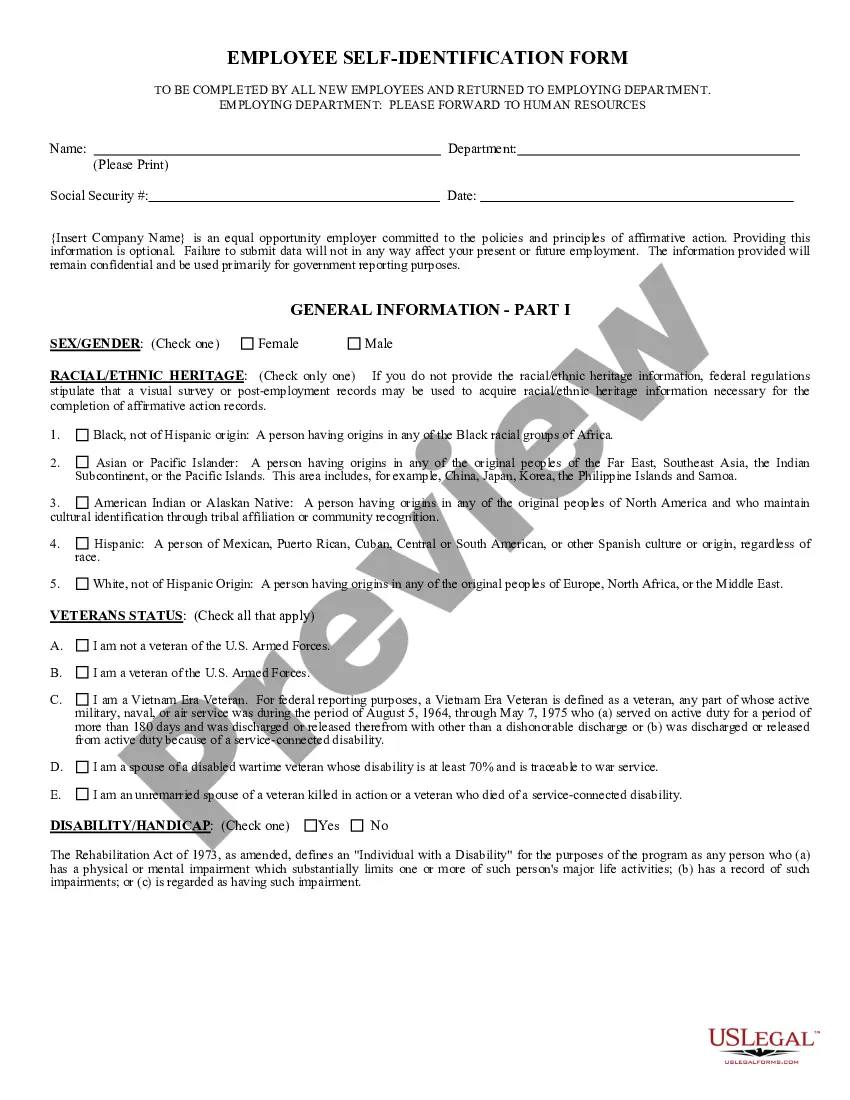
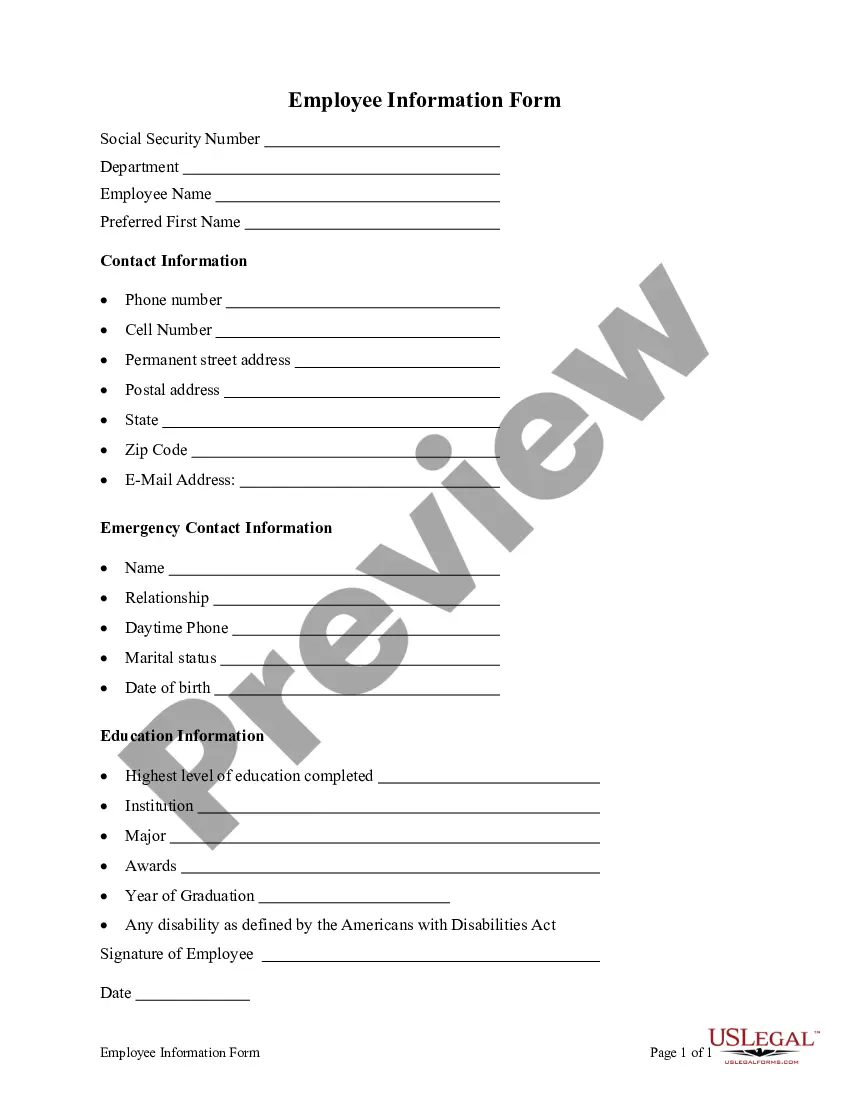
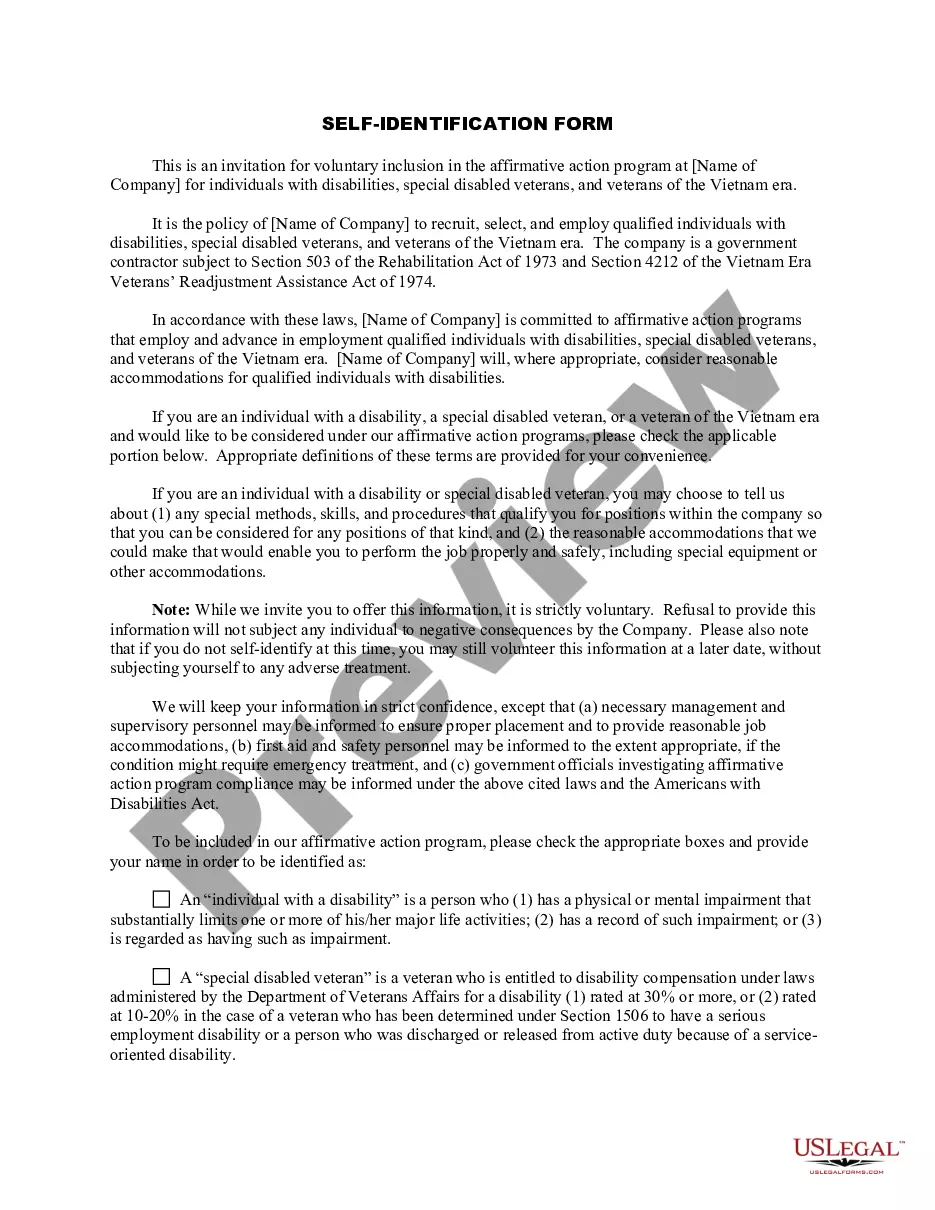
West Virginia Employee Self-Identification Form
Description
Get your form ready online
Our built-in tools help you complete, sign, share, and store your documents in one place.
Make edits, fill in missing information, and update formatting in US Legal Forms—just like you would in MS Word.
Download a copy, print it, send it by email, or mail it via USPS—whatever works best for your next step.
Sign and collect signatures with our SignNow integration. Send to multiple recipients, set reminders, and more. Go Premium to unlock E-Sign.
If this form requires notarization, complete it online through a secure video call—no need to meet a notary in person or wait for an appointment.
We protect your documents and personal data by following strict security and privacy standards.

Make edits, fill in missing information, and update formatting in US Legal Forms—just like you would in MS Word.

Download a copy, print it, send it by email, or mail it via USPS—whatever works best for your next step.

Sign and collect signatures with our SignNow integration. Send to multiple recipients, set reminders, and more. Go Premium to unlock E-Sign.

If this form requires notarization, complete it online through a secure video call—no need to meet a notary in person or wait for an appointment.

We protect your documents and personal data by following strict security and privacy standards.
Looking for another form?

How to fill out Employee Self-Identification Form?
Are you in a circumstance where you require documents for both professional or personal needs almost every day.
There is an abundance of legal document templates accessible online, but finding versions you can trust is challenging.
US Legal Forms provides numerous form templates, such as the West Virginia Employee Self-Identification Form, that are designed to comply with federal and state regulations.
Once you find the appropriate form, click Get now.
Choose a convenient document format and download your copy.
- If you are already familiar with the US Legal Forms website and have an account, simply Log In.
- Afterward, you can download the West Virginia Employee Self-Identification Form template.
- If you do not possess an account and wish to begin using US Legal Forms, follow these steps.
- Select the form you desire and ensure it is for the appropriate city/state.
- Utilize the Review button to examine the form.
- Check the summary to confirm that you have selected the correct form.
- If the form does not meet your requirements, use the Search field to find the form that fits your needs.
Form popularity
FAQ
Self-identification is an important tool that provides an avenue for employees to anonymously share their diversity data so that their employers can implement strategies to build a culture that supports all employees, and measure their progress towards their diversity goals.
Self-identification is when an employee discloses their diversity identity to their employer, including race/ethnicity, LGBTQ, veteran status, or disability status.
An invitation to self-identify is an optional question on a job application that allows the applicant to identify as a veteran or person with a disability. Some organizations also invite existing employees to self-identify using a standard form.
/02ccself.a026a02c8den.t026a.fa026a/ to believe that you are a particular kind of person, especially when other people do not think that you are that kind of person: "If you self-identify as Navajo, then you're Navajo," he said.
Self identification is how your see yourself or identifying yourself with someone or something else. An example of self identification is to see yourself as a great father. An example of self-identification is a boy with caucasian and black parents who identifies himself as a black man. noun.
identification survey allows employers to determine which employees selfidentified as members of one or more of the designated groups: women, Indigenous people, members of racialized groups and/or people with disabilities.
To believe that you are a particular kind of person, especially when other people do not think that you are that kind of person: "If you self-identify as Navajo, then you're Navajo," he said.
The employer is subject to certain governmental recordkeeping and reporting requirements for the administration of civil rights laws and regulations. In order to comply with these laws, the employer invites employees to voluntarily self-identify their race and ethnicity.
You may voluntarily self-identify as having a disability on this form without fear of any punishment because you did not identify as having a disability earlier. .