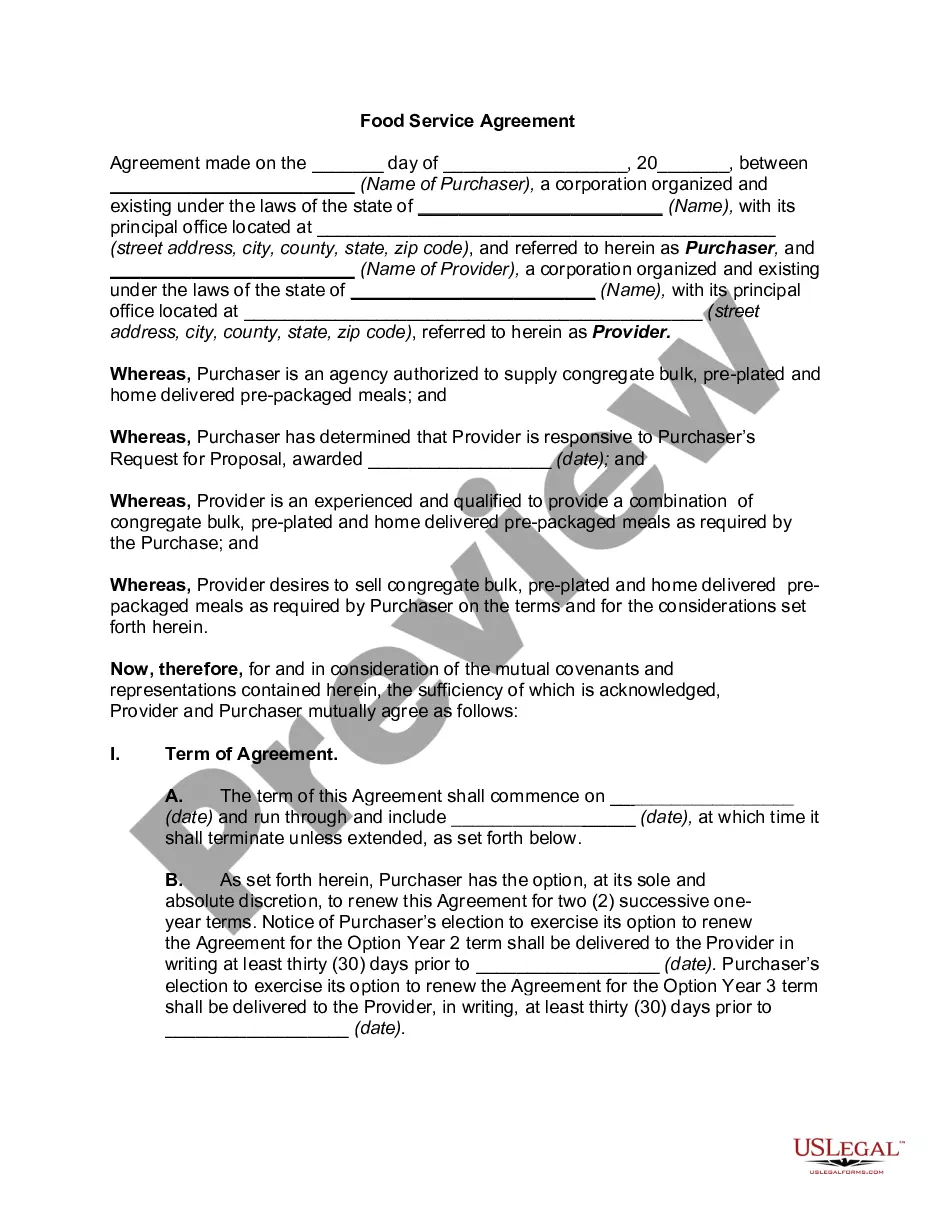
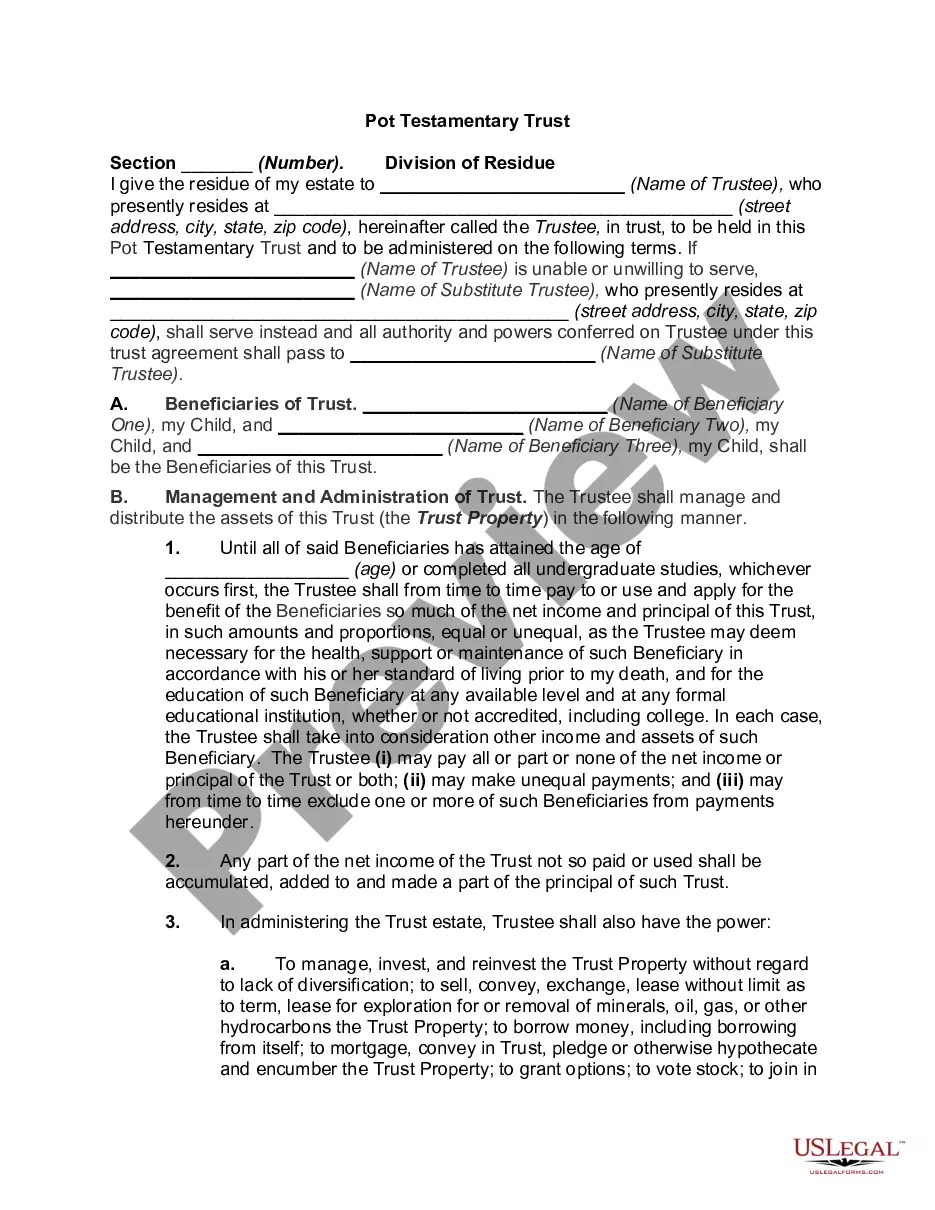
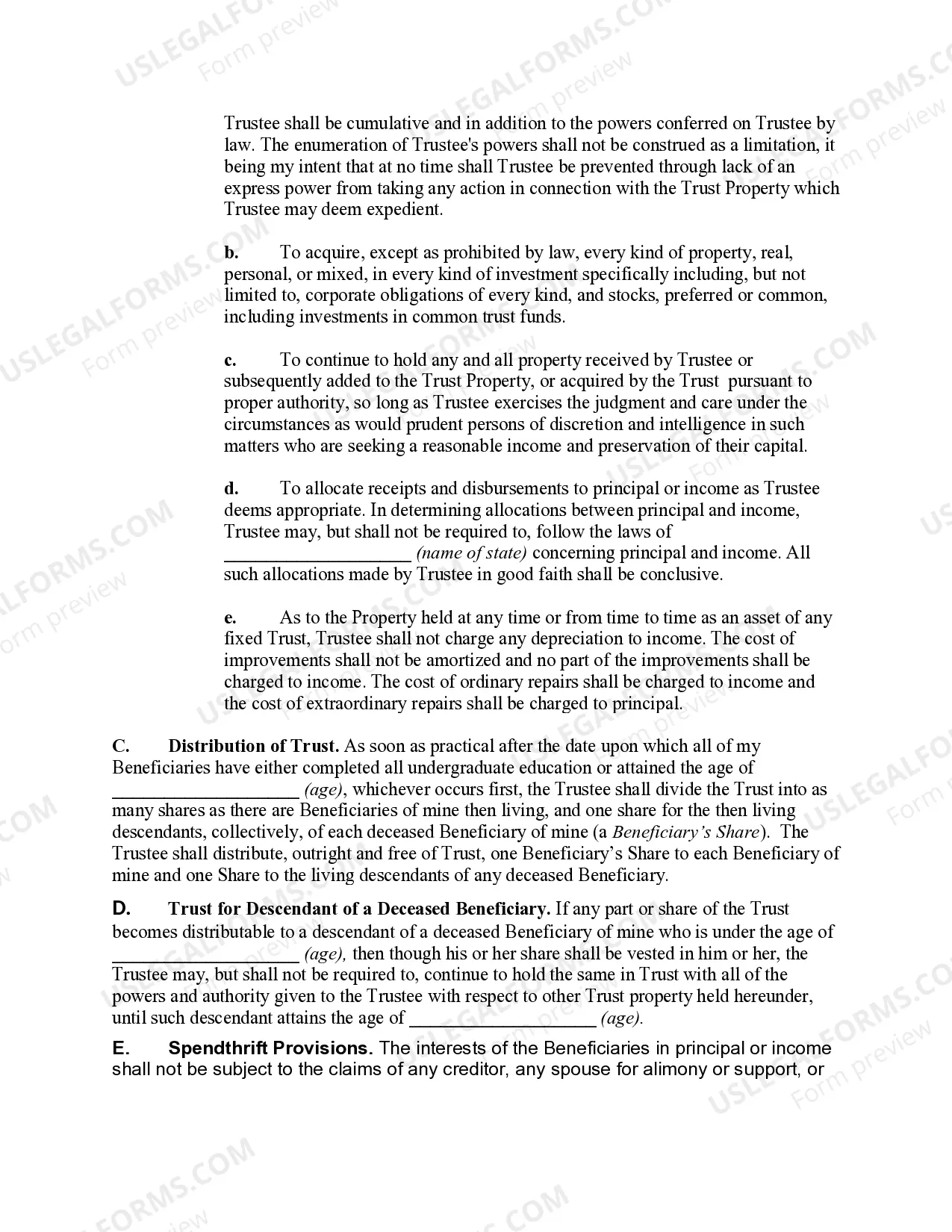
West Virginia Pot Testamentary Trust
Description

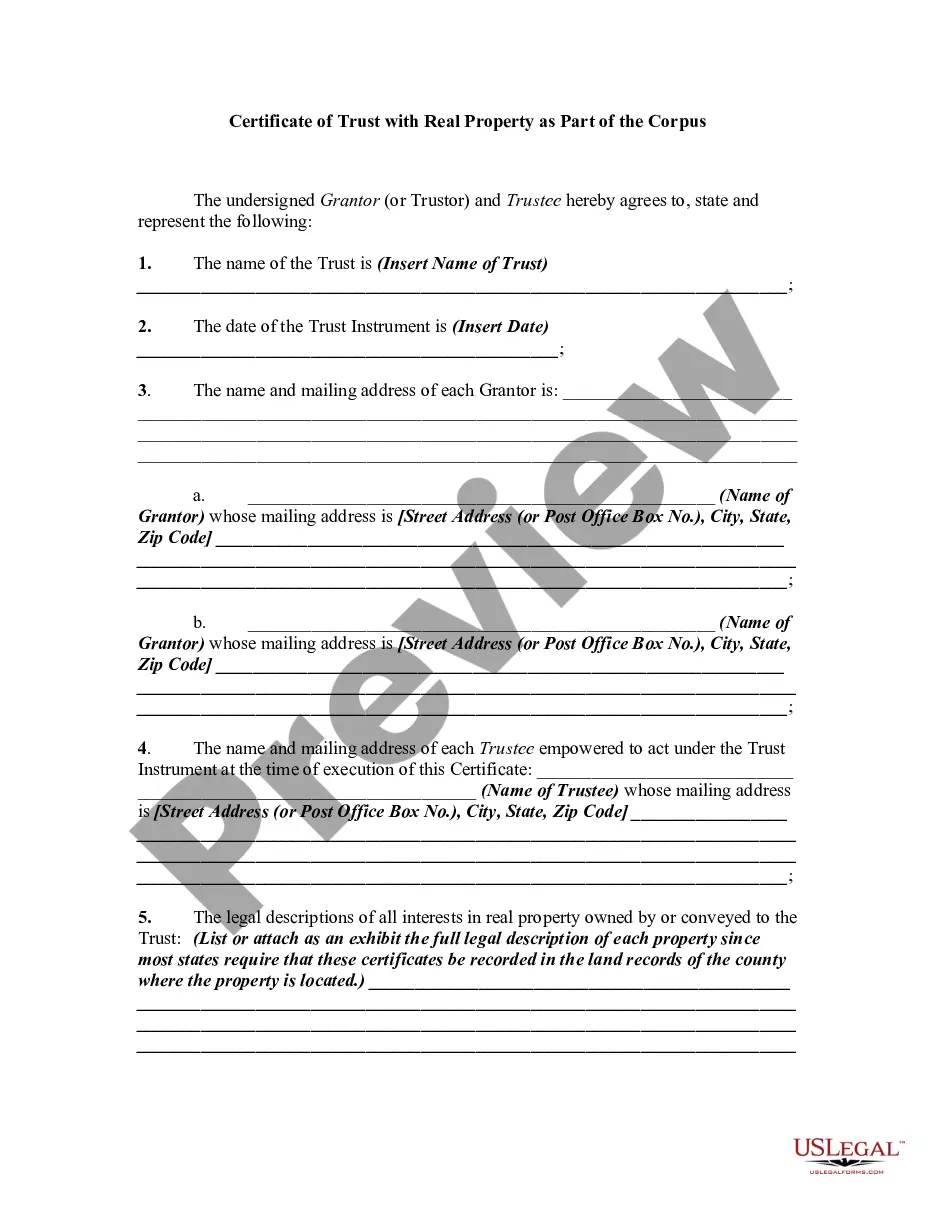
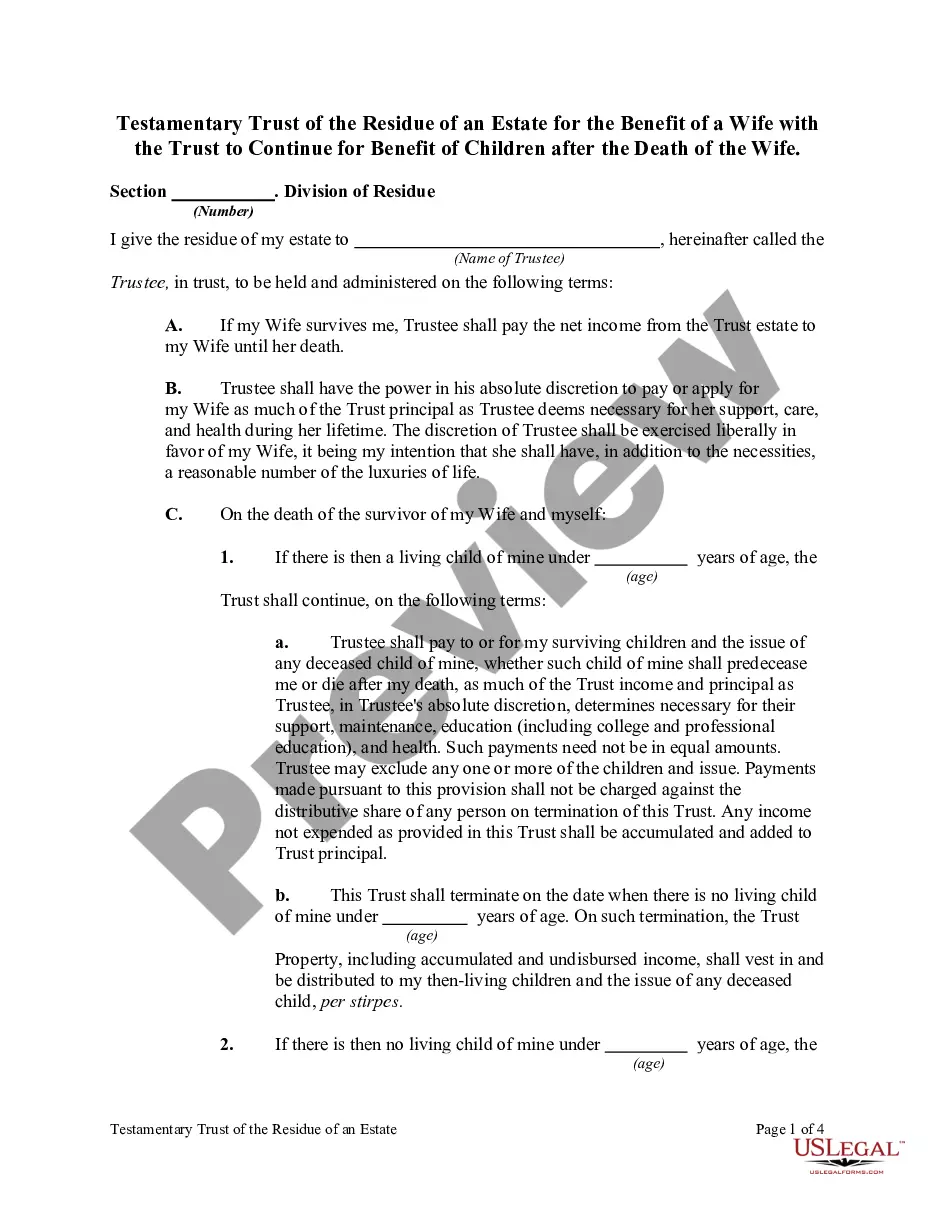
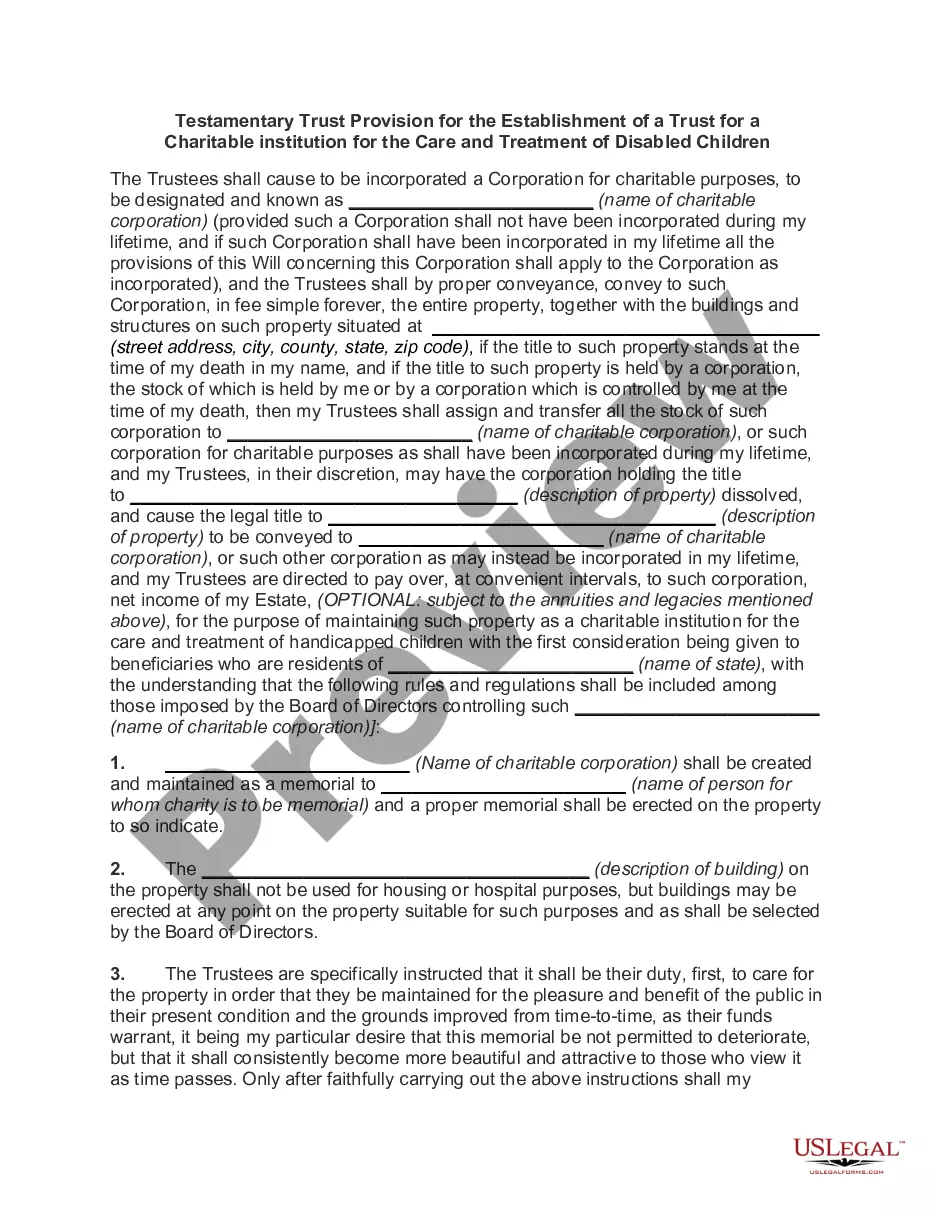
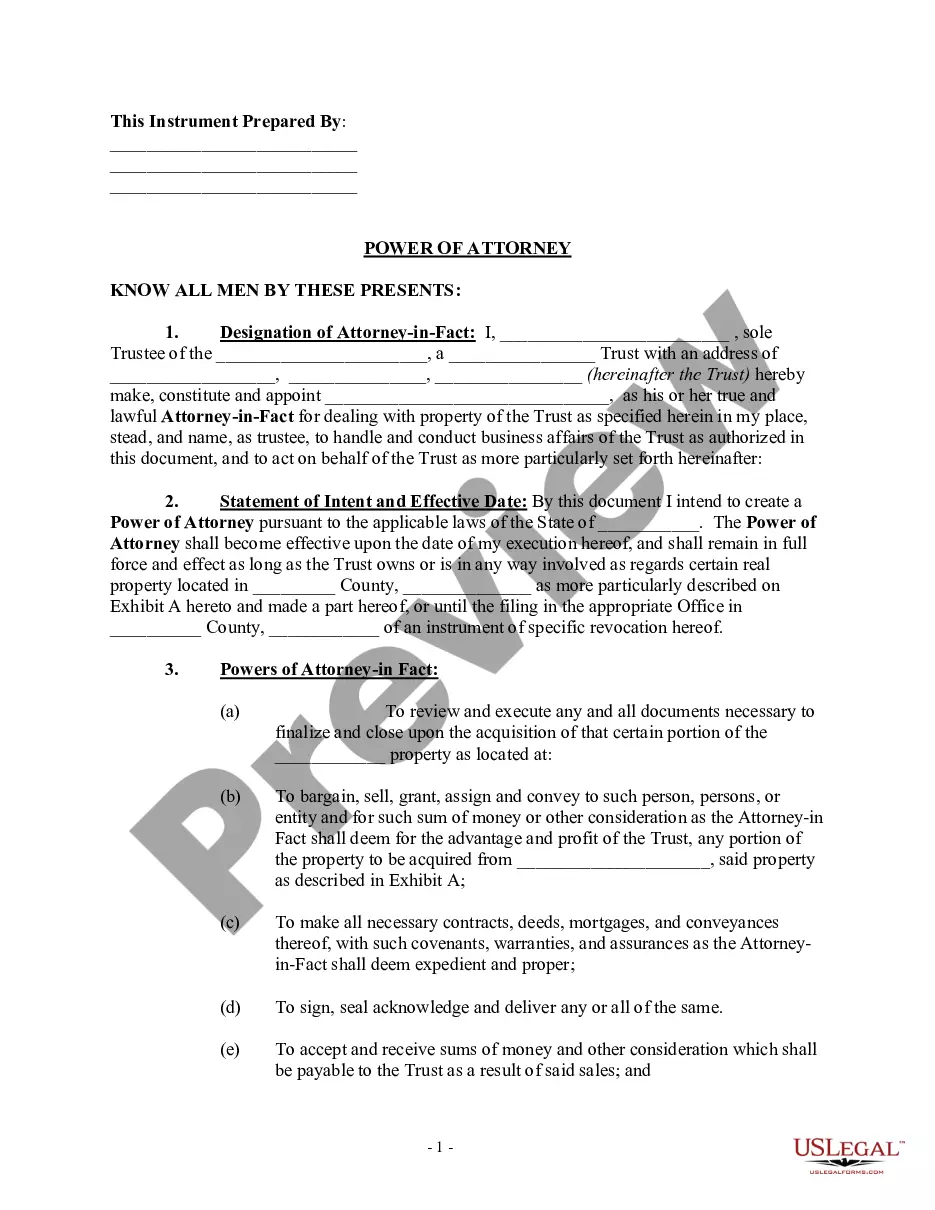
Get your form ready online
Our built-in tools help you complete, sign, share, and store your documents in one place.
Make edits, fill in missing information, and update formatting in US Legal Forms—just like you would in MS Word.
Download a copy, print it, send it by email, or mail it via USPS—whatever works best for your next step.
Sign and collect signatures with our SignNow integration. Send to multiple recipients, set reminders, and more. Go Premium to unlock E-Sign.
If this form requires notarization, complete it online through a secure video call—no need to meet a notary in person or wait for an appointment.
We protect your documents and personal data by following strict security and privacy standards.

Make edits, fill in missing information, and update formatting in US Legal Forms—just like you would in MS Word.

Download a copy, print it, send it by email, or mail it via USPS—whatever works best for your next step.

Sign and collect signatures with our SignNow integration. Send to multiple recipients, set reminders, and more. Go Premium to unlock E-Sign.

If this form requires notarization, complete it online through a secure video call—no need to meet a notary in person or wait for an appointment.

We protect your documents and personal data by following strict security and privacy standards.
Looking for another form?


How to fill out Pot Testamentary Trust?
US Legal Forms - one of the largest collections of legal documents in the United States - offers a vast array of legal document templates that you can download or print.
By utilizing the site, you can find thousands of forms for business and personal purposes, organized by categories, states, or keywords. You can access the most recent drafts of forms like the West Virginia Pot Testamentary Trust within moments.
If you already have an account, Log In and retrieve the West Virginia Pot Testamentary Trust from the US Legal Forms collection. The Download button will appear on every form you examine. You can access all previously downloaded forms from the My documents section of your profile.
Process the transaction. Use your credit card or PayPal account to complete the payment.
Select the format and download the form to your device. Edit. Complete, modify, print, and sign the downloaded West Virginia Pot Testamentary Trust. Each template you have added to your account has no expiration date and is yours permanently. Therefore, if you would like to download or print another copy, simply navigate to the My documents section and click on the form you need. Access the West Virginia Pot Testamentary Trust with US Legal Forms, the most extensive archive of legal document templates. Utilize thousands of professional and state-specific templates that meet your business or personal needs and requirements.
- Ensure that you have selected the correct form for your locality.
- Click the Preview button to review the content of the form.
- Check the form description to verify that you have chosen the appropriate document.
- If the form does not meet your needs, use the Search box at the top of the screen to find the one that does.
- If you are satisfied with the form, confirm your selection by clicking the Purchase now button.
- Then, select the payment plan you prefer and provide your details to register for an account.
Form popularity
FAQ
NOTARY REQUIREMENTSThere is no requirement for a will to be notarized in West Virginia, unless the will contains a self-proving affidavit. The self-proving affidavit must be notarized (W. Va. Code § 41-5-15).
Making a living trust in West Virginia consists of six primary steps:Decide which type of trust is best for you.Assess your property.Name a trustee.Create the document.Sign the trust in front of a notary public.Fund the trust by transferring your assets into it.
Example of a Testamentary Trust in a WillYou specified that upon your death, Bob will manage your assets for the benefit of your daughter until she reaches the age of 21. You want Bob to be in charge of giving your daughter monthly income for education and expenses.
To name a special needs trust as a beneficiary, use the name of the trustee and the full legal name of the trust as beneficiary: For example: Chris Lee as the trustee of The Pat Lee Special Needs Trust"
To create a testamentary trust, the settlor first must select the trustee and the beneficiary and specify the assets that are to be placed in trust. The settlor also has the ability to specify when and how to disburse the trust to the beneficiary. The last will and testament should detail all of this information.
Naming Your Testamentary TrustThe name of the trust (this must be listed first);The words created in my last will and Testament' (do not include a date created);The name of the trustee, followed by the word trustee;The trustee's address and phone number.
Most beneficiary designations will require you to provide a person's full legal name and their relationship to you (spouse, child, mother, etc.). Some beneficiary designations also include information like mailing address, email, phone number, date of birth and Social Security number.
(b) a testamentary trust derives from a valid will of a deceased....There are no fees involved and the deceased's last will serves as the trust document.Application form (J401)Completed Acceptance of Trusteeship (J417) and Acceptance of Auditor Application (J405) forms.Beneficiary Declaration (J450)
The trust can also be used to reduce estate tax liabilities and ensure professional management of the assets. A disadvantage of a testamentary trust is that it does not avoid probatethe legal process of distributing assets through the court.