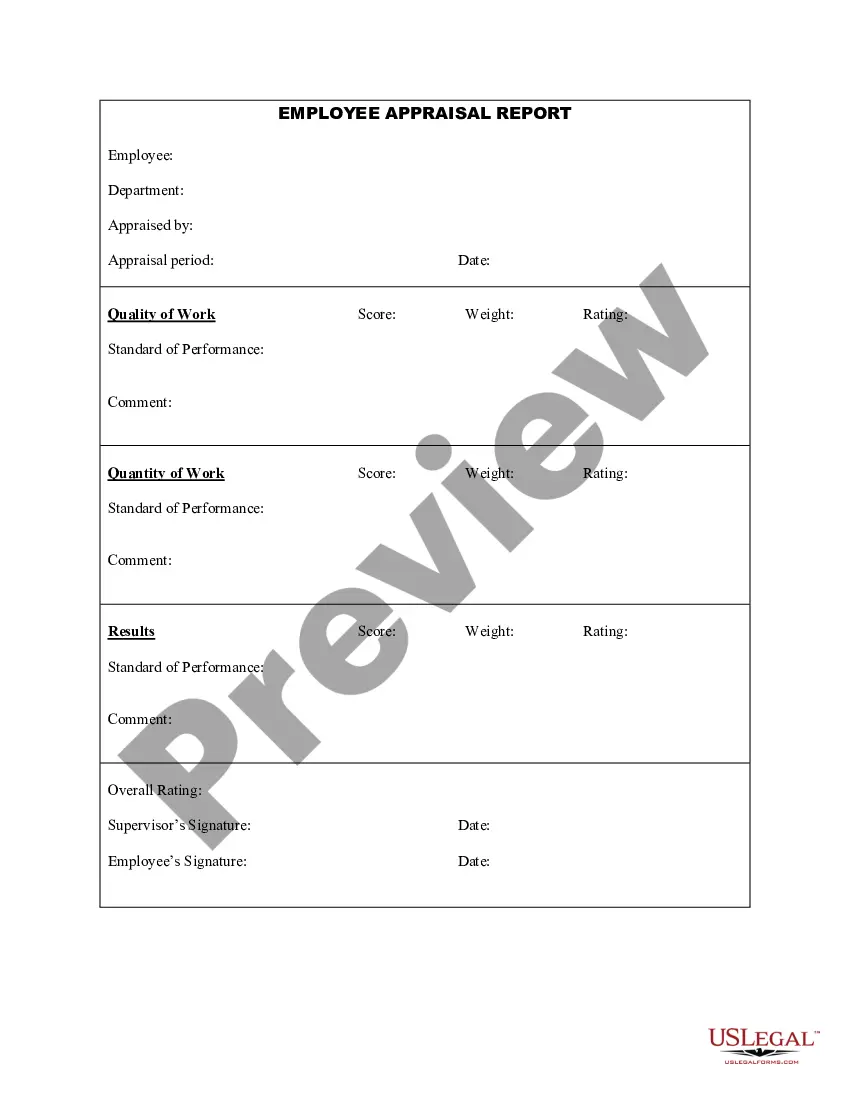
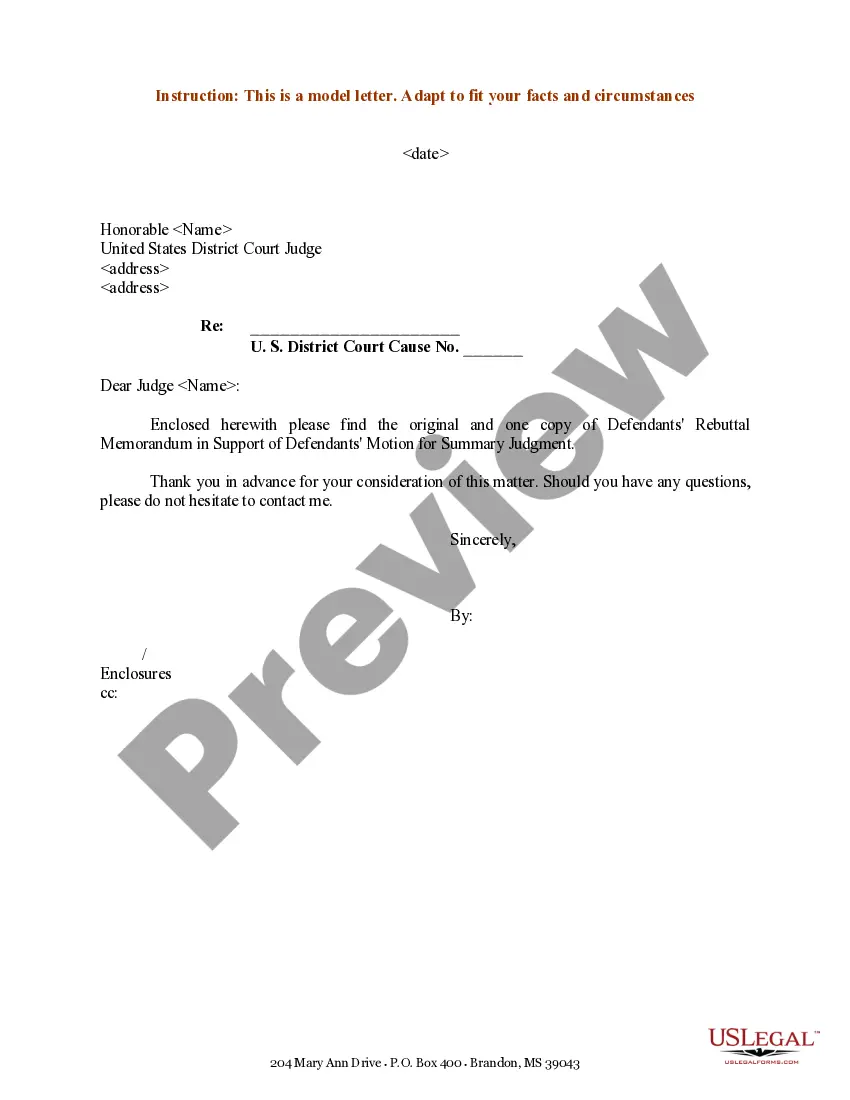
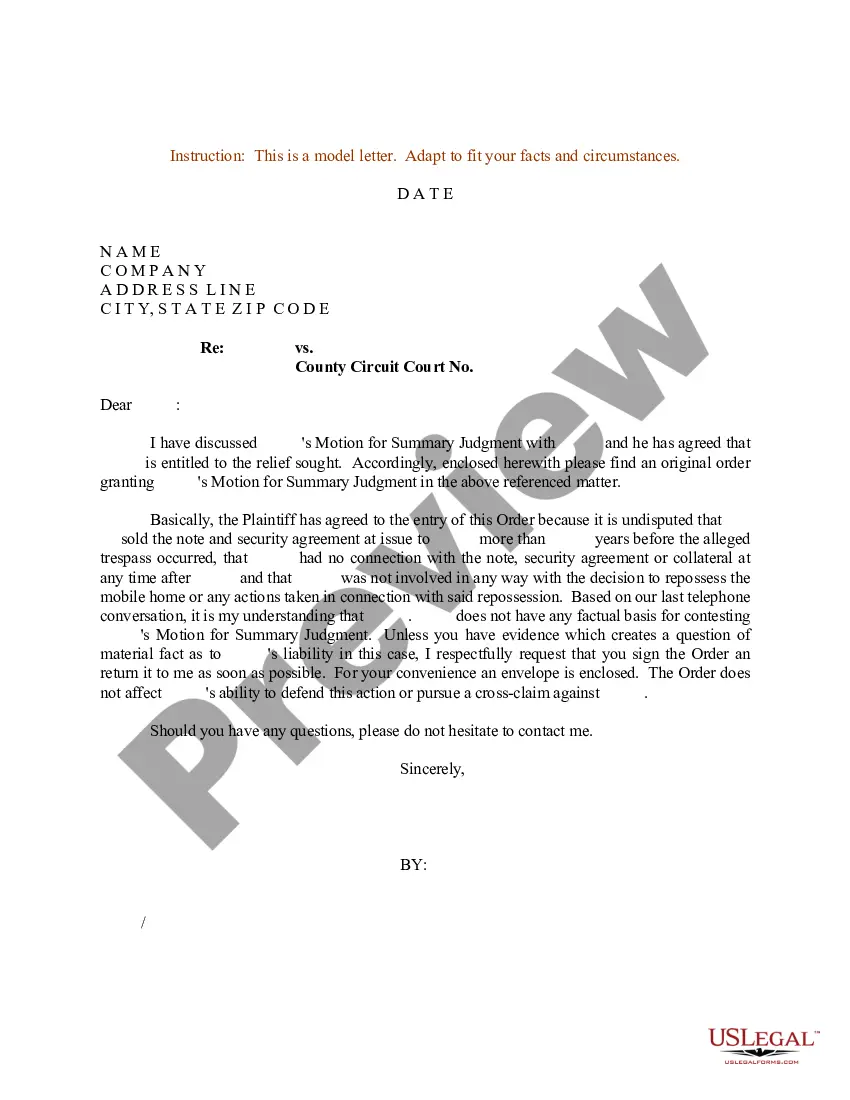
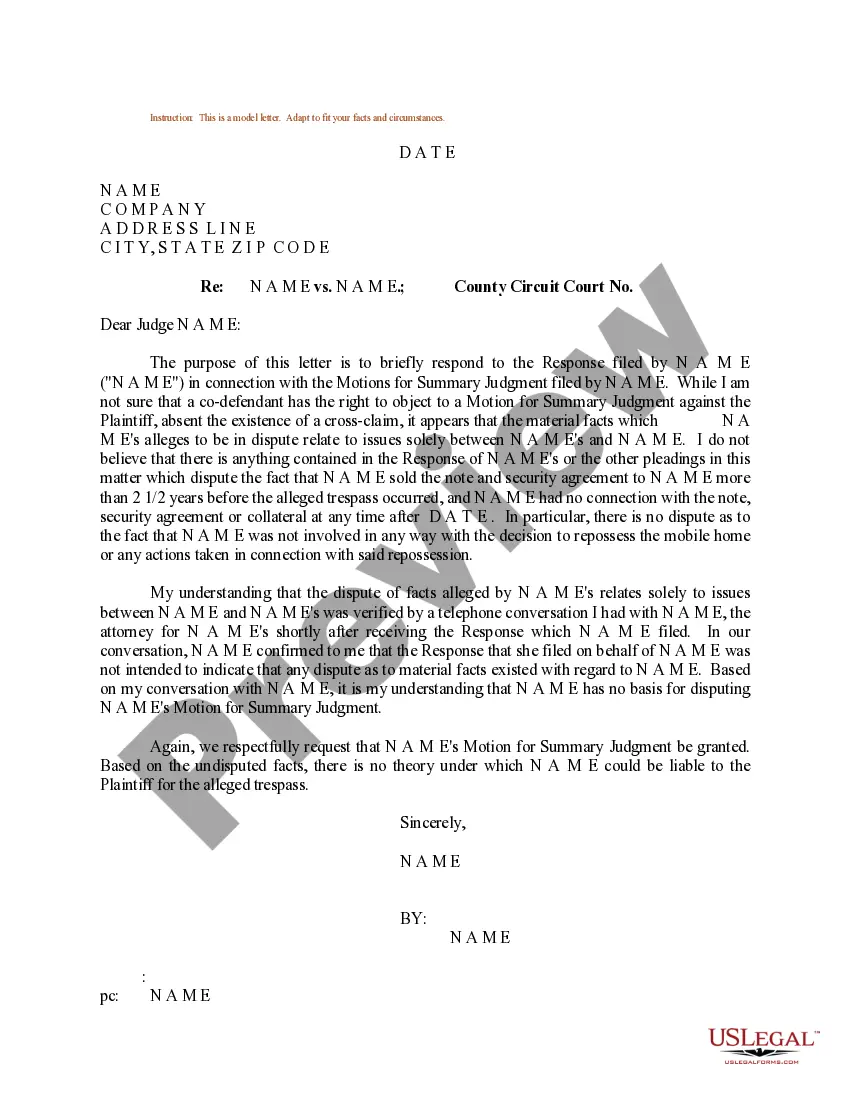
West Virginia Sample Letter regarding Defendants' Rebuttal Memorandum in Support of Defendants' Motion for Summary Judgment
Description
Get your form ready online
Our built-in tools help you complete, sign, share, and store your documents in one place.
Make edits, fill in missing information, and update formatting in US Legal Forms—just like you would in MS Word.
Download a copy, print it, send it by email, or mail it via USPS—whatever works best for your next step.
Sign and collect signatures with our SignNow integration. Send to multiple recipients, set reminders, and more. Go Premium to unlock E-Sign.
If this form requires notarization, complete it online through a secure video call—no need to meet a notary in person or wait for an appointment.
We protect your documents and personal data by following strict security and privacy standards.

Make edits, fill in missing information, and update formatting in US Legal Forms—just like you would in MS Word.

Download a copy, print it, send it by email, or mail it via USPS—whatever works best for your next step.

Sign and collect signatures with our SignNow integration. Send to multiple recipients, set reminders, and more. Go Premium to unlock E-Sign.

If this form requires notarization, complete it online through a secure video call—no need to meet a notary in person or wait for an appointment.

We protect your documents and personal data by following strict security and privacy standards.
Looking for another form?

How to fill out Sample Letter Regarding Defendants' Rebuttal Memorandum In Support Of Defendants' Motion For Summary Judgment?
Finding the right lawful document template can be a have a problem. Of course, there are plenty of templates accessible on the Internet, but how will you get the lawful kind you want? Make use of the US Legal Forms website. The support offers a large number of templates, such as the West Virginia Sample Letter regarding Defendants' Rebuttal Memorandum in Support of Defendants' Motion for Summary Judgment, which can be used for enterprise and private requirements. All of the varieties are checked by specialists and satisfy federal and state specifications.
Should you be previously authorized, log in to the accounts and click on the Acquire option to find the West Virginia Sample Letter regarding Defendants' Rebuttal Memorandum in Support of Defendants' Motion for Summary Judgment. Use your accounts to look with the lawful varieties you may have ordered formerly. Visit the My Forms tab of the accounts and have another copy in the document you want.
Should you be a whole new consumer of US Legal Forms, here are easy directions that you should adhere to:
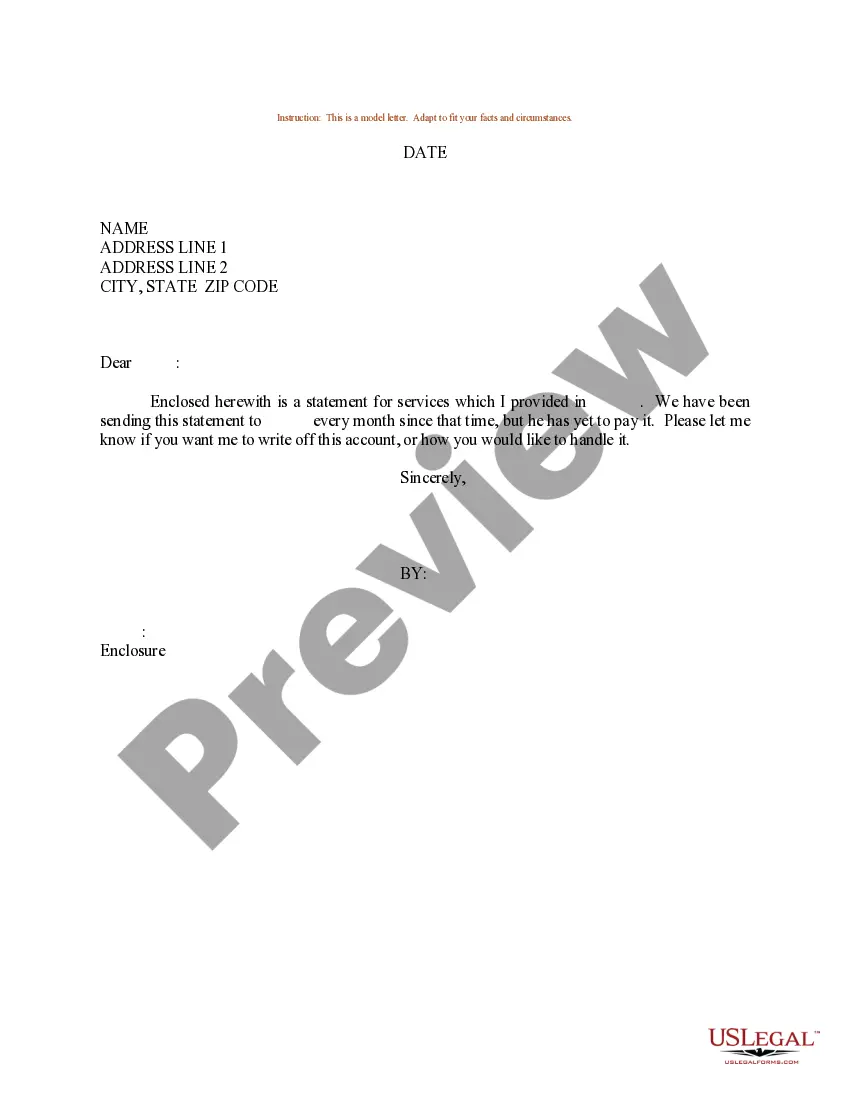
- Initial, make certain you have chosen the proper kind for your city/region. You may examine the form while using Preview option and study the form explanation to make certain it is the best for you.
- If the kind fails to satisfy your needs, utilize the Seach discipline to find the right kind.
- Once you are positive that the form would work, select the Buy now option to find the kind.
- Choose the pricing program you would like and enter the required info. Design your accounts and pay for your order utilizing your PayPal accounts or charge card.
- Pick the file file format and download the lawful document template to the product.
- Full, change and printing and indication the acquired West Virginia Sample Letter regarding Defendants' Rebuttal Memorandum in Support of Defendants' Motion for Summary Judgment.
US Legal Forms will be the biggest local library of lawful varieties for which you can see a variety of document templates. Make use of the service to download expertly-created paperwork that adhere to express specifications.
Form popularity
FAQ
A party seeking summary judgment may refer to any evidence that would be admissible at trial, such as depositions (or deposition excerpts), party admissions, affidavits in support from witnesses, documents received during discovery (such as contracts, emails, letters, and certified government documents).
If you fail to support your motion with a memorandum of points and authorities, the court could deny the motion because you have implicitly admitted there is no basis for it.
Be as persuasive as possible as you write your motion in a sequential, logical format. Express your ideas clearly, and make sure you outline what steps are necessary and how they will help your case. Use facts of the case whenever you can to avoid baseless emotional appeals.
3) Declaration in Support of Motion for Summary Judgment The Declaration is a sworn statement to the Court stating all of the declarant's facts supporting your Motion. These facts must come from the declarant's own personal knowledge of the events.
As an initial matter, the Court reiterated the utility of expert witness declarations in summary judgment motions: "An expert witness declaration is admissible to support or defeat summary judgment if the expert's testimony would be admissible at trial in ance with Evidence Code section 720.
There are three critical aspects of your opposition to a summary judgment you should pay particular attention to in order to ensure that you have the best chance of getting the motion denied: (1) Your separate statement; (2) your evidence; and (3) objecting to the defense's evidence.
If you are opposing a motion for summary judgment, your affidavit or affirmation should attach and refer to any relevant exhibits. You may also attach affidavits or affirmations from other people who have personal knowledge of relevant information regarding the motion.
The memorandum generally must include a statement of facts, an introduction of evidence and arguments, a discussion of the relevant case law, statutes, or other secondary materials, a conclusion and signature block.
As a general principle, a motion asks a court to do something or to not do something. A "memorandum of law" or a "memorandum of points and authorities" "briefs" the court, i.e., explains to the court the legal authority, consisting of both decisional and statutory law, which supports the moving party's request.
Generally, a legal memorandum comprises six sections, with the following information: Heading or caption. ... Question presented. ... Brief answer. ... Statement of facts. ... Discussion. ... Conclusion.