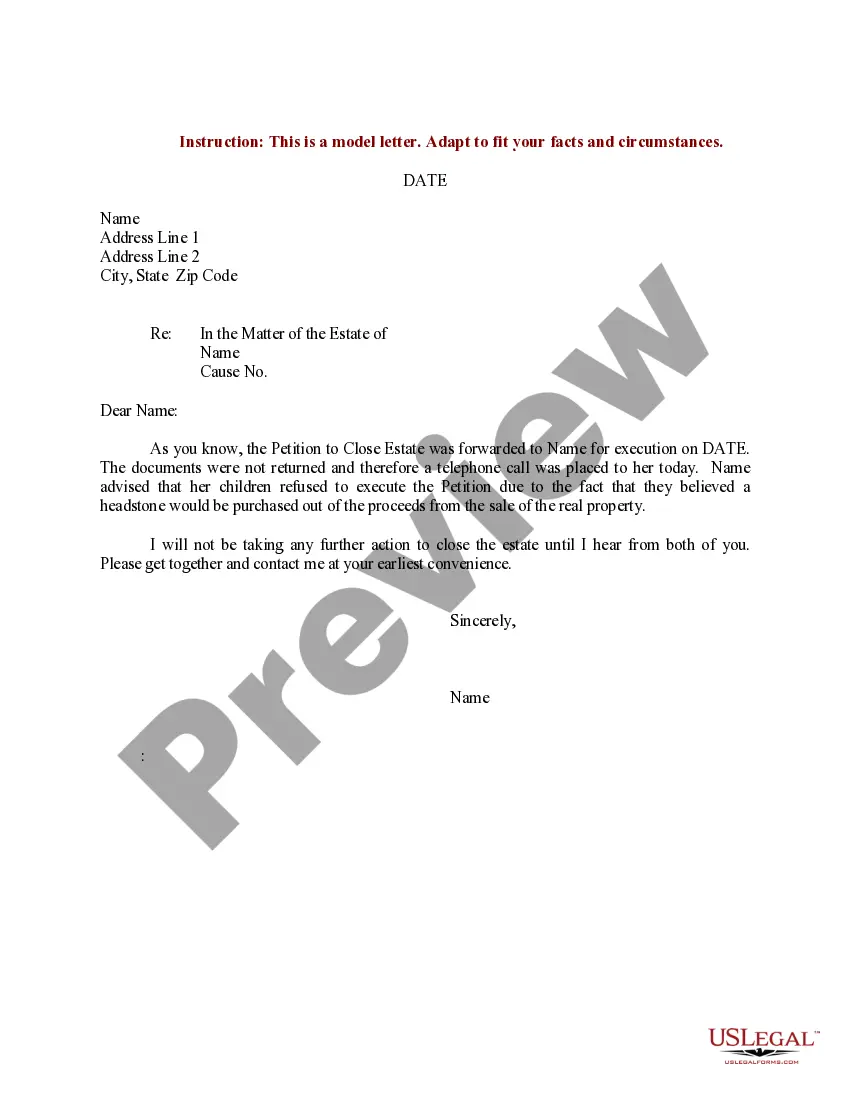
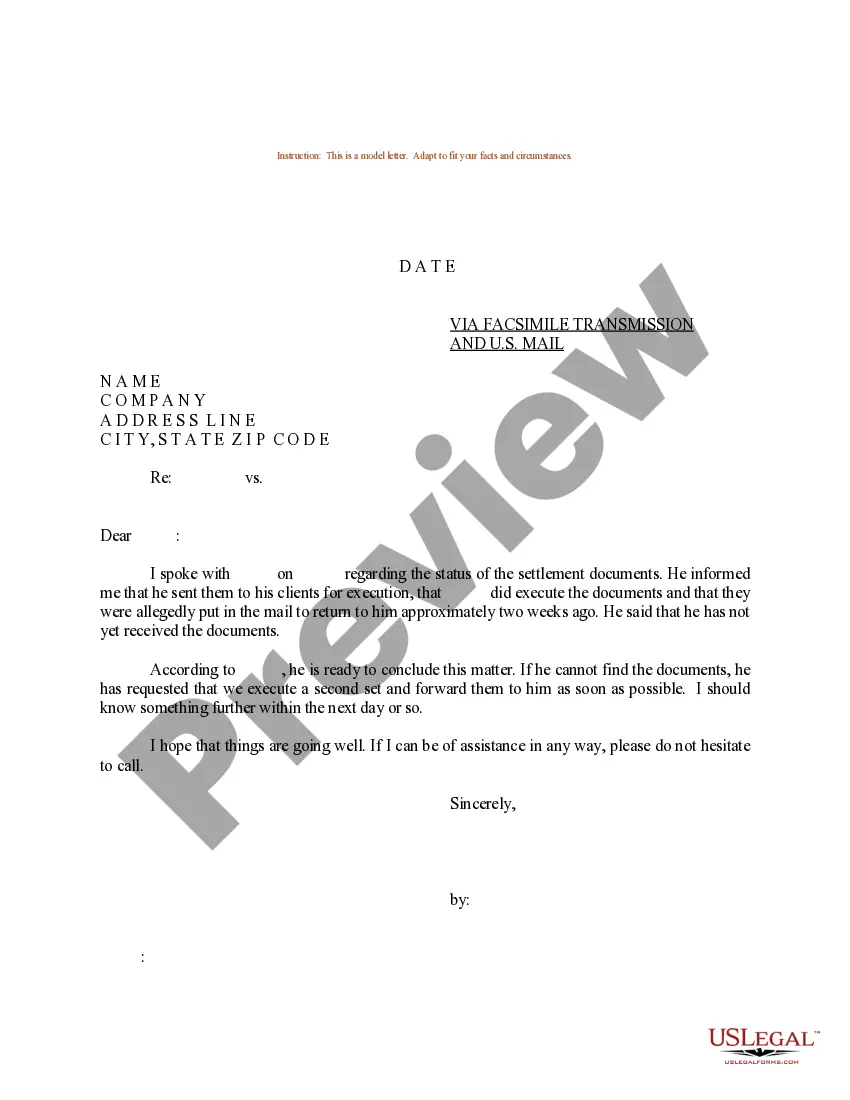
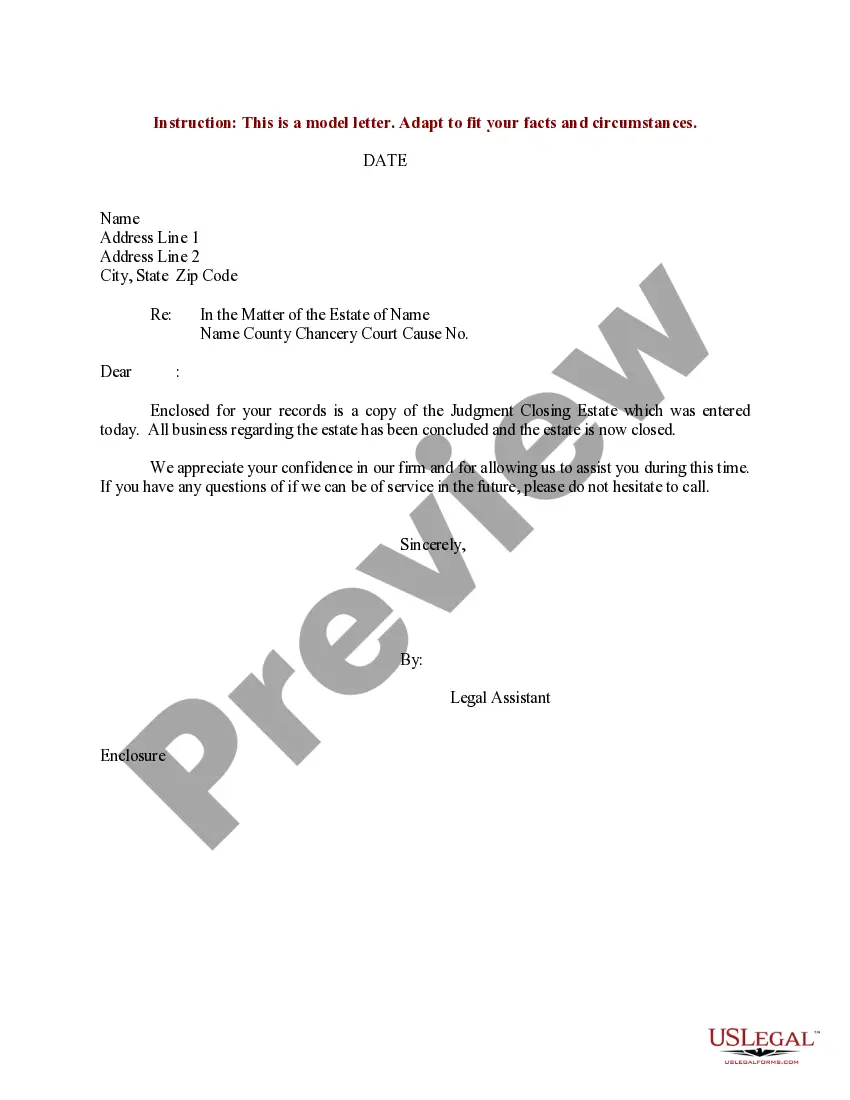
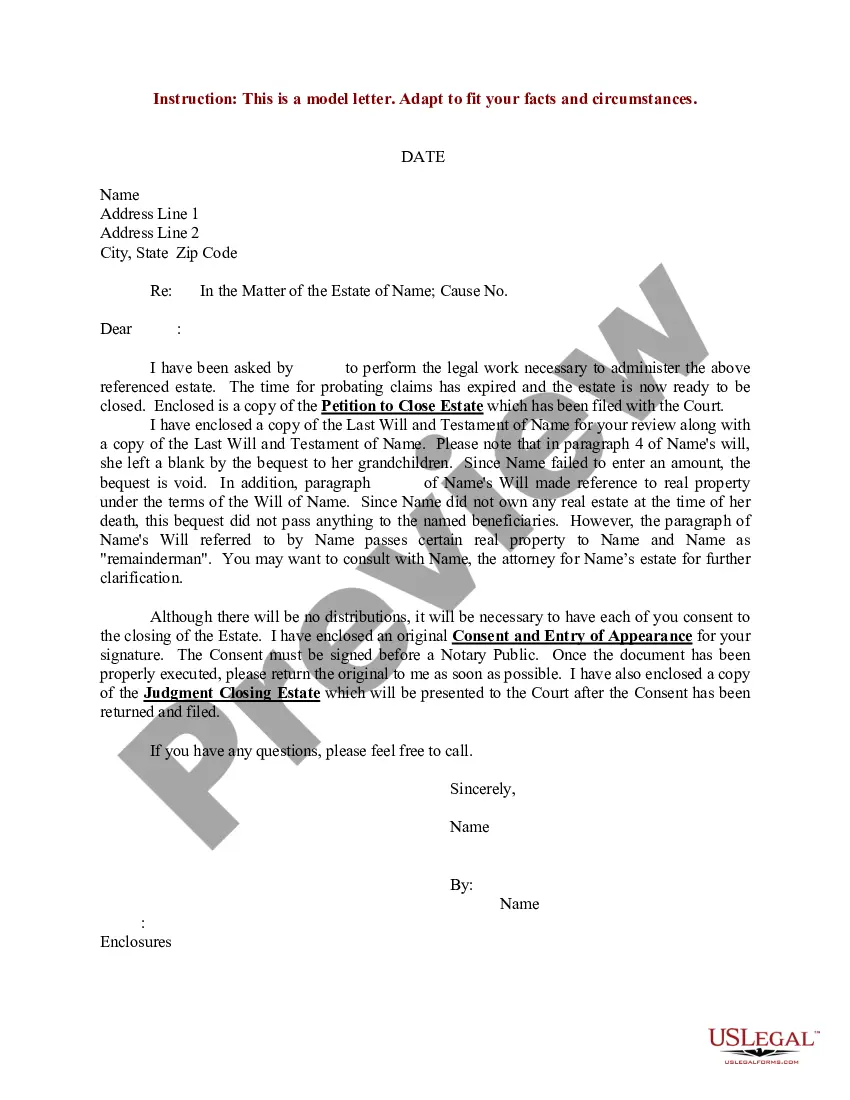
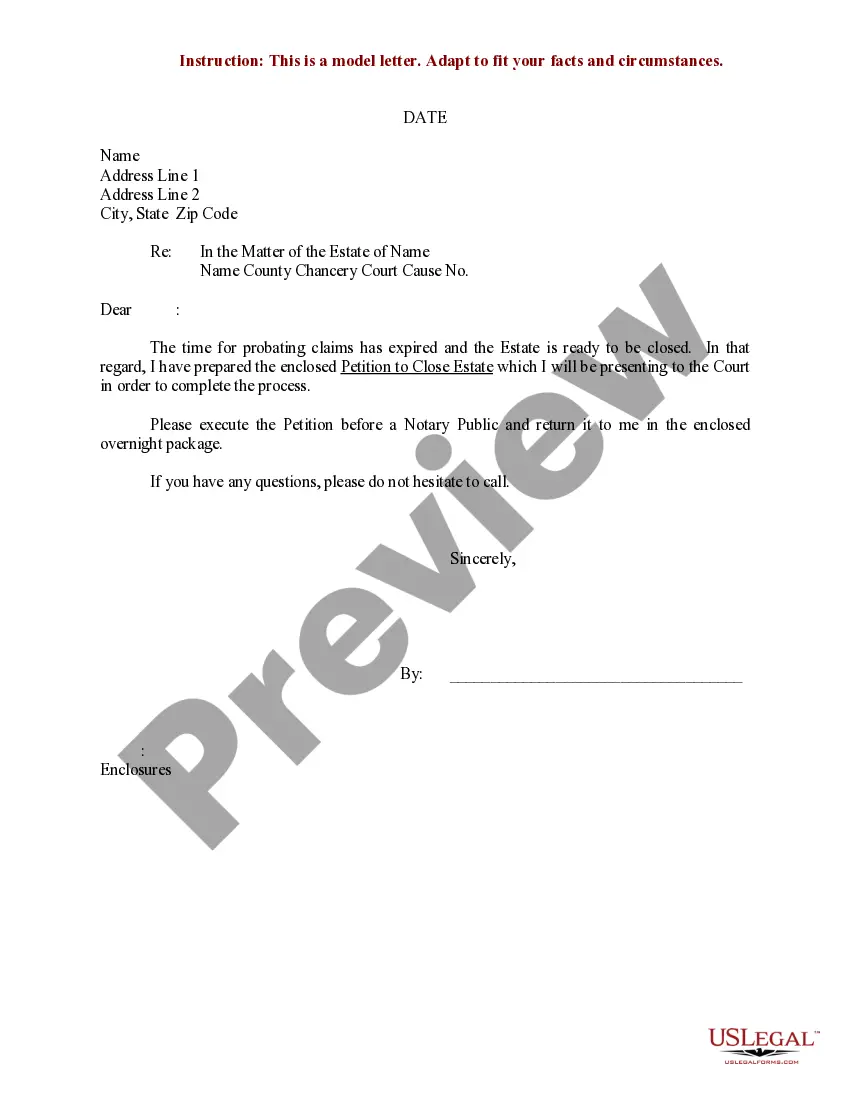
West Virginia Sample Letter for Update to Estate Closure
Description
Get your form ready online
Our built-in tools help you complete, sign, share, and store your documents in one place.
Make edits, fill in missing information, and update formatting in US Legal Forms—just like you would in MS Word.
Download a copy, print it, send it by email, or mail it via USPS—whatever works best for your next step.
Sign and collect signatures with our SignNow integration. Send to multiple recipients, set reminders, and more. Go Premium to unlock E-Sign.
If this form requires notarization, complete it online through a secure video call—no need to meet a notary in person or wait for an appointment.
We protect your documents and personal data by following strict security and privacy standards.

Make edits, fill in missing information, and update formatting in US Legal Forms—just like you would in MS Word.

Download a copy, print it, send it by email, or mail it via USPS—whatever works best for your next step.

Sign and collect signatures with our SignNow integration. Send to multiple recipients, set reminders, and more. Go Premium to unlock E-Sign.

If this form requires notarization, complete it online through a secure video call—no need to meet a notary in person or wait for an appointment.

We protect your documents and personal data by following strict security and privacy standards.
Looking for another form?

How to fill out Sample Letter For Update To Estate Closure?
Choosing the best lawful file format could be a have difficulties. Obviously, there are plenty of templates available on the net, but how would you find the lawful type you want? Make use of the US Legal Forms website. The service delivers a large number of templates, such as the West Virginia Sample Letter for Update to Estate Closure, that you can use for company and personal requirements. Each of the kinds are inspected by specialists and meet up with federal and state needs.
Should you be already signed up, log in to the bank account and click on the Obtain option to obtain the West Virginia Sample Letter for Update to Estate Closure. Utilize your bank account to look from the lawful kinds you may have acquired previously. Check out the My Forms tab of your own bank account and obtain one more duplicate from the file you want.
Should you be a whole new user of US Legal Forms, here are straightforward instructions that you should comply with:
- Initially, ensure you have selected the right type for your personal town/region. It is possible to check out the shape while using Review option and look at the shape outline to make sure it will be the right one for you.
- When the type does not meet up with your expectations, make use of the Seach area to find the appropriate type.
- When you are sure that the shape is acceptable, select the Get now option to obtain the type.
- Choose the costs plan you desire and enter in the essential information. Create your bank account and purchase the transaction using your PayPal bank account or credit card.
- Choose the submit file format and down load the lawful file format to the gadget.
- Total, modify and produce and indication the acquired West Virginia Sample Letter for Update to Estate Closure.
US Legal Forms will be the biggest local library of lawful kinds where you can find various file templates. Make use of the service to down load professionally-produced papers that comply with condition needs.
Form popularity
FAQ
If the estate has not been settled, yes The executor is the legal owner of the house and does not need the beneficiaries' permission to sell it if they decide that is in the beneficiaries' best interests. They can consider their wishes, but they don't have to, and they don't have to follow them if they do.
There two ways to close the estate: (1) final settlement; or (2) waiver of final settlement. Generally, you must close the estate within 5 years of starting the probate process. W. Va.
A West Virginia small estate affidavit, also known as a 'short form settlement', is a form that can be used to hasten the distribution of an estate worth $50,000 or less in the State of West Virginia.
To initiate a probate case in West Virginia, you need to obtain and file in the appropriate county a certified copy of the death certificate within 30 days of the date of death. If the decedent left a will, that should be filed in the court as well.
In West Virginia, the question often arises about how long an executor has to settle an estate. While the timeline can vary widely, it usually ranges from several months to over a year.
Additionally, West Virginia does not require probate for estates worth less than $100,000. Real estate assets do not count toward the $100,000 total.
A person can expect for the probate process in Virginia to take anywhere from six months up to a year or more. Generally, there is a creditor period, so an estate cannot be completely distributed and closed prior to the expiration of the six-month period.
It is necessary to probate an estate when the decedent has solely-held assets; that is, assets that do not have a joint or co-owner with rights of survivorship, a beneficiary (on the security or account, not in the will), or pay-on-death designee.