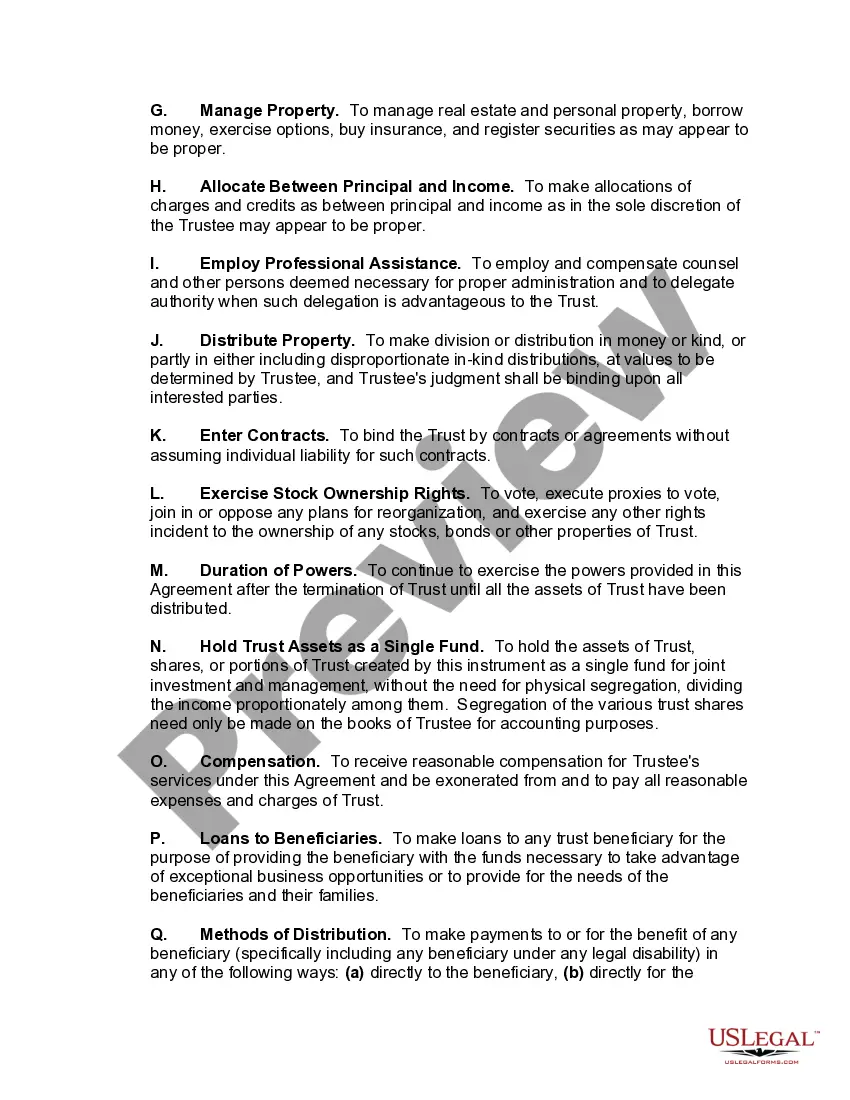
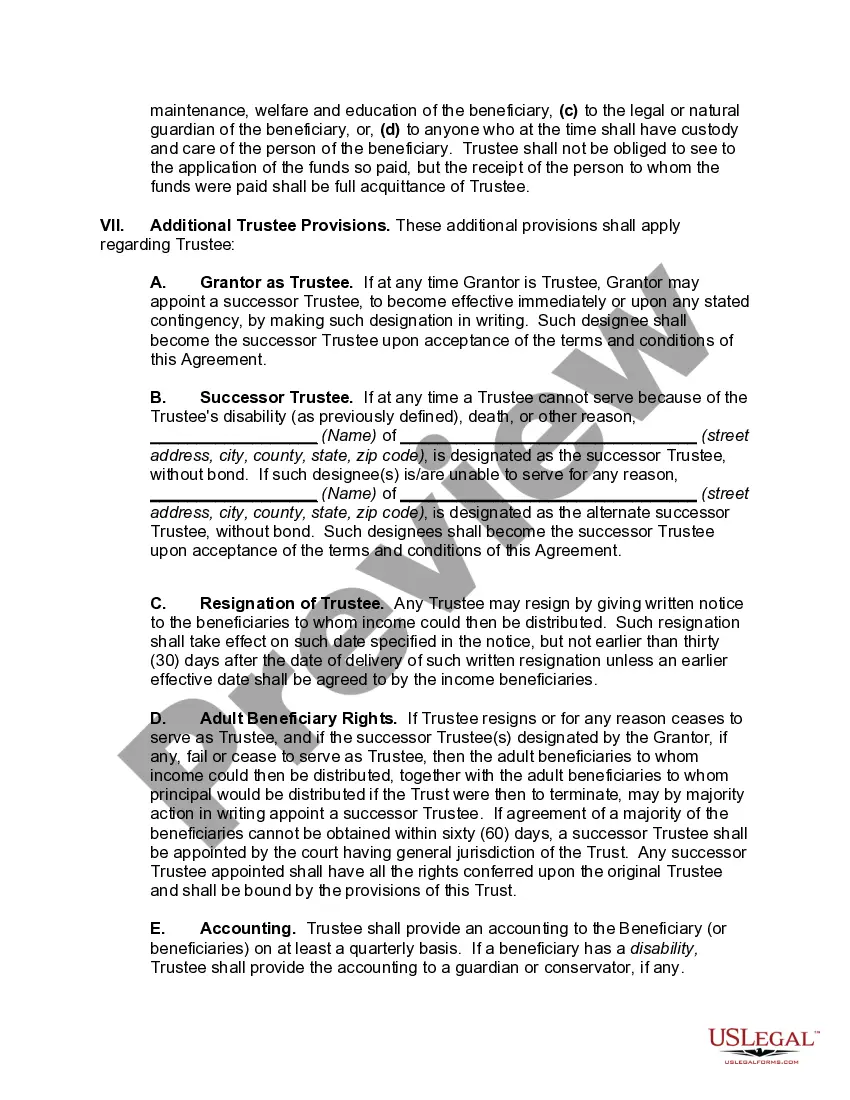
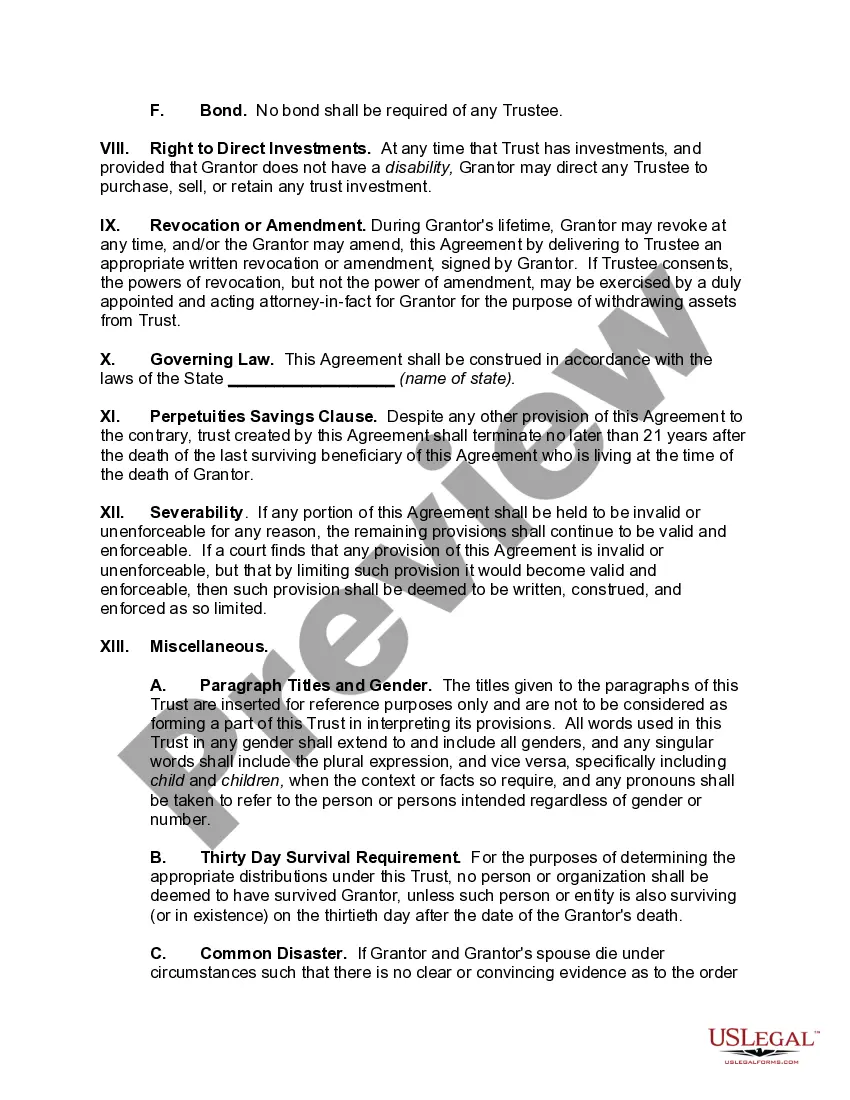
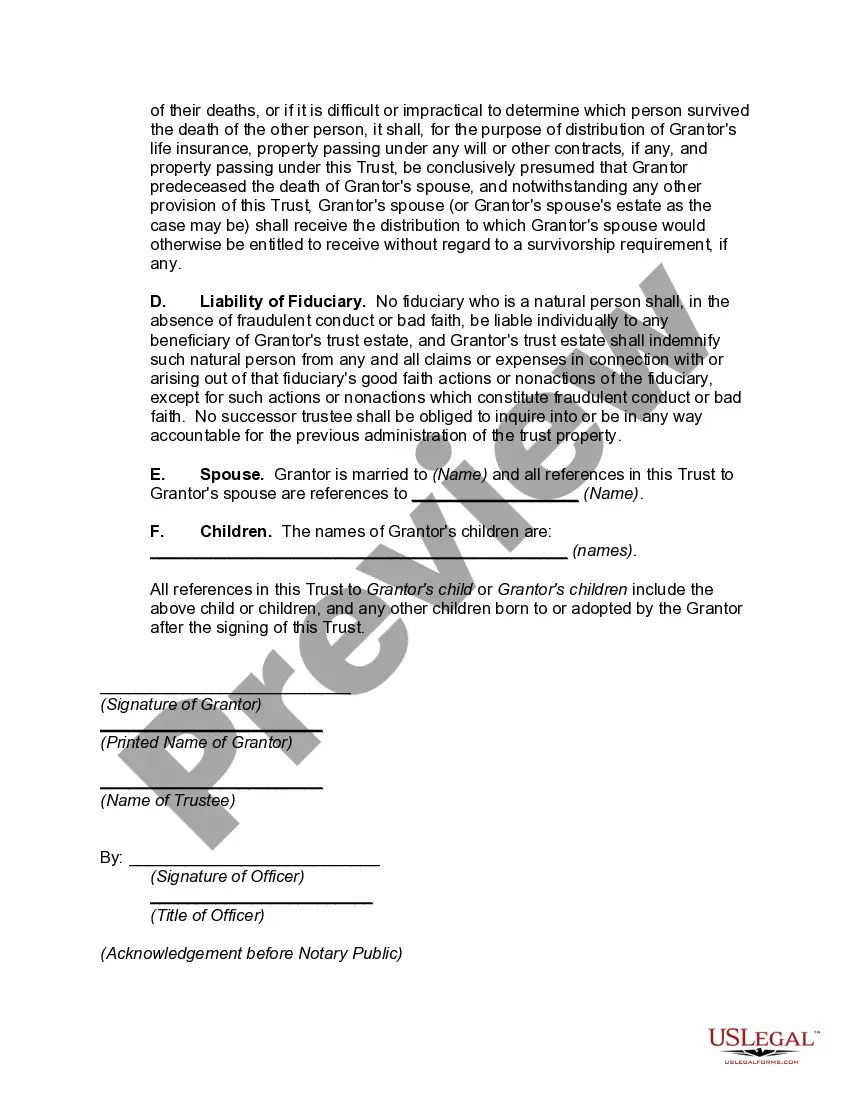
West Virginia Living Trust with Provisions for Disability
Description
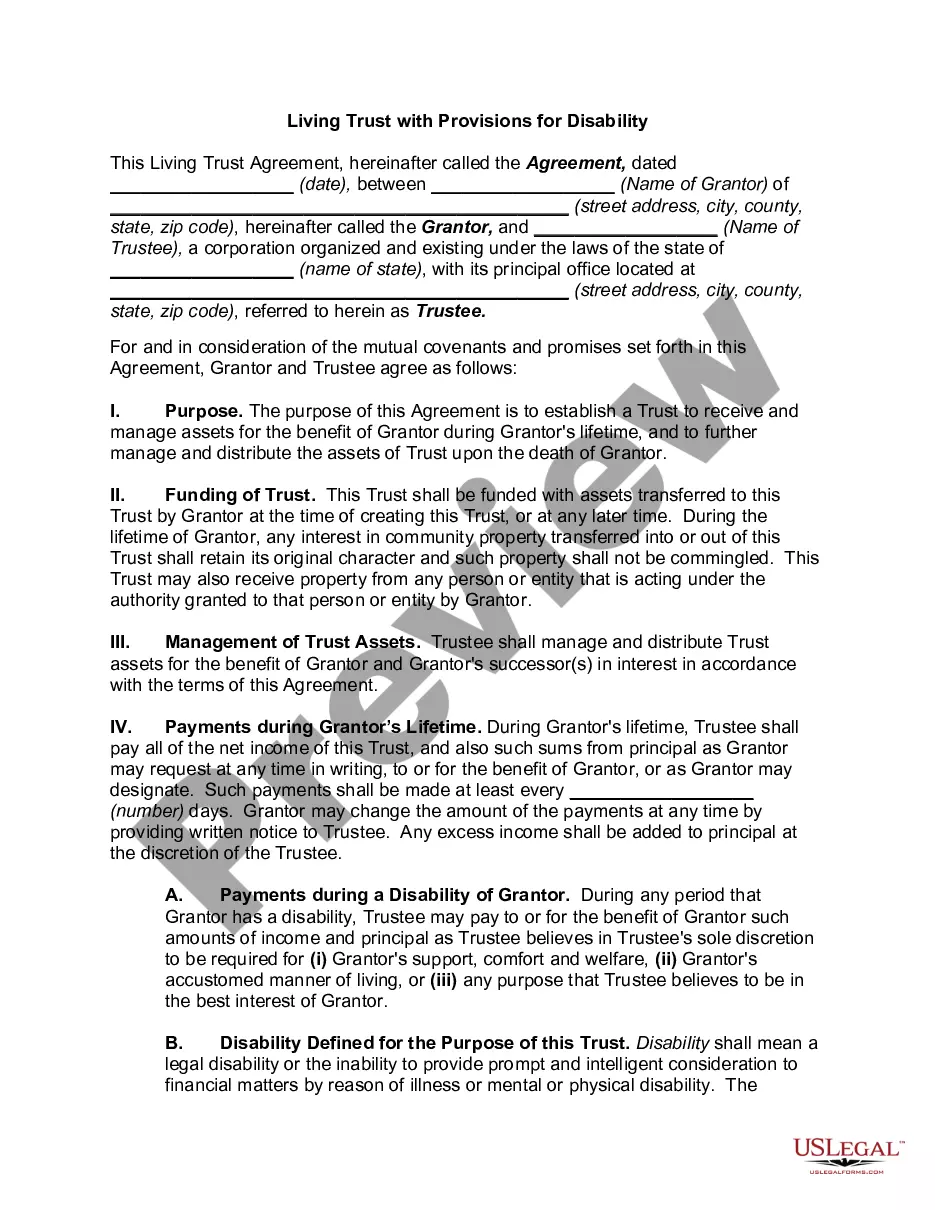
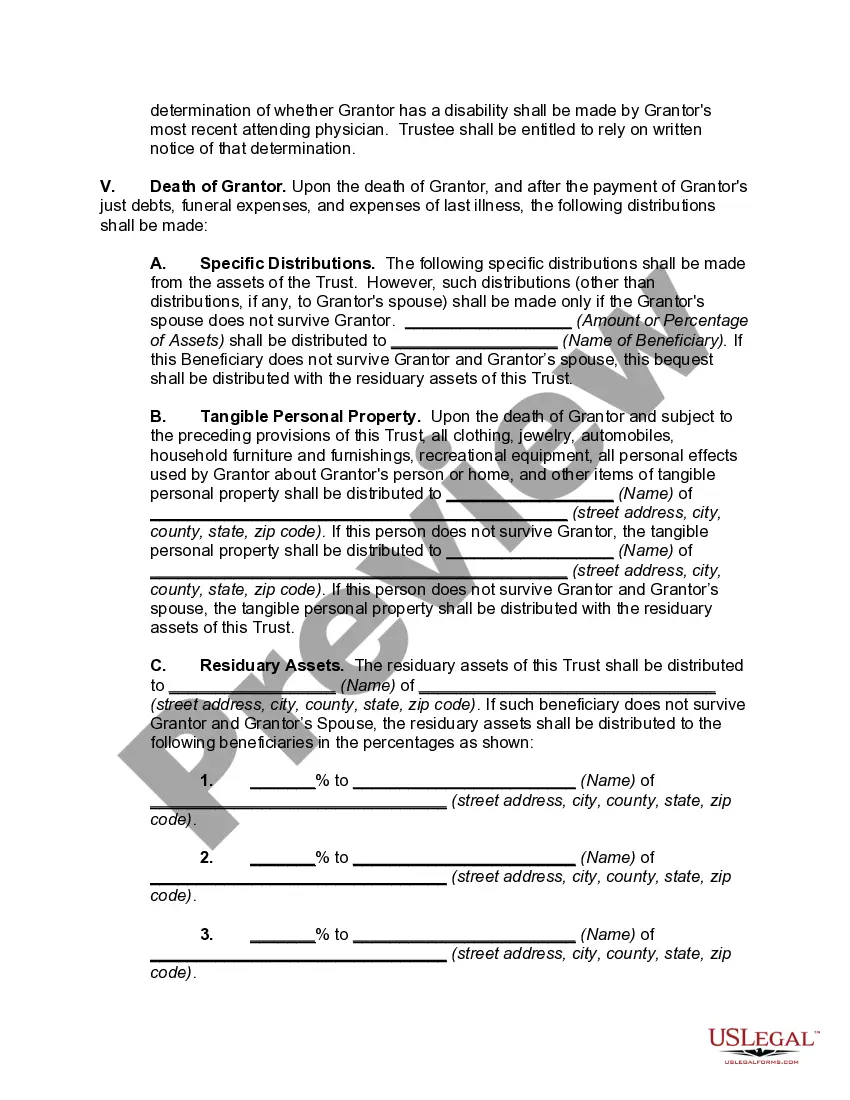
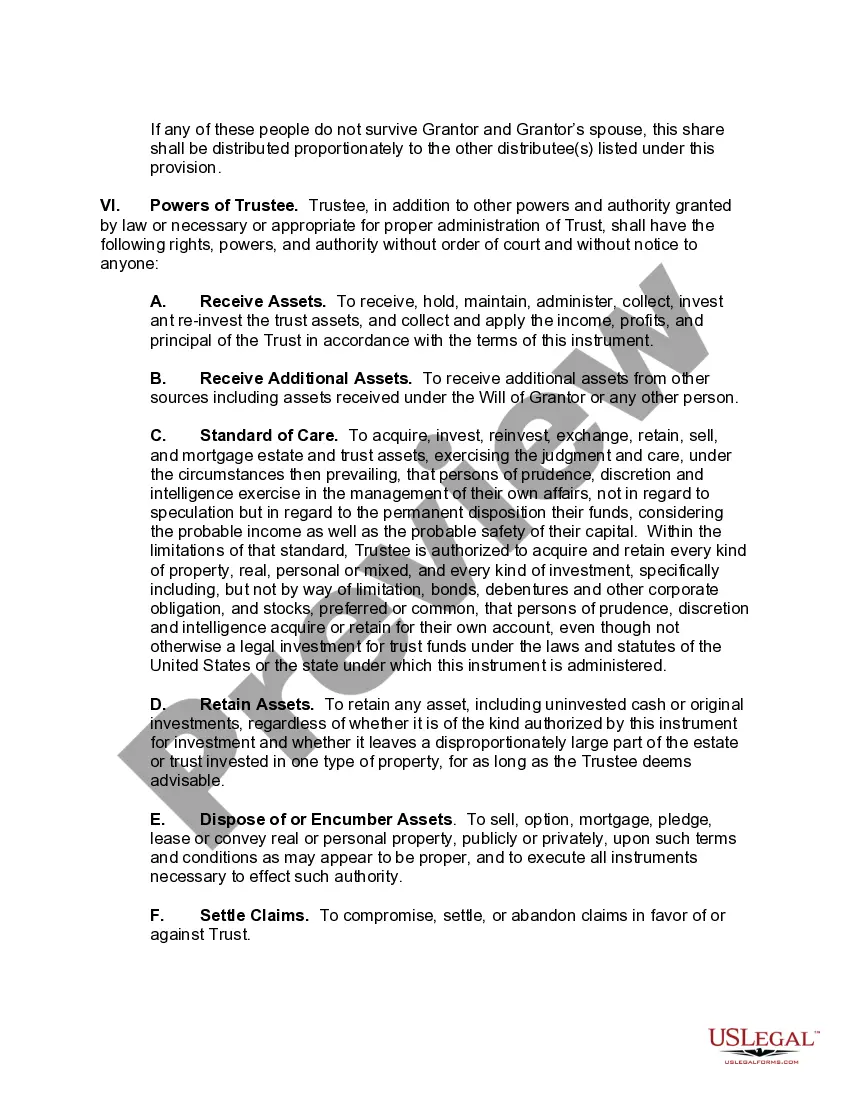
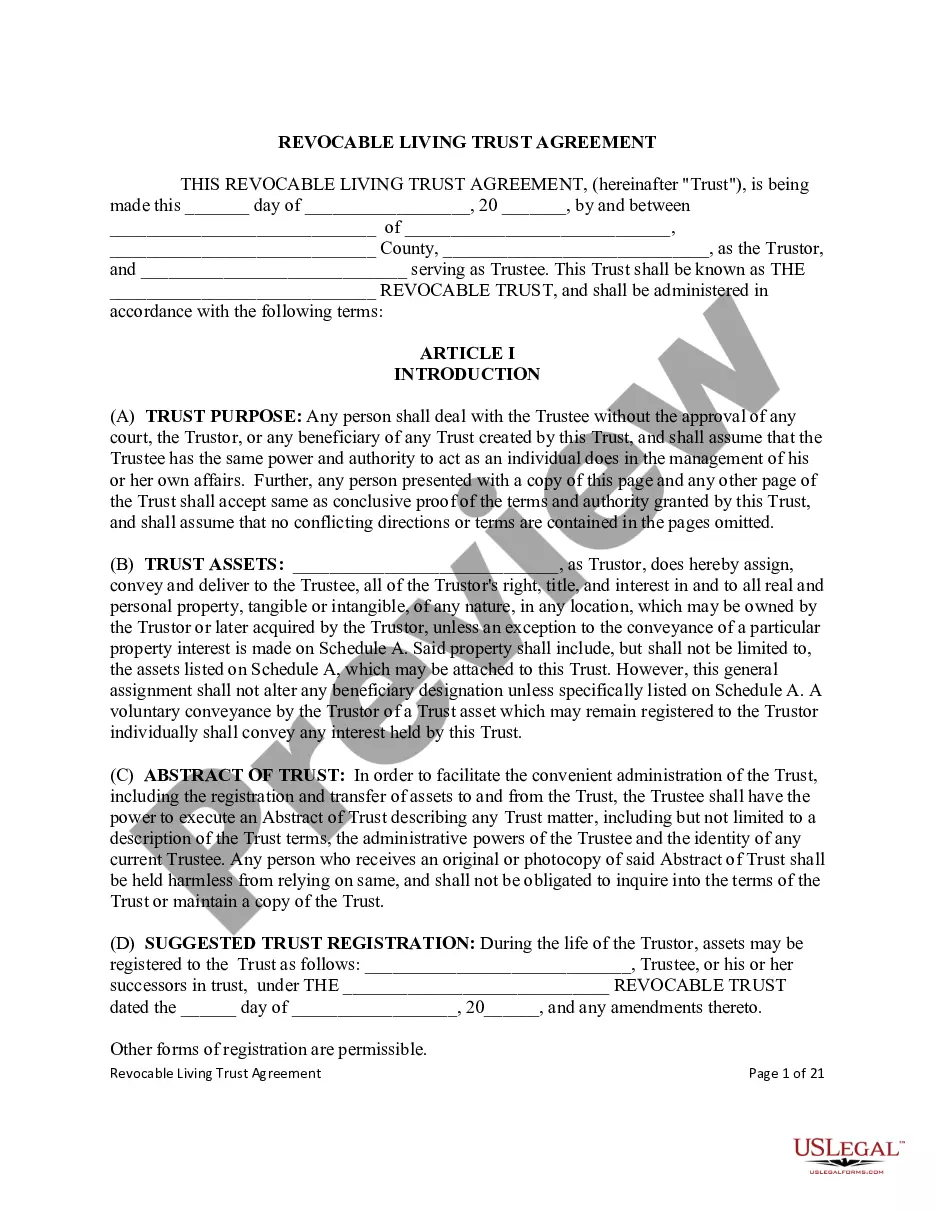
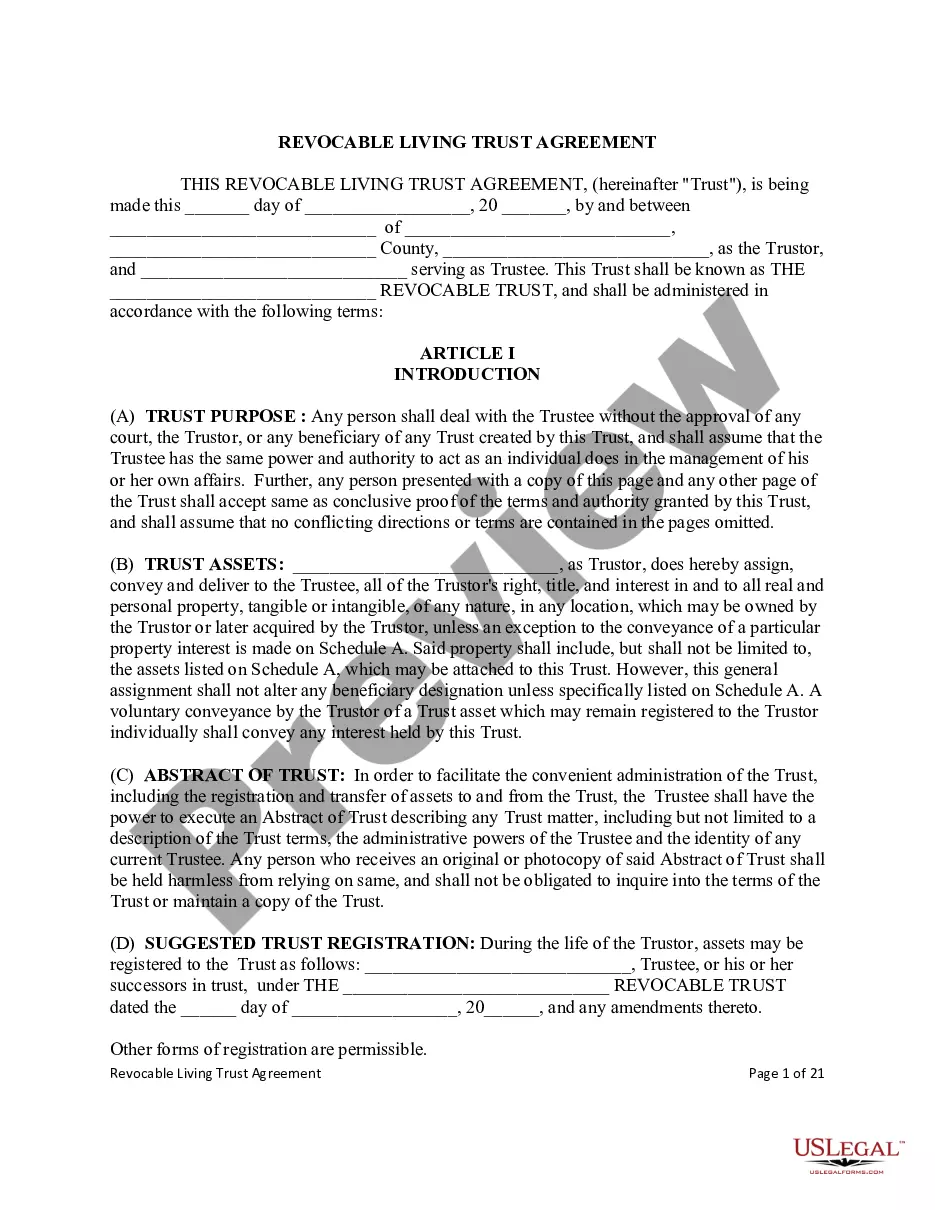
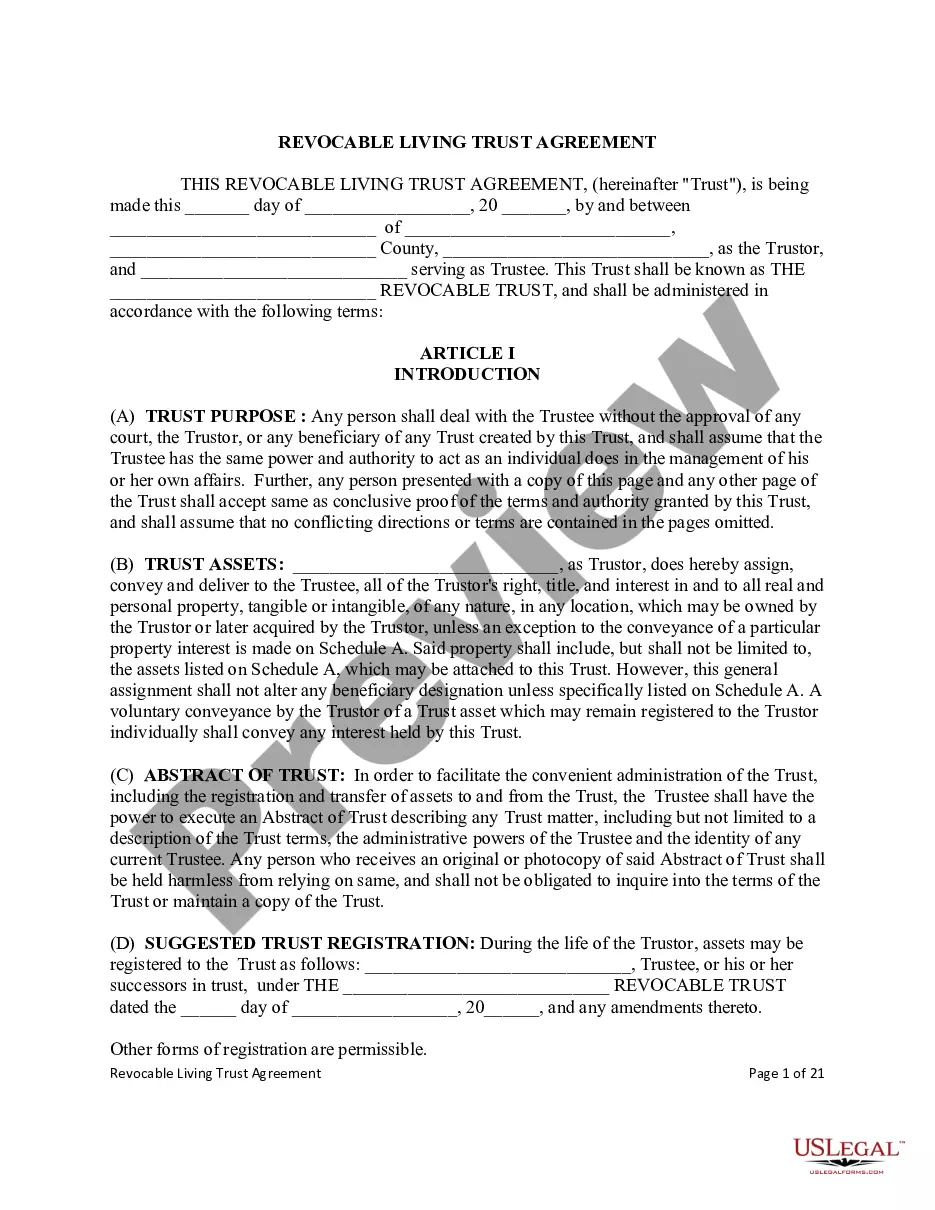
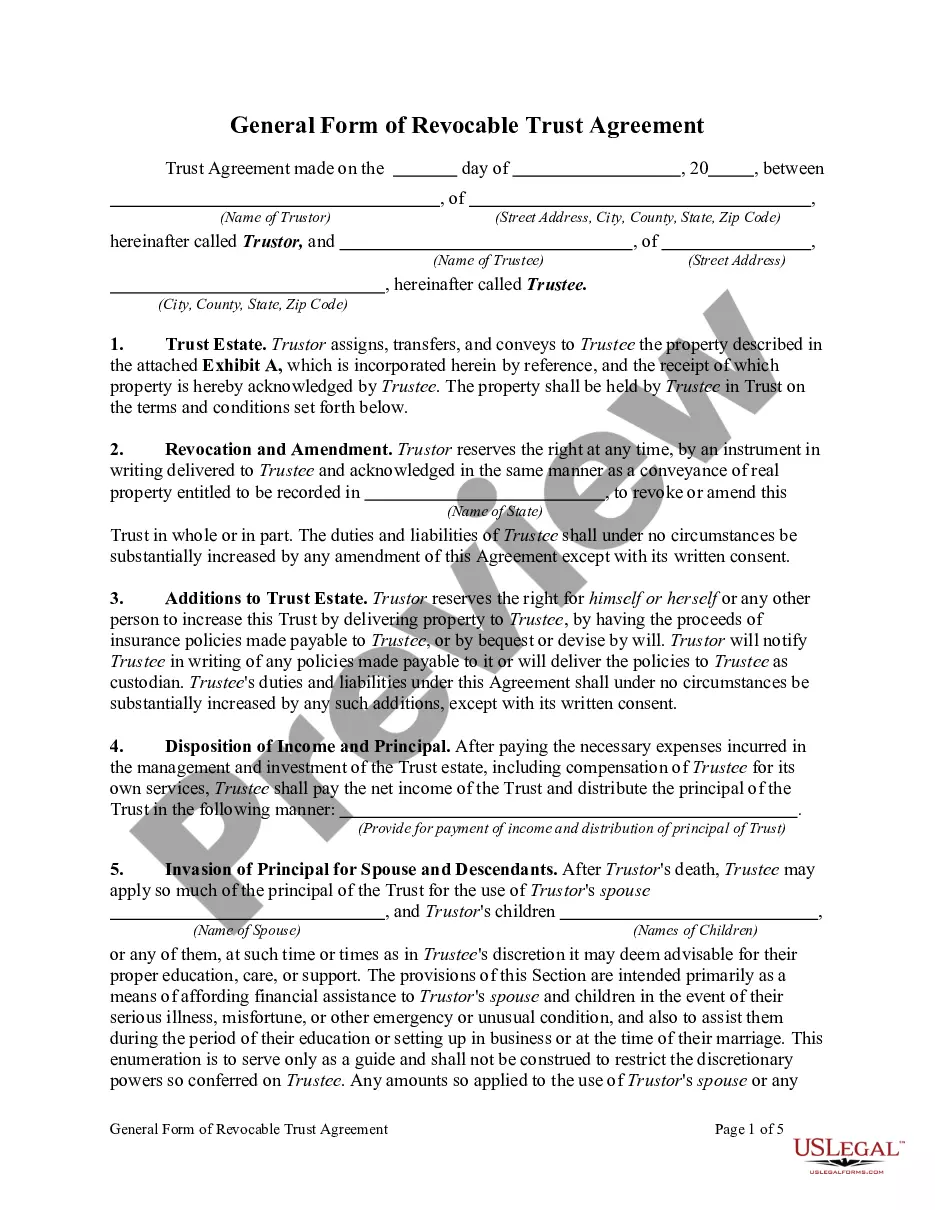
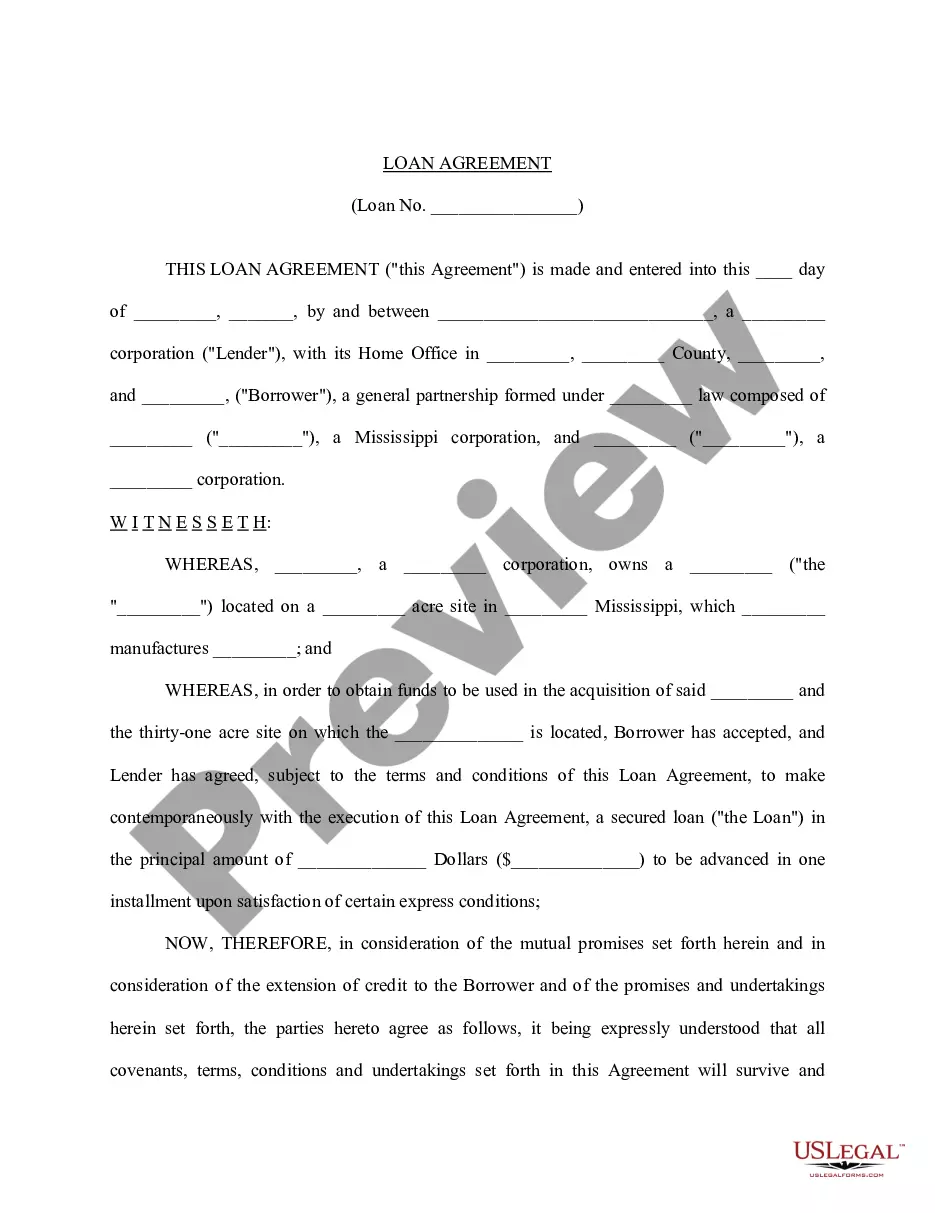
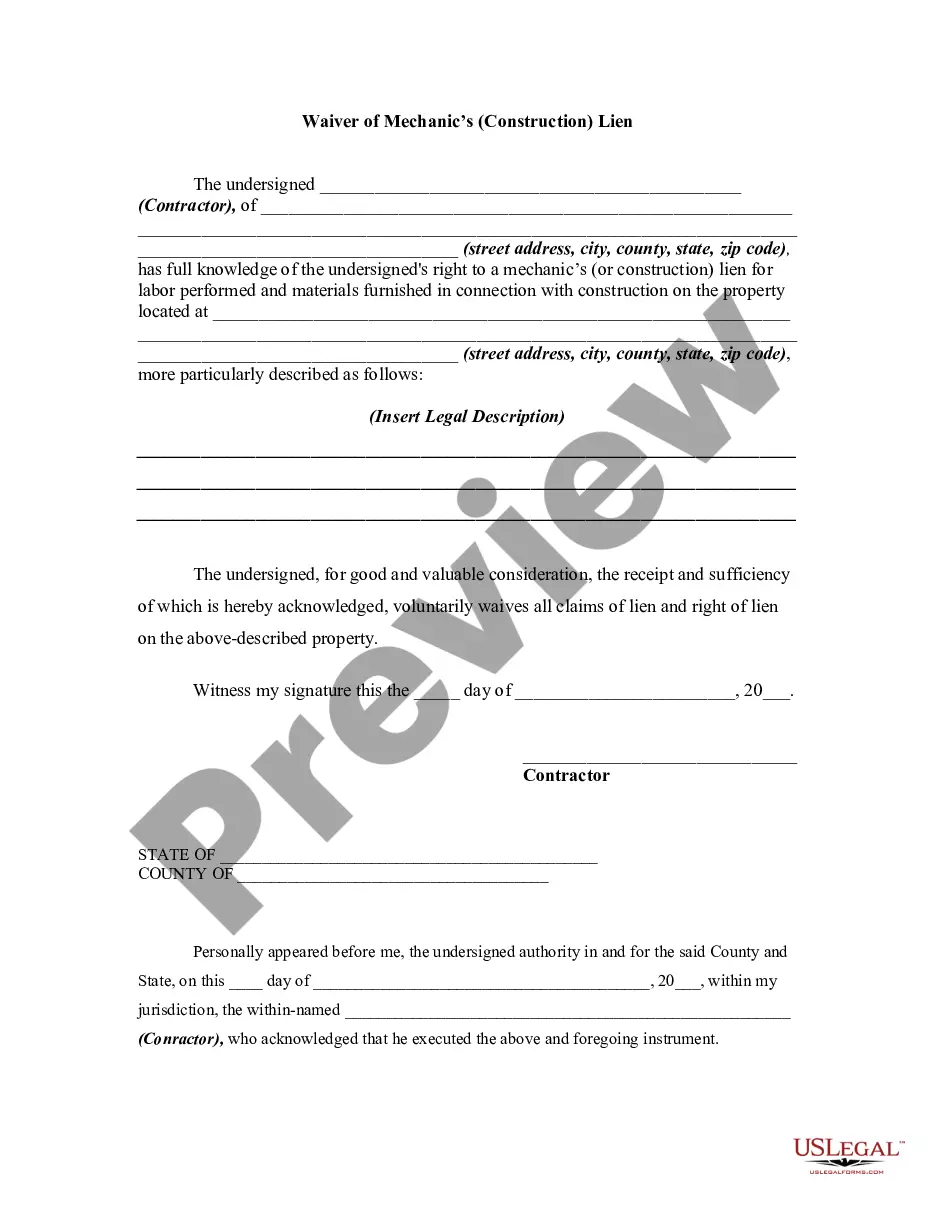
How to fill out Living Trust With Provisions For Disability?
US Legal Forms - one of the largest collections of legal templates in the United States - provides a broad selection of legal document designs that you can download or print.
By utilizing the website, you can access countless templates for business and personal purposes, sorted by types, states, or keywords. You can obtain the latest versions of documents such as the West Virginia Living Trust with Provisions for Disability within moments.
If you have a monthly membership, Log In and download the West Virginia Living Trust with Provisions for Disability from the US Legal Forms library. The Download button will appear on every document you view. You can access all previously downloaded forms from the My documents tab in your account.
Next, select the pricing option you prefer and provide your credentials to create an account.
Complete the payment. Use a credit card or PayPal account to finalize the transaction. Choose the format and download the document to your device. Make edits. Fill out, modify, and print and sign the downloaded West Virginia Living Trust with Provisions for Disability. Each template you added to your account has no expiration date and belongs to you indefinitely. Thus, if you wish to download or print another copy, simply go to the My documents section and click on the document you need.
- If you are using US Legal Forms for the first time, here are brief instructions to help you start.
- Ensure you have selected the correct document for your city/state.
- Press the Preview button to review the document's content.
- Check the document description to confirm you have chosen the right one.
- If the document does not meet your needs, use the Search field at the top of the screen to find the one that does.
- If you are satisfied with the document, confirm your choice by clicking the Buy now button.
Form popularity
FAQ
The best trust for a disabled person is often a special needs trust, as it allows for the management of funds without jeopardizing eligibility for government benefits. This trust can provide financial support for medical expenses, housing, and other needs while keeping the beneficiary's benefits intact. Incorporating this type of trust into a West Virginia Living Trust with Provisions for Disability can offer peace of mind and financial security for your loved one.
The best trustee for a special needs trust is someone who understands the unique needs of individuals with disabilities. This could be a family member, a close friend, or a professional trustee who has experience in managing these types of trusts. When creating a West Virginia Living Trust with Provisions for Disability, choosing the right trustee is crucial to ensure that your loved one’s needs are met effectively.
In West Virginia, to qualify for disability benefits, you must demonstrate that you have a medical condition that significantly impairs your ability to work. This may include physical, mental, or emotional conditions that are expected to last at least 12 months. Understanding how these qualifications interact with a West Virginia Living Trust with Provisions for Disability can help you protect your assets while ensuring you receive the necessary support.
A special disability trust is designed to benefit individuals with disabilities while preserving their eligibility for government assistance programs. This type of trust allows you to set aside funds specifically for the beneficiary’s needs without impacting their benefits. Incorporating a special disability trust into your West Virginia Living Trust with Provisions for Disability can provide essential support while maintaining compliance with government regulations.
The strongest type of trust is often considered to be an irrevocable trust. Once established, you cannot change or revoke it without the consent of the beneficiaries. This type of trust provides strong asset protection and can be a key component in a West Virginia Living Trust with Provisions for Disability, ensuring your assets are secure and managed according to your wishes.
A living trust in West Virginia is a legal arrangement where you place your assets into a trust during your lifetime. This helps manage your property and ensures a smooth transfer to your beneficiaries after your death. When you create a West Virginia Living Trust with Provisions for Disability, you also include specific instructions for your care if you become unable to manage your affairs.
Assets That Can And Cannot Go Into Revocable TrustsReal estate.Financial accounts.Retirement accounts.Medical savings accounts.Life insurance.Questionable assets.
HOW DOES MONEY FROM A TRUST THAT IS NOT MY RESOURCE AFFECT MY SSI BENEFITS? Money paid directly to you from the trust reduces your SSI benefit. Money paid directly to someone to provide you with food or shelter reduces your SSI benefit but only up to a certain limit.
The first $20 of income received each month is not counted. In addition, with respect to earned income, the first $65 each month is not counted, and one-half of the earnings over $65 in any given month is not counted.
SSDI is not a needs-based benefit. If you are on that program for two years, you will also qualify for Medicare. Because SSDI is not needs-based, a special needs trust is not necessary to qualify for it.