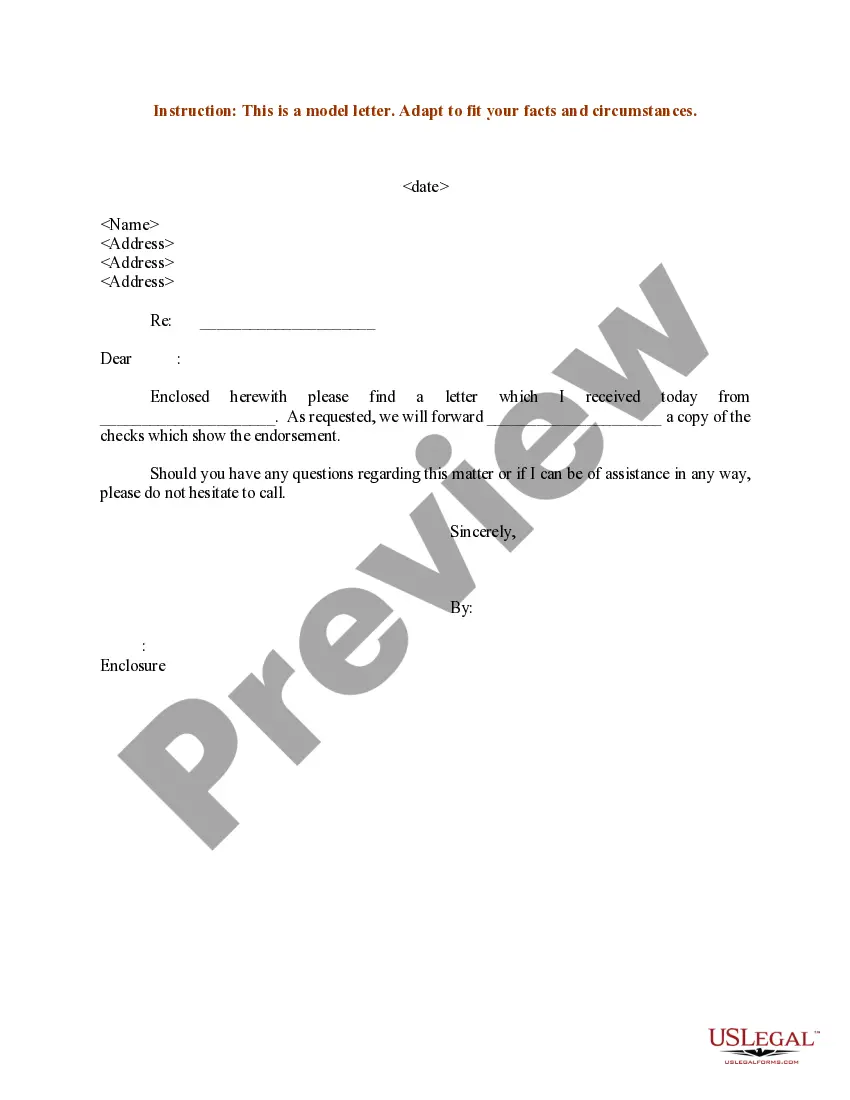
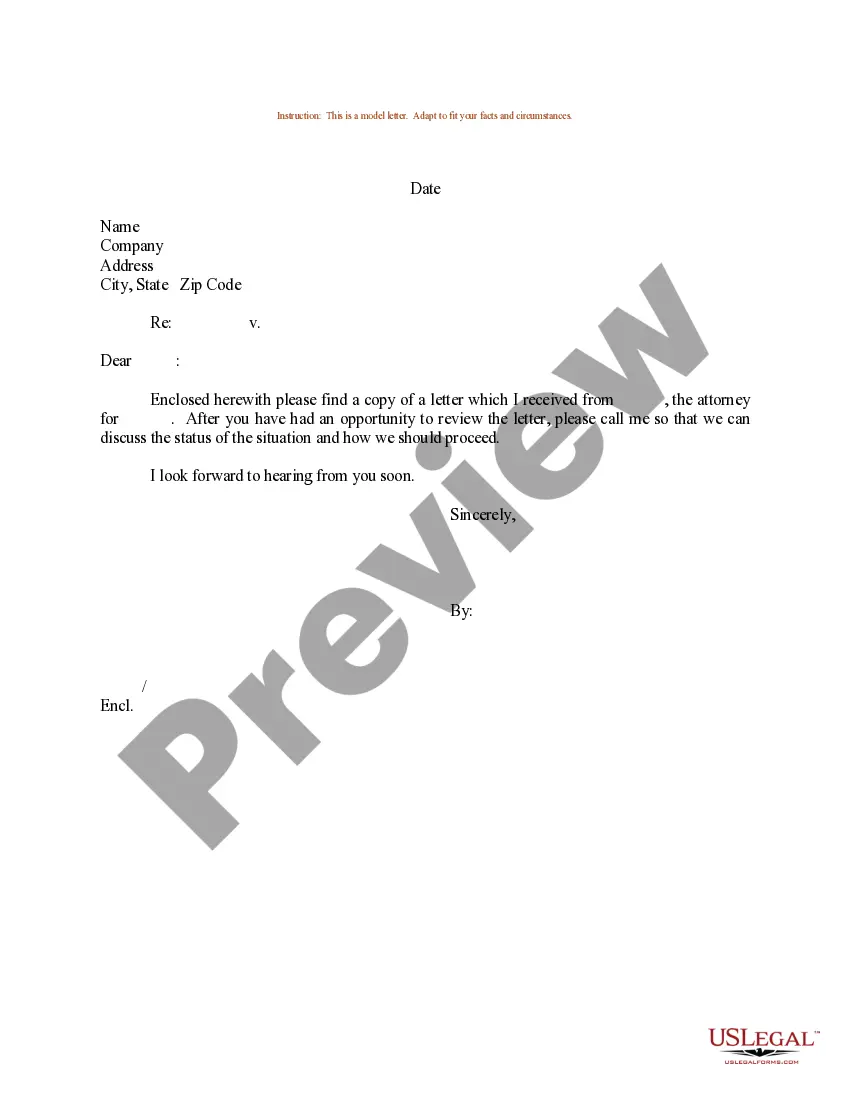
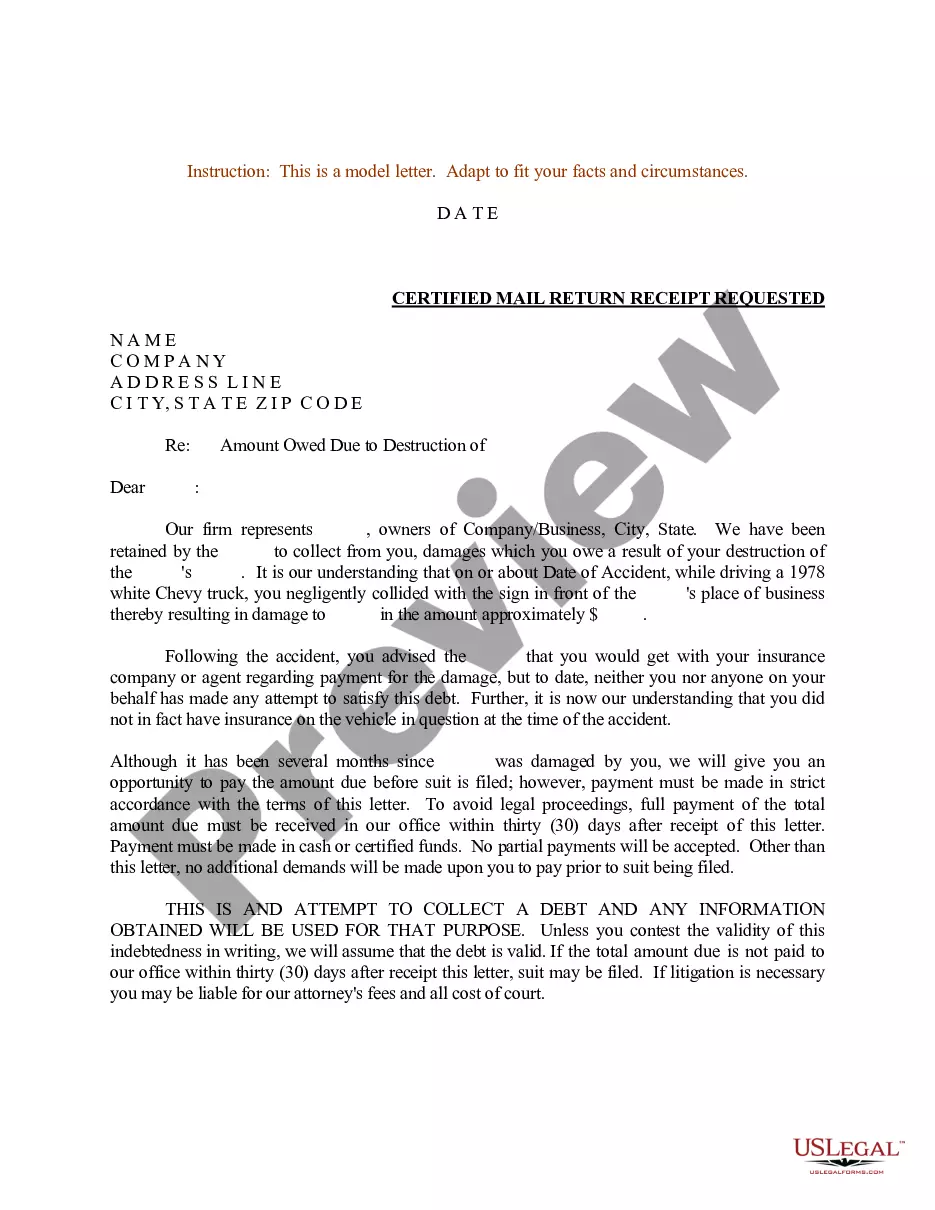
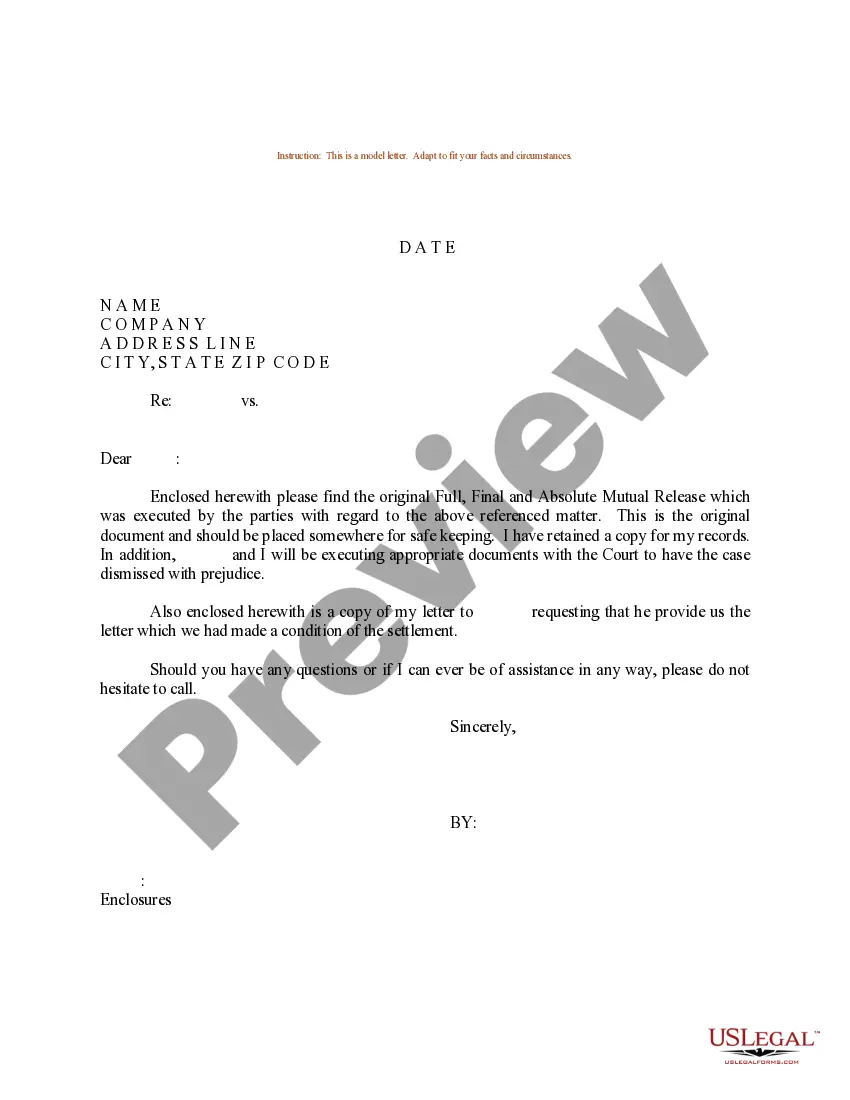
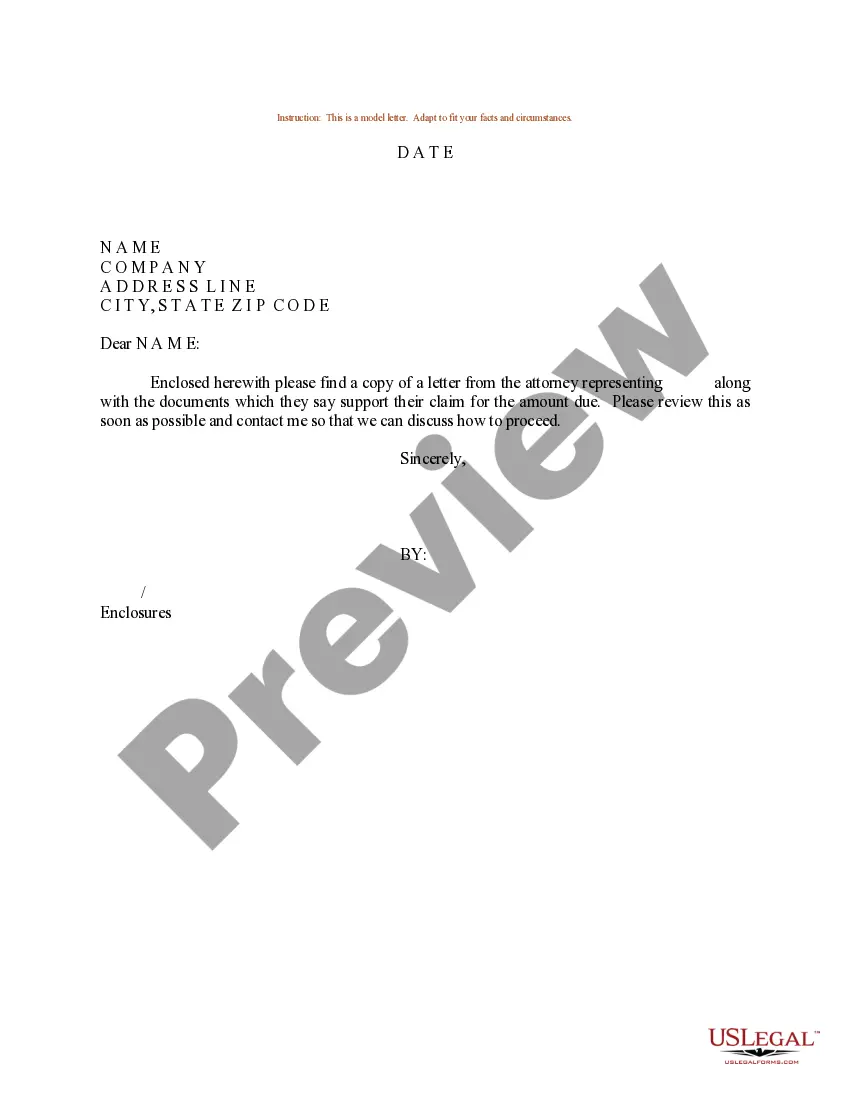
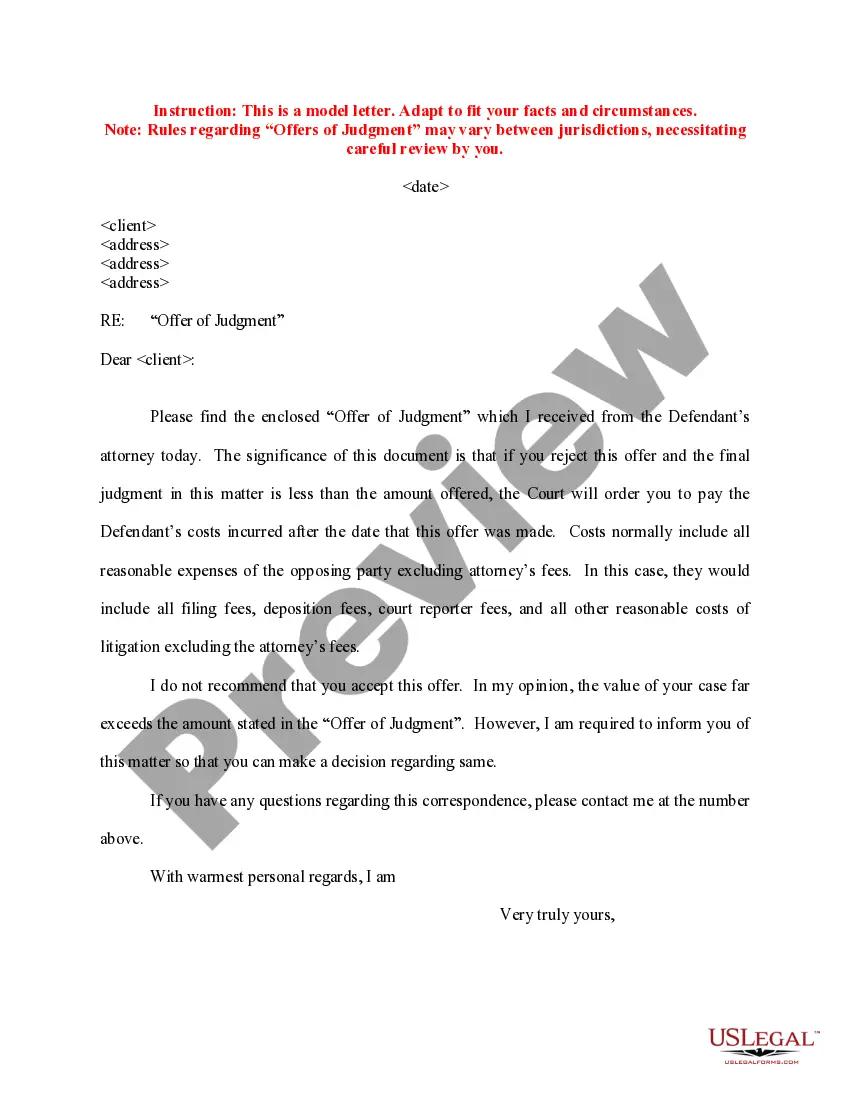
West Virginia Sample Letter for Correspondence received from Defendant
Description
Get your form ready online
Our built-in tools help you complete, sign, share, and store your documents in one place.
Make edits, fill in missing information, and update formatting in US Legal Forms—just like you would in MS Word.
Download a copy, print it, send it by email, or mail it via USPS—whatever works best for your next step.
Sign and collect signatures with our SignNow integration. Send to multiple recipients, set reminders, and more. Go Premium to unlock E-Sign.
If this form requires notarization, complete it online through a secure video call—no need to meet a notary in person or wait for an appointment.
We protect your documents and personal data by following strict security and privacy standards.

Make edits, fill in missing information, and update formatting in US Legal Forms—just like you would in MS Word.

Download a copy, print it, send it by email, or mail it via USPS—whatever works best for your next step.

Sign and collect signatures with our SignNow integration. Send to multiple recipients, set reminders, and more. Go Premium to unlock E-Sign.

If this form requires notarization, complete it online through a secure video call—no need to meet a notary in person or wait for an appointment.

We protect your documents and personal data by following strict security and privacy standards.
Looking for another form?
How to fill out Sample Letter For Correspondence Received From Defendant?
US Legal Forms - one of the largest collections of legal documents in the United States - offers a variety of legal document templates that you can download or print. By using the website, you can find numerous forms for business and personal purposes, organized by categories, states, or keywords. You can access the latest forms such as the West Virginia Sample Letter for Correspondence received from Defendant in just a few minutes.
If you already have a subscription, Log In and download the West Virginia Sample Letter for Correspondence received from Defendant from the US Legal Forms repository. The Download button will appear on each form you view. You can find all previously downloaded forms in the My documents section of your account.
If you are using US Legal Forms for the first time, here are some simple steps to help you get started: Ensure you have selected the correct form for your city/state. Click the Preview button to examine the form's content. Review the form summary to confirm you have chosen the right form. If the form does not meet your needs, utilize the Search box at the top of the screen to find one that does. If you are satisfied with the form, confirm your selection by clicking the Buy now button. Then, choose the pricing plan you want and provide your information to register for an account. Complete the transaction. Use your credit card or PayPal account to process the transaction. Select the format and download the form to your device. Make edits. Fill out, modify, print, and sign the downloaded West Virginia Sample Letter for Correspondence received from Defendant. Every template you add to your account does not have an expiration date and is yours permanently. So, if you wish to download or print another copy, just visit the My documents section and click on the form you need.
- Access the West Virginia Sample Letter for Correspondence received from Defendant with US Legal Forms, the most extensive collection of legal document templates.
- Utilize thousands of professional and state-specific templates that satisfy your business or personal requirements.
- Download or print forms at any time without limitations.
- Easily manage your forms through the My documents section of your account.
- Enjoy the convenience of a user-friendly interface for finding and downloading legal documents.
- Ensure compliance with legal standards using professionally crafted templates.
Form popularity
FAQ
Discovery is how you gather the evidence you will need to prove your case as plaintiff, or defeat the plaintiff's case as a defendant. You use discovery to find out things like: What the other side plans to say about an issue in your case. What facts or witnesses support their side.
Discovery is the formal process by which the parties to a case in court exchange information about the case. This includes information about the witnesses and evidence to be presented at trial. Its purpose is to make the parties aware of the evidence which may be presented at trial.
Discovery means you send the other side questions and requests for information or items (like documents) in writing. The other side must respond to your question or request in writing.
?All parties shall make reasonable efforts to cooperate for the purpose of minimizing the burden or expense of discovery.? Better known as the ?Golden Rule Letter,? it should be attached to a motion to compel to evidence to the court that a good-faith effort has been made.
The three forms of discovery are: Written - This form of discovery takes place on paper. ... Document Production - This form of discovery involves an exchange of documents. ... Oral - Sometimes known as depositions, this form of discovery allows parties to gain sworn statements from involved individuals.
Follow the order of this format, leaving a space in between each section: Your Information (first thing that goes on the inside of the letter) Name. ... The Date. The Judge's Information. Honorable Judge First Name Last Name. ... What the Letter Is Going to Address. ... Salutation. ... Body. ... Signature.
Examination for Discovery involve lawyers from one side asking individuals from the opposing side a series of questions. Usually, there will be one opportunity to examine an individual, unless the court provides permission for the lawyer to examine that individual multiple times.