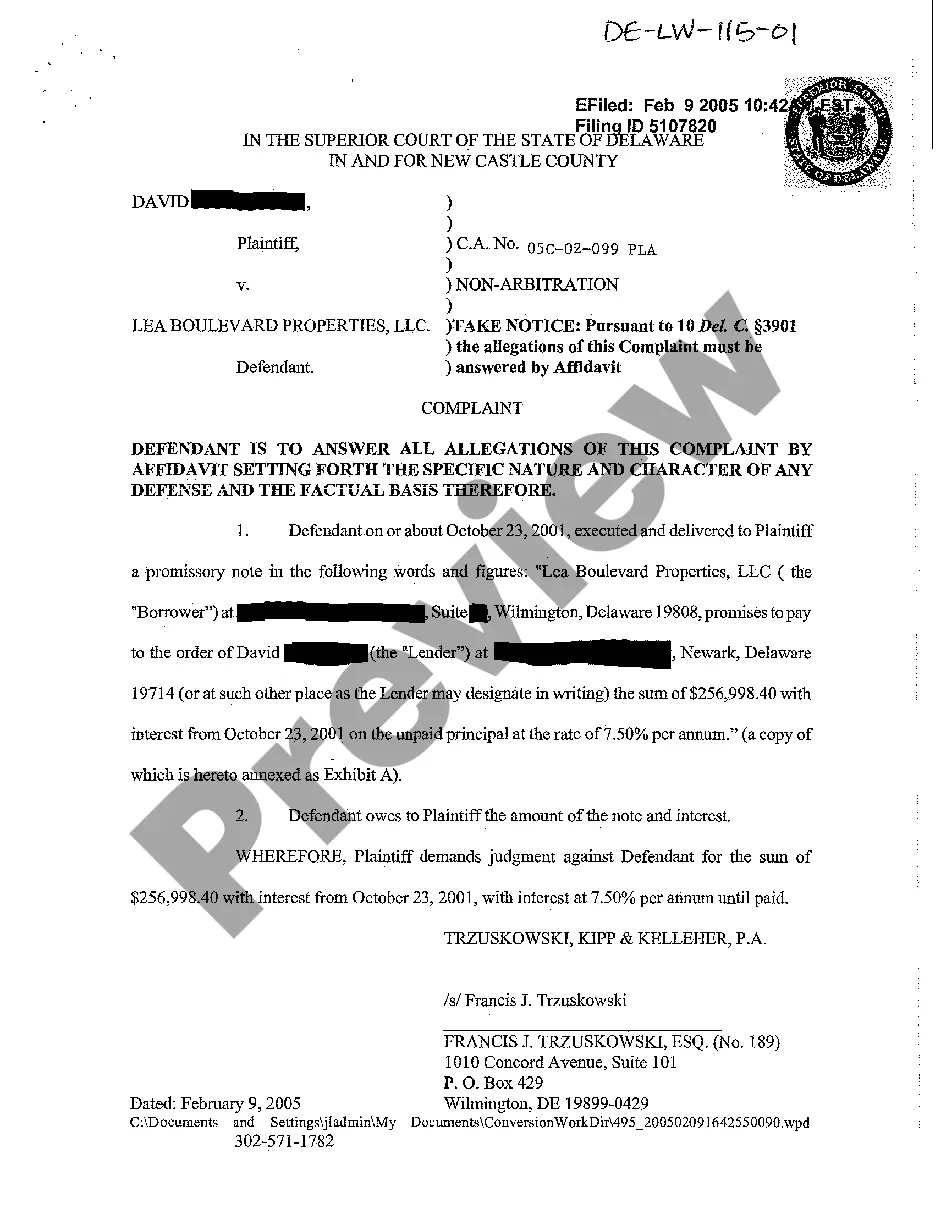
West Virginia Civil Case Information Statement - Civil Cases
Understanding this form
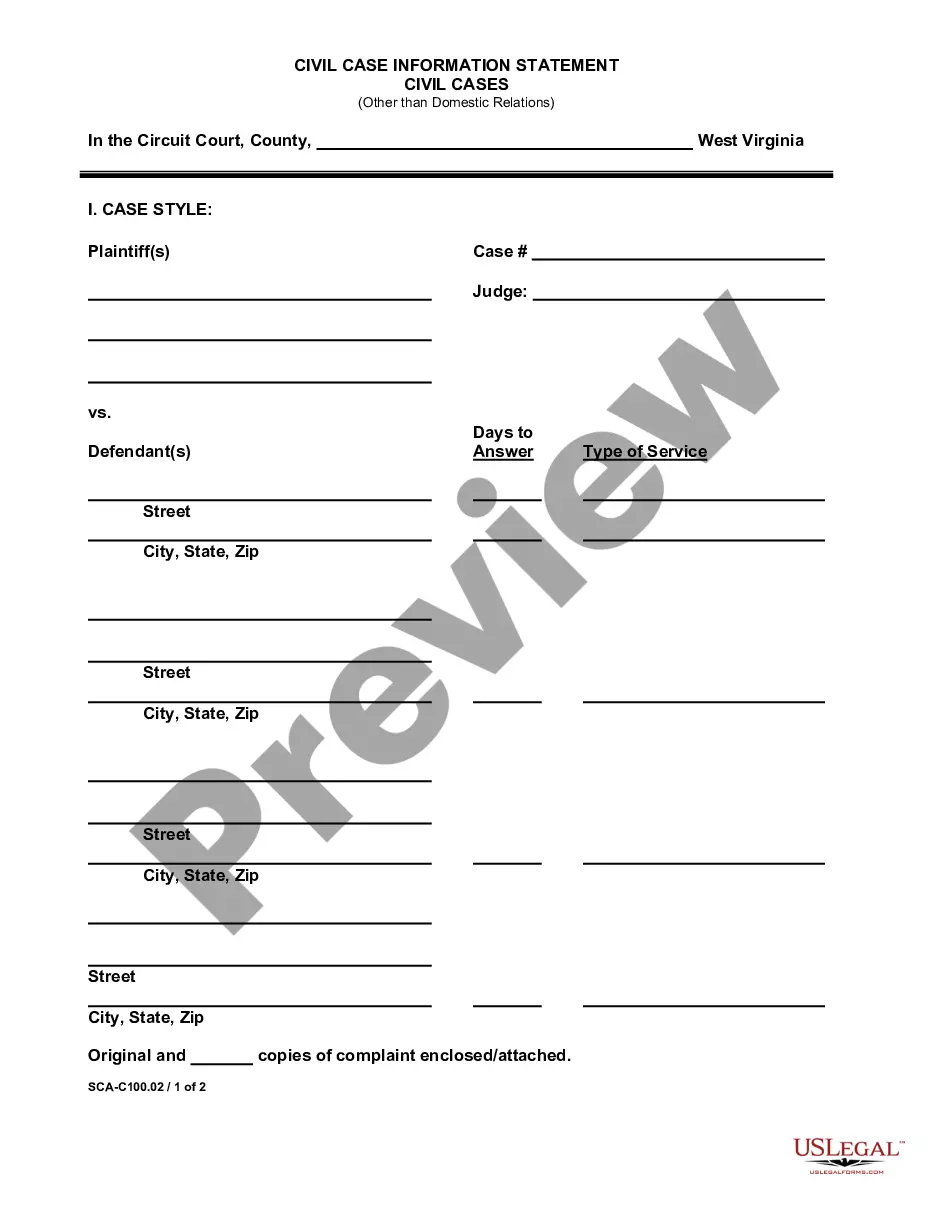
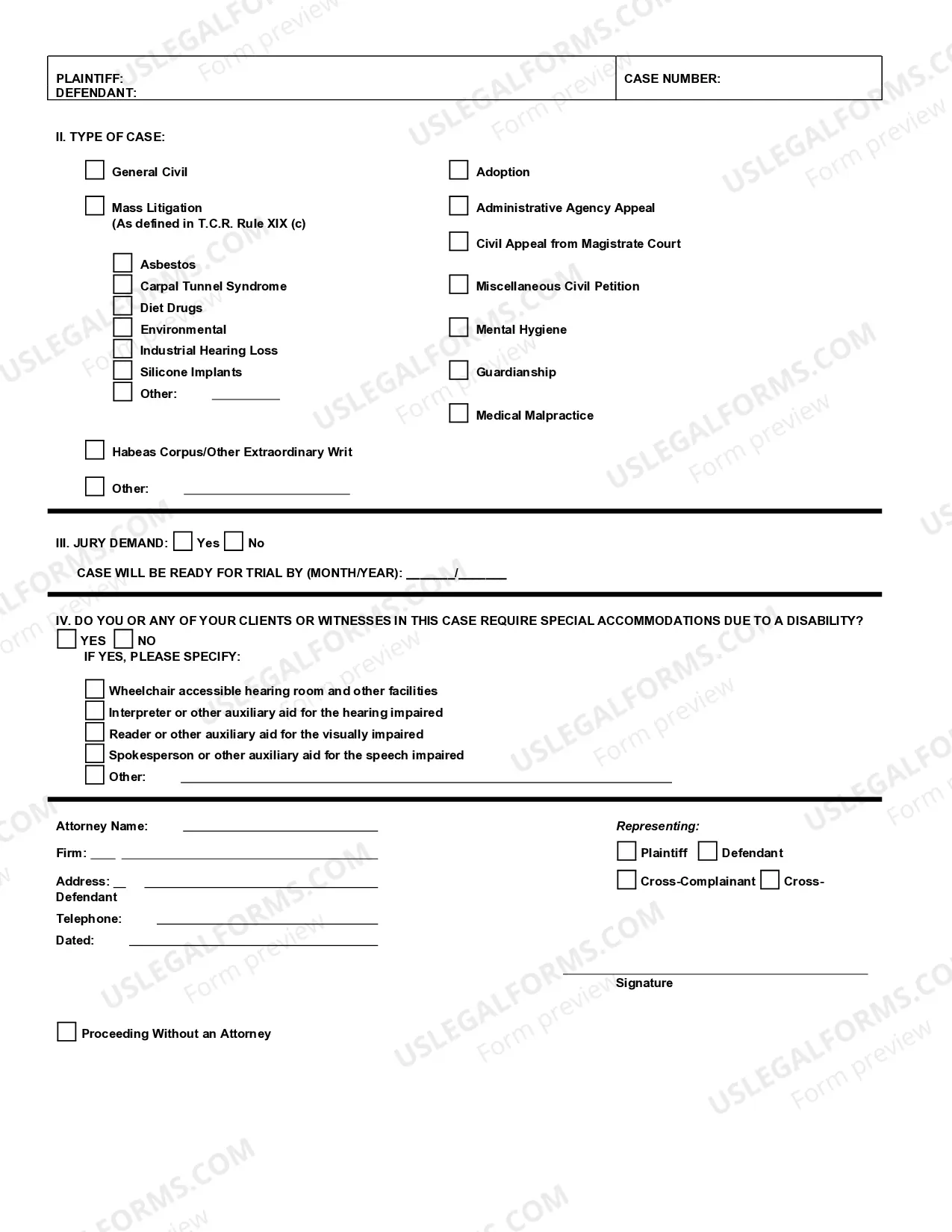
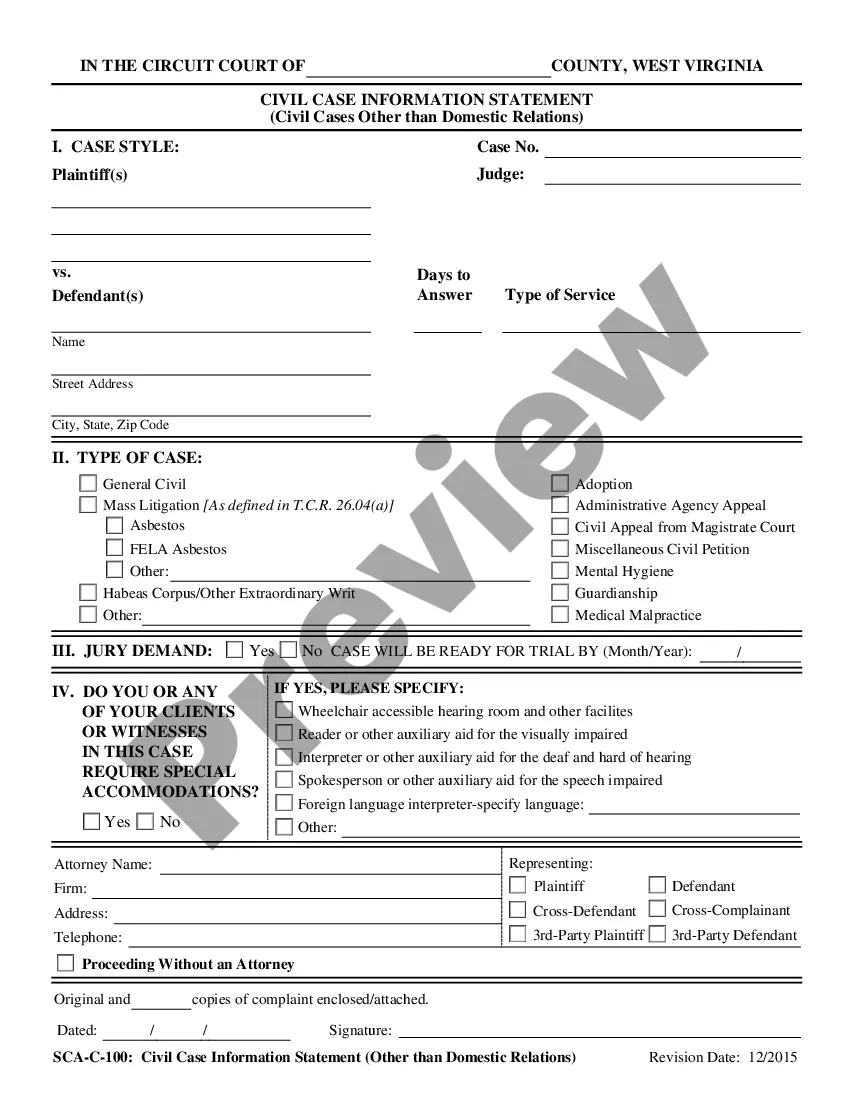
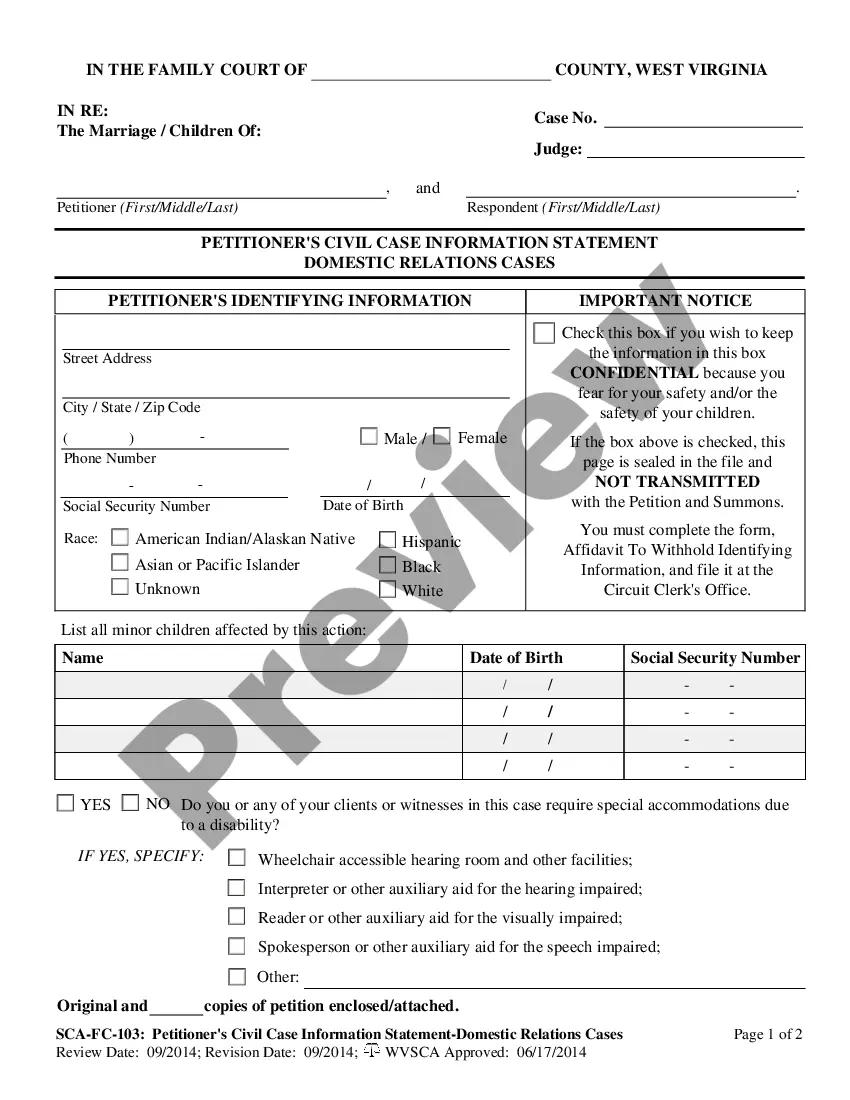
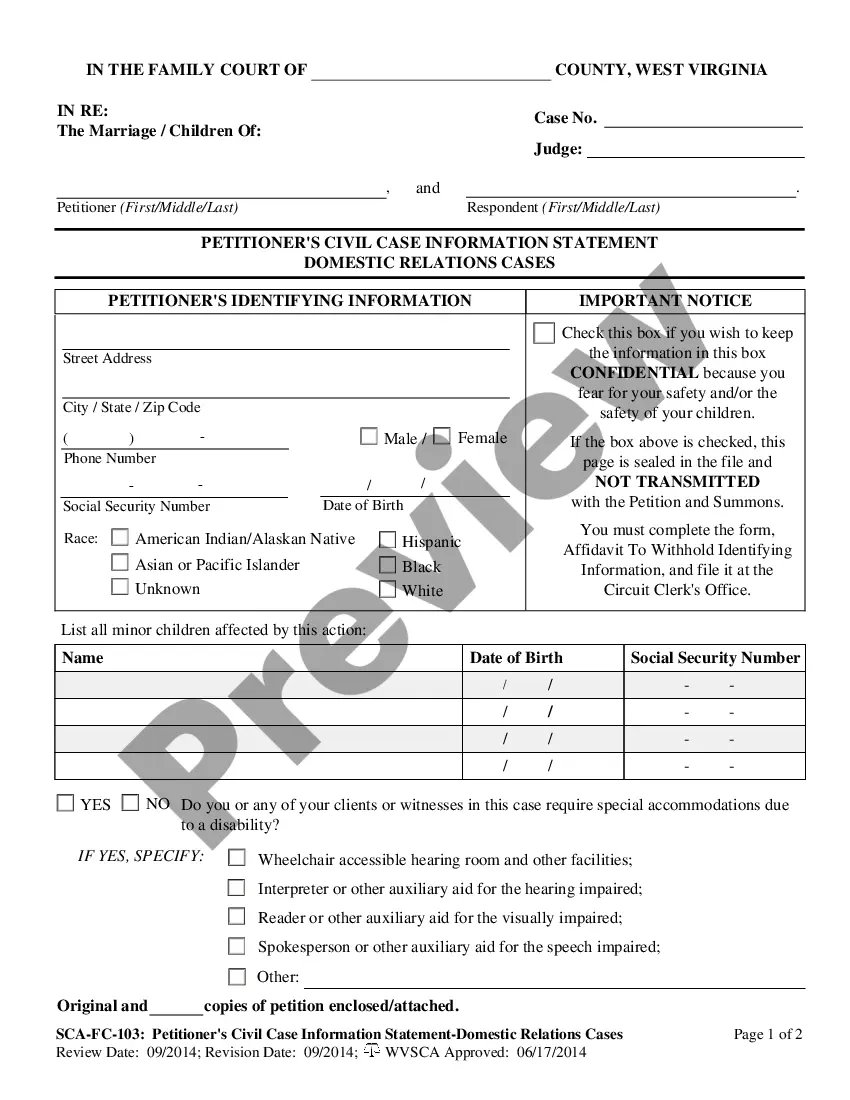
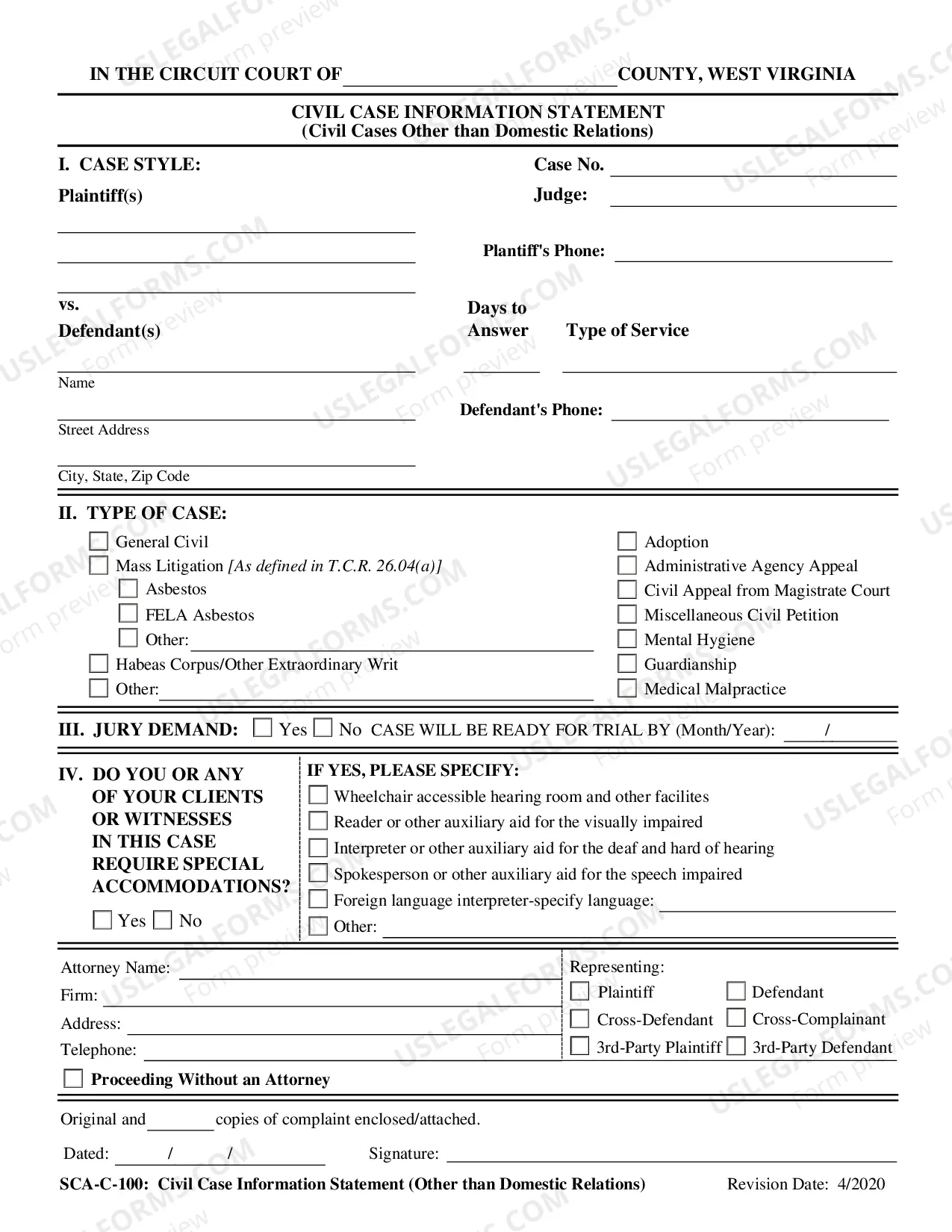
The Civil Case Information Statement is a legal document used to provide necessary details about a civil case. This form outlines the type of civil case, including aspects like general civil, adoption, and mass litigation. It helps the court understand the context and specifics of your case, distinguishing it from other forms such as notices or petitions.
Key components of this form
- Type of case: Specifies the nature of your civil case, such as general civil or adoption.
- General information: Includes required details for identifying the case and parties involved.
- Case number: A unique identifier assigned to your case by the court.
- Reason for filing: States the rationale behind the civil action taken.

When this form is needed
You should use the Civil Case Information Statement when initiating a civil lawsuit in a court of law. It is essential for cases involving civil rights, contracts, torts, or administrative appeals. This document is often required by the court at the beginning stages of a case to ensure all pertinent information is correctly filed.
Who should use this form
- Individuals pursuing a civil lawsuit.
- Attorneys representing clients in civil matters.
- Parties involved in administrative agency appeals.
Instructions for completing this form
- Identify the type of case: Choose from the provided options that best describes your case.
- Fill in the general information: Enter the names of the parties involved and any other identifiers.
- State the reason for your civil action: Clearly articulate why the case is being filed.
- Include the case number: Make sure to obtain and enter the unique case number assigned by the court.
Does this document require notarization?
This form usually doesn’t need to be notarized. However, local laws or specific transactions may require it. Our online notarization service, powered by Notarize, lets you complete it remotely through a secure video session, available 24/7.
Get your form ready online
Our built-in tools help you complete, sign, share, and store your documents in one place.
Make edits, fill in missing information, and update formatting in US Legal Forms—just like you would in MS Word.
Download a copy, print it, send it by email, or mail it via USPS—whatever works best for your next step.
Sign and collect signatures with our SignNow integration. Send to multiple recipients, set reminders, and more. Go Premium to unlock E-Sign.
If this form requires notarization, complete it online through a secure video call—no need to meet a notary in person or wait for an appointment.
We protect your documents and personal data by following strict security and privacy standards.

Make edits, fill in missing information, and update formatting in US Legal Forms—just like you would in MS Word.

Download a copy, print it, send it by email, or mail it via USPS—whatever works best for your next step.

Sign and collect signatures with our SignNow integration. Send to multiple recipients, set reminders, and more. Go Premium to unlock E-Sign.

If this form requires notarization, complete it online through a secure video call—no need to meet a notary in person or wait for an appointment.

We protect your documents and personal data by following strict security and privacy standards.
Common mistakes to avoid
- Failing to select the correct type of case, which can delay processing.
- Omitting the case number, resulting in confusion.
- Providing insufficient detail about the reason for filing.
Benefits of completing this form online
- Convenience: Complete and file the form from anywhere at any time.
- Editability: Easily make corrections or updates before finalizing your submission.
- Reliability: Forms are drafted by licensed attorneys, ensuring they meet legal standards.
Looking for another form?

Form popularity
FAQ
There are thirty-one circuit courts in West Virginia with a total of seventy-five circuit judges. Circuit courts are West Virginia's only general jurisdiction trial courts of record. They have jurisdiction over all civil cases totaling more than $300.
The Superior Court of California. Documents maintained in court case files are public records and subject to public inspection. California Rules of Court, Rule 2.400(a) states that all papers in the court files may be inspected by the public in the office of the clerk.all court records are presumed open.
There are 158 magistrates in West Virginia. There are at least two magistrates in every county, and ten in the largest county, Kanawha. A county-by-county map of West Virginia's fifty-five counties with magistrate information can be found here.
To find court records in West Virginia, requesters must begin their search on the West Virginia Judiciary Administrative Office of the Courts website. From there, you may go look up the local or circuit courts where the case was held.
West Virginia Public Records This law specifies that all government information and records are presumed accessible to the public.The information documented on this website includes criminal records, court records, vital records, and over 15 million additional transparent public records.
The circuit courts are West Virginia's only general jurisdiction trial courts of record.
The magistrate courts are trial courts of limited jurisdiction. There are 158 magistrates in West Virginia. They issue warrants and protective orders, hear misdemeanor cases and minor civil cases, and conduct some preliminary reviews.
To obtain access to those records, researchers must contact the appropriate federal court. Online access to case and docket information is provided for a fee by the Administrative Office of the U.S. Courts through PACER. The court may refer you to a Federal Records Center to obtain copies.
The State of West Virginia provides access to public records including birth, death, marriage and divorce records, property information, court records, access to criminal records and a sex offender registry.This is something that you must find through the individual county where the divorce decree was granted.