West Virginia Notice of Intent to Vacate at End of Specified Lease Term from Tenant to Landlord for Residential Property
What is this form?
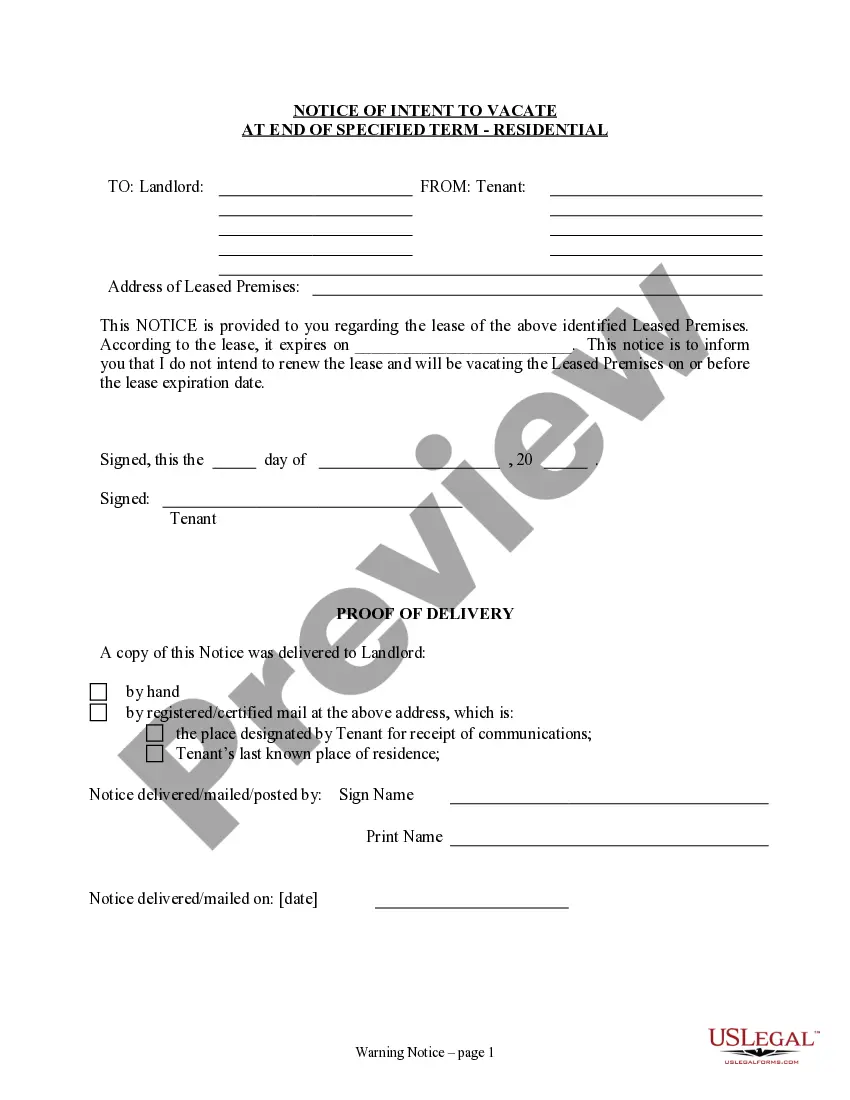
This Notice of Intent to Vacate at End of Specified Lease Term from Tenant to Landlord for Residential Property is a formal document that a tenant uses to notify their landlord that they will be vacating the rental property at the end of the lease term. This form is specifically designed for situations where the lease has a predetermined end date and helps clarify the tenant's intention not to renew the lease, thereby preventing misunderstandings regarding the lease termination date. Unlike other termination notices, this document is not typically required if the lease specifies an end date. However, it serves to formally communicate the tenant's decision.
Key components of this form
- Identification of parties: Tenant's and landlord's names and addresses.
- Details of the rental property: Address of the leased premises.
- Lease expiration date: The specific date when the lease term ends.
- Statement of intent: A declaration that the tenant does not intend to renew the lease.
- Signature: The tenant's signature and date of the notice.
- Proof of delivery: Options for delivering the notice to the landlord.
When to use this form
This form should be used when a tenant has a lease that clearly states an expiration date and intends to vacate the property on or before that date. It is particularly important in circumstances where the tenant does not plan to renew the lease, ensuring the landlord is informed and can prepare for the transition. This notice is also useful to protect the tenant's rights by providing written documentation of their intent to leave the property, preventing any potential disputes over lease renewal or move-out dates.
Who needs this form
- Residential tenants who are nearing the end of a specified lease term.
- Tenants who do not wish to renew their lease agreement.
- Individuals looking for a formal way to communicate their intent to vacate to their landlord.
- Tenants who want to document their notice for future reference or disputes.
How to complete this form
- Identify the parties: Fill in the names and addresses of both the tenant and the landlord.
- Specify the property: Enter the address of the leased premises being vacated.
- Enter the lease expiration date: Indicate the date when the current lease ends.
- State your intent: Clearly declare that you do not intend to renew the lease.
- Sign and date the form: Provide your signature and the date of the notice.
- Deliver the notice: Choose a delivery method, such as hand delivery or registered mail, and keep a record of the delivery.
Notarization requirements for this form
This form usually doesn’t need to be notarized. However, local laws or specific transactions may require it. Our online notarization service, powered by Notarize, lets you complete it remotely through a secure video session, available 24/7.
Get your form ready online
Our built-in tools help you complete, sign, share, and store your documents in one place.
Make edits, fill in missing information, and update formatting in US Legal Forms—just like you would in MS Word.
Download a copy, print it, send it by email, or mail it via USPS—whatever works best for your next step.
Sign and collect signatures with our SignNow integration. Send to multiple recipients, set reminders, and more. Go Premium to unlock E-Sign.
If this form requires notarization, complete it online through a secure video call—no need to meet a notary in person or wait for an appointment.
We protect your documents and personal data by following strict security and privacy standards.
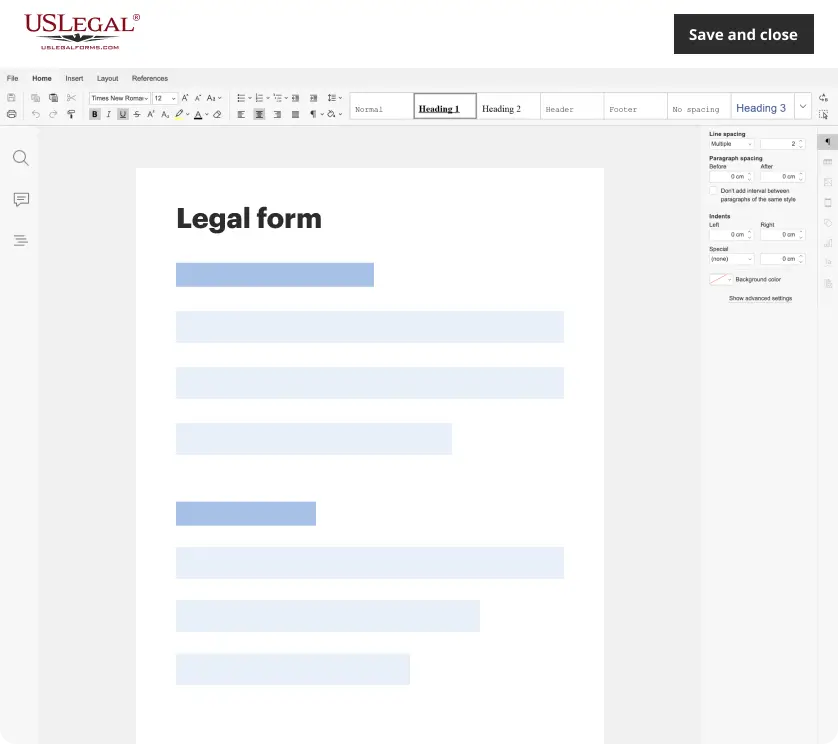
Make edits, fill in missing information, and update formatting in US Legal Forms—just like you would in MS Word.
Download a copy, print it, send it by email, or mail it via USPS—whatever works best for your next step.
Sign and collect signatures with our SignNow integration. Send to multiple recipients, set reminders, and more. Go Premium to unlock E-Sign.

If this form requires notarization, complete it online through a secure video call—no need to meet a notary in person or wait for an appointment.
We protect your documents and personal data by following strict security and privacy standards.
Common mistakes
- Not including the lease expiration date, which is crucial for clarity.
- Failing to deliver the notice properly, which can lead to disputes.
- Not keeping a copy of the notice for personal records.
- Assuming verbal communication is sufficient; this form should always be in writing.
Why use this form online
- Convenient access: Download and fill out the form whenever needed.
- Editability: Easily customize the form to fit your specific lease details.
- Reliability: Forms are drafted by licensed attorneys, ensuring legal compliance.
Legal use & context
- This form serves as a formal notification to the landlord and is a key part of the lease termination process.
- Using this notice helps protect the tenant's rights by providing evidence of intent to vacate.
- Failure to provide proper notification may lead to lease renewal issues or disputes over the security deposit.
Looking for another form?
Form popularity
FAQ
At-will tenancy is subject to the will of both the tenant and the landlord (hence the name). In other words, the tenant can choose to leave and stop paying rent at any time, and the landlord can choose to stop accepting rent and ask the tenant to leave at any time.
In Colorado, evictions are sometimes referred to as forcible entry & detainer (FED). Before you can file for eviction, you must generally provide 10 days' notice (increased from 3 days prior) for tenants to correct a deficiency or leave the property, except in certain circumstances.
TERMINATING OR ENDING YOUR TENANCY If you have no written lease and you pay rent by the month, the tenancy can be terminated by either you or the landlord for any reason or no reason at all, by giving at least 30 days written notice before the next rental due date.
A holdover tenant is a tenant who stays in the rental unit after the lease expires. If the tenant continues to pay rent, the tenancy essentially becomes a month-to-month tenancy. A holdover tenant is legally allowed to stay in the rental unit as long as the landlord takes no action to remove them.
A termination notice has to give the tenant 14 clear days before the tenant has to leave the residential premises. The day the notice is served on the tenant and the day the tenant moves out do not count as part of the 14 days.
This notice will inform the tenant that the tenant has 21 days to either remedy the violation or move out of the rental unit. If the tenant does not remedy the violation or move, then the landlord can file an eviction lawsuit against the tenant at the end of the 30 days. (Va. Code Ann.
A landlord can simply give you a written notice to move, allowing you 30 days (60 days if you've lived in the rental a year or more) as required by California law and specifying the date on which your tenancy will end.
Eviction notices When written by a landlord, a notice to vacate is commonly known as an "eviction notice," which tells the tenant they must move out of the rental property.
Explain the Situation Tell your tenant in straightforward terms what the problem is, and explain that they cannot stay on the property any longer. Describe the Consequences Calmly explain that they will be evicted with necessary court orders if they remain on the property.