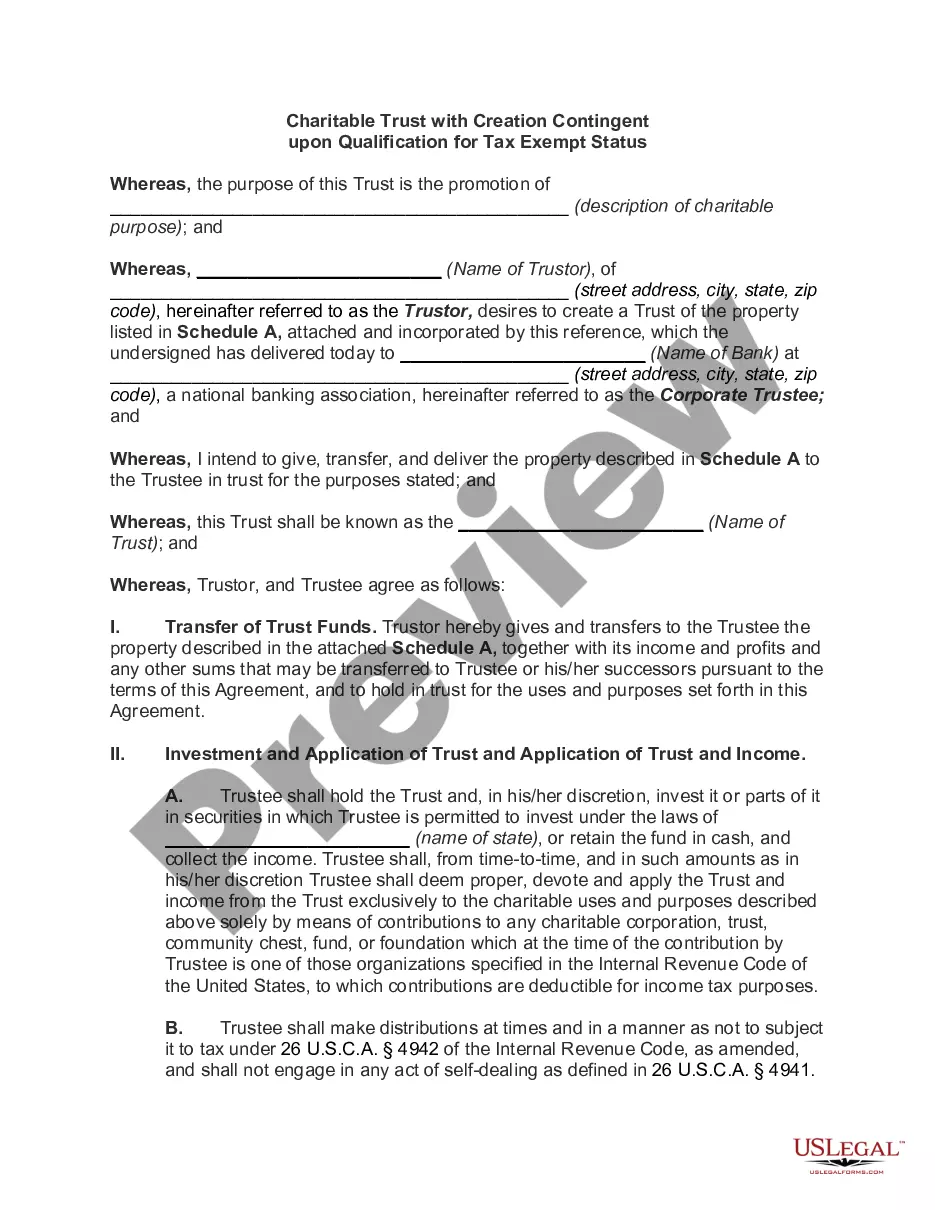
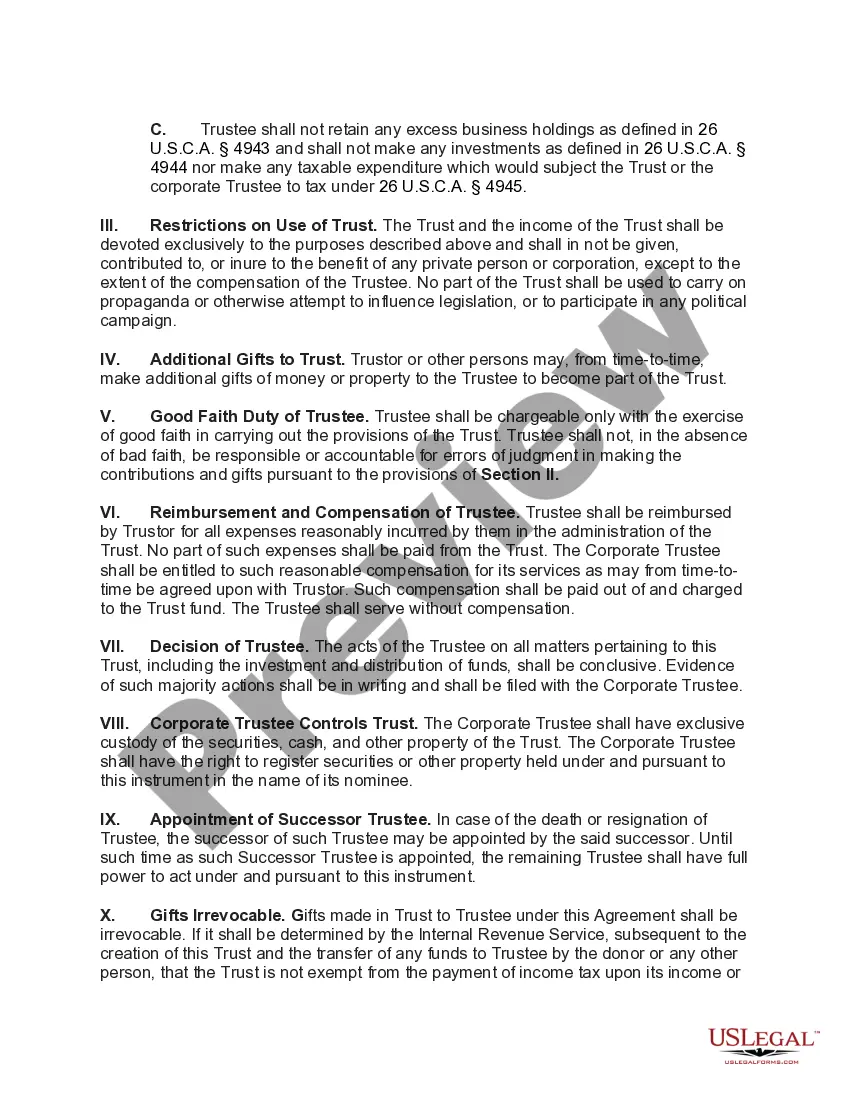
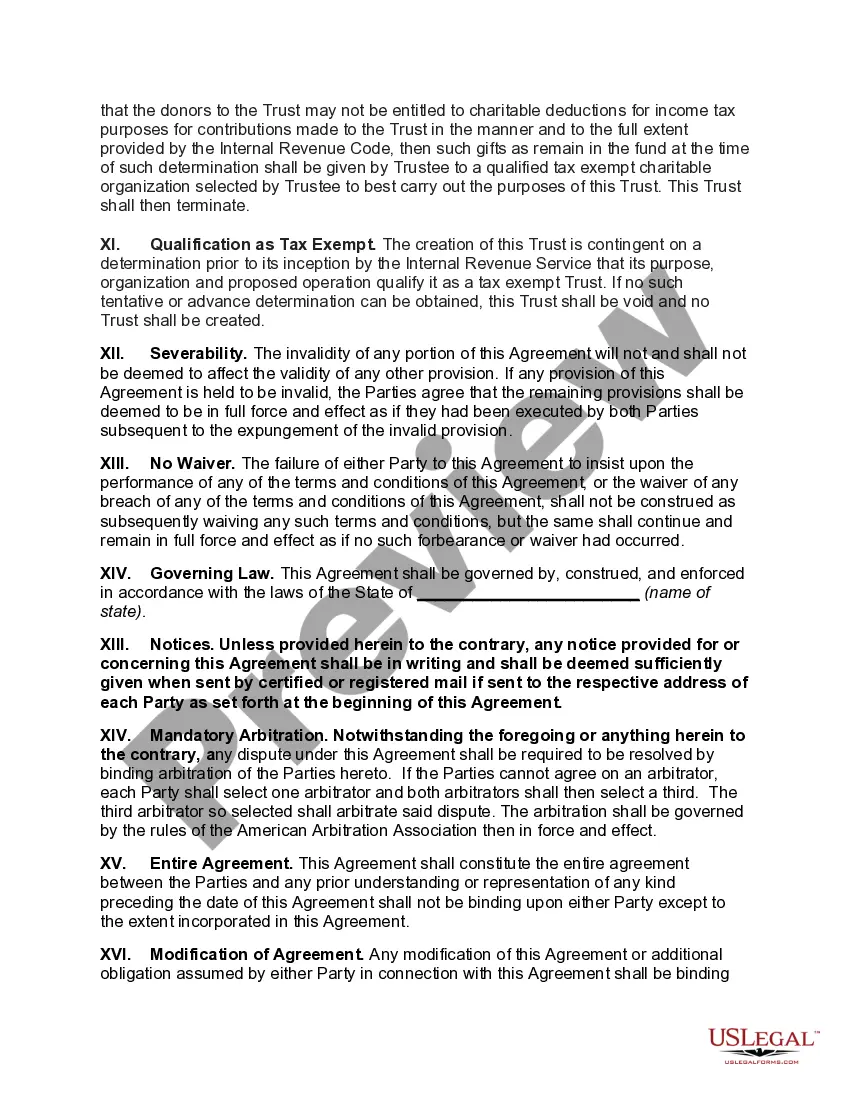
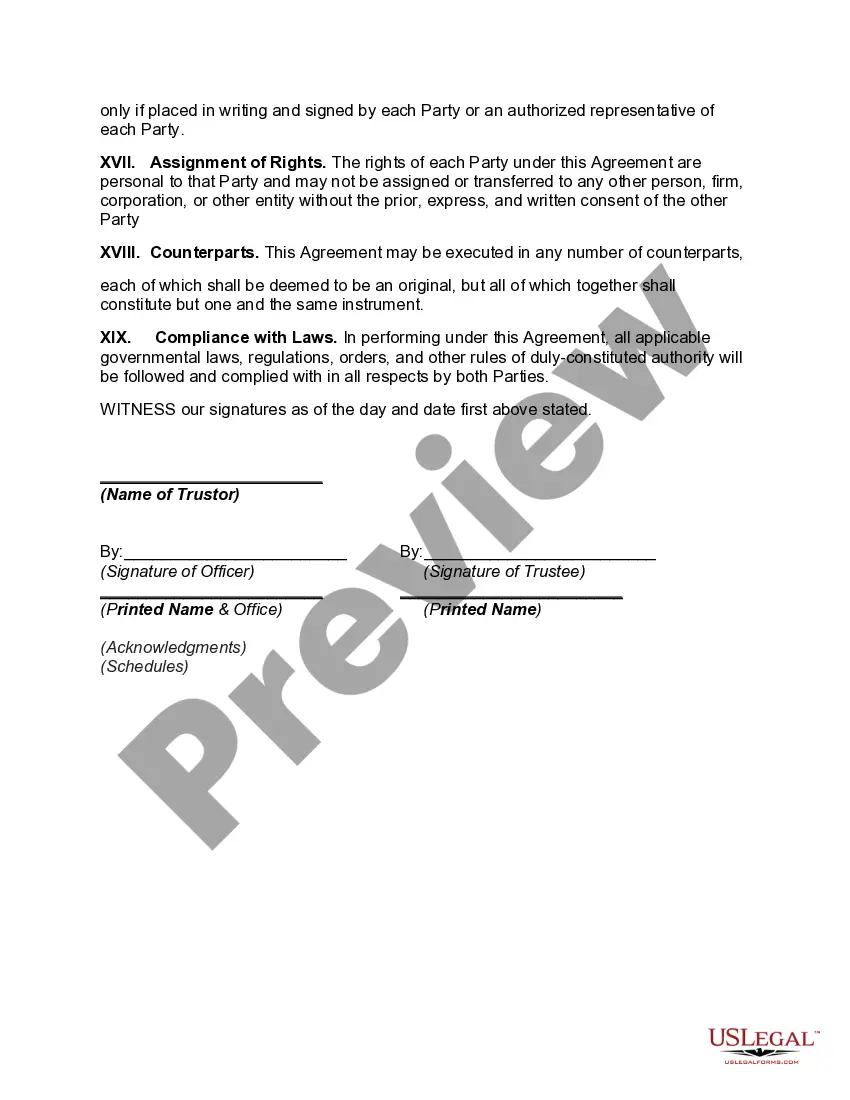
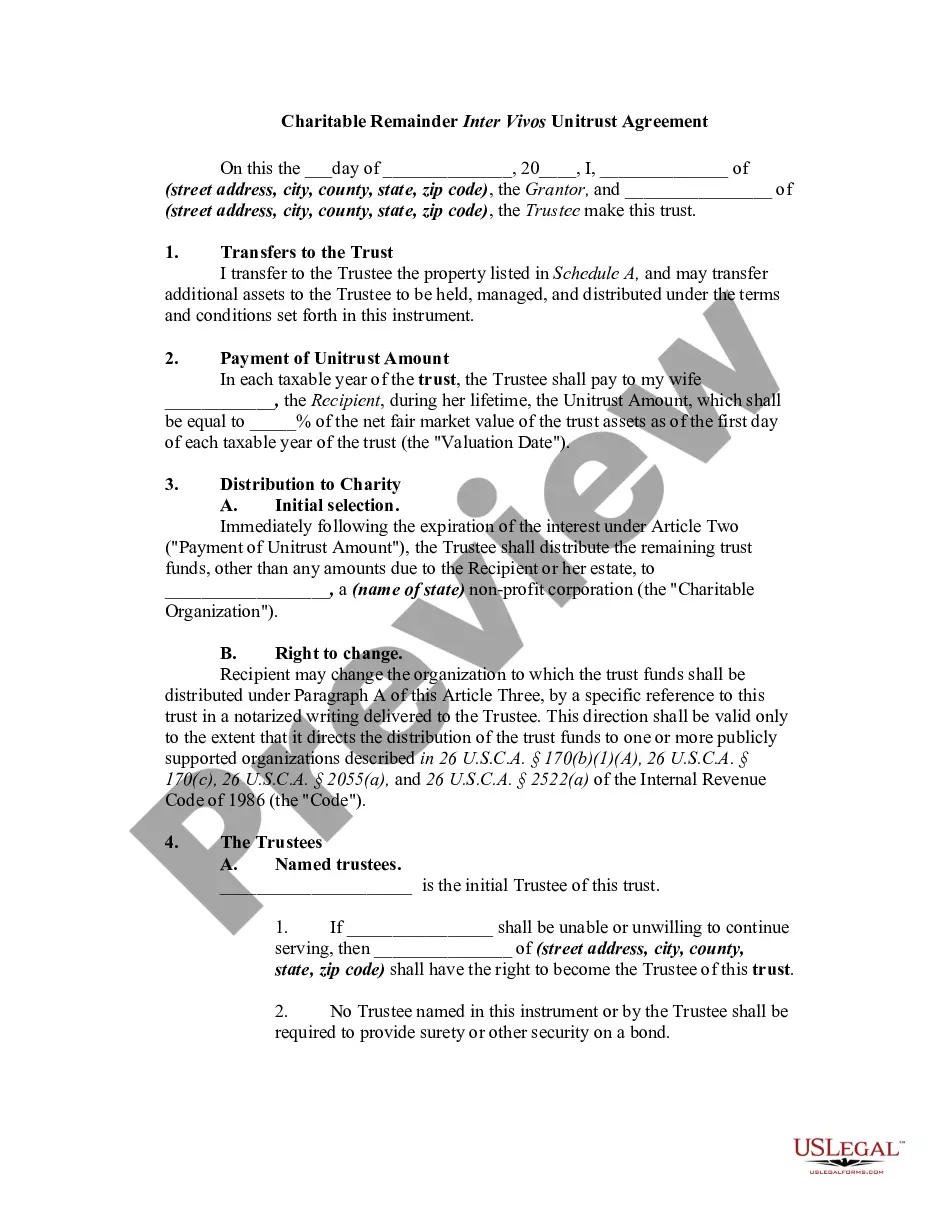
Wisconsin Charitable Trust with Creation Contingent upon Qualification for Tax Exempt Status
Description
Get your form ready online
Our built-in tools help you complete, sign, share, and store your documents in one place.
Make edits, fill in missing information, and update formatting in US Legal Forms—just like you would in MS Word.
Download a copy, print it, send it by email, or mail it via USPS—whatever works best for your next step.
Sign and collect signatures with our SignNow integration. Send to multiple recipients, set reminders, and more. Go Premium to unlock E-Sign.
If this form requires notarization, complete it online through a secure video call—no need to meet a notary in person or wait for an appointment.
We protect your documents and personal data by following strict security and privacy standards.

Make edits, fill in missing information, and update formatting in US Legal Forms—just like you would in MS Word.

Download a copy, print it, send it by email, or mail it via USPS—whatever works best for your next step.

Sign and collect signatures with our SignNow integration. Send to multiple recipients, set reminders, and more. Go Premium to unlock E-Sign.

If this form requires notarization, complete it online through a secure video call—no need to meet a notary in person or wait for an appointment.

We protect your documents and personal data by following strict security and privacy standards.
Looking for another form?









How to fill out Charitable Trust With Creation Contingent Upon Qualification For Tax Exempt Status?
Are you presently in a position where you require documents for either commercial or particular operations almost all the time.
There are numerous credible document templates accessible online, but locating versions you can rely on is not simple.
US Legal Forms offers a vast array of form templates, similar to the Wisconsin Charitable Trust with Creation Contingent upon Qualification for Tax Exempt Status, that can be filled out to comply with state and federal requirements.
Choose the pricing plan you prefer, fill in the necessary information to create your account, and complete the transaction using your PayPal or Visa or Mastercard.
Select a suitable document format and download your copy.
- If you are already acquainted with the US Legal Forms website and have an account, simply Log In.
- After that, you can download the Wisconsin Charitable Trust with Creation Contingent upon Qualification for Tax Exempt Status template.
- If you don't have an account and wish to start using US Legal Forms, follow these steps.
- Obtain the form you need and verify that it is for your specific city/county.
- Utilize the Review button to inspect the form.
- Check the summary to ensure you have selected the correct form.
- If the form isn't what you're looking for, use the Research field to find the form that suits you and your requirements.
- When you obtain the correct form, click Purchase now.
Form popularity
FAQ
You can start an S corporation (S corp) in Wisconsin by forming a limited liability company (LLC) or a corporation, and then electing S corp status from the IRS when you apply for your EIN. An S corp is an IRS tax classification, not a business structure. The S corp status is used to reduce a business's tax burden.
A Wisconsin S corporation is simply a standard corporation that becomes an S corporation when its shareholders elect special tax status with the Internal Revenue Service (IRS) by filing an IRS Form 2553 (after filing its official documents with State).
Some jurisdictionsthe District of Columbia, Louisiana, New Hampshire, New York City, Tennessee, and Texasdo not recognize the federal S corporation election and, for the most part, tax S corporations like other business corporations.
Goods that are subject to sales tax in Wisconsin include physical property, like furniture, home appliances, and motor vehicles. Prescription medicine, groceries, and gasoline are all tax-exempt.
To be exempt from withholding, both of the following must be true: You owed no federal income tax in the prior tax year, and. You expect to owe no federal income tax in the current tax year.
A qualifying nonprofit organization may purchase items exempt from tax by providing the seller either of the following:A fully completed Wisconsin Sales and Use Tax Certificate (Form S-211 or S-211E) indicating the organization meets the requirements of section 501(c)(3) of the IRC.The organization's CES number.
A corporation electing Subchapter S status for federal purposes was taxed as a regular (C) corporation for Wisconsin. For corporations' taxable years ending from July 31, 1979, through June 30, 1987, Wisconsin recognized tax- option (S) corporation status.
Not all states and localities recognize S corporations and, consequently, do not extend the pass-through taxation advantages to them since they treat them as C corporations. The District of Columbia, New Hampshire, Tennessee, New York City and Texas do not afford special treatment to S corporations.
Creating a living trust in Wisconsin may be useful in your estate plan. Your trust offers privacy not available with a will. The assets, beneficiaries, and terms of the trust are never public record. If you choose to pass your assets through a will, it must go through probate and then becomes public record.
However, a charitable trust is not treated as a charitable organization for purposes of exemption from tax. Accordingly, the trust is subject to the excise tax on its investment income under the rules that apply to taxable foundations rather than those that apply to tax-exempt foundations.