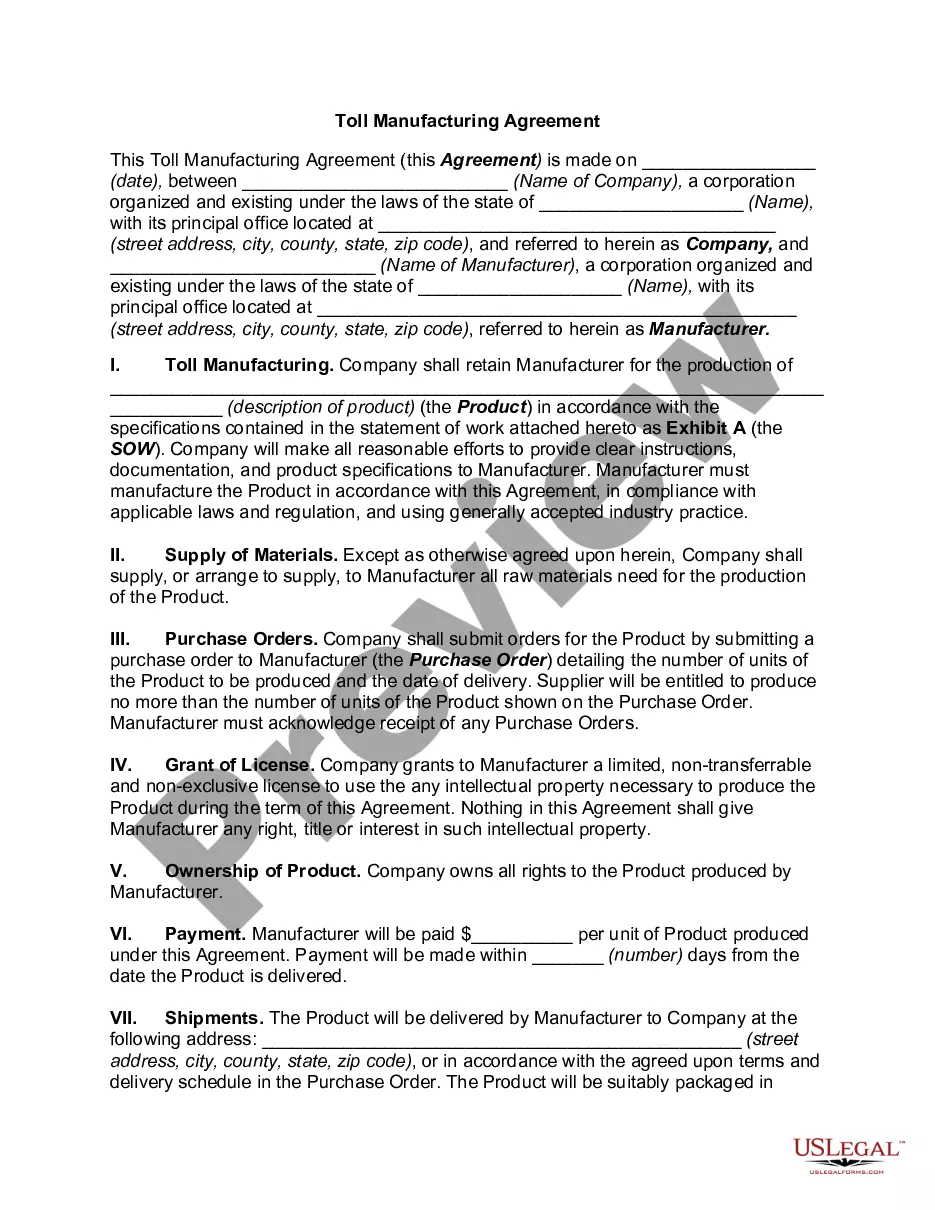
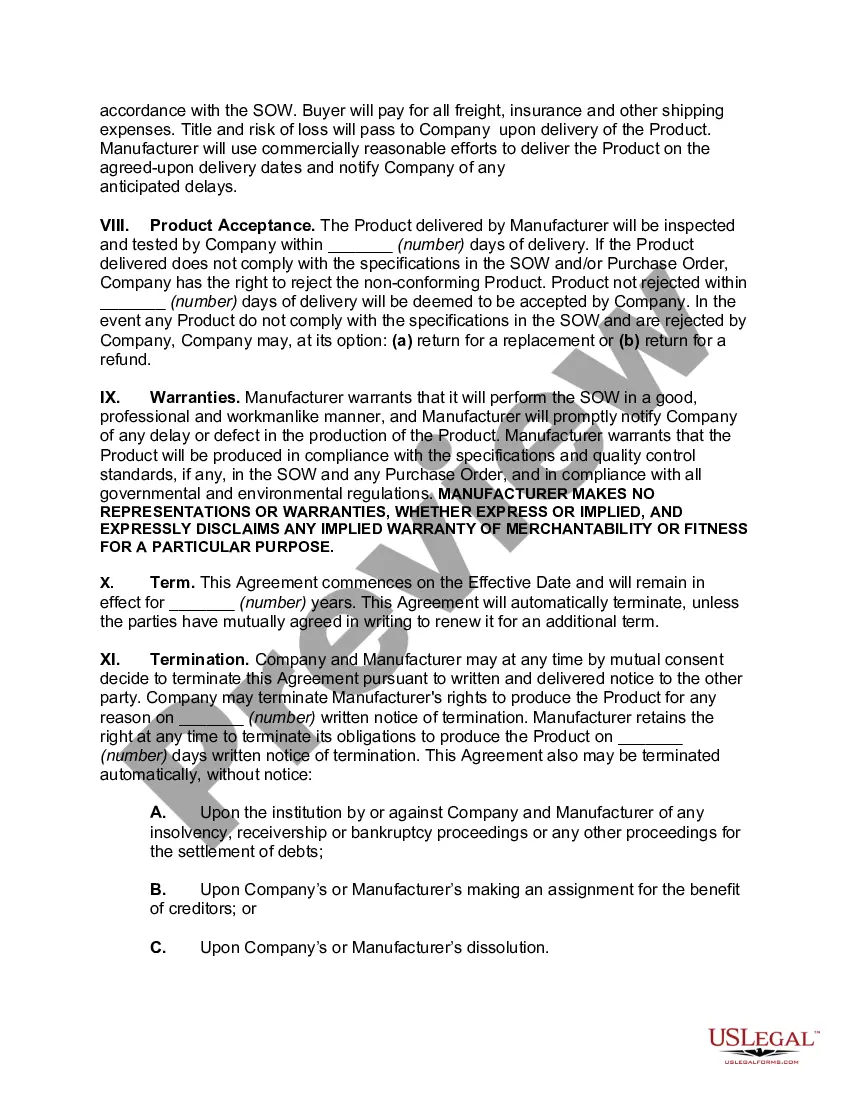
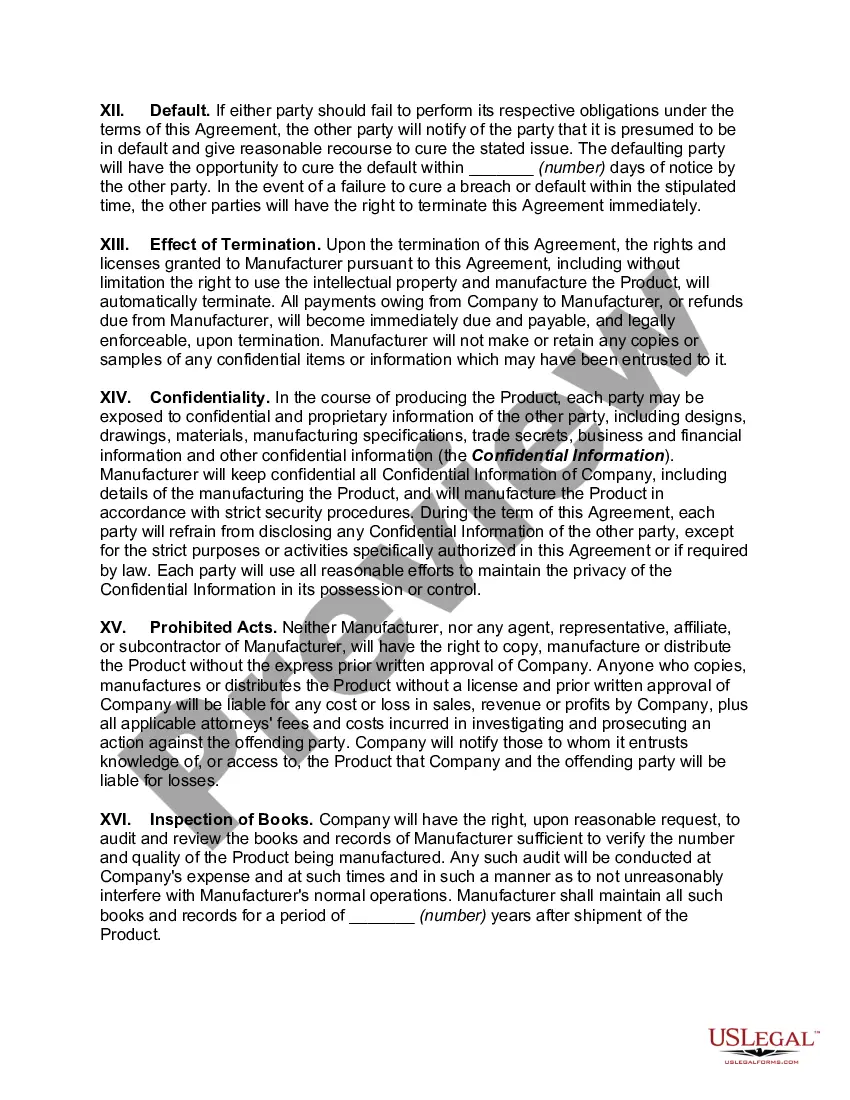
Wisconsin Toll Manufacturing Agreement
Description
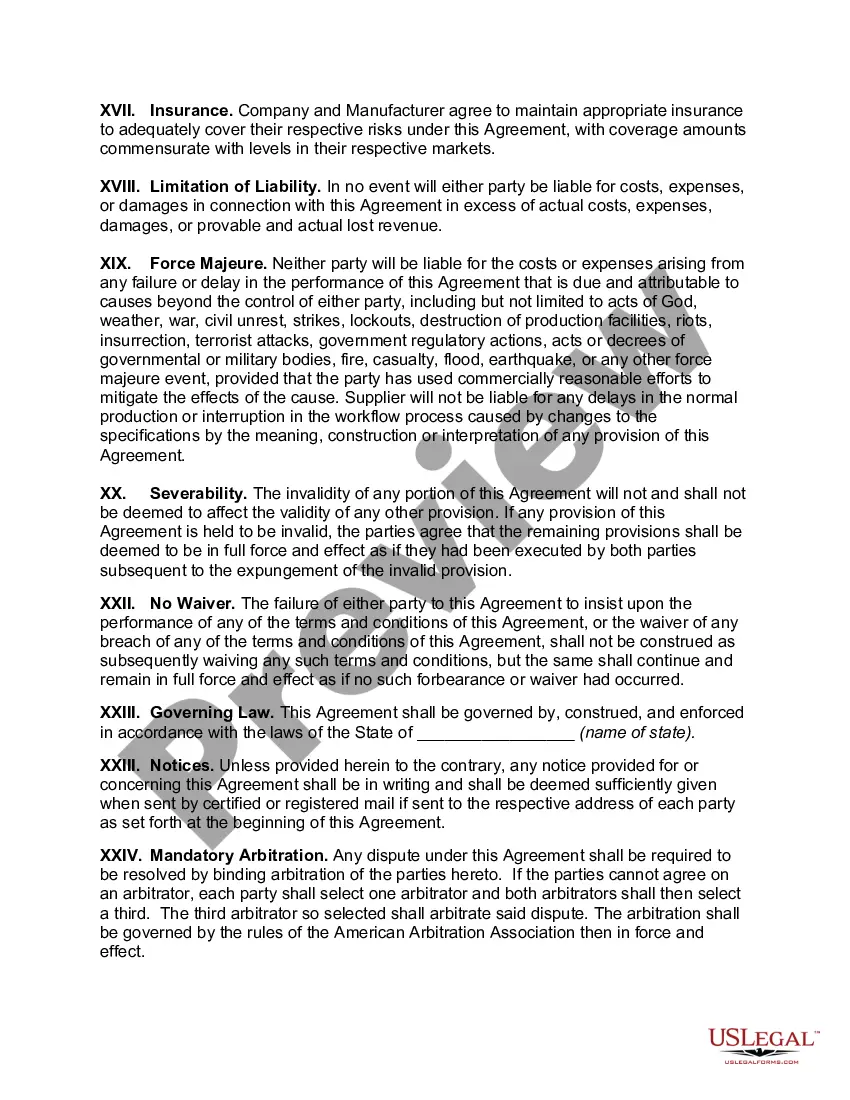
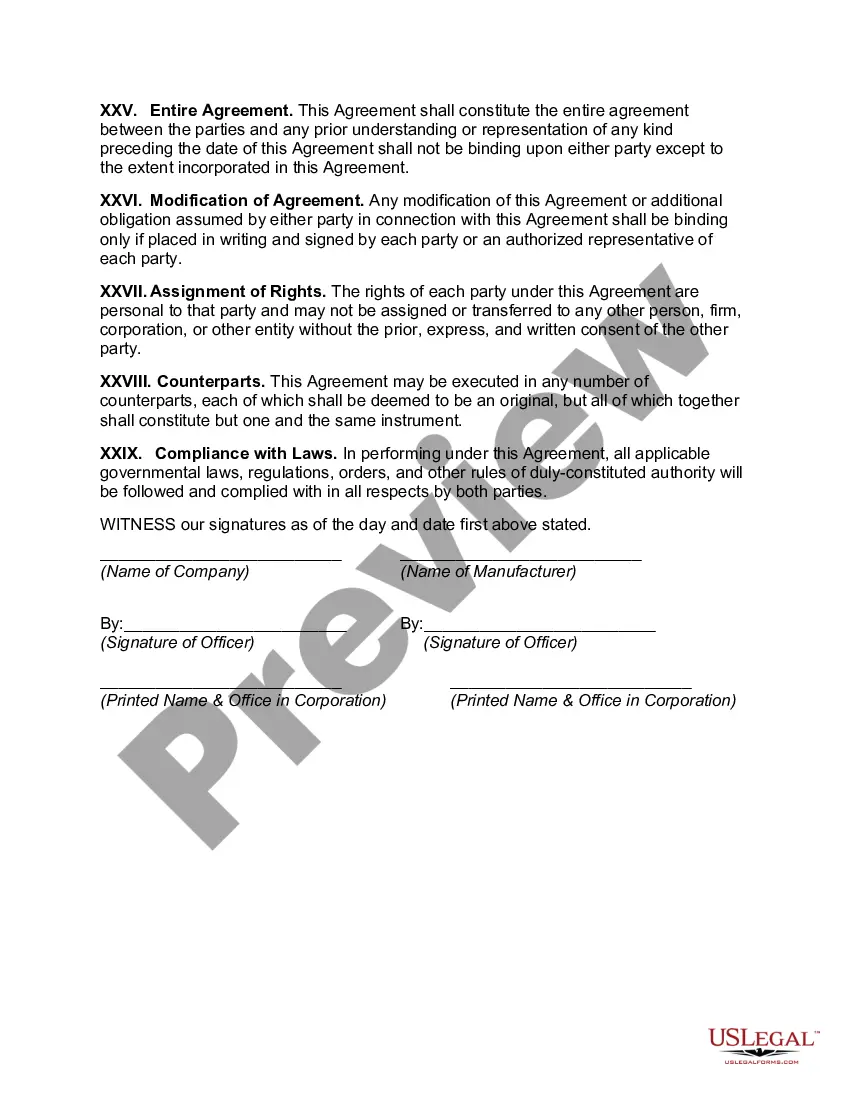
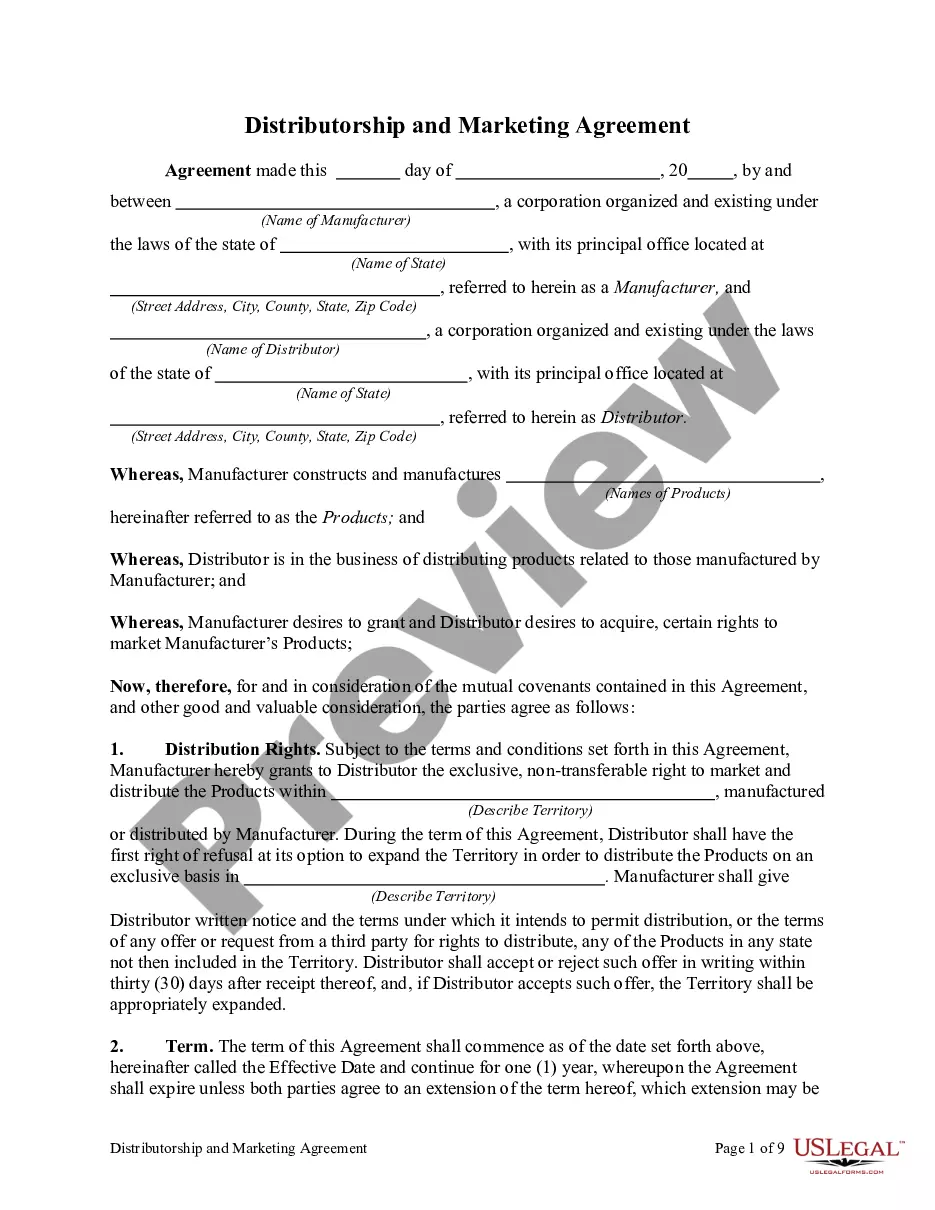
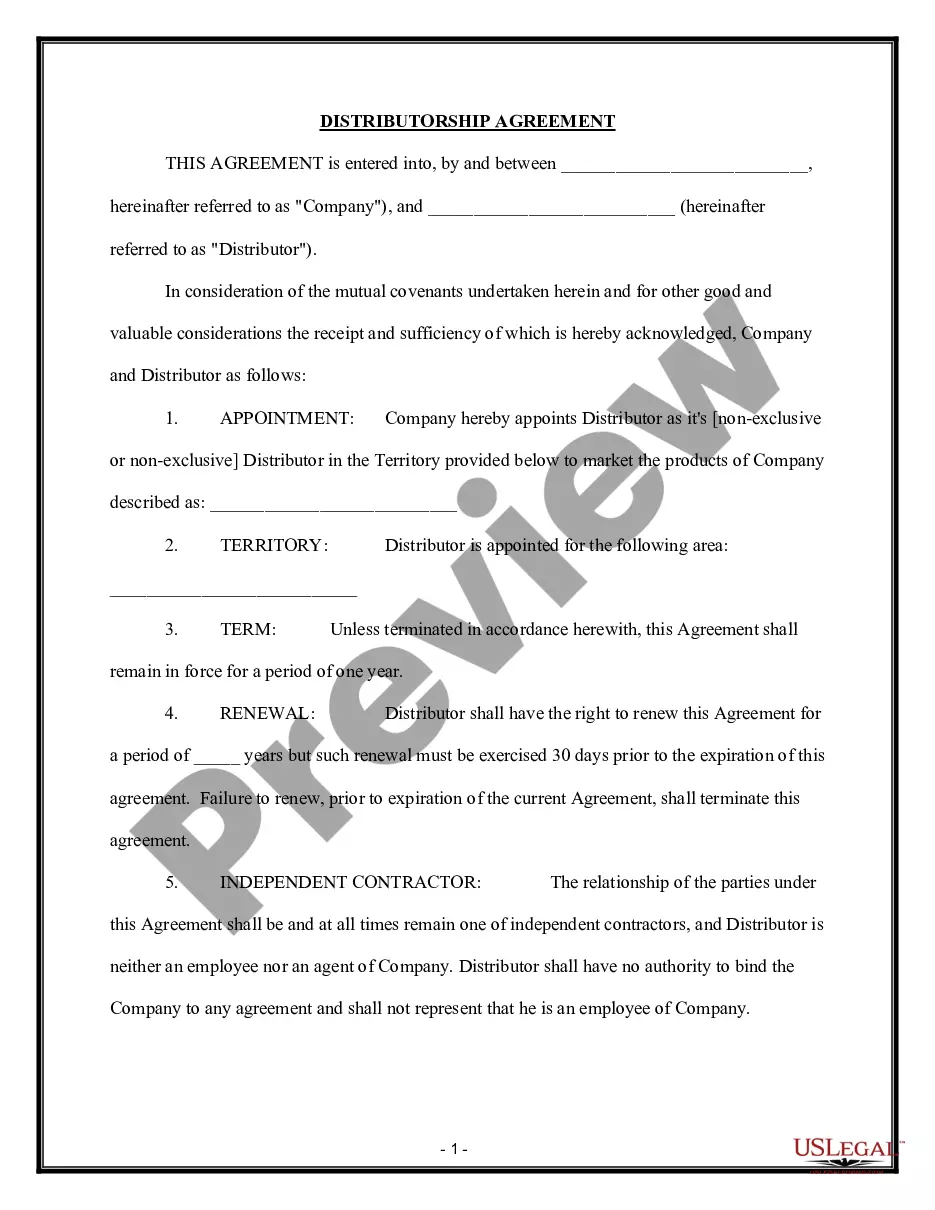
Get your form ready online
Our built-in tools help you complete, sign, share, and store your documents in one place.
Make edits, fill in missing information, and update formatting in US Legal Forms—just like you would in MS Word.
Download a copy, print it, send it by email, or mail it via USPS—whatever works best for your next step.
Sign and collect signatures with our SignNow integration. Send to multiple recipients, set reminders, and more. Go Premium to unlock E-Sign.
If this form requires notarization, complete it online through a secure video call—no need to meet a notary in person or wait for an appointment.
We protect your documents and personal data by following strict security and privacy standards.

Make edits, fill in missing information, and update formatting in US Legal Forms—just like you would in MS Word.

Download a copy, print it, send it by email, or mail it via USPS—whatever works best for your next step.

Sign and collect signatures with our SignNow integration. Send to multiple recipients, set reminders, and more. Go Premium to unlock E-Sign.

If this form requires notarization, complete it online through a secure video call—no need to meet a notary in person or wait for an appointment.

We protect your documents and personal data by following strict security and privacy standards.
Looking for another form?



How to fill out Toll Manufacturing Agreement?
You might spend hours online searching for the legal document template that meets the federal and state requirements you need.
US Legal Forms offers thousands of legal forms that have been reviewed by experts.
You can easily download or print the Wisconsin Toll Manufacturing Agreement from the service.
If available, utilize the Preview option to browse through the document template as well.
- If you already have a US Legal Forms account, you can Log In and click on the Acquire option.
- After that, you can complete, modify, print, or sign the Wisconsin Toll Manufacturing Agreement.
- Every legal document template you obtain is yours permanently.
- To get an additional copy of the purchased form, go to the My documents tab and click on the relevant option.
- If you are using the US Legal Forms website for the first time, follow the simple instructions below.
- First, make sure you have chosen the appropriate document template for the state/town you select.
- Review the form description to ensure you have selected the correct form.
Form popularity
FAQ
A toll manufacturing agreement outlines the terms and conditions under which one company agrees to manufacture products for another using the latter's materials. This contractual arrangement defines responsibilities, costs, and timelines, ensuring clarity for both parties. Using a Wisconsin Toll Manufacturing Agreement can protect your interests and streamline the manufacturing process, enhancing your business efficiency.
Toll manufacturing involves processing raw materials for another company without taking ownership of the final product. In contrast, subcontracting refers to hiring another company to perform a specific job or task, which may not strictly involve manufacturing. Both methods can streamline operations, but recognizing their unique applications can help optimize your business strategy.
Contract manufacturing often encompasses a broader range of services, including design and full product management, while toll manufacturing focuses specifically on converting raw materials into finished goods. While both methods allow companies to enhance their production capabilities, choosing between them hinges on your specific manufacturing requirements and ownership preferences. To explore these options, consider using tools like the Wisconsin Toll Manufacturing Agreement.
A manufacturer produces goods from raw materials and often handles product development, design, and distribution. On the other hand, a contract manufacturer partners with businesses to create products on their behalf, providing flexibility and reducing overhead costs. Understanding these distinctions helps you choose the right production strategy for your needs.
A toll manufacturer processes raw materials into finished products for another company, handling the production without taking ownership of the goods. In contrast, a contract manufacturer manages the whole production process, from design to final assembly, while typically having ownership of the products. Both options are essential for businesses looking to optimize production, but the key difference lies in ownership and control.
A toll agreement is a contract between a company and a manufacturer where the manufacturer processes materials on behalf of the company. This arrangement allows companies to leverage specialized production capabilities without investing in the equipment themselves. By using a Wisconsin Toll Manufacturing Agreement, firms can maintain control over their product quality while enjoying the benefits of outsourced production.
Toll manufacturing offers several advantages for businesses. First, it allows you to focus on your core competencies while outsourcing production to experts. Additionally, it can reduce operational costs and minimize the need for significant capital investment. With a Wisconsin Toll Manufacturing Agreement, you can streamline your processes and improve your supply chain efficiency.
The primary distinction between toll manufacturing and contract manufacturing lies in the ownership and control of the product. In a Wisconsin Toll Manufacturing Agreement, one company provides the raw materials, while another company performs the manufacturing process without taking ownership of the product. Conversely, contract manufacturing involves the manufacturer owning the product and handling everything from production to distribution. Understanding these differences can help you choose the right model for your business needs.
Tolling fees are costs associated with the processing of a company's materials by a toll manufacturer. These fees cover various aspects, including labor, equipment use, and overhead incurred during production. In a Wisconsin Toll Manufacturing Agreement, it's important to clearly define these fees upfront to prevent any surprises and ensure that both parties align expectations throughout the production process.
A tolling arrangement is a contractual agreement allowing one company to use another's facilities or expertise for manufacturing. Under a Wisconsin Toll Manufacturing Agreement, it specifies the conditions under which one party provides materials while the other processes them. This arrangement is particularly beneficial for companies looking to streamline production and reduce overhead costs, all while maintaining focus on their core business.