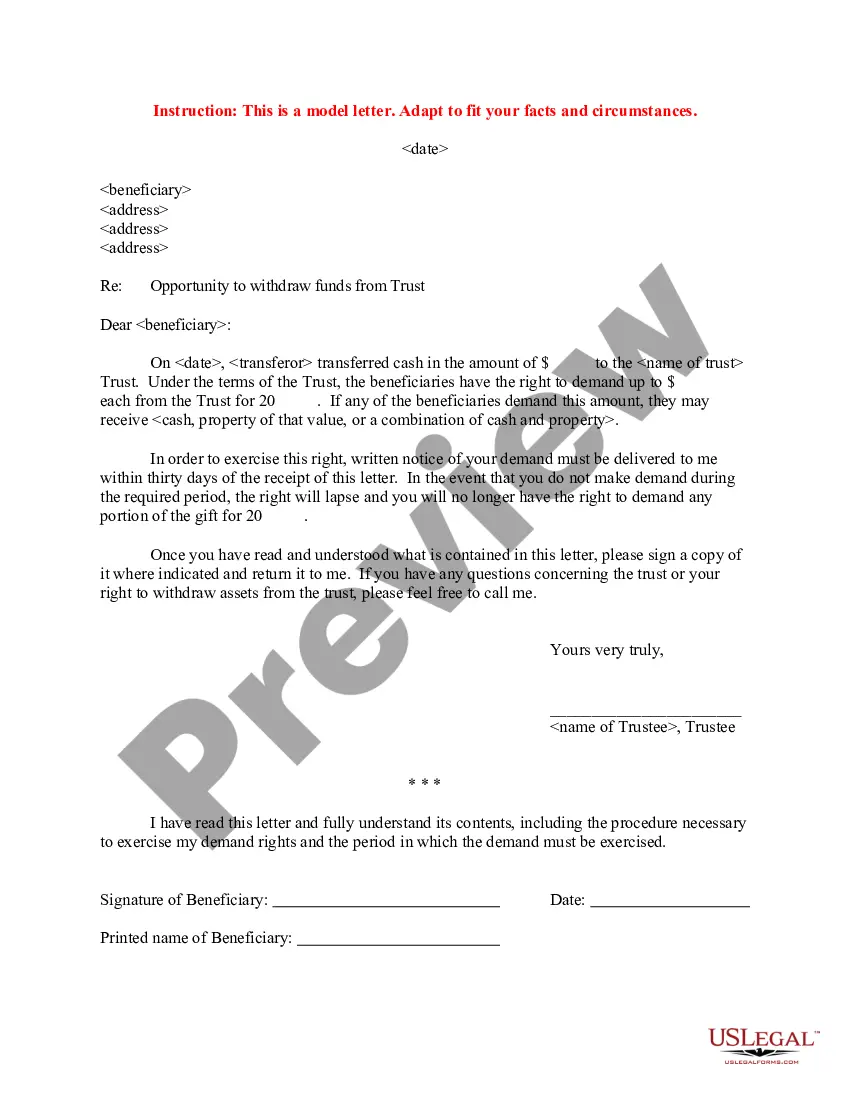
Wisconsin Sample Letter to Beneficiaries regarding Trust Money
Description



Get your form ready online
Our built-in tools help you complete, sign, share, and store your documents in one place.
Make edits, fill in missing information, and update formatting in US Legal Forms—just like you would in MS Word.
Download a copy, print it, send it by email, or mail it via USPS—whatever works best for your next step.
Sign and collect signatures with our SignNow integration. Send to multiple recipients, set reminders, and more. Go Premium to unlock E-Sign.
If this form requires notarization, complete it online through a secure video call—no need to meet a notary in person or wait for an appointment.
We protect your documents and personal data by following strict security and privacy standards.

Make edits, fill in missing information, and update formatting in US Legal Forms—just like you would in MS Word.

Download a copy, print it, send it by email, or mail it via USPS—whatever works best for your next step.

Sign and collect signatures with our SignNow integration. Send to multiple recipients, set reminders, and more. Go Premium to unlock E-Sign.

If this form requires notarization, complete it online through a secure video call—no need to meet a notary in person or wait for an appointment.

We protect your documents and personal data by following strict security and privacy standards.
Looking for another form?
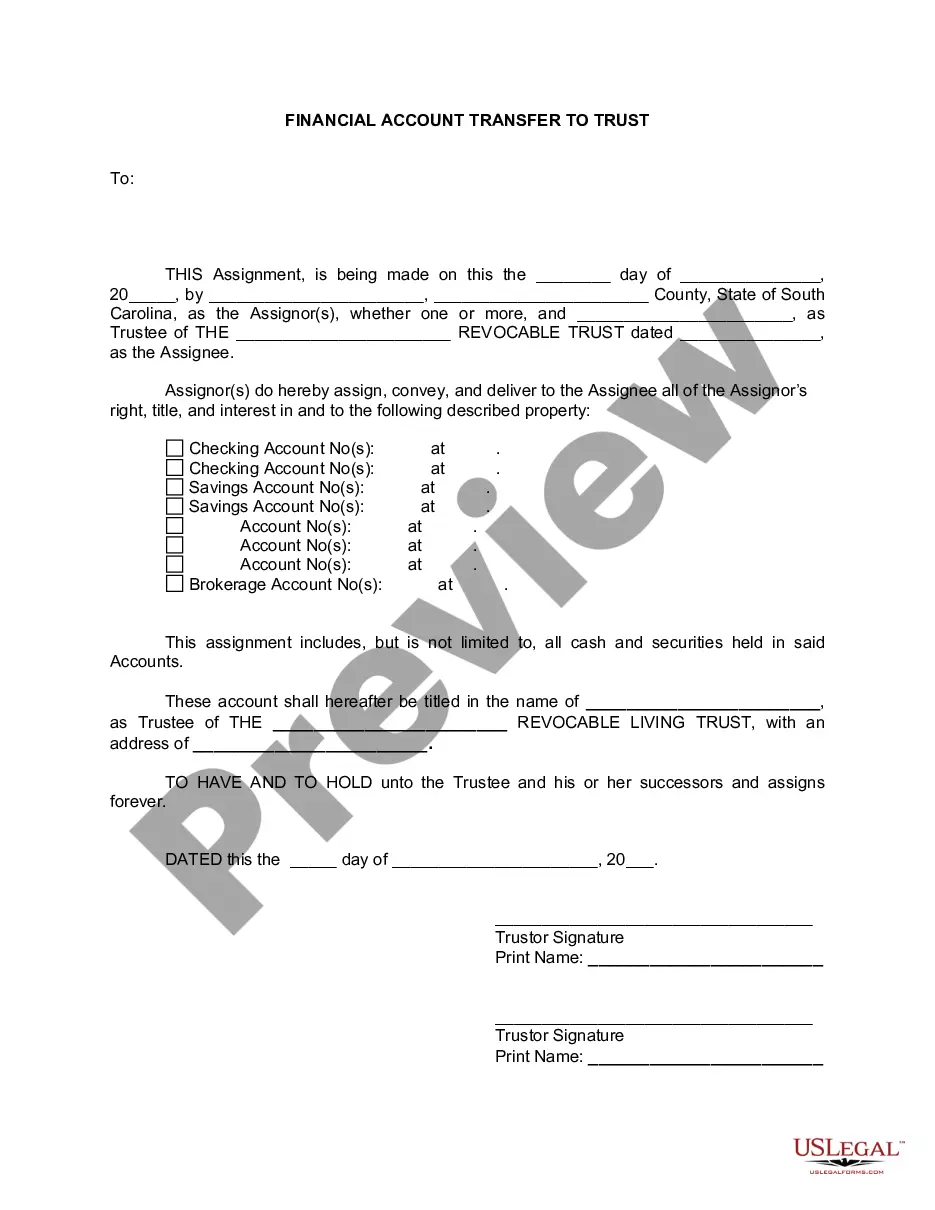









How to fill out Sample Letter To Beneficiaries Regarding Trust Money?
Finding the right legitimate record web template might be a have difficulties. Obviously, there are tons of layouts accessible on the Internet, but how can you discover the legitimate kind you need? Utilize the US Legal Forms internet site. The assistance delivers 1000s of layouts, like the Wisconsin Sample Letter to Beneficiaries regarding Trust Money, that you can use for company and private demands. Each of the types are checked out by specialists and fulfill federal and state needs.
In case you are already registered, log in in your bank account and then click the Acquire key to have the Wisconsin Sample Letter to Beneficiaries regarding Trust Money. Make use of your bank account to check with the legitimate types you have purchased in the past. Go to the My Forms tab of your bank account and acquire one more version of the record you need.
In case you are a fresh user of US Legal Forms, listed below are simple recommendations that you can follow:
- Initial, be sure you have selected the appropriate kind to your metropolis/county. You may look through the form utilizing the Review key and study the form description to make sure it will be the right one for you.
- In the event the kind will not fulfill your expectations, use the Seach discipline to find the appropriate kind.
- When you are sure that the form would work, go through the Buy now key to have the kind.
- Select the prices strategy you desire and enter the required information and facts. Create your bank account and buy the transaction using your PayPal bank account or bank card.
- Choose the data file file format and acquire the legitimate record web template in your system.
- Total, edit and print out and signal the received Wisconsin Sample Letter to Beneficiaries regarding Trust Money.
US Legal Forms will be the greatest library of legitimate types where you can discover numerous record layouts. Utilize the company to acquire appropriately-made documents that follow state needs.
Form popularity
FAQ
Write the names of the main individual(s), entity (such as a charity, business, religious organization, funeral home, etc.), trust, or estate. You may name more than one. All secondary beneficiaries listed will receive EQUAL SHARES (equal amounts) of your benefit if ALL of the primary beneficiaries are deceased.
The grantor can opt to have the beneficiaries receive trust property directly without any restrictions. The trustee can write the beneficiary a check, give them cash, and transfer real estate by drawing up a new deed or selling the house and giving them the proceeds.
To leave property to your living trust, name your trust as beneficiary for that property, using the trustee's name and the name of the trust. For example: John Doe as trustee of the John Doe Living Trust, dated January 1, 20xx.
Trust Fund Distribution Rules to Beneficiaries If the trust fund is cash only, trust fund distribution involves writing checks to beneficiaries. Real estate is deeded out of the trust and into the names of beneficiaries. Stocks and bonds can be transferred from the trust into the beneficiary's brokerage accounts.
The payout rule stipulates that the beneficiary must take out the remaining balance over the owner's remaining life expectancy.
When trust beneficiaries receive distributions from the trust's principal balance, they don't have to pay taxes on this disbursement. The Internal Revenue Service (IRS) assumes this money was taxed before being placed into the trust. Gains on the trust are taxable as income to the beneficiary or the trust.
Trusts and Estates | Matthew D. The U.S. Tax Code gives fiduciaries of trusts and estates the option to make additional distributions to their beneficiaries up to 65 days into the new year. This small 65-day window can be a great planning opportunity if you know how to take advantage of it.
As previously mentioned, trustees generally cannot withhold money from a beneficiary for no reason or indefinitely. Similarly, trustees cannot withdraw money from a trust to benefit themselves, even if the trustee is also a beneficiary.