Wisconsin Notice of Option for Recording
What is this form?
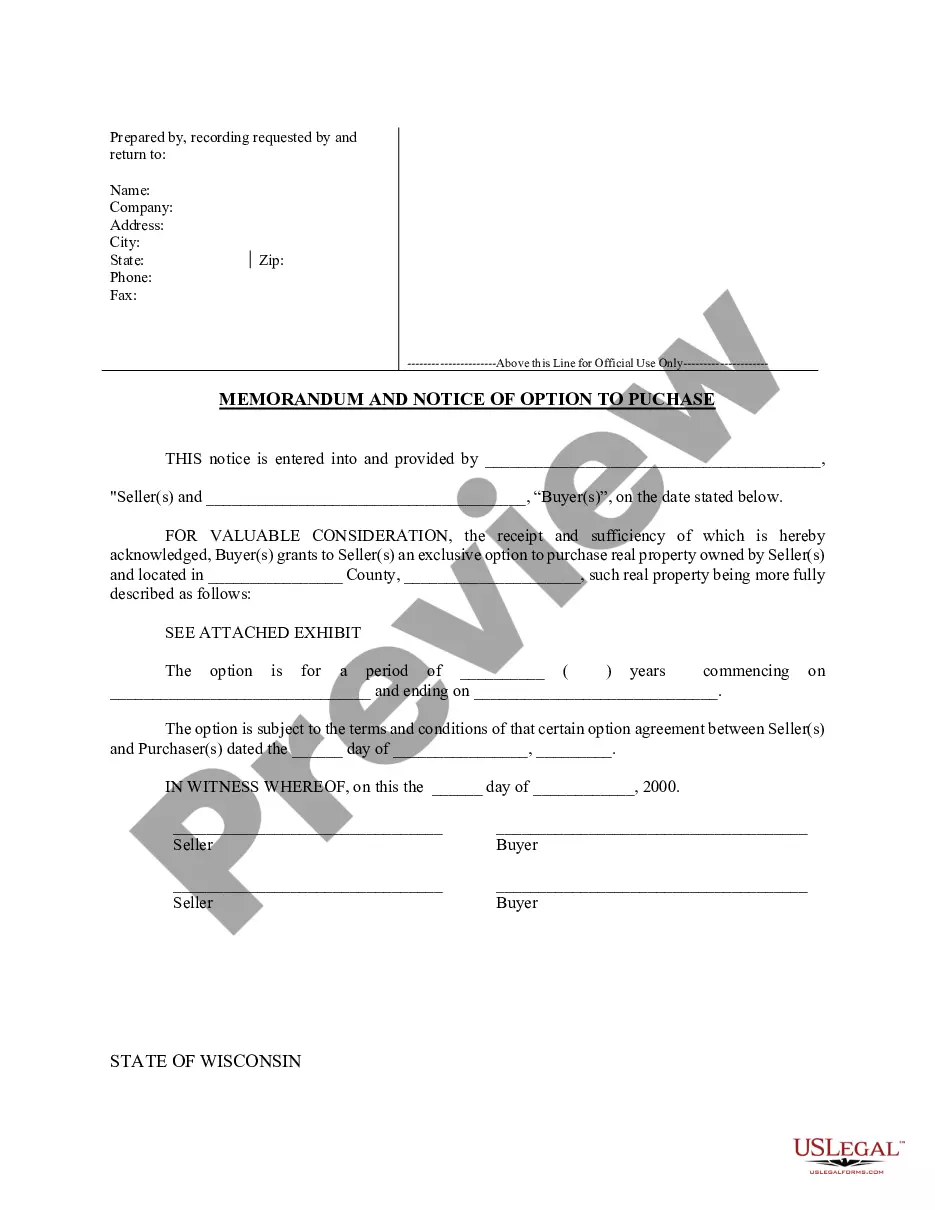
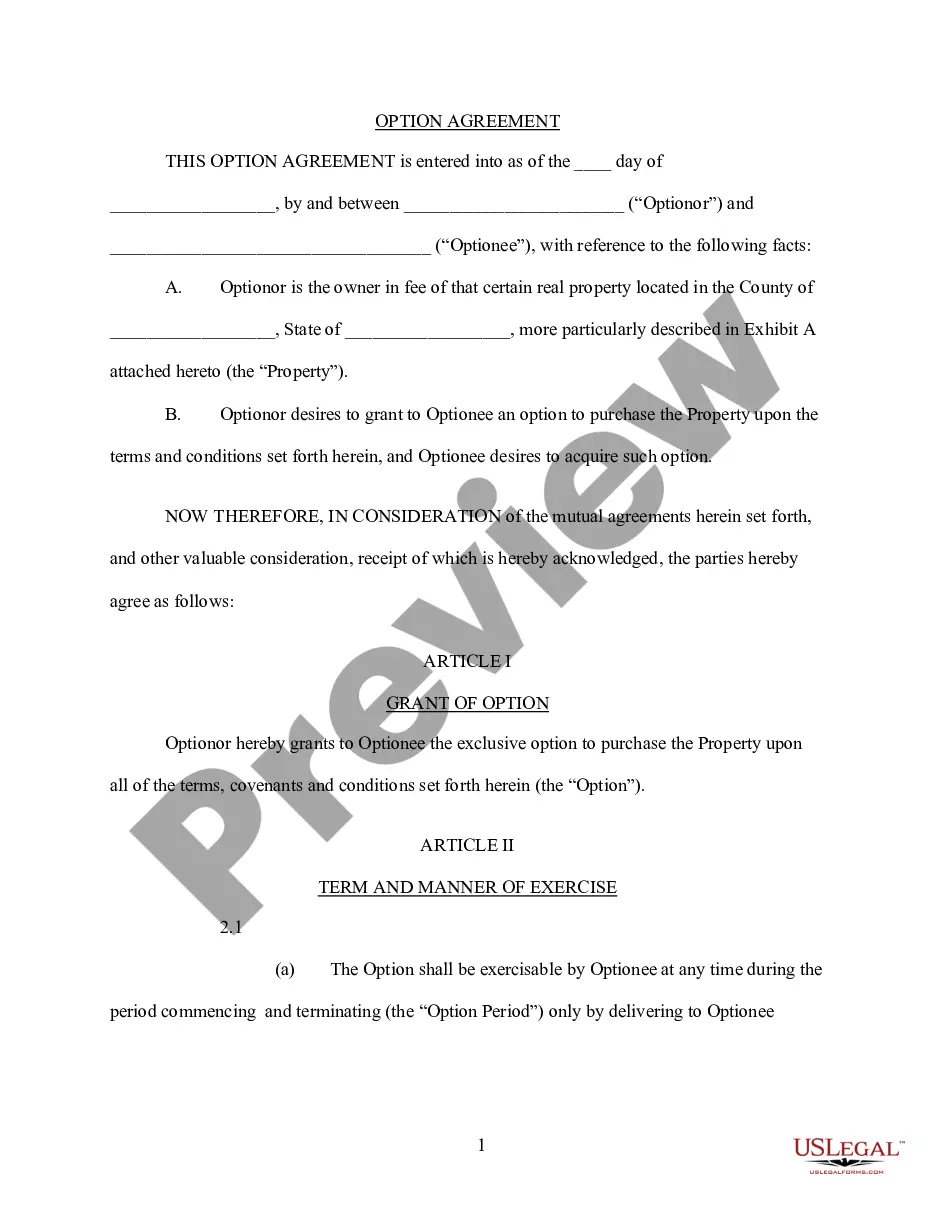
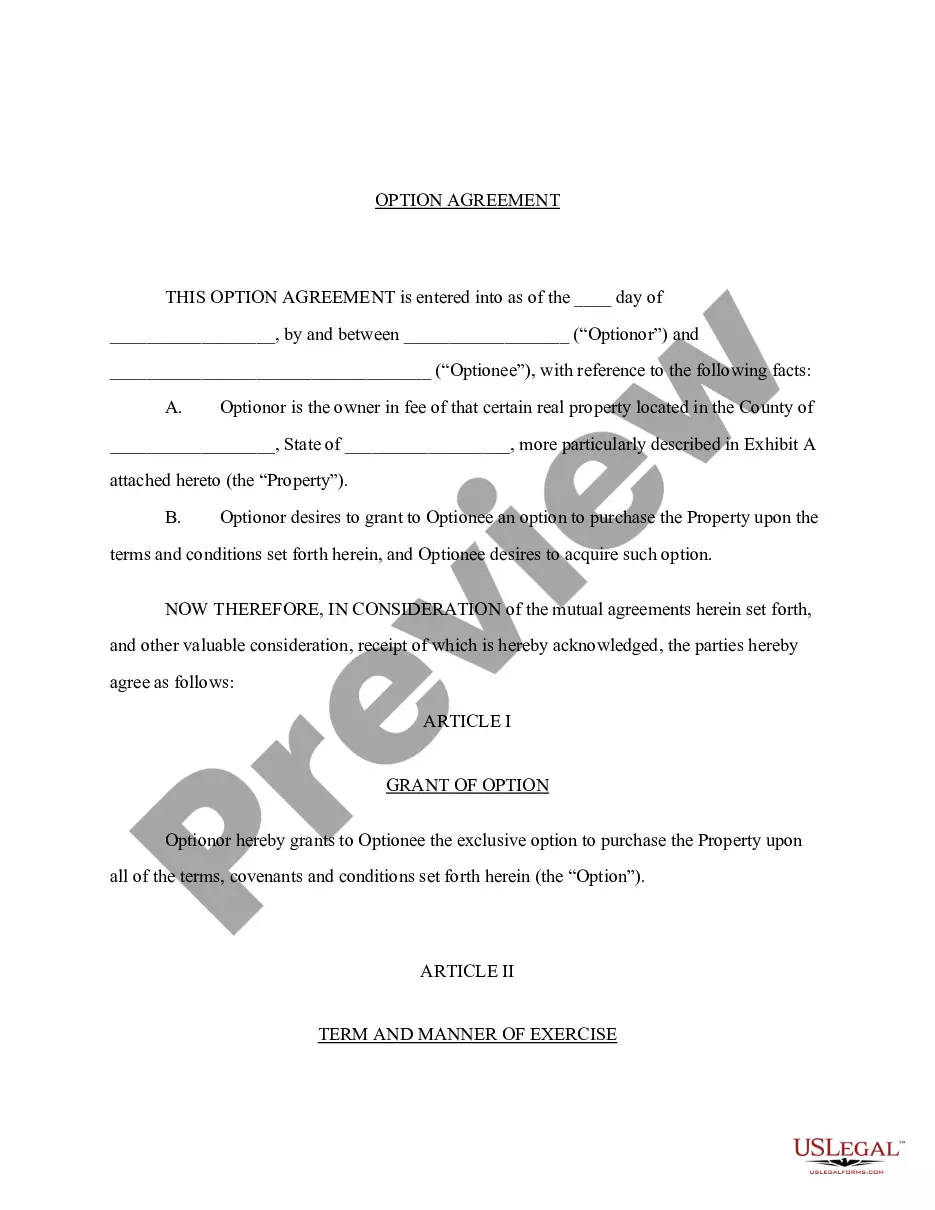
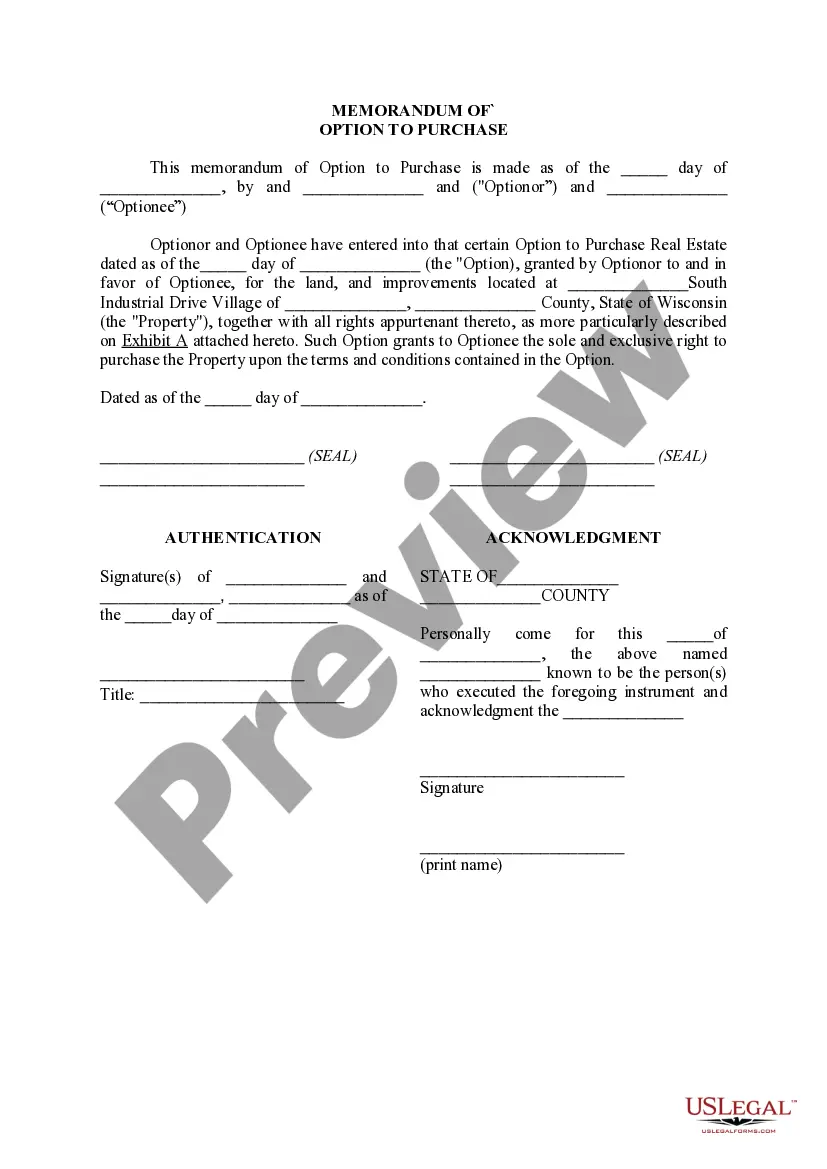
The Notice of Option for Recording is a legal document that provides notice of an existing option to purchase a specific parcel of real estate. This form serves as a summary and encapsulation of the more detailed Option Agreement, allowing parties to record their option without needing to disclose the entire agreement publicly. It creates a public record that can protect the rights of the buyer while informing third parties that an option exists on the property in question.
What’s included in this form
- Identification of the seller(s) and buyer(s).
- Description of the real property involved.
- Details of the option agreement, including the duration.
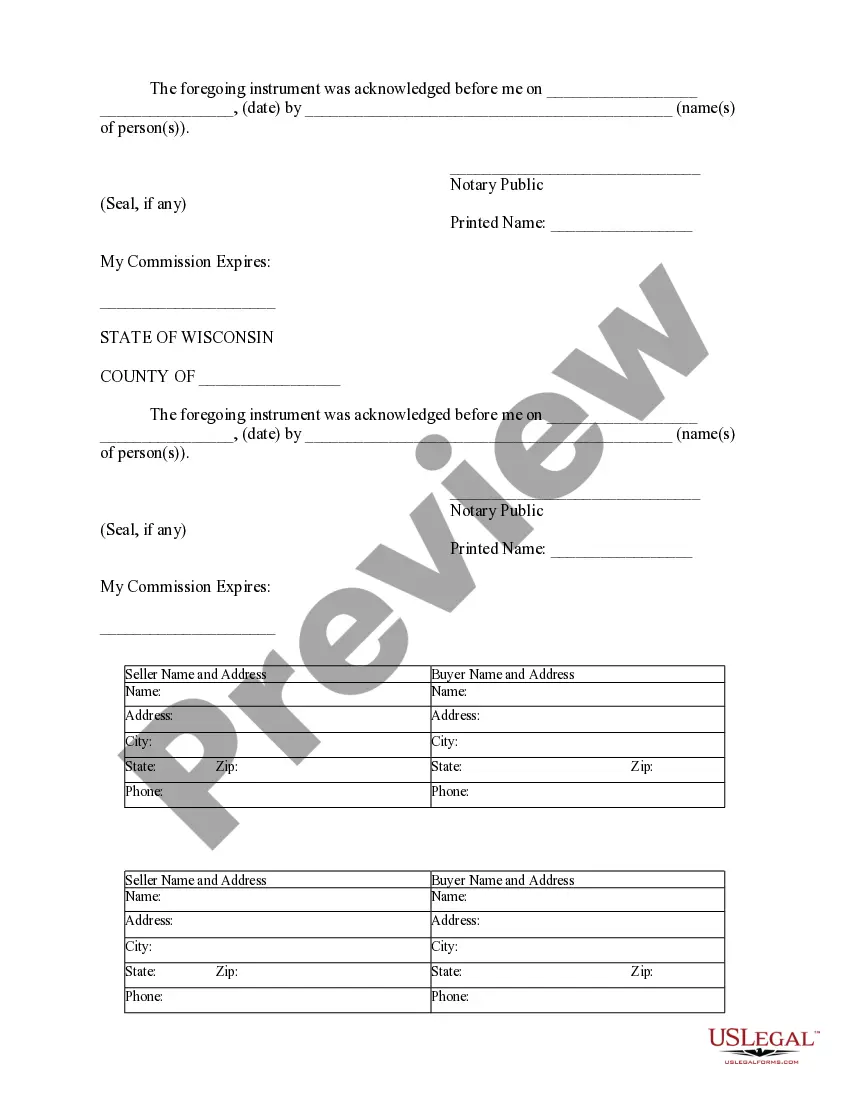
- Witness and notary acknowledgment sections for legal validation.

When this form is needed
This form is used when a seller wants to notify the public that a buyer holds an option to purchase their property. It is particularly useful when parties wish to keep the full terms of the Option Agreement private while still providing notice of the agreement's existence. Common scenarios include real estate transactions where a buyer intends to secure a property for potential purchase at a later date.
Who this form is for
- Property sellers looking to establish an option agreement.
- Buyers who wish to protect their rights under an option to purchase.
- Real estate professionals involved in property transactions.
- Legal representatives facilitating real estate deals.
How to complete this form
- Identify and enter the names of the seller(s) and buyer(s).
- Complete the property description by detailing the location and identifying features.
- Specify the duration of the purchase option including start and end dates.
- Include reference details of the prior option agreement, if applicable.
- Have the seller(s) and buyer(s) sign the document in the presence of a notary.
Notarization guidance
To make this form legally binding, it must be notarized. Our online notarization service, powered by Notarize, lets you verify and sign documents remotely through an encrypted video session.
Get your form ready online
Our built-in tools help you complete, sign, share, and store your documents in one place.
Make edits, fill in missing information, and update formatting in US Legal Forms—just like you would in MS Word.
Download a copy, print it, send it by email, or mail it via USPS—whatever works best for your next step.
Sign and collect signatures with our SignNow integration. Send to multiple recipients, set reminders, and more. Go Premium to unlock E-Sign.
If this form requires notarization, complete it online through a secure video call—no need to meet a notary in person or wait for an appointment.
We protect your documents and personal data by following strict security and privacy standards.

Make edits, fill in missing information, and update formatting in US Legal Forms—just like you would in MS Word.

Download a copy, print it, send it by email, or mail it via USPS—whatever works best for your next step.

Sign and collect signatures with our SignNow integration. Send to multiple recipients, set reminders, and more. Go Premium to unlock E-Sign.

If this form requires notarization, complete it online through a secure video call—no need to meet a notary in person or wait for an appointment.

We protect your documents and personal data by following strict security and privacy standards.
Common mistakes to avoid
- Not accurately describing the property, which can lead to disputes later.
- Failing to include the correct names of the parties involved.
- Omitting signatures or notary validation may render the document invalid.
- Leaving out key details about the option's duration.
Advantages of online completion
- Convenience of filling out and accessing your form from any device.
- Editable templates allow for quick adjustments to specific needs.
- Legally valid forms prepared by licensed attorneys enhance peace of mind.
- Instant access to important legal documentation reduces delays in transactions.
Looking for another form?

Form popularity
FAQ
Birth Records. Death Records. Marriage Records. Property Document Recording. Real Estate Records. Military Discharge. UCC Financing Statement. Legal, Audits and Tax Collections.
Recording the act of putting a document into official county records is an important process that provides a traceable chain of title to a property.The most important real estate documents list ownership, encumbrances, and lien priority. These are used to maintain proper real estate transactions.
As a general rule, all recorded documents should be notarized.
Title deeds do not have to be recorded. Recording is filing them in the county recorder's office and if recorded, the title deed acts as defacto notice to all third parties as to ownership in the property.
The most common documents are related to mortgages, deeds, easements, foreclosures, estoppels, leases, licenses, and fees, among other kinds of documents. The most important real estate documents list ownership, encumbrances, and lien priority.
Recording documents means submitting documents to the County Recorders or Recorder of Deeds office in your area. These recorded documents form a chain of title so that the history of ownership on your property can be verified.
And since Wisconsin is a race-notice state, timely recording of real estate documents is good practice to protect against the claims of subsequent purchasers, mortgagees, and lienholders.
The register of deeds in the county where the property is located. Where should a party record a real estate conveyance? It is not an absolute guarantee that the title is free from defects. Which of the following is true of a buyer's title insurance policy?
States that follow the Race-Notice statute: Alaska, Arkansas, California, Colorado, District of Columbia, Georgia, Hawaii, Idaho, Indiana, Maryland, Michigan, Minnesota, Mississippi, Montana, Nebraska, Nevada, New Jersey, New York, North Dakota, Ohio (regarding mortgages, OH follows the Race statute), Oregon,