Wisconsin Subcontractor's Identification Notice by Corporation
Overview of this form
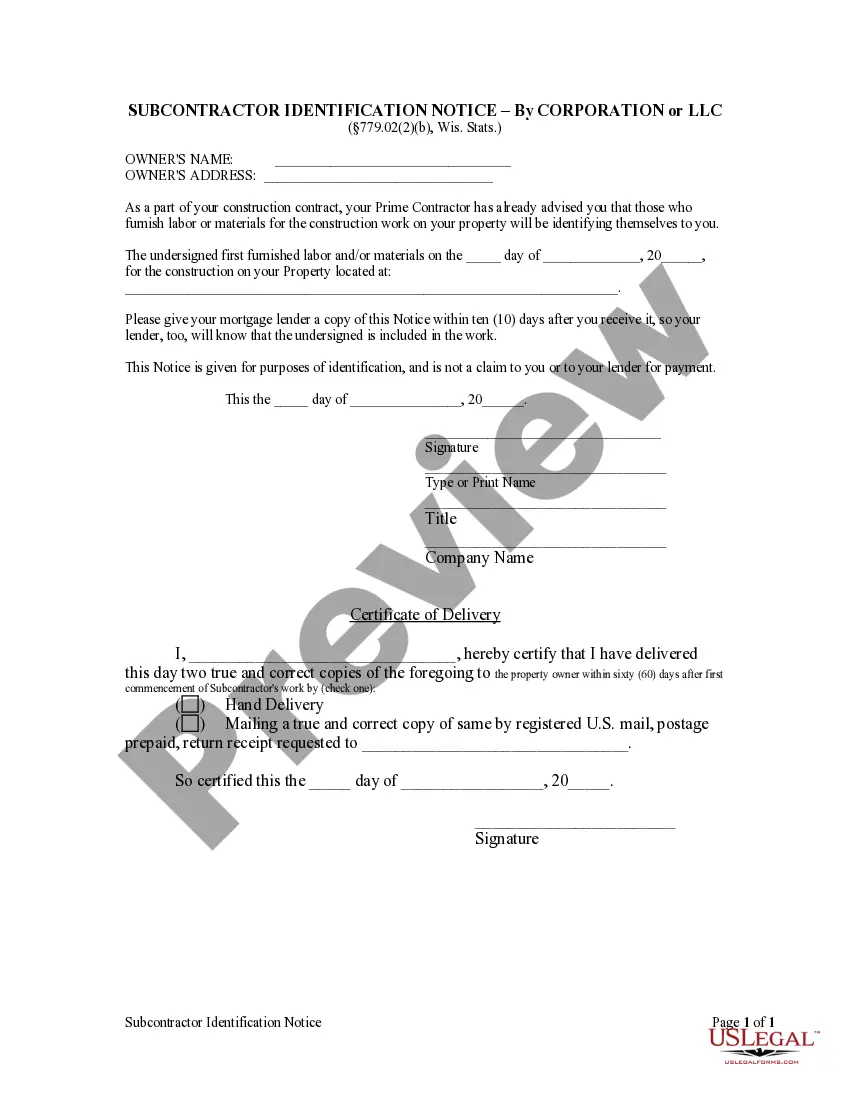
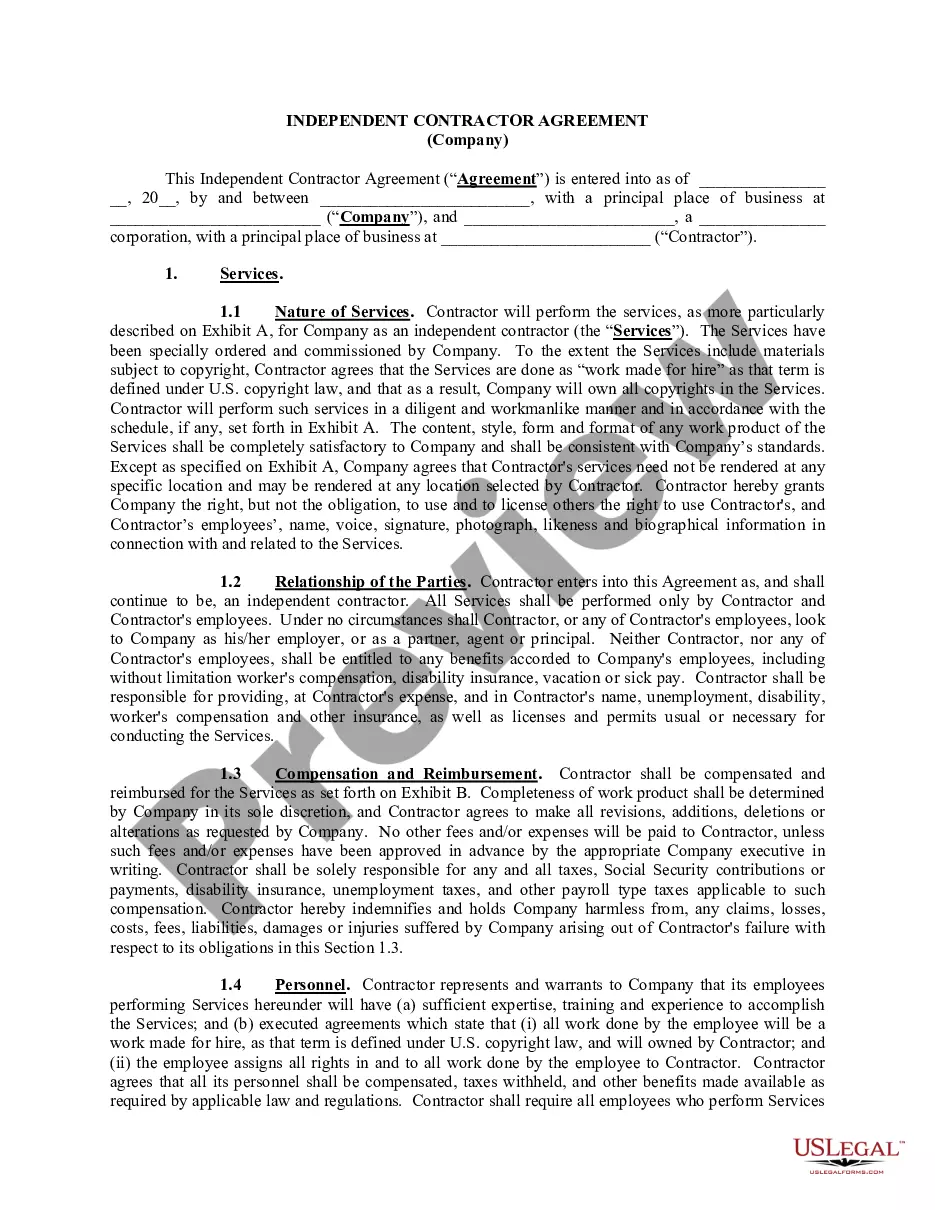
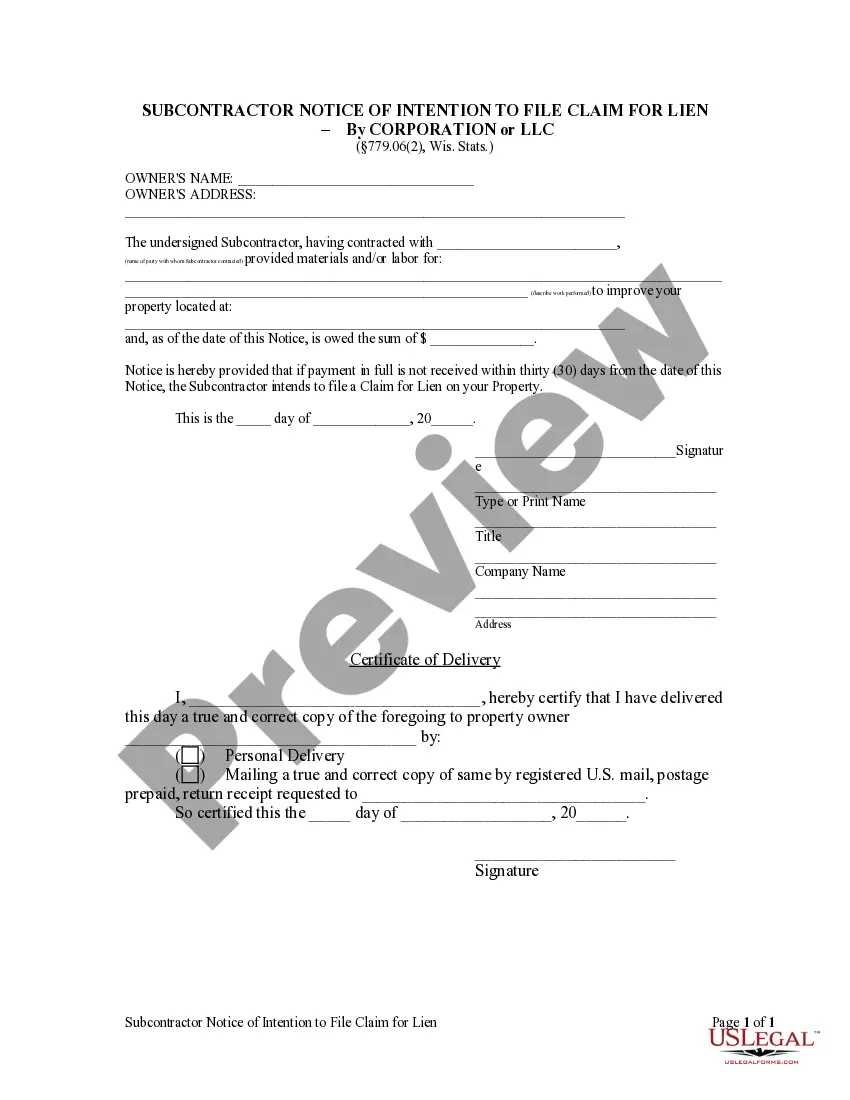
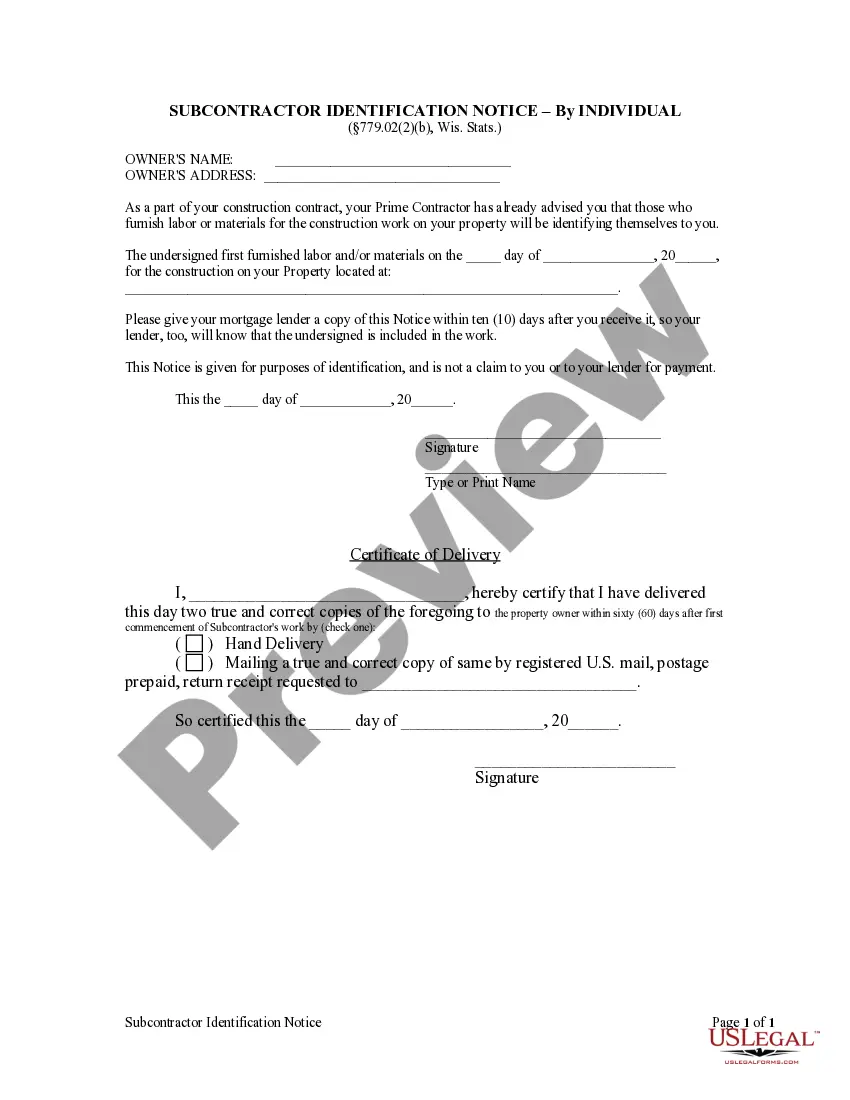
The Subcontractor's Identification Notice by Corporation is a legal document used by subcontractors to formally notify the property owner of their involvement in a construction project. This form is critical for protecting the subcontractor's rights to file a lien for non-payment for labor or materials provided. Unlike other notices, this document specifically focuses on identifying the subcontractor and ensuring communication with the owner and the mortgage lender, if applicable.
Key parts of this document
- Owner's name and address: Identifies the property owner receiving the notification.
- Date of first labor or materials: Indicates when the subcontractor began working on the project.
- Property location: Specifies the physical address where the work was performed.
- Signature: The subcontractor signs to acknowledge the notice is officially delivered.
- Certification of delivery: Confirms how and when the notice was delivered to the property owner.
Situations where this form applies
This form should be used when a subcontractor has provided labor or materials for a construction project and needs to inform the property owner of their involvement. It is essential to submit this notice within sixty days of starting work to ensure the right to file a construction lien, should the payment issues arise later.
Who can use this document
- Subcontractors: Those who provide specialized work or materials for a construction project.
- Corporations: Corporate entities engaged in subcontracting for construction.
- Construction project managers: Individuals overseeing projects involving multiple subcontractors.
Instructions for completing this form
- Identify the parties: Fill in the property owner's name and address.
- Specify the property: Clearly indicate the address where the work is being performed.
- Enter the date: Record the first date when labor or materials were provided.
- Sign the notice: The subcontractor must sign and include their printed name and title.
- Delivery method: Choose how the notice is delivered and complete the certification of delivery section.
Notarization guidance
This form does not typically require notarization unless specified by local law.
Get your form ready online
Our built-in tools help you complete, sign, share, and store your documents in one place.
Make edits, fill in missing information, and update formatting in US Legal Forms—just like you would in MS Word.
Download a copy, print it, send it by email, or mail it via USPS—whatever works best for your next step.
Sign and collect signatures with our SignNow integration. Send to multiple recipients, set reminders, and more. Go Premium to unlock E-Sign.
If this form requires notarization, complete it online through a secure video call—no need to meet a notary in person or wait for an appointment.
We protect your documents and personal data by following strict security and privacy standards.

Make edits, fill in missing information, and update formatting in US Legal Forms—just like you would in MS Word.

Download a copy, print it, send it by email, or mail it via USPS—whatever works best for your next step.

Sign and collect signatures with our SignNow integration. Send to multiple recipients, set reminders, and more. Go Premium to unlock E-Sign.

If this form requires notarization, complete it online through a secure video call—no need to meet a notary in person or wait for an appointment.

We protect your documents and personal data by following strict security and privacy standards.
Mistakes to watch out for
- Failing to deliver the notice within sixty days of starting work.
- Not providing the required number of signed copies.
- Incorrectly addressing the notice to the owner or their agent.
- Omitting important details such as the date or property address.
Why complete this form online
- Convenience: Easily fill out and download the form from anywhere.
- Editable: Customize the form to meet your specific project needs.
- Reliable: All forms are drafted by licensed attorneys to ensure legal compliance.
Looking for another form?



Form popularity
FAQ
STEP 1: Name your Wisconsin LLC. STEP 2: Choose a Registered Agent in Wisconsin. STEP 3: File the Wisconsin LLC Articles of Organization. STEP 4: Create a Wisconsin LLC Operating Agreement. STEP 5: Get a Wisconsin LLC EIN.
How much does it cost to form an LLC in Wisconsin? The Wisconsin Department of Financial Institutions charges a $170 fee to file the Articles of Organization by mail and $130 to file online.
STEP 1: Name your Wisconsin LLC. STEP 2: Choose a Registered Agent in Wisconsin. STEP 3: File the Wisconsin LLC Articles of Organization. STEP 4: Create a Wisconsin LLC Operating Agreement. STEP 5: Get a Wisconsin LLC EIN.
How much does it cost to form an LLC in Wisconsin? The Wisconsin Department of Financial Institutions charges a $170 fee to file the Articles of Organization by mail and $130 to file online.
Time to process your corporation or LLC formation varies by state with routine processing taking 4 - 6 weeks or even more in the slowest states. Expedited Processing will reduce that time to about 10 business days or less with the exception of just a few states.
You can find information on any corporation or business entity in Wisconsin or another state by performing a search on the Secretary of State website of the state or territory where that corporation is registered.
STEP 1: Name your Wisconsin LLC. STEP 2: Choose a Registered Agent in Wisconsin. STEP 3: File the Wisconsin LLC Articles of Organization. STEP 4: Create a Wisconsin LLC Operating Agreement. STEP 5: Get a Wisconsin LLC EIN.
If money's tight, or you don't want to use a company formation service, we've got good news for you you can form an LLC yourself. Although you'll still need to pay your state filing fees (they're unavoidable!), you can save on the costs of having your LLC filed through a professional incorporation business.
Run Your Own Show. Entrepreneurs are self-starters who prefer to chart their own courses. Limit Your Personal Liability. Avoid Double Taxation and Pass-Through Deduction. Less Administrative Hassles and Paperwork. Flexibility in Sharing Profits.