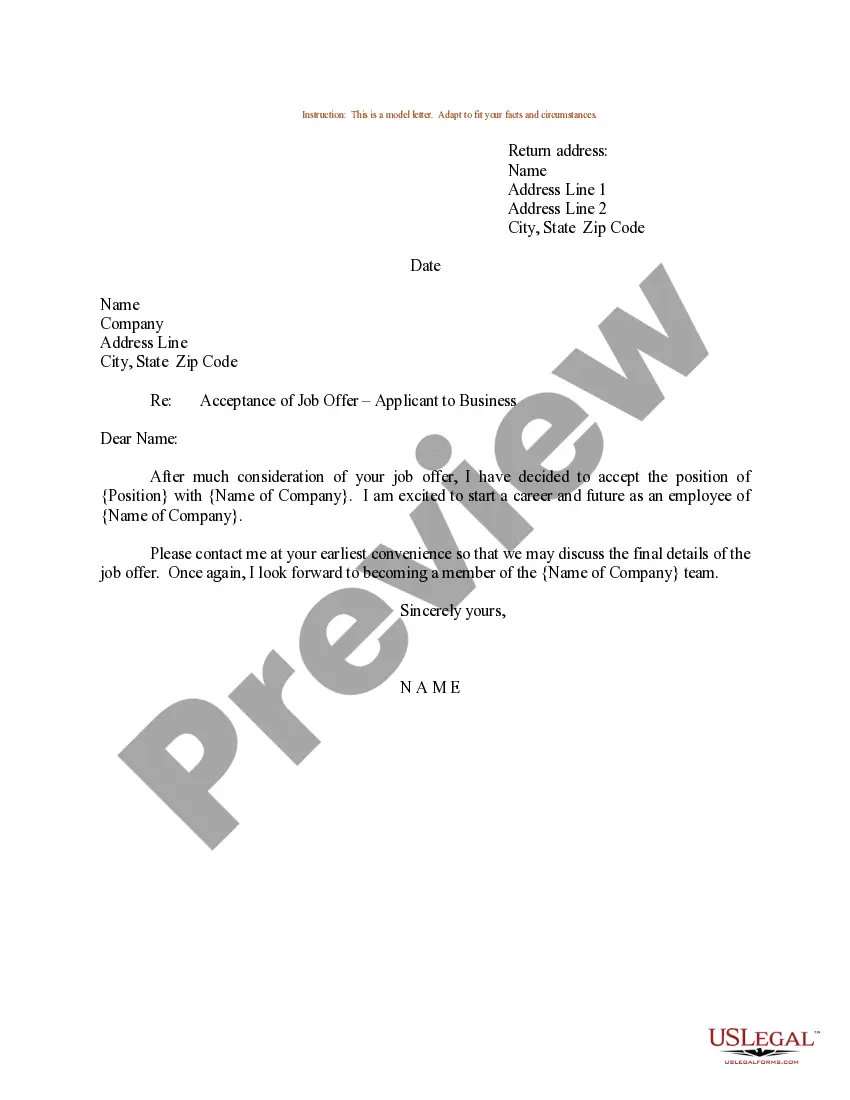
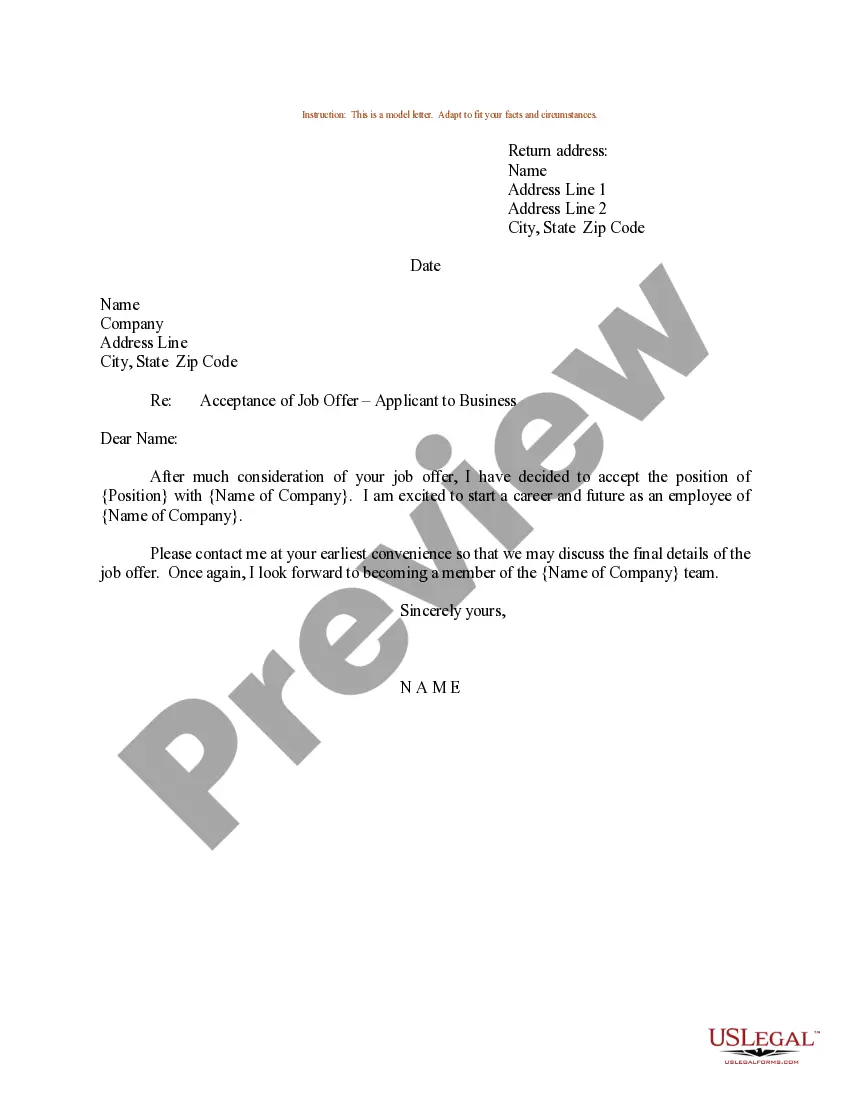
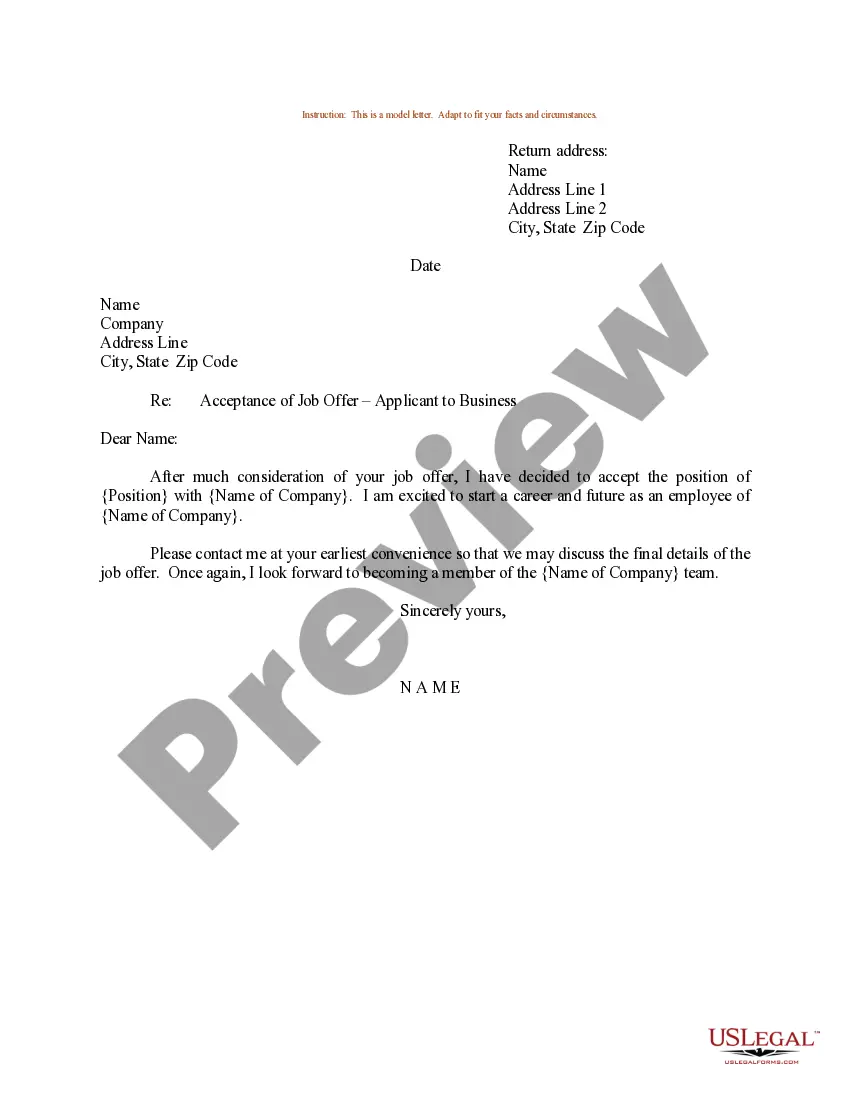
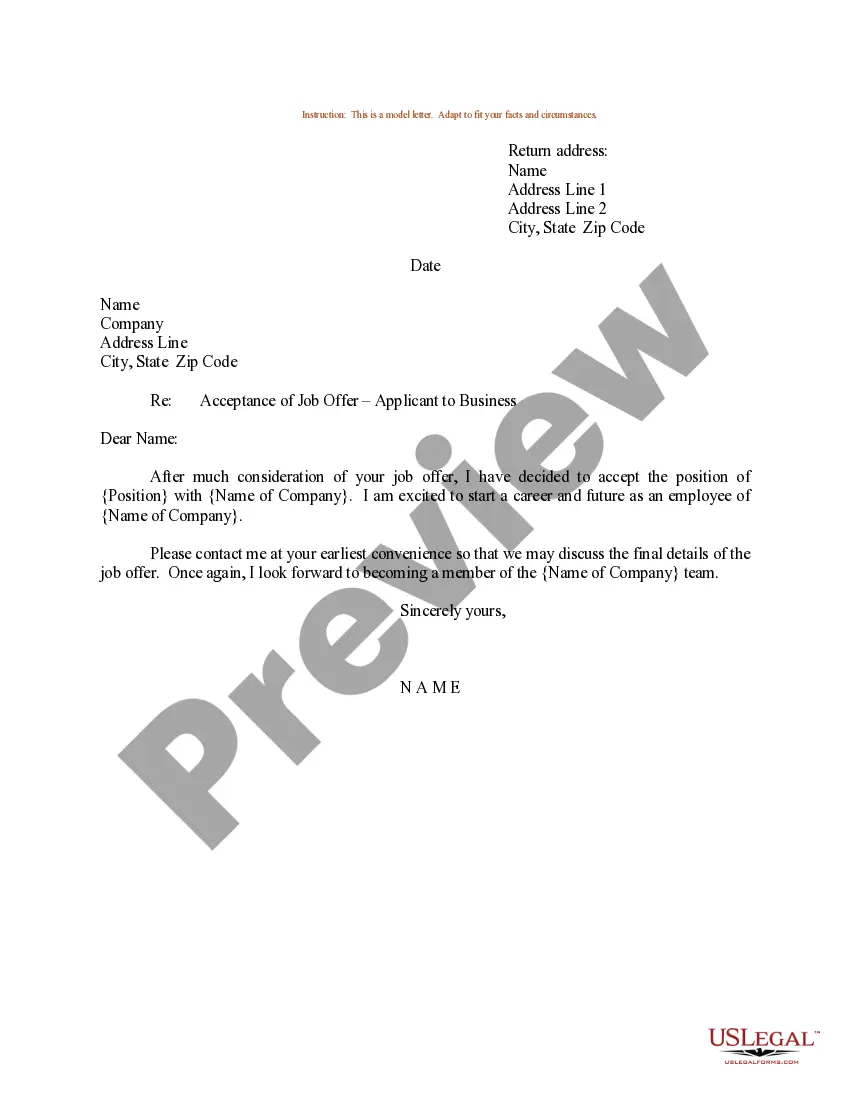
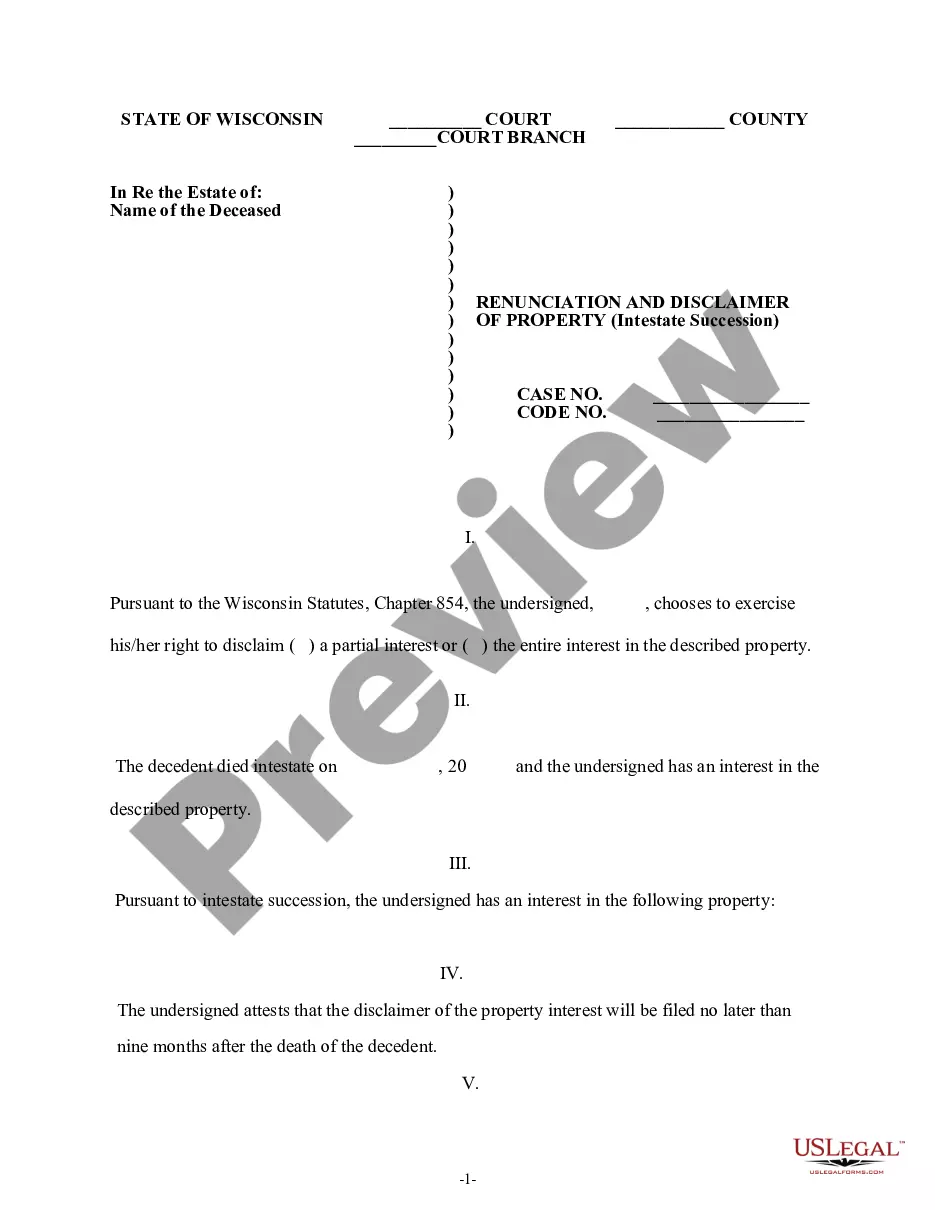
This form is a Renunciation and Disclaimer of Property conveyed to the beneficiary by the last will and testament of the decedent, where the beneficiary gained an interest in the property upon the death of the decedent, but, pursuant to the Wisconsin Statutes, Chapter 854, has chosen to disclaim a portion of or the entire interest in the property. The beneficiary attests that the disclaimer will be filed no later than nine months after the death of the decedent in order to secure the validity of the disclaimer. The form also contains a state specific acknowledgment and a certificate to verify delivery.
Wisconsin Renunciation And Disclaimer of Property from Will by Testate
State:
Wisconsin
Control #:
WI-01-03
Format:
Word
Instant download
Description
Free preview
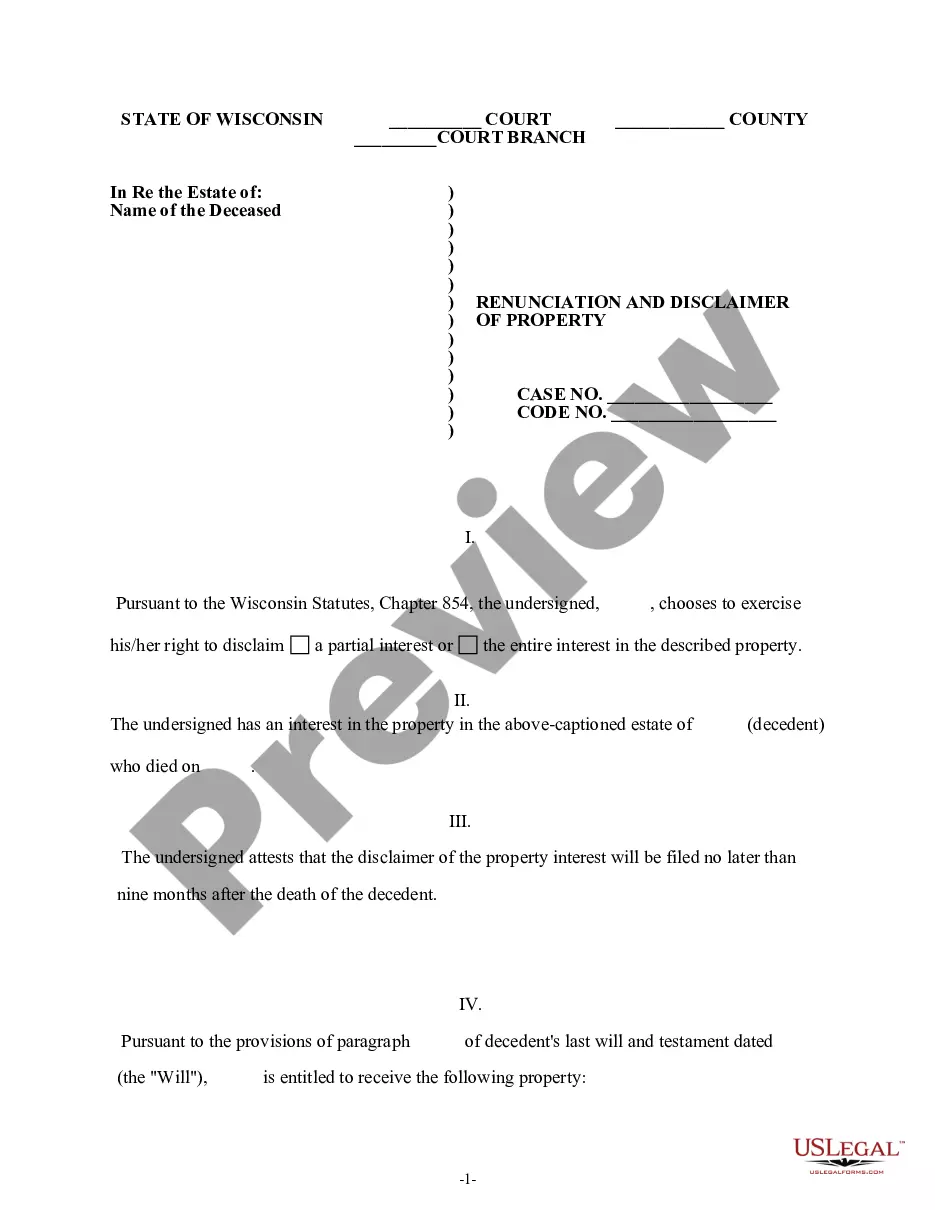
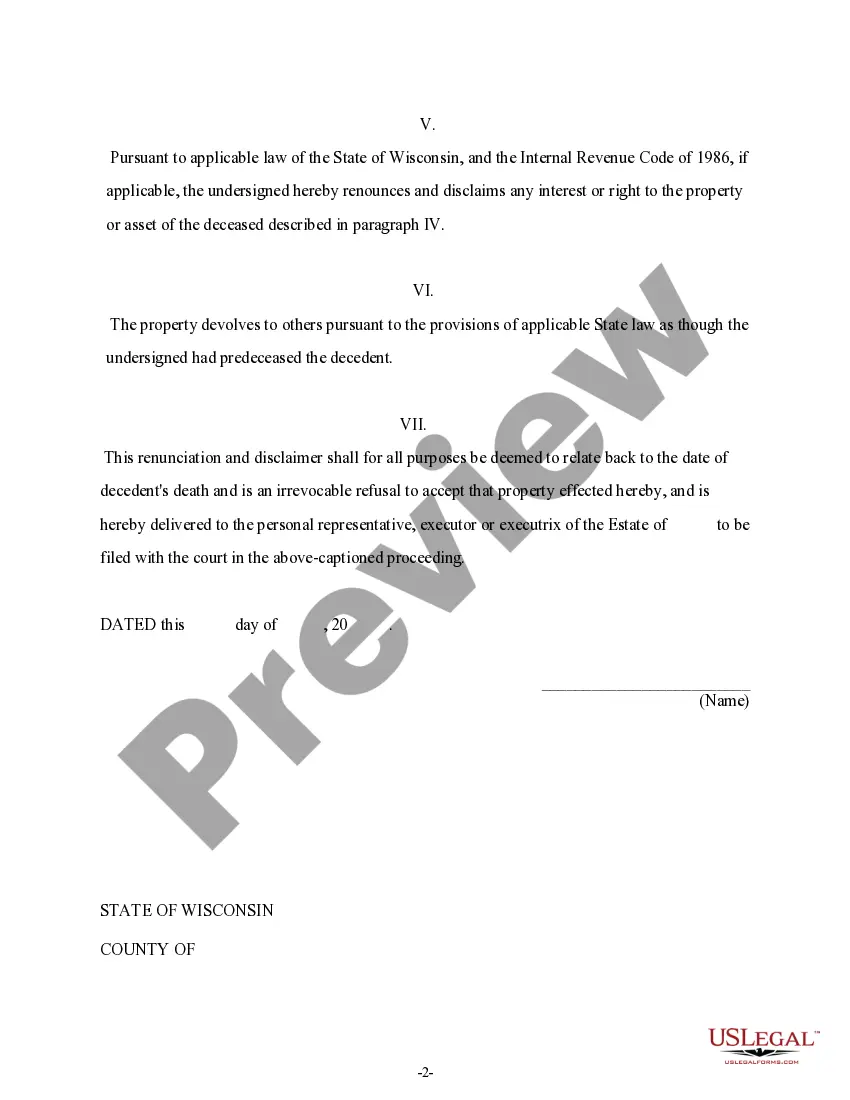
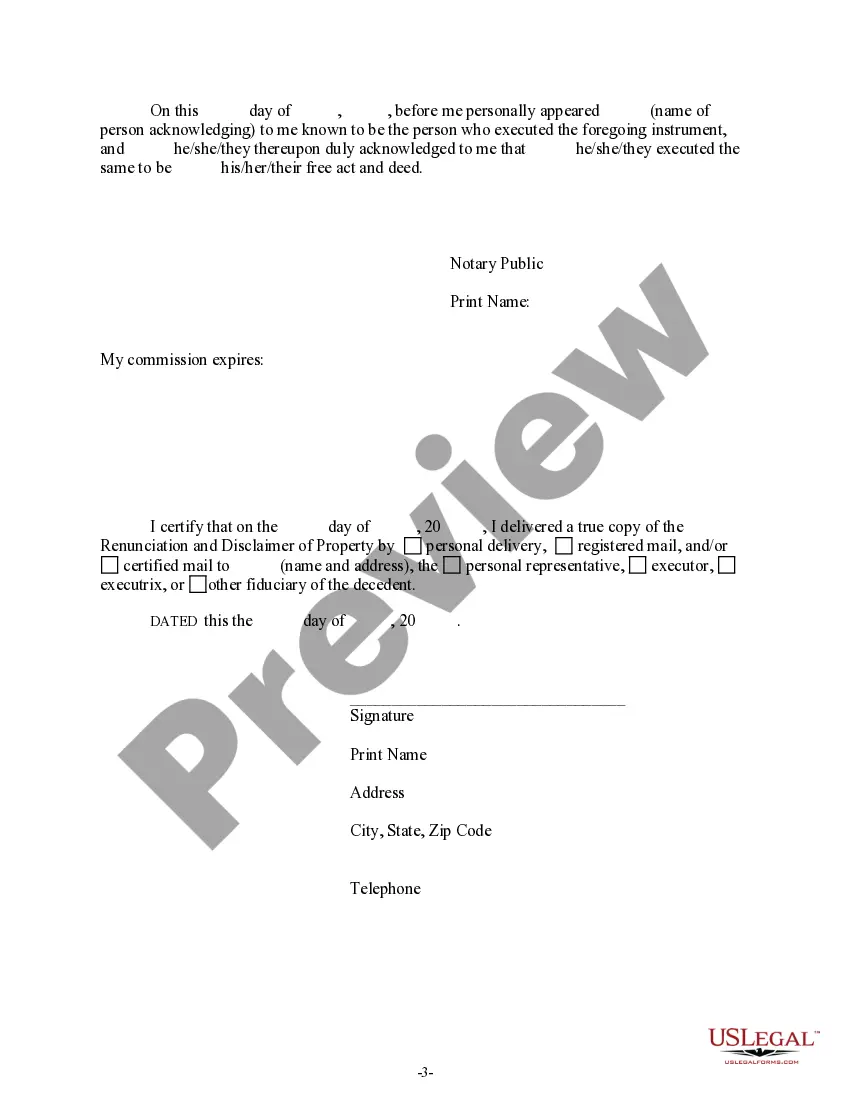
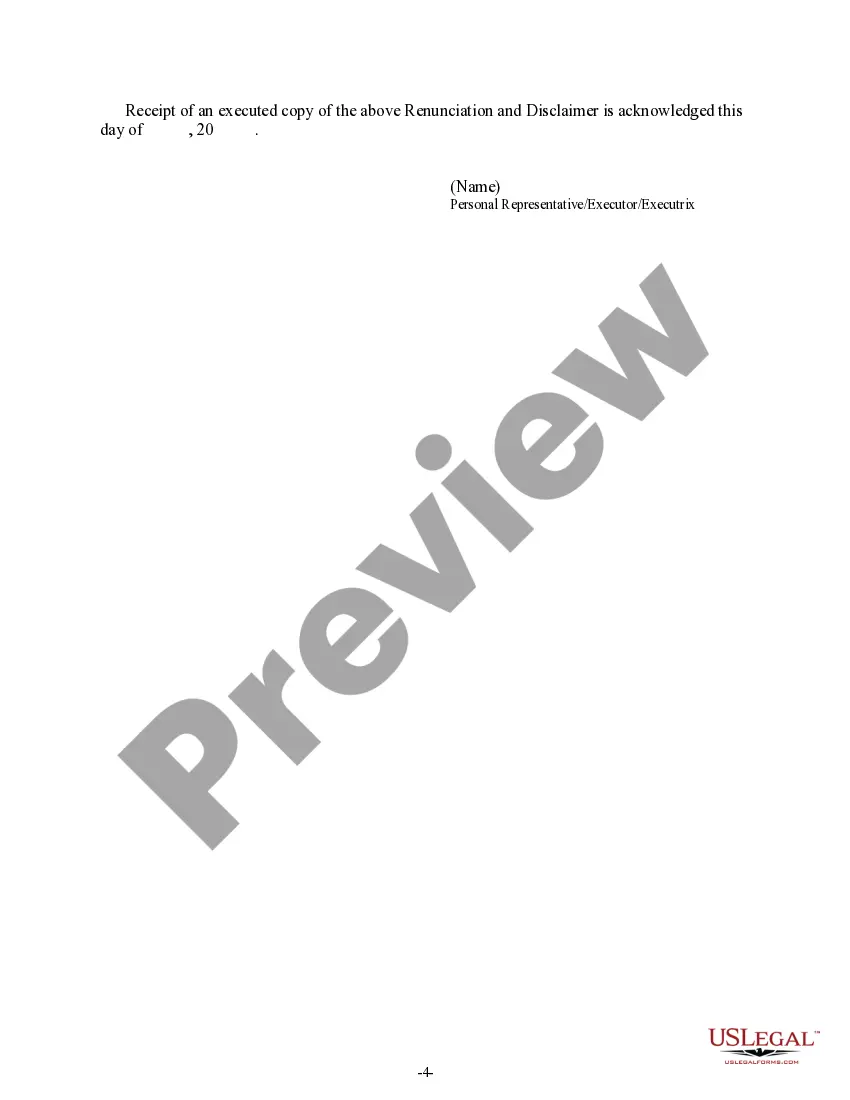



How to fill out Wisconsin Renunciation And Disclaimer Of Property From Will By Testate?
Out of the large number of services that provide legal samples, US Legal Forms provides the most user-friendly experience and customer journey when previewing forms prior to buying them. Its comprehensive catalogue of 85,000 templates is categorized by state and use for efficiency. All the documents on the platform have been drafted to meet individual state requirements by accredited legal professionals.
If you have a US Legal Forms subscription, just log in, look for the template, hit Download and get access to your Form name in the My Forms; the My Forms tab keeps all your downloaded documents.
Keep to the tips listed below to obtain the document:
- Once you discover a Form name, ensure it is the one for the state you need it to file in.
- Preview the form and read the document description prior to downloading the sample.
- Search for a new sample using the Search field in case the one you have already found isn’t correct.
- Click on Buy Now and select a subscription plan.
- Create your own account.
- Pay using a credit card or PayPal and download the document.
When you’ve downloaded your Form name, you may edit it, fill it out and sign it in an online editor that you pick. Any document you add to your My Forms tab can be reused multiple times, or for as long as it remains the most up-to-date version in your state. Our platform provides fast and easy access to samples that fit both legal professionals as well as their customers.
Form popularity
FAQ
In law, a disclaimer is a statement denying responsibility intended to prevent civil liability arising for particular acts or omissions. Disclaimers are frequently made to escape the effects of the torts of negligence and of occupiers' liability towards visitors.
What is a Deed of Disclaimer? A Deed of Disclaimer is a document that you can execute if you wish to Disclaim an inheritance due via the Rules of Intestacy and you are not applying for probate. A typical example of this is if a spouse of a deceased would prefer the estate passes to the children.
Disclaim, in a legal sense, refers to the renunciation of an interest in, or an acceptance of, inherited assets, such as property, by way of a legal instrument. A person disclaiming an interest, right, or obligation is known as a disclaimant.
Informal probate is the administration of a deceased person's estate without continuous court supervision.Formal probate is required in a number of instances and Wisconsin statutes require the estate's personal representative to procure the assistance of an attorney.
The Domiciliary Letters shows that the probate court has given the authority to the named personal representative to act on behalf on the estate of the decedent and to perform all duties required to administer the estate according to statute.
1a : a denial or disavowal of legal claim : relinquishment of or formal refusal to accept an interest or estate. b : a writing that embodies a legal disclaimer. 2a : denial, disavowal. b : repudiation.
Though there is no time limit on the probate application itself, there are aspects of the process which do have time scales. Inheritance tax for example, is a very important part of attaining probate in the first place and must be done within 6 months of date of death.
Disclaimer of interest, in the law of inheritance, wills and trusts, is a term that describes an attempt by a person to renounce their legal right to benefit from an inheritance (either under a will or through intestacy) or through a trust. A disclaimer of interest is irrevocable.
Although Wisconsin law requires that probate be completed within 18 months, a court may choose to grant an extension. On average, probate in Wisconsin takes no less than six months. The probate process must allow time for creditors to be notified, file required income tax returns, and resolve any disputes.