Wisconsin Concrete Mason Contract for Contractor
What is this form?
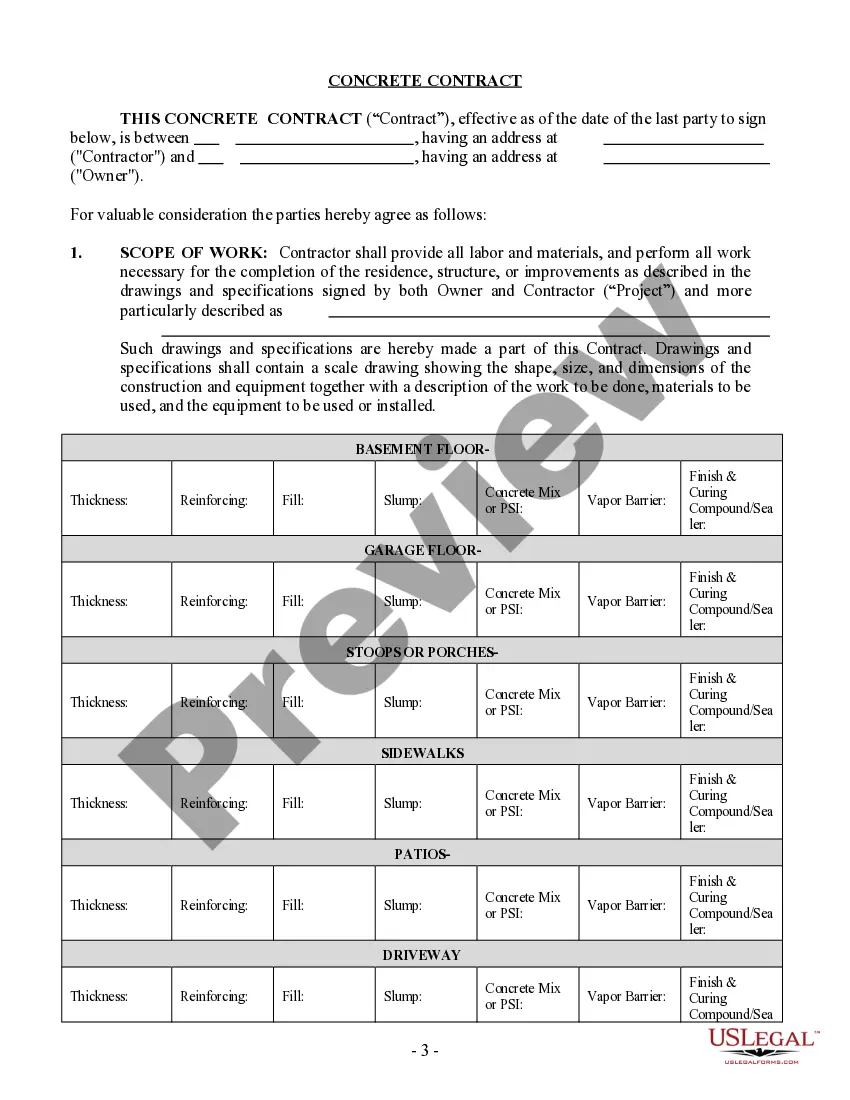
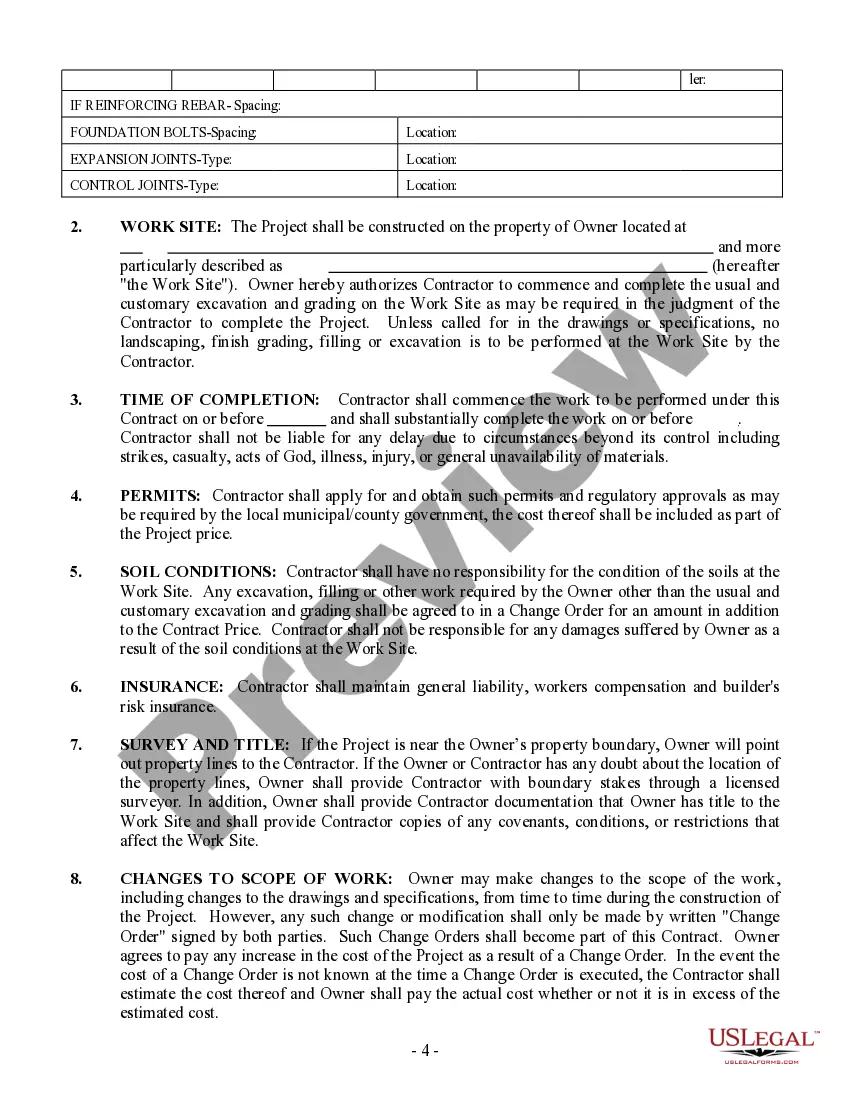
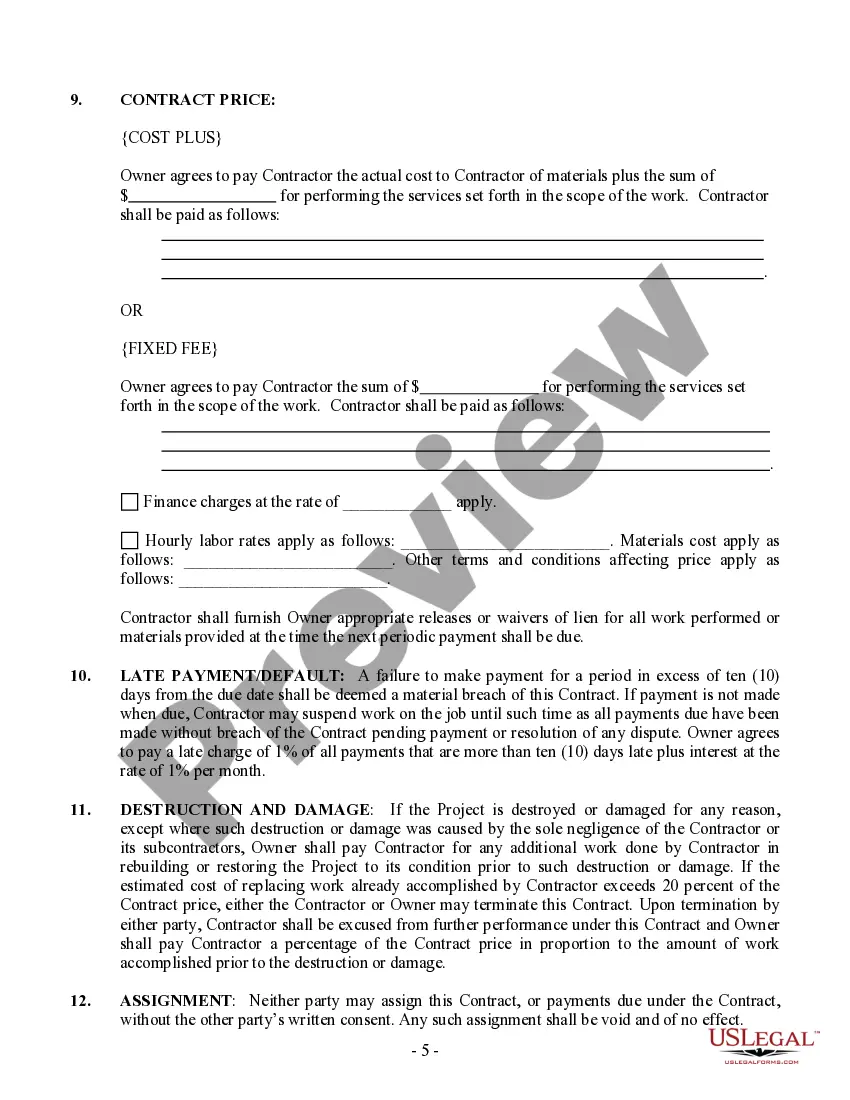
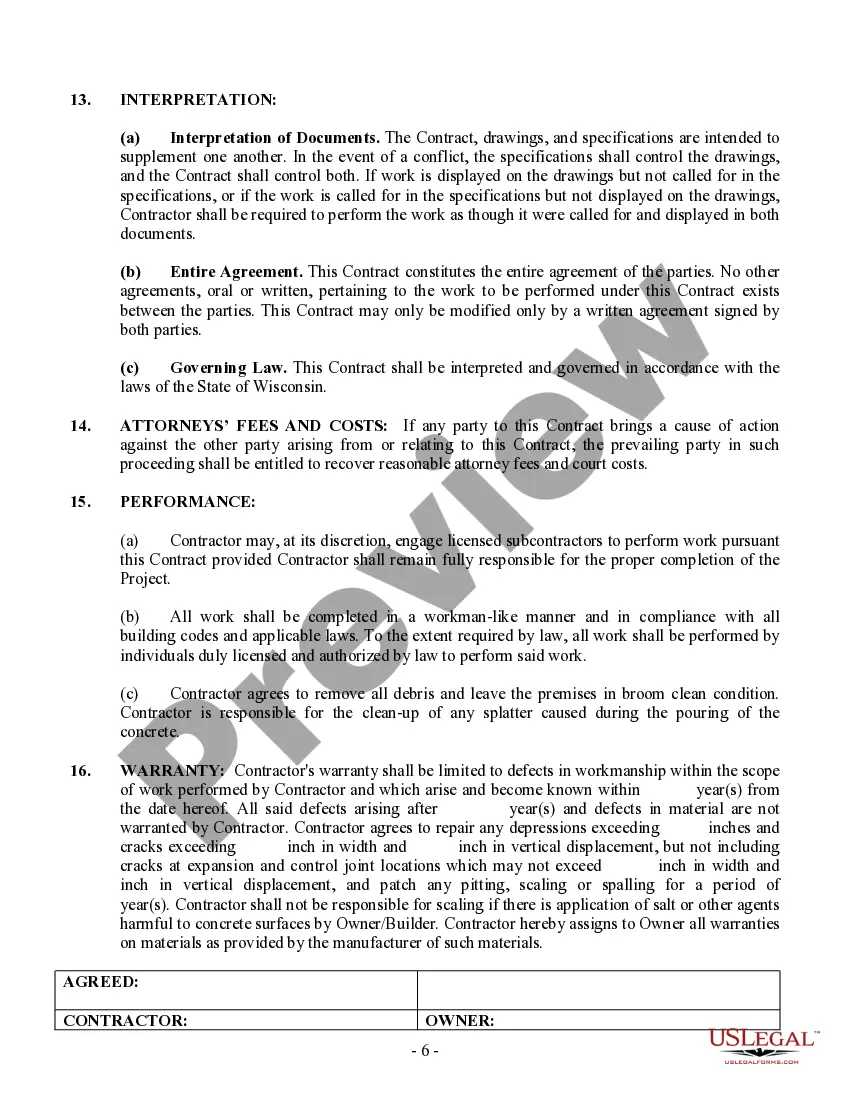
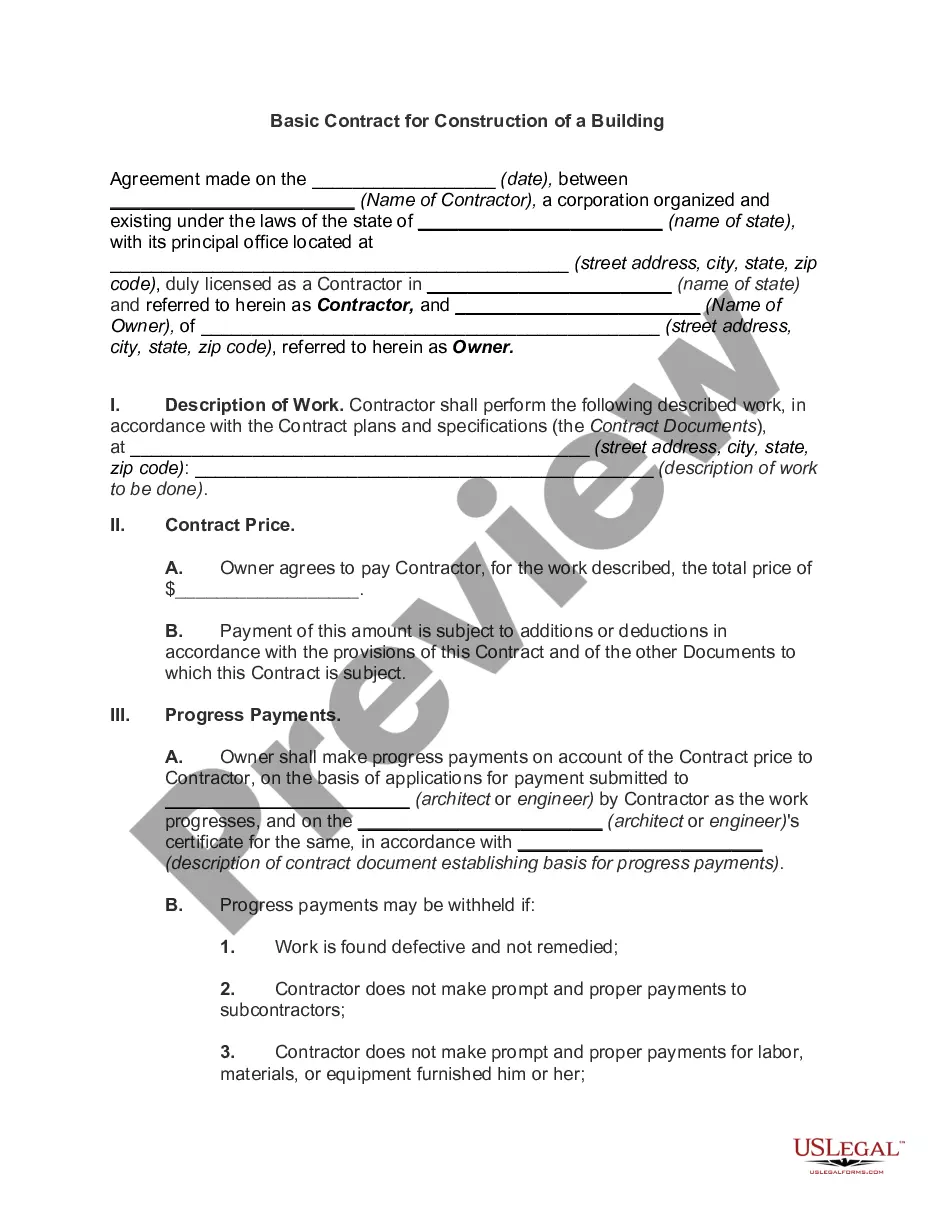
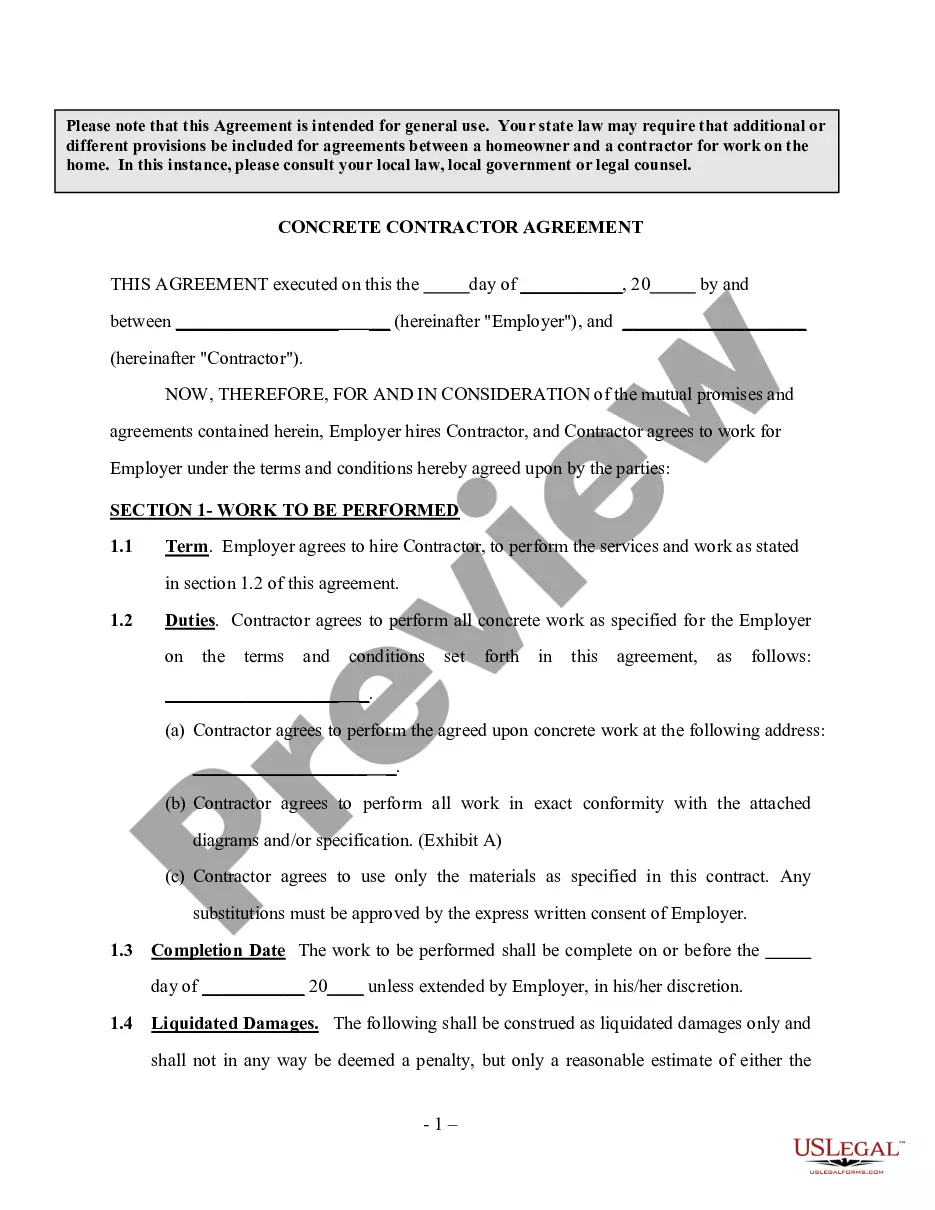
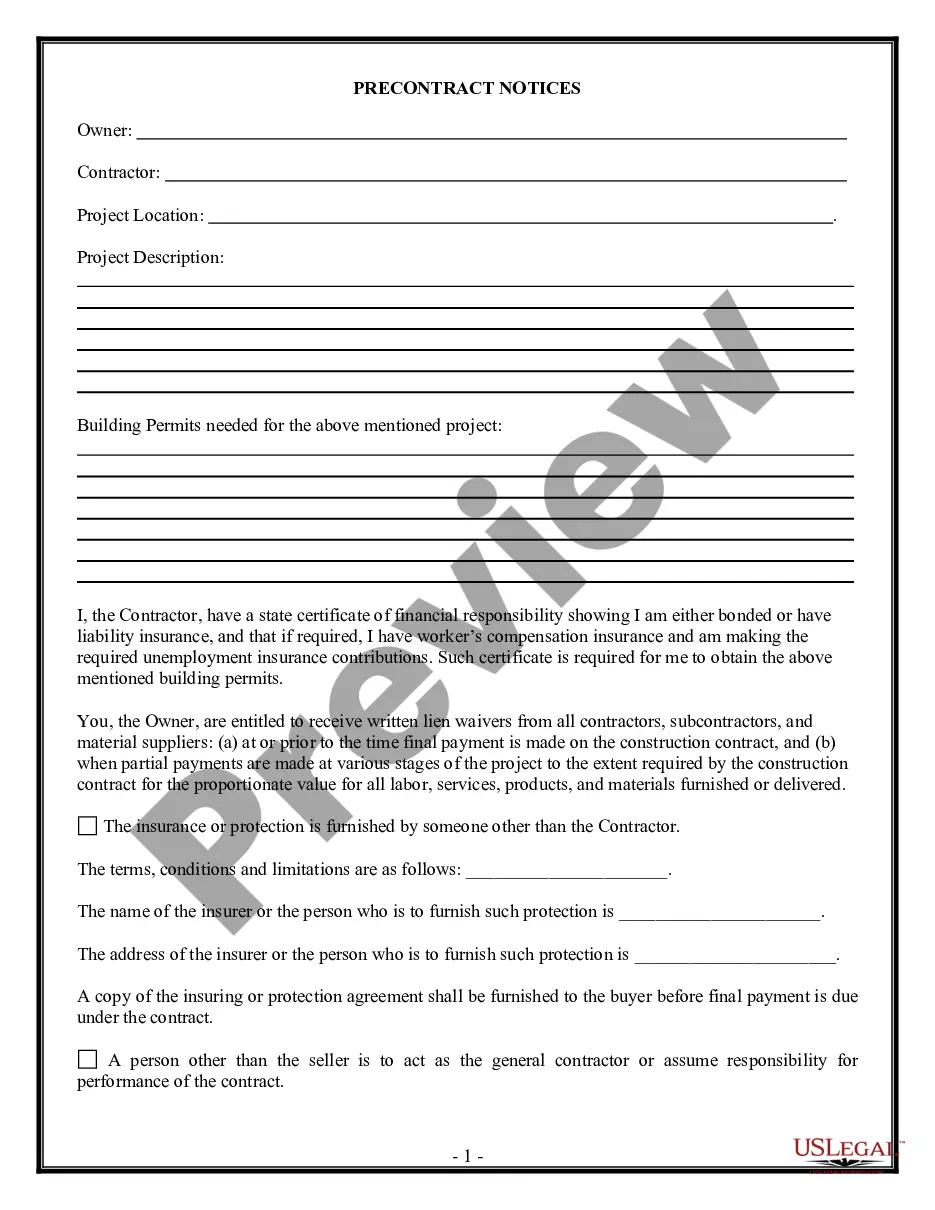
The Concrete Mason Contract for Contractor is a legal agreement between property owners and concrete masonry contractors. It outlines the terms of the project, including payment methods, project scope, warranties, and insurance requirements. This contract is specifically tailored to comply with Wisconsin state laws, ensuring that both parties understand their rights and responsibilities, which distinguishes it from other general construction agreements.
Key parts of this document
- Payment terms: Options for cost plus or fixed fee arrangements.
- Change orders: Protocols for modifying the scope of work and associated costs.
- Insurance requirements: Obligation for contractors to maintain appropriate insurance.
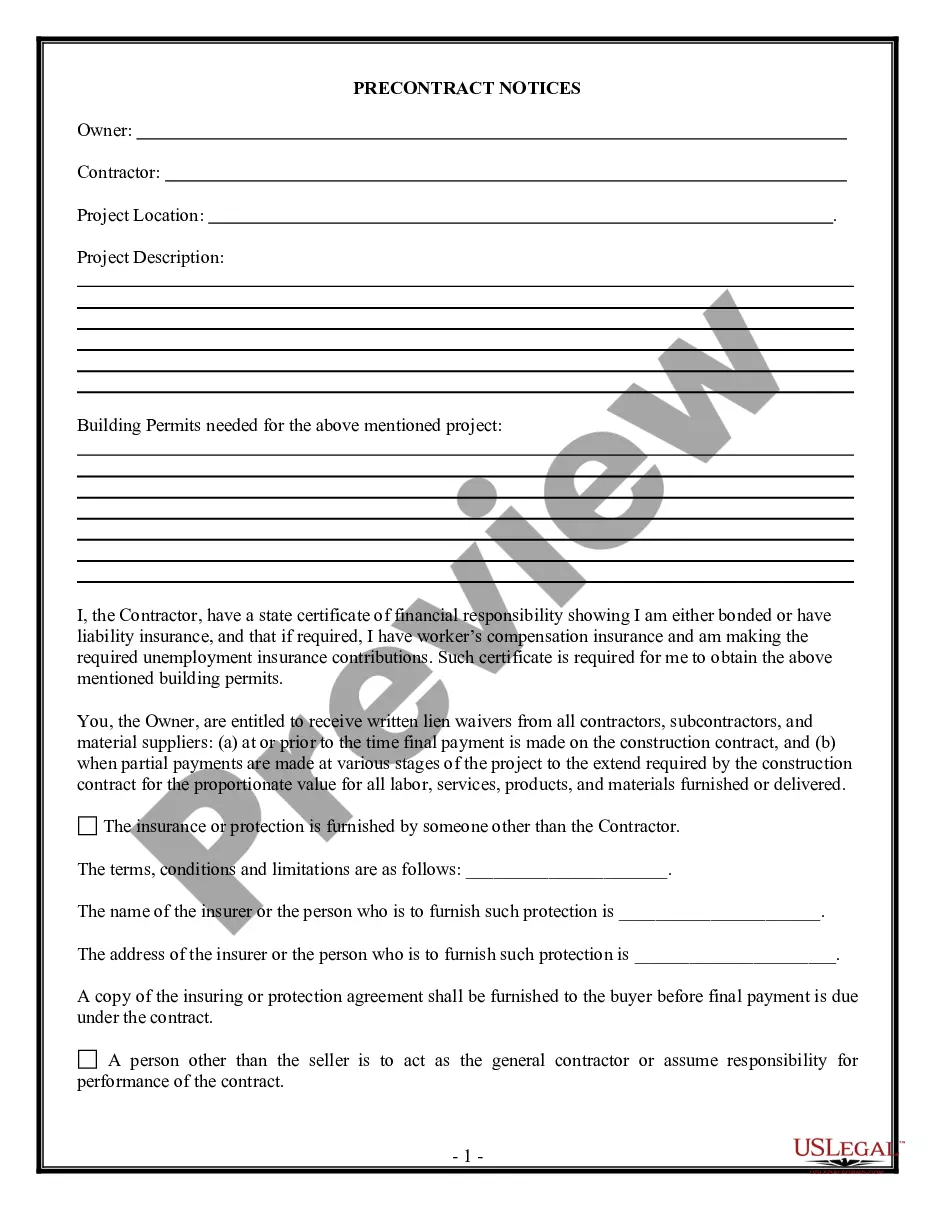
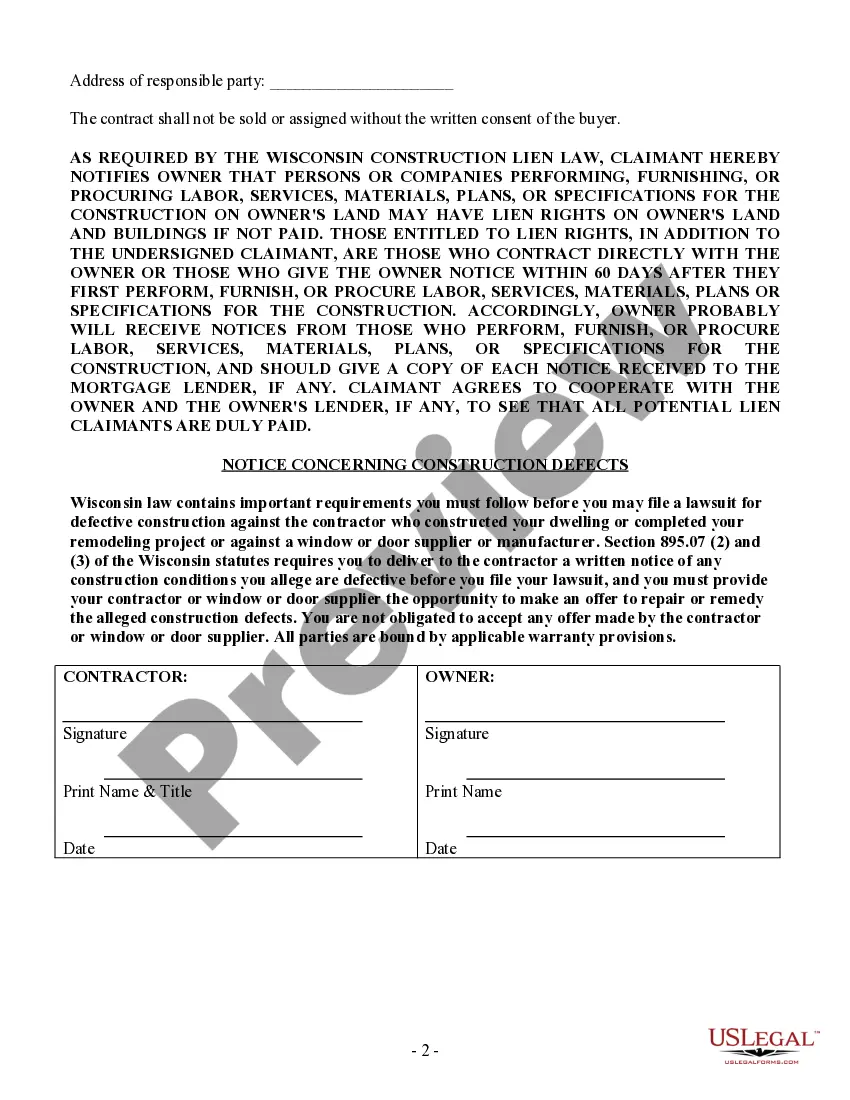
- Liens: Notification of potential lien rights for subcontractors and suppliers.
- Permits: Contractor's responsibility to obtain necessary permits for the project.
- Dispute resolution: Procedures for handling late payments and project disputes.

When to use this form
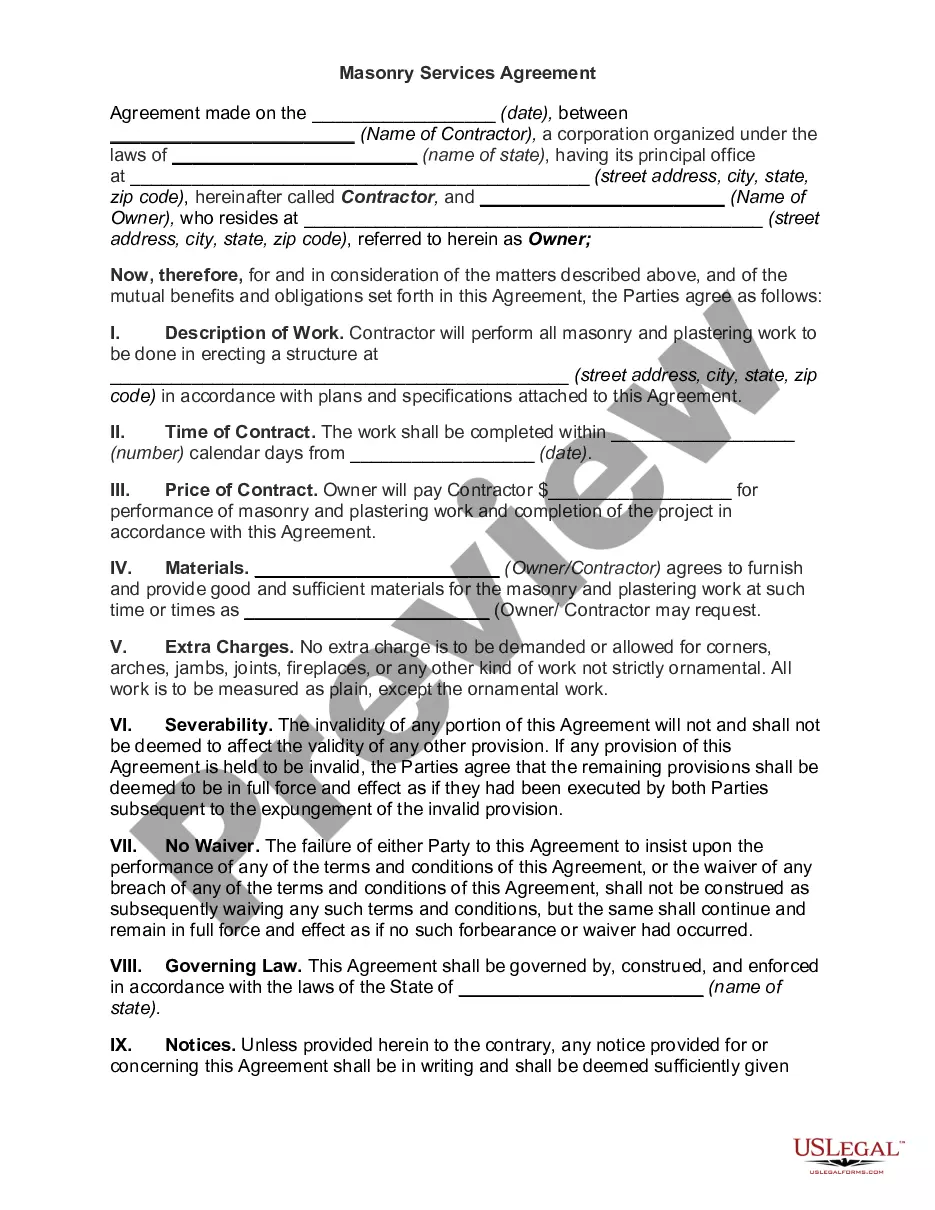
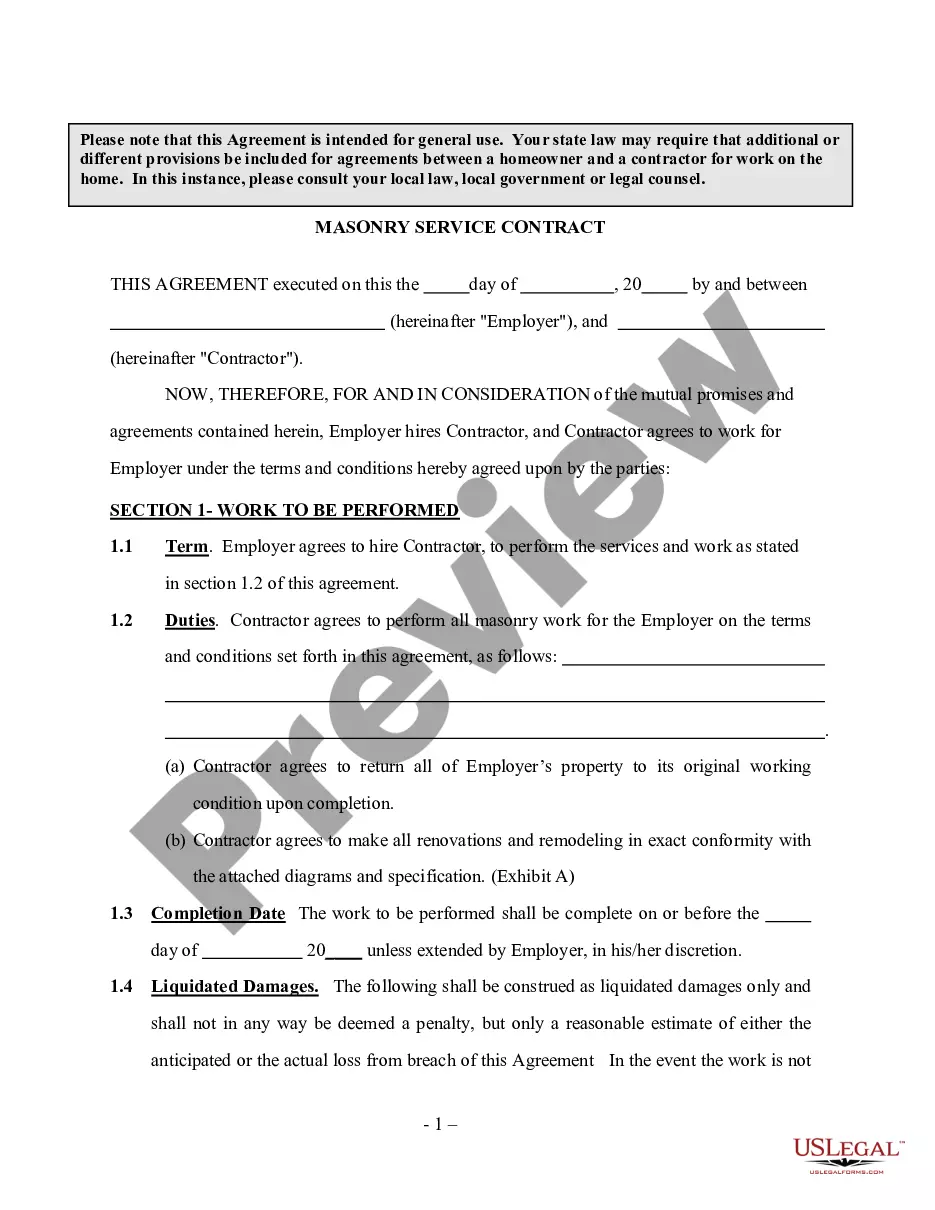
This form should be used when engaging a concrete masonry contractor for projects involving new construction, renovations, or repairs involving concrete work. It is essential when there's a need for clear terms regarding payments, liabilities, and responsibilities, ensuring legal protection for both parties throughout the construction process.
Who this form is for
- Property owners who are planning concrete masonry projects.
- Concrete masonry contractors looking for a standardized contract for client agreements.
- Subcontractors involved in concrete-related tasks on a construction project.
How to complete this form
- Identify the parties: Clearly state the names and contact information of the property owner and the contractor.
- Specify the project details: Describe the scope of work and the location where services will be performed.
- Enter payment information: Choose either a fixed fee or cost-plus payment arrangement and detail any additional costs.
- Complete insurance sections: Fill in the insurance requirements, including the insurer's name and address.
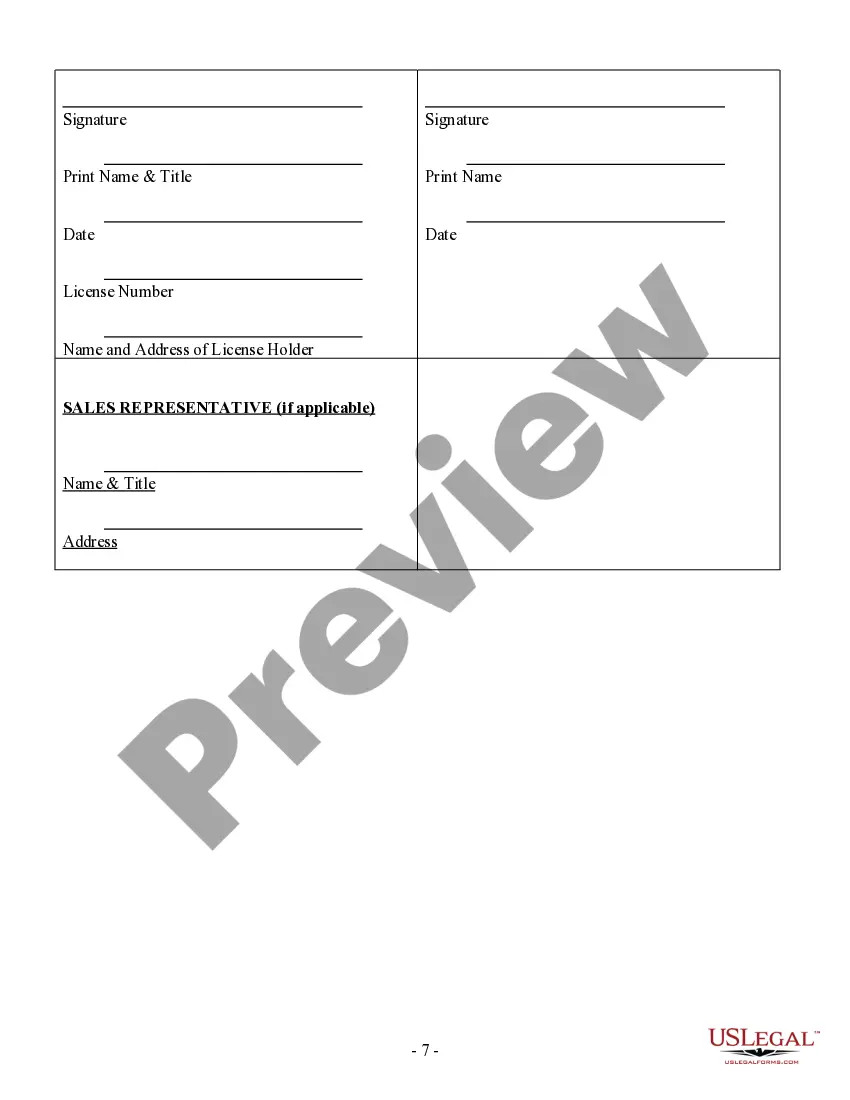
- Sign the contract: Ensure both parties sign and date the document to validate the agreement.
Is notarization required?
Notarization is not commonly needed for this form. However, certain documents or local rules may make it necessary. Our notarization service, powered by Notarize, allows you to finalize it securely online anytime, day or night.
Get your form ready online
Our built-in tools help you complete, sign, share, and store your documents in one place.
Make edits, fill in missing information, and update formatting in US Legal Forms—just like you would in MS Word.
Download a copy, print it, send it by email, or mail it via USPS—whatever works best for your next step.
Sign and collect signatures with our SignNow integration. Send to multiple recipients, set reminders, and more. Go Premium to unlock E-Sign.
If this form requires notarization, complete it online through a secure video call—no need to meet a notary in person or wait for an appointment.
We protect your documents and personal data by following strict security and privacy standards.

Make edits, fill in missing information, and update formatting in US Legal Forms—just like you would in MS Word.

Download a copy, print it, send it by email, or mail it via USPS—whatever works best for your next step.

Sign and collect signatures with our SignNow integration. Send to multiple recipients, set reminders, and more. Go Premium to unlock E-Sign.

If this form requires notarization, complete it online through a secure video call—no need to meet a notary in person or wait for an appointment.

We protect your documents and personal data by following strict security and privacy standards.
Common mistakes
- Failing to clearly define the scope of work and payment terms.
- Overlooking the need for insurance coverage documentation.
- Not updating the contract with necessary change orders in writing.
- Missing signatures from both parties, which can invalidate the contract.
Benefits of completing this form online
- Convenience: Download and fill out the contract from anywhere at any time.
- Editability: Easily customize the form to fit specific project needs.
- Reliability: Ensure that you are using a legally sound contract drafted by licensed attorneys.
Legal use & context
- The contract enforces rights regarding payments and project requirements between property owners and contractors.
- It ensures clarity on liability and responsibilities, reducing potential disputes.
- It is governed by Wisconsin law, which must be considered in the event of a legal dispute.
Main things to remember
- A Concrete Mason Contract is crucial for defining roles and responsibilities in concrete projects.
- Using this form ensures compliance with Wisconsin construction laws.
- Providing clear payment details and site conditions can prevent disputes.
Looking for another form?

Form popularity
FAQ
An estimate should be the contractor's best professional assessment, including the cost of hiring any subcontractors, the price of materials, and any other labor involved.
Name of contractor and contact information. Name of homeowner and contact information. Describe property in legal terms. List attachments to the contract. The cost. Failure of homeowner to obtain financing. Description of the work and the completion date. Right to stop the project.
Get it in writing. Keep it simple. Deal with the right person. Identify each party correctly. Spell out all of the details. Specify payment obligations. Agree on circumstances that terminate the contract. Agree on a way to resolve disputes.
An agreement between private parties creating mutual obligations enforceable by law. The basic elements required for the agreement to be a legally enforceable contract are: mutual assent, expressed by a valid offer and acceptance; adequate consideration; capacity; and legality.
Scope of Work, Selection Sheet and Drawings. License Number and Insurance. Description of Change Orders. Warranty information. Subcontractor Agreements. Payment schedule. Completion Schedule / Timeline. Clauses Required by Law.
Your general contractor should provide proof of licensing, bonding and insurance before a project starts, but it's better to have it in hand before you sign any contracts. It's important that contractors carry any licensing and/or certification required for the specific trade or skill they practice.
Terms. This is the first section of any agreement or contract and states the names and locations of the parties involved. Responsibilities & Deliverables. Payment-Related Details. Confidentiality Clause. Contract Termination. Choice of Law.
Timeframe or key milestones of the project; hours of work; deliverables of the project; and. way the business will pay the contractor for their services.
Identifying/Contact Information. Title and Description of the Project. Projected Timeline and Completion Date. Cost Estimate and Payment Schedule. Stop Work Clause and Stop Payment Clause. Act of God Clause. Change Order Agreement. Warranty.