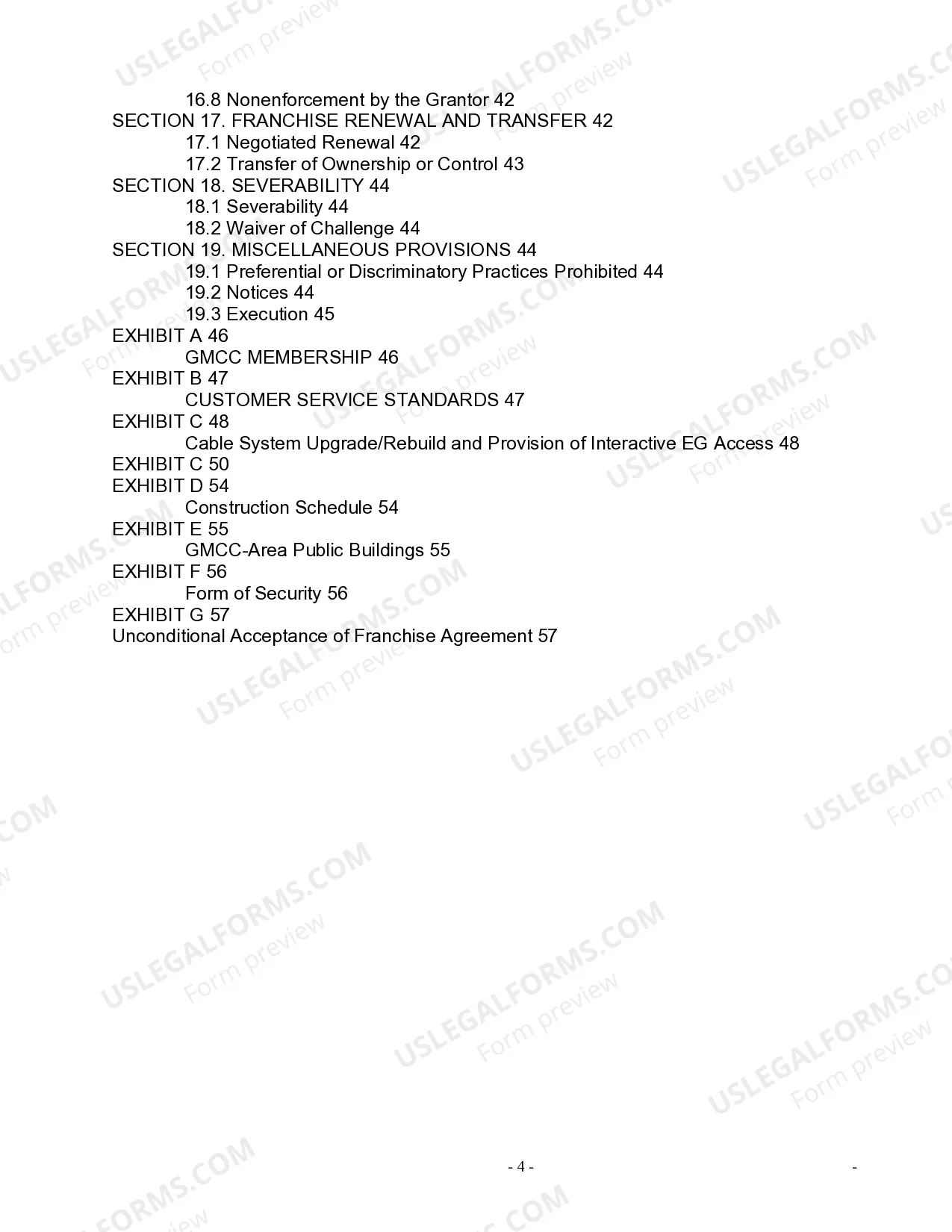
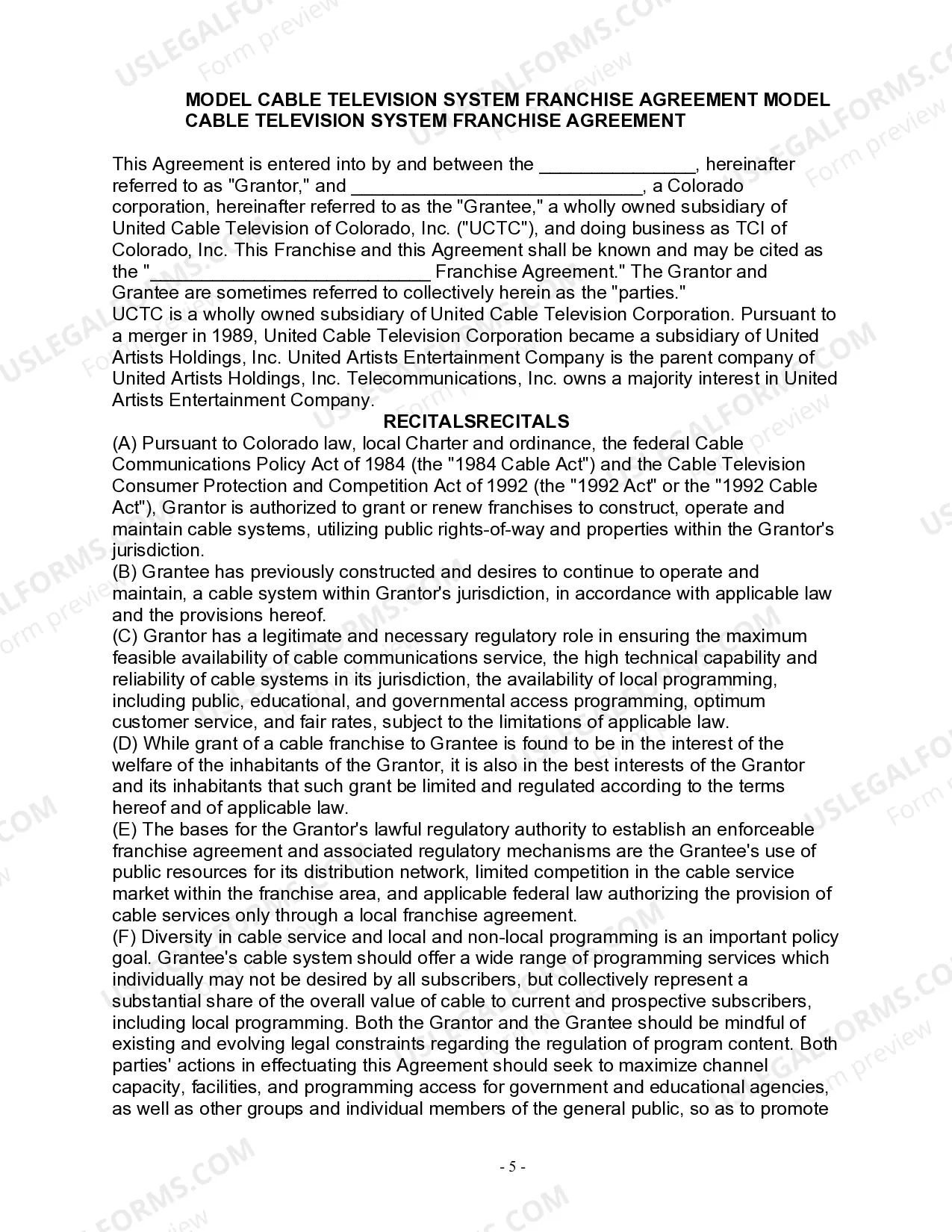
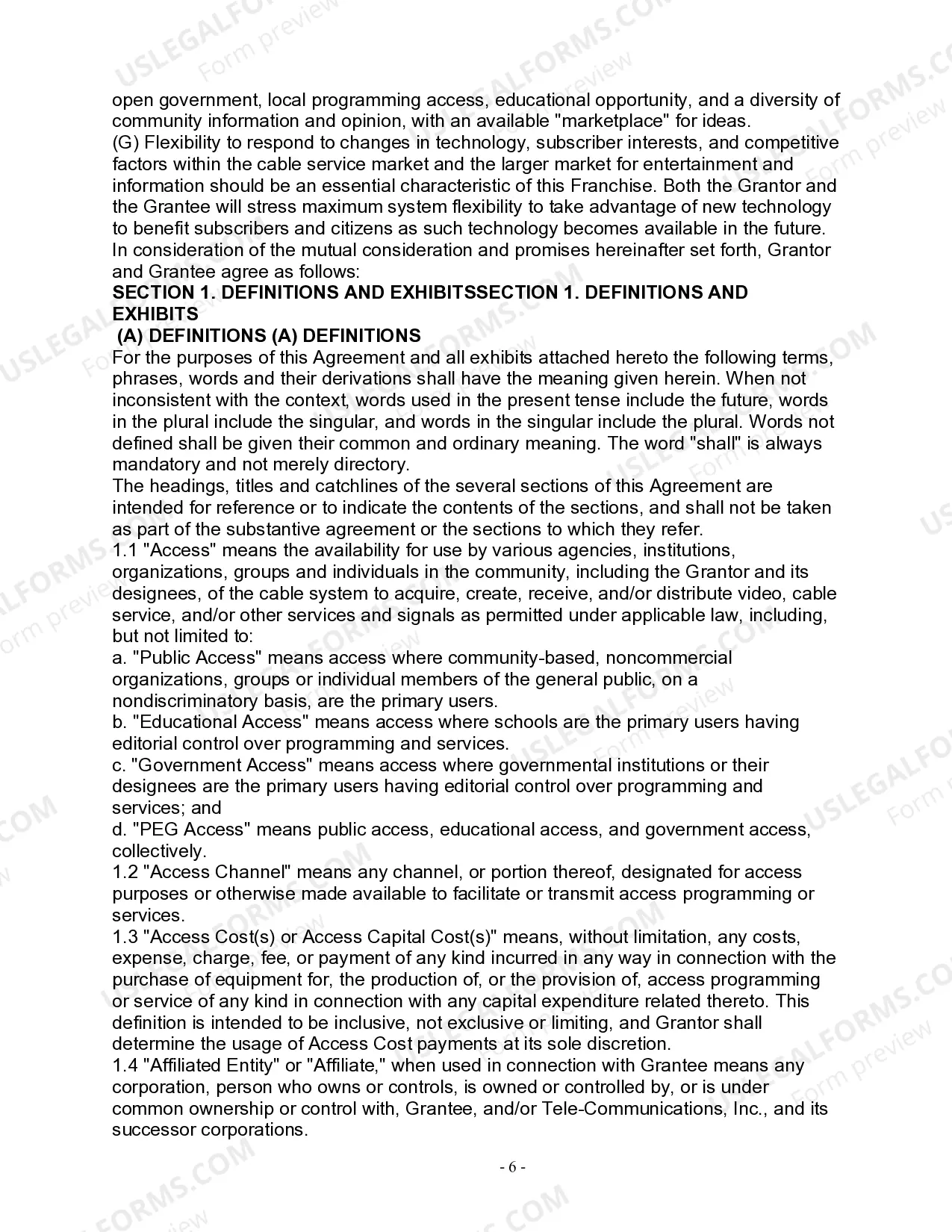
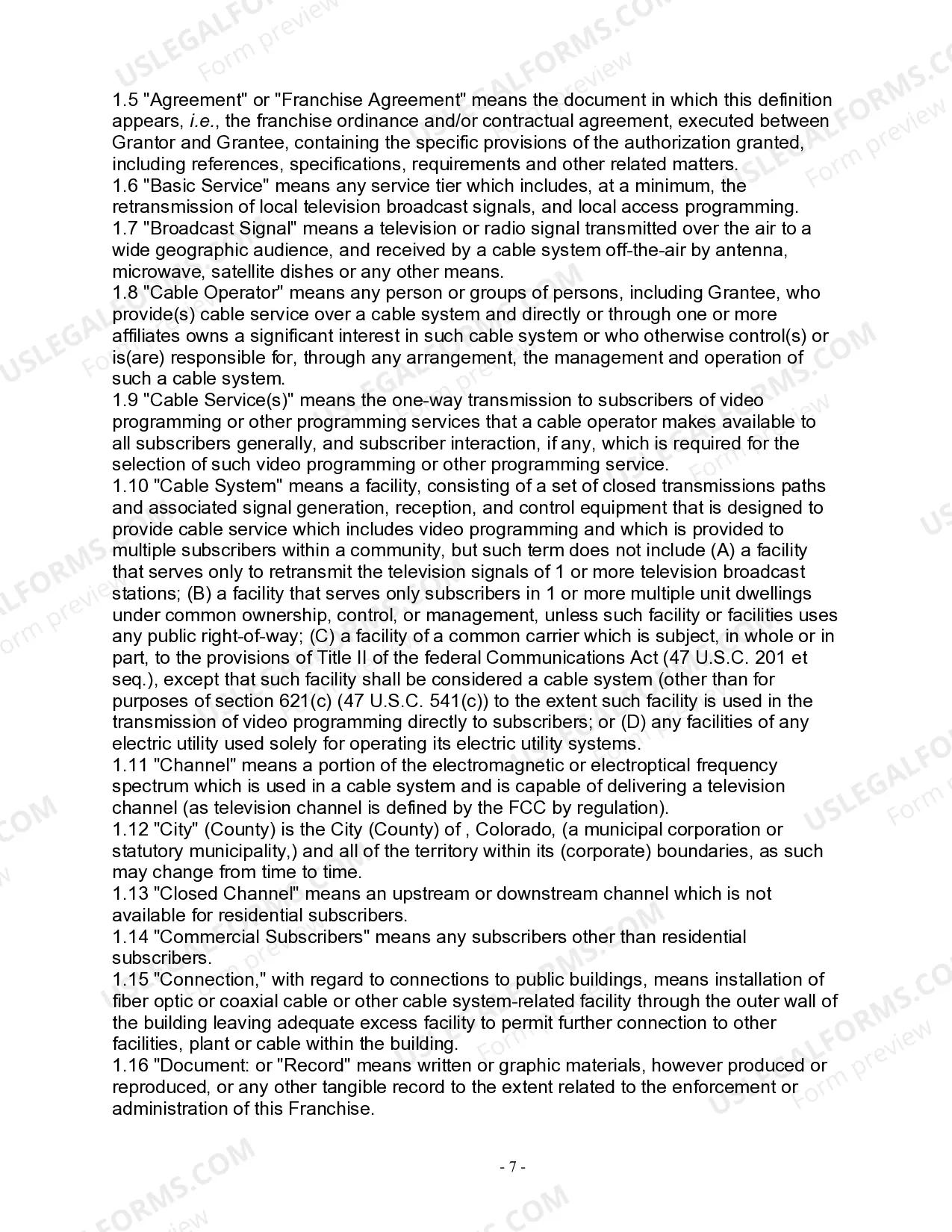
Washington Cable Consortium Cable Television Franchise Agreement
Description
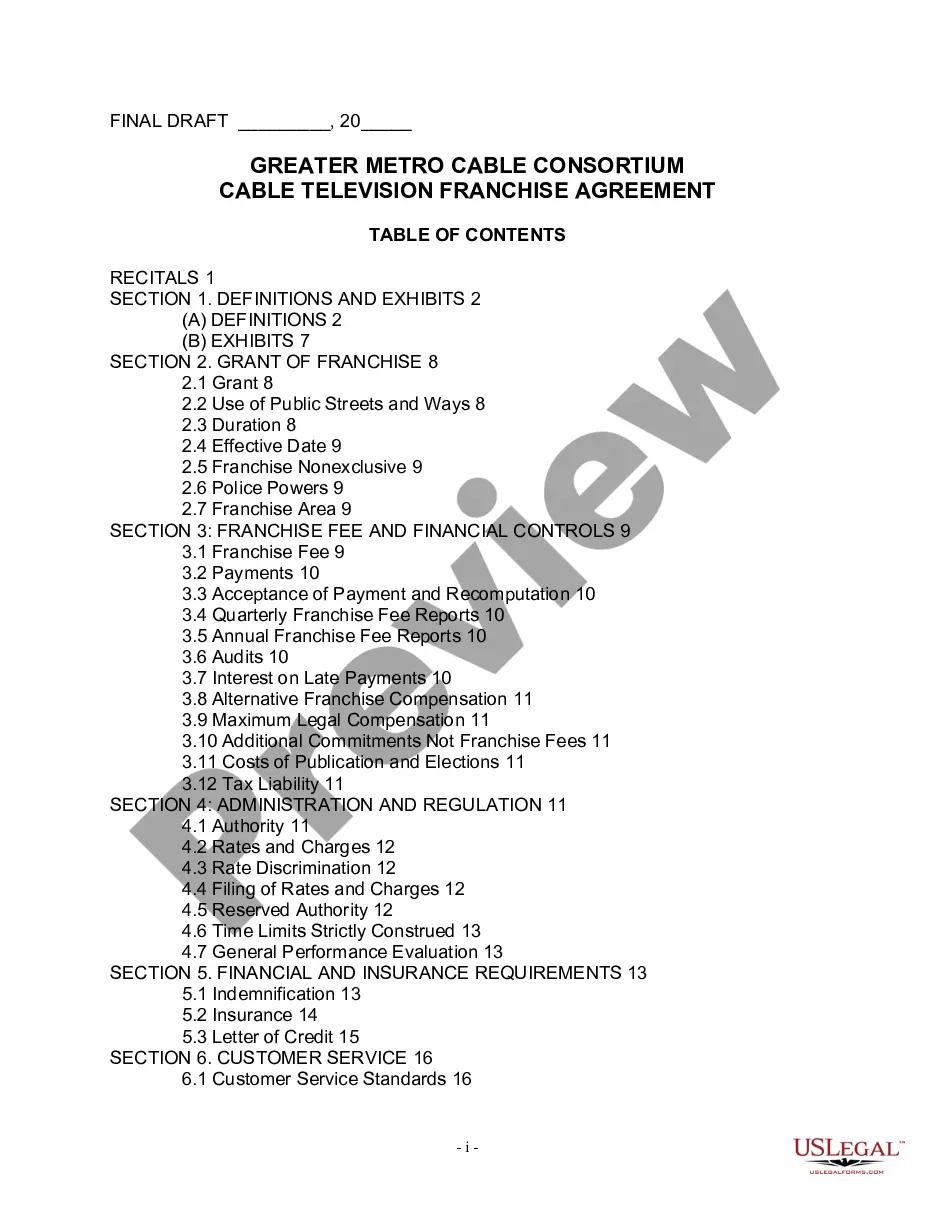
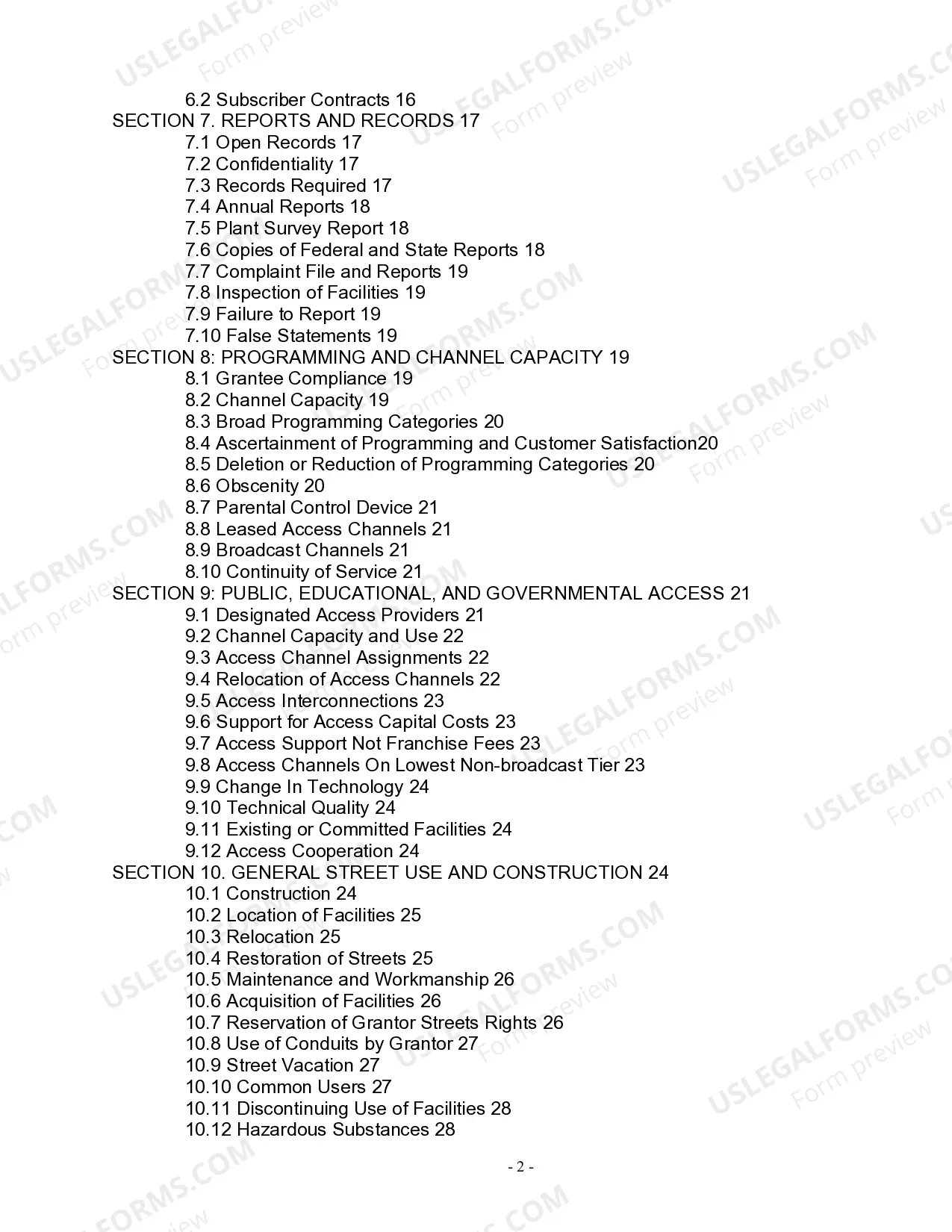
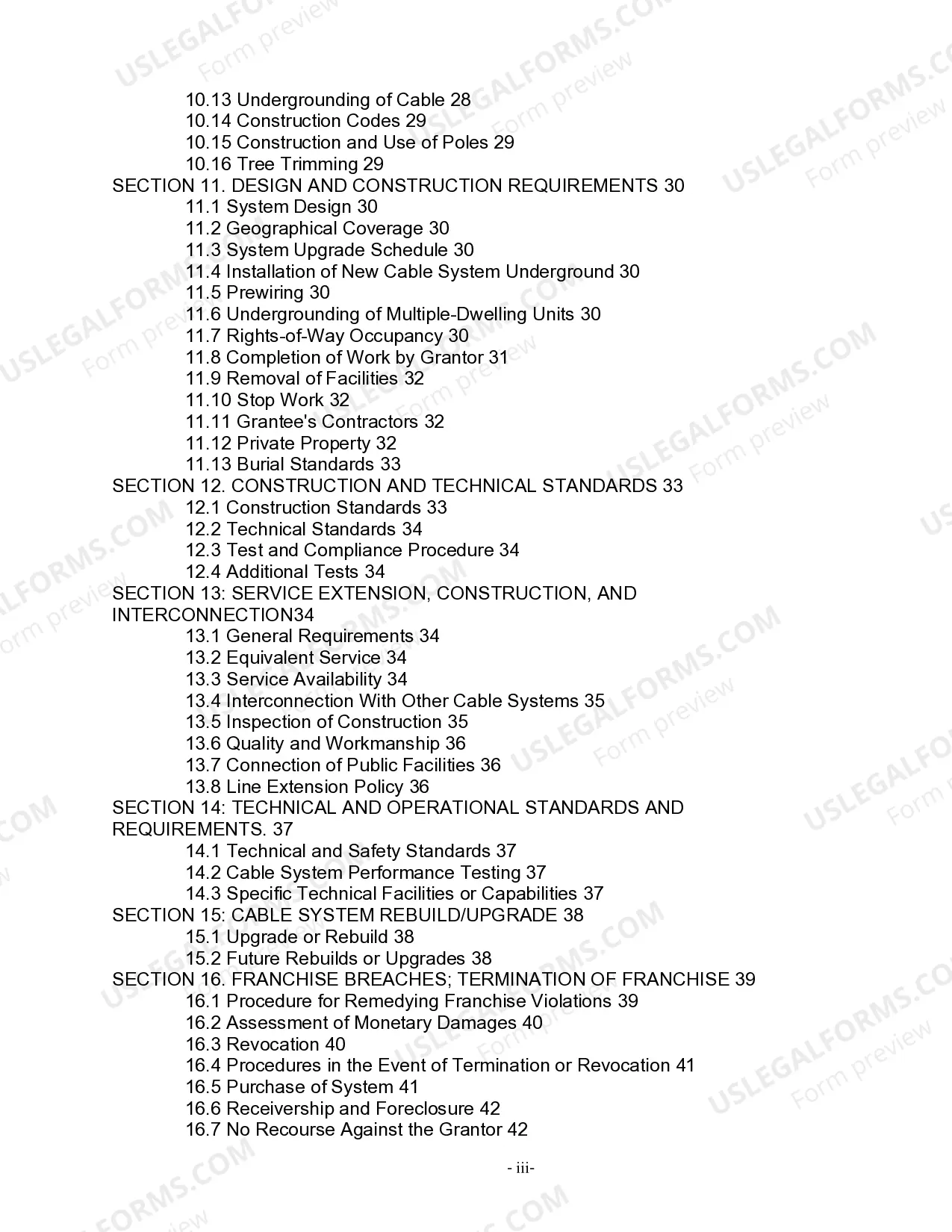







How to fill out Cable Consortium Cable Television Franchise Agreement?
Are you currently in the situation where you need documents for either professional or specific reasons almost every day.
There are numerous legitimate document templates available online, but locating versions you can trust is not easy.
US Legal Forms offers thousands of form templates, like the Washington Cable Consortium Cable Television Franchise Agreement, designed to meet state and federal standards.
- If you are already familiar with the US Legal Forms website and possess an account, simply Log In.
- Then, you can obtain the Washington Cable Consortium Cable Television Franchise Agreement template.
- If you do not have an account and wish to start using US Legal Forms, follow these steps.
- Find the form you need and ensure it is for the correct region/area.
- Use the Review button to inspect the form.
- Check the details to confirm that you have selected the right document.
- If the form is not what you are looking for, use the Search bar to find the form that meets your needs.
- Once you find the appropriate form, click on Purchase now.
- Select the pricing plan you want, complete the required information to create your account, and pay for your order using PayPal or Visa or Mastercard.
- Choose a convenient file format and download your copy.
- Access all the document templates you have purchased in the My documents section. You can obtain an additional copy of the Washington Cable Consortium Cable Television Franchise Agreement at any time if needed. Just follow the necessary form to download or print the document template.
- Utilize US Legal Forms, the largest collection of legal forms, to save time and prevent mistakes. The service offers properly crafted legal document templates that you can use for various purposes. Create your account on US Legal Forms and start making your life a bit easier.
Form popularity
FAQ
The primary purpose of a franchise agreement is to establish a legal framework for cable providers to offer services while ensuring compliance with local regulations. It aims to protect consumer interests by mandating service quality standards and promoting competition. Additionally, the Washington Cable Consortium Cable Television Franchise Agreement allows local governments to manage public rights-of-way effectively, ensuring that residents have access to reliable and affordable cable television services.
Cable franchises are generally awarded for a term of 10 to 15 years, depending on local regulations and negotiations. This time frame allows cable providers to invest in infrastructure and expand their services while ensuring that local governments can reassess the agreement's terms at regular intervals. The Washington Cable Consortium Cable Television Franchise Agreement follows this standard, helping to maintain a balance between service provision and community needs.
Cable franchise fees are typically used to support public services, such as funding local public access channels and improving community media resources. They can also contribute to infrastructure projects that enhance telecommunications and broadband services in the area governed by the Washington Cable Consortium Cable Television Franchise Agreement. This creates a win-win situation, as residents benefit from improved services while the local government can allocate funds to community projects.
A cable franchise agreement is a legal contract between a cable provider and a local government. This agreement grants the cable provider the right to operate and offer cable television services within a specific area, such as the jurisdiction of the Washington Cable Consortium Cable Television Franchise Agreement. It outlines the responsibilities of the provider, including service quality and customer support, while also ensuring that the local government can regulate the service to benefit the community.
Section 622 of the Federal Cable Act is a crucial piece of legislation that governs cable television franchises in the United States. It mandates that local governments must negotiate fair agreements with cable companies, including the Washington Cable Consortium Cable Television Franchise Agreement. This section ensures that municipalities receive compensation for the use of public rights-of-way by cable providers. Understanding this section is vital for communities looking to establish equitable cable services and enhance local access to information.
Franchise Fee Franchise fees are paid to local governments as compensation for Comcast's use of the public rights-of-way and easements. The Federal Cable Act authorizes cable operators to collect from customers the full amount of franchise fees paid to local governments.
Cable franchise agreements provide the franchisee the right to construct, install, maintain and operate a cable system on County Public Rights-of-Way in exchange for the franchisee's promise to provide cable service to residents of the County.
Basic service is generally regulated by the local franchising authority (the local or state entity empowered by Federal, State, or local law to grant a franchise to a cable company to operate in a given area).
Cable franchise agreements provide the franchisee the right to construct, install, maintain and operate a cable system on County Public Rights-of-Way in exchange for the franchisee's promise to provide cable service to residents of the County.
Broadcasters make money largely through on-air advertising as well as fees to third parties for content retransmission. Cable networks provide content to distributors, including cable, telecommunications, and satellite operators. They also make money selling air time for advertisements.