Mississippi Land Deed of Trust
Overview of this form
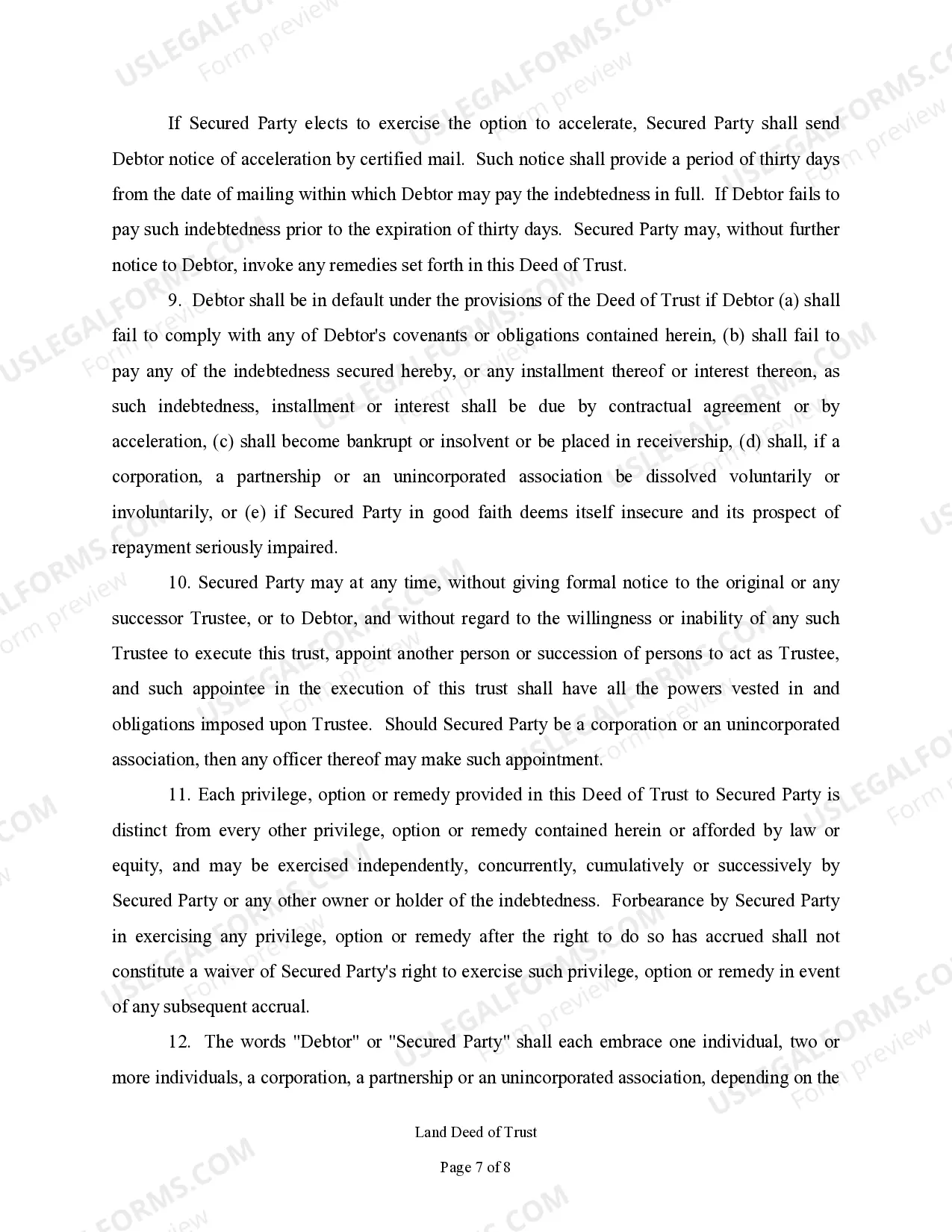
The Land Deed of Trust is a legal document used to secure a loan or borrowing against real property. It creates a trust, allowing a trustee to hold the legal title of the property until the borrower pays back the loan in full. Unlike a mortgage, a deed of trust involves three parties: the borrower (debtor), the lender (secured party), and the trustee. This form is essential for property transactions in which a loan is secured by real estate in accordance with specific state laws.
Form components explained
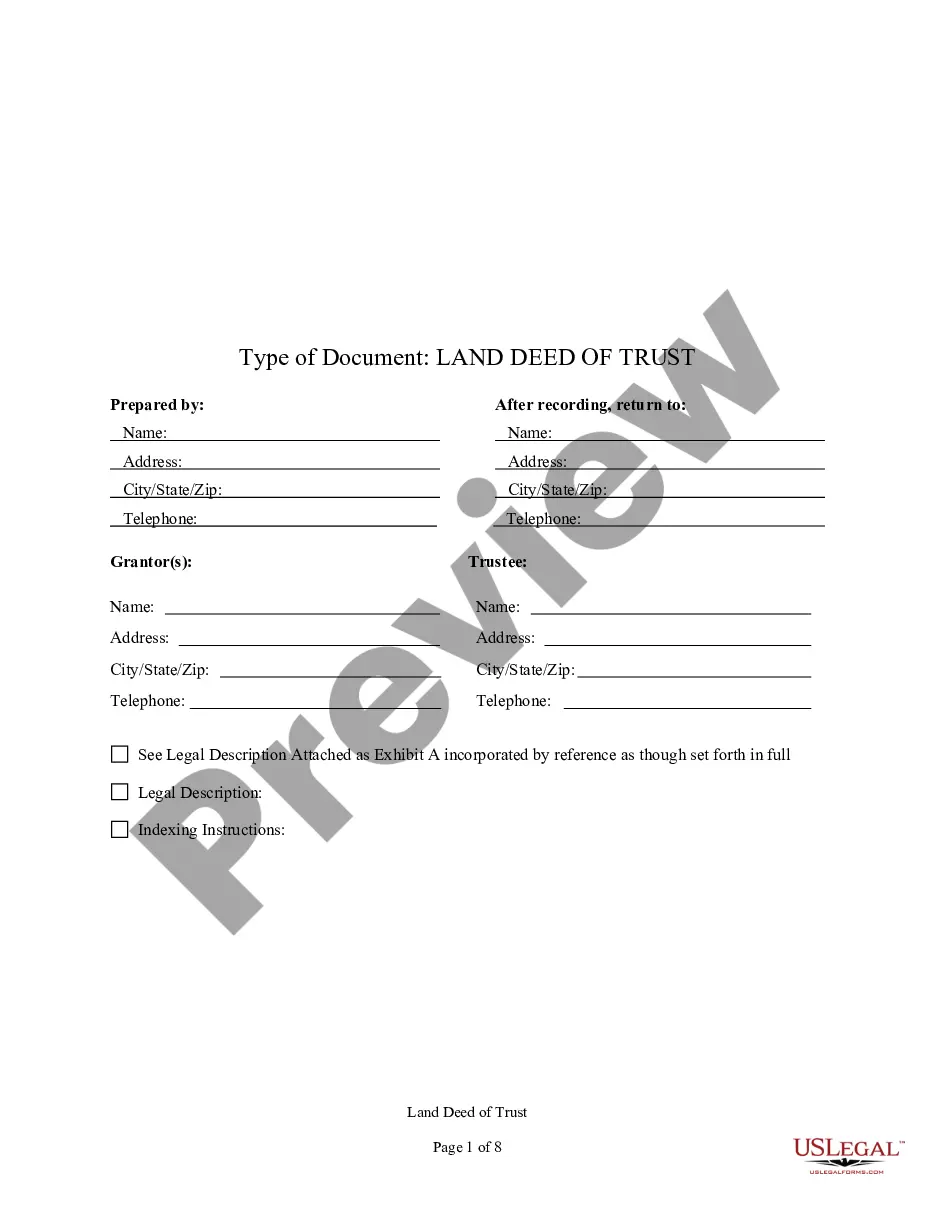
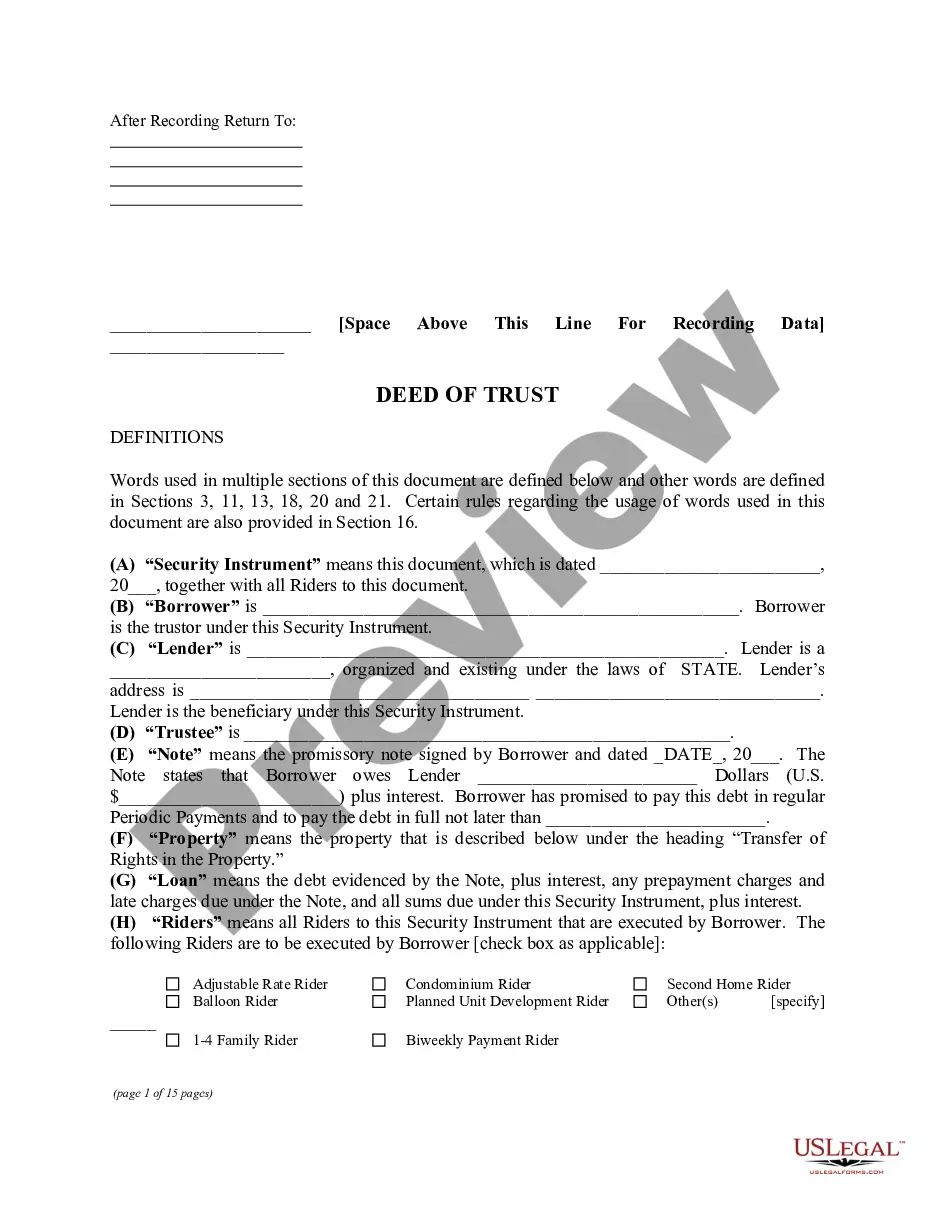
- Identification of the grantor (borrower), trustee, and secured party (lender).
- Details of the property being secured, including its legal description.
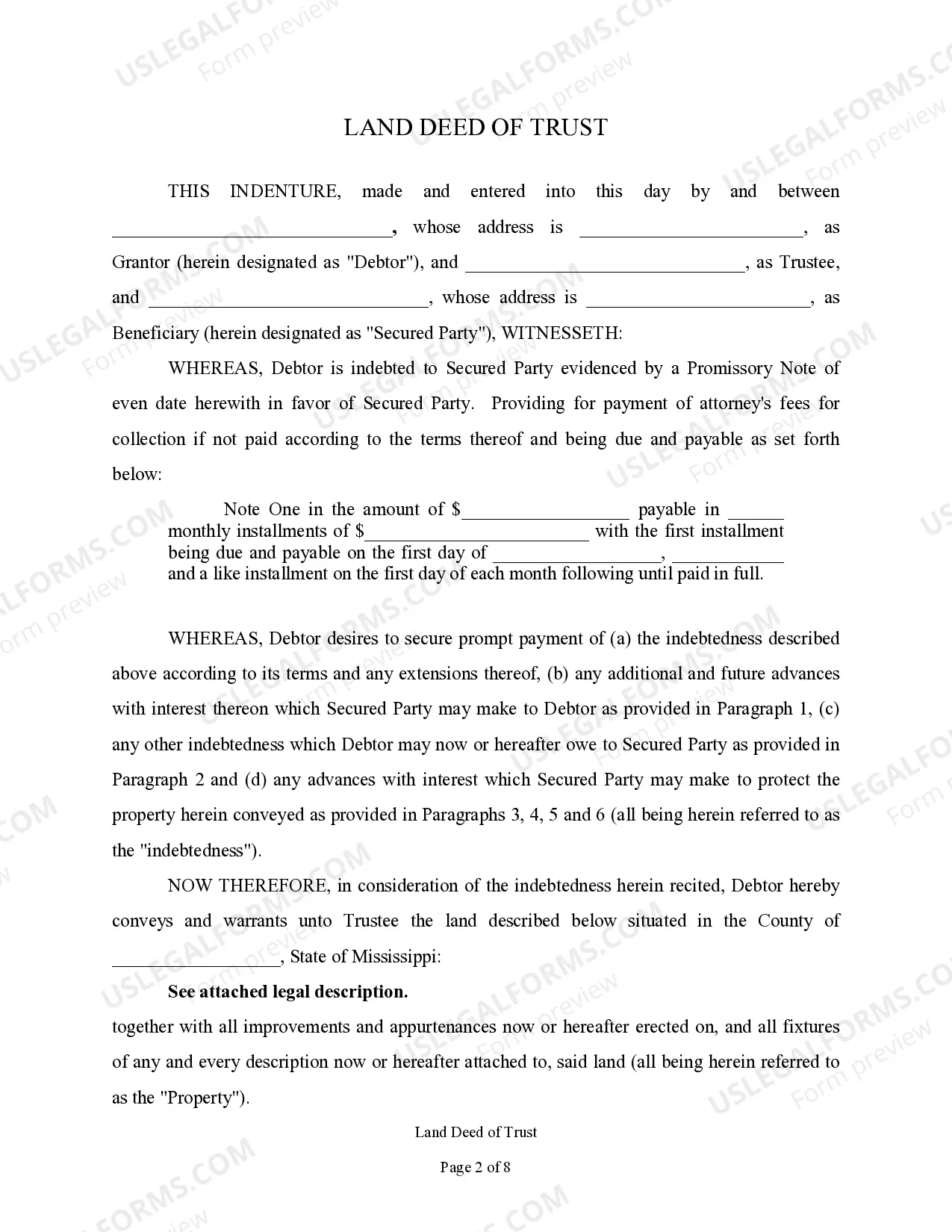
- Terms of the indebtedness, including payment structure and interest rates.
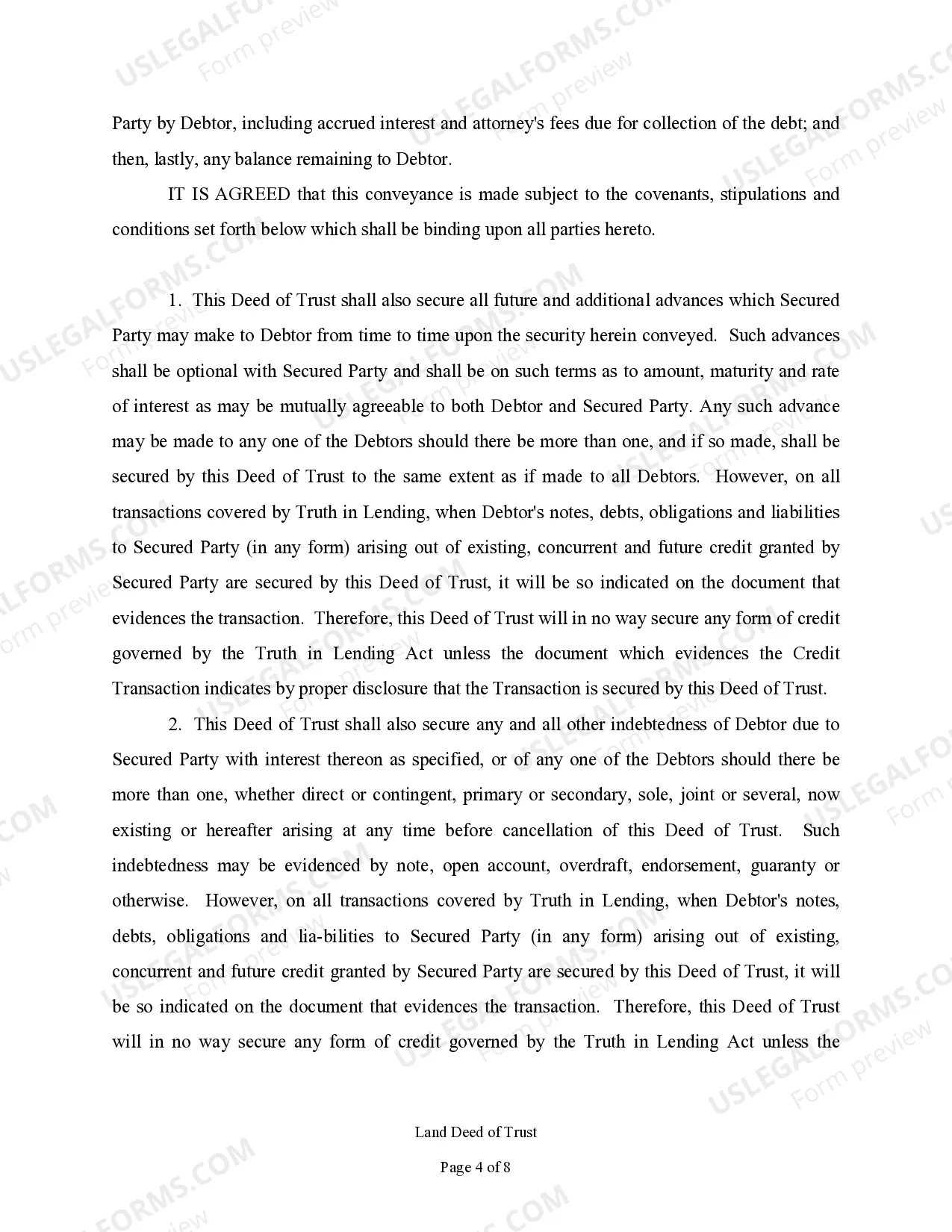
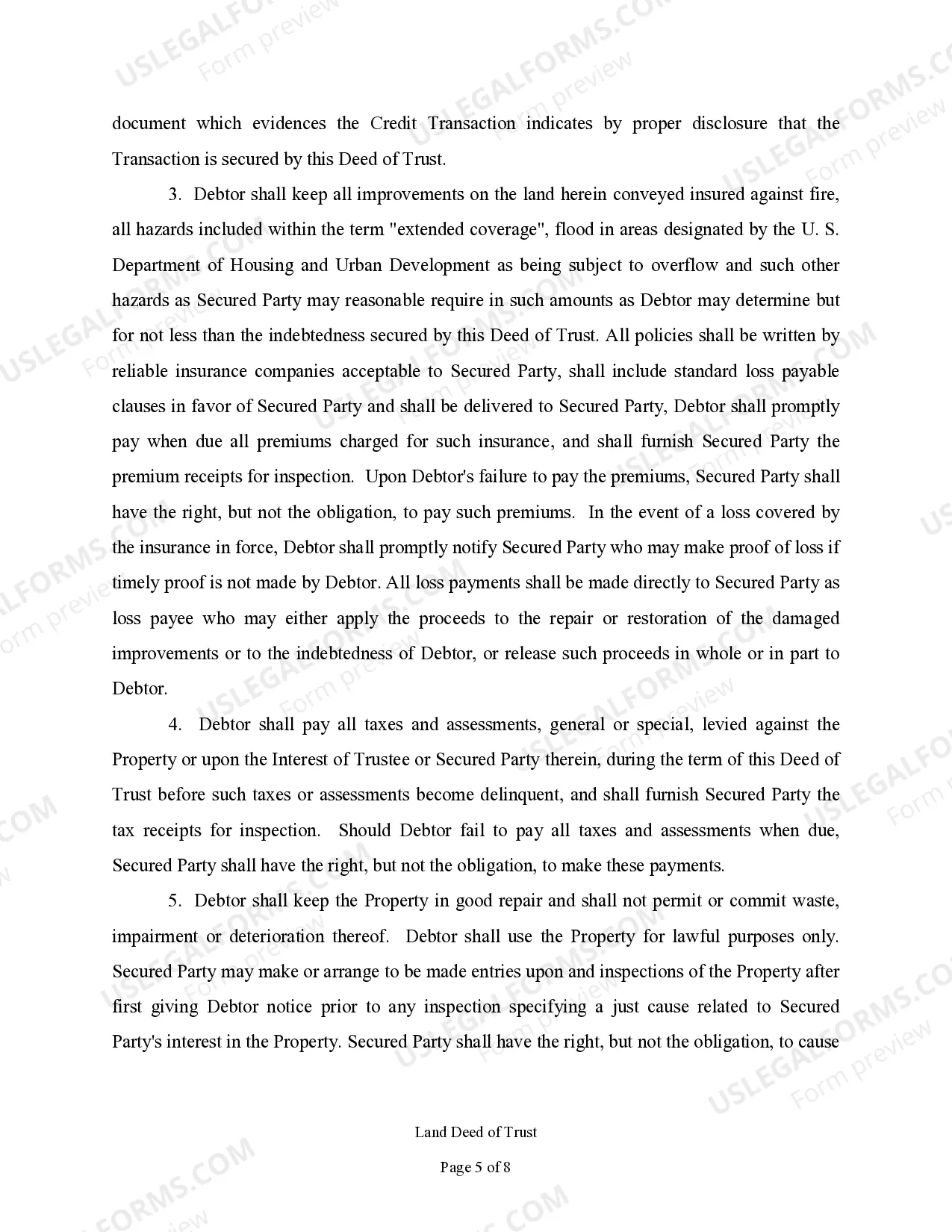
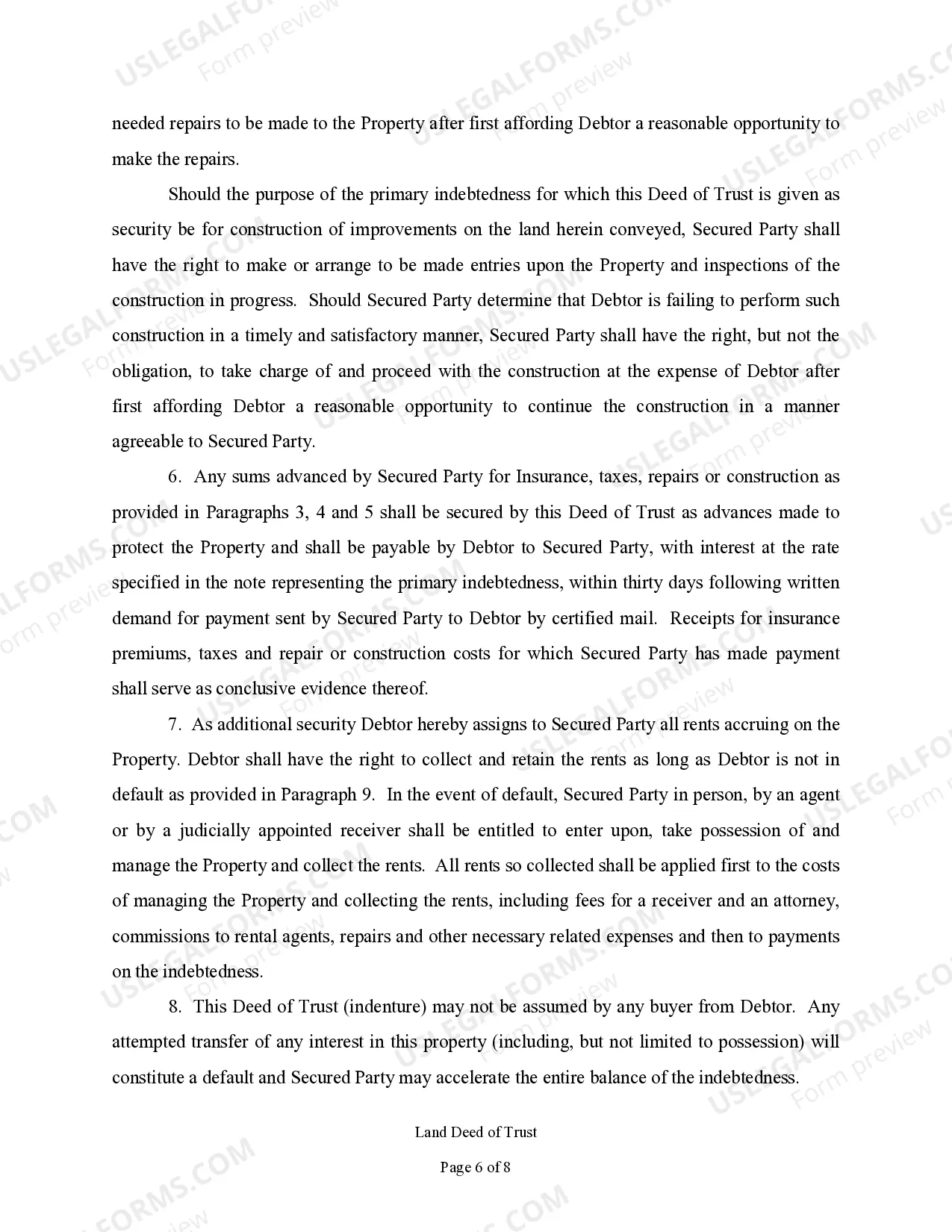
- Clauses outlining covenants, conditions, and obligations of the parties involved.
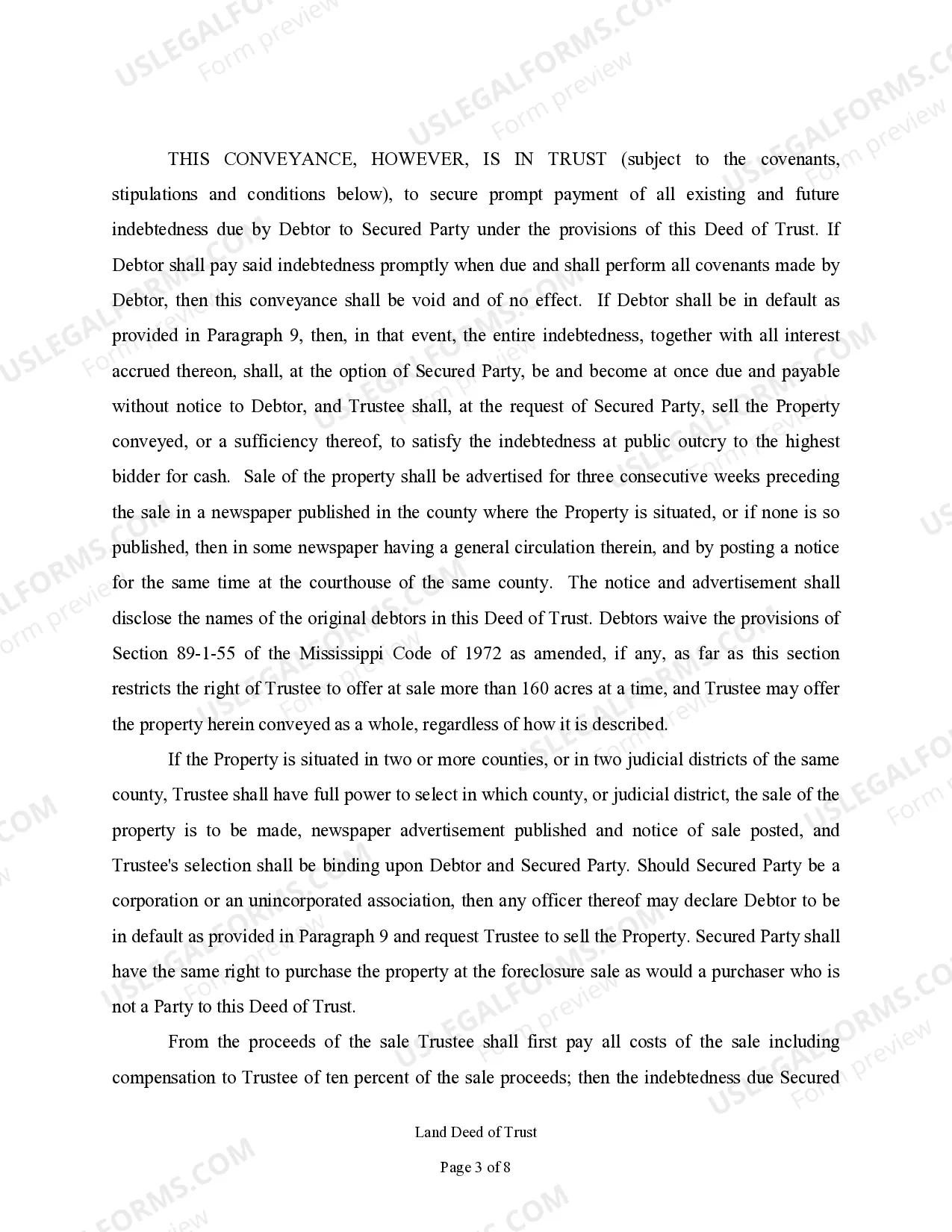
- Provisions for default, including the process for foreclosure if the debtor fails to meet payment terms.

When to use this form
This form is necessary when a borrower seeks to secure a loan with real property. It is commonly used in scenarios such as purchasing a home, refinancing an existing mortgage, or taking out a home equity loan. Use this deed of trust when you want to provide the lender with a legal claim to the property as collateral until the debt is fully repaid.
Who this form is for
- Homeowners borrowing against their property.
- Real estate investors seeking financing for property acquisition.
- Lenders or financial institutions providing loans secured by real estate.
- Trustees appointed to manage the secured property on behalf of the lender.
Completing this form step by step
- Identify the parties: Enter the names and addresses of the grantor, trustee, and secured party.
- Specify the property: Provide a complete legal description of the property being secured.
- Outline the terms: Detail the principal amount, payment schedule, and interest rates associated with the debt.
- Insert covenants and obligations: Clearly state the responsibilities and conditions for the debtor to adhere to.
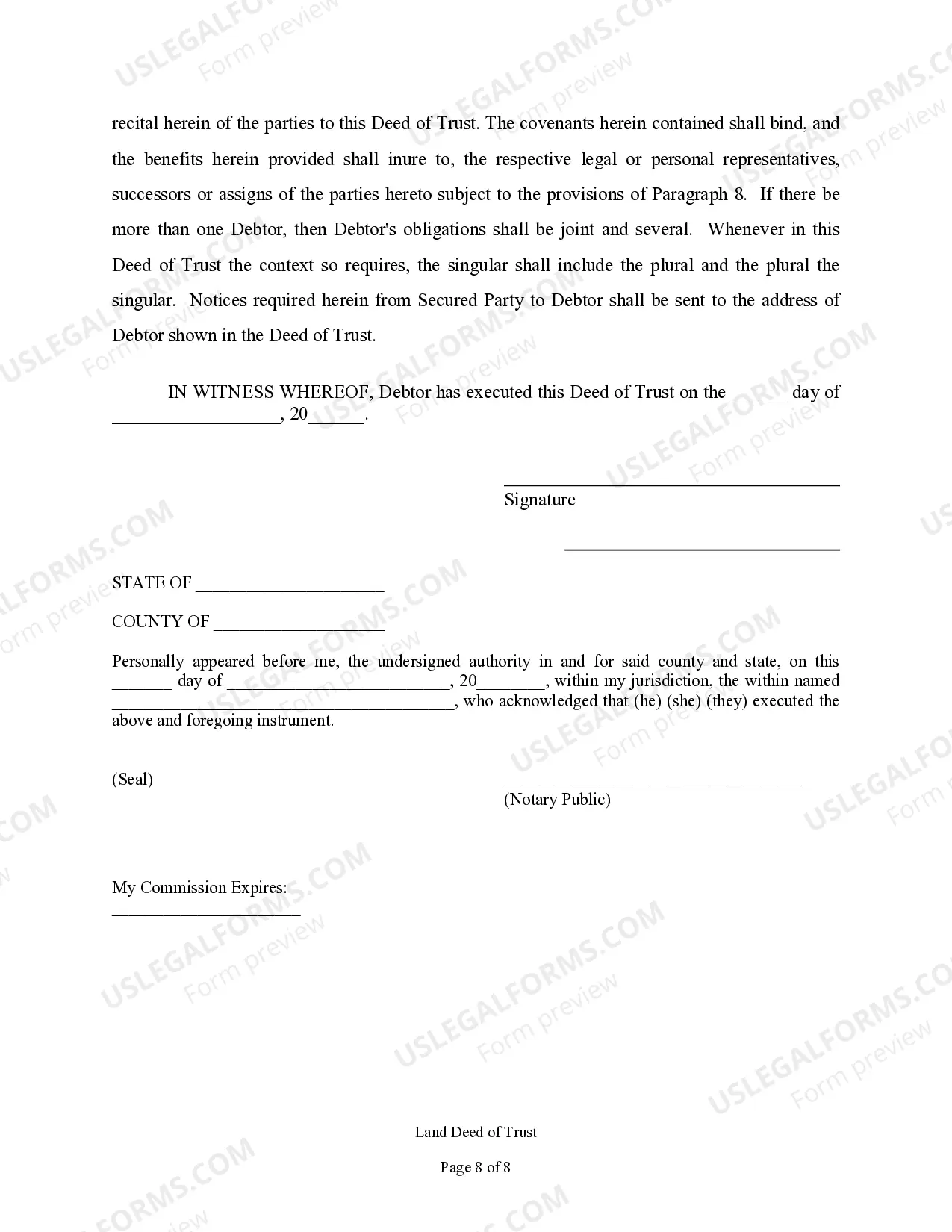
- Sign and date the form: Include signatures of all parties involved and any required witnesses or notaries.
Is notarization required?
Yes, this form must be notarized to be legally valid. US Legal Forms offers integrated online notarization services, providing 24/7 availability through secure video calls. This method ensures the document is completed correctly without the need to travel for a notary.
Get your form ready online
Our built-in tools help you complete, sign, share, and store your documents in one place.
Make edits, fill in missing information, and update formatting in US Legal Forms—just like you would in MS Word.
Download a copy, print it, send it by email, or mail it via USPS—whatever works best for your next step.
Sign and collect signatures with our SignNow integration. Send to multiple recipients, set reminders, and more. Go Premium to unlock E-Sign.
If this form requires notarization, complete it online through a secure video call—no need to meet a notary in person or wait for an appointment.
We protect your documents and personal data by following strict security and privacy standards.

Make edits, fill in missing information, and update formatting in US Legal Forms—just like you would in MS Word.

Download a copy, print it, send it by email, or mail it via USPS—whatever works best for your next step.

Sign and collect signatures with our SignNow integration. Send to multiple recipients, set reminders, and more. Go Premium to unlock E-Sign.

If this form requires notarization, complete it online through a secure video call—no need to meet a notary in person or wait for an appointment.

We protect your documents and personal data by following strict security and privacy standards.
Common mistakes
- Failing to accurately complete the legal description of the property.
- Omitting signatures or necessary witness and notary acknowledgments.
- Not specifying all terms related to the loan payment schedule.
- Ignoring state-specific regulations that may affect the enforceability of the deed.
Why complete this form online
- Convenience of accessing and completing the form at your own pace.
- Editability to customize the form based on individual property and loan specifications.
- Reliability of using a legally vetted document drafted by licensed attorneys.
Legal use & context
- This form legally binds the parties to the terms of the trust, establishing clear obligations and rights.
- It is enforceable in court, provided it meets state-specific requirements and is appropriately executed.
- The trustee has the authority to take necessary legal action in case of default by the debtor, including property foreclosure.
Summary of main points
- A Land Deed of Trust secures loans with real property as collateral.
- It involves a debtor, secured party, and trustee, each with specific roles and responsibilities.
- Ensure the form is completed accurately and notarized for legal validity.
- This document is vital for both homebuyers and real estate investors seeking to secure financing.
Looking for another form?

Form popularity
FAQ
Whether you have a deed of trust or a mortgage, they both serve to assure that a loan is repaid, either to a lender or an individual person. A mortgage only involves two parties the borrower and the lender. A deed of trust adds an additional party, a trustee, who holds the home's title until the loan is repaid.
Some owners are put off using solicitors duke to the deed of trust cost. Individuals can write out their own, and use someone else as a witness. However, this may have errors or not be a legally binding document. The investment of getting a deed of trust when buying a property is often worth it in the long term.
As you stated in your question, it is recorded among the land records, and your lender keeps the original. When you pay off the loan, the lender will return the deed of trust with the promissory note. This document is rather lengthy and quite legalistic.
A real estate deed should be recorded in the office of the county recorder in the county where the property is located. The office of the county recorder may also be called the register of deeds, clerk of courts, office of the judge of probate, or recorder of deeds.
The following states use Deed of Trusts: Alaska, Arizona, California, District of Columbia, Georgia, Mississippi, Missouri, Nevada, North Carolina, and Virginia.
They serve different purposes and are signed by different parties. The warranty deed transfers the property's ownership from the current owner to the new buyer, while the deed of trust ensures the lender has interest in the property in the event a buyer defaults on the loan.
The title deeds to a property with a mortgage are usually kept by the mortgage lender. They will only be given to you once the mortgage has been paid in full. But, you can request copies of the deeds at any time.
A Deed of Trust is essentially an agreement between a lender and a borrower to give the property to a neutral third party who will serve as a trustee. The trustee holds the property until the borrower pays off the debt.
A deed of trust is a legal document that is the security for a real estate loan. The document itself is recorded with the county recorder or registrar of titles in the county where the real estate is located.