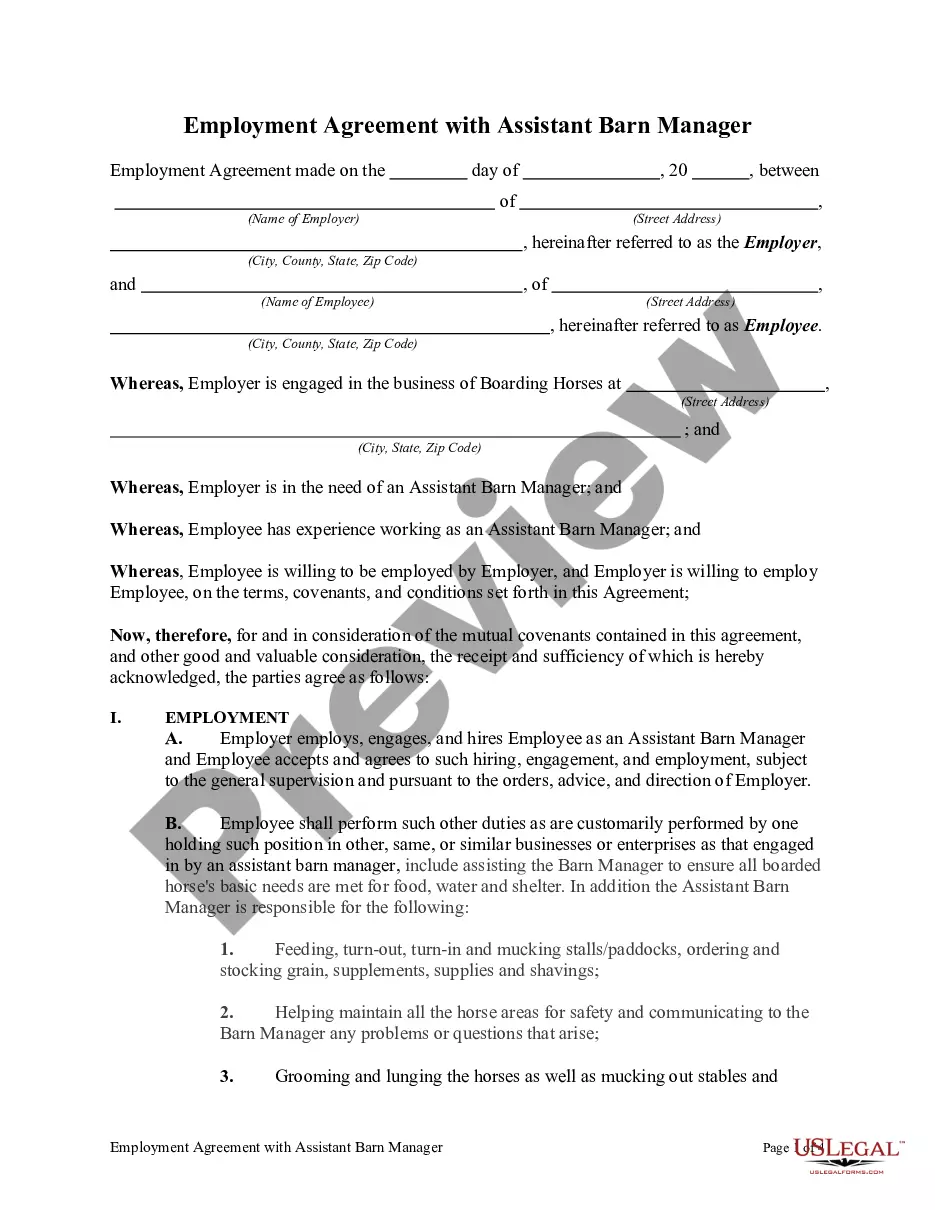
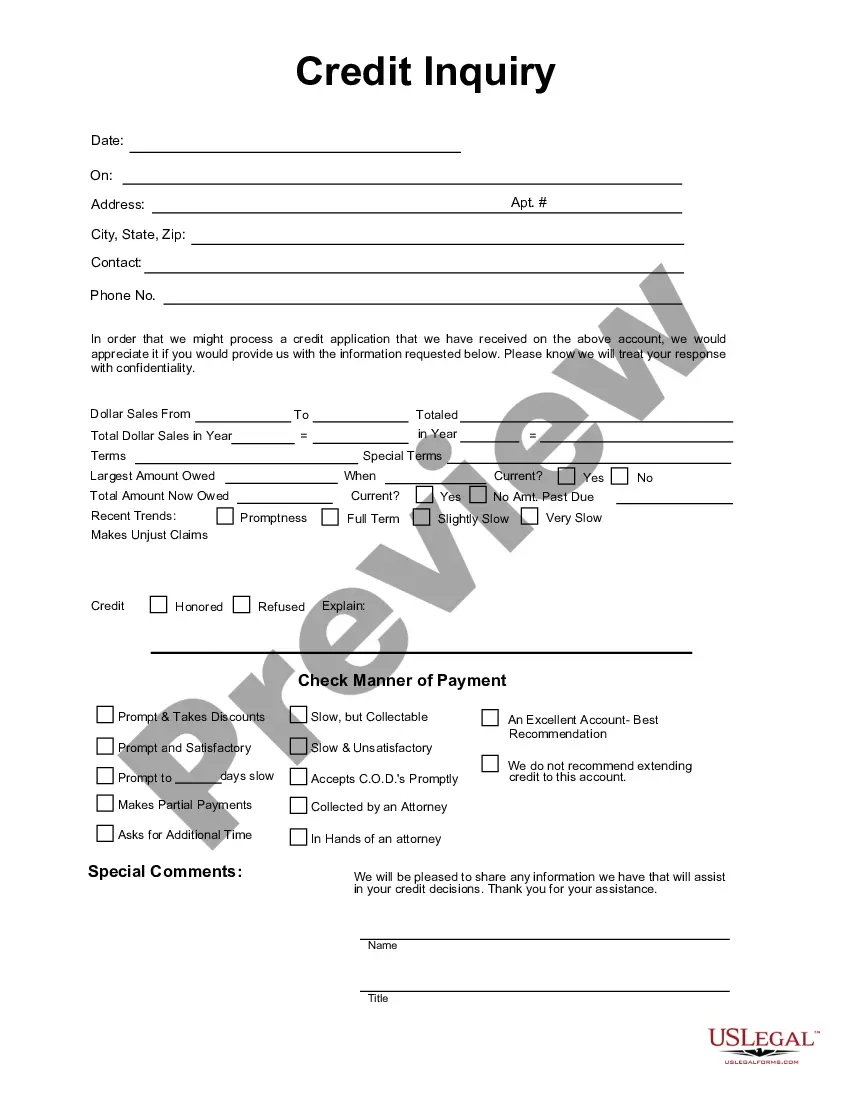
This form is a business type form that is formatted to allow you to complete the form using Adobe Acrobat or Word. The word files have been formatted to allow completion by entry into fields. Some of the forms under this category are rather simple while others are more complex. The formatting is worth the small cost.
Washington Credit Inquiry
Category:
State:
Multi-State
Control #:
US-135-AZ
Format:
Word;
PDF;
Rich Text
Instant download
Description
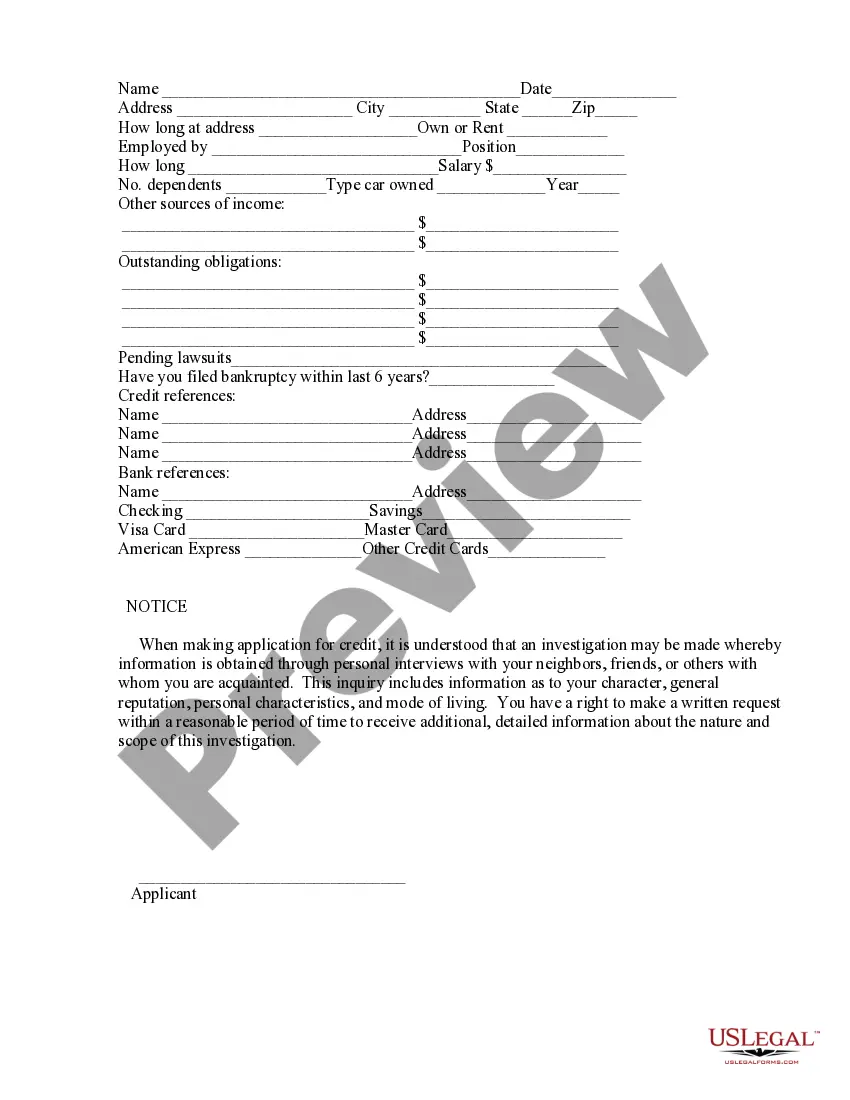
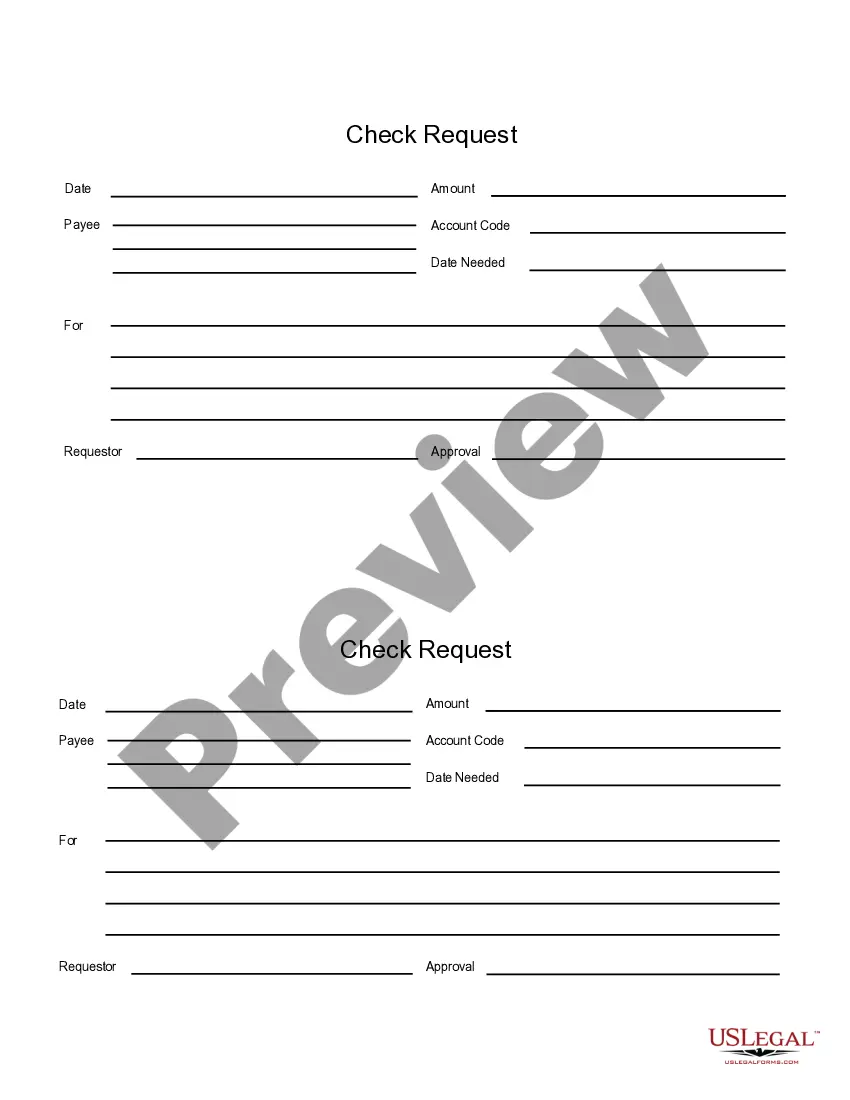
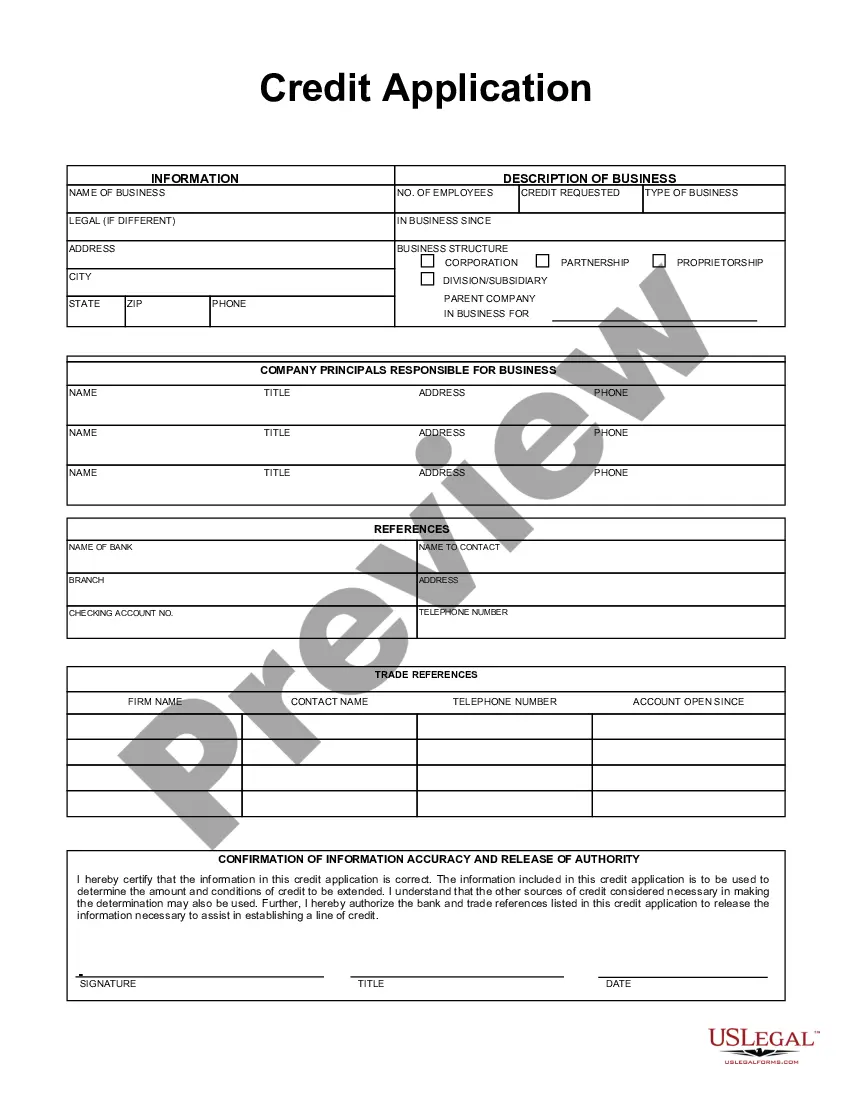
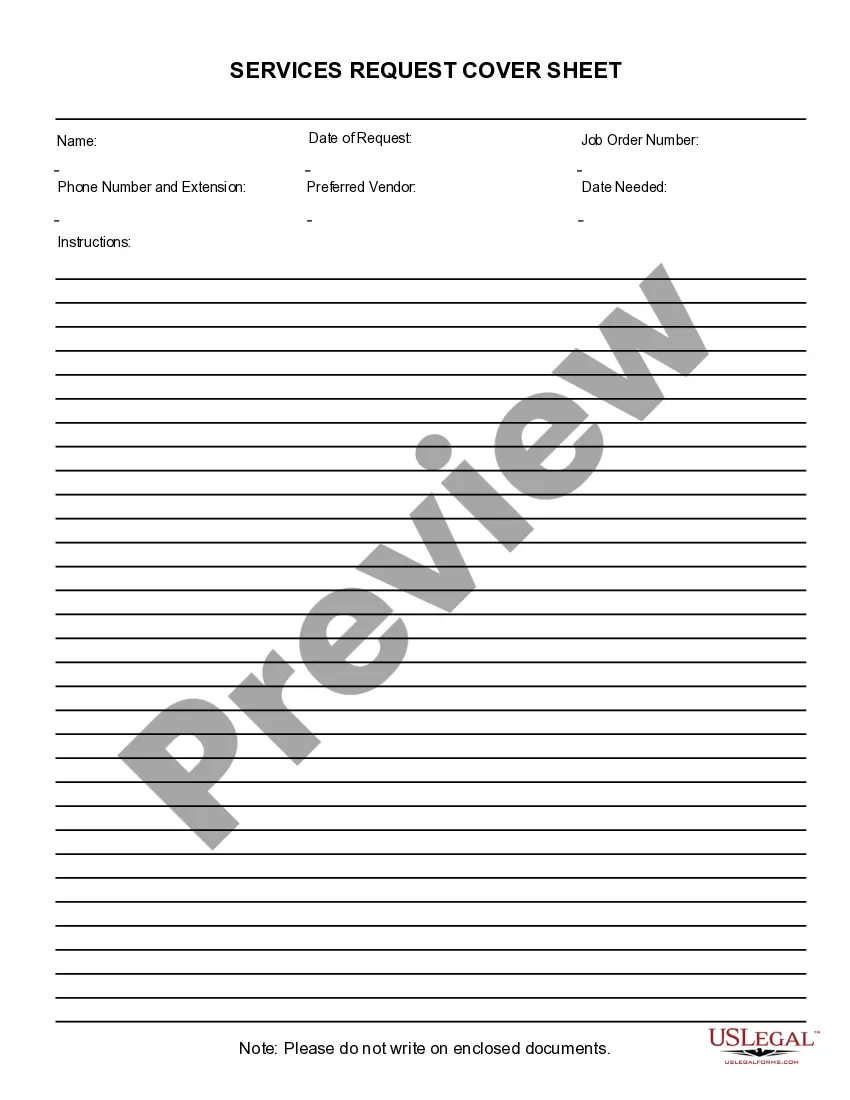
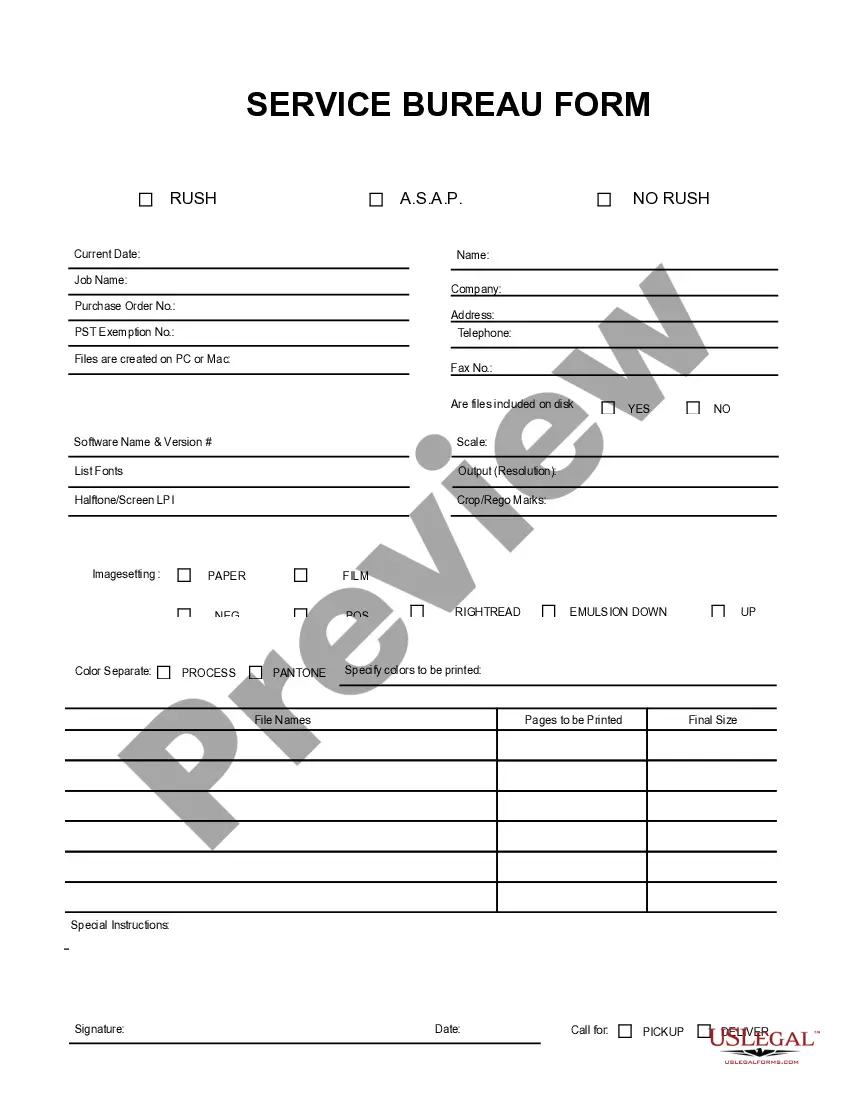

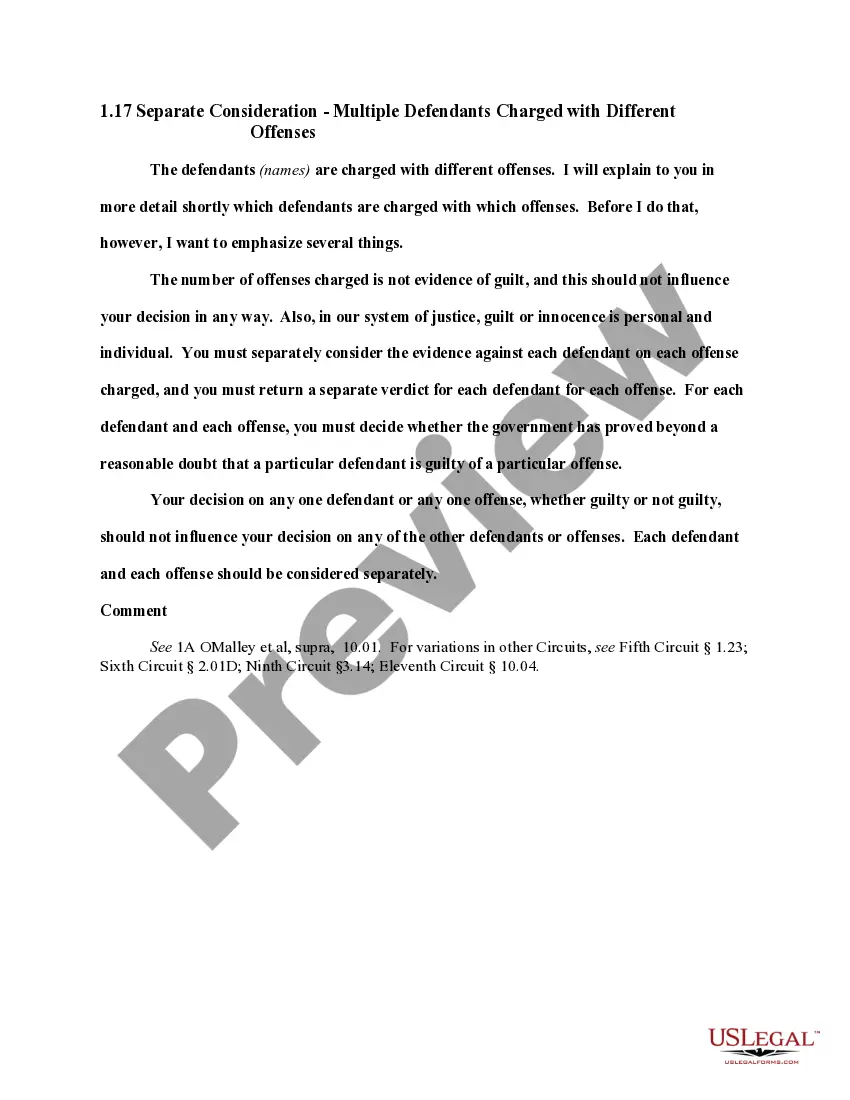

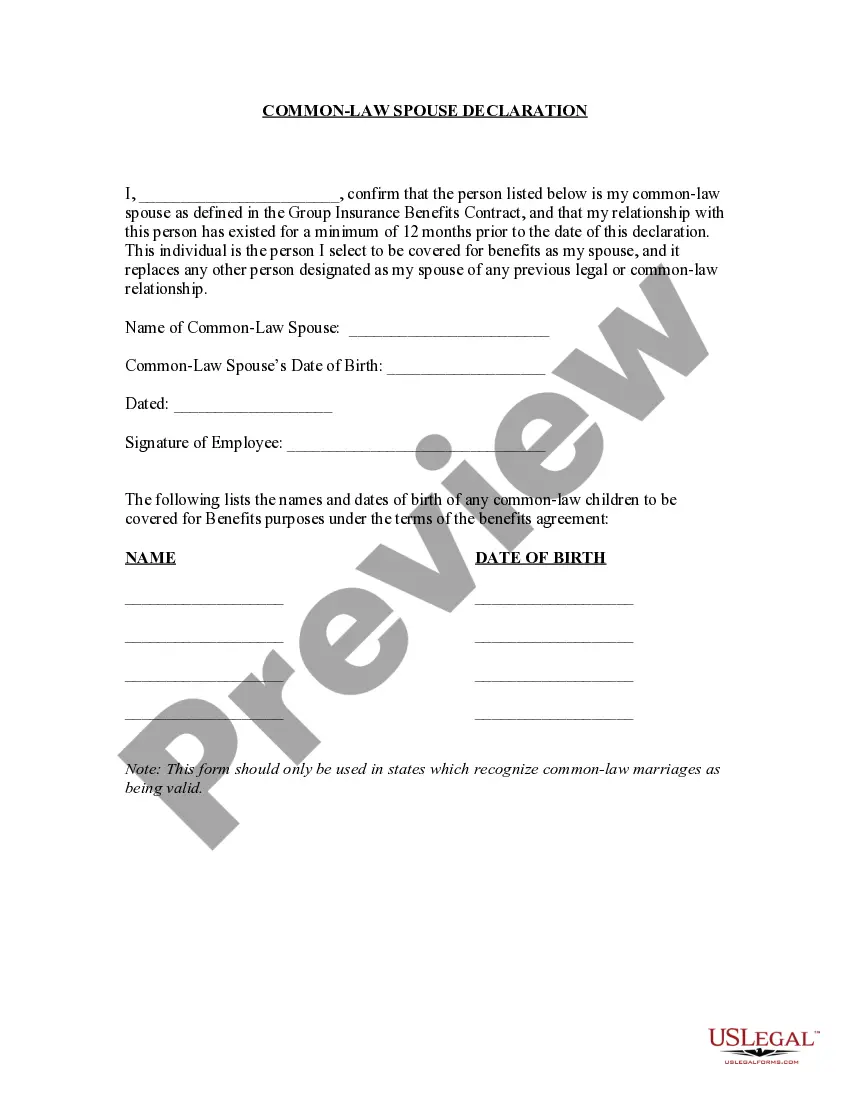

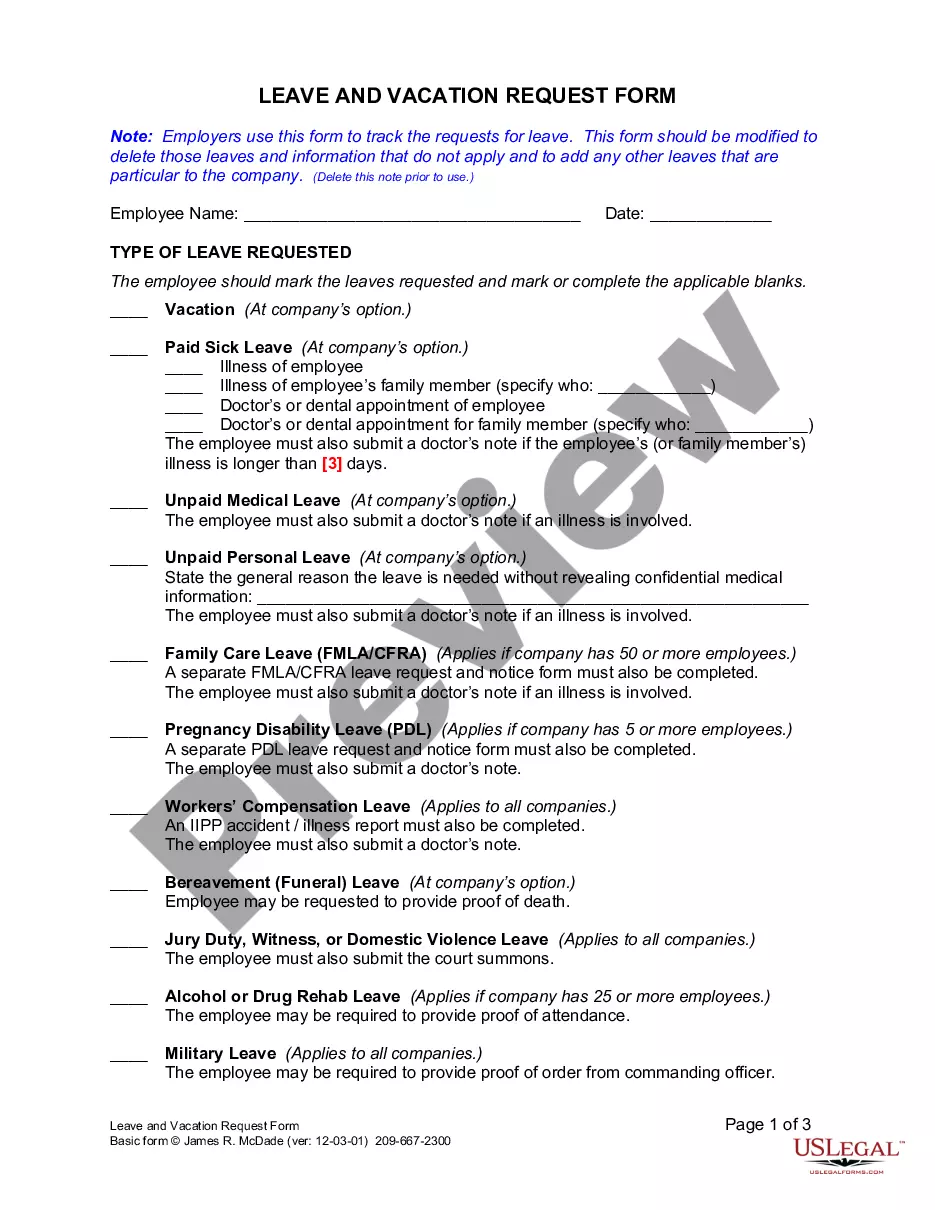


How to fill out Credit Inquiry?
If you need to compile, acquire, or generate authentic document templates, utilize US Legal Forms, the leading collection of legal forms available online. Take advantage of the site’s straightforward and user-friendly search to find the documents you need. Various templates for business and personal purposes are categorized by types and states, or keywords.
Use US Legal Forms to locate the Washington Credit Inquiry in just a few clicks.
If you are an existing US Legal Forms user, sign in to your account and click the Download button to obtain the Washington Credit Inquiry. You can also retrieve forms you have previously downloaded in the My documents section of your account.
Every legal document template you acquire is yours permanently. You have access to every form you have downloaded in your account. Click on the My documents section and select a form to print or download again.
Compete and obtain, and print the Washington Credit Inquiry with US Legal Forms. There are numerous professional and state-specific forms you can use for your business or personal needs.
- Step 1. Ensure you have selected the form for the correct city/state.
- Step 2. Utilize the Preview option to review the form’s content. Remember to read the description.
- Step 3. If you are dissatisfied with the form, use the Search field at the top of the screen to find other types of your legal form template.
- Step 4. After finding the form you need, click the Buy now button. Choose the payment plan you prefer and enter your details to register for an account.
- Step 5. Process the transaction. You can use your credit card or PayPal account to complete the purchase.
- Step 6. Select the format of your legal form and download it onto the device.
- Step 7. Fill out, modify, and print or sign the Washington Credit Inquiry.
Form popularity
FAQ
To get Washington credit inquiries removed, review your credit report for errors or unauthorized entries. After identifying issues, you can dispute these inquiries with credit bureaus. Utilizing tools from platforms like US Legal Forms can assist you with the dispute process, ensuring you handle it efficiently.
This information is reported to Equifax by your lenders and creditors and includes the types of accounts (for example, a credit card, mortgage, student loan, or vehicle loan), the date those accounts were opened, your credit limit or loan amount, account balances, and your payment history.
Under the federal Fair Credit Reporting Act and the state law RCW 19.182, consumer reporting agencies may keep correct and verifiable information in your file for seven years, and 10 years in the case of bankruptcy.
No, requesting your credit report will not hurt your credit score. Checking your own credit report is not an inquiry about new credit, so it has no effect on your score.
Though prospective employers don't see your credit score in a credit check, they do see your open lines of credit (such as mortgages), outstanding balances, auto or student loans, foreclosures, late or missed payments, any bankruptcies and collection accounts.
According to FICO, a hard inquiry from a lender will decrease your credit score five points or less. If you have a strong credit history and no other credit issues, you may find that your scores drop even less than that. The drop is temporary.
The impact of a single hard inquiry is relatively small, usually dinging your FICO® Score five points or less. You can gain those points back over just a few months' time, however, with positive credit habits such as paying down debt and making all your payments on time.
Hard inquiries have a negative impact on your credit score, in the short term at least. While a hard inquiry will stay on your credit report for two years, it will usually only impact your credit for a few months.
In general, credit inquiries have a small impact on your FICO Scores. For most people, one additional credit inquiry will take less than five points off their FICO Scores. For perspective, the full range for FICO Scores is 300-850. Inquiries can have a greater impact if you have few accounts or a short credit history.
How Many Hard Inquiries Per Year Until Your Credit Score Drops? Six or more inquiries are considered too many and can seriously impact your credit score. If you have multiple inquiries on your credit report, some may be unauthorized and can be disputed.