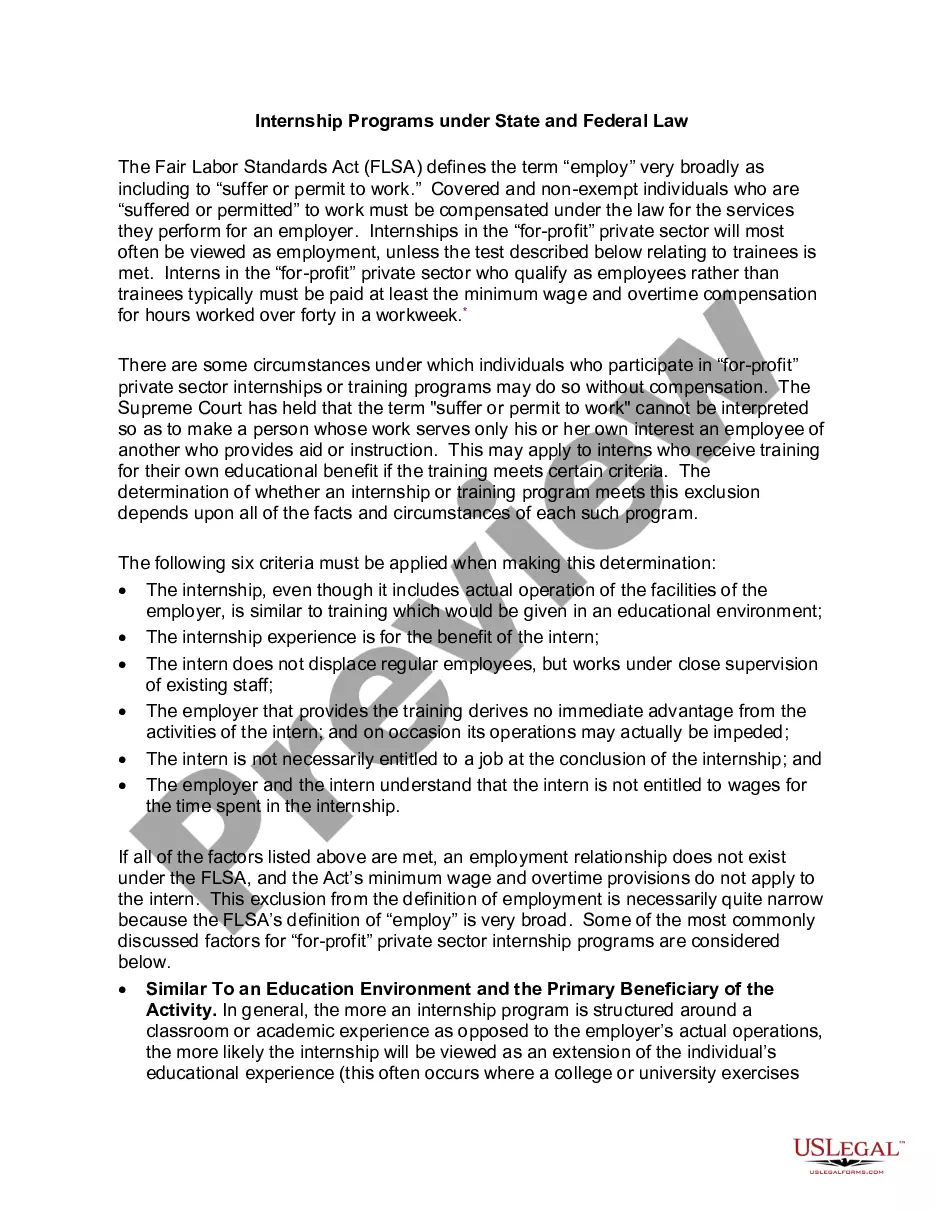
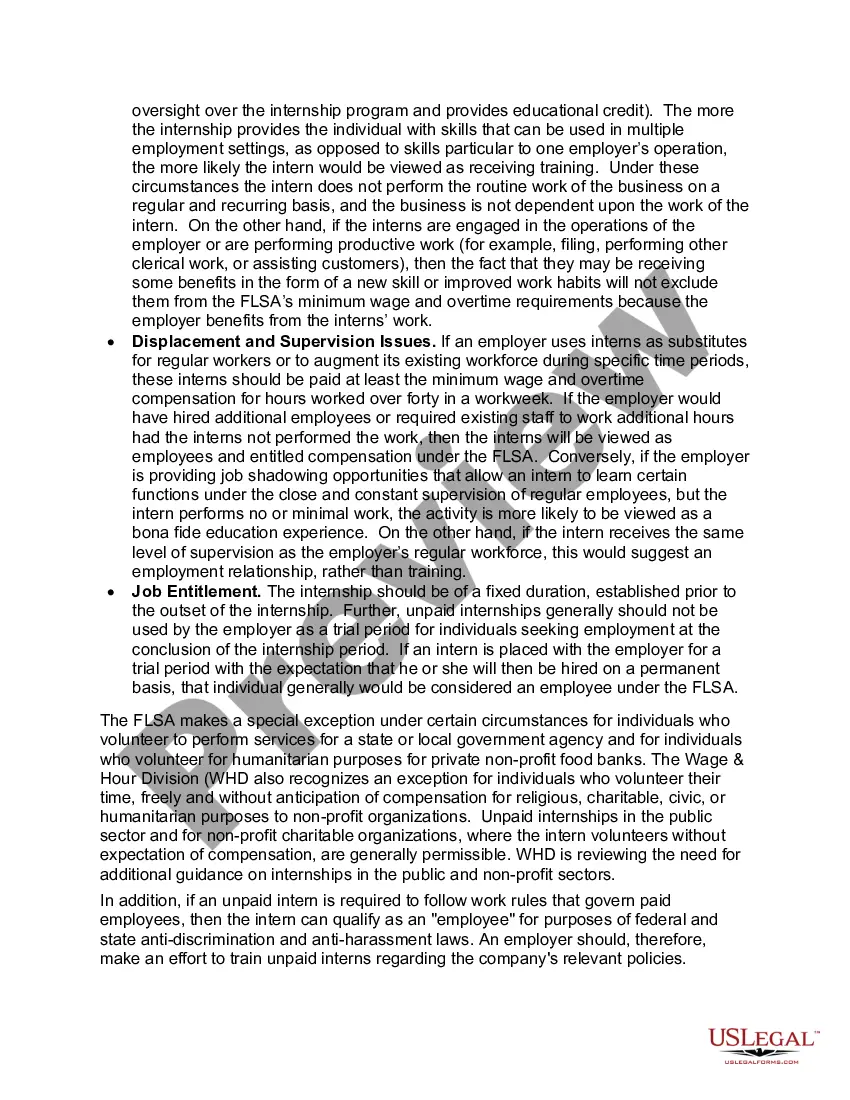
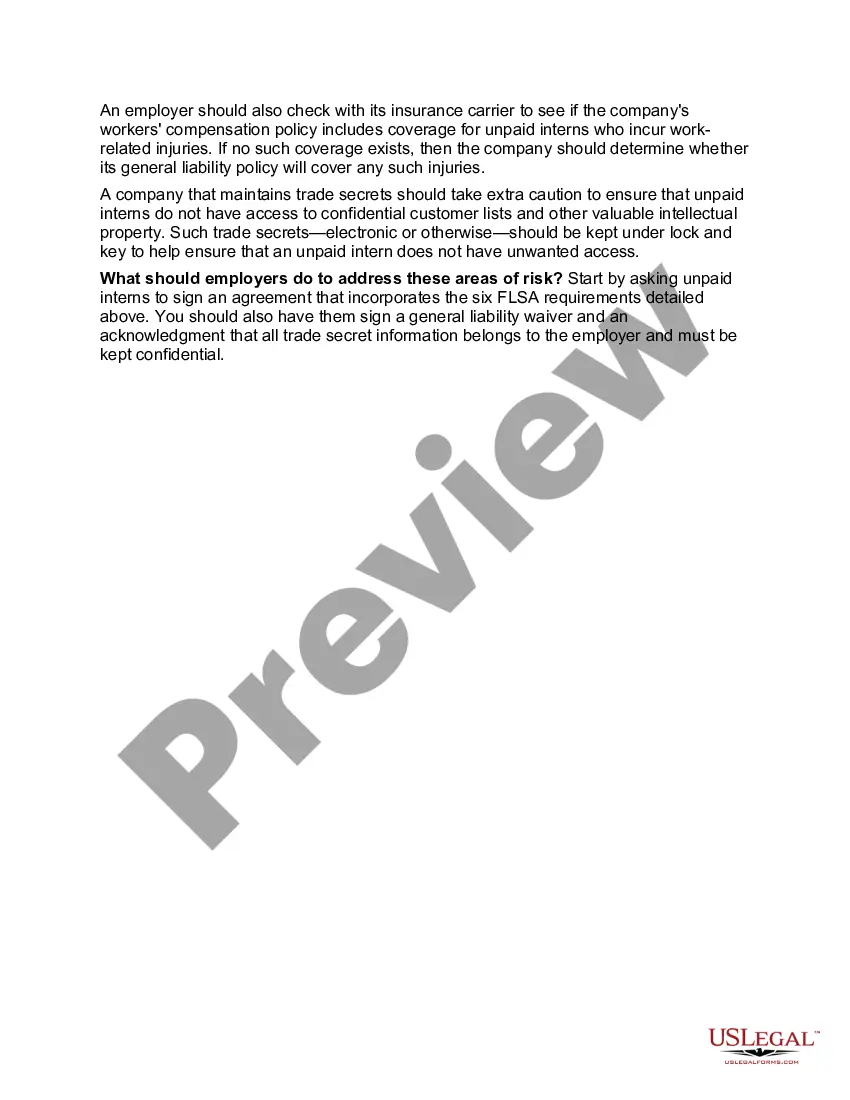
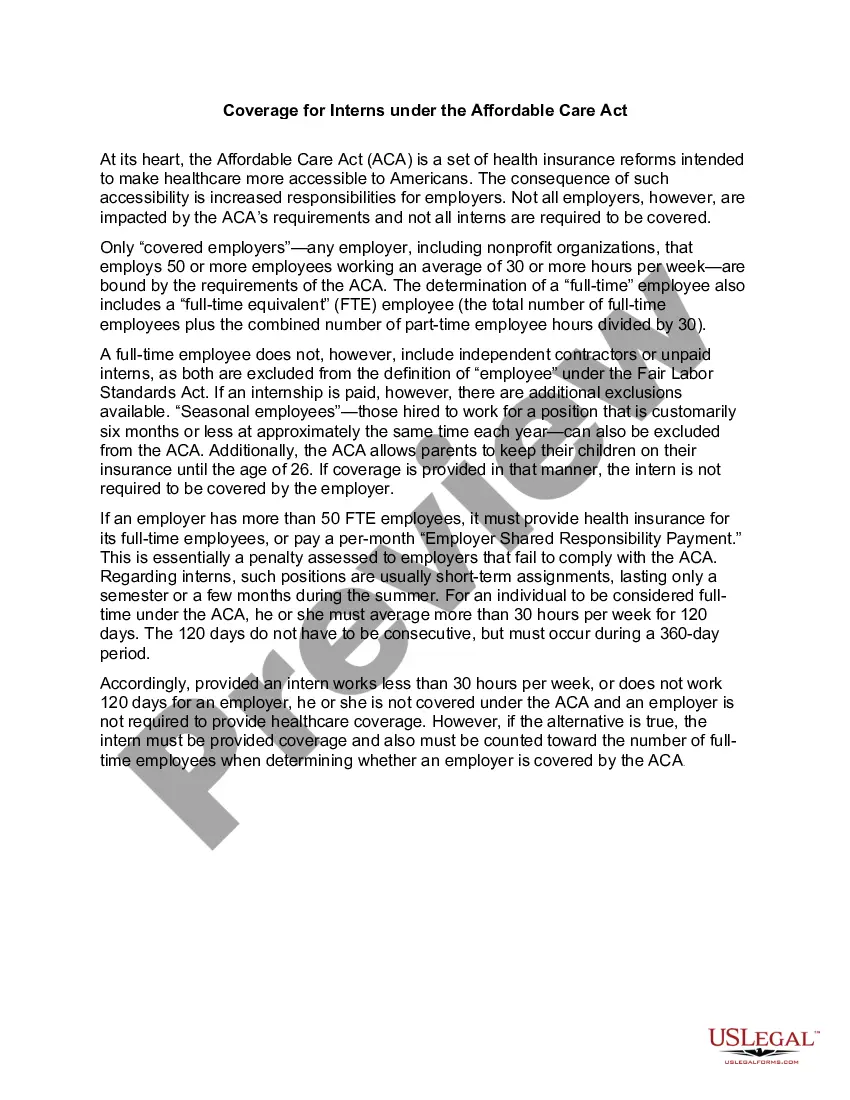
Washington Internship Programs under State and Federal Law
Description
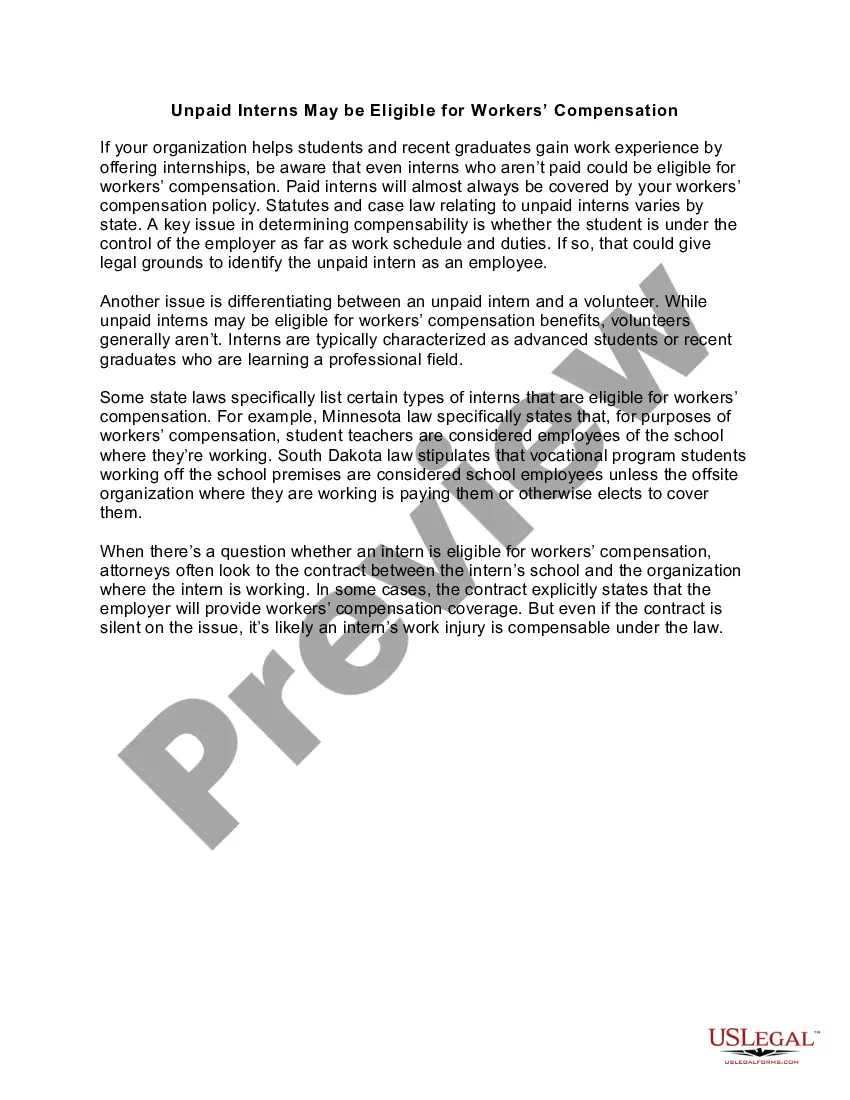
Get your form ready online
Our built-in tools help you complete, sign, share, and store your documents in one place.
Make edits, fill in missing information, and update formatting in US Legal Forms—just like you would in MS Word.
Download a copy, print it, send it by email, or mail it via USPS—whatever works best for your next step.
Sign and collect signatures with our SignNow integration. Send to multiple recipients, set reminders, and more. Go Premium to unlock E-Sign.
If this form requires notarization, complete it online through a secure video call—no need to meet a notary in person or wait for an appointment.
We protect your documents and personal data by following strict security and privacy standards.

Make edits, fill in missing information, and update formatting in US Legal Forms—just like you would in MS Word.

Download a copy, print it, send it by email, or mail it via USPS—whatever works best for your next step.

Sign and collect signatures with our SignNow integration. Send to multiple recipients, set reminders, and more. Go Premium to unlock E-Sign.

If this form requires notarization, complete it online through a secure video call—no need to meet a notary in person or wait for an appointment.

We protect your documents and personal data by following strict security and privacy standards.
Looking for another form?


How to fill out Internship Programs Under State And Federal Law?
If you need extensive, download, or print legal document templates, utilize US Legal Forms, the largest selection of legal forms available online.
Employ the site's straightforward and convenient search to find the documents you require.
Various templates for business and personal purposes are categorized by types and jurisdictions, or keywords.
Step 4. After locating the form you need, click the Get now button. Choose your preferred payment plan and enter your details to register for an account.
Step 5. Complete the transaction. You may use your credit card or PayPal account to finalize the purchase.
- Utilize US Legal Forms to access the Washington Internship Programs under State and Federal Law with just a few clicks.
- If you are already a US Legal Forms user, Log In to your account and click the Download button to retrieve the Washington Internship Programs under State and Federal Law.
- You can also access forms you previously saved in the My documents section of your account.
- If you're using US Legal Forms for the first time, follow the instructions below.
- Step 1. Ensure you have selected the form for your correct area/state.
- Step 2. Use the Preview feature to review the form's content. Don’t forget to read the description.
- Step 3. If you are not satisfied with the form, use the Search field at the top of the page to find alternative types of the legal form template.
Form popularity
FAQ
Minimum QualificationsFull-time student pursuing an undergraduate degree from a variety of majors, including: Area Studies. Computer Science. Cybersecurity. Economics. Engineering. International Affairs. Physical Sciences.Two 90-day tours are preferred; however, one 90-day tour is the minimum requirement.
Candidates for CIA agent jobs in clandestine services must:Be a citizen of the United States.Be at least 18 years old.Possess a bachelor's degree with a minimum GPA of 3.0.Have strong interpersonal skills.Have a strong interest in international affairs.Be able to write clearly and accurately.
If certain criteria are met, learners and student learners may be paid less than the state minimum wage. Unpaid, required training, outside of required academic and licensing credentials, is not allowed.
If you read the qualifications, you probably realize it's pretty tough to get into the CIA, especially if you want to be one of the 10% of CIA officers who are field operatives. Your chances will be much better if you've first been honest with yourself about who you are and what you're capable of.
In California, unpaid internships are legal as long as the employer follows specific rules and requirements. For starters, the intern must be the primary beneficiary and not the employer. The law recognizes the need for students to gain valuable work experience in their chosen field before they graduate.
Unpaid internships are legal if the intern is the primary beneficiary of the arrangement. This is determined by the seven-point Primary Beneficiary Test. If an employer is the primary beneficiary, the intern is considered an employee under the Fair Labor Standards Act and entitled to minimum wage.
How to Get a Job at the CIA and What It's Like to Work ThereYou must be a U.S. citizen.You must be physically in the United States.Don't do drugs for at least 12 months before you apply.You will have to move to the Washington, D.C., area.You need at least a four-year degree with a 3.0 GPA.More items...
Interns and students, however, may not be employees under the FLSAin which case the FLSA does not require compensation for their work. Courts have used the primary beneficiary test to determine whether an intern or student is, in fact, an employee under the FLSA.
Are unpaid internships illegal? Under existing laws, it's illegal for employers not to pay workers at least the national minimum wage. However, whether you're a 'worker' as an intern will depend on the nature of your work experience.
70% of interns are hired at the same company they interned with following their internship. 39.2% of internships in the U.S. are unpaid positions, and 60.8% of internships are paid positions.