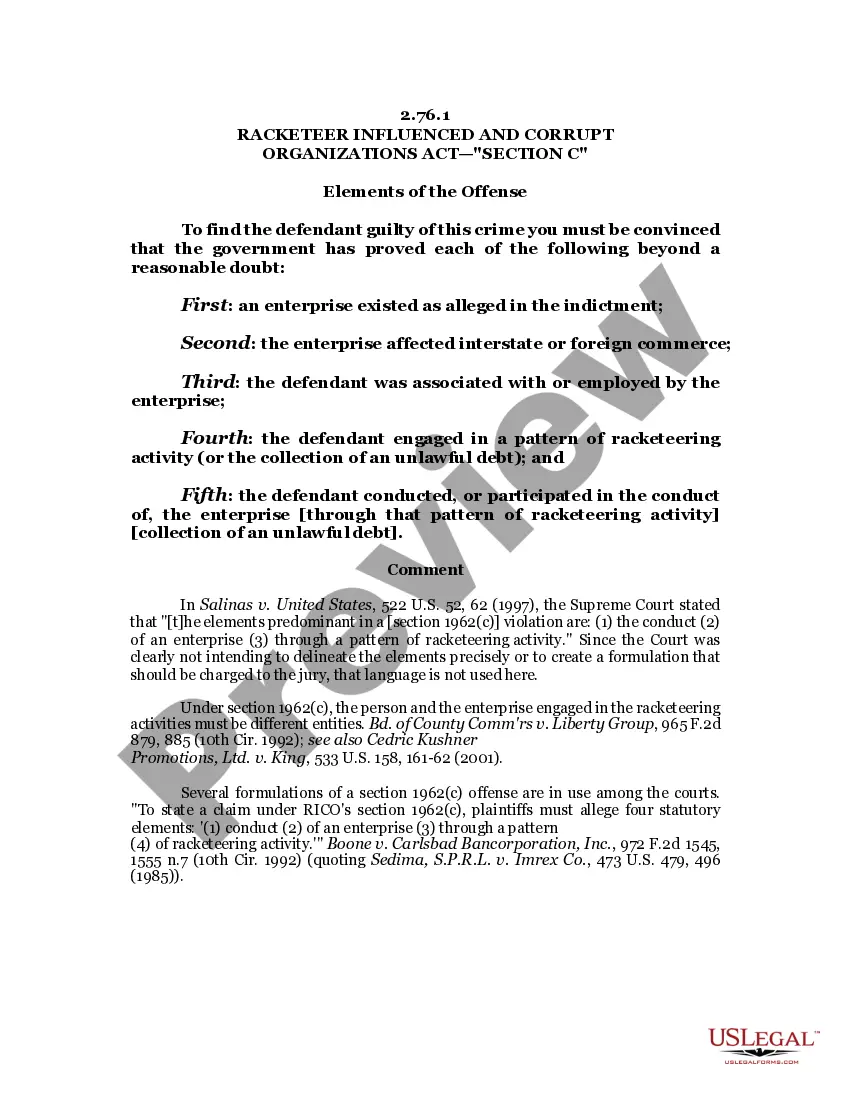
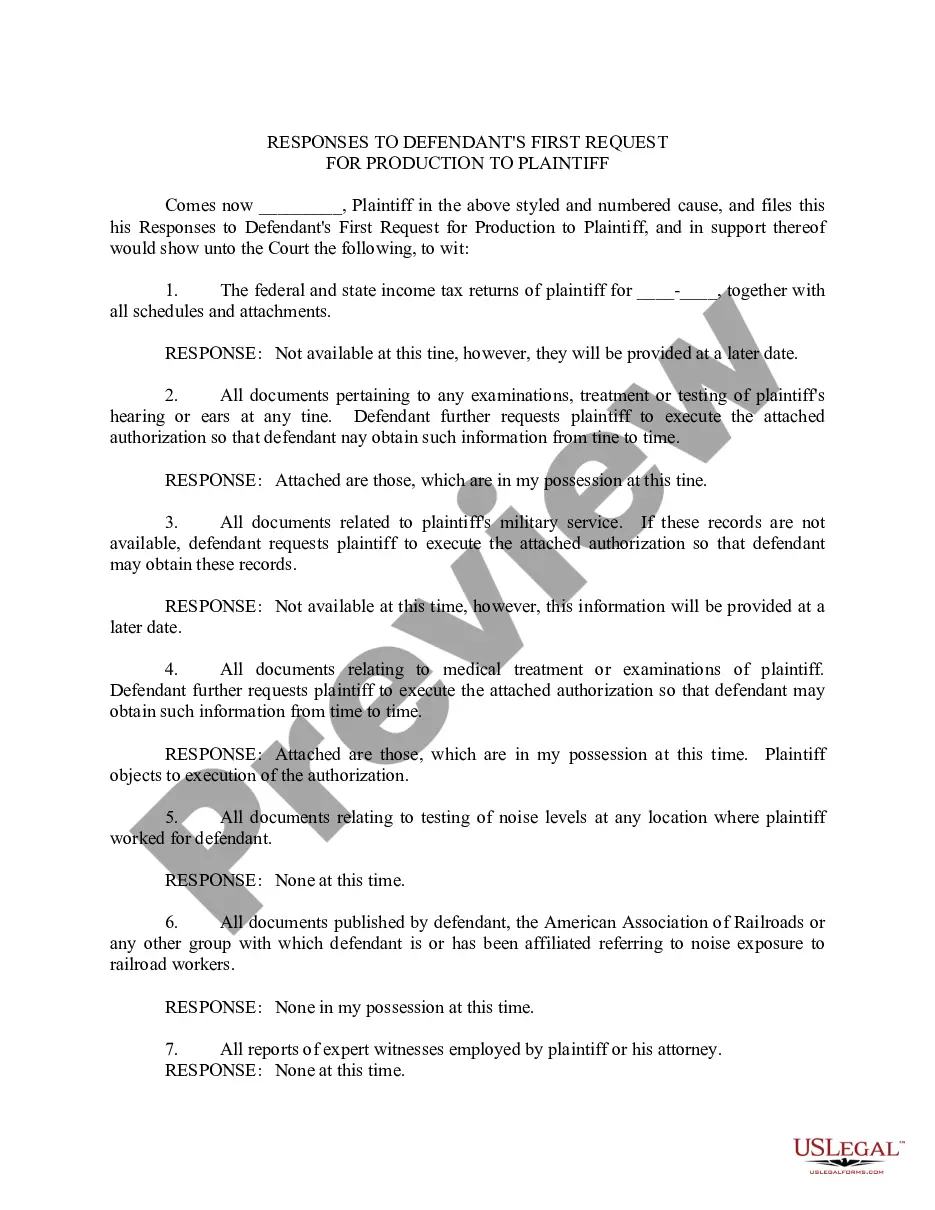
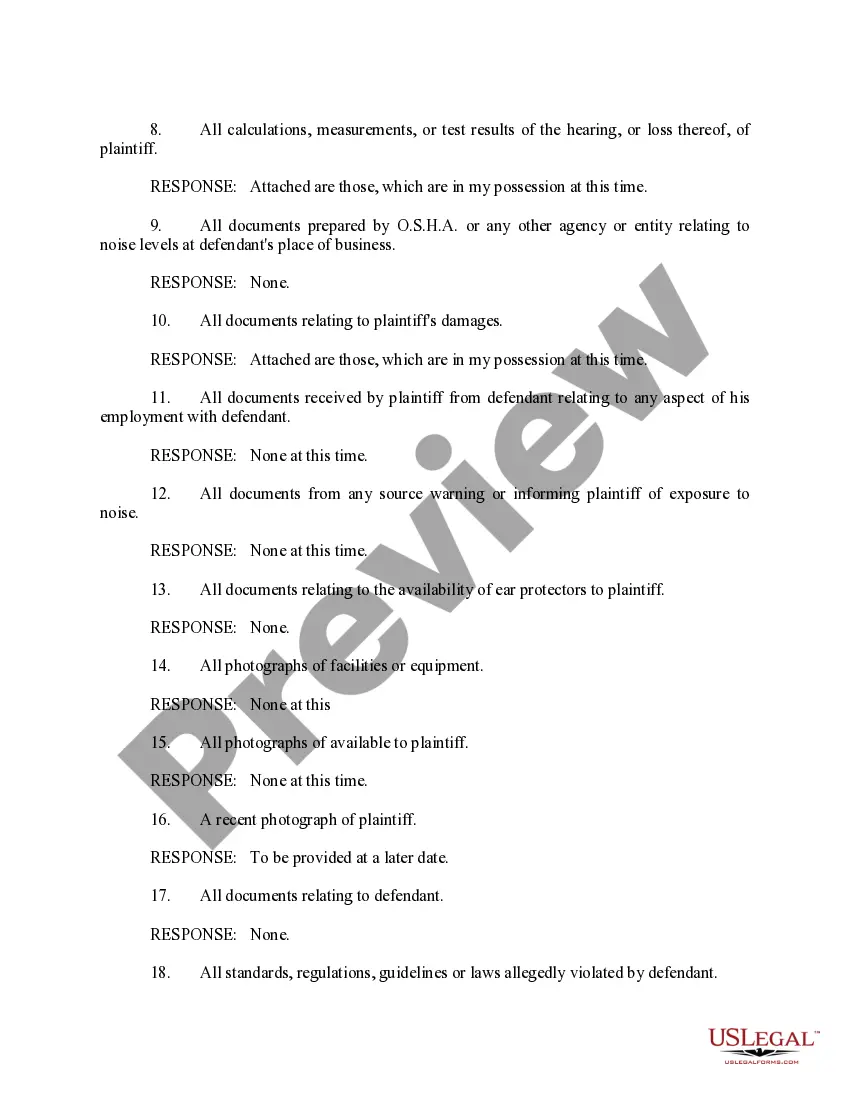
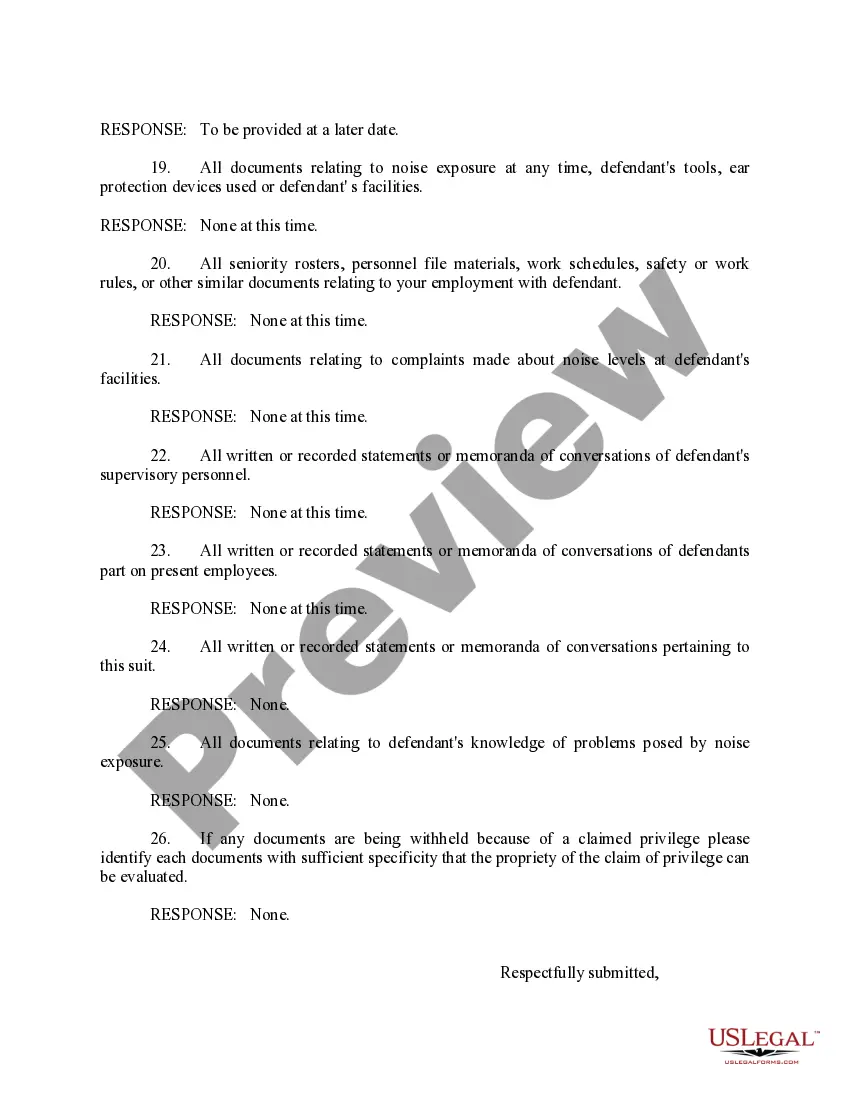
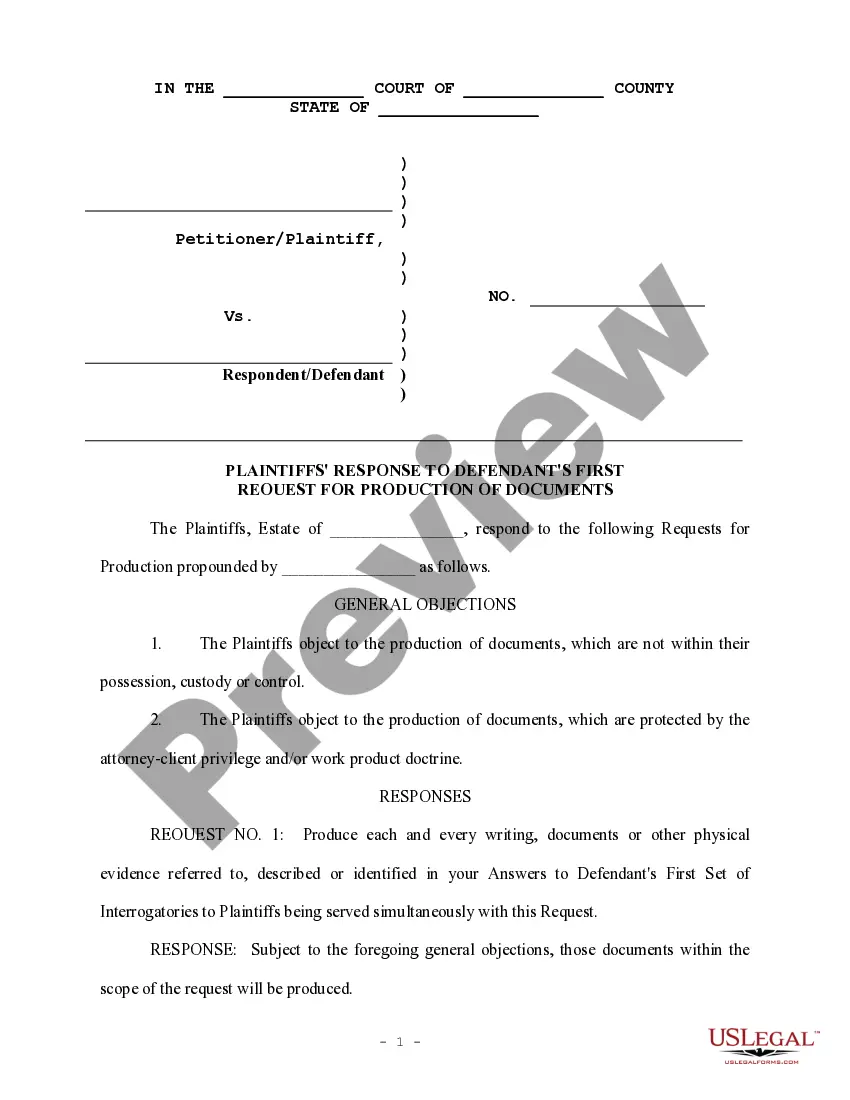
Washington Responses To Defendant's First Request For Production To Plaintiff
Description

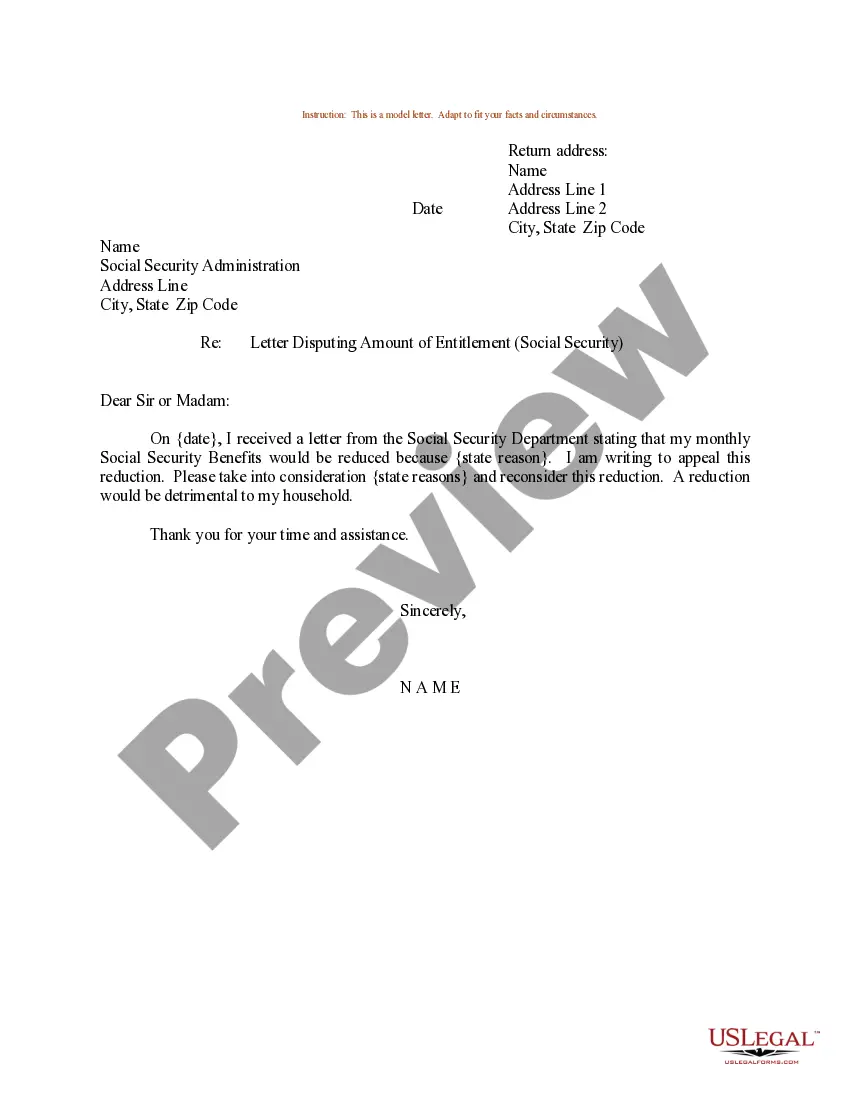
How to fill out Responses To Defendant's First Request For Production To Plaintiff?
US Legal Forms - one of the largest collections of legal documents in the U.S. - offers a broad selection of legal form templates that you can download or print. By using the website, you can access thousands of templates for business and personal use, categorized by type, state, or keywords. You can find the latest versions of forms like the Washington Responses To Defendant's First Request For Production To Plaintiff in seconds.
If you already have an account, Log In and download the Washington Responses To Defendant's First Request For Production To Plaintiff from the US Legal Forms library. The Download button will appear on each form you view. You can access all previously saved forms from the My documents tab of your account.
If you want to use US Legal Forms for the first time, here are simple steps to get started: Ensure you have selected the correct form for your city/state. Click the Review button to examine the form's content. Check the form summary to confirm you have chosen the right form. If the form doesn’t meet your requirements, use the Search area at the top of the screen to find one that does. If you are satisfied with the form, confirm your choice by clicking the Get now button. Next, select the pricing plan you desire and provide your information to register for an account. Process the transaction. Use your credit card or PayPal account to complete the transaction. Choose the format and download the form to your device. Make edits. Fill out, modify, print, and sign the saved Washington Responses To Defendant's First Request For Production To Plaintiff.
- Every template you add to your account has no expiration date and is yours indefinitely.
- So, if you wish to download or print another copy, simply go to the My documents section and click on the form you need.
- Access the Washington Responses To Defendant's First Request For Production To Plaintiff with US Legal Forms, the most extensive library of legal document templates.
- Utilize thousands of professional and state-specific templates that fulfill your business or personal requirements and needs.
Form popularity
FAQ
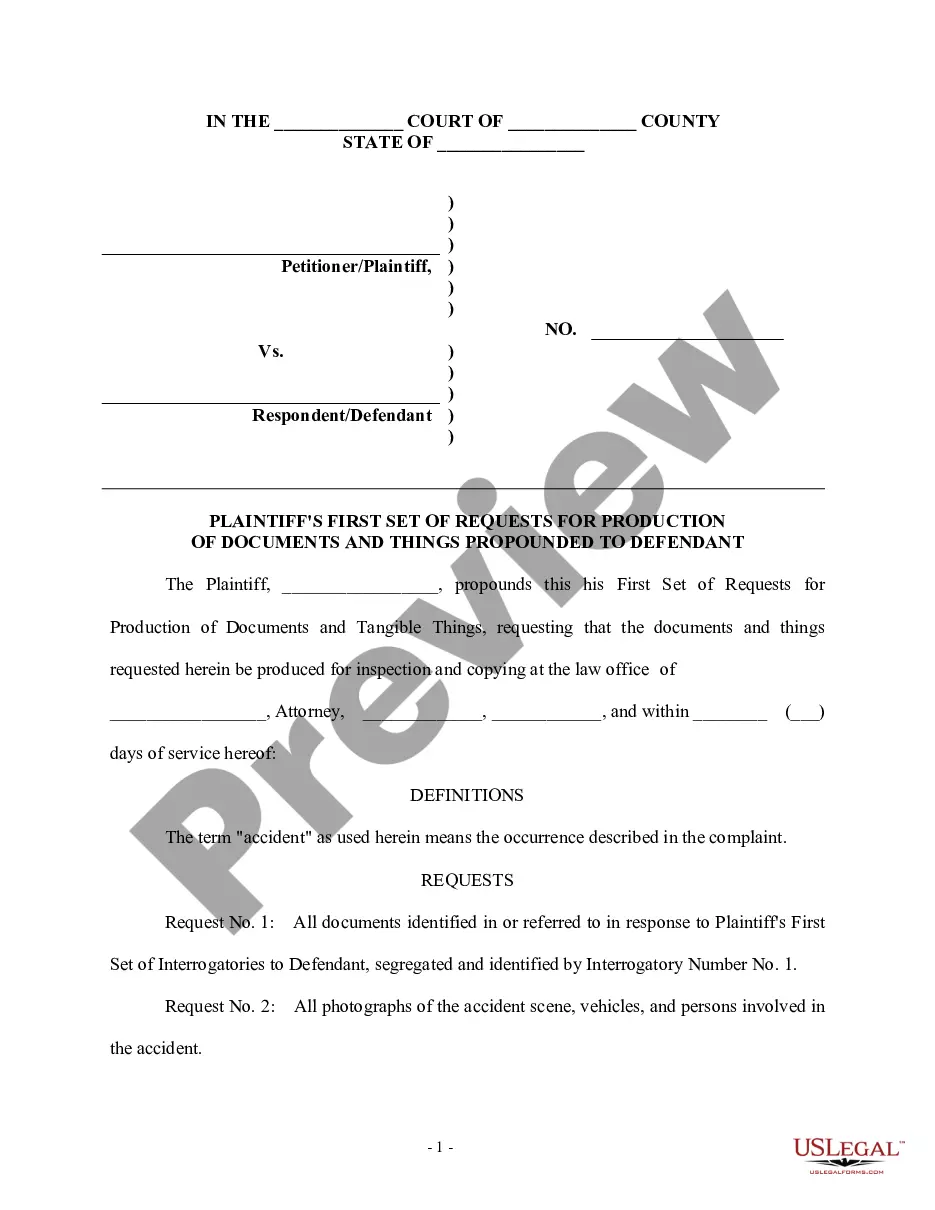
Generally, a request for production asks the responding party to make available the original documents, but a requesting party may permit photocopies of the requested documents be sent instead, if inspection of the original document is not necessary.
In contrast to interrogatories and requests for admission, which are limited to 35 questions as a "matter of right", there is no limit on demands for production.
A party filing discovery materials on order of the court or for use in a proceeding or trial shall file only those portions upon which the party relies and may file a copy in lieu of the original.
They are provided for your information. There is no form for your answer, but you typically have to respond in a specified format, using paper with numbers down the left-hand side, with your name and address at the top left, the name of the court and of the case, and the case number.
Check or type: ?I will allow this request in whole and will provide the documents or things as requested.? Check or type: "I cannot comply with the request because no such documents or things exist. A diligent search and reasonable inquiry have been made in an attempt to comply with this demand.?
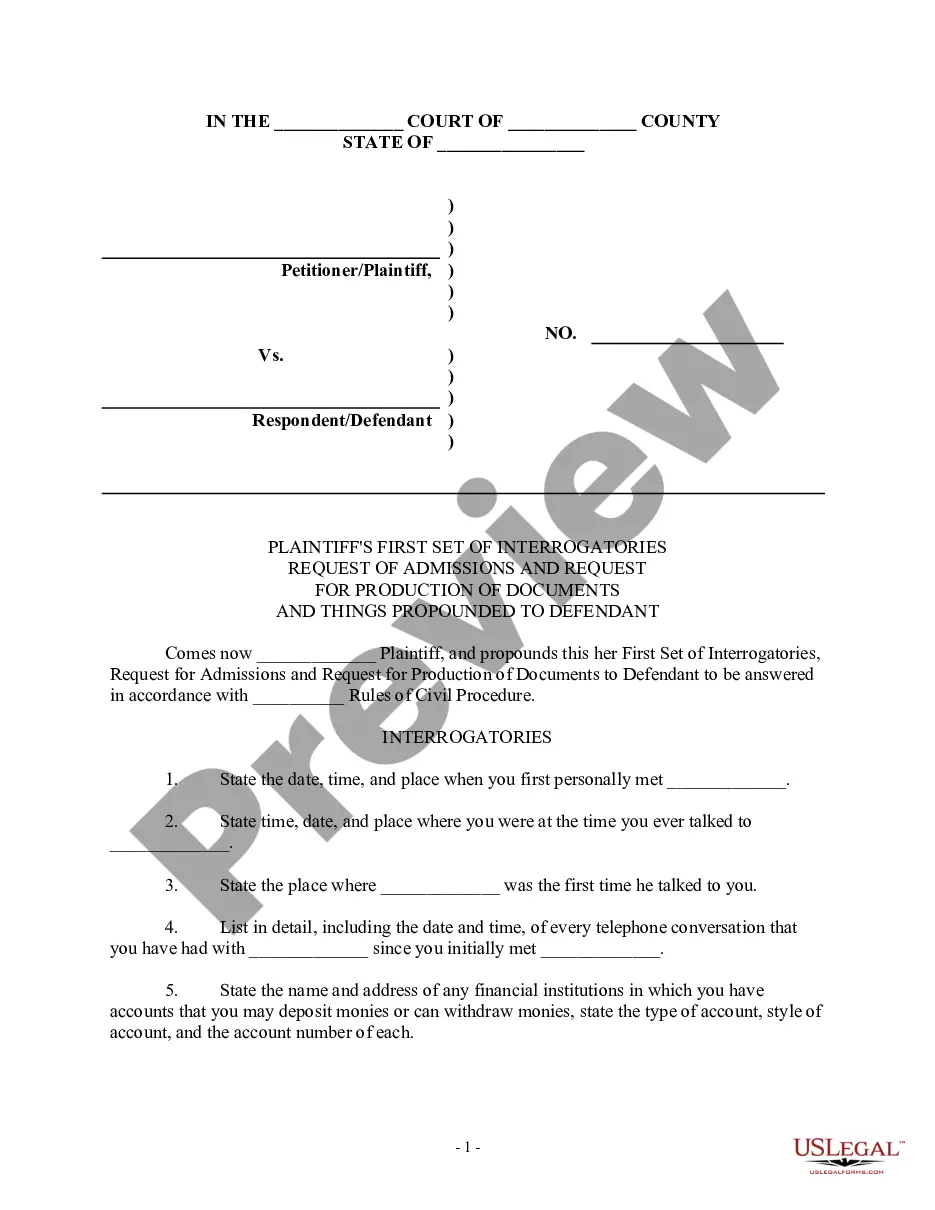
Interrogatories may, without leave of court, be served upon the plaintiff after the summons and a copy of the complaint are served upon the defendant, or the complaint is filed, whichever shall first occur, and upon any other party with or after service of the summons and complaint upon that party.
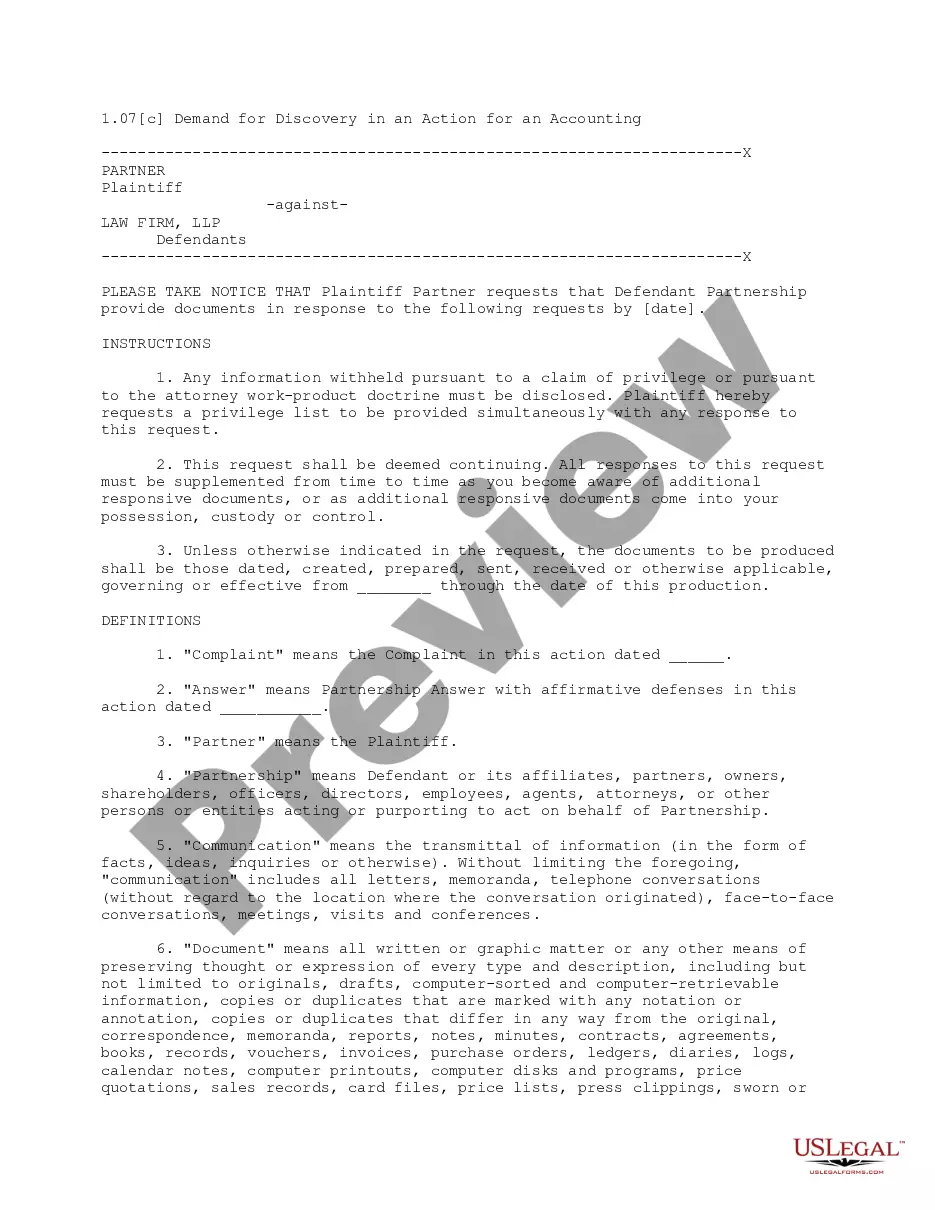
The process of delivering, or making available for review, documents produced during litigation or in response to a request for documents from a regulatory or other body. Discoverable documents in litigation may include both paper (hard copy) documents and electronically stored information (ESI).
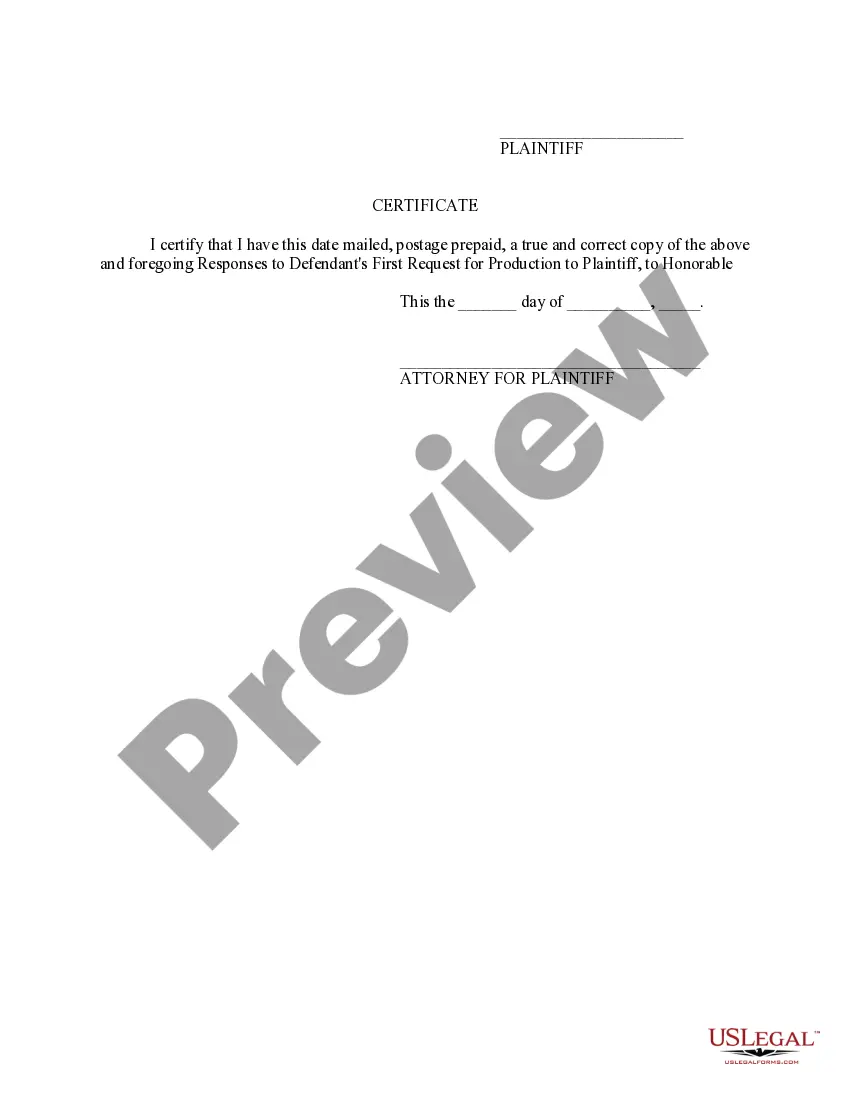
Your response to a request for production consists of two parts: One part is a written response to the requests, in which you state under penalty of perjury that you will produce the requested items; that you will not produce and why; or that you object to a request on legal grounds.