Washington Agreement by Remainderman to Sell Remainder Interest in Trust and/or Wills
Understanding this form
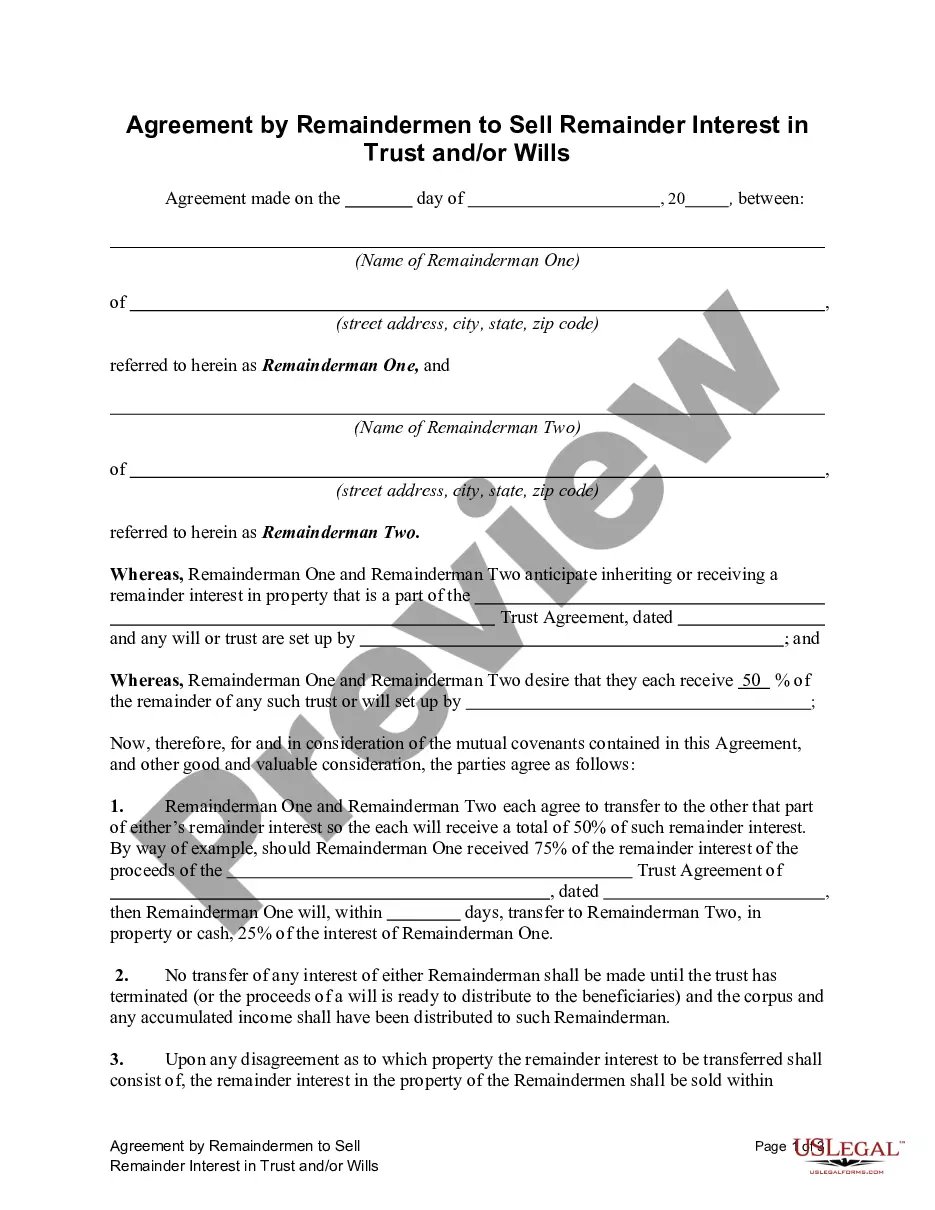
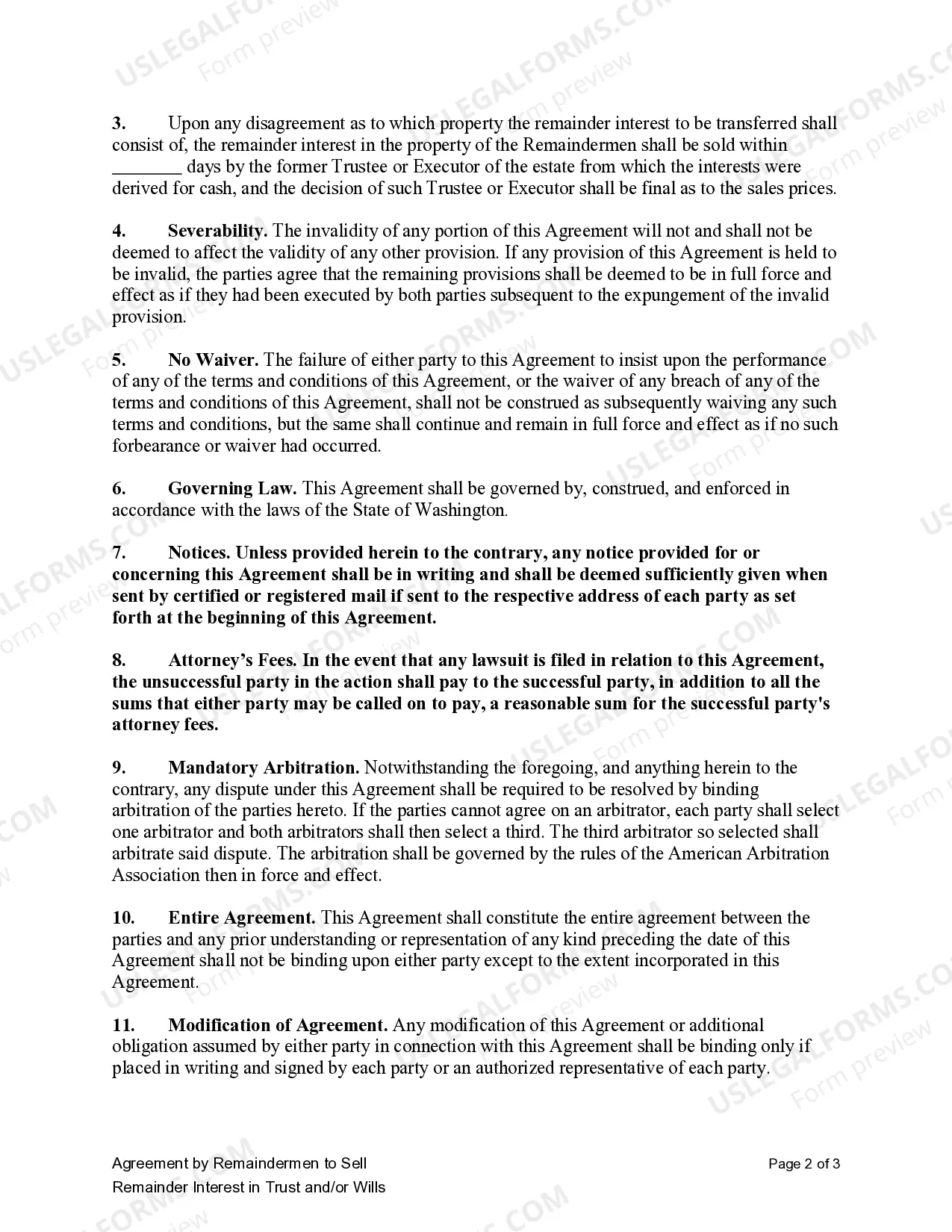
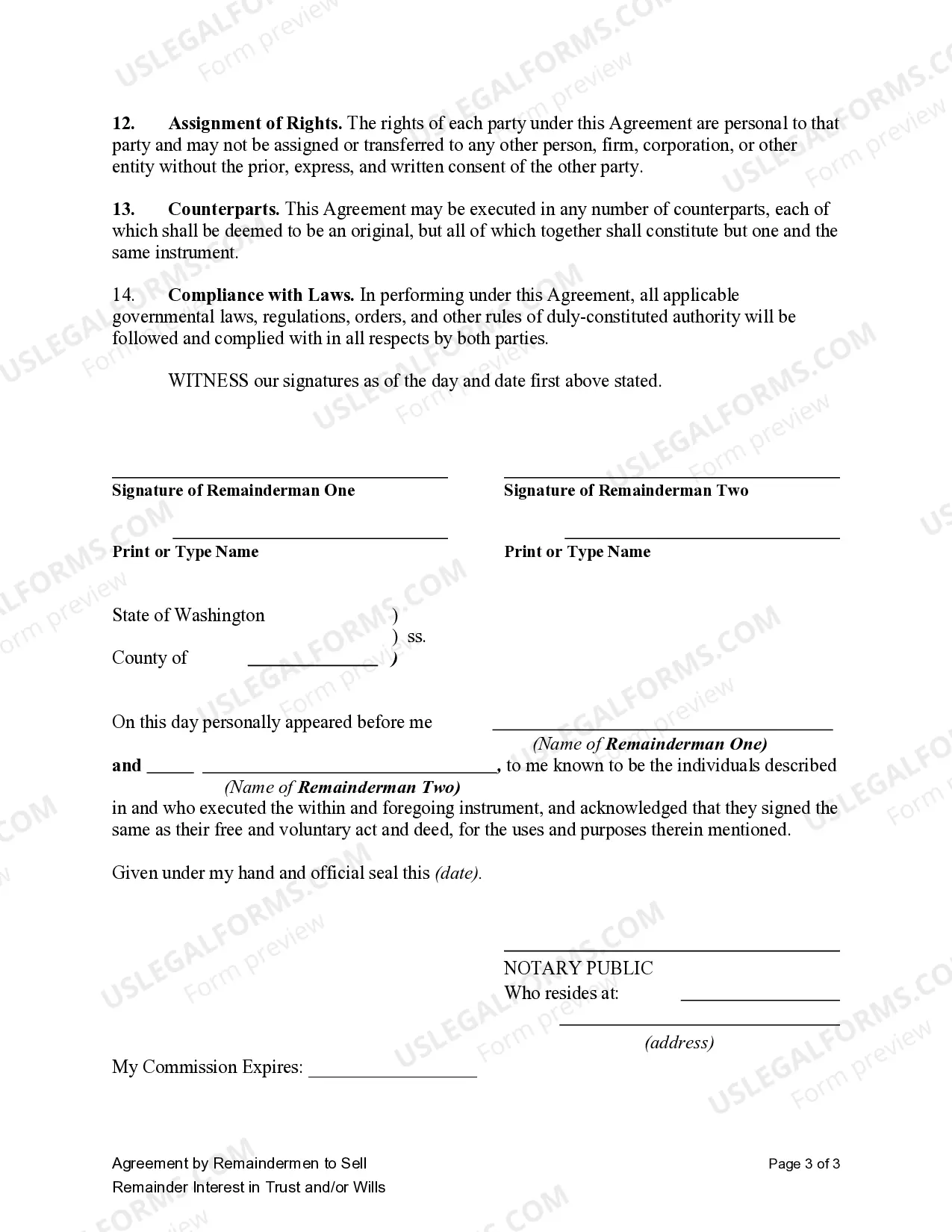
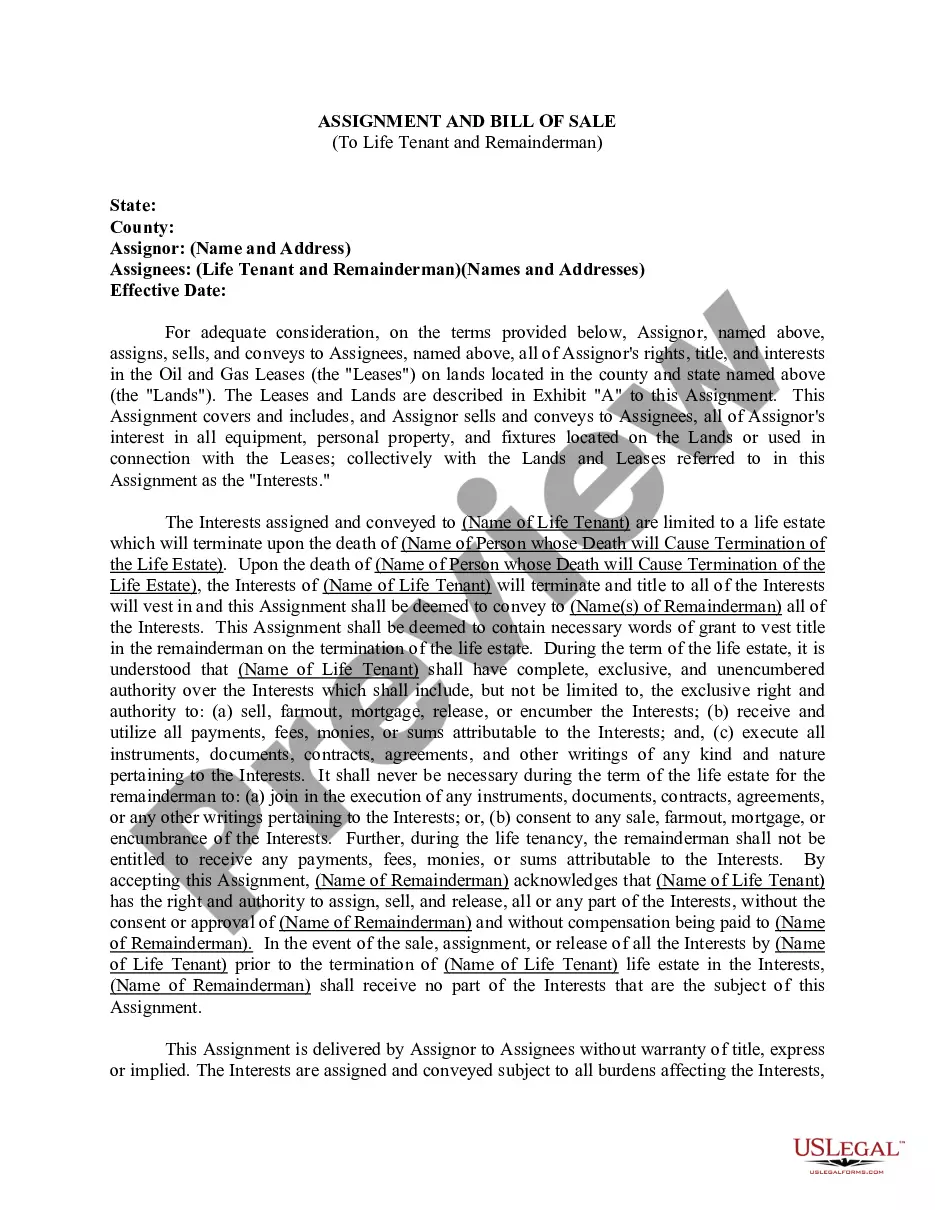
This Agreement by Remainderman to Sell Remainder Interest in Trust and/or Wills is a legal document that outlines the agreement between individuals who hold the status of remainderman in a trust or will. It allows these parties to sell a portion of their interest in the assets of the trust or will, establishing a mutually agreed percentage of interest. This form differs from other property transfer agreements by focusing specifically on the sale of remainder interests held in trusts or wills.
Key parts of this document
- Identification of the parties involved in the agreement.
- Details on the property or remainder interest being transferred.
- Provisions for dispute resolution through binding arbitration.
- Governing law for the agreement, specifying Washington state laws.
- Clauses regarding attorney fees and modifications of the agreement.
When to use this document
This form is utilized in scenarios where individuals who are remaindermen wish to sell a portion of their interest in a trust or will. It may be needed when a remainderman wants to liquidate their interest for cash, resolve disagreements about asset distribution, or when reorganizing interests among beneficiaries is necessary. This agreement helps prevent disputes by clearly outlining the terms of the sale and the interests involved.
Who needs this form
This agreement is intended for:
- Individuals identified as remaindermen in a trust or will.
- Beneficiaries looking to sell or transfer a portion of their interest.
- Parties involved in estate planning or trust management who need a legal framework for transferring interests.
Completing this form step by step
- Identify the parties involved in the sale of the remainder interest.
- Specify the property or remainder interest that is being sold.
- Clearly outline the agreed percentage of interest for each party.
- Include provisions for resolving disputes through arbitration.
- Ensure all parties sign the agreement and date it appropriately.
Notarization requirements for this form
This form does not typically require notarization unless specified by local law. However, having notarized signatures can provide additional legal validation in disputes.
Get your form ready online
Our built-in tools help you complete, sign, share, and store your documents in one place.
Make edits, fill in missing information, and update formatting in US Legal Forms—just like you would in MS Word.
Download a copy, print it, send it by email, or mail it via USPS—whatever works best for your next step.
Sign and collect signatures with our SignNow integration. Send to multiple recipients, set reminders, and more. Go Premium to unlock E-Sign.
If this form requires notarization, complete it online through a secure video call—no need to meet a notary in person or wait for an appointment.
We protect your documents and personal data by following strict security and privacy standards.

Make edits, fill in missing information, and update formatting in US Legal Forms—just like you would in MS Word.

Download a copy, print it, send it by email, or mail it via USPS—whatever works best for your next step.

Sign and collect signatures with our SignNow integration. Send to multiple recipients, set reminders, and more. Go Premium to unlock E-Sign.

If this form requires notarization, complete it online through a secure video call—no need to meet a notary in person or wait for an appointment.

We protect your documents and personal data by following strict security and privacy standards.
Avoid these common issues
- Failing to clearly define the property being transferred.
- Not specifying the percentage of interest each party holds.
- Overlooking dispute resolution provisions.
- Failing to obtain signatures from all involved parties.
Benefits of using this form online
- Convenient access to legal forms that are ready to use.
- Ability to fill out and customize forms according to specific needs.
- Reliability of documents drafted by licensed attorneys.
Looking for another form?


Form popularity
FAQ
A person owns property in a life estate only throughout their lifetime. Beneficiaries cannot sell property in a life estate before the beneficiary's death. One benefit of a life estate is that property can pass when the life tenant dies without being part of the tenant's estate.
A life tenant can sell or mortgage his or her life interest, but the interest sold or mortgaged is limited to the lifetime of the seller or mortgagee.Although the life tenant can sell the life estate, the buyer would have ownership rights only as long as the original life tenant lived.
Transferring property into a California Life Estate is irrevocable. However, all owners, Life Tenants and Remainder man can agree to a transfer. In doing so, there may be tax consequences and/or Medicaid concerns.
A remainderman may sell his interest in the property, but the buyer would take the property subject to the rights of life tenant.If the life tenant and the remainderman both agree and sign transfer documents, the property can be sold before the life tenant dies.
In trust law, a remainder interest is the part of the trust property that remains after the specific devises are given to the intended beneficiaries.
A remainder interest gives the holder the right to take ownership when the life estate has ended. The home will need to be appraised at the time of the gift to determine the value of both the life estate and the remainder interest.
As a life tenant, you may not easily sell or mortgage property with a life estate interest. The remaindermen must all agree if you decide to sell or borrow against the property.
Life Interest Trusts are most commonly used to create and protect interests in a property.The husband's Will would create a Life Interest Trust or Right of Occupation for his wife, so that she can live in the property for as long as she needs. The Will would then provide that the property passes to the children.