Married Person's Will for the State of Connecticut with Children with a Credit Shelter Trust for Spouse and a Trust for Children
Understanding this form
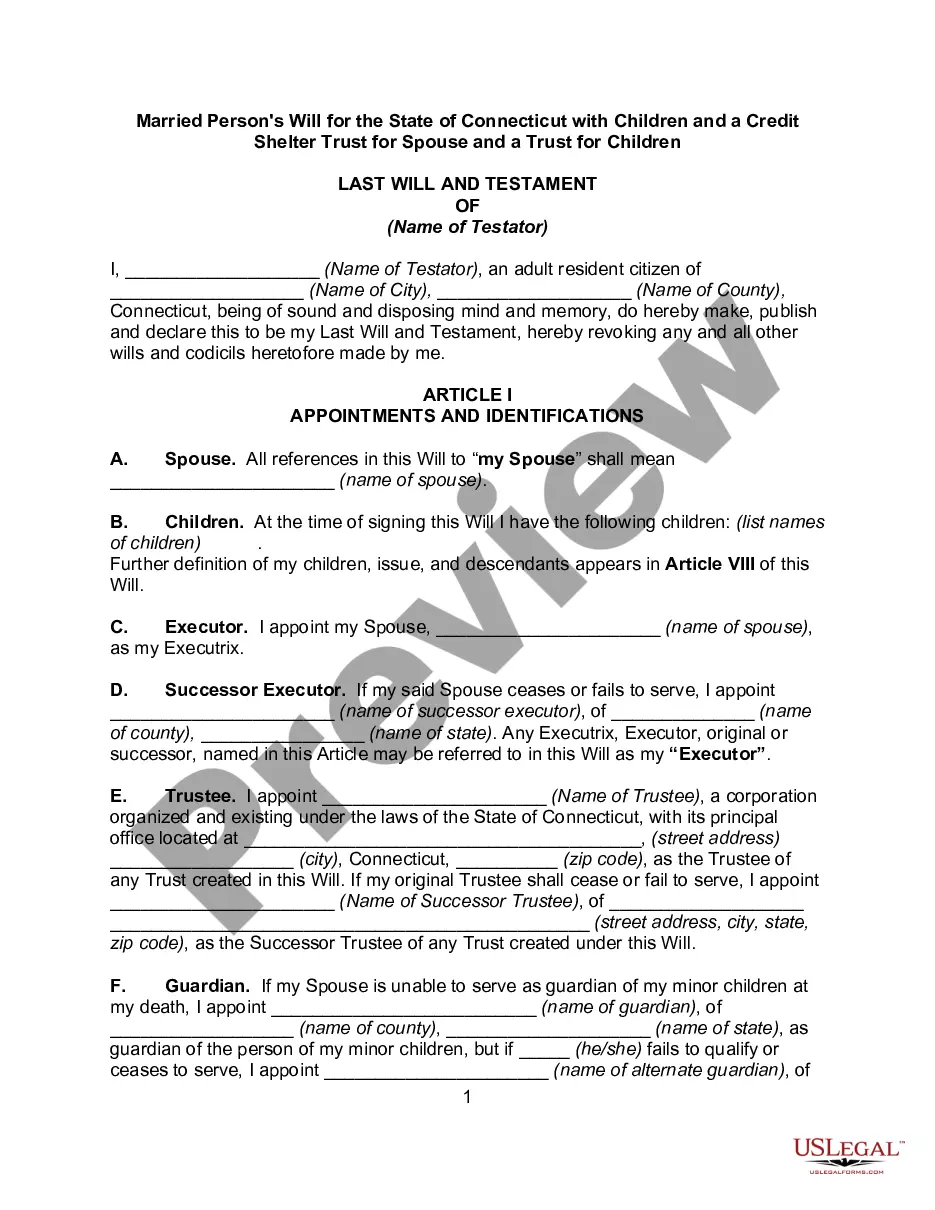
This Married Person's Will for the State of Connecticut is a legal document that allows individuals to outline how their assets will be distributed after death. It specifically addresses the needs of married couples with children and includes provisions for a credit shelter trust for the spouse and the creation of a trust for children. This form differs from simpler wills by incorporating specific strategies to minimize estate taxes, offering greater protection for both the surviving spouse and the children.
Form components explained
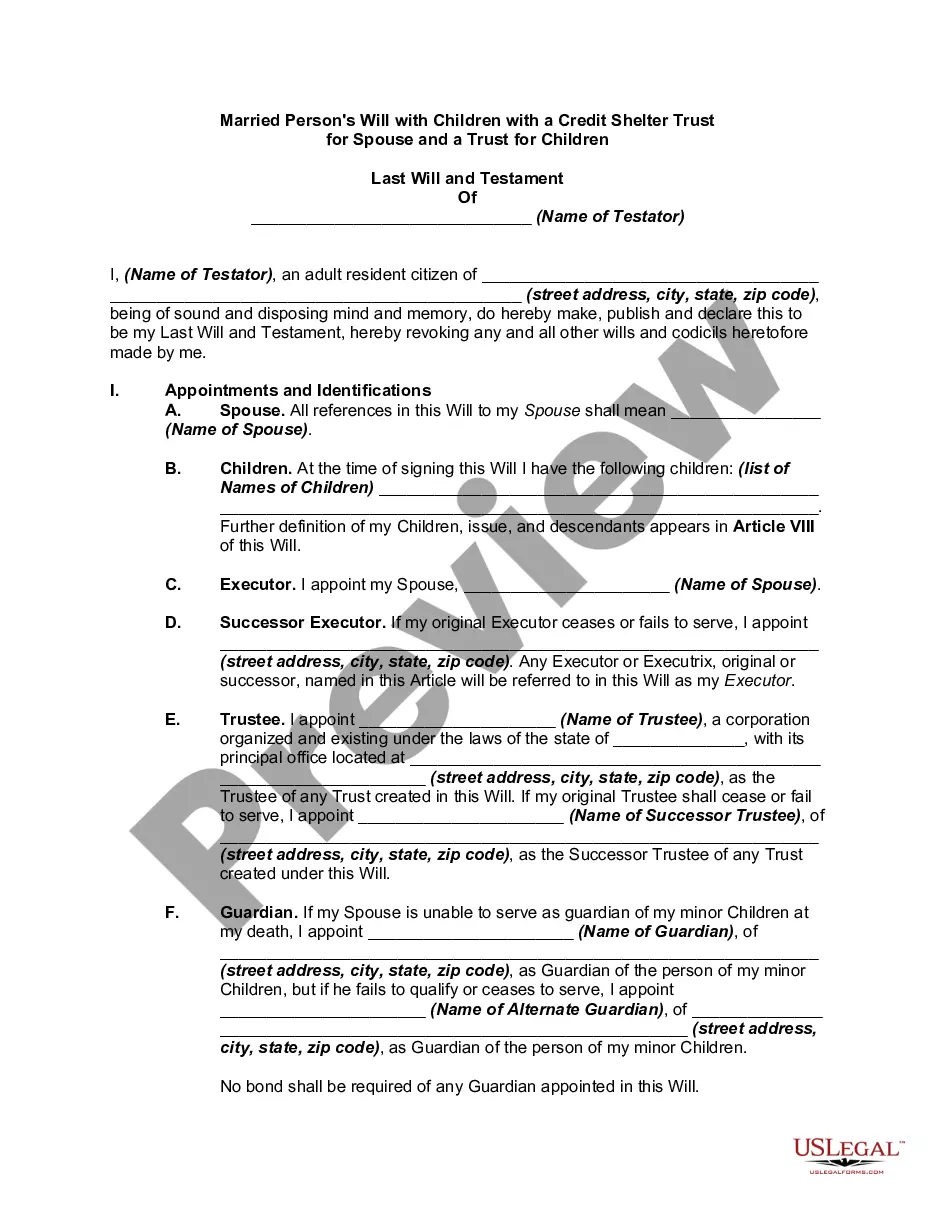
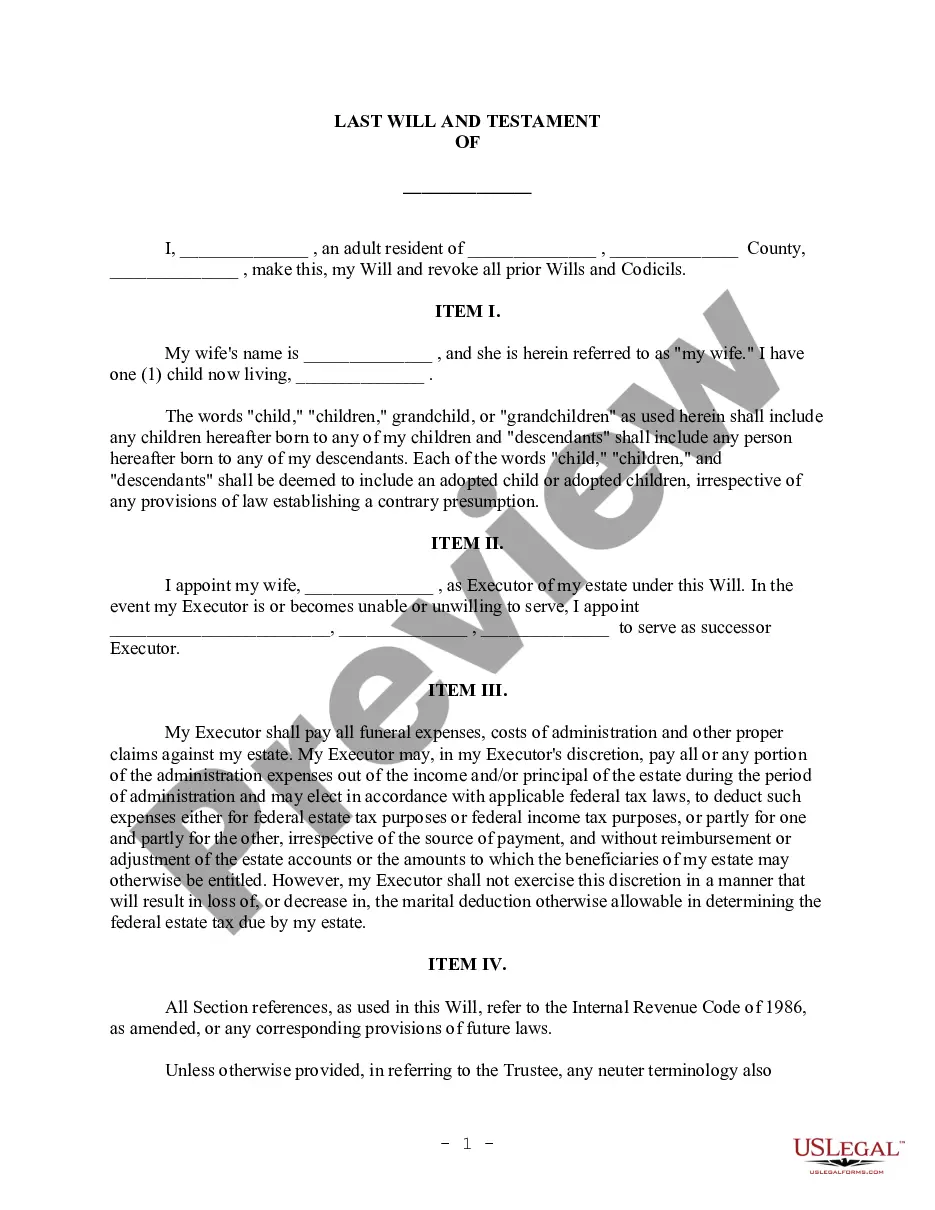
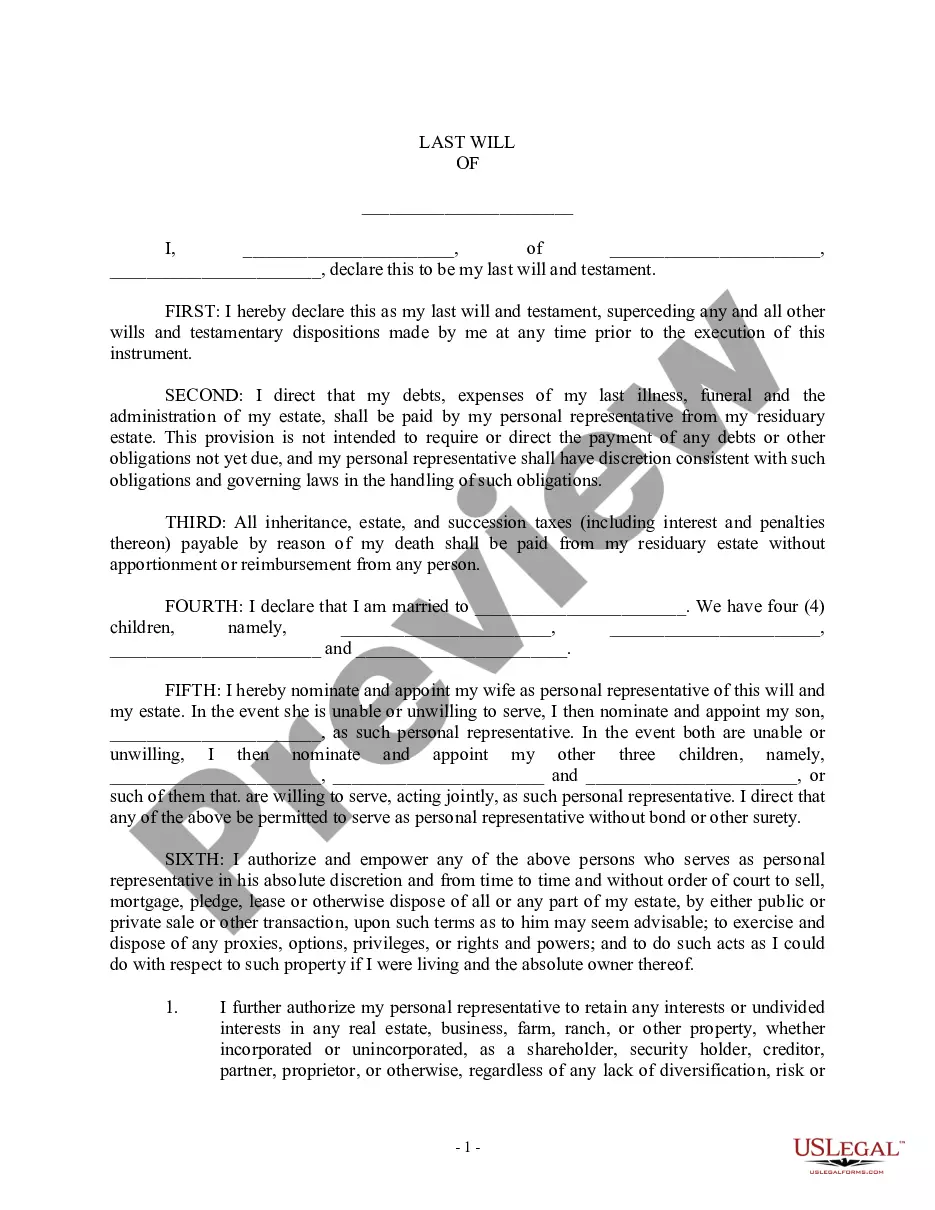
- Identification of the testator and their spouse.
- Appointment of a trustee and guardian for minor children.
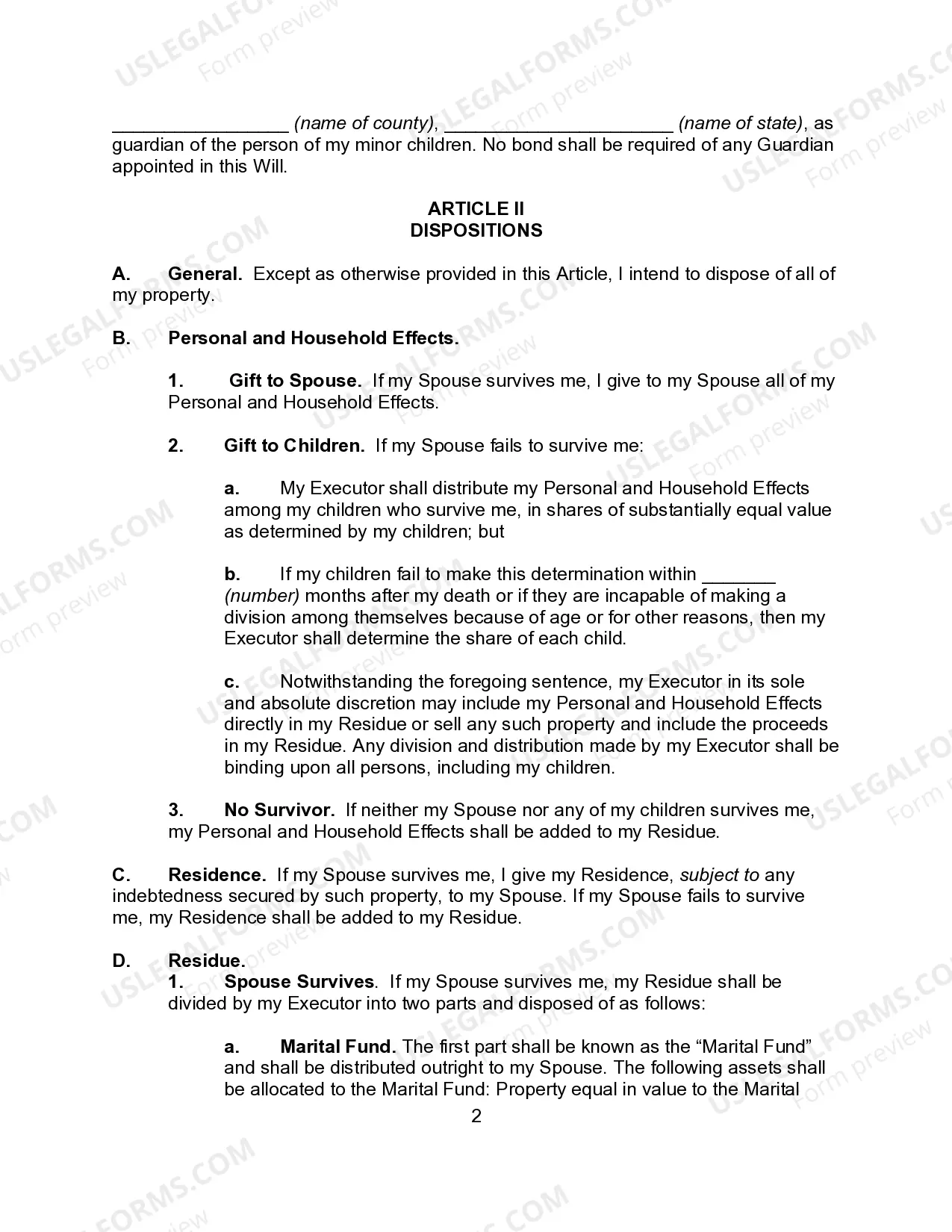
- Distribution clauses for personal and household effects.
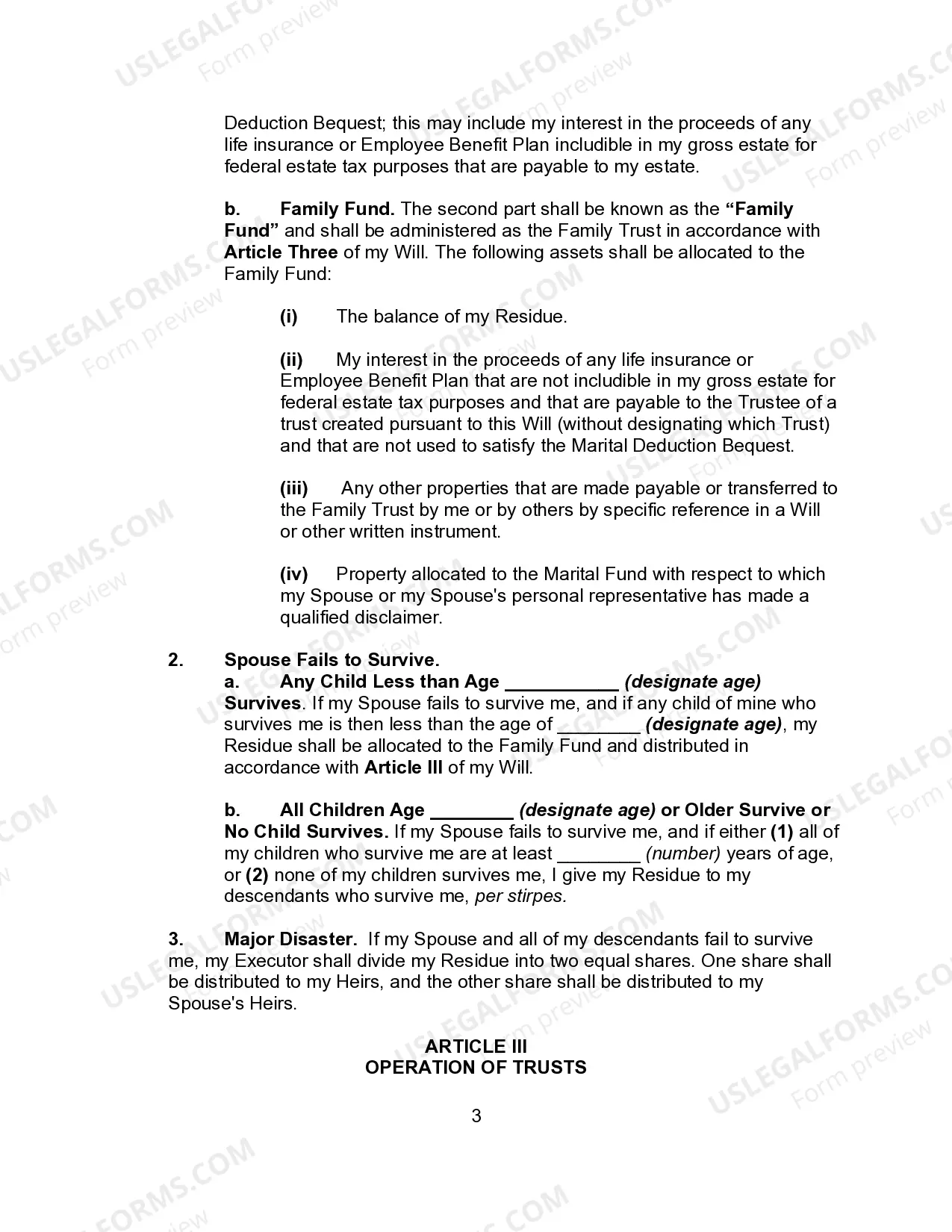
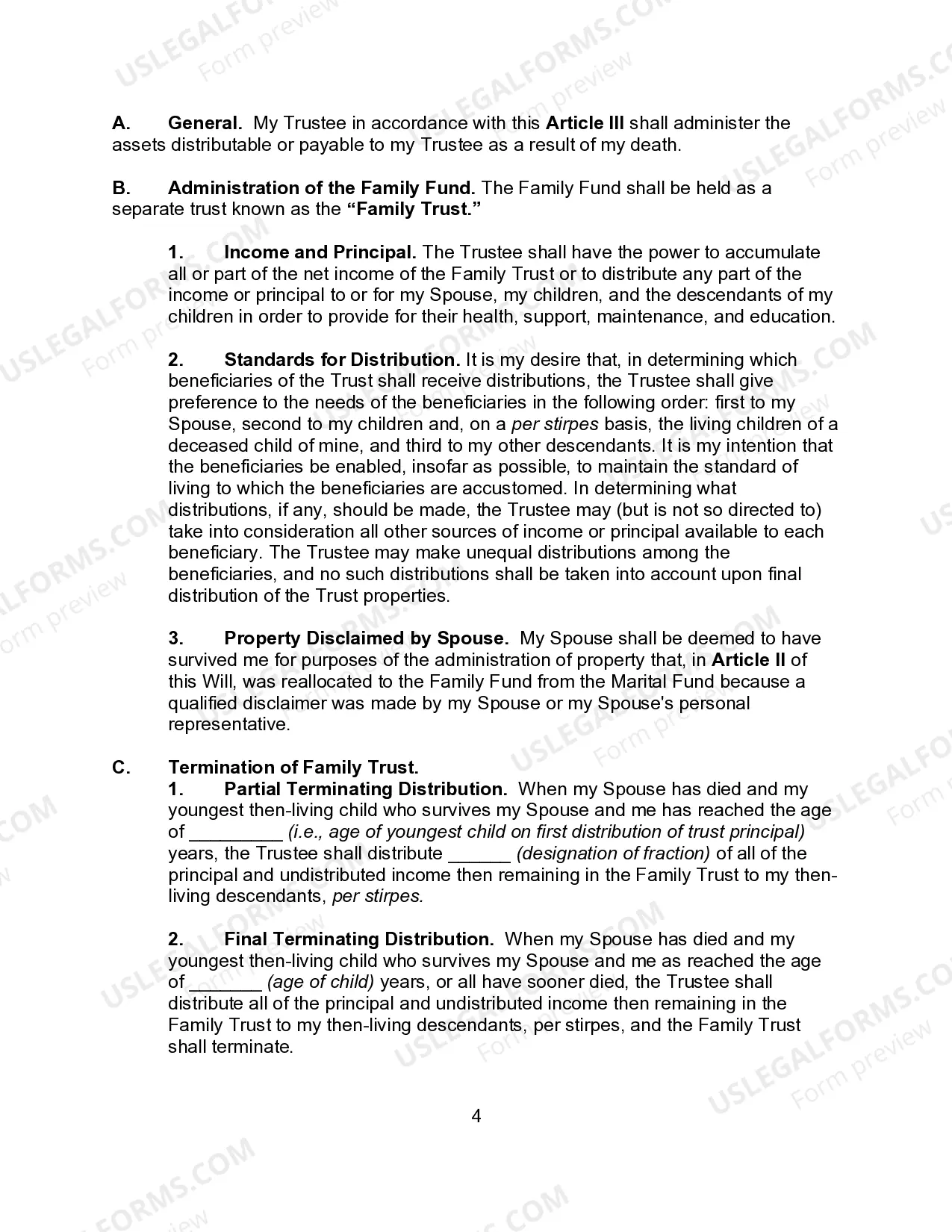
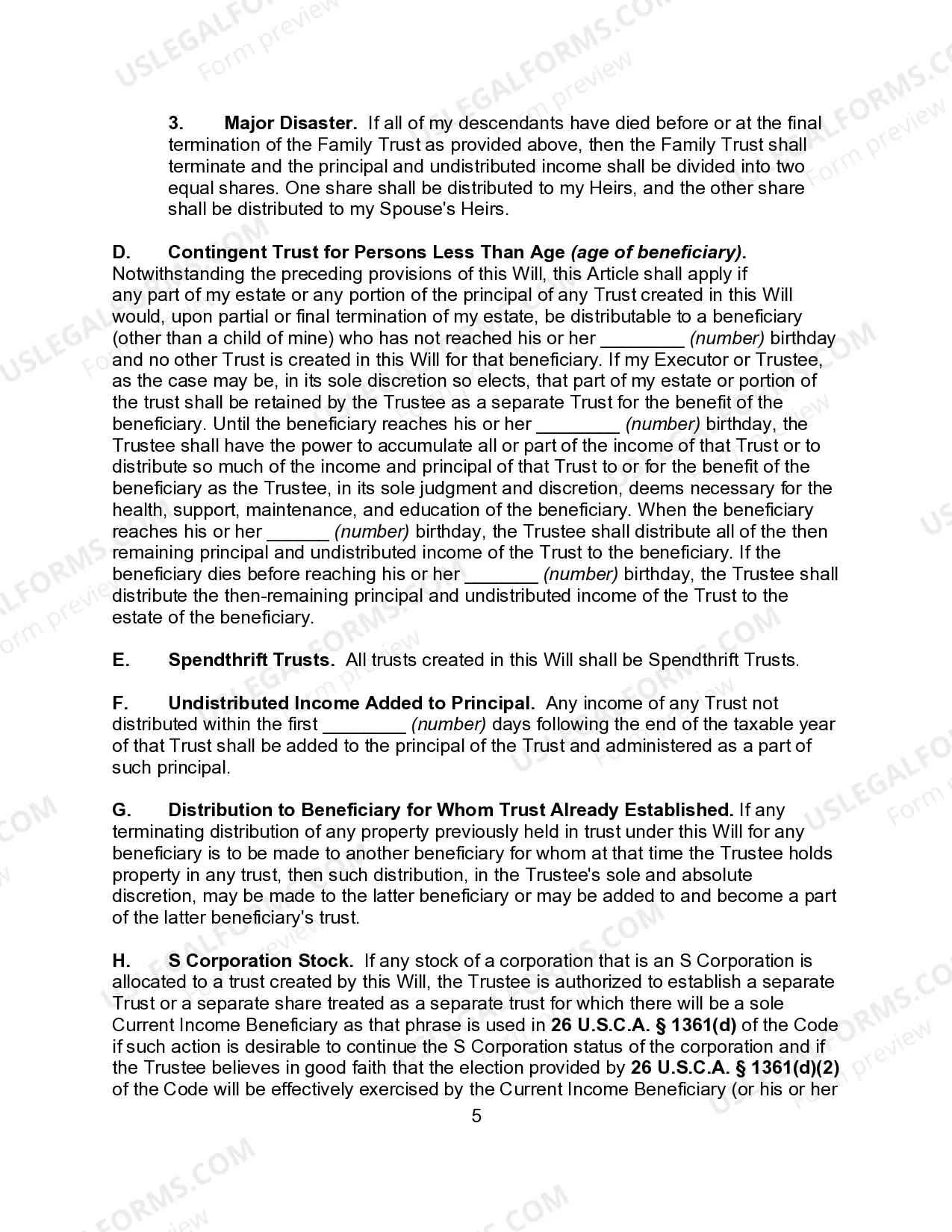
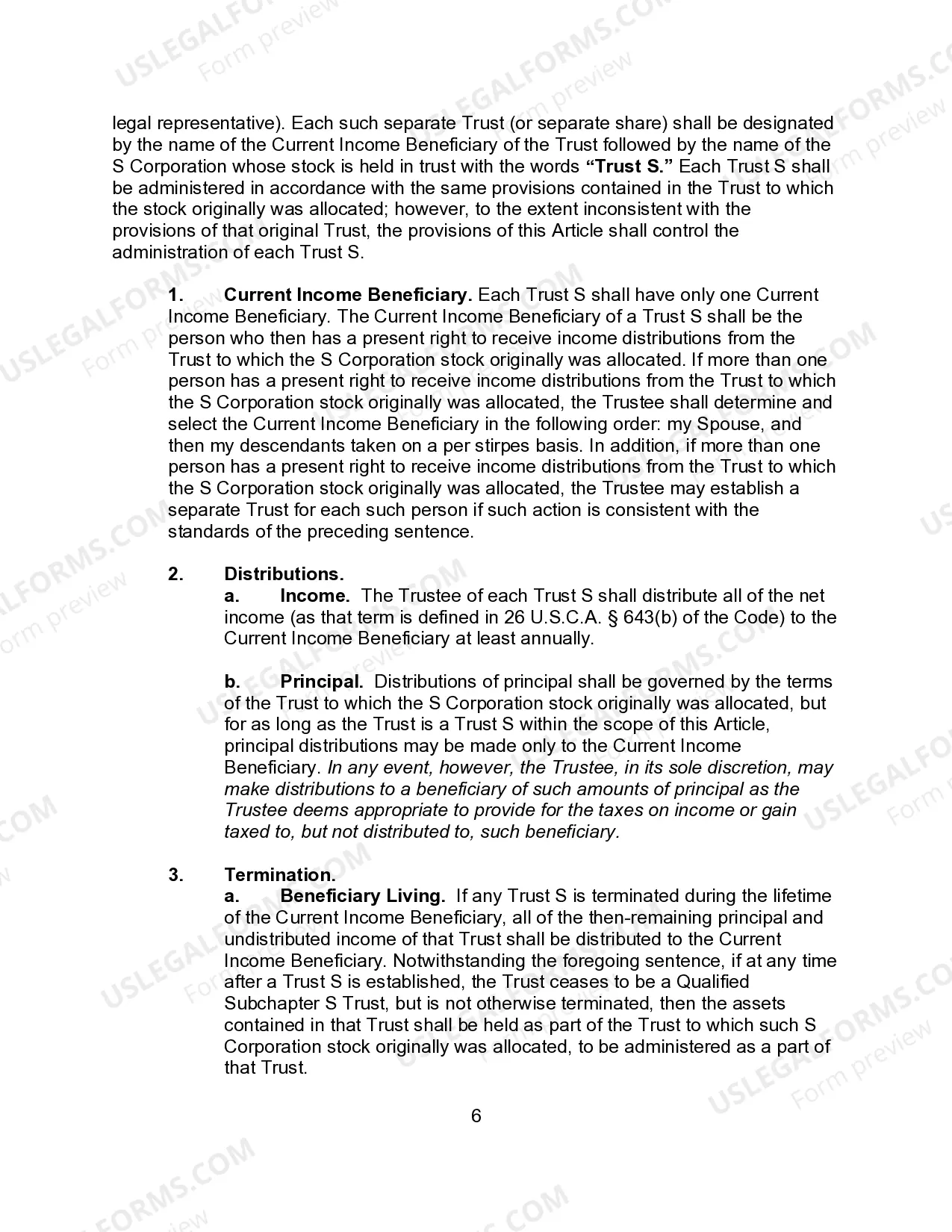
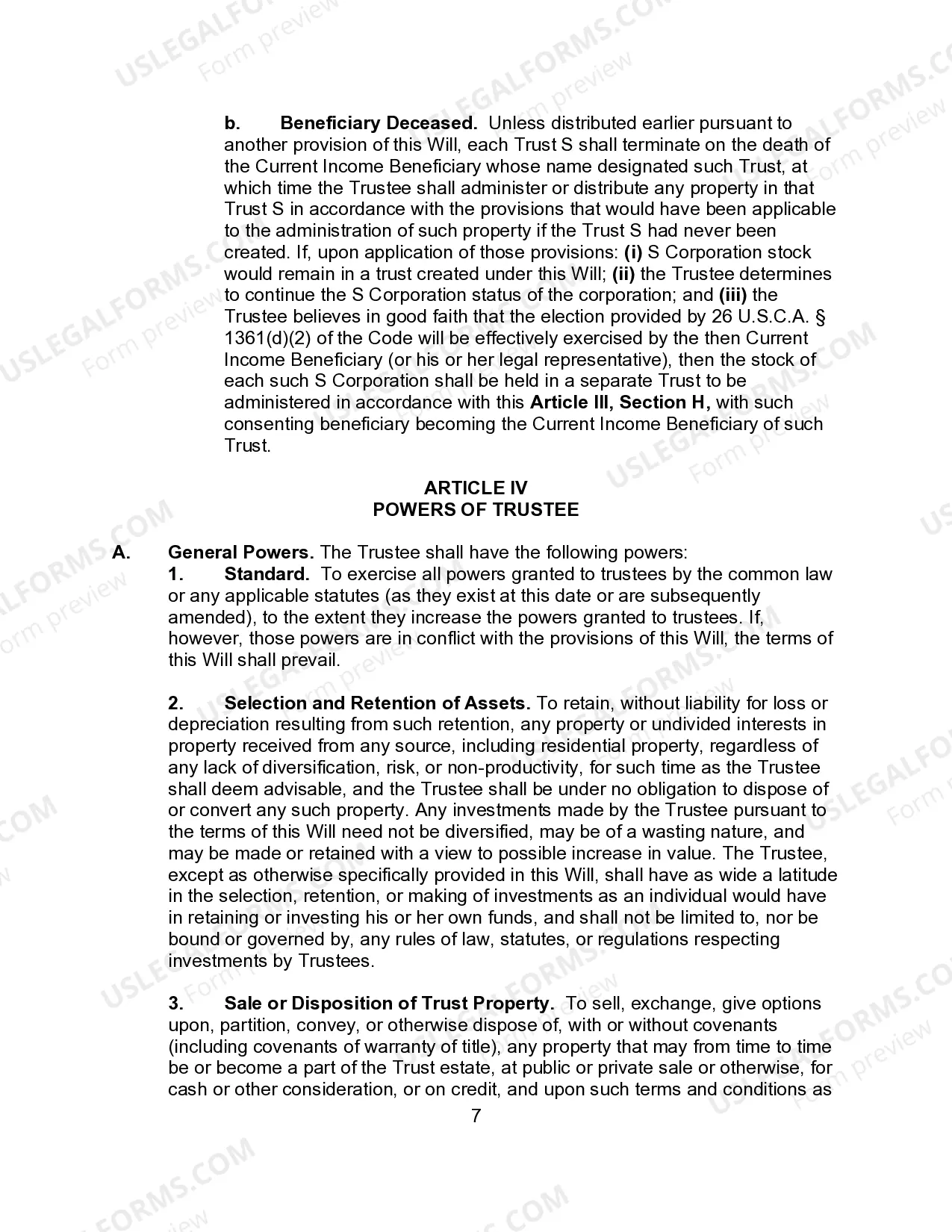
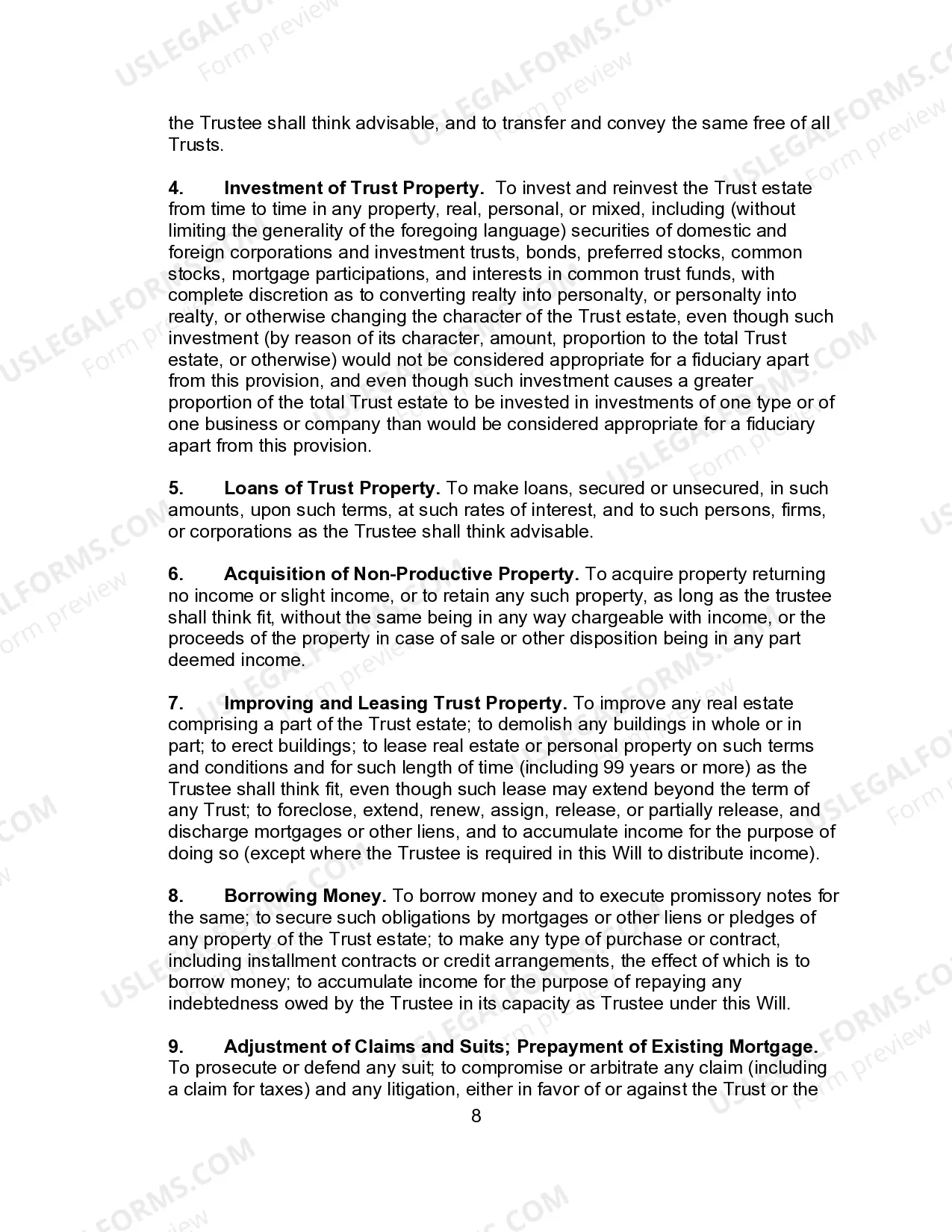
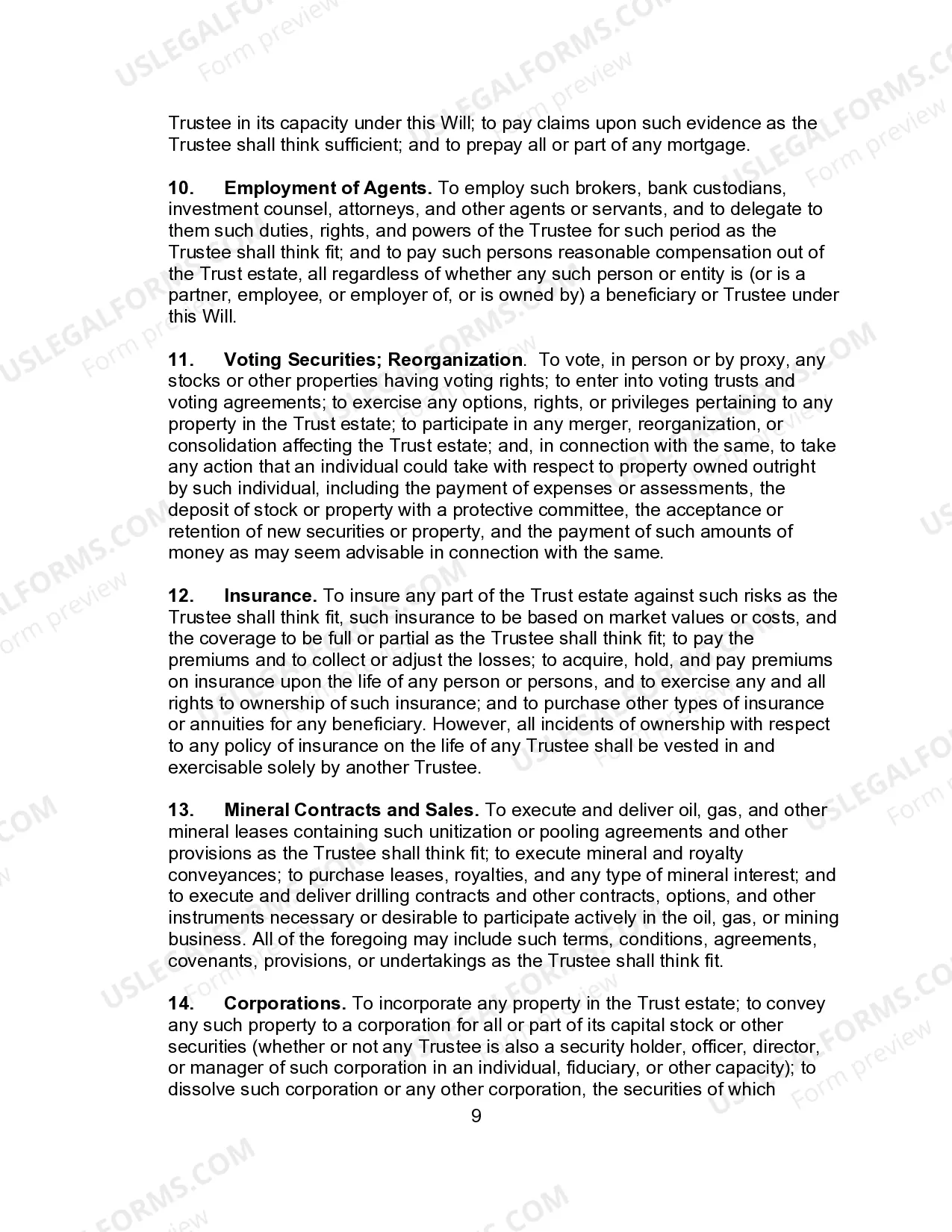
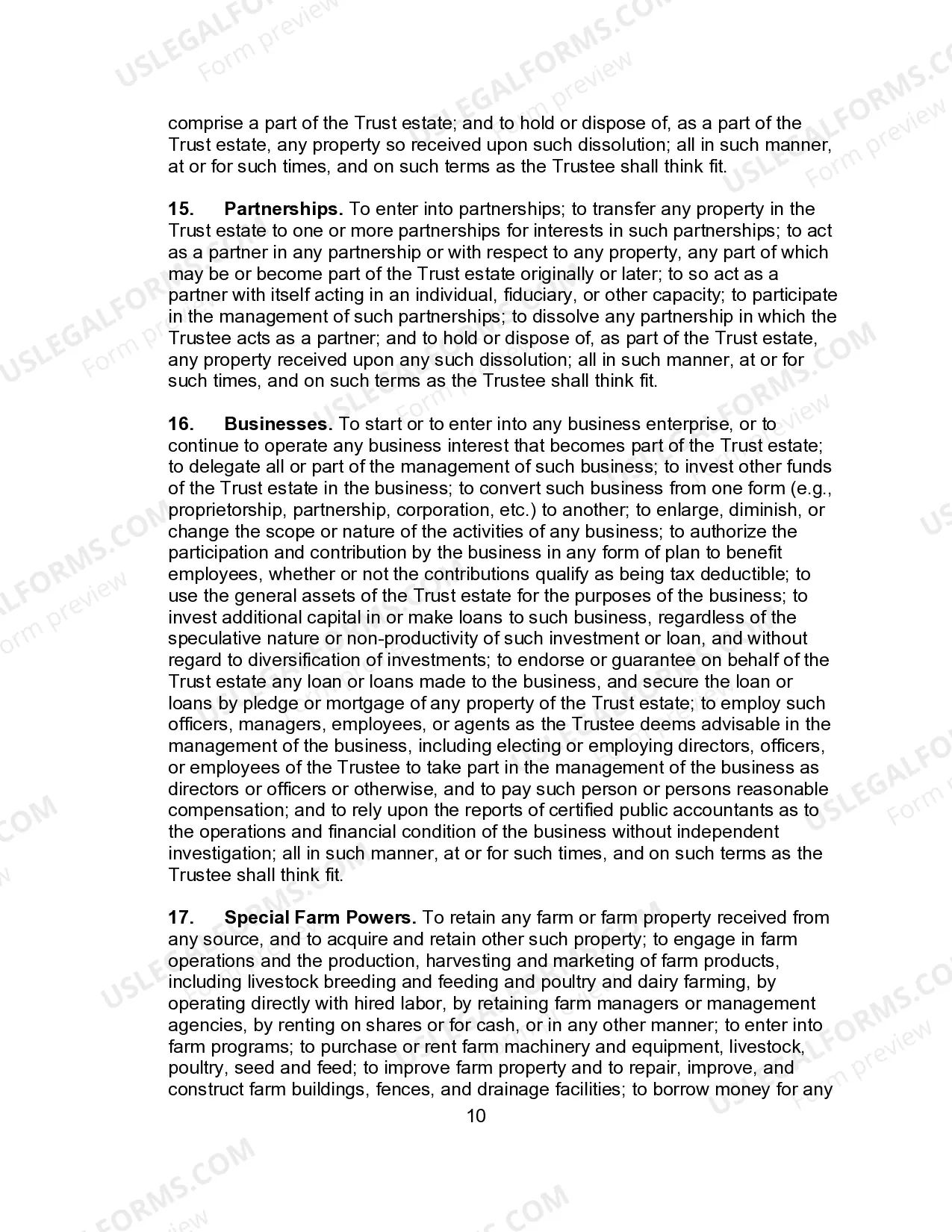
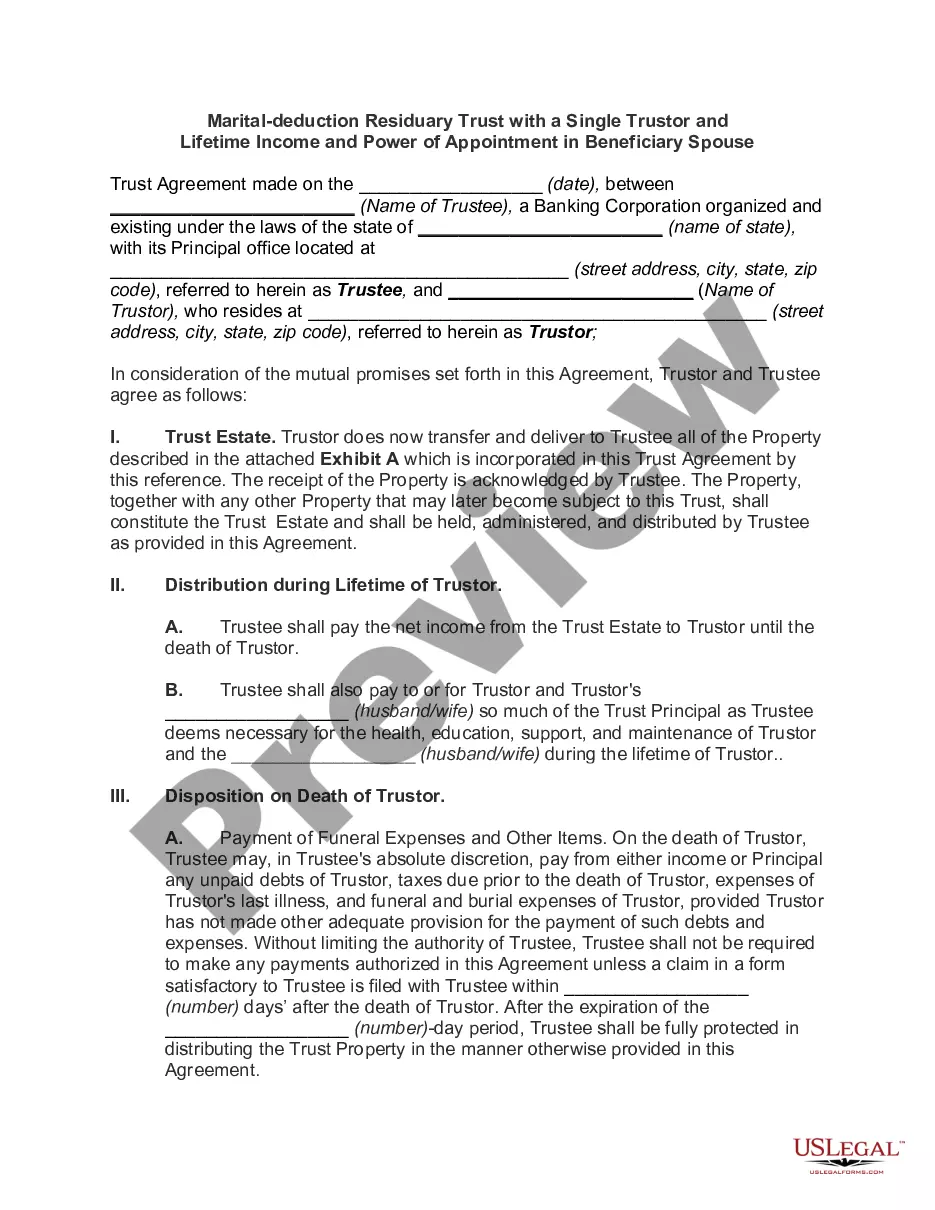
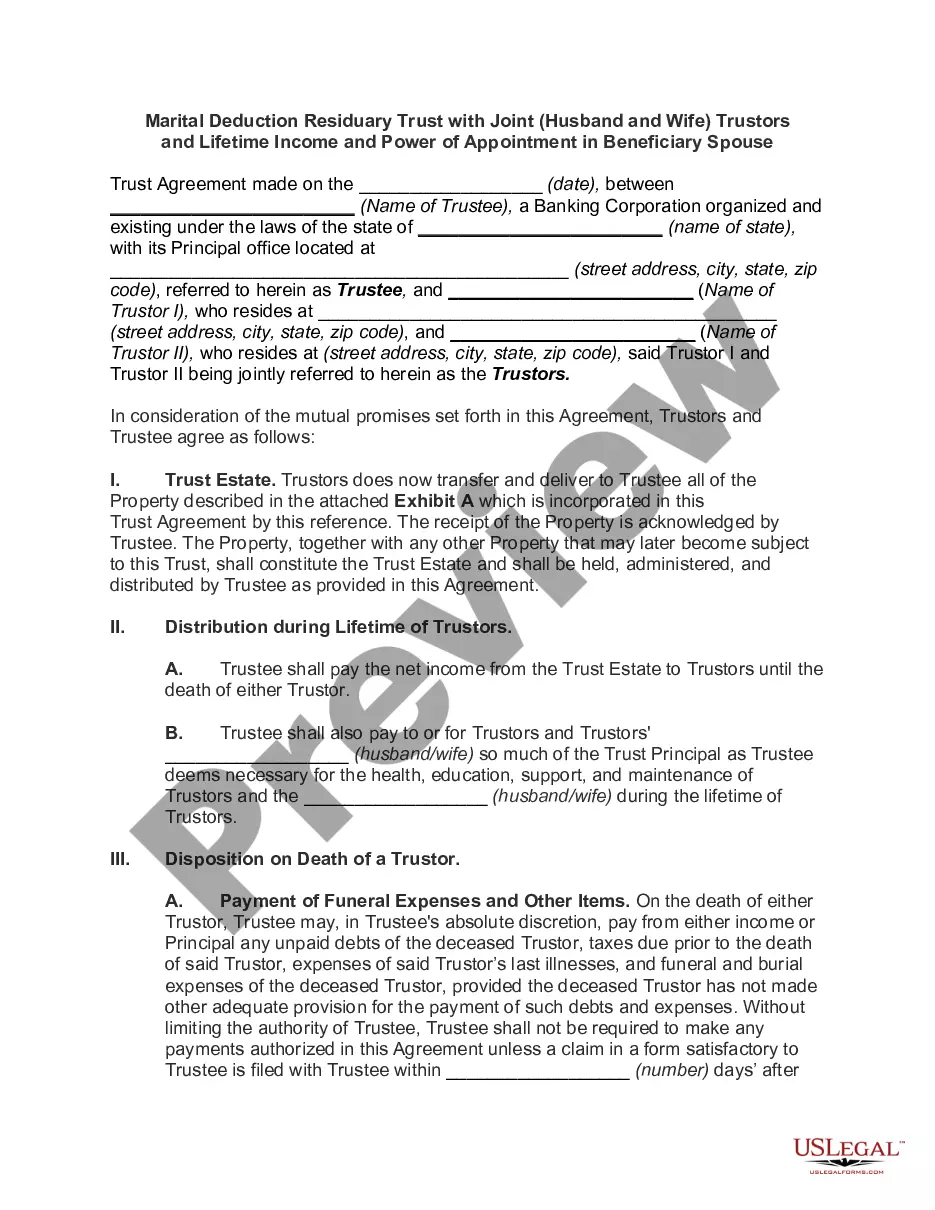
- Creation of marital and family trusts to manage assets and minimize taxes.
- Provisions for the termination of trusts and distribution of assets based on children's ages.

When to use this form
This form is essential for married individuals in Connecticut who want to ensure their children are provided for while minimizing estate taxes. It is particularly relevant when there are substantial assets, and the couple seeks to utilize tools like a credit shelter trust to protect these assets from potential taxes upon the first spouse's death.
Intended users of this form
- Married individuals in Connecticut with children.
- Couples wanting to create tax-efficient estate plans.
- Individuals with significant assets who wish to minimize estate taxes.
- Parents looking to establish guardianship for minor children in their will.
Instructions for completing this form
- Identify the parties involved, including the testator, spouse, and any trustees or guardians.
- Fill out the personal and household effects section specifying gifts to the spouse and children.
- Designate the residence and outline how it will be distributed.
- Complete the sections establishing the marital and family trusts, including allocation details.
- Ensure all signatures from the testator and witnesses are obtained for validity.
Notarization requirements for this form
This form does not typically require notarization unless specified by local law. However, it is recommended to have the document notarized to ensure its validity and establish intent.
Get your form ready online
Our built-in tools help you complete, sign, share, and store your documents in one place.
Make edits, fill in missing information, and update formatting in US Legal Forms—just like you would in MS Word.
Download a copy, print it, send it by email, or mail it via USPS—whatever works best for your next step.
Sign and collect signatures with our SignNow integration. Send to multiple recipients, set reminders, and more. Go Premium to unlock E-Sign.
If this form requires notarization, complete it online through a secure video call—no need to meet a notary in person or wait for an appointment.
We protect your documents and personal data by following strict security and privacy standards.

Make edits, fill in missing information, and update formatting in US Legal Forms—just like you would in MS Word.

Download a copy, print it, send it by email, or mail it via USPS—whatever works best for your next step.

Sign and collect signatures with our SignNow integration. Send to multiple recipients, set reminders, and more. Go Premium to unlock E-Sign.

If this form requires notarization, complete it online through a secure video call—no need to meet a notary in person or wait for an appointment.

We protect your documents and personal data by following strict security and privacy standards.
Common mistakes
- Failing to update the will after significant life events, such as the birth of a child.
- Not clearly designating a guardian for minor children.
- Neglecting to have the will properly witnessed, potentially invalidating it.
- Omitting specific allocations in the trust, leading to uncertainty in distributions.
Why complete this form online
- Convenient access to a legally sound template that is easy to modify.
- Faster completion without the need for in-person meetings with attorneys.
- Flexibility to save and edit the document as personal circumstances change.
Legal use & context
- This will is a legally binding document once properly executed according to Connecticut law.
- It provides guidelines for asset distribution and trust management that comply with state regulations.
- Failure to follow the specified procedures can result in the will being deemed invalid, denying the intended beneficiaries their inheritance.
Quick recap
- This is a specialized will for married individuals in Connecticut with children.
- Incorporates tax strategies to benefit the surviving spouse and children.
- Clear procedures for guardianship and asset distribution are essential for effective estate planning.
Glossary of terms used in this form
- Testator: The person who creates the will.
- Trustee: An individual or institution appointed to manage a trust.
- Beneficiary: A person who receives benefits from a trust or will.
- Estate Tax: A tax imposed on the transfer of the estate of a deceased person.
Looking for another form?


Form popularity
FAQ
First, in a standard credit shelter trust, there is no step-up in basis at the death of the surviving spouse.Second, the credit shelter trust is a separate taxpayer and requires its own tax return, Form 1041.
While a QTIP does offer more overall direction of the funds, a marital gift trust has the flexibility of not mandating that the surviving spouse take annual allotments. Instead, they are able to leave principal in the trust if so desired, which may continue to increase the total assets through interest over time.
QTIP trusts are put to use in estate planning and are especially useful when beneficiaries exist from a previous marriage but the grantor dies before a subsequent spouse does. With a QTIP, estate tax is not assessed at the point of the first spouse's death, but is instead determined after the second spouse has passed.
An exemption trust is a trust designed to drastically reduce or eliminate federal estate taxes for a married couple's estate.An exemption trust does not pass the assets along to the surviving spouse.
A credit shelter trust (CST) is a trust created after the death of the first spouse in a married couple. Assets placed in the trust are generally held apart from the estate of the surviving spouse, so they may pass tax-free to the remaining beneficiaries at the death of the surviving spouse.
(a) Persons authorized to solemnize marriages in this state include (1) all judges and retired judges, either elected or appointed, including federal judges and judges of other states who may legally join persons in marriage in their jurisdictions, (2) family support magistrates, state referees and justices of the
If you are planning to marry in Connecticut, you must obtain a marriage license from the vital records office of the town where the marriage will take place. There is a $50.00 fee for each marriage license. Payment must be submitted to the town at the time the marriage license is issued (see License to Get Married).
Requests for Connecticut marriage records can be processed by the office of the Town Clerk of the judicial district where the marriage was licensed or by the state's Vital Records Office.
There is no waiting period in CT. If you have your marriage license you can be married the same day.You will need to contact the town clerk's office in the town the ceremony will take place to apply for a marriage license.